
NCI(601336)

Search documents
新华保险:2025年累计原保险保费收入近1959亿元,同比增15%
Xin Lang Cai Jing· 2026-01-16 09:05
新华保险公告称,2025年1月1日至12月31日,公司累计原保险保费收入为19589859万元,约1959亿元, 同比增长15%。 ...

新华保险:2025年保费收入1958.99亿元 同比增长15%
Zheng Quan Shi Bao Wang· 2026-01-16 09:04
人民财讯1月16日电,新华保险(601336)1月16日公告,公司2025年累计原保险保费收入为1958.99亿 元,同比增长15%。 ...
新华保险(01336) - 保费收入公告
2026-01-16 09:01
香港交易及結算所有限公司及香港聯合交易所有限公司對本公告的內容概不負責,對其準確性或完 整性亦不發表任何聲明,並明確表示,概不對因本公告全部或任何部分內容而產生或因倚賴該等內 容而引致的任何損失承擔任何責任。 根據中華人民共和國財政部《企業會計準則第 25 號——原保險合同》(財會〔2006〕3 號)及《保險 合同相關會計處理規定》(財會〔2009〕15 號),新華人壽保險股份有限公司(「公司」)於 2025 年 1 月 1 日至 2025 年 12 月 31 日期間累計原保險保費收入為人民幣 19,589,859 萬元,同比增長 15%。 2025 年,公司聚焦提升市場競爭力,持續深化"以客戶為中心"的專業化、市場化、體系化改革, 著力推動基礎管理、服務生態、產品創新、隊伍建設、科技賦能、資產負債聯動、品牌文化建設等一 系列轉型舉措的快速落地,為公司高質量、高能級發展注入內生動力。 上述累計原保險保費收入數據未經審計,提請投資者注意。 承董事會命 新華人壽保險股份有限公司 楊玉成 董事長 中國北京,2026年1月16日 於本公告日期,本公司董事長、執行董事為楊玉成;執行董事為龔興峰;非執行董事為楊雪、毛思 ...
新华保险:2025年全年保费收入为1958.99亿元,同比增长15%
Ge Long Hui· 2026-01-16 08:56
格隆汇1月16日丨新华保险(601336.SH)公布,本公司于2025年1月1日至2025年12月31日期间累计原保险 保费收入为人民币1958.99亿元,同比增长15%。2025年,公司聚焦提升市场竞争力,持续深化"以客户 为中心"的专业化、市场化、体系化改革,着力推动基础管理、服务生态、产品创新、队伍建设、科技 赋能、资产负债联动、品牌文化建设等一系列转型举措的快速落地,为公司高质量、高能级发展注入内 生动力。 ...
保险板块1月16日跌2.1%,中国人寿领跌,主力资金净流出5.47亿元
Zheng Xing Xing Ye Ri Bao· 2026-01-16 08:55
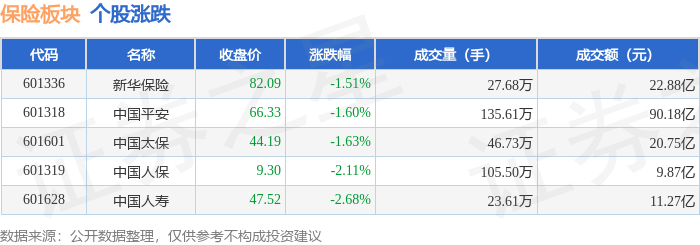
证券之星消息,1月16日保险板块较上一交易日下跌2.1%,中国人寿领跌。当日上证指数报收于 4101.91,下跌0.26%。深证成指报收于14281.08,下跌0.18%。保险板块个股涨跌见下表: | 代码 | 名称 | 收盘价 | 涨跌幅 | 成交量(手) | 成交额(元) | | --- | --- | --- | --- | --- | --- | | 601336 | 新华保险 | 82.09 | -1.51% | 27.68万 | 22.88亿 | | 601318 | 中国平安 | 66.33 | -1.60% | 135.61万 | 90.18亿 | | 601601 | 中国太保 | 44.19 | -1.63% | 46.73万 | 20.75亿 | | 616109 | 中国人保 | 9.30 | -2.11% | 105.50万 | 9.8717 | | 601628 | 中国人寿 | 47.52 | -2.68% | 23.61万 | 11.27 Z | 从资金流向上来看,当日保险板块主力资金净流出5.47亿元,游资资金净流出3.97亿元,散户资金净流入 9.44亿元。保险板块个股资金 ...





资负共振驱动保险板块估值修复
Huafu Securities· 2026-01-15 10:10
Group 1 - The insurance sector has entered a valuation recovery phase since 2025, with a cumulative increase of 31.31% in the insurance sector, continuing strong momentum into 2026, driven by improved capital market sentiment and rising equity markets, leading to a collective strength in insurance stocks, with major companies like China Ping An reaching multi-year highs [1][7]. - The new individual insurance premium growth for major insurers such as China Life, Ping An, Taikang, and Xinhua has exceeded expectations, with first-day growth rates reaching 40-60%, driven by the "deposit migration" effect, product structure optimization, and the ongoing reinforcement of anti-involution policies in the insurance industry [1][8][16]. Group 2 - Regulatory measures have opened up space for asset-side expansion, with significant potential for increasing equity allocation by insurance funds. The total investment return rate for listed insurance companies has shifted to a range of 5%-6%, with a systematic increase in investment yield driven by regulatory policy collaboration [2][22]. - The insurance sector is expected to benefit from the recovery of the real estate market, with improved financing conditions for property companies and a narrowing of credit risk premiums, enhancing the valuation framework for the insurance sector [2][27]. Group 3 - The recent strong performance of the insurance sector reflects a resonance repair driven by multiple positive factors on both the asset and liability sides. The "deposit migration" trend has brought continuous incremental premiums, while the adjustment of product interest rates has effectively controlled long-term cost pressures [3][27]. - The regulatory adjustments have significantly expanded the equity allocation space for insurance funds, allowing for a more flexible allocation of equity assets and enhancing overall portfolio returns [21][22].
保险板块1月15日跌0.63%,中国人寿领跌,主力资金净流出1.65亿元
Zheng Xing Xing Ye Ri Bao· 2026-01-15 08:58
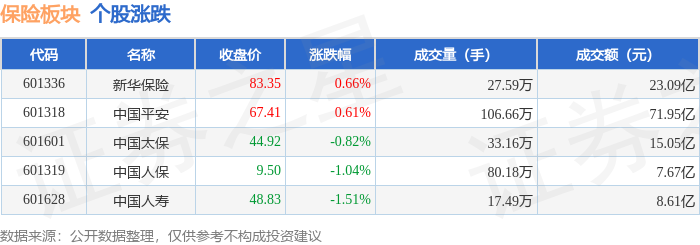
证券之星消息,1月15日保险板块较上一交易日下跌0.63%,中国人寿领跌。当日上证指数报收于 4112.6,下跌0.33%。深证成指报收于14306.73,上涨0.41%。保险板块个股涨跌见下表: 从资金流向上来看,当日保险板块主力资金净流出1.65亿元,游资资金净流出3.33亿元,散户资金净流入 4.98亿元。保险板块个股资金流向见下表: | 代码 | 名称 | 主力净流入 (元) | 主力净占比 游资净流入 (元) | | 游资净占比 散户净流入 (元) | | 散户净占比 | | --- | --- | --- | --- | --- | --- | --- | --- | | 601601 中国太保 | | 1.08亿 | 7.15% | -1.19/Z | -7.93% | 1172.46万 | 0.78% | | 601628 中国人寿 | | 1513.53万 | 1.76% | 515.82万 | 0.60% | -2029.36万 | -2.36% | | 601336 新华保险 | | 606.86万 | 0.26% | -4536.59万 | -1.96% | 3929.73万 | 1. ...
2025中国企业ESG“金责奖”优秀奖评选结果揭晓


Xin Lang Cai Jing· 2026-01-15 03:45
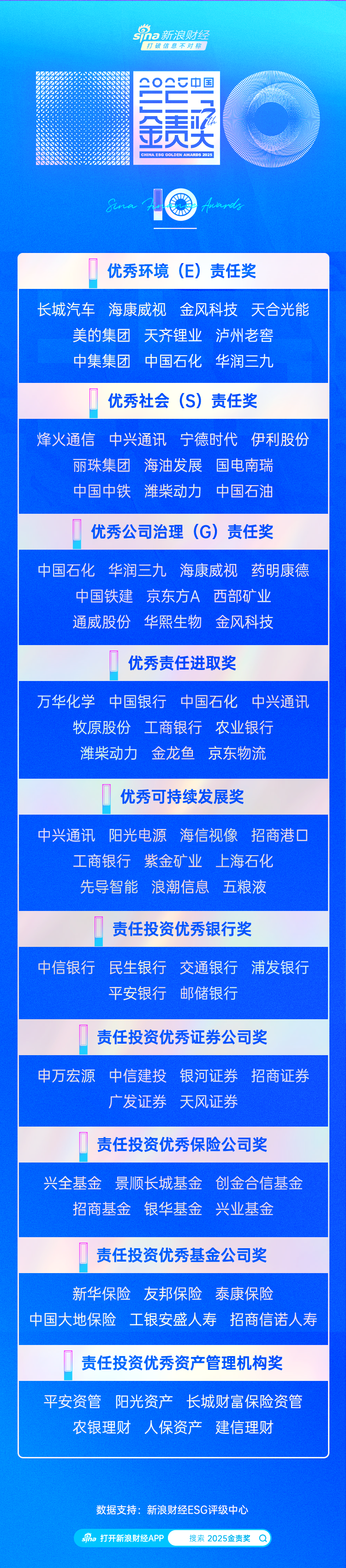
Core Viewpoint - The 2025 China Enterprise ESG "Golden Responsibility Award" aims to recognize companies and institutions that have made significant contributions to ESG initiatives in China, reflecting a shift from voluntary practices to compliance requirements in ESG performance [1][12]. Group 1: ESG Development and Awards Overview - By 2025, China's ESG development has transitioned from "setting standards" to "strengthening regulations," with a comprehensive disclosure standard system being established [1][12]. - The award selection attracted over 5,000 companies, with results based on ESG performance, online voting, and professional evaluations [2][12]. Group 2: Award Categories and Winners - The award categories include Excellent Environmental Responsibility Award, Excellent Social Responsibility Award, Excellent Corporate Governance Responsibility Award, Excellent Responsibility Initiative Award, Excellent Sustainable Development Award, and various responsibility investment awards [1][12]. - Notable winners of the Excellent Environmental Responsibility Award include Great Wall Motors, Hikvision, and China Petroleum [7][24]. - The Excellent Social Responsibility Award was awarded to companies such as YF Communication, ZTE, and Ningde Times [7][24]. - Winners of the Excellent Corporate Governance Responsibility Award include China Petroleum, Hikvision, and WuXi AppTec [7][24]. - The Excellent Responsibility Initiative Award was given to companies like ZTE, Sunlight Power, and Industrial and Commercial Bank of China [7][24]. - The Excellent Sustainable Development Award included companies such as WanHua Chemical, China Bank, and China Petroleum [7][24]. Group 3: Responsibility Investment Awards - The Responsibility Investment Excellent Bank Award was given to institutions like CITIC Bank and Minsheng Bank [5][21]. - The Responsibility Investment Excellent Securities Company Award included firms such as Shenwan Hongyuan and CITIC Securities [5][22]. - The Responsibility Investment Excellent Insurance Company Award recognized companies like New China Life and AIA [5][26]. - The Responsibility Investment Excellent Fund Company Award included firms such as Xinhua Fund and Harvest Fund [5][27]. - The Responsibility Investment Excellent Asset Management Institution Award recognized institutions like Ping An Asset Management and Sunshine Asset Management [5][28]. Group 4: Call to Action and Future Directions - The award committee encourages more Chinese enterprises to integrate ESG principles into their operations and strategic planning, emphasizing the importance of balancing commercial and social values [10][29].
新华保险20260114
2026-01-15 01:06
Summary of Xinhua Insurance Conference Call Company Overview - **Company**: Xinhua Insurance - **Focus Year**: 2026 Key Points Industry and Strategic Focus - Xinhua Insurance's strategy for 2026 emphasizes dividend insurance, aiming to maintain overall value stability despite a slightly lower value rate compared to traditional insurance products [2][5] - The company plans to optimize its business structure and match high-value protection products to achieve steady growth in new business value through regular premium income [2][5] Performance and Market Position - The company reported that its performance in the 2026 opening period met established targets, with both individual and bank insurance channels showing strong growth in regular and value premiums [3][6] - Dividend insurance products have gained significant market acceptance, with their share increasing and the interest margin narrowing by 25 basis points compared to traditional insurance [3][5] Competitive Landscape - Xinhua Insurance acknowledges intense competition in the bank insurance channel but sees opportunities due to banks' increasing focus on insurance as a low-capital burden intermediary business [7][8] - The company aims to deepen existing networks, expand bank personnel, and open new outlets to capitalize on market opportunities [8] Financial Management and Cost Control - Strict cost management measures are in place, including rigorous oversight of bank fees and commissions, ensuring alignment with budgeted expenditures [9] - Xinhua Insurance has established strong partnerships with nearly 60 banks, enhancing its strategic cooperation to drive business growth in 2026 [9] Asset Allocation and Investment Strategy - The asset allocation for 2026 will primarily focus on fixed-income assets, maintaining an approximately 80% share, while equity assets will remain stable [10][11] - The company plans to respond to regulatory calls by moderately increasing the proportion of equity assets and enhancing long-term equity investments [10][11] Risk Management - Xinhua Insurance's exposure to Vanke is estimated at around 4-5 billion yuan, with no current risk events reported [12] - The company is actively assessing impairment risks based on new standards and actual repayment situations [12] Regulatory and Tax Implications - The new asset-liability matching management system is viewed positively, with the company already aligning its practices to meet regulatory requirements [16][17] - The impact of new tax regulations is expected to be limited, as the company has adequately accounted for future profit expectations and deferred tax liabilities [19] Future Product Development - Xinhua Insurance is optimistic about the market potential for new products like dividend-type critical illness insurance, which combines protection and savings features [18] - The company is currently in the development phase for these products, aiming to meet customer needs and optimize its business structure [18] Capital Planning and Solvency - The company maintains a strong solvency position above regulatory requirements, despite potential capital pressures from increased equity investment ratios [19] - Future capital planning includes issuing 20 billion yuan in perpetual bonds to supplement core capital and ensure stable solvency [19] Conclusion - Xinhua Insurance is strategically positioned to navigate competitive challenges and regulatory changes while focusing on sustainable growth through optimized product offerings and robust financial management practices [2][19]
险企2025理赔年报透视:获赔率超99% 为何“理赔难”呼声仍在
Guo Ji Jin Rong Bao· 2026-01-14 15:17
Group 1 - The core focus of the article is on the rising trend of insurance claims in China, highlighting the increasing number of claims and payout amounts across various insurance companies, with a high claim approval rate maintained above 99% [1][2] - In the first eleven months of 2025, the insurance industry reported a premium income of 5.76 trillion yuan, a year-on-year increase of 7.56%, while claims paid out reached 2.21 trillion yuan, up 5.95% [2] - Major players like China Life and Ping An Life have shown significant growth in claims, with China Life processing over 62.24 million claims and a total payout exceeding 100.4 billion yuan, marking a 10% increase [2] Group 2 - The improvement in claims processing efficiency is attributed to technological advancements, with companies utilizing AI and data analytics to streamline the claims process, resulting in faster payouts [3] - Despite advancements, there are still concerns regarding the perception of "difficult claims," primarily due to issues such as incomplete health disclosures by consumers and misunderstandings of policy terms [3][4] - The disparity between the high incidence of critical illnesses and the inadequate coverage provided by critical illness insurance is highlighted, with significant gaps in protection against high medical costs [5][7] Group 3 - The report indicates that medical insurance claims are the most frequent, while critical illness insurance accounts for the highest payout amounts, revealing a structural difference in their functions [6] - The average treatment cost for cancer ranges from 220,000 to 800,000 yuan, while the average payout for critical illness claims is only 100,000 yuan, indicating a substantial coverage gap [7] - Recommendations for consumers include prioritizing critical illness insurance for family breadwinners and considering medical insurance for younger individuals to mitigate large medical risks [7]