
Industrial Securities(601377)

Search documents
002155,一字涨停!
Zhong Guo Ji Jin Bao· 2026-01-26 05:13
Market Overview - The A-share market opened higher but experienced fluctuations, with the Shanghai Composite Index closing at 4141.01 points, a slight increase of 0.12% [1] - The Shenzhen Component Index fell by 0.74%, and the ChiNext Index dropped by 0.86% [1] Individual Stock Performance - A total of 3756 stocks declined, while 1606 stocks rose, with 50 stocks hitting the daily limit up [2] - The total trading volume in the Shanghai and Shenzhen markets reached 2.24 trillion yuan, an increase of 347.8 billion yuan compared to the previous trading day [2] Sector Performance Precious Metals - The precious metals sector saw significant gains, with stocks such as Hunan Gold (002155) hitting the daily limit up, and others like Jin Hui Shares (603132) and Zhao Jin Gold (000506) also achieving 10% limit up [3][5] - The price of spot gold surpassed $5000 per ounce for the first time, increasing by over 1%, while spot silver rose by over 5% [5] Oil and Gas - The oil and gas sector experienced a rally, with major companies like China Petroleum and China Oil & Gas seeing increases of over 4% [6] - International oil prices surged, with WTI and ICE crude oil both rising by over 3% due to escalating geopolitical tensions [6] Financial Sector - The financial sector showed upward movement, with securities stocks rising, and insurance and banking stocks also performing well [8] - Notable gains were seen in stocks like Caitong Securities (601108) and Xingye Securities, both increasing by over 4% [9] Alcoholic Beverages - The liquor sector faced a downturn, with a decline of over 1%, particularly affected by a significant drop in Yanghe Shares (002304), which fell by over 8% [13] - Yanghe Shares projected a net profit decline of 62.18% to 68.30% for the fiscal year 2025, indicating potential financial distress [14]







公募基金业绩基准新规落地,证券ETF华夏(515010)涨1.31%
Sou Hu Cai Jing· 2026-01-26 04:05
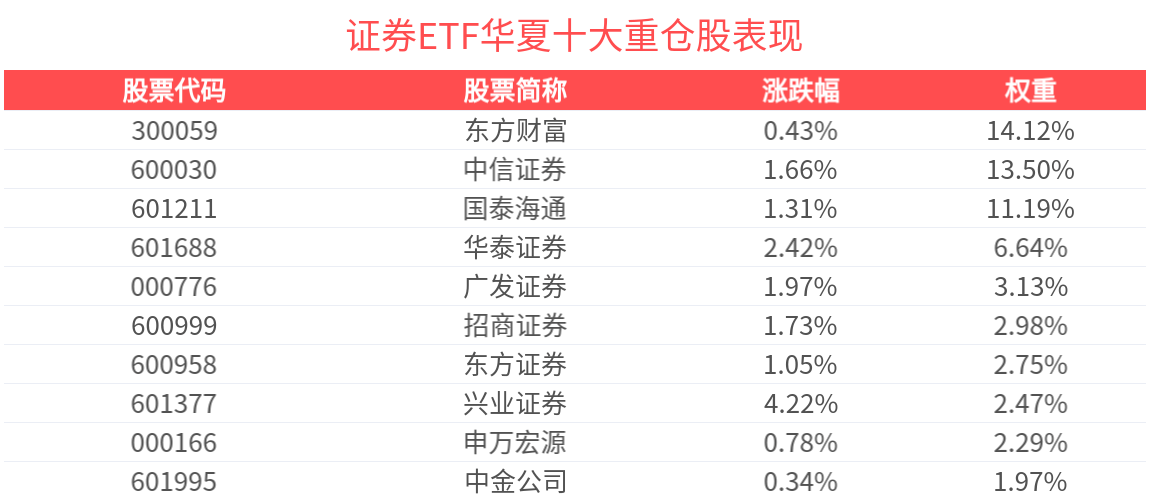
Market Overview - On January 26, the Shanghai Composite Index rose by 0.12%, while the ChiNext Index fell by 0.86%. Gold stocks, oil and gas, and basic metals led the gains, with insurance and brokerage sectors also performing well. Financial technology and AI application concepts experienced a pullback [1] Regulatory Changes - On January 23, the China Securities Regulatory Commission (CSRC) and the Asset Management Association of China released new guidelines for the performance comparison benchmarks of publicly offered securities investment funds, effective from March 1. The new regulations aim to address industry issues such as ambiguous benchmarks and style drift, establishing a comprehensive control system that links performance benchmarks to fund manager compensation [1] Fund Performance and Fees - The Financial Technology ETF Huaxia (516100) announced a fee reduction starting January 22, aligning its management fee rate with the Securities ETF Huaxia at 0.15%, and a custody fee rate of 0.05%, making it the lowest among comparable funds [1] - The Securities ETF Huaxia tracks the CSI All Share Securities Companies Index, which has a current price-to-earnings ratio (PE-TTM) of 17.15, placing it in the 6.05% percentile over the past year, indicating a historical low valuation [2] Top Holdings - As of December 31, 2025, the top ten weighted stocks in the CSI All Share Securities Companies Index include: - Dongfang Caifu (14.12%) - CITIC Securities (13.50%) - Guotai Junan (11.19%) - Huatai Securities (6.64%) - GF Securities (3.13%) - China Merchants Securities (2.98%) - Dongfang Securities (2.75%) - Industrial Securities (2.47%) - Shenwan Hongyuan (2.29%) - CICC (1.97%) - The top ten stocks account for a total of 61.15% of the index [2][3]




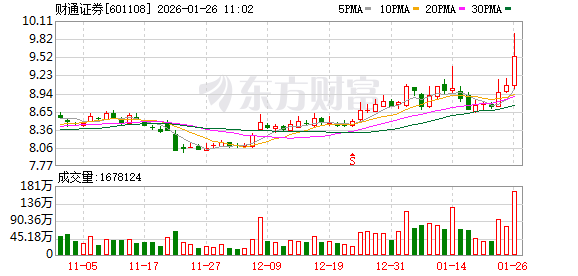
大金融板块集体走强,财通证券冲击涨停
Mei Ri Jing Ji Xin Wen· 2026-01-26 03:03
每经AI快讯,大金融板块集体走强,财通证券冲击涨停,兴业证券、新华保险、中国太保、宁波银行 涨超5%。 (文章来源:每日经济新闻) ...



证券ETF鹏华(159993)涨超1.8%,A股市场持续活跃
Xin Lang Cai Jing· 2026-01-26 03:02
Group 1 - The capital market has been active recently, with brokers conducting research on 440 A-share companies this year, predominantly in the electronics and machinery sectors, while the power equipment and chemical sectors have seen a surge in interest [1] - According to Founder Securities, brokers are still in a "lagging" phase, but ROE is on an upward trend, indicating that sector performance, although delayed, is expected to improve [1] - The capital market is projected to remain robust in 2025, with an average daily stock trading volume of 20.8 trillion yuan, a year-on-year increase of 70.2%, and an average margin balance of 2.08 trillion yuan, up 32.7% year-on-year [1] Group 2 - The 国证证券龙头指数 (399437) has shown a strong increase of 1.98%, with notable gains in constituent stocks such as 财通证券 (6.50%), 兴业证券 (4.95%), and 华泰证券 (3.52%) [1] - The 证券ETF鹏华 (159993) closely tracks the 国证证券龙头指数 and aims to reflect the market performance of quality listed companies in the securities theme [2] - As of December 31, 2025, the top ten weighted stocks in the 国证证券龙头指数 account for 79.13% of the index, including companies like 东方财富, 中信证券, and 华泰证券 [2]


A股证券板块短线拉升,财通证券涨超7%
Mei Ri Jing Ji Xin Wen· 2026-01-26 02:35
Group 1 - The A-share securities sector experienced a short-term surge on January 26, with notable increases in stock prices [2] - Citic Securities saw a rise of over 7%, while Huatai Securities and Industrial Securities increased by more than 3% [2] - Other companies such as GF Securities and Huaxin Securities also showed significant upward movement [2]
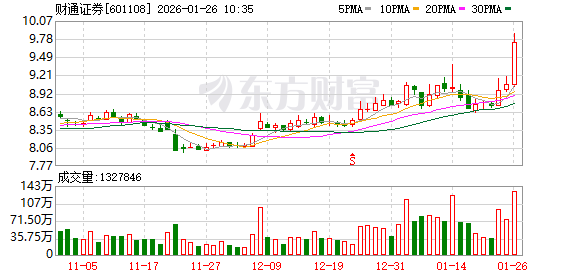
A股证券板块拉升:财通证券涨超7% 广发证券等跟涨
Ge Long Hui· 2026-01-26 02:29
Core Viewpoint - The A-share securities sector experienced a short-term surge, with notable increases in stock prices for several securities firms [1] Group 1: Company Performance - Caitong Securities saw a rise of over 7% in its stock price [1] - Huatai Securities and Industrial Securities both increased by more than 3% [1] - Other firms such as GF Securities and Huaxin Securities also experienced significant stock price increases [1]
十大券商一周策略:慢牛未改!科技 + 资源品成共识配置,警惕赚钱效应收敛
Jin Rong Jie· 2026-01-25 23:50
Core Viewpoint - The A-share market is characterized by "structural differentiation and simultaneous repair," with various institutions noting that despite ongoing redemption pressure on broad-based ETFs, sectors such as consumer chains, real estate chains, and resource products are entering a repair window [1][2]. Group 1: Market Trends - The broad-based ETF redemption pressure continues to grow, with significant differences in the承接力 (support capacity) among different industries and stocks [2]. - The consumer chain is expected to see an increase in allocation leading up to the Two Sessions, with the real estate chain also likely to experience noticeable recovery during this period [2]. - The spring market is supported by ample liquidity and policy backing, which may sustain the ongoing spring rally, although caution is advised regarding the marginal contraction of profit effects at high levels [1][3]. Group 2: Investment Focus - The consensus among institutions is to focus on technology (AI, semiconductors) and resource products (non-ferrous metals, chemicals) as key investment directions [1][7]. - There is growing attention on cyclical sectors showing signs of bottom reversal, such as power grid equipment and lithium batteries, as well as non-bank sectors [1][3]. - The current market environment is conducive to exploring basic combinations centered around chemicals, non-ferrous metals, new energy, and power equipment, while also considering low allocation in non-bank sectors like securities and insurance [2][4]. Group 3: Performance and Earnings - As the annual report forecast disclosure period peaks, the impact of earnings on market structure is expected to become more pronounced, with a focus on sectors with earnings highlights [4][11]. - The performance of sectors such as AI hardware, batteries, pharmaceuticals, steel, and non-bank financials is anticipated to improve, given their relatively low price increases [4][12]. - The market is likely to experience a rotation among sectors, with a focus on high-growth areas and those benefiting from price increases [12][14]. Group 4: Future Outlook - The market is expected to continue its slow bull trend, with the potential for a correction after reaching a phase high between 4200 and 4300 points [6][10]. - The spring market is seen as an extension of the structural bull market, with a likelihood of a consolidation phase following the current rally [3][5]. - The focus for 2026 includes a clearer dual mainline of asset allocation towards physical assets and Chinese assets, with thematic investments becoming essential [9][10].

【十大券商一周策略】春季行情仍在途,注意总体赚钱效应已逼近高位
券商中国· 2026-01-25 14:11
Group 1 - The core viewpoint of the article emphasizes the ongoing recovery of market confidence, with potential for sector and stock recovery, particularly in consumer and real estate chains before the Two Sessions [2] - The article highlights the significant outflow of funds from broad-based ETFs, with a notable impact on sectors and stocks that are underweight by institutions [2] - It suggests that sectors with strong fundamentals and logical narratives, particularly those not heavily weighted in broad-based indices, are likely to see recovery [2] Group 2 - The spring market is characterized by a transition towards a more stable phase, with the potential for a perfect spring market driven by increased profitability [3] - The article notes that the overall profitability effect is nearing a high point, indicating that the market may face limitations in time and space for further growth [3] - It anticipates a correction phase following the spring market, where the focus will shift to clearer industrial trends and performance digestion [3] Group 3 - The article discusses the supportive role of abundant liquidity in driving the current spring market, stemming from various factors including insurance capital and foreign fund inflows [4] - It emphasizes the importance of focusing on fundamental performance as companies begin to disclose annual reports, with particular attention to sectors like AI hardware, batteries, and pharmaceuticals [5] Group 4 - The article identifies the current market phase as a structural bull market, transitioning from the second consolidation phase to the third upward phase [6] - It suggests that the market may face a correction after reaching a temporary high between 4200 and 4300 points, with a focus on the support levels and core sectors [6] Group 5 - The article advocates for a dual focus on technology and resource sectors, highlighting the importance of macroeconomic conditions and liquidity in shaping investment strategies [7] - It identifies key sectors such as semiconductors, AI, and new energy as central to current market trends, with a positive outlook for resource industries [7] Group 6 - The article suggests that the market's optimism is necessary, particularly in light of the recent volatility and the need to consider the relationship between market optimism and regulatory cooling [8] - It emphasizes the importance of focusing on physical assets and Chinese assets in investment strategies, with a recommendation for sectors like equipment exports and consumer recovery [9] Group 7 - The article indicates that the current market is entering a phase of high volatility and differentiation, with expectations for policy-driven demand expansion [10] - It highlights the potential for the non-ferrous metals sector to benefit from both industrial trends and financial attributes, particularly in light of geopolitical factors [11] Group 8 - The article notes that the A-share market is returning to a slow bull trend, with an increasing importance of sector rotation and fundamental performance [12] - It emphasizes the need to focus on structural investment opportunities, particularly in technology innovation and manufacturing sectors [12] Group 9 - The article suggests that the current market may be entering the latter half of the spring market, with a focus on sectors with strong performance and clear industrial trends [13] - It highlights the potential for price increases in sectors like basic chemicals and new energy materials, as well as opportunities in export-driven sectors [13] Group 10 - The article maintains that the slow bull trend is likely to continue, with a focus on technology, resource sectors, and industries with high growth potential [14] - It suggests that the current market conditions provide ample opportunities for investment, particularly in sectors with strong earnings forecasts [14]

兴业证券:后续还有哪些催化值得期待?
智通财经网· 2026-01-25 11:55
Core Viewpoint - The report from Industrial Securities emphasizes that the recent cooling in the market affects the rhythm and structure rather than the overall trend, with the core logic supporting the upward spring market remaining unchanged. The current spring market is still in progress, and although the market rhythm has slowed, the upward trend continues, with the profit effect expanding to a broader range [1]. Group 1: Liquidity and Catalysts - A liquidity-rich environment is the core driving force supporting the upward trend of the spring market, stemming from the strong performance of insurance funds and the influx of foreign capital due to the appreciation of the RMB [1][2]. - Insurance funds have shown impressive performance in the "opening red" period, with individual insurance premium growth rates exceeding 30% for leading companies, and some companies' individual insurance premiums surpassing 10 billion [1]. - The first half of this year is expected to see a peak in the maturity of residents' fixed deposits, creating an important window for residents to increase their allocation to equity assets [2]. - The continuous appreciation of the RMB is attracting foreign capital back to the market, with a record high of $99.9 billion in bank foreign exchange settlement surplus in December 2025, including a $11.5 billion surplus in securities investment [2]. Group 2: Market Structure and Performance - The current market is characterized by a warm macro environment and supportive policies, which are enhancing market risk appetite and driving the profit effect to expand across various sectors [3]. - The upcoming week will feature a concentrated window for industry catalysts, particularly with the earnings reports from North American tech giants, which may influence the domestic market [4]. - The earnings preview period is approaching its peak, with a disclosure rate expected to reach around 55%, which will significantly impact market structure [4][7]. Group 3: Earnings Forecasts and Sector Focus - As of January 23, 2025, 889 A-share listed companies have released earnings forecasts, with 304 companies expecting net profit growth exceeding 50%, primarily in sectors such as computing, chemicals, new energy, pharmaceuticals, and computer technology [5][6]. - The sectors with high growth or exceeding expectations in earnings forecasts include storage, new energy (battery storage, grid equipment), chemicals, and innovative pharmaceuticals [6][7]. - The report highlights that industries with low price increases during the current market rally include AI hardware, new energy, and various cyclical sectors [8]. Group 4: Future Market Outlook - February is anticipated to be a core window for bullish market activity, with a typical pattern of market volatility driven by liquidity and risk appetite, particularly in small-cap and growth sectors [9]. - The report suggests that themes such as AI applications, commercial space, and energy narratives should be revisited as they may gain renewed attention in February [9].
金融行业周报(2026、01、25):业绩比较基准新规正式落地,坚定保险中长期向好逻辑-20260125
Western Securities· 2026-01-25 10:30
Investment Rating - The report maintains a positive long-term outlook for the insurance sector, indicating a strong continuity in market performance despite recent fluctuations [2][12][16]. Core Insights - The financial sector experienced a mixed performance this week, with the non-bank financial index down by 1.45%, underperforming the CSI 300 index by 0.83 percentage points. The insurance sector saw a decline of 4.02%, while the brokerage sector decreased by 0.61% [1][10]. - The insurance sector's performance is driven by two main factors: policy support leading to economic recovery and liquidity easing combined with a strong stock market. The report suggests a shift from liquidity-driven growth to a focus on macro policy support and economic recovery expectations [2][13][16]. - The brokerage sector is expected to benefit from new regulations that enhance investment management quality, with a recommendation to focus on larger, undervalued firms and those involved in mergers and acquisitions [3][18]. - The banking sector is facing a slight decline, but there are signs of recovery in profitability for leading banks, with recommendations to focus on banks with high dividend yields and those expected to benefit from market conditions [19][21]. Summary by Sections Insurance Sector - The insurance sector's recent decline is attributed to short-term market sentiment and liquidity changes, but the long-term outlook remains positive due to strong support from both the liability and asset sides [2][12][16]. - Key recommendations include focusing on companies like China Pacific Insurance, China Ping An, China Life (H), and China Taiping, with a specific recommendation for New China Life [4][16]. Brokerage Sector - The brokerage sector's performance is slightly better than the overall market, with a focus on the new guidelines from the regulatory body that aim to improve fund management quality [3][17]. - Recommended firms include Guotai Junan, Huatai Securities, and others, particularly those with strong merger and acquisition prospects [4][18]. Banking Sector - The banking sector has shown a decline but is expected to stabilize, with recommendations to focus on banks with high earnings elasticity and strong dividend yields [19][21]. - Specific banks to watch include Hangzhou Bank, Ningbo Bank, and others, with a focus on those that have previously been undervalued [4][21].

