CPIC(601601)

Search documents
中国太保:服务国家战略,践行保险为民
Jie Fang Ri Bao· 2025-12-26 03:55
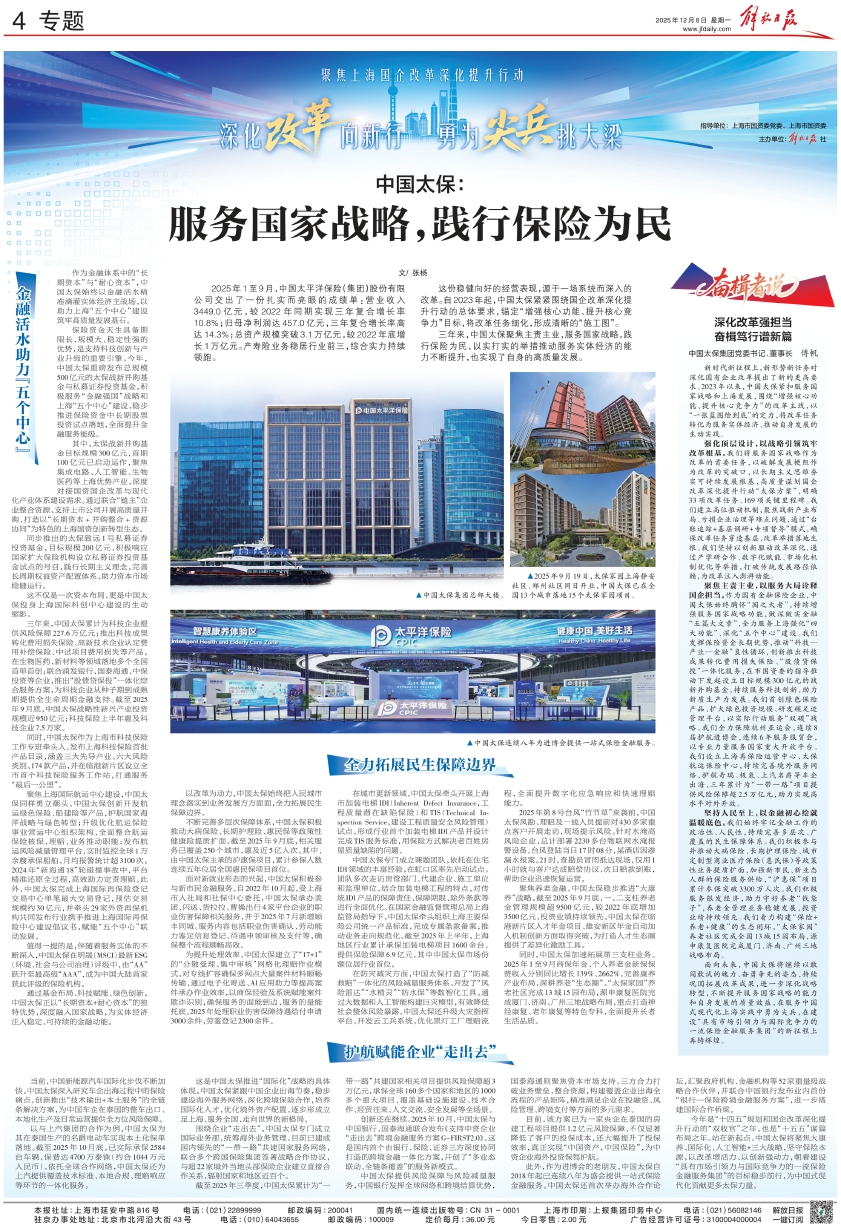
Core Insights - China Pacific Insurance (Group) Co., Ltd. reported strong financial performance for the first nine months of 2025, with operating revenue of 344.9 billion yuan, a compound annual growth rate of 10.8% compared to the same period in 2022, and a net profit of 45.7 billion yuan, with a compound annual growth rate of 14.3% [4][23]. - The company has focused on deepening reforms and enhancing core competitiveness since 2023, aligning with national strategies and improving its service capabilities to support the real economy [4][23]. Financial Performance - The total asset scale exceeded 3.1 trillion yuan, an increase of 1 trillion yuan compared to the end of 2022 [4][23]. - The life and property insurance sectors remain among the top three in the industry, demonstrating sustained comprehensive strength [4][23]. Strategic Initiatives - China Pacific Insurance launched a 50 billion yuan merger and acquisition fund and a private equity investment fund to support the "Financial Strong Country" strategy and the construction of Shanghai's "Five Centers" [24]. - The merger and acquisition fund has a target size of 30 billion yuan, with the first phase of 10 billion yuan already in operation, focusing on key industries such as integrated circuits, artificial intelligence, and biomedicine [24]. Technological and Service Innovations - The company has provided risk protection totaling 227.6 trillion yuan to technology enterprises over the past three years, introducing various insurance products tailored for high-tech industries [25]. - China Pacific Insurance established the first technology insurance service workstation in the Lingang New Area, enhancing service accessibility for technology companies [25]. International Expansion - The company is actively building an overseas service network and has established strategic partnerships with multiple multinational insurance groups, covering nearly 100 countries and regions [32][33]. - As of the third quarter of 2025, China Pacific Insurance has provided risk protection exceeding 3 trillion yuan for projects related to the Belt and Road Initiative [33]. ESG and Sustainability - The company achieved an upgrade in its MSCI ESG rating from "AA" to "AAA," becoming the first insurance institution in mainland China to receive this highest rating [27]. - China Pacific Insurance is committed to integrating sustainable finance into its operations, focusing on long-term capital and stable financial support for the real economy [27]. Social Responsibility - The company has expanded its health insurance offerings, covering nearly 5 billion people across 250 cities, and has been a leader in providing policy-based health insurance [28]. - China Pacific Insurance has implemented a grid-based claims processing model to enhance efficiency in handling occupational injury claims, processing over 3,000 claims in 2025 [28]. Community Development - The company has launched multiple community projects, including the "Taibao Home" initiative, which has established 15 community centers across 13 cities [20][31]. - It has also developed specialized rehabilitation hospitals to improve the quality of life for the elderly [31].


国寿、太保宣布:撤销监事会
Jin Rong Shi Bao· 2025-12-26 02:14
Group 1 - The core point of the article is the significant shift in the governance structure of the insurance industry in China, with multiple companies, including China Life and China Pacific Insurance, announcing the abolition of their supervisory boards [1][2][3] - As of December 25, 2023, a total of 13 insurance companies have announced the dissolution of their supervisory boards, indicating a profound transformation in the long-standing "three meetings and one layer" governance framework [1][2] - The trend of abolishing supervisory boards began with Japan's insurance company in April 2023 and has been rapidly adopted by state-owned insurance groups, expanding from group companies to specialized subsidiaries [1][2] Group 2 - The new policy guidance is driven by the upcoming implementation of the revised Company Law in July 2024, which allows wholly state-owned companies to replace supervisory boards with audit committees [3] - The decision to abolish supervisory boards is motivated by the need to reduce costs and improve efficiency, addressing the weaknesses of traditional supervisory functions [3] - Experts believe that the abolition of supervisory boards represents an exploration of modern financial governance, with a focus on enhancing compliance and risk management capabilities within the insurance industry [3]

年内险资向私募股权基金出资已超千亿元
Zheng Quan Ri Bao· 2025-12-26 02:01
Core Insights - Insurance capital has significantly increased its investment in private equity funds, with a total contribution of 109.76 billion yuan as of December 19, marking a 55.85% increase compared to the previous year [1] Group 1: Investment Trends - The top five insurance institutions in private equity investment for 2025 are China Pacific Life Insurance Co. (205.99 billion yuan), Ping An Life Insurance Co. (150 billion yuan), Sunshine Life Insurance Co. (114.88 billion yuan), AIA Group (106.75 billion yuan), and PICC Capital (100 billion yuan) [2] - Life insurance companies contributed the most to private equity funds, totaling 88.53 billion yuan, a year-on-year increase of 57.05%, while insurance asset management companies contributed 17.98 billion yuan, a significant increase of 231.12% [3] Group 2: Regulatory Environment - Recent regulatory changes have encouraged insurance capital to increase equity allocations, such as raising the limit on single venture capital fund investments from 20% to 30% of the fund's paid-in capital [2] - The regulatory framework has also enhanced the tolerance for short-term volatility, promoting long-term investment strategies among insurance companies [2] Group 3: Investment Strategy - Insurance companies prefer growth funds, with nine out of the top ten funds being growth-oriented, as they align with the need for stable cash flow and lower investment risk [4] - The focus on private equity funds is seen as a long-term strategic choice, particularly for life insurance companies, which are expected to continue increasing their allocations in this area [5][6] Group 4: Sector Focus - The investment strategy will likely target sectors aligned with national strategic directions, particularly in hard technology, healthcare, and green energy, reflecting a commitment to supporting high-quality economic development [6]

“长钱”叙事下的险资
Shang Hai Zheng Quan Bao· 2025-12-26 02:01
Group 1 - The core narrative of insurance capital is shifting towards "long money," characterized by more precise asset-liability matching, diversified investment channels, and extended investment horizons, which are expected to persist for a long time [1] - Regulatory policies are guiding this shift by loosening restrictions on insurance capital investments, encouraging long-term investments in the capital market [2][6] - As of Q3 2025, the balance of stock investments for life and property insurance companies has increased by approximately 50% and 30% respectively compared to the beginning of the year [2] Group 2 - Insurance capital is increasingly focusing on gold investments as a new area of interest, with the wealth storage function of gold regaining importance amid global macro uncertainties [3] - The OCI strategy, which emphasizes long-term dividend returns over short-term price differences, has led to a record number of approximately 40 equity stakes taken by insurance capital this year [4] - The new "National Nine Articles" has transformed dividend requirements from regulatory guidance to rigid constraints, enhancing the market environment for stable dividend targets [4] Group 3 - Long-term investment philosophy is becoming a core criterion for talent selection within insurance institutions, emphasizing the importance of a shared long-term investment vision among team members [5] - The investment strategy is evolving from a generic approach to a more refined asset-liability matching strategy, necessitated by changes in liability characteristics and the development of floating yield products [6][7] - A dynamic asset-liability matching mechanism is being established to adapt to the characteristics of floating yield products and market conditions, ensuring investment returns effectively cover liability costs [7]
多家险企康养社区密集落地
Jin Rong Shi Bao· 2025-12-26 02:01
Core Insights - The article highlights the growth and development of senior living communities in China, particularly those operated by major insurance companies, as they adapt to the aging population and enhance service offerings [1][2][3] Group 1: Company Developments - China Taiping's "Wutong Renjia" community in Shanghai welcomed its 1500th resident, showcasing its successful growth since opening in November 2019, with interest groups increasing from over 10 to over 30 [1] - Taikang's "Taikang Zhijia" in Nantong opened a new experience center, planning to build approximately 1500 senior living units and a rehabilitation medical facility, expected to be operational by Q4 2027 [2] - China Pacific Insurance launched two new communities, "Taibao Jiayuan" in Beijing and "Sanya International Leyang Center," expanding its network to 15 projects, with 14 already operational [2] Group 2: Industry Trends - The insurance sector is transitioning from single project operations to a nationwide network, offering comprehensive services that include health management, cultural entertainment, and travel vacation options for seniors [3] - The trend of travel-based senior living communities is emerging, with companies like Dajia Insurance establishing locations in scenic areas, indicating a diversification in the types of services offered [2][3]

养老社区布局从“落子成点”到“经纬成网” 险企养老版图加速“裂变”
Zheng Quan Ri Bao Zhi Sheng· 2025-12-25 16:36
Core Viewpoint - The insurance industry is accelerating its investment in high-quality elderly care communities, responding to China's aging population and creating a nationwide network for "migratory-style retirement" by 2025 [1][2]. Group 1: Industry Trends - By the end of 2025, insurance companies are expected to launch over 10 elderly care community projects, with major players like China Life, Taikang Insurance, and China Pacific Insurance leading the market [2][3]. - The insurance sector has built 130 elderly care community projects during the 14th Five-Year Plan period, establishing a broad network of elderly care services [2]. Group 2: Market Drivers - The demand for elderly care is driven by over 310 million people aged 60 and above in China, with the silver economy projected to reach 30 trillion yuan by 2035 [4]. - Policies from the China Banking and Insurance Regulatory Commission support insurance institutions in investing in elderly care facilities, providing clear guidance for industry development [4]. Group 3: Business Models - Insurance companies are diversifying their investment strategies, moving from a heavy asset model to a combination of heavy, medium, and light asset approaches [5]. - The "insurance product + elderly care community" model enhances large policy sales and aligns with the long-term investment needs of elderly care facilities [4][5]. Group 4: Home Care Services - Home care is becoming a new focus for insurance companies, addressing the core needs of the elderly population and expanding service coverage [6][8]. - Major insurance firms like Ping An have extended home care services to 100 cities, benefiting nearly 240,000 clients [7]. Group 5: Strategic Importance - The insurance sector's engagement in elderly care is seen as a strategic long-term initiative, aiming to create a second growth curve for life insurance businesses and transition from product sales to service-oriented models [9][11]. - The integration of elderly care services with insurance products is expected to enhance customer loyalty and control costs [9][10]. Group 6: Operational Challenges - High capital costs and long return cycles are common challenges in the elderly care community sector, with occupancy rates needing to exceed 60% for cash flow sustainability [10]. - The home care sector faces operational challenges, including high service costs and the need for standardized services, which require innovative solutions and collaboration among various stakeholders [10].

5年重回3万亿!新华、太保创历史新高,五大险企市值大涨背后,是为什么?
13个精算师· 2025-12-25 14:12
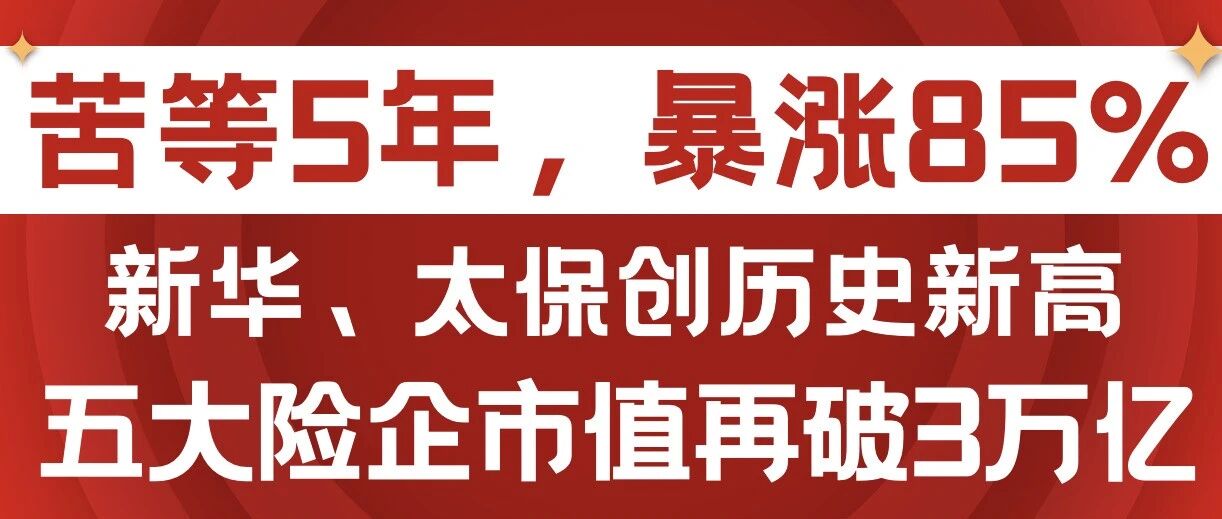
一周内 多家上市险企创新高 ②外部机遇叠加 资负两端压力缓解 分红险发力、养老需求增长 ③资本市场 对上市险企看好的背后 是预期的转变、对头部的信心 1 时隔5年 五大险企市值超3万亿 ①新华、太保:创历史新高 平安、人保:创近年来新高 更重要的是,时隔五年,上市保险公司终于走出低谷,市值重回顶峰! 截止目前,五大上市险企的总市值已经超过3.3万亿,较上年同期增长约2 9%,近两年 累计涨幅约8 5%。 甚至,资本市场对保险公司的讨论热度也明显提升... 有人表示"保险公司的股东们苦尽甘来",也有人说"之前的银行感觉要换成保险了"。 时隔5年 五大险企 市值超3万亿 新华、太保:创历史新高 | 保险股 √ | 当前价 ◆ | 涨跌幅 ◆ | 成交量 $ | 总市值 ◆ 年初至今 ◆ | | --- | --- | --- | --- | --- | | 中国太保 | 42.64 | +1.14 (+2.75%) | 33.95万手 | 4102.11亿 +28.80% | | SH601601 | | | | | | 中国平安 | 70.80 | +1.77 (+2.56%) 77.79万手 | | 1.28 ...

中国太保大宗交易成交97.87万股 成交额3655.40万元
Zheng Quan Shi Bao Wang· 2025-12-25 13:34
12月25日中国太保大宗交易一览 | 成交量 | 成交金 | 成交价 | 相对当日收盘 | | | | --- | --- | --- | --- | --- | --- | | (万 | 额(万 | 格 | 折溢价(%) | 买方营业部 | 卖方营业部 | | 股) | 元) | (元) | | | | | 97.87 | 3655.40 | 37.35 | -12.41 | 国泰海通证券股份有限公司 | 国泰海通证券股份有限公司 | | | | | | 上虞市民大道证券营业部 | 上虞市民大道证券营业部 | (文章来源:证券时报网) 证券时报·数据宝统计显示,中国太保今日收盘价为42.64元,上涨2.75%,日换手率为0.50%,成交额为 14.47亿元,全天主力资金净流入3847.80万元,近5日该股累计上涨3.80%,近5日资金合计净流出2.92亿 元。 两融数据显示,该股最新融资余额为15.93亿元,近5日减少4542.08万元,降幅为2.77%。 据天眼查APP显示,中国太平洋保险(集团)股份有限公司成立于1991年05月12日,注册资本962034.1455 万人民币。(数据宝) 中国太保12月 ...
股价连刷高点,保险股正走向资负共振的价值修复
第一财经· 2025-12-25 13:34
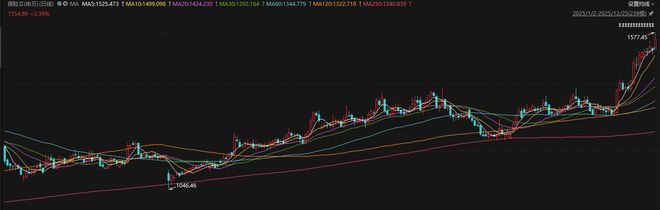
Core Viewpoint - The insurance sector in A-shares has shown significant strength this year, with multiple stocks reaching new highs, driven by external policy benefits and internal asset-liability resonance [3][5][10]. Group 1: Performance Overview - As of December 25, the A-share insurance sector index closed at 1554.89 points, the highest since April 2021 [5]. - The insurance sector has outperformed other financial sectors, with a year-to-date increase of 30.54%, significantly higher than the banking sector's 11.74% and the overall non-bank financial sector's 13.74% [5][8]. - From September of last year to now, the insurance sector has seen a cumulative increase of 58.7% [5]. Group 2: Individual Stock Performance - Notable stocks such as China Pacific Insurance and Ping An have reached new price highs, with China Pacific touching 43 CNY per share and Ping An reaching 71.98 CNY per share [7][8]. - Year-to-date, New China Life and Ping An have recorded price increases of 50% and 40%, respectively, leading the sector [8]. Group 3: Policy and Market Drivers - The rise in insurance stock prices is attributed to a combination of policy support and asset-liability resonance [10][11]. - Regulatory policies have positively impacted both the asset and liability sides of the insurance business, with new guidelines promoting the development of health insurance and improving underwriting profitability in non-auto insurance [11]. - The asset side has benefited from increased investment in A-shares, with insurance companies' stock investments rising to 3.62 trillion CNY, an increase of 1.19 trillion CNY from the previous year [12]. Group 4: Future Outlook - Analysts predict that the insurance sector will enter a golden development period starting in 2026, driven by synchronized improvements in asset and liability conditions [13][15]. - The demand for insurance products remains high, and regulatory support is expected to continue, leading to improved profitability and valuation for insurance companies [15][16]. - The P/EV valuation for major insurance companies is currently low, ranging from 0.6 to 0.8, with expectations for gradual recovery towards 1.0 by 2026 [16].

前瞻2026┃股价连刷高点,保险股正走向资负共振的价值修复
Di Yi Cai Jing Zi Xun· 2025-12-25 12:44
Core Viewpoint - The insurance sector in A-shares has shown significant strength this year, with multiple stocks reaching new highs, driven by external policy benefits and internal asset-liability resonance [1][2][6]. Performance Summary - As of December 25, the A-share insurance sector index closed at 1554.89 points, the highest since mid-April 2021 [2]. - The insurance sector has increased by 30.54% this year, outperforming the banking sector's 11.74% and the overall non-bank financial sector's 13.74% [2]. - From September of last year to now, the cumulative increase in the A-share insurance sector has reached 58.7% [2]. Individual Stock Performance - On December 25, China Pacific Insurance reached a new high of 43 CNY per share, while Ping An Insurance hit 71.98 CNY per share, the highest since March 2021 [4]. - New China Life Insurance also reached a new high of 73.45 CNY per share on December 23 [4]. - Year-to-date, New China Life and Ping An have recorded increases of 50% and 40%, respectively, leading the sector [4]. Policy Support and Asset-Liability Resonance - The rise in insurance stock prices is attributed to the highlighting of their allocation value, supported by policy backing and asset-liability resonance [6]. - Regulatory policies have been favorable, with recent guidelines promoting high-quality development in health insurance and improving profitability in non-auto insurance [7]. - The asset side has seen increased investment in A-shares by large state-owned insurance companies, with a significant rise in stock investments [8]. Future Outlook - Analysts predict that the insurance sector will enter a golden development period starting in 2026, driven by synchronized improvements in asset and liability sides [10]. - The demand for insurance products remains high, and regulatory policies are expected to continue to support the sector, leading to potential valuation recovery [10][12]. - The P/EV (price to embedded value) ratio for major listed insurance companies is currently low, ranging from 0.6 to 0.8, with expectations for gradual recovery towards 1.0 by 2026 [12].