CPIC(601601)

Search documents
靴子落地!金融监管总局:风险因子调降10%,保险投资再松绑,有哪些影响?
13个精算师· 2025-12-05 15:25
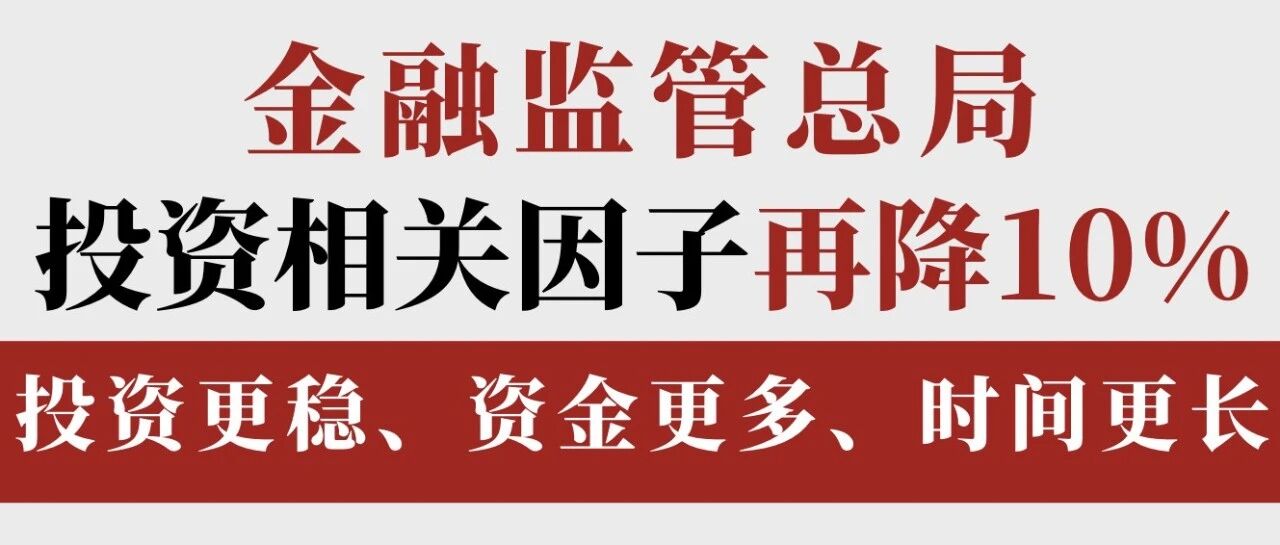
刚刚 持仓时间超过3年的市值超3千亿 ③有助 险企更注重长期投资 投资更稳、资金更多、时间更长 金融监管总局发文 ①将股票投资的 风险因子进一步调降10% 要求对沪深300等持仓超过3年 ② 沪深300和红利100 保险公司持仓市值超4.8千亿 1 金融监管总局:提上限、降因子 助力险企发挥"长期资本"的优势 | 序号 | 文件名称 时间 | | --- | --- | | 13 | 关于优化保险公司权益类资产配置监管有关事项的通知 2020/7/17 | | 123 | 关于优化保险公司偿付能力监管标准的通知 3 2023/9/10 | | గ్ | 关于调整保险资金权益类资产监管比例有关事项的通知 2025/4/8 | | | 峰 关于调整保险公司相关业务风险因子的通知 2025/12/5 | 近年来,为推动以保险资金为代表的中长期资金,加大对市场的投资力度,金融监管总 局等部门,先后出台多项措施。 先是,对权益类资产投资,实行差异化监管,而后,又下调风险因子、上调权益类投资 比例上限! 以金融监管总局为例,从2 020年至今,已经先后下发4个文件,详见上图。 今日,金融监管总局下发《关于调整保险公司相关 ...






A股有望迎来千亿资金,万亿巨头直线拉升
2 1 Shi Ji Jing Ji Bao Dao· 2025-12-05 14:31
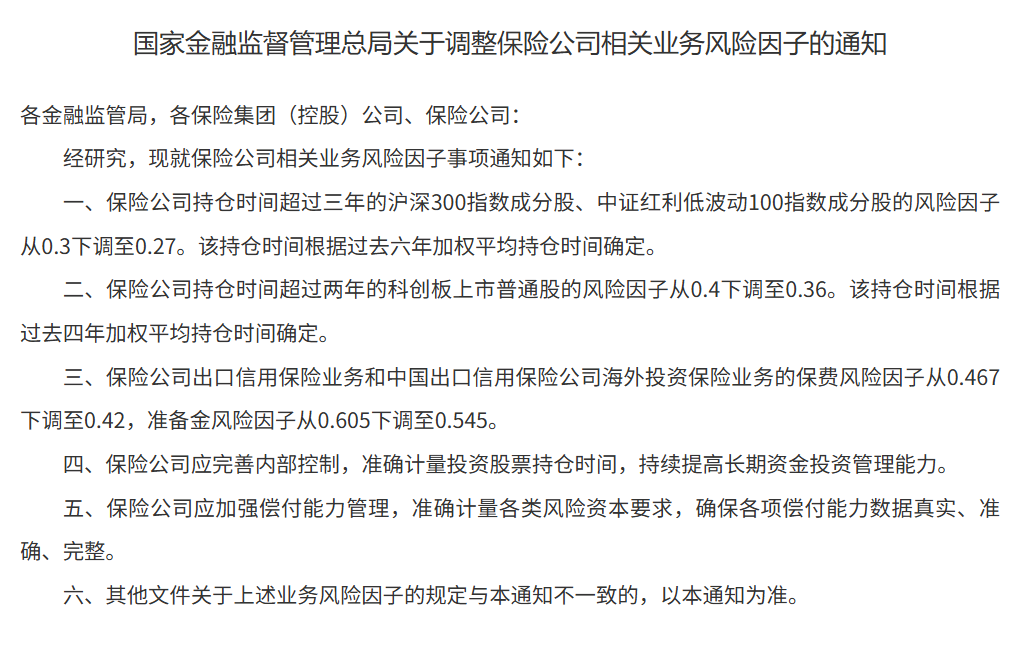
Core Viewpoint - The National Financial Regulatory Administration has announced a reduction in risk factors for insurance companies' stock investments and export credit insurance, signaling a policy shift towards "capital relaxation" and "long-term investment" [1][5]. Group 1: Policy Adjustments - The new notification aims to encourage insurance funds to act as "patient capital" and increase long-term market participation by lowering risk factors based on stock type and holding duration [1][5]. - The risk factor for stocks in the CSI 300 index and the CSI Low Volatility 100 index, held for over three years, has been reduced from 0.3 to 0.27, while the risk factor for Sci-Tech Innovation Board stocks held for over two years has been lowered from 0.4 to 0.36 [5][6]. - The adjustments also include a reduction in premium risk factors for export credit insurance and overseas investment insurance from 0.467 to 0.42 and reserve risk factors from 0.605 to 0.545 [5][9]. Group 2: Impact on Insurance Companies - The reduction in risk factors alleviates the solvency pressure on insurance companies and enhances capital efficiency, promoting long-term investments in the stock market [1][6]. - For example, a hypothetical investment of 10 billion yuan in the CSI 300 index would see a capital reserve requirement decrease from 3 billion yuan to 2.7 billion yuan due to the lowered risk factor [6]. - The policy encourages insurance companies to adopt a long-term investment strategy, which can lead to improved market stability and support for the real economy [7][9]. Group 3: Market Reactions - Following the announcement, insurance stocks in both A-shares and Hong Kong markets saw significant gains, with China Pacific Insurance rising over 6% and China Ping An increasing by more than 5% [10][11]. - The adjustments are expected to benefit large insurance companies more due to their greater resources, while smaller firms may face challenges in capitalizing on these policy changes [8]. Group 4: Support for Foreign Trade - The notification also aims to bolster support for foreign trade enterprises by adjusting risk factors in export credit insurance, which is crucial given the current global economic uncertainties [9]. - The regulatory body emphasizes the importance of these adjustments in fostering patient capital and supporting technological innovation [9].

A股有望迎来千亿资金,万亿巨头直线拉升
21世纪经济报道· 2025-12-05 14:26
作者丨林汉垚 编辑丨周炎炎 12月5日,国家金融监管总局发布的《关于调整保险公司相关业务风险因子的通知》(以下简 称《通知》)显示,在严守风险底线的前提下, 下调保险公司相关股票投资风险因子及出口 信用保险业务和中国出口信用保险公司海外投资保险业务的保费风险因子 。 这一举措,释放出"资本松绑"与"长钱长投"的政策信号。 国家金融监管总局有关司局负责人在答记者问时明确指出,更好发挥保险资金耐心资本作用, 有效服务实体经济。 天职国际保险咨询主管合伙人周瑾向21世纪经济报道记者表示,为了更好鼓励保险资金作 为"耐心资本"加大长期入市力度,在之前监管的提高投资比例上限、拉长考核周期以及指导国 有保险公司增量保费投资A股比例的基础上,此次《通知》从偿付能力规则的角度进一步给出 激励措施,根据股票的类型和保险公司持有的时长,降低相关的风险因子,减少资本占用。 此外,多位业内专家在接受采访时表示, 风险因子的下调不仅缓解了保险公司的偿付能力压 力,也提升了资本使用效率,有助于推动险资长期入市,培育稳定资金来源,最终实现金融与 实体经济的良性互动 。 另据财联社报道,中泰非银测算,《通知》对持仓时间分别根据过去六年/四年 ...

A股大消费板块拉升,超导概念股持续走强
Qi Huo Ri Bao· 2025-12-05 12:21
Group 1: Stock Market Performance - A-shares experienced a rebound with the Shanghai Composite Index rising by 0.7%, Shenzhen Component Index by 1.08%, and ChiNext Index by 1.36% [1] - Over 4,300 stocks in the market increased, with total trading volume reaching 17,390 billion yuan, an increase of 1,773 billion yuan compared to the previous trading day [1] - For the week, the Shanghai Composite Index rose by 0.37%, Shenzhen Component Index by 1.26%, and ChiNext Index by 1.86% [1] Group 2: Sector Performance - The insurance sector showed significant gains, leading the market with a strong performance [1] - China Pacific Insurance (601601) increased by 6.85%, while China Ping An saw substantial gains in both A-shares and H-shares [1] - According to CITIC Securities, the insurance industry is entering a phase of healthy expansion, with expectations of continued upward trends through 2026 [1] Group 3: Superconducting Materials - The superconducting concept continues to strengthen, with companies like Baosheng Co. (600973) and Ningbo Yunsheng (600366) hitting the daily limit [2] - A new nickel-based superconductor developed by Chinese scientists has set a record for the highest superconducting transition temperature, published in the journal Nature [2] Group 4: Consumer Sector - The consumer sector saw a surge, with a wave of stocks hitting the daily limit [2] - The Ministry of Commerce announced plans to enhance supply of essential goods and stimulate consumption through high-level opening-up measures [2]


超50亿元!加仓
Zhong Guo Zheng Quan Bao· 2025-12-05 12:12
01 12月5日,A股金融板块爆发,保险板块龙头股大涨,多只金融科技ETF涨超3%。 02 成交额方面,12月5日,中证A500ETF、证券ETF、沪深300ETF、中证500ETF成交额大幅放量。 03 12月3日至4日,A股连续调整,资金趁机布局A股ETF,合计净流入51.85亿元。其中,中证A500ETF、中证1000ETF、沪深300ETF等宽基指数 ETF出现资金大幅净流入。 金融科技ETF大涨 12月5日下午,A股三大指数走强,截至收盘,上证指数涨0.7%,深证成指涨1.08%,创业板指涨1.36%。全市场成交额17390亿元,较上一交易 日增加1773亿元。 保险板块下午大幅拉升,多只龙头股大涨,中国太保涨超6%,中国平安涨超5%,中国人保、中国人寿、新华保险涨超4%。A股ETF中,多只 金融科技ETF涨超3%。 | 金融科技ETF大涨 | | | | --- | --- | --- | | 证券代码 | 证券简称 | 涨幅(%) | | 159206. SZ | 卫星ETF | 4. 44 | | 515720. SH | 金融科技ETF富国 | 4. 22 | | 159103. SZ | ...

险资集体大涨:监管下调风险因子,耐心资本获准“降本入市”
Xin Lang Cai Jing· 2025-12-05 12:09
Core Viewpoint - The recent surge in the stock prices of listed insurance companies is attributed to the announcement by the National Financial Regulatory Administration regarding the adjustment of risk factors for insurance companies, effectively "unbinding" capital for insurers [9][11]. Group 1: Policy Adjustments - The core of the policy adjustment is to reduce the capital occupation cost for insurance companies through technical means, guiding funds more precisely [3][11]. - The risk factors for index components held for over three years, such as the CSI 300 and CSI Dividend Index, have been lowered from 0.2 to 0.17, while the risk factor for stocks locked for over five years on the Sci-Tech Innovation Board has been reduced from 0.4 to 0.36 [4][11]. - This adjustment allows insurance companies to release more usable capital without increasing their capital base [5][11]. Group 2: Market Implications - The regulatory intent is clear: to encourage insurers to adhere to "value investing" by lowering the holding costs of blue-chip and dividend stocks, acting as a "ballast" for the market [5][11]. - The adjustment also provides more room for insurers to support "hard technology" and "new economy" sectors, particularly favoring the Sci-Tech Innovation Board [5][11]. - The recent stock price increase reflects a perfect resonance between policy benefits and the transformation needs of insurance companies, especially in a declining interest rate environment [6][11]. Group 3: Future Outlook - The surge on December 5 may be just the beginning of a new round of asset allocation adjustments by insurers, with incremental funds gradually flowing into high-value areas of the A-share market [7][12]. - This situation presents a good opportunity for insurers to optimize their balance sheets and signifies that "patient capital" has better access to the market [7][12]. - However, the effectiveness of this policy relaxation will ultimately depend on the insurers' stock selection capabilities and risk management in a volatile market [7][12].

保险板块12月5日涨4.37%,中国太保领涨,主力资金净流入11.87亿元
Sou Hu Cai Jing· 2025-12-05 11:43
从资金流向上来看,当日保险板块主力资金净流入11.87亿元,游资资金净流出3.12亿元,散户资金净流 出8.75亿元。保险板块个股资金流向见下表: | 代码 | 名称 | 主力净流入(元) | 主力净占比 游资净流入 (元) | | 游资净占比 散户净流入 (元) | | 散户净占比 | | --- | --- | --- | --- | --- | --- | --- | --- | | 601318 中国平安 | | 10.75 Z | 12.82% | -3.14亿 | -3.75% | -7.60 Z | -9.07% | | 601336 新华保险 | | 1.74亿 | 9.97% | -9879.13万 | -5.65% | -7560.42万 | -4.32% | | 601319 中国人保 | | 9100.17万 | 8.12% | -7049.63万 | -6.29% | -2050.54万 | -1.83% | | 601628 中国人寿 | | 1420.36万 | 1.54% | 885.91万 | 0.96% | -2306.27万 | -2.51% | | 601601 中国太 ...
A股五张图:酸了!历史第一大肉签!
Xuan Gu Bao· 2025-12-05 10:33
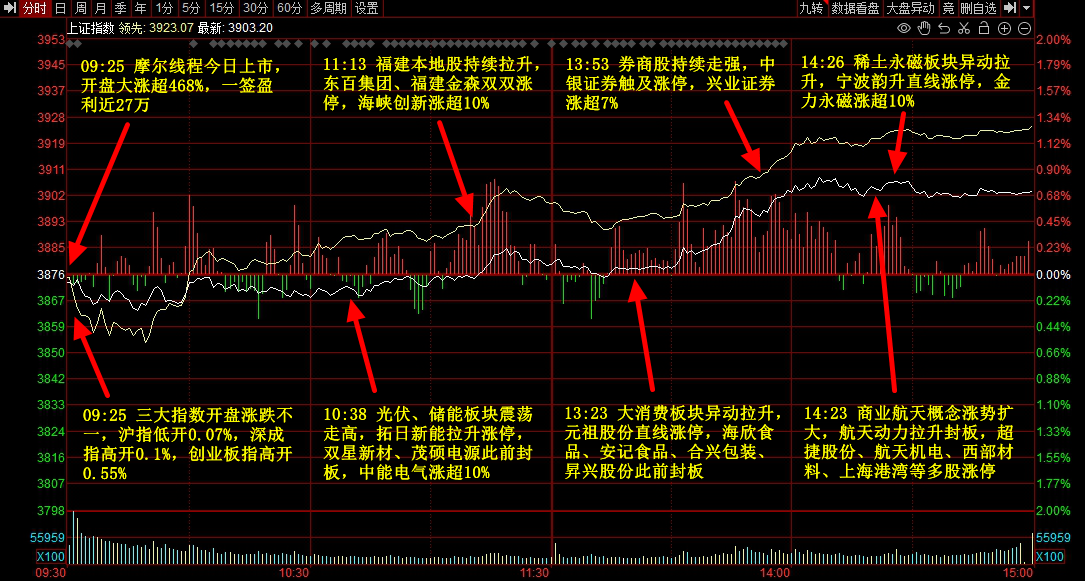
Market Overview - The market experienced a collective rebound, with the Shanghai Composite Index, Shenzhen Component Index, and ChiNext Index rising by 0.7%, 1.08%, and 1.36% respectively, and over 4,300 stocks advancing while less than 1,000 declined [1] - The total trading volume exceeded 1.7 trillion [1] Aerospace Sector - The aerospace sector showed strong performance, with stocks like Tianjian Technology, Chaojie Co., Shanghai Port Bay, Aerospace Science and Technology, Aerospace Power, and Aerospace Development hitting the daily limit [1] - Other notable gainers included Sry New Materials and Qian Zhao Optoelectronics, which rose over 10% [1] Nuclear Power and Fusion - The nuclear power and fusion sectors also saw significant activity, with stocks such as Yongding Co. and Hongxun Technology hitting the daily limit, while others like Hahai Huaton and Hezhuan Intelligent experienced strong gains [1] Financial Sector - The financial sector, including insurance and fintech, saw a sudden surge in the afternoon, with stocks like Ruida Futures and Yingshi Sheng hitting the daily limit [6] - China Pacific Insurance, China Ping An, and China Life Insurance also showed strong performance in the afternoon [6] - Financial technology and brokerage stocks rose by 2.15% and 2.27% respectively, while the insurance sector increased by 4.71% [7] Rare Earth Sector - The rare earth sector experienced a significant pulse after news that companies like Jinli Permanent Magnet and Ningbo Yunsheng received general export licenses, which will simplify export processes and accelerate delivery [11] - Stocks in this sector, including Jinli Permanent Magnet and Ningbo Yunsheng, saw substantial gains, with Jinli rising over 15% and both Ningbo and Zhongke Sanhuan hitting the daily limit [11] Thematic Stocks - Various thematic stocks showed collective strength, with the forestry sector rising by 5.71% and notable gainers including Fujian Jinsen and Pingtan Development [13] - The aerospace and nuclear fusion sectors also saw significant increases, with stocks like Longguang Huaxin and Chaojie Co. hitting the daily limit [14]



再次领涨A股!这一板块涨幅创一年新高
第一财经· 2025-12-05 10:26
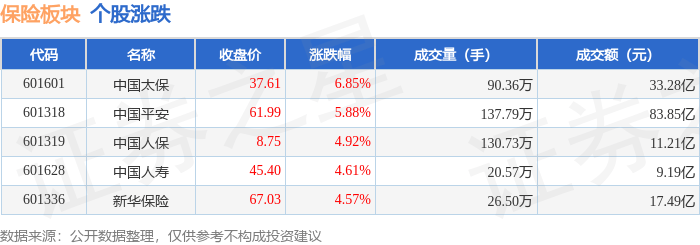
Core Viewpoint - The article highlights a significant rally in the insurance sector of the A-share market, driven by regulatory changes that lower risk factors for long-term holdings, encouraging insurance companies to invest more in the stock market and support technological innovation [4]. Market Performance - On December 5, the A-share market saw over 4,300 stocks rise, with the Shanghai Composite Index closing at 3,902.81 points, up 0.7%. The Shenzhen Component Index rose by 1.08%, the ChiNext Index by 1.36%, and the North 50 by 1.52%. The total trading volume for the day was 1.74 trillion yuan [3]. - The insurance sector experienced a strong performance, with all major insurance stocks rising over 4.5%. The Wind Insurance Index surged by 5.8%, marking its highest increase in nearly a year [3]. Key Insurance Stocks - China Pacific Insurance (601601.SH; 02601.HK) led the gains, rising by 6.85% to 37.61 yuan per share. China Ping An (601318.SH; 02318.HK) increased by 5.88%, closing at 61.99 yuan per share after reaching a high of 62.2 yuan [3]. - Other notable performers included China Life (601628.SH; 02628.HK) up 4.61% to 45.4 yuan, and New China Life (601336.SH; 01336.HK) up 4.57% to 67.03 yuan [3]. Regulatory Impact - The National Financial Regulatory Administration announced a reduction in risk factors for insurance companies holding certain stocks for over three years, which is expected to alleviate pressure on their solvency and encourage long-term investments [4]. - The risk factor for stocks in the CSI 300 and the CSI Low Volatility Dividend 100 indices was lowered from 0.3 to 0.27, and for stocks listed on the Sci-Tech Innovation Board from 0.4 to 0.36 [4]. Insurance Sector Trends - The insurance sector's performance was initially sluggish from January to early April 2025, primarily due to high growth pressures from 2024. However, from mid-April to August, the sector rebounded, benefiting from structural market trends and expectations of changes in the upper limit of preset interest rates [4]. - Since October, the sector has seen renewed growth, driven by better-than-expected third-quarter reports [4]. Financial Metrics - Since October, major insurance companies have seen significant stock price increases: China Life up 15.18%, China Ping An up 14.33%, and China Pacific Insurance up 12.32% [5]. - The insurance industry's net assets grew from 2.7 trillion yuan at the beginning of 2024 to 3.7 trillion yuan by September 2025, indicating a return to a rapid growth trajectory. Total assets increased from 31.8 trillion yuan to 40.4 trillion yuan during the same period [5].

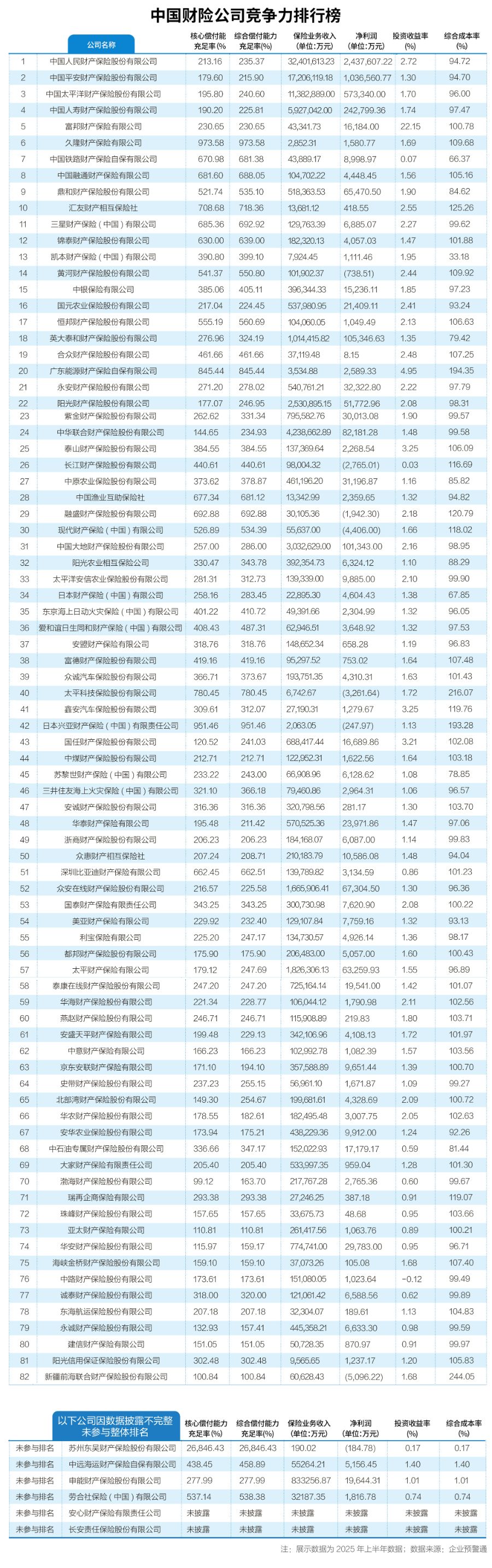
2025年中国财险公司竞争力报告发布
2 1 Shi Ji Jing Ji Bao Dao· 2025-12-05 10:05
Core Insights - The "21st Century Financial Annual Conference" recently held by Southern Finance Media Group and 21st Century Economic Report released the "China Insurance Industry Competitiveness Research Report (2025)" which evaluates the competitiveness of property insurance companies in China based on various financial metrics [1] Group 1: Report Overview - The report categorizes insurance companies into four types: life insurance, health insurance, property insurance, and pension insurance, and analyzes them based on both broad and specific metrics [1] - The evaluation metrics include core solvency adequacy ratio, comprehensive solvency adequacy ratio, insurance business income, net profit, investment return rate, and comprehensive cost ratio [1] Group 2: Competitiveness Rankings - The top property insurance companies in China for 2025 are ranked as follows: 1. China People's Property Insurance Co., Ltd. with a core solvency adequacy ratio of 213.16% and insurance business income of 32,401,613.23 million [2] 2. Ping An Property & Casualty Insurance Co., Ltd. with a core solvency adequacy ratio of 179.60% and insurance business income of 17,206,119.18 million [2] 3. China Pacific Property Insurance Co., Ltd. with a core solvency adequacy ratio of 195.80% and insurance business income of 11,382,889.00 million [2] - Other notable companies include Fubon Property Insurance Co., Ltd. and Jiulong Property Insurance Co., Ltd., with solvency ratios of 230.65% and 973.58% respectively [2] Group 3: Data Collection and Methodology - The report's data is sourced from various financial reports, solvency reports, and disclosures from the National Financial Regulatory Administration, with a cutoff date of June 30, 2025 [5] - The report acknowledges potential issues with data completeness and disclosure delays but asserts that these do not affect the overall analysis and evaluation of the industry [5]