China Life(601628)

Search documents
遵义金融监管分局同意中国人寿财险遵义市新蒲新区支公司变更营业场所
Jin Tou Wang· 2025-09-18 03:44
2025年9月10日,遵义金融监管分局发布批复称,《中国人寿(601628)财产保险股份有限公司遵义市 中心支公司关于变更中国人寿财产保险股份有限公司遵义市新蒲新区支公司营业场所的请示》(国寿财 险遵发〔2025〕165号)收悉。经审核,现批复如下: 一、同意中国人寿财产保险股份有限公司遵义市新蒲新区支公司将营业场所变更为:贵州省遵义市新蒲 新区长征大道名城地产城市综合体1-1#裙房13层(B区)。 二、中国人寿财产保险股份有限公司应按照有关规定及时办理变更及许可证换领事宜。 ...

微综艺打响“小而美”大战
3 6 Ke· 2025-09-18 03:33
Core Insights - Micro-variety shows are becoming a favored marketing tool for brands and short video platforms, moving from traditional advertising to content co-creation [1][3][4] - The rise of micro-variety shows is attributed to their ability to engage users in a fragmented attention economy, offering a new marketing strategy for brands [3][4][7] Brand Strategies - Brands like Haowang Water and China Life are launching custom micro-variety shows to enhance emotional connections and integrate product knowledge into entertaining formats [1][5][7] - The trend is shifting from sponsorship in traditional variety shows to brands taking a more active role in content creation, aiming for deeper engagement with target audiences [14][16][17] Market Trends - The overall number of variety shows has decreased by 11% year-on-year, with sponsorships down by 10%, leading brands to favor micro-variety shows due to lower costs and higher engagement potential [4][19] - Micro-variety shows typically last between 3 to 30 minutes, making them suitable for social media platforms like Douyin and Kuaishou, where short, engaging content thrives [4][9] Content Types - Micro-variety shows can be categorized into four main types: derivative shows from popular formats, celebrity reality shows, original lifestyle content, and brand-customized shows [9][12] - These shows often address social issues and emotional themes, resonating with diverse audience segments [12][18] Marketing Evolution - The marketing approach is evolving from hard advertising to content co-creation, with brands integrating their narratives into the shows [14][20] - Brands are increasingly focusing on niche markets and specific themes, allowing for targeted engagement and community building [16][18] Engagement Strategies - Successful micro-variety shows leverage social media for broader reach and audience interaction, creating a stable content asset for brands [23] - The emphasis is on creating genuine, valuable content that resonates with users, moving away from overt promotional tactics [20][23]



保险欺诈藏陷阱?中国人寿教你识破骗局、守护权益
Zhong Guo Jin Rong Xin Xi Wang· 2025-09-18 03:02
Core Viewpoint - Insurance fraud poses significant risks to consumers and disrupts the normal order of the insurance market, necessitating robust countermeasures from companies like China Life Insurance [1][4]. Group 1: Definition and Types of Insurance Fraud - Insurance fraud is defined as the act of obtaining illegal benefits through insurance contracts [3]. - Common types of insurance fraud include: 1. Fabricating insurance claims to obtain payouts 2. Exaggerating losses or creating fictitious incidents to claim insurance money 3. Intentionally causing accidents to claim insurance benefits [3]. Group 2: Impact of Insurance Fraud - The consequences of insurance fraud are multifaceted, affecting various stakeholders: - For consumers, fraud leads to delays in legitimate claims and potentially higher premiums in the future due to increased costs [4]. - For perpetrators, exposure to fraud results in legal repercussions and the obligation to repay fraudulent gains [4]. - For insurance companies, fraud increases operational costs and risks, which can hinder pricing and claims efficiency, ultimately affecting industry sustainability [4]. - For society, insurance fraud undermines trust in the insurance sector and disrupts social order, leading to a broader crisis of confidence in financial systems [4]. Group 3: Consumer Role in Preventing Insurance Fraud - Consumers are encouraged to enhance their awareness and actively participate in anti-fraud initiatives: - Providing accurate information when purchasing insurance and submitting genuine claims [5][6]. - Safeguarding personal information and using official channels for transactions to avoid scams [6]. - Reporting any suspected fraud to insurance companies or regulatory bodies to help protect others [6]. Group 4: Ongoing Commitment to Anti-Fraud Measures - China Life Insurance is committed to strengthening anti-fraud measures and ensuring consumer protection, aiming to maintain the integrity of the insurance safety net for families [7].
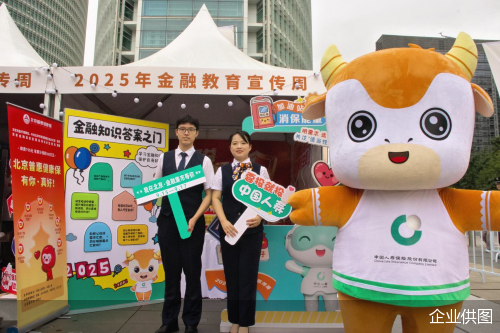
中国人寿寿险北京市分公司亮相“金融集市”,保障金融权益,助力美好生活
Bei Jing Shang Bao· 2025-09-18 02:11
Core Viewpoint - The "Financial Market" event, organized by various financial institutions including China Life Insurance Beijing Branch, aims to enhance public financial literacy and awareness of investment risks, particularly focusing on issues like investment decision risks and agent refund traps [1][3]. Group 1: Event Overview - The "Financial Market" event took place from September 15 to September 17, 2025, under the guidance of the Financial Consumer Protection Bureau of the Financial Regulatory Administration [1]. - The event was co-hosted by multiple financial regulatory bodies and institutions, highlighting a collaborative effort to promote financial education in Beijing [1]. Group 2: Interactive Activities - China Life Insurance Beijing Branch set up engaging interactive areas such as "Financial Knowledge Answer Gate" and "Stay Away from Agent Refund Declaration," making complex financial concepts accessible and enjoyable for the public [2]. - The event attracted over a thousand participants, with activities designed to combine financial education with fun, enhancing the overall experience for attendees [2]. Group 3: Consumer Protection Initiatives - The company established "Consumer Protection Energy Stations" across the city to educate the public on appropriate management, fraud prevention, and consumer rights, aiming to boost risk awareness and capabilities [3]. - A special campaign was launched to combat illegal agent refund practices, involving training and community outreach to help consumers identify and avoid financial traps [3]. - The company plans to continue enhancing financial literacy and service quality, focusing on making financial knowledge understandable and applicable for the public [3].
保险资金凸显耐心资本优势
Jing Ji Ri Bao· 2025-09-17 22:06
Core Viewpoint - The insurance industry plays a crucial role in mitigating economic risks, maintaining social stability, and enhancing livelihood security, as evidenced by the performance of listed insurance companies in their semi-annual reports [1] Group 1: Service to the Real Economy and Public Welfare - The life insurance sector is continuously enriching inclusive insurance products and services, providing essential support for healthcare, protection against loss, and elderly care [2] - China Life has engaged in over 200 major illness insurance projects and 70 long-term care insurance projects, while also launching innovative health insurance products [2] - China Pacific Insurance has increased its investment in the second pillar pension management assets to 678.3 billion yuan, a 5.1% increase from the beginning of the year [2] Group 2: Technology and Green Investments - China Pacific Insurance has increased its technology investment balance to 119.7 billion yuan, while New China Life has established a venture capital fund focused on new infrastructure and strategic emerging industries [3] - China Life has made significant investments in green sectors, including a major IPO in the renewable energy sector, while China Pacific has developed a green investment management system [3] Group 3: Market Stability through Investment - Several listed insurance companies have actively responded to calls for insurance capital to enter the market, enhancing equity allocation and investment capabilities [4] - New China Life has optimized its asset structure and participated in long-term capital market pilot reforms, establishing funds focused on high-quality listed companies [4] Group 4: A-share Market Investment Growth - China Insurance has increased its A-share investment assets by 26.1% by mid-year, with a focus on long-term investment value and stable dividend returns [5] Group 5: Investment Strategy for the Second Half of the Year - China Life remains optimistic about the A-share market, focusing on sectors such as technology innovation and advanced manufacturing for investment opportunities [6] - The company plans to maintain a flexible allocation strategy in fixed income while optimizing equity allocation towards high-dividend stocks [6] Group 6: Cost Reduction and Risk Management - The insurance industry is optimizing product structures and accelerating the development of floating yield dividend insurance products to mitigate interest rate risk [7] - New China Life has established a leadership group to promote the transformation of dividend insurance, achieving significant results in premium growth [8] Group 7: Asset-Liability Management - New China Life is enhancing its asset-liability matching capabilities by diversifying its fixed income portfolio and reducing reinvestment risks [9] - China Life has successfully narrowed the effective duration gap of its new business to 1.5 years, demonstrating effective interest rate risk management [9][10]


看好就是买买买 中国平安“扫货”3只金融股H股
Zheng Quan Shi Bao· 2025-09-17 19:23
Core Viewpoint - China Ping An has significantly increased its holdings in both insurance and banking stocks since September, indicating a strong investment strategy in the financial sector [1][2][4]. Investment in Insurance Stocks - On September 11, China Ping An's subsidiary, Ping An Life, purchased 77.8092 million shares of China Pacific Insurance (China Taibao) H-shares, raising its holding from 8.47% to 11.28%, with an estimated investment of approximately HKD 2.5 billion [2][3]. - The buying spree began in August, with an initial purchase of 1.7414 million shares, which increased the holding to 5.04% [2]. - The total investment in China Taibao H-shares since August has exceeded HKD 5 billion, with a significant increase in holding percentage by 6.24 points [2][3]. - Ping An Life also increased its stake in China Life H-shares by acquiring 44.095 million shares for over HKD 1 billion, raising its holding to 8.13% [3]. Investment in Banking Stocks - China Ping An has continued to invest in banking stocks, purchasing 40.213 million shares of Agricultural Bank H-shares and 12.381 million shares of Postal Savings Bank H-shares, raising their holdings to 18.07% and 16.01%, respectively [4][5]. - The company has adopted a "bulk buying" strategy for both banking and insurance stocks, indicating a strong bullish outlook on these sectors [4][6]. - The total expenditure on banking stocks this year has surpassed HKD 100 billion [4]. Market Context and Strategy - The continuous increase in holdings reflects a broader trend of insurance companies entering the market, with a reported 26.69% increase in stock holdings by life insurance companies since the beginning of the year [6]. - The low interest rate environment and new financial regulations have prompted insurance companies to seek high-dividend stocks to enhance investment returns [6][7]. - Regulatory support has facilitated the entry of long-term funds into the market, allowing companies like China Ping An to focus on stable, high-dividend stocks [6][7].



保险板块9月17日涨0.32%,中国人寿领涨,主力资金净流出13.29亿元
Zheng Xing Xing Ye Ri Bao· 2025-09-17 08:52
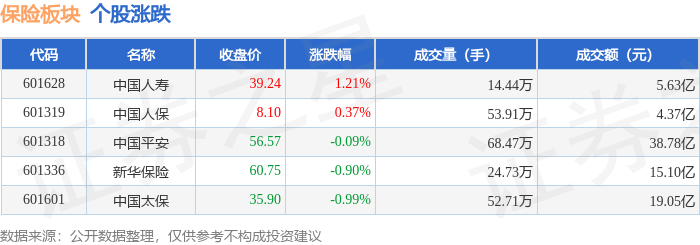
以上内容为证券之星据公开信息整理,由AI算法生成(网信算备310104345710301240019号),不构成投资建议。 证券之星消息,9月17日保险板块较上一交易日上涨0.32%,中国人寿领涨。当日上证指数报收于 3876.34,上涨0.37%。深证成指报收于13215.46,上涨1.16%。保险板块个股涨跌见下表: | 代码 | 名称 | 收盘价 | 涨跌幅 | 成交量(手) | 成交额(元) | | --- | --- | --- | --- | --- | --- | | 601628 | 中国人寿 | 39.24 | 1.21% | 14.44万 | 5.63 乙 | | 601319 | 中国人保 | 8.10 | 0.37% | 53.91万 | 4.37亿 | | 601318 | 中国平安 | 56.57 | -0.09% | 68.47万 | 38.78亿 | | 601336 | 新华保险 | 60.75 | -0.90% | 24.73万 | 15.10 Z | | 601601 | 中国太保 | 35.90 | -0.99% | 52.71万 | 19.05亿 | 从资金流向上来看 ...

聚焦金融知识普及,守护群众财产安全——中国人寿财险山东省分公司开展“保障金融权益 助力美好生活”宣传活动
Qi Lu Wan Bao· 2025-09-17 08:22
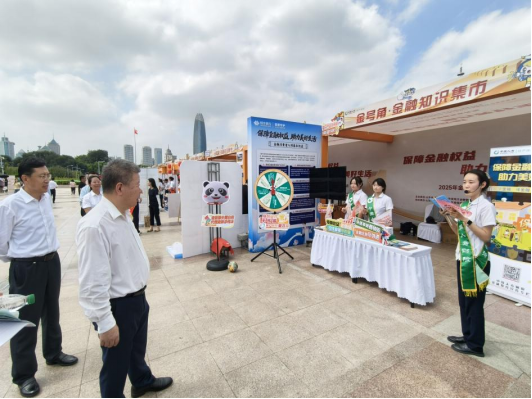
齐鲁晚报˙齐鲁壹点记者闫明 通讯员郑彦 崔广勋报道 2025年9月15日,由国家金融监督管理总局山东监管局组织的"保障金融权益 助力美好生活"主题宣传活 动在济南市泉城广场举行。本次活动旨在积极践行以人民为中心的发展思想,提升社会公众金融素养和 风险防范意识。中国人寿财险山东省分公司作为重要参与单位,积极响应监管要求,通过多种形式开展 金融知识普及教育,助力构建和谐金融环境。 参加活动的中国人寿财险山东省分公司分管客管/消保工作的负责人在接受采访时表示,公司要始终坚 持以"客户为中心",持续优化金融服务,切实保护消费者合法权益。要进一步发挥基层机构力量,推动 金融知识下沉县域、走进社区、走进乡村,使金融教育真正贴近百姓需求,为提振消费信心、服务美好 生活注入金融动能。 此次活动的开展,不仅强化了公众对金融风险的认识,也展现了山东国寿财险主动履行社会责任、护航 民生发展的企业担当。未来,公司将继续依托专业优势和网络覆盖,为广大人民群众提供更加安全、便 捷、优质的金融服务,为构建健康稳定的金融生态贡献力量。 活动当天,泉城广场秋高气爽,游人如织。中国人寿财险山东省分公司通过设立宣传展台、播放金融知 识宣传视频、发 ...
中国人寿财险济宁市中心支公司科技赋能护航秋粮生产——让“丰收在望”变为“粮食满仓”
Qi Lu Wan Bao· 2025-09-17 08:22
Core Viewpoint - The company is actively implementing measures to enhance autumn grain production, utilizing advanced technology and agricultural insurance to mitigate risks and ensure food security [3][5][7]. Group 1: Company Initiatives - The company has invested several hundred thousand yuan to establish a professional flying defense team and purchase pesticides and plant growth regulators for pest control in autumn grain crops [3][5]. - A total of 23,000 acres have been treated using advanced DJI T50 drones, effectively controlling major pests and diseases, thereby promoting crop growth and maturity [3][5]. - The company has provided risk protection for 210,000 farming households, amounting to 1.91 billion yuan in food safety risk coverage this year [9]. Group 2: Collaboration and Technology - The company has signed a strategic cooperation agreement with the Jining Meteorological Bureau to establish a data-sharing mechanism for precise weather forecasting and early warning services [9]. - Utilizing meteorological satellite remote sensing data, the company monitors crop growth and soil moisture conditions to enable early detection and response to potential disasters [9]. - The company aims to expand the promotion of various insurance types, including meteorological index insurance and income supplement insurance, to provide comprehensive risk protection for autumn grain [9]. Group 3: Agricultural Insurance Focus - As a key provider of policy agricultural insurance, the company has undertaken risk coverage of 1.448 billion yuan for three major grain crops this year [7]. - The company emphasizes the importance of agricultural insurance services in stabilizing grain production and is committed to transitioning from post-disaster compensation to pre-disaster prevention [9]. - The company is enhancing service efficiency and accuracy through technology and expert guidance, ensuring high satisfaction among farmers [7].

“买买买”!平安“扫货”3只金融股
券商中国· 2025-09-17 05:58
Core Viewpoint - China Ping An is actively increasing its holdings in both insurance and banking stocks, indicating a strategic investment approach in the current low-interest-rate environment [1][7]. Group 1: Investment in Insurance Stocks - On September 11, China Ping An purchased 77.8092 million shares of China Pacific Insurance (H shares), raising its stake to 11.28% from 8.47% [2][3]. - The total investment in China Pacific Insurance since August has exceeded 5 billion HKD, with a significant increase in holdings over the month [4][6]. - China Ping An's strategy includes a series of incremental purchases, starting from an initial stake of 5.04% on August 8, which has now grown substantially [3][4]. Group 2: Investment in Banking Stocks - China Ping An has also been active in acquiring banking stocks, including 40.213 million shares of Agricultural Bank of China (H shares), increasing its stake to 18.07% [2][7]. - The company has invested over 100 billion HKD in banking stocks this year, reflecting a strong commitment to this sector [7]. - The investment strategy appears to be a "bulk buying" approach, focusing on stable and high-dividend yielding assets [7][8]. Group 3: Market Context and Strategy - The low-interest-rate environment and the implementation of new accounting standards have increased the demand for insurance companies to enhance investment returns through equity investments [7][8]. - Analysts suggest that the investment in insurance stocks by insurance funds is a continuation of a strategy to allocate more to high-dividend stocks under current market conditions [8][10]. - The overall trend shows a significant increase in equity investments by insurance companies, with a reported 25% growth in stock and fund investments year-on-year [10][11].