
GWMOTOR(601633)

Search documents
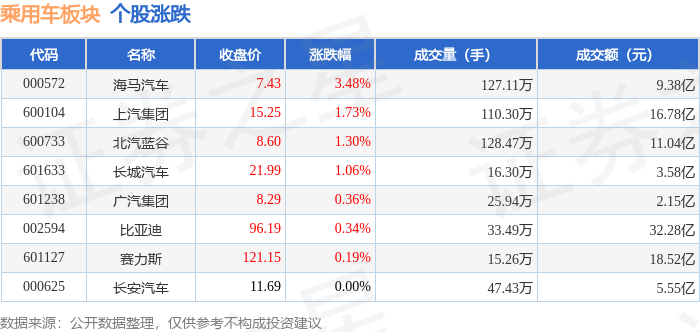
乘用车板块1月19日涨0.68%,海马汽车领涨,主力资金净流入6355.93万元
Zheng Xing Xing Ye Ri Bao· 2026-01-19 08:52
Group 1 - The passenger car sector increased by 0.68% on January 19, with Haima Automobile leading the gains [1] - The Shanghai Composite Index closed at 4114.0, up 0.29%, while the Shenzhen Component Index closed at 14294.05, up 0.09% [1] - Key stocks in the passenger car sector showed varied performance, with notable increases in stocks like Haima Automobile (3.48%) and SAIC Motor (1.73%) [1] Group 2 - The net inflow of main funds in the passenger car sector was 63.56 million yuan, while retail investors experienced a net outflow of 45.99 million yuan [1] - Haima Automobile had a significant main fund net inflow of 73.46 million yuan, while retail investors saw a net outflow of 86.47 million yuan [2] - BYD experienced a net outflow of 88.17 million yuan from main funds, indicating a negative trend in investor sentiment [2]






打破边界,长城归元平台压根没想过“随大流”
财联社· 2026-01-19 08:06
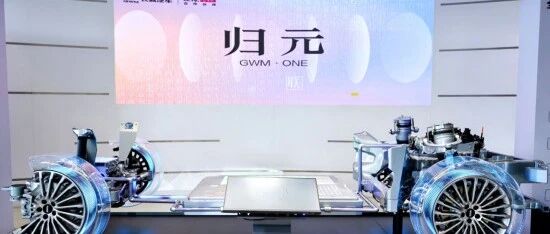
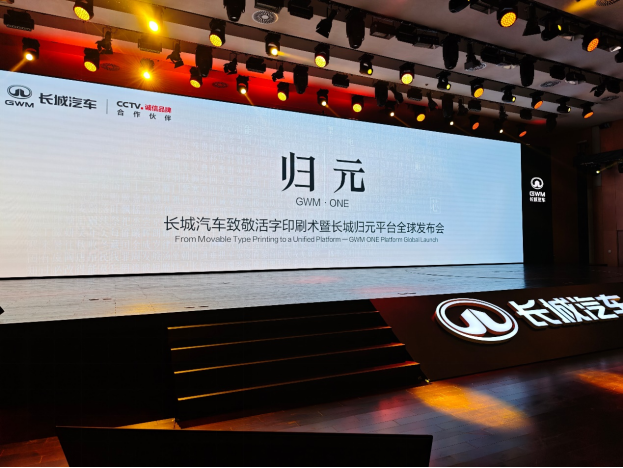
中国汽车工业飞速发展,新能源汽车市场渗透率持续攀升,行业竞争开始进入 "架构博弈"的关键 阶段。长城汽车凝聚多年造车积淀与全产业链技术储备,正式发布全球首个原生AI全动力平台 ——归元平台。这一平台借鉴"活字印刷"智慧,以全动力兼容、原生AI赋能、全栈自研为核心 优势,破解用户用车痛点,重塑了汽车产业竞争逻辑,并为中国汽车从"规模领先"向"价值引 领"转型注入了关键动力。 架构革新,构建全场景适配能力 中国汽车工业技术发展速度值得肯定,但诸多车企在架构打造方面喜欢 "随大流",动力形式 碎片化、智能功能割裂、研发周期冗长等现实情况,依然束缚着架构的进一步升级。长城此次 发布的归元平台以SOA为核心的底层革新,从根本上重构了汽车的技术逻辑。传统汽车"分布 式功能架构"下各系统壁垒森严、数据难以互通的局限,归元平台创新性地将整车颗粒化为 300多个可复用的功能单元,借鉴"活字印刷术"的古老智慧,通过全栈标准化的服务契约体 系,实现了跨车型自由调用、跨场景无缝协同。 归元平台被称为 "汽车界的活字印刷术",主要是因为其底层逻辑与"活字印刷术"具有一定的 相通性。这一平台依托SOA架构构建底层语言,将原子化能力贴上2 ...
长城汽车发布归元平台首款旗舰SUV预告图
Zhong Guo Zhi Liang Xin Wen Wang· 2026-01-19 06:15
Core Insights - The Great Wall Motor's "Return to Origin" platform was launched on January 16, featuring core characteristics of "one vehicle with multiple powertrains, one vehicle with multiple categories, and one vehicle with multiple forms" [2] - The new flagship SUV from the Wey brand is expected to be named "Hujue," with an estimated length of nearly 5.3 meters and a 2+2+2 six-seat layout, incorporating ASL intelligent body and VLA large model technology [2] - The vehicle is anticipated to be equipped with an air suspension system, enhancing the technological feel and ride quality as a flagship model [2] - The powertrain is expected to include a plug-in hybrid system with a 2.0T engine, achieving a 0-100 km/h acceleration time of 4.4 seconds in full electric mode and 4.7 seconds in hybrid mode [2]

长城归元平台,汽车界的“活字印刷术”
Di Yi Cai Jing· 2026-01-19 04:34
Core Insights - The rise of China's automotive industry brings both speed and hidden risks, with Great Wall Motors launching the Guiyuan platform to redefine the relationship between technological innovation and user value [1][4] - The Guiyuan platform innovates by breaking traditional mechanical thinking, creating the world's first native AI all-power platform, which allows for a modular approach to vehicle design [2][4] Technological Innovation - The Guiyuan platform features over 300 reusable functional units, akin to movable type in printing, enabling seamless collaboration across different vehicle models and scenarios [2][4] - The platform's architecture allows for a "disassemble, configure, and evolve" approach, emphasizing user experience and cultural relevance in automotive design [4][12] User Experience Enhancements - The platform addresses evolving consumer expectations by offering comprehensive adaptability across various driving scenarios, moving beyond the traditional utility of vehicles [5][6] - It supports five powertrain types: plug-in hybrid, intelligent hybrid, pure electric, efficient fuel, and hydrogen fuel, showcasing industry-leading capabilities [6][8] Performance and Efficiency - The platform includes advanced components such as an 800V high-voltage electrical architecture and a 2.0T efficient hybrid engine, achieving a WLTC comprehensive range of 1393 kilometers, the highest in its class globally [8][9] - The platform's design allows for rapid charging capabilities, alleviating range anxiety for users [8][9] Safety and Intelligence - The platform incorporates a Coffee EEA 4.0 electronic architecture, enhancing the vehicle's ability to predict risks and understand user emotions, thus improving safety [9][12] - It shifts safety strategies from passive to proactive, creating a comprehensive safety chain through innovative structural and battery safety measures [9][12] Commitment to User Value - The Guiyuan platform is designed to meet user expectations for reliability and cost-effectiveness, ensuring that users can trust their vehicle investments [12][13] - The platform's architecture reduces maintenance costs and enhances the resale value of vehicles, addressing user concerns about ownership expenses [12][13] Strategic Vision - The development of the Guiyuan platform is a result of Great Wall Motors' long-term commitment to self-research and a comprehensive industry chain approach, positioning the company as a leader in the transition from a manufacturing powerhouse to a manufacturing stronghold [13][15] - The platform represents a significant shift in the development philosophy of the Chinese automotive industry, reflecting a blend of cultural heritage and modern technological capabilities [15]

长城汽车发布全球化智能整车平台:归元
Yang Shi Wang· 2026-01-19 04:17
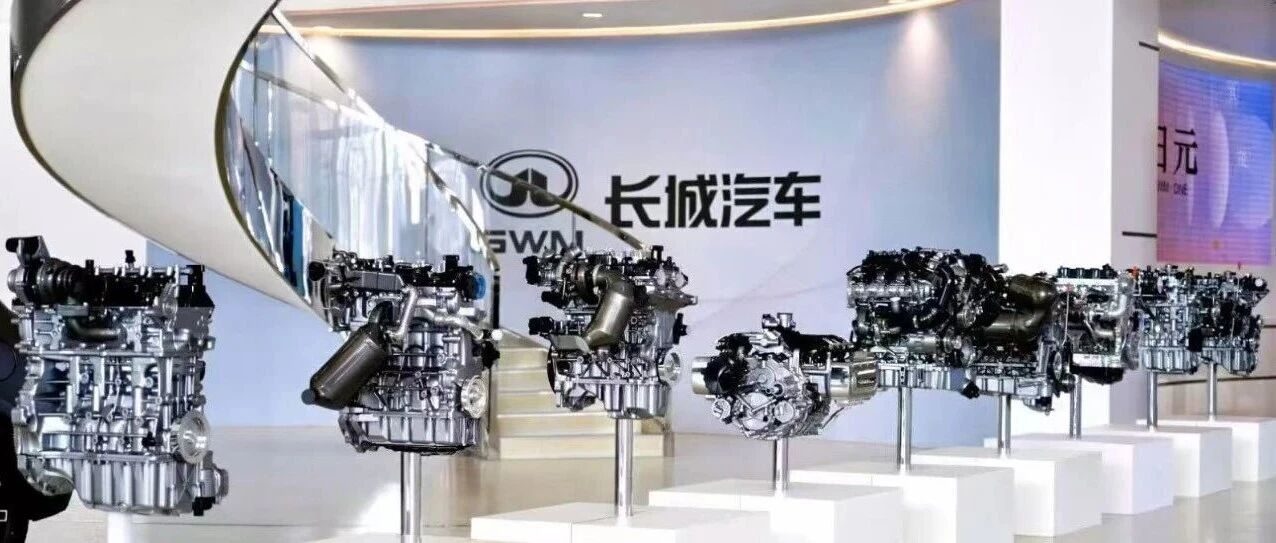
平台的核心技术能力围绕三大维度展开。在动力维度,归元平台实现了"一车多动力",成为可全面兼容插电混动(PHEV)、混合动力(HEV)、纯电 动(BEV)、高效燃油(ICE)及氢燃料电池(FCEV)五种动力形式的整车平台。这种全动力兼容性,旨在尊重全球不同市场的能源结构、基础设施和用 户偏好,为长城汽车的全球化战略提供坚实的技术底座。 近日,长城汽车发布了全新的全球化智能整车平台——归元平台,并系统阐述了其核心价值与技术理念。该平台不仅标志着长城在整车架构领域的重大 突破,也体现了其从中国传统文化中汲取智慧,以系统性创新应对全球化与电动化挑战的发展思路。 归元平台的命名与核心理念,源自对中国古代四大发明之一"活字印刷术"的深刻理解。长城汽车董事长魏建军亲赴浙江瑞安探访木活字印刷技艺,他认 为,活字印刷通过将复杂的雕版解构为标准化的字模,再根据需求灵活组合,实现了效率与个性化的统一。这一"解构与重构"、"标准化与灵活组合"的东方 智慧,正是归元平台的设计哲学。平台旨在将汽车研发从传统的"雕版"式固定思维,转变为"活字"式的模块化、柔性化体系,构建"可拆、可配、可进化"的 底层架构,以更高效的方式响应全球市场的多元 ...
长城归元平台,汽车界的“活字印刷术”
第一财经· 2026-01-19 03:45
Core Viewpoint - The rise of China's automotive industry brings both speed and hidden risks, with Great Wall Motors launching the "Guiyuan" platform that aims to redefine the relationship between technological innovation and user value, embodying the company's commitment to "technology is inherently good" [1][12]. Group 1: Innovation and Technology - The Guiyuan platform innovates by breaking traditional mechanical thinking of "power + chassis + body," creating the world's first native AI all-power platform, likened to the "movable type printing" in the automotive industry [3][5]. - The platform decomposes the vehicle into over 300 reusable functional units, allowing for cross-model and cross-scenario collaboration through a standardized service contract system, enhancing user experience [3][5]. - The architecture of the Guiyuan platform is designed to be "removable, configurable, and evolvable," representing a unique "living car manufacturing technique" that transcends the single concept of a platform [5][13]. Group 2: User Experience and Value - The Guiyuan platform addresses evolving consumer expectations by offering comprehensive power coverage, including plug-in hybrid, intelligent hybrid, pure electric, efficient fuel, and hydrogen power, thus moving beyond the limitations of traditional vehicle power strategies [7][9]. - The platform features significant upgrades, such as the "Super Hi4" system, which includes an 800V high-voltage electrical architecture and a 2.0T efficient hybrid engine, achieving a WLTC comprehensive range of 1393 kilometers, the highest in its class globally [9][10]. - The platform's intelligent and safety upgrades utilize advanced electronic architectures and AI to enhance user interaction and safety, shifting from passive to proactive safety measures [10][12]. Group 3: Cost Efficiency and Sustainability - The Guiyuan platform is designed to meet user demands for cost-effective ownership, with a focus on reducing maintenance costs and increasing the resale value of vehicles through high reliability and low operational costs [12][15]. - The platform's development is rooted in a long-term strategy of self-research and full industry chain collaboration, positioning Great Wall Motors as a strong player in the transition from a manufacturing power to a manufacturing stronghold in the automotive sector [13][15]. Group 4: Cultural and Industry Impact - The launch of the Guiyuan platform signifies a profound innovation in the development philosophy of the Chinese automotive industry, reflecting the deep cultural heritage and manufacturing strength of China [15]. - The platform not only aims to enhance user experience but also serves as a new paradigm for innovation in the automotive industry, encouraging a shift away from blind imitation of Western technologies [5][15].
国产旗舰SUV上新,6座布局,车长5米3,搭VLA大模型,问界M9和理想L9该急?
Xin Lang Cai Jing· 2026-01-19 01:20
Core Insights - The new SUV from Great Wall Motors, potentially named "Hujue," is the first model on the new "Guiyuan" platform, featuring a 2.0T plug-in hybrid system and a 6-seat (2+2+2) layout [1][17]. Design and Features - The new model is expected to have a large SUV size with a distinctive design, including a closed grille and a large lower intake grille, along with a roof-mounted lidar for advanced driving assistance [4][15]. - The side profile emphasizes a sleek and rounded design, similar to the Li Auto L9, with a length of 5.3 meters and 21-inch multi-spoke wheels [7][15]. - The rear design includes a high stance with a spoiler and a continuous taillight design, aiming for a premium feel [6][17]. Performance Specifications - The vehicle is anticipated to achieve 0-100 km/h in 4.4 seconds when fully charged and 4.7 seconds in a depleted state, with an electric range exceeding 400 km and a rapid charging capability of 200 km in just 5 minutes [6][17]. Platform Overview - The "Guiyuan" platform aims to introduce five powertrain types, seven vehicle categories, and over 50 global models, covering a wide range from non-bearing to bearing body structures and various vehicle classes [6][19]. - It features a highly modular architecture with 49 core modules and 329 shared components, allowing for flexible vehicle assembly and unique software functionalities [11][21]. - The platform boasts an 80% parts commonality and a 30% reduction in development time, enhancing supply stability and cost-effectiveness [13][21].

一套架构,全域兼容 长城汽车发布归元平台
Zhong Guo Zhi Liang Xin Wen Wang· 2026-01-18 13:48
Core Viewpoint - The launch of the "Guiyuan" platform by Great Wall Motors emphasizes a return to the essence of the automotive industry through a technology-driven approach, aiming to simplify complex technologies and enhance user experience [1][15]. Group 1: Platform Overview - The Guiyuan platform is inspired by the Chinese invention of movable type printing, focusing on modular, combinable, and efficient production methods that significantly reduce costs and time [3]. - It features a structure that allows for the decomposition of hardware into 49 core modules and 329 common components, enhancing the platform's scalability and adaptability [5]. - The software architecture is based on SOA, with over 2,000 standardized atomic capability tags, transforming hardware capabilities into a resource pool that can be easily accessed and utilized by AI [5]. Group 2: Powertrain Compatibility - The platform supports five powertrain types: PHEV, HEV, BEV, FCEV, and ICE, showcasing its versatility to meet diverse global market energy structures and user needs [7]. Group 3: Performance Metrics - The Super Hi4-PHEV achieves a pure electric range of 363 kilometers and accelerates from 0 to 100 km/h in 4.4 seconds, with a fuel consumption as low as 6.3L/100km [9]. - The high-capacity HEV features a significant acceleration improvement of 12% and a 14.4% reduction in fuel consumption [9]. - The 900V high-voltage BEV can be charged in just 10.5 minutes, while hydrogen models leverage self-developed fuel cell technology [9]. Group 4: AI Integration - The platform incorporates a native AI system that enhances vehicle intelligence, enabling features such as proactive defense and advanced driving capabilities through a comprehensive sensor network [9]. - The vehicle's AI can understand user preferences, making it a more intuitive travel companion [9]. Group 5: Safety Innovations - The Guiyuan platform adopts the "T-Safety" concept, integrating advanced safety features and materials to create a robust protective structure for vehicles [11]. - It employs a 24-hour warning system through vehicle-cloud connectivity, ensuring comprehensive safety for drivers and passengers [11]. Group 6: Research and Development - The platform is the result of over 30 years of self-research and development by Great Wall Motors, with more than 150 key components being independently controlled [13]. - A team of 23,000 engineers and significant R&D investment have optimized both development costs and timelines, creating a positive feedback loop that benefits users and enhances the automotive industry [13].
一季度整车有望反弹,零部件聚焦新产业投资:汽车行业周报(20260112-20260118)-20260118
Huachuang Securities· 2026-01-18 12:26
Investment Rating - The report maintains a positive outlook for the automotive industry, expecting a rebound in vehicle sales in Q1 and focusing on investments in intelligent driving, robotics, and liquid cooling technologies [3]. Core Insights - The automotive sector is experiencing significant dynamics, including sales, pricing, exports, and robotics developments [2]. - The report highlights that January's early sales data shows a substantial year-on-year decline, primarily due to subsidy reductions and rising vehicle prices, leading to consumer hesitation [5]. - The report anticipates that the pressure on vehicle prices will be managed through strict enforcement of anti-competitive practices, aiming to stabilize prices and profit margins [5]. - The export market is expected to grow rapidly, supported by agreements that lower trade barriers for electric vehicles, enhancing profitability for manufacturers and dealers [5]. - The robotics sector is gaining traction, with the Optimus V3 generating market excitement and expectations for product launches [5]. Data Tracking - In early January, the average discount rate remained stable, with a 9.6% increase year-on-year, and the average discount amount reached 22,259 yuan, up by 2,192 yuan year-on-year [4]. - December's wholesale vehicle sales were reported at 2.85 million units, reflecting a year-on-year decline of 8.7% and a month-on-month decline of 6.3% [4]. - Notable sales performance in December included significant year-on-year growth for new energy vehicle manufacturers like NIO and Li Auto, while traditional automakers like SAIC and Changan showed mixed results [6]. Industry News - The report discusses various industry developments, including the price commitments for electric vehicles between China and Europe, which aim to facilitate trade [27]. - The Ministry of Industry and Information Technology is focusing on enhancing the competitiveness of the new energy vehicle sector and regulating market practices to prevent price wars [27]. - Recent data indicates a significant drop in retail sales of passenger vehicles in early January, with a 32% year-on-year decline [27]. Market Performance - The automotive sector saw a weekly increase of 0.71%, ranking 8th out of 29 sectors, while the overall market indices showed mixed results [10].




汽车行业周报:2025年中国重卡销量达114.5万,加拿大将中国电动汽车配额内关税降至6.1%-20260118
KAIYUAN SECURITIES· 2026-01-18 12:01
Investment Rating - The industry investment rating is "Positive" (maintained) [1] Core Insights - The Chinese heavy truck market's total sales for 2025 reached 1.145 million units, marking a 27% increase from the previous year [5][13] - The China Automobile Association forecasts total automobile sales in 2026 to be 34.75 million units, a 1% year-on-year growth [15] - The demand for high-end luxury passenger cars in China is exceeding expectations, with a favorable competitive landscape [7] Industry News - Tesla will stop selling Full Self-Driving (FSD) after February 14, transitioning to a monthly subscription model [14] - Shanghai aims to achieve large-scale application of high-level autonomous driving scenarios by 2027 [16] - Great Wall Motors launched the world's first native AI all-power platform "Guiyuan," supporting multiple power systems [17] - Canada has reduced tariffs on Chinese electric vehicles to 6.1%, eliminating the previous 100% additional tax [18] Market Performance - The A-share automotive sector outperformed the market with a weekly increase of 0.71%, ranking 8th among A-share primary industries [25] - The passenger vehicle index decreased by 1.87%, while the commercial vehicle index increased by 5.53% [6] - The automotive parts index rose by 1.26%, with notable gains in the electric control systems and lightweight components [6][35] Investment Recommendations - For passenger vehicles, recommended stocks include JAC Motors and Seres, with beneficiaries being Geely Automobile [7] - In the parts sector, recommended stocks include Desay SV Automotive, Zhejiang Xiantong, and Meili Technology, with beneficiaries being Weichai Power and others [7]


