
GWMOTOR(601633)

Search documents
长城汽车(02333) - 2025 - 年度业绩
2026-03-27 14:06
香港交易及結算所有限公司及香港聯合交易所有限公司對本公告的內容概不負責,對其準確性或完整性亦不發表任何 聲明,並明確表示,概不對因本公告全部或任何部份內容而產生或因倚賴該等內容而引致的任何損失承擔任何責任。 長 城 汽 車 股 份 有 限 公 司 GREAT WALL MOTOR COMPANY LIMITED* (於中華人民共和國註冊成立的股份有限公司) 股份代號:02333(港幣櫃台)及82333(人民幣櫃台) 截至 2025 年 12 月 31 日止年度業績公告 長城汽車股份有限公司(「本公司」)董事會(「董事會」)欣然宣佈本公司及其子公司截至 2025 年 12 月 31 日止年度经审计業績。本公告載有本公司 2025 年年度報告全文,乃按香港聯合交易 所有限公司證券上市規則中有關年度業績初步公佈的相關規定而編制。本公司 2025 年年度報告 可于香港聯合交易所有限公司(www.hkexnews.hk)及本公司官方網(www.gwm.com.cn)閱覽。 承董事會命 長城汽車股份有限公司 公司秘書 李紅栓 重要提示 經 德 勤 華 永 會 計 師 事 務 所( 特 殊 普 通 合 夥 )審 計 , 公 ...
长城汽车(02333) - 2025 H2 - 电话会议演示
2026-03-27 14:05
年方35,开场而已 35 years young – and it is only the beginning 2026年3月 Mar. 2026 声明Disclaimer 本介绍片由长城汽车股份有限公司(「公司」)编制,只作企业通讯和一般参考之用。公司无意在任何司 法管辖区使用本介绍片作为出售和招揽他人购买公司任何证券的要约,或用作投资公司证券的决定基础。 未经咨询专业意见的情况下,不得使用或依赖此等全部资料。本介绍纯属简报性质,并非完整地描述公司、 公司业务、目前或过去的经营业绩或业务未来前景。 公司不会为本介绍片发出任何明文或隐含的保证或声明。公司特此强调,不会对任何人使用或依赖本介绍 片的任何资料(财务或其它资料)承担任何责任。 This presentation is prepared by Great Wall Motor Company Limited (the "Company") and is solely for the purpose of corporate communication and general reference only. The presentation is no ...
长城汽车(601633) - 长城汽车股份有限公司关于开展外汇衍生品交易业务的公告
2026-03-27 13:58
| 证券代码:601633 | 证券简称:长城汽车 | 公告编号:2026-028 | | --- | --- | --- | | 转债代码:113049 | 转债简称:长汽转债 | | 长城汽车股份有限公司 关于开展外汇衍生品交易业务的公告 本事项已经公司第八届董事会第四十八次会议通过,无需提交股东会审议。 本公司董事会及全体董事保证本公告内容不存在任何虚假记载、误导性陈述或者重 大遗漏,并对其内容的真实性、准确性和完整性承担法律责任。 重要内容提示: 交易目的 为进一步提高长城汽车股份有限公司(以下简称"公司"或"本公司")及子公司 (以下合称 "本集团")应对外汇波动风险的能力,更好地规避和防范本集团所面临的 外汇汇率波动风险,增强本集团财务稳健性,本集团拟开展与主营业务紧密相关的外汇 衍生品交易。 交易品种及工具 包括但不限于远期结售汇(含差额交割)、外汇掉期、货币互换、外汇期权、利率 互换、利率掉期、利率期权及其组合产品等。 交易金额、交易保证金及权利金 交易金额:本集团自董事会审议通过之日起至 2026 年年度董事会召开之日止,开 展外汇衍生品交易业务,期限内任一时点持有的最高合约价值不超过人民币 ...
长城汽车(601633) - 长城汽车股份有限公司关于开展外汇衍生品交易业务的可行性分析报告
2026-03-27 13:58
长城汽车股份有限公司 关于开展外汇衍生品交易业务的可行性分析报告 一、业务背景 交易保证金及权利金:本集团自董事会审议通过之日起至2026年年度董事会召开之 日止,预计动用的交易保证金和权利金(包括为交易而提供的担保物价值、预计占用的 金融机构授信额度、为应急措施所预留的保证金等)在期限内任一时点占用的资金余额 不超过人民币45亿元或其他等值货币。 (三)期限 长城汽车股份有限公司(以下简称"本公司")及子公司(以下合称"本集团")随 着海外业务的不断拓展,外汇收支规模也不断增长,收支结算币种及收支期限的不匹配 使外汇风险敞口不断扩大。受国际政治、经济形势等因素影响,汇率和利率波动幅度不 断加大,外汇风险显著增加。 在此背景下,为防范汇率大幅波动对本集团造成不良影响,合理降低财务费用,本 集团拟根据具体业务情况,通过外汇衍生品交易业务适度开展外汇套期保值。本集团外 汇衍生品业务交易均以正常生产经营日常贸易项下及资本项下需求为基础,以具体经营 业务为依托,遵循合法、审慎、安全、有效的原则,不进行以投机为目的的外汇交易, 不进行超出经营实际需要的复杂外汇衍生品交易,聚焦主业,以"保值"而非"增值" 为核心,尽可能 ...
长城汽车(601633) - 长城汽车股份有限公司关于购买理财产品的公告
2026-03-27 13:57
长城汽车股份有限公司 关于购买理财产品的公告 本公司董事会及全体董事保证本公告内容不存在任何虚假记载、误导性陈述 或者重大遗漏,并对其内容的真实性、准确性和完整性承担法律责任。 重要内容提示: 基本情况 | 投资金额 | 在授权有效期内购买理财产品额度为不超过 435 亿元人民币,授 | | --- | --- | | | 权有效期内任一时点的交易金额(含前述投资的收益进行再投资 | | | 的相关金额)不超过 435 亿元人民币,且资金在上述额度内可以 | | | 滚动使用 | | 投资种类 | 银行、证券公司及基金管理公司风险等级为中低风险的结构性存 | | | 款、理财及基金类产品 | | 资金来源 | 自有资金 | 已履行及拟履行的审议程序 长城汽车股份有限公司(以下简称"公司"或"本公司")于 2026 年 3 月 27 日召开第八届董事会第四十八次会议审议通过了《关于公司购买理财产 品的议案》,将本公司及其子公司(以下简称"本集团")在授权有效期内购 买理财产品额度不超过 435 亿元人民币,本事项无需提交公司股东会审议。 特别风险提示 本集团购买的产品均为风险等级为中低风险的结构性存款、理财及基 ...
营收超2228亿元!长城汽车发布2025年财报,欲将城市NOA下探至10万元级
Mei Ri Jing Ji Xin Wen· 2026-03-27 13:41
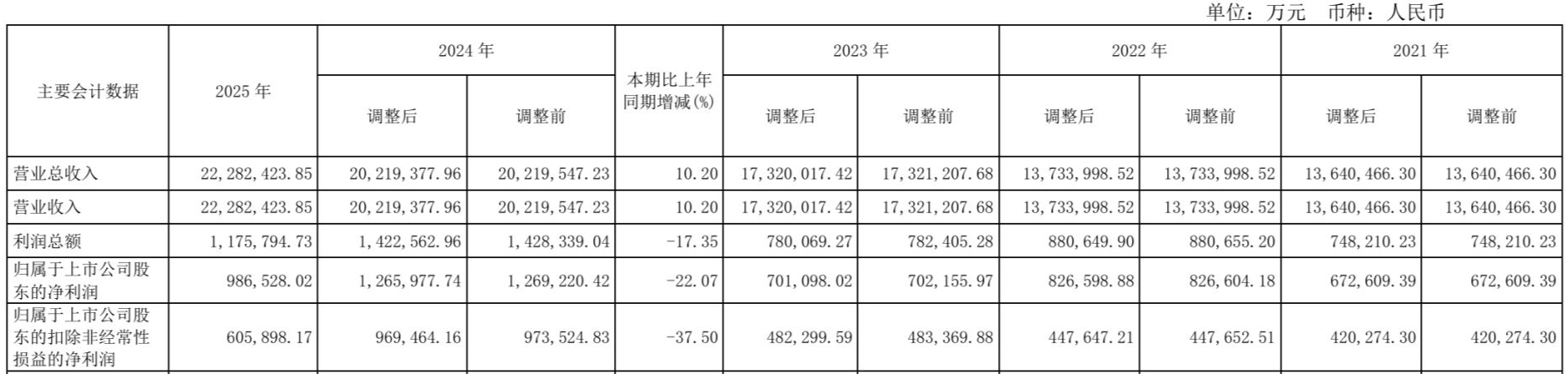
Core Viewpoint - Great Wall Motors reported a total revenue of 222.82 billion yuan for 2025, marking a year-on-year increase of 10.20%, while the net profit attributable to shareholders decreased by 22.07% to 9.87 billion yuan [1][2][3] Financial Performance - Total revenue for 2025 was 222.82 billion yuan, compared to 2024's 202.19 billion yuan, reflecting a growth of 10.20% [2] - Net profit attributable to shareholders was 9.87 billion yuan, down from 12.66 billion yuan in 2024, a decline of 22.07% [2] - Total profit for the year was 11.76 billion yuan, a decrease of 17.35% from 2024 [2] - The net profit after deducting non-recurring gains and losses was 6.06 billion yuan, down 37.50% from the previous year [2] Sales and Market Strategy - Great Wall Motors achieved new car sales of 1.32 million units in 2025, a year-on-year increase of 7.23% [3] - Overseas sales reached 506,800 units, up 11.6%, while global sales of new energy vehicles were 406,000 units, reflecting a growth of 26% [3] - The company aims to sell no less than 1.8 million vehicles in 2026, with a net profit target of at least 10 billion yuan [3] Product Development and Technology - The company plans to enhance its global strategy with a focus on different market developments for its brands, including Haval and Ora [3][5] - The Coffee Pilot 3 system will be scaled to more models, while the new Coffee Pilot 4 will be introduced in high-end vehicles [3] Risk Management - Great Wall Motors identified two main risks: international geopolitical conflicts and increased competition in the domestic market [5] - The company aims to mitigate these risks through localized operations and a diversified market strategy [5] Dividend Distribution - The company plans to distribute a cash dividend of 0.35 yuan per share to all shareholders [6]

长城汽车(02333)建议提名田雅娟为独立非执行董事
智通财经网· 2026-03-27 12:45
职工董事卢彩娟女士任期,将于2026年6月15日届满,公司职工董事将于届时召开的职工代表大会上重 新选举,新任职工董事将与本公司订立服务协议,任期自服务协议订立之日起至第九届董事会届满。 建议第九届董事会由8名董事组成。魏建军先生、赵国庆先生、李红栓女士(执行董事);何平先生(非执行 董事);新任职工董事;以及范辉先生、邹兆麟先生、田雅娟女士(独立非执行董事)。 智通财经APP讯,长城汽车(02333)发布公告,根据《公司章程》要求及本公司股东保定创新长城资产管 理有限公司提名,执行董事魏建军先生、赵国庆先生、李红栓女士,非执行董事何平先生符合资格,将 于股东周年大会上重选连任。根据本公司董事会建议,独立非执行董事范辉先生、邹兆麟先生符合资 格,将于股东周年大会上重选连任。独立非执行董事乐英女士任期已满六年,不再重选连任。本公司董 事会建议提名田雅娟女士为本公司第九届董事会独立非执行董事,以代替乐英女士,田雅娟女士愿意参 选本公司独立非执行董事,于股东周年大会获委任为董事的前提下,魏建军先生、赵国庆先生、李红栓 女士、何平先生、邹兆麟先生、范辉先生、田雅娟女士将与本公司签订服务协议,任期自2025年年度股 东 ...
长城汽车(02333) - 选举及委任董事
2026-03-27 12:18
長城汽車股份有限公司 GREAT WALL MOTOR COMPANY LIMITED* 香港交易及結算所有限公司及香港聯合交易所有限公司對本公告的內容概不負責,對其準確性 或完整性亦不發表任何聲明,並明確表示,概不對因本公告全部或任何部份內容而產生或因倚 賴該等內容而引致的任何損失承擔任何責任。 (於中華人民共和國註冊成立的股份有限公司) 股份代號:02333(港幣櫃台)及82333(人民幣櫃台) 公告 選舉及委任董事 長城汽車股份有限公司(「本公司」或「公司」)第八屆董事會將於2026年6月15日屆 滿,根據《長城汽車股份有限公司章程》(「公司章程」)第120條規定,全體現任董 事將退任。 鑒於公司第八屆董事會截至2026年6月15日屆滿,公司需重新選舉本公司董事會 (「董事會」)成員。 根據《公司章程》要求及本公司股東保定創新長城資產管理有限公司提名,執行董 事魏建軍先生、趙國慶先生、李紅栓女士,非執行董事何平先生符合資格,將於 股東週年大會上重選連任。根據本公司董事會建議,獨立非執行董事范輝先生、 鄒兆麟先生符合資格,將於股東週年大會上重選連任。獨立非執行董事樂英女士 任期已滿六年,不再重選連任。本公 ...
长城汽车(02333) - 海外监管公告
2026-03-27 12:17
香港交易及結算所有限公司及香港聯合交易所有限公司對本公告的內容概不負責,對其準確性或完整性亦不發表任何 聲明,並明確表示,概不對因本公告全部或任何部份內容而產生或因倚賴該等內容而引致的任何損失承擔任何責任。 GREAT WALL MOTOR COMPANY LIMITED* (於中華人民共和國註冊成立的股份有限公司) 股份代號:02333(港幣櫃台)及82333(人民幣櫃台) 海外監管公告 此海外監管公告是根據香港聯合交易所有限公司證券上市規則第 13.10B 條發出。以下為長城汽 車股份有限公司於上海證券交易所網站(www.sse.com.cn)所刊發之「長城汽車股份有限公司 2025年年度報告摘要」。 承董事會命 長城汽車股份有限公司 公司秘書 李紅栓 中國河北省保定市,2026 年 3 月27 日 於本公告日期,董事會成員如下: 執行董事: 魏建軍先生、趙國慶先生及李紅栓女士。 長 城 汽 車 股 份 有 限 公 司 职工董事:盧彩娟女士。 非執行董事:何平先生。 獨立非執行董事: 樂英女士、 輝先生及鄒兆麟先生。 * 僅供識別 长城汽车股份有限公司 2025 年年度报告摘要 公司代码:601633 公 ...
长城汽车(02333) - 海外监管公告
2026-03-27 12:16
香港交易及結算所有限公司及香港聯合交易所有限公司對本公告的內容概不負責,對其準確性或完整性亦不發表任何 聲明,並明確表示,概不對因本公告全部或任何部份內容而產生或因倚賴該等內容而引致的任何損失承擔任何責任。 長 城 汽 車 股 份 有 限 公 司 GREAT WALL MOTOR COMPANY LIMITED* (於中華人民共和國註冊成立的股份有限公司) 股份代號:02333(港幣櫃台)及82333(人民幣櫃台) 海外監管公告 此海外監管公告是根據香港聯合交易所有限公司證券上市規則第 13.10B 條發出。以下為長城汽 車股份有限公司於上海證券交易所網站(www.sse.com.cn)所刊發之「長城汽車股份有限公司 2025年年度報告」。 承董事會命 長城汽車股份有限公司 公司秘書 李紅栓 中國河北省保定市,2026 年 3 月27 日 於本公告日期,董事會成員如下: 執行董事: 魏建軍先生、趙國慶先生及李紅栓女士。 职工董事:盧彩娟女士。 非執行董事:何平先生。 獨立非執行董事: 樂英女士、 輝先生及鄒兆麟先生。 * 僅供識別 长城汽车股份有限公司 2025 年年度报告 公司代码:601633 公司简称: ...