
PSBC(601658)

Search documents
邮储银行新疆区分行 铺就天山脚下的金色路
Zheng Quan Ri Bao Zhi Sheng· 2025-10-11 13:36
Core Insights - Postal Savings Bank of China Xinjiang Branch is committed to fulfilling its "financial border defense" responsibilities, focusing on the strategic positioning of Xinjiang and enhancing financial support for major strategic projects and key sectors [1] Group 1: Infrastructure Development - The Urumqi Airport expansion project, a key initiative under the national "14th Five-Year Plan," is set to become the largest single construction project in Xinjiang, with a capacity of 48 million passengers and 550,000 tons of cargo annually [2] - The bank has provided a credit line of 4 billion yuan and disbursed 1.9 billion yuan in fixed asset loans to support the airport project, enhancing Xinjiang's role as a gateway for Eurasian trade [2] - The bank is actively integrating financial services with transportation projects, supporting major infrastructure like the Lanzhou-Xinjiang Railway and Tianshan Highway through tailored financing solutions [2] Group 2: Free Trade Zone Initiatives - The establishment of the China (Xinjiang) Free Trade Pilot Zone has prompted the bank to develop a work plan to enhance financial services within the zone [3] - The bank facilitated the issuance of 380 million yuan in Lotus bonds for enterprises in the free trade zone, aimed at funding key projects under the Belt and Road Initiative [3] Group 3: Agricultural Support - The bank has established a diversified financial service system to support agriculture, ensuring food security and the supply of quality agricultural products in Xinjiang [4] - Innovative loan products, such as a 3-year, 50,000 yuan unsecured loan with government interest subsidies, have been introduced to assist local herders, addressing their financial challenges [4] - The bank has launched online loan products for the cotton industry, streamlining the loan application process for farmers [4] Group 4: Future Plans - The bank plans to continue focusing on the construction of Xinjiang's "ten major industrial clusters" and enhance its financial support for the region's high-quality economic and social development [5]

邮储银行海南省分行高效服务助制造业企业“智”变
Zheng Quan Ri Bao· 2025-10-11 13:08
Core Viewpoint - The article highlights the proactive role of Postal Savings Bank of China Hainan Branch in supporting traditional manufacturing enterprises like Hainan Huajin Steel Structure Co., Ltd. in their technological upgrades and transformation towards high-quality development [2][4]. Group 1: Financial Support and Services - Postal Savings Bank of China Hainan Branch has developed innovative financial products and a comprehensive service system to provide all-around financial support for manufacturing enterprises [2]. - A specialized team was formed to assess the operational status, asset value, and technological capabilities of enterprises, leading to tailored financial service solutions [2][3]. - The bank established a "special approval channel for technology manufacturing enterprises" to enhance service efficiency and address funding challenges quickly [2]. Group 2: Case Study of Hainan Huajin Steel Structure Co., Ltd. - Hainan Huajin Steel Structure Co., Ltd. faced multiple pressures including aging equipment, technological bottlenecks, and tight cash flow [2]. - The company received a credit approval of 30 million yuan, along with preferential interest rates and a medium-to-long-term repayment plan, alleviating its financial pressure [3]. - With the financial support, the company introduced advanced robotic arms, significantly improving welding precision, and successfully overcame technical challenges related to wind resistance [3]. Group 3: Future Outlook - The Hainan Branch of Postal Savings Bank aims to deepen its financial services for manufacturing enterprises, focusing on precise product design and professional service teams to assist more companies in their transformation and contribute to Hainan's high-quality development [4].

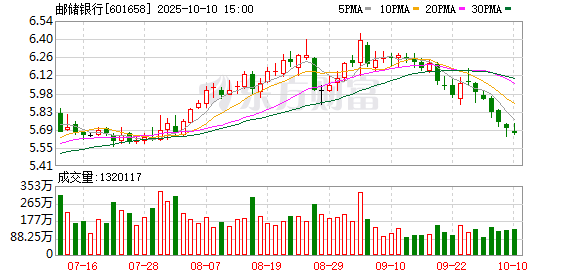
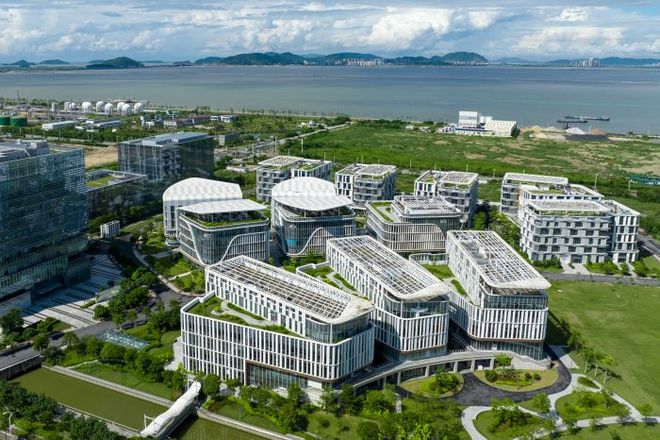
一线调研:千亿赛道竞速 广东园区成银行转型新增长极
2 1 Shi Ji Jing Ji Bao Dao· 2025-10-11 09:40
Core Insights - The article discusses the role of industrial parks in promoting high-quality economic development and how financial services are evolving to support these parks, particularly in Guangdong Province [2][3]. Group 1: Industrial Parks and Economic Contribution - Industrial parks are crucial for China's industrialization and urbanization, contributing significantly to economic and social development [3]. - As of last year, 59 industrial parks have GDPs exceeding 100 billion yuan, with Jiangsu, Guangdong, and Shandong leading in development [3]. - The Ministry of Industry and Information Technology and the National Development and Reform Commission have issued guidelines to promote the high-quality development of industrial parks [3]. Group 2: Financial Solutions for Industrial Parks - Banks are increasingly treating industrial parks as primary business units, offering integrated financial solutions that include credit, investment banking, leasing, and digital platforms [2][3]. - The shift from traditional credit models to a more integrated approach is aimed at addressing the financing challenges faced by small and medium-sized enterprises (SMEs) in these parks [4][5]. - New financing models focus on "scene-based empowerment" and "ecological collaboration," utilizing operational data as credit references and park risk control as security [4][5]. Group 3: Case Study and Implementation - A case study of Guangdong Xinbangle Technology Co., Ltd. illustrates how banks are adapting to the needs of light-asset technology companies by providing loans based on future production capacity assessments [5][6]. - The "Park Loan 2.0" initiative in Shenzhen aims to enhance financial support for SMEs by fostering collaboration among government, parks, banks, and guarantors [7][8]. - The model's success relies on the ability of parks to provide real-time operational data, reducing information asymmetry and enhancing risk management [8]. Group 4: Cross-Provincial Cooperation and Future Prospects - Cross-provincial cooperation in industrial parks is emerging, with Guangdong and Guangxi collaborating on 125 parks, generating a combined output value of 60 billion yuan [9]. - The integration of Guangdong's financial resources with Guangxi's labor and land advantages is expected to accelerate the development of industrial chains [9][10]. - The financial support for industrial parks is seen as a way to optimize resource allocation and promote high-quality economic growth in China [10].
徐州:“粮”“邮”携手聚合力 金融活水润三农
Yang Zi Wan Bao Wang· 2025-10-11 08:39
Core Insights - The meeting focused on the collaboration between financial institutions and agricultural enterprises to enhance food security and support rural revitalization through financial policies and market analysis [1][5]. Group 1: Market Dynamics - The meeting highlighted the importance of food security and collaboration between banks and enterprises, with discussions on the expected production, quality, costs, and planting area changes for the autumn 2025 rice crop [2]. - Representatives from the grain industry shared firsthand experiences and challenges, providing valuable insights for market analysis and decision-making across the supply chain [2]. Group 2: Financial Support - The Postal Savings Bank of China introduced various credit products tailored for the entire grain industry chain, including "Grain Purchase Loans" and "Grain-Post Loans," addressing financing needs from planting to processing [3]. - The bank emphasized its commitment to serving the agricultural sector by exploring innovative service models and enhancing business integration to support new operational entities [4]. Group 3: Collaborative Efforts - The meeting established a communication bridge among banks, enterprises, and farmers, facilitating information exchange and resource integration to address challenges collaboratively [5]. - The Postal Savings Bank plans to deepen cooperation with the China Grain Reserves Corporation to foster high-quality development in the grain industry and implement rural revitalization strategies [5].
三季度金融机构被罚没超10亿 四家机构收超6000万大额罚单
2 1 Shi Ji Jing Ji Bao Dao· 2025-10-11 07:54
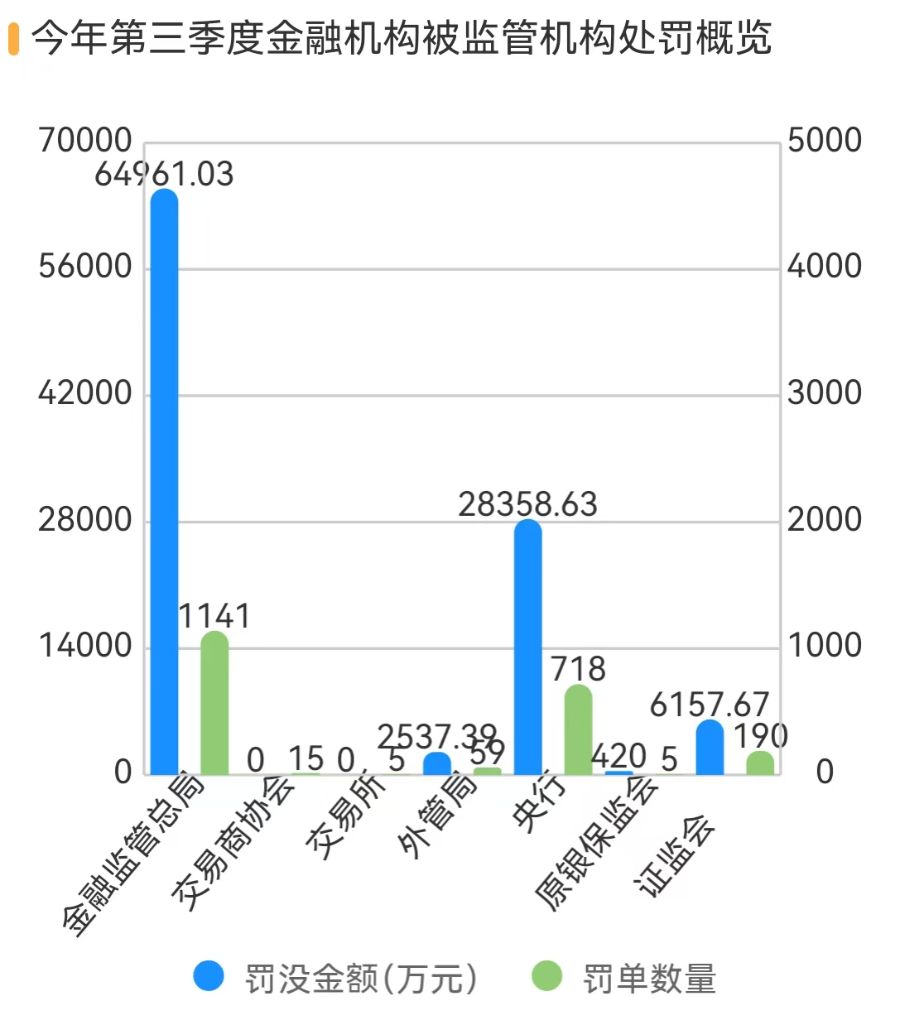
Core Insights - In the third quarter of this year, financial institutions received a total of 2,133 fines, amounting to 1.024 billion yuan, representing significant increases of 36.12% and 190.91% respectively compared to the previous quarter, and a notable rise compared to the same period last year [1] Summary by Sections 1. Penalty Situation in Q3 - The National Financial Regulatory Administration issued 1,141 fines to financial institutions in Q3, totaling 650 million yuan, with a slight decrease of 20.82% in the number of fines year-on-year, but a 46.4% increase in the total amount [2] - The central bank significantly increased its penalties, issuing 718 fines, which is a year-on-year increase of 357.32%, with a total penalty amount of 284 million yuan, also up 353.34% year-on-year [2] 2. Overall Penalty Trends - The overall penalty situation for financial institutions in the first three quarters shows a strong enforcement in Q1, a slight decline in Q2, and a resurgence in Q3 [4] 3. Breakdown by Institution Type - Banks received 1,448 fines in Q3, an increase of 18.3% year-on-year, with penalties totaling 829 million yuan, a year-on-year increase of 84.63% [7] - Insurance companies received 471 fines, with a slight increase of 7.29% year-on-year, and penalties amounting to 93.86 million yuan, up 41.57% [7] - Securities firms received 45 fines, a decrease of 30.77% year-on-year, but an increase of 40.63% compared to the previous quarter [7] 4. Major Penalties - In Q3, there were four penalties exceeding 60 million yuan, with Huaxia Bank receiving the largest fine of 87.25 million yuan for improper management of loans and regulatory data reporting [11] - Guangfa Bank received the second-largest fine of 66.70 million yuan for similar violations [12] - Hengfeng Bank was fined 61.50 million yuan for issues related to loan management and investment [13] 5. Compliance Cases - Huaxia Securities faced penalties for promoting false financial products, resulting in significant client losses [15] - Donghua Futures was penalized for improper procurement processes involving funds [14] 6. Compliance Characteristics - There has been an increase in penalties related to internet business violations, with 15 fines issued in Q3, a 275% increase from Q2 [15] - Loan misappropriation issues were prominent, with 60 related fines issued, a 130.77% increase from the previous quarter [17] 7. Penalty Rankings - In Q3, Huaxia Bank had the highest total penalty amount of 91.62 million yuan, followed by Guangfa Bank at 72.84 million yuan, and Hengfeng Bank at 65.55 million yuan [19] - Among non-bank institutions, Donghai Securities led with a penalty of 60 million yuan, followed by Huaxia Wealth Management and Guangyin Wealth Management [21]



三季度金融机构被罚没超10亿,四家机构收超6000万大额罚单
2 1 Shi Ji Jing Ji Bao Dao· 2025-10-11 07:47
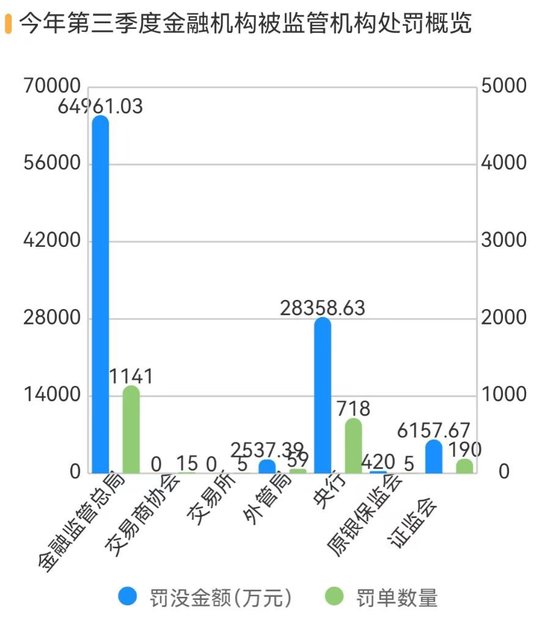
Summary of Key Points Core Viewpoint - In the third quarter of this year, financial institutions received a total of 2,133 fines amounting to 1.024 billion yuan, representing significant increases of 36.12% and 190.91% respectively compared to the previous quarter, and a notable rise from the same period last year [1]. Group 1: Penalty Overview - The National Financial Supervision Administration issued 1,141 fines totaling 650 million yuan in the third quarter, with a year-on-year increase of 46.4% in penalty amounts despite a slight decrease of 20.82% in the number of fines [1]. - The central bank's penalties surged, with 718 fines issued, marking a year-on-year increase of 357.32%, and total penalties amounting to 284 million yuan, up 353.34% [1]. Group 2: Sector-Specific Penalties - Banks received 1,448 fines in the third quarter, an increase of 18.3% year-on-year, with penalties totaling 829 million yuan, reflecting an 84.63% increase [6]. - Insurance companies faced 471 fines, a slight increase of 7.29%, with penalties amounting to 93.86 million yuan, up 41.57% [6]. - Securities firms received 45 fines, a decrease of 30.77% year-on-year, but an increase of 40.63% compared to the previous quarter [6]. Group 3: Major Penalties - Four fines exceeding 60 million yuan were issued in the third quarter, with Huaxia Bank receiving the largest fine of 87.25 million yuan for improper management of loans and regulatory data reporting [11]. - Guangfa Bank was fined 66.70 million yuan for similar violations, while Hengfeng Bank received a fine of 61.50 million yuan for issues related to loan and wealth management [11]. Group 4: Compliance Cases - Hua'an Securities faced penalties for promoting false financial products, resulting in significant client losses [12]. - Donghua Futures was penalized for improper procurement practices involving funds from its parent company [13]. Group 5: Compliance Trends - There has been a notable increase in penalties related to internet business violations, with 15 fines issued in the third quarter, a 275% increase from the previous quarter [14]. - Major banks such as Postal Savings Bank and Zhejiang Merchants Bank were penalized for improper management of internet loan operations [15]. Group 6: Loan Misuse Issues - A total of 60 fines related to loan misuse were recorded, a 130.77% increase from the previous quarter, with funds often misallocated to repay bad loans or for investment purposes [17]. Group 7: Penalty Rankings - In terms of total penalties, Huaxia Bank led with 91.62 million yuan, followed by Guangfa Bank with 72.84 million yuan, and Hengfeng Bank with 65.55 million yuan [17].
邮储银行青岛分行双补贴激活家电焕新消费热
Zhong Guo Jin Rong Xin Xi Wang· 2025-10-11 07:05
Group 1 - The core idea of the news is the successful implementation of a dual subsidy model in Qingdao, combining government incentives for replacing old appliances with bank discounts, which has significantly boosted consumer spending during the holiday season [1][2] - Qingdao's government has expanded its old-for-new appliance subsidy policy to include 12 categories, with subsidies reaching up to 2000 yuan, enhancing consumer interest in purchasing new appliances [1] - Postal Savings Bank of Qingdao has effectively integrated government subsidies with its own credit card promotions, creating a "policy dividend + financial benefit" effect that reduces shopping costs for consumers [1] Group 2 - This initiative marks the fourth old-for-new themed activity by Postal Savings Bank of Qingdao this year, demonstrating the bank's responsiveness to government policies and consumer needs [2] - The bank aims to extend its promotional efforts beyond appliances to other consumer sectors, fostering a diverse consumption ecosystem in Qingdao and contributing to the recovery of the local market [2] - The bank's promotional strategy includes a comprehensive online and offline approach, effectively communicating the benefits of the dual subsidy model to consumers, resulting in a nearly 30% increase in inquiries during the holiday period [1]
78家机构入场!集中债券借贷业务破冰,首日融券池规模破万亿
2 1 Shi Ji Jing Ji Bao Dao· 2025-10-11 06:12
Core Insights - The central clearing company and the interbank lending center launched a centralized bond lending business to enhance market efficiency and liquidity [1][8][11] - The first batch of 78 participating institutions includes a diverse range of banks and financial entities, indicating broad market engagement [2][3][4] Group 1: Business Overview - Centralized bond lending allows borrowing parties to provide collateral while borrowing bonds, with a commitment to return them on a specified date [1] - The new model aims to improve transaction efficiency by acting as a "central trading facilitator" without changing the essence of bond lending [1][9] Group 2: Market Participation - The initial participants include 5 state-owned banks, 7 joint-stock banks, 27 city commercial banks, 1 foreign bank, 15 rural commercial banks, 1 rural credit cooperative, 21 securities companies, and 1 financial leasing company [2][3] - Notable participants include major banks like Industrial and Commercial Bank of China, China Construction Bank, and the only foreign bank, Fubon Bank [2][7] Group 3: Market Impact - The bond pool exceeded 1.3 trillion yuan on the first day, covering various types of bonds, indicating strong initial interest [7] - The centralized lending model is expected to enhance market efficiency, risk management, and standardization of operations [9][10][11] Group 4: Risk Management - The centralized bond lending business introduces a central counterparty mechanism to mitigate credit risk and prevent systemic risk [12] - This model allows for centralized risk management, reducing the impact of any single participant's default on the broader market [12][13] Group 5: Participation Requirements - Eligible participants include financial institutions in the interbank bond market and foreign bank branches, with specific application procedures outlined [13] - Institutions must sign a collateral management service agreement and submit an application to participate in the centralized bond lending business [13]





集中债券借贷业务上线 首批78家机构参与
Zhong Guo Jing Ying Bao· 2025-10-11 06:12
Core Insights - The Central Securities Depository and Clearing Company and the Interbank Lending Center launched a centralized bond lending business, involving 78 participating institutions from various banking sectors [1][2] Group 1: Business Overview - The centralized bond lending business allows for a bond pool exceeding 1.3 trillion yuan, including various types of bonds such as government bonds, local government bonds, and corporate bonds [1] - The top ten institutions in the bond pool include major banks like Industrial and Commercial Bank of China and China Construction Bank [1] Group 2: Operational Mechanism - The initiative is designed to enhance risk management, improve market efficiency, and increase liquidity in the bond market [2] - It features a standardized lending product, streamlined initiation processes, and automated collateral management to meet the diverse needs of market participants [2]

邮储银行沁阳市支行开展金融教育进校园活动
Huan Qiu Wang· 2025-10-11 03:24
Core Viewpoint - Postal Savings Bank of China is actively engaging in financial education initiatives to enhance public financial literacy and promote financial rights protection, demonstrating its commitment to social responsibility [1] Group 1: Financial Education Activities - The bank organized a financial knowledge promotion event at Qinyang Foreign Language School, themed "Protecting Financial Rights, Supporting a Better Life" [1] - Employees set up promotional displays and banners at the school, providing information about the 2025 Financial Education Promotion Week and key financial knowledge points [1] Group 2: Impact and Future Plans - The event successfully raised financial awareness among students and staff, enhancing their understanding of financial risk prevention [1] - The bank plans to organize more financial education activities in the future to further improve public financial literacy and share the benefits of a better life [1]