
PSBC(601658)

Search documents
邮储银行滨州市分行多维发力强化金融支持,助推消费市场提质扩容
Qi Lu Wan Bao Wang· 2025-09-08 23:30
Core Viewpoint - Postal Savings Bank of China (601658) is actively supporting local consumption initiatives through financial services, aiming to boost the consumer market in Binzhou [1][2] Group 1: Financial Support Initiatives - The bank has developed a comprehensive plan to support the "Shopping in China" event, including exhibition preparation and staff training [1] - The bank has optimized its consumer loan products by consolidating similar offerings and launching the "Youxiang Loan," which allows for fully online applications [1] - The loan terms include a maximum duration of 7 years, with individual loans up to 500,000 yuan and credit loans up to 1 million yuan, along with periodic interest rate discounts [1] Group 2: Consumer Engagement Activities - Various consumer discount activities have been launched for savings card customers, including random discounts on WeChat transactions and specific discounts on Alipay and Taobao [2] - For credit card customers, new promotional activities have been introduced, such as "Daily Consumption Discounts," which have seen participation from 434 stores and 4,817 transactions, totaling over 27,300 yuan in subsidies [2] - The bank is leveraging multiple channels, including mobile banking apps and social media, to expand the reach of its consumer financial services [2] Group 3: Loan Performance and Future Plans - As of July 2025, the bank's non-housing consumer loan balance reached 2.041 billion yuan [2] - The bank plans to accelerate the issuance of consumer loans and enhance service scenarios to further stimulate local consumption [2]
商业银行或成房屋的最大出售方
数说者· 2025-09-07 23:33
Core Viewpoint - The article discusses the current state of personal housing loans in China, highlighting the significant role of major banks in this sector and the rising non-performing loan (NPL) rates due to a sluggish real estate market [2][3][4]. Group 1: Personal Housing Loan Balances - As of June 2025, the total personal housing loan balance in China reached 37.74 trillion yuan, with the top eight banks accounting for 73.17% of this total [2]. - The major banks' personal housing loan balances as of June 2025 are as follows: Industrial and Commercial Bank of China (ICBC) at 6.05 trillion yuan, China Construction Bank (CCB) at 6.15 trillion yuan, and Agricultural Bank of China (ABC) at 4.93 trillion yuan [3][4]. Group 2: Non-Performing Loan Rates - The NPL rate for personal housing loans at ICBC increased to 0.86% by June 2025, up from 0.73% at the end of 2024, marking a significant rise over the past five years [4][5]. - Other major banks also reported NPL rates exceeding 0.7%, indicating a widespread issue across the banking sector [5]. Group 3: Measures to Address NPLs - In response to rising NPLs, banks have increasingly turned to the securitization of personal housing loans as a means to manage these assets [8][11]. - The number of securitization projects has grown from 6 in 2020 to 29 in 2024, with 19 projects already completed in the first half of 2025 [8][13]. - The total amount of personal housing NPLs disposed of through securitization reached 70.11 billion yuan in 2024, with 49.59 billion yuan disposed of in the first half of 2025 [11][14]. Group 4: Impact on Housing Market - The increase in securitization and the corresponding rise in the number of disposed loans suggest that banks may become significant sellers of housing, potentially impacting housing prices negatively [16][26]. - The number of housing units associated with disposed NPLs reached 83,779 in the first half of 2025, indicating a substantial volume of properties being sold off [16][26].







银行集体喊话!下半年风控不放松!
券商中国· 2025-09-07 23:32
Core Viewpoint - The overall asset quality of the banking industry has remained stable and improved, with a focus on risk management and control in the second half of the year [1][2]. Group 1: Asset Quality Overview - As of mid-year, the overall asset quality of the banking industry is stable and has further improved, with 20 A-share listed banks showing a decrease in non-performing loan (NPL) ratios compared to the beginning of the year [2][3]. - Among the listed banks, Xian Bank, Qilu Bank, and Chongqing Bank reported the most significant reductions in NPL ratios, with decreases of 12, 10, and 8 basis points, respectively [4][5]. - Conversely, some banks, including Guizhou Bank and Minsheng Bank, experienced increases in their NPL ratios compared to the beginning of the year [6]. Group 2: Sector-Specific Risks - There is a notable upward trend in NPL ratios in specific sectors, particularly in corporate real estate and retail personal loans [7][8]. - Qingnong Bank reported a significant increase in its real estate NPL ratio, rising by 14.15 percentage points to 21.32%, with real estate NPLs now comprising 61.54% of its total NPLs [8]. - Guizhou Bank also saw a rise in its real estate NPL ratio, which increased by 70 basis points to 1.75% [8]. Group 3: Retail Credit Concerns - In the retail credit sector, there has been an increase in NPL ratios for personal consumption loans and credit cards, with 8 out of 14 banks reporting higher NPL ratios for credit card receivables compared to the beginning of the year [9][10]. - Chongqing Bank's credit card NPL ratio increased by 1.15 percentage points to 4.19%, while Lanzhou Bank's rose by 1.06 percentage points to 2.85% [9]. - Among 12 banks disclosing personal consumption loan NPL ratios, 7 reported increases, with notable rises from China Merchants Bank and Lanzhou Bank [10]. Group 4: Risk Management Strategies - Banks are increasingly prioritizing risk management, with several executives emphasizing the need for enhanced risk control measures and digital risk management capabilities [11][12]. - Beijing Bank plans to strengthen its provisioning efforts and improve the management of new NPLs, while ICBC expects a slowdown in the deterioration of personal consumption loans due to supportive economic policies [11]. - Industry leaders, including those from Industrial Bank and China Merchants Bank, are focusing on risk mitigation in real estate and credit card sectors, indicating a shift from high incidence to a more controlled environment [12].




国有六大行:积极落实个人消费贷贴息政策
Zheng Quan Ri Bao· 2025-09-07 16:09
Core Viewpoint - The implementation of the personal consumption loan interest subsidy policy starting September 1 has prompted several major banks to prepare for its execution, aiming to attract consumers through simplified processes and enhanced customer experience [1][2]. Group 1: Policy Implementation - Major state-owned banks, including ICBC, ABC, BOC, CCB, and PSBC, have released FAQs regarding the personal consumption loan interest subsidy, addressing consumer concerns [1]. - The cumulative interest subsidy cap for each borrower during the policy period is set at 3,000 yuan, with a maximum subsidy of 1,000 yuan for individual loans under 50,000 yuan [1]. Group 2: Automatic Recognition of Transactions - Banks like CCB and TCB have stated that loan funds will be disbursed to the borrower's selected debit card/account, with automatic recognition of transactions including POS payments, QR code payments, and online transactions [2]. - For transactions not automatically recognized, customers can submit proof of consumption for manual review to receive the subsidy [2]. Group 3: Existing Loans and Compliance - Borrowers with personal consumption loans issued before September 1, 2025, can still enjoy the subsidy if they use the funds for consumption during the policy period without needing to refinance [3]. - Banks have emphasized strict compliance measures against fraudulent activities related to loan applications and subsidy claims, with penalties for violations [3]. Group 4: Economic Impact - Analysts from CITIC Securities believe that the interest subsidy will positively impact consumer spending by reducing interest burdens and leveraging fiscal funds to enhance consumption loan leverage [3].
邮储银行(601658):2025年中报点评:业绩增速转正,PPOP高增长14.9%
Changjiang Securities· 2025-09-07 13:46
Investment Rating - The investment rating for Postal Savings Bank is "Buy" and is maintained [9]. Core Views - The bank's revenue growth turned positive at +1.5% in the first half of the year, with a net profit growth of +0.8%. The second quarter saw a significant increase in net profit growth at +4.8%, leading among state-owned banks [2][6]. - The net interest income decreased by 2.7%, primarily due to a decline in net interest margin, which dropped by 17 basis points year-on-year. The bank's net interest margin was 1.70% at the end of the first half [2][12]. - The non-performing loan ratio was 0.92%, with a slight increase of 1 basis point from the previous quarter and 2 basis points from the beginning of the year. The provision coverage ratio stood at 260%, down 6 percentage points from the previous quarter [2][6]. Summary by Sections Performance - Revenue growth turned positive at +1.5% in the first half, with Q2 showing a growth of +3.1%. Net profit growth was +0.8%, with Q2 at +4.8% [2][6]. - Net interest income decreased by 2.7%, with a decline in net interest margin impacting overall performance [12]. - Non-interest income grew by +19.1%, driven by investment banking and wealth management services [12]. Scale - Total assets and loans grew by 6.5% and 7.0% respectively compared to the beginning of the year. Retail loans increased by 1.9%, while corporate loans surged by 14.8% [12][24]. Interest Margin - The net interest margin decreased by 1 basis point to 1.70%, with a year-on-year decline of 17 basis points, the largest among state-owned banks [12][24]. Asset Quality - The non-performing loan ratio increased to 0.92%, with a new generation rate of 0.93%. Retail loans showed a higher risk, with the new generation rate rising to 1.53% [12][24]. Investment Recommendations - The bank's performance growth is leading among peers, with a current A-share/PB valuation of 0.74x and an expected dividend yield of 3.5% [12][24]. If macroeconomic conditions improve, asset quality may enhance, leading to valuation recovery, thus maintaining a "Buy" rating [12][24].
邮储银行青岛分行举办“智汇财源 聚势未来”财富交流活动
Zhong Guo Jin Rong Xin Xi Wang· 2025-09-07 11:50
Group 1 - The core idea of the article is that Postal Savings Bank of China Qingdao Branch organized a wealth exchange event for business owners, showcasing its professional service image and comprehensive service advantages [1] - The event featured two investment advisors from the head office who provided cross-disciplinary insights to business owners [1] - The Qingdao Branch plans to continue enhancing services for key customer groups, keeping pace with market trends, innovating service models, and optimizing service content to inject strong financial momentum into local economic development [1]
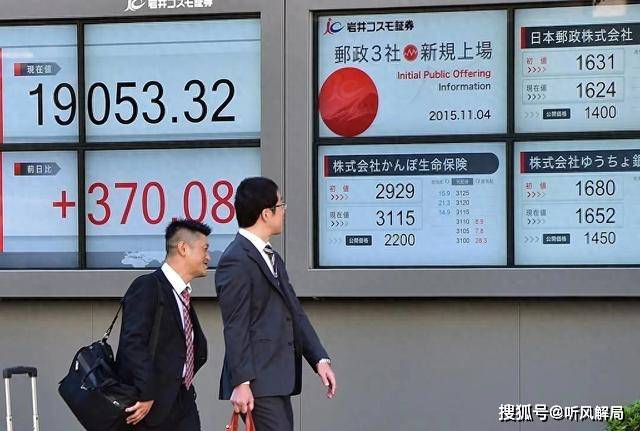
日本邮储银行重磅官宣!190万亿存款将迎数字日元时代
Sou Hu Cai Jing· 2025-09-07 10:59
Core Insights - Japan Post Bank is set to launch a digital yen (DCJPY) by the end of the fiscal year 2026, marking a significant step in the global financial industry's exploration of digital currencies [1] - The introduction of DCJPY will allow customers to exchange yen for digital yen for free, facilitating instant transactions in blockchain assets, which could drastically reduce settlement times for bonds from days to mere clicks [1][2] - The initiative is supported by DeCurret DCP, a technology firm backed by major financial groups, ensuring that each digital yen is backed by a corresponding fiat yen, combining blockchain efficiency with traditional financial stability [1] Company Strategy - Japan Post Bank aims to democratize finance by enabling quick and easy access to bond investments, particularly targeting younger demographics [2] - The bank's strategy includes a dual approach: maintaining control over the financial system through DCJPY while also fostering innovation in the stablecoin market [2] - This "sandbox + traditional finance" model may serve as a template for other countries looking to innovate in the digital currency space [2] Broader Implications - The digital yen initiative could significantly enhance financial inclusion, particularly for elderly customers in remote areas who have limited access to traditional financial services [3] - The transformation is expected to improve the efficiency of capital flow in Japan, potentially saving businesses billions of yen annually through reduced settlement times [2][3] - Challenges such as network security, anti-money laundering measures, and compatibility with traditional banking systems will need to be addressed as the project progresses [3]
太平洋给予邮储银行“买入”评级,邮储银行2025年中报点评:非息收入表现突出,负债成本优势稳固
Sou Hu Cai Jing· 2025-09-07 08:51
Group 1 - The core viewpoint of the report is that Postal Savings Bank (601658.SH) is rated as "Buy" due to its optimized capital structure, strong non-interest income performance, and good asset quality [1][1][1] Group 2 - The report highlights that the optimization of the capital structure opens new space for capital replenishment [1] - It notes that the performance of non-interest income effectively offsets the pressure from interest margin [1] - The asset quality is described as excellent, with sufficient risk compensation [1]

银行储蓄卡有“保质期”
Huan Qiu Wang· 2025-09-07 02:20
Core Viewpoint - The expiration of savings cards does not equate to account cancellation or fund freezing, ensuring the safety of user funds [2][3] Group 1: Account and Fund Safety - Expired savings cards do not affect the status of the account or the safety of funds, allowing users to continue accessing their deposits and investment services [2] - The expiration serves as a mechanism for banks to identify and manage inactive accounts, optimizing operational efficiency and resource allocation [3] Group 2: Inconveniences of Expired Cards - Expired cards can disrupt daily transactions, such as point-of-sale purchases and ATM withdrawals, as well as interrupt automatic payment services [3] - The specific limitations imposed by expired cards may vary by bank, depending on their management rules [3] Group 3: Card Replacement Process - Users are advised to monitor the expiration date on their cards and replace them promptly to avoid payment disruptions [5] - Major banks offer convenient card replacement services, including online applications and local branch support, ensuring a seamless transition to new cards [6] - Community banks are encouraged to enhance local services, such as mobile service units and home visits for elderly clients, to facilitate card replacement [6]


邮储银行赣州市分行:以绿色金融绘就“生态美产业兴百姓富”和美画卷
Zheng Quan Ri Bao Zhi Sheng· 2025-09-06 15:12
Core Viewpoint - Postal Savings Bank of China (PSBC) Ganzhou Branch is actively promoting green finance initiatives to support ecological and economic development in Jiangxi province, focusing on sustainable projects that enhance both environmental protection and local income generation [1][2][6]. Financial Support for Ecological Projects - PSBC Ganzhou Branch has established a dedicated financial service team to address the financing challenges faced by national reserve forest projects, providing a total credit of 170 million yuan, with the first loan of 100 million yuan allocated for land transfer and forest cultivation [1][2]. - The funding not only supports ecological projects but also stimulates under-forest planting, contributing to local income growth [2]. Green Industry Development - The bank's financial services align with green development, focusing on low-carbon industries such as photovoltaic power, waste incineration, and sewage treatment, with over 88 million yuan in loans issued for urban water supply projects benefiting 185,000 residents [2][5]. - PSBC has provided 75 million yuan in credit support for county-level photovoltaic energy storage projects, expected to generate over 10 million kilowatt-hours annually [2]. Support for Manufacturing Transformation - PSBC has facilitated the transformation of Jiangxi Weimian Textile Group into an intelligent manufacturing model, providing 15 million yuan in loans to overcome funding barriers and an additional 20 million yuan for new production lines [3]. - The company has achieved a 30% reduction in energy consumption and a 70% decrease in labor costs due to automation and digital upgrades [3]. Promotion of Inclusive Finance - The bank has issued over 21 billion yuan in loans to support more than 1,500 small and medium-sized enterprises, driving the transition towards low-carbon and efficient industries [4][5]. Agricultural Financing Initiatives - PSBC has supported ecological agriculture projects, providing 500,000 yuan in loans to local entrepreneurs for aquaculture, which has led to significant business growth and job creation in the community [5][6]. - The bank's agricultural loans reached 17.2 billion yuan, with nearly 7 billion yuan in inclusive agricultural loans, reinforcing the role of green finance in rural revitalization [6]. Growth in Green Financing - As of the end of July, the green financing balance of PSBC reached 2.63 billion yuan, reflecting a 52% year-on-year increase, demonstrating the bank's commitment to sustainable development [6].