
CZBANK(601916)

Search documents
银行业促消费“路线图”不断细化
Jin Rong Shi Bao· 2025-07-30 02:40
Core Viewpoint - Consumption has become a crucial engine for economic growth in China, with a series of policies aimed at boosting domestic demand and consumption being implemented this year [1]. Financial Support for Consumption - The People's Bank of China and six other departments issued the "Guiding Opinions on Financial Support for Boosting and Expanding Consumption," outlining 19 key measures to enhance financial support for consumption [1]. - Multiple banks have developed action plans to support consumption, focusing on deepening consumer scenarios, product innovation, and optimizing resource allocation [2]. Bank Initiatives - China CITIC Bank has launched a comprehensive plan combining credit support, scenario discounts, and green incentives to lower consumer costs and enhance spending willingness [2]. - Jiangsu Bank has introduced 18 measures to support consumption, focusing on enhancing consumer capacity and improving financial services [2]. Focus on Key Consumption Areas - The "Guiding Opinions" emphasize increasing financial support for key consumption areas and innovating financial products tailored to consumer scenarios [3]. - China Bank has introduced a consumer credit loan with a low interest rate and high loan limit, alongside significant tourism subsidies [3]. - Everbright Bank is promoting various consumer activities through online platforms, aiming to create a closed loop of payment, rights, and consumption [3]. Service Consumption Growth Potential - Service consumption remains a shortfall in China's consumption landscape, with the "Guiding Opinions" encouraging financial institutions to increase credit support for service sectors like retail, hospitality, and elder care [4]. - The People's Bank of China has established a 500 billion yuan service consumption and elder care relending facility to stimulate financial support for these sectors [5]. Bank Responses to Policy - Banks are quickly responding to the new policies, with examples including Construction Bank providing financing for elder care facility upgrades and Zheshang Bank supporting hotel renovations [5]. - The China Banking Research Institute anticipates that consumption growth will be driven by policy effectiveness and the release of service consumption potential in the second half of the year [5]. Recommendations for Financial Institutions - Financial institutions are encouraged to enhance their understanding of consumption support, innovate financial products, and integrate more consumer scenarios into their offerings [6]. - Banks should focus on traditional consumption upgrades, service consumption expansion, and new consumption cultivation to better meet market demands [6].






33家银行上榜《财富》中国500强 成都银行排名提升35位
Jing Ji Guan Cha Wang· 2025-07-29 09:01
Core Insights - The 2025 Fortune China 500 list shows a significant increase in the number of commercial banks, rising from 28 to 33, marking a record high [1] - Regional banks are demonstrating strong performance, reflecting the deep empowerment of China's regional economic development strategies [2] - State-owned and joint-stock banks remain the backbone of the banking sector, with total revenues of approximately $1.33 trillion and profits exceeding $266.2 billion, accounting for about 35% of the overall profits of the Fortune 500 [3] Commercial Banks Performance - The total revenue of the 33 commercial banks in the list reached approximately $1.33 trillion, with a combined profit of over $266.2 billion [3] - Major state-owned banks like ICBC, ABC, and CCB maintained stable rankings, with ICBC leading at $221.46 billion in revenue [3][4] - Joint-stock banks showed mixed results, with China Merchants Bank improving its ranking to 49th with $70.39 billion in revenue [3][4] Regional Banks Highlights - Regional banks such as Jiangsu Bank, Beijing Bank, and Ningbo Bank performed well, with Jiangsu Bank ranking 162nd with $21.88 billion in revenue [5] - Chengdu Bank emerged as the "progress king" in the banking sector, climbing 35 places to rank 324th with $6.56 billion in revenue [6][7] - New entrants like Guangzhou Rural Commercial Bank and Chengdu Rural Commercial Bank made notable debuts, ranking 354th and 383rd respectively [7] Strategic Insights - The performance of regional banks is attributed to their ability to align with local economic strategies, providing ample credit demand and diverse opportunities [2][7] - Continuous improvement in corporate governance and a focus on differentiated services are essential for regional banks to achieve long-term value growth [7]





银行股再现普涨,已有银行年内涨幅超30%,未来行情如何演绎
Bei Jing Shang Bao· 2025-07-28 09:56
Core Viewpoint - The banking sector in A-shares is experiencing a "small bull market" with 29 out of 42 listed banks showing gains as of July 28, driven by multiple positive factors and expected to present a structural market trend in the future [1][3][7] Group 1: Market Performance - On July 28, banks like Qilu Bank and Qingdao Bank saw significant intraday gains, with Qilu Bank rising over 5% and Qingdao Bank over 3% [1][3] - Year-to-date, the banking sector has shown a steady upward trend, with banks like Qingdao Bank, Shanghai Pudong Development Bank, and Xiamen Bank achieving over 30% gains [3][4] - Despite a brief fluctuation in July, the overall upward trend remains supported by low valuations and high dividend yields [3][4] Group 2: Fundamental Improvements - The banking sector's asset quality has improved significantly, with a decrease in non-performing loan ratios and stable provision coverage ratios [4][6] - The economic recovery expectations have alleviated net interest margin pressures, leading to a steady rebound in profitability [4][6] Group 3: Policy and Valuation Support - Regulatory support for the banking sector, including liquidity release and optimized regulatory assessments, has created a favorable external environment [4][5] - Long-standing low valuations of bank stocks, with price-to-book ratios generally below 1, are expected to undergo a correction as market risk appetite increases [4][5] Group 4: Capital Inflows - Continuous inflows of long-term funds, particularly from insurance capital seeking stable returns, have bolstered the banking sector [5][6] - The expansion of passive funds and foreign capital inflows since Q2 have further supported the upward movement of bank stocks [5][6] Group 5: Positive Feedback Loop - Rising bank stock prices enhance banks' financing capabilities, reducing equity financing costs and improving credit image [6][7] - The increase in core capital through convertible bonds can enhance banks' credit expansion capabilities, ultimately benefiting the real economy [7] Group 6: Future Outlook - Analysts predict a structural market trend for the banking sector, with a focus on banks with strong asset quality and profitability [7][8] - The second half of 2025 is expected to see a fluctuating upward trend in the banking sector, with particular attention on low-valuation banks and those with strong fundamentals [7][8]



浙商银行:山区海岛县贷款总额超540亿元,让金融活水润泽山海
Zheng Quan Zhi Xing· 2025-07-28 03:28
Core Insights - Zhejiang province is advancing high-quality development in mountainous and island counties, exemplified by the transformation of local farmers' livelihoods through financial support and innovative agricultural practices [1] - Zheshang Bank is committed to supporting the economic and social development of these regions by implementing tailored financial solutions and fostering local industries [1][4] Financial Support Initiatives - Zheshang Bank has launched a service plan focusing on the unique needs of mountainous and island counties, with a total loan amount of 540.96 billion yuan by June 2025, reflecting a 12% increase from the beginning of the year [1][3] - The bank has introduced over 70 "Smart Shared Prosperity Loans" products, with a cumulative loan amount of 26.24 billion yuan, aimed at enhancing local agricultural and industrial development [3] Innovative Financing Models - The bank employs digital financial products to improve traditional financing methods, facilitating quick loan approvals and disbursements to support local businesses, such as a 450,000 yuan loan to a tea factory in Lishui [2] - In response to urgent funding needs, the bank has implemented emergency response mechanisms, providing tailored financial solutions to clients like a fish farmer in Taizhou, resulting in significant income recovery [2] Industry-Specific Strategies - Zheshang Bank has developed targeted strategies for different counties based on their unique resources and industrial characteristics, such as supporting the fishing industry in Zhoushan with a 69 million yuan loan for a joint venture project [4] - The bank is also fostering collaboration between academia and local industries to enhance product development and market reach, as seen in the support for the gardenia flower industry in Xiajiang Village [4] Community Development Efforts - The bank is actively involved in rural revitalization initiatives, partnering with local governments to implement projects that promote economic growth and job creation, such as solar energy projects and e-commerce training [6] - By establishing a comprehensive financial ecosystem, Zheshang Bank aims to replicate its successful models across 108 districts nationwide, covering 22 provincial administrative regions and 47 cities [6]
固收专题报告:信用赎回可控,把握波段机会
CAITONG SECURITIES· 2025-07-28 03:23
1. Report Industry Investment Rating - No information provided in the content 2. Core Views of the Report - Anti - involution policies affect commodity prices, shock the market's inflation expectations, and cause a significant adjustment in the bond market. Credit bond yields rise with interest rates, and most credit spreads widen, with secondary and perpetual (二永) bonds showing large fluctuations and high spread increases. Fund companies with the most unstable liability ends sell significantly, while insurance companies increase their buying efforts, and bank wealth management remains relatively stable. The trading enthusiasm for medium - and long - term bonds such as urban investment bonds, industrial bonds, and 二永 bonds remains high [2]. - It is too early to worry about negative feedback, with a very low probability. Market learning has improved the ability to respond, and there has been no change in macro - expectations. Moreover, bank wealth management's increasing consideration of liquidity in its configuration can prevent negative feedback [3]. - The asset shortage pattern remains unchanged and may even intensify. Interest rates may have short - term adjustments but do not support continuous and significant adjustments. Once interest rates stabilize, credit is likely to stabilize. After the market adjustment, it will be more difficult to further compress credit spreads compared to previous lows, and credit spreads are more likely to fluctuate. Investors need to seize phased trading opportunities [4]. - Investors should focus on coupon - bearing assets, and consider both coupon and trading operations for long - term bonds. For trading strategies, medium - and long - term 二永 bonds are recommended; for allocation strategies, sinking investment in urban investment bonds is still recommended. Wait for trading opportunities for ultra - long - term bonds [5]. 3. Summary by Relevant Catalogs 3.1 Market Review: Significant Correction, Noticeable Widening of 二永 Bond Spreads 3.1.1 Market Performance - This week, the credit bond market significantly corrected, and credit spreads widened. The stock market strengthened, and the bond market significantly corrected. Credit bond yields generally rose, especially for medium - and long - term 二永 bonds, which increased by over 10bp, with the 10Y 二永 bond correcting by up to 14.5bp. Most credit spreads widened, with 二永 bonds seeing more significant increases, while spreads of some medium - and long - term notes, enterprise bonds, and urban investment bonds of certain grades slightly narrowed [10]. - From a daily perspective, urban investment bond yields generally rose, with the adjustment amplitude first increasing and then decreasing, reaching a daily correction high on Thursday. From Monday to Tuesday, long - term 二永 bonds led the yield increase, but the overall amplitude was relatively small. From Wednesday to Thursday, the yield increase continued to expand, with long - term 二永 bonds correcting by over 5bp on Thursday and short - term bonds increasing by about 4bp. The long - and short - term yields of urban investment bonds and medium - term notes also increased by 3.5bp - 5bp. On Friday, the market continued to decline, but the amplitude narrowed. Credit spreads showed a divergent trend. Affected by the different adjustment speeds of credit bonds and interest - rate bonds, the spreads of 二永 bonds, known as "interest - rate amplifiers," generally widened, while the spreads of less - liquid urban investment bonds and medium - term notes were still slightly compressed in the early stage and widened on Friday [16]. 3.1.2 Insurance Continues to Allocate, Funds Sell on a Large Scale - Insurance companies' credit bond allocation remains strong. This week, insurance companies continued to be net buyers, with a net buying scale of 12.563 billion yuan, a 38.7% increase from the previous week. The net buying volume of ultra - long - term credit bonds over 5 years was 6.75 billion yuan, with the increase intensity remaining basically the same as last week [18]. - Funds sold credit bonds significantly this week, with a selling scale of 22.578 billion yuan. The net selling volume within 5Y was 12.738 billion yuan, and the net selling volume over 5Y was 7.474 billion yuan [18]. - Bank wealth management scale slightly increased. As of July 20, the bank wealth management scale was 31.02 trillion yuan, an increase of 0.06 trillion yuan from the previous weekend. This week, the net buying scales of wealth management and other product categories for credit bonds were 15.301 billion yuan and 13.078 billion yuan respectively, with month - on - month changes of 15.80% and 39.13% [21][22]. 3.1.3 Transaction Proportion: Decrease in Low - Rating Transaction Proportion - The transaction proportion of urban investment bonds, industrial bonds, and 二永 bonds with a remaining term of over 3 years was 30%, 29%, and 72% respectively, indicating that the transaction proportion of medium - and long - term bonds remained high. For urban investment bonds, the proportion of transactions under 3 years remained basically the same as last week, with the 3 - 5Y transaction proportion decreasing by 2 percentage points and the over - 5Y proportion increasing by 2 percentage points. For industrial bonds, the proportion of transactions within 1 year decreased by 1 percentage point, the 1 - 3Y proportion decreased by 2 percentage points, and the 3 - 5Y proportion increased by 3 percentage points. For 二永 bonds, the proportion of transactions within 1 year decreased by 1 percentage point, the 1 - 3Y proportion increased by 2 percentage points, and the 3 - 5Y proportion decreased by 3 percentage points [28]. - The proportion of low - rating transactions of non - financial credit bonds decreased this week. The proportion of transactions of urban investment bonds with a rating of AA(2) and below decreased by 1 percentage point from last week, the proportion of industrial bonds with a rating of AA and below decreased by 1 percentage point month - on - month, and the proportion of 二永 bonds with a rating of AA and below decreased by 3 percentage points from last week [29]. 3.2 Market Outlook: Redemption is Controllable, Seize Trading Opportunities 3.2.1 Redemption is Controllable, Seize Trading Opportunities - Reasons for market adjustment: With the continuous implementation of anti - involution policies, commodity futures prices have risen significantly, affecting the market's inflation expectations. The Nanhua Industrial Products Index, which reflects commodity price trends, has also risen significantly. Historically, this index has a certain forward - looking predictive effect on PPI. By observing the term structure of interest - rate swaps, indicators such as IRS FR007 5 - year - 1 - year and 1 - year - FR007 have quickly turned positive, indicating a change in the market's inflation expectations [31][33]. - Regarding the concern of negative feedback: It is too early to worry about negative feedback, with a very low probability. Market adjustments in September 2024 and March 2025 were more significant than the current one, but no obvious negative feedback occurred. The key lies in the increasing consideration of liquidity in bank wealth management's configuration. Since April this year, the absolute amount and proportion of inter - bank certificate of deposit (NCD) allocation have been at historically high levels, enabling wealth management to handle market fluctuations. As long as bank wealth management remains stable, the key link of market negative feedback can be stopped [38][40]. - Analysis of tight funds: The funding situation tightened on Thursday this week, leading to a higher market adjustment amplitude. The tightening on Thursday may be due to banks' liability - side issues. From the perspective of large banks' deposit - loan spreads, the deposit - loan spreads of large banks generally decline seasonally in July. After the significant reduction of deposit interest rates in May, large banks face the pressure of term - deposit maturity transfer, resulting in relatively large liability pressure. A low deposit - loan spread means reduced stability of funding rates, which are more dependent on the central bank's liquidity injection. Any daily misalignment in the central bank's liquidity injection can significantly impact funding rates [41][42]. - Future trends: The asset shortage pattern remains unchanged and may even intensify. Interest rates may have short - term adjustments, but the current macro - environment does not support continuous and significant interest - rate adjustments. The impact of anti - involution policies on inflation expectations has been fully priced in the short term through the significant rise in commodity prices. For credit bonds, it will be more difficult to further compress credit spreads below previous lows this year. Credit spreads are more likely to fluctuate, and investors need to seize phased small - band opportunities [50][56]. 3.2.2 Science and Technology Innovation Bonds Continue to Contribute Net Financing to the Market - In July, non - financial credit bond financing performed well, with the net financing exceeding the levels of the same month in the previous two years, reaching 347.9 billion yuan. The supply of long - term credit bonds has increased. Recently, the sentiment for extending the duration of credit bonds has been positive. Although the issuance duration in July has decreased month - on - month, there is still room for extending the duration [57][59]. 3.3 What to Buy in Credit? 3.3.1 Focus on High - Grade 二永 Bonds for Trading, Weak - Quality Urban Investment Bonds for Coupon - The price - comparison of short - term 二永 bonds is positive, while that of medium - and long - term 二永 bonds is negative. Considering different investor needs, high - grade trading strategies are recommended to focus on 二永 bonds, and low - grade coupon strategies are recommended to focus on urban investment bonds. This week, the price - comparison advantage of short - term AAA second - tier capital bonds over medium - term notes remained positive, and the price - comparison of long - term AAA second - tier capital bonds with medium - term notes fluctuated around 0. The price - comparison of short - term urban investment bonds with medium - term notes is positive, and the price - comparison of long - term low - grade urban investment bonds has quickly recovered to the historical central level. Urban investment bonds still have a price - comparison advantage over medium - term notes, but the difference is not significant. Considering the bond - selection scope, urban investment bonds are still preferred [62][64]. 3.3.2 General Credit Coupon is More Advantageous - Currently, the proportion of urban investment bonds with a valuation above 2.3% is 19.8%, that of non - financial industrial bonds is 10.8%, and that of 二永 bonds is 6.8%. From the perspective of coupon - based bond selection, general credit offers a wider bond - selection space. For urban investment bonds, investors can consider both coupon and trading operations for the long - term, and can continue to participate in short - term high - coupon varieties. For industrial bonds, investors can focus on important local state - owned real - estate enterprises among real - estate developers, such as Shoukai and Jianfa Real Estate; among non - real - estate entities, focus on China Minsheng Bank, Jizhong Energy, and Bohai Bank [68][72]. 3.3.3 Statistics of Primary Issuance - Relevant data shows the weekly net financing and cumulative net financing of various credit bonds, including urban investment bonds, industrial bonds, 二永 bonds, and other financial bonds from December 30, 2024, to July 27, 2025 [77]. 3.3.4 Details of Secondary Valuation Changes - No detailed information provided in the content





金融助力县域高质量发展的定位、功能与路径—中国式现代化视域 | 宏观经济
清华金融评论· 2025-07-23 09:22
Core Viewpoint - The article emphasizes the critical role of finance in enabling high-quality development in county areas, which are essential for urban-rural integration and common prosperity in China. It advocates for a comprehensive financial empowerment system that integrates technology, application, and institutional layers to effectively support county development [2][3]. Financial Empowerment Mechanisms - Finance serves as the backbone of the national economy and is crucial for resource allocation and promoting factor mobility. It plays a key role in addressing the imbalances and inadequacies in county development, which include economic expansion alongside structural imbalances, and the need for industrial upgrades amidst factor outflows [3][6]. Industrial Promotion Function - The financial sector is vital for supporting the transformation and development of county industries. Many counties still rely on traditional, inefficient business models, necessitating better organization and resource allocation to reshape industrial chains [7]. - Digital finance enhances service efficiency and promotes collaboration among various stakeholders, leveraging big data and AI to integrate production factors with financial services. This integration helps reduce information asymmetry and drives county economic advancement [8]. Risk Mitigation Function - Counties face complex and diverse risks, making financial risk management essential for maintaining social stability. Financial institutions can enhance the resilience of industrial structures and support small and micro enterprises, thereby diversifying county economies and reducing dependency on single industries [9]. - By establishing risk-sharing mechanisms with local governments, financial institutions can alleviate pressure and improve access to financing for industries, effectively distributing risks between the government and the market [9].

24.6万亿私人银行进入存量时代
3 6 Ke· 2025-07-23 05:47
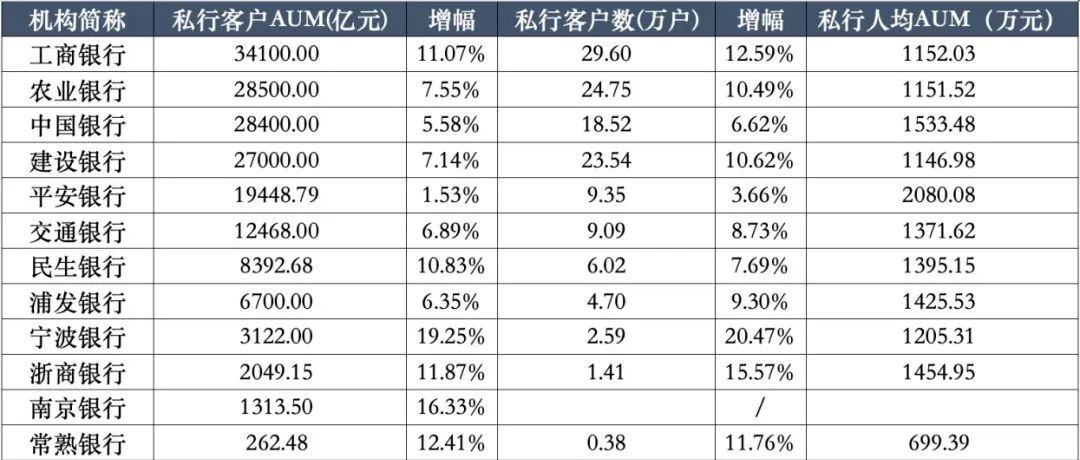
Core Insights - The private banking sector is experiencing intense competition among major banks, with a focus on high-net-worth clients and asset management growth [2][19] - Recent developments, including the "internship monetization" controversy involving Industrial Bank, have sparked discussions about the boundaries of value-added services in private banking [1][7] Group 1: Private Banking Market Overview - The total Assets Under Management (AUM) in the private banking sector has reached 24.6 trillion yuan, with many banks reporting double-digit growth in client numbers and AUM [2][6] - Major banks like Industrial Bank, Agricultural Bank, and Bank of China have surpassed 3 trillion yuan in AUM, with significant year-on-year growth rates of 18.87% and 16.73% respectively [6][12] Group 2: Client Growth and Performance - As of the end of 2024, Industrial Bank had 289,000 private banking clients, an increase of 9.9% from the previous year, while Agricultural Bank and Bank of China also reported substantial client growth [4][6] - The average AUM per private banking client varies, with Industrial Bank at 11.52 million yuan and Agricultural Bank at 11.51 million yuan [3][6] Group 3: Competitive Strategies - Banks are adopting differentiated strategies to attract high-net-worth clients, with a focus on comprehensive services that include financial and non-financial resources [9][12] - The competition is not only about asset size but also about the quality of services offered, with banks like Industrial Bank and Construction Bank emphasizing tailored solutions for entrepreneurs [14][18] Group 4: Challenges and Future Directions - The private banking sector faces challenges such as product homogenization and intense competition, which may impact the effectiveness of non-interest income growth [4][19] - Moving forward, the industry is expected to shift from a scale-oriented approach to one focused on the health of client assets, aiming for a transformation from "scale competition" to "value management" [20]
健民集团: 健民集团2025年第一次临时股东大会会议资料
Zheng Quan Zhi Xing· 2025-07-22 16:16
Group 1 - The first extraordinary general meeting of shareholders for Jianmin Pharmaceutical Group Co., Ltd. is scheduled for July 30, 2025, at 14:00 in Wuhan [1][2] - The meeting will combine on-site voting and online voting through the Shanghai Stock Exchange's shareholder meeting voting system [4][7] - The agenda includes the review and voting on the proposal to amend the company's articles of association [8][9] Group 2 - The meeting will be presided over by Vice Chairman Xu Liang, with Secretary of the Board Zhou Jie recording the minutes [1][2] - Shareholders or their legal representatives must register 30 minutes before the meeting and present necessary identification [6] - The voting process will include a break, followed by the announcement of voting results after the market closes at 15:00 [2][5] Group 3 - The proposed amendments to the articles of association aim to enhance corporate governance by removing the supervisory board and transferring its responsibilities to the audit committee [8][9] - New sections will clarify the roles and obligations of controlling shareholders and actual controllers, as well as the responsibilities of independent directors [9][21] - The amendments will also standardize the procedures for convening shareholder meetings and clarify the qualifications for directors and senior management [9][10]

银行股变奏,普涨格局下减持暗涌
2 1 Shi Ji Jing Ji Bao Dao· 2025-07-22 11:39
Core Viewpoint - The banking sector has shown strong performance in 2023, with the China Securities Banking Index rising by up to 25%, and many bank stocks reaching historical highs, prompting some shareholders to consider profit-taking through share reductions [1][2][3] Summary by Sections Bank Stock Performance - The banking sector's stocks have experienced significant gains, with 42 stocks achieving positive growth and 18 reaching new historical highs this year [1] - Qingdao Bank has seen the largest increase, with intraday gains exceeding 40% [1] Shareholder Reduction Announcements - Six banks have announced share reduction plans since May, coinciding with the peak prices of bank stocks [2][3] - China Life intends to reduce its stake in Hangzhou Bank by up to 50.79 million shares, representing 0.7% of the total shares, marking the end of its 16-year investment in the bank [2] - Other banks, such as Qilu Bank and Changsha Bank, have also announced share reductions, with Qilu Bank's major shareholder planning to sell up to 60.44 million shares [3][5] Reasons for Share Reductions - Market analysts suggest that the reductions are primarily due to shareholders seeking to lock in profits after substantial price increases [8][9] - Factors influencing these decisions include the need for asset reallocation, the high valuation of bank stocks, and potential concerns about future growth prospects [9] Ongoing Investment Interest - Despite the reductions, there is still strong interest in bank stocks, with eight banks receiving shareholder increases this year, indicating a net positive sentiment towards the sector [9][10] - Insurance companies have also been actively acquiring bank shares, further demonstrating ongoing confidence in the banking sector [10]

外汇展业改革参与银行增至22家 建设银行等6家入列
2 1 Shi Ji Jing Ji Bao Dao· 2025-07-22 09:07
Core Insights - The State Administration of Foreign Exchange (SAFE) has reported significant progress in foreign exchange business reform, with 22 banks now participating in the initiative, which aims to enhance cross-border trade and investment facilitation [1][2] Group 1: Bank Participation - The 22 participating banks include 4 large banks, 9 joint-stock banks, 4 city commercial banks, and 5 foreign banks, indicating a diverse representation across the banking sector [2] - New entrants to the foreign exchange business reform this year include major banks such as China Construction Bank and foreign banks like Standard Chartered and JPMorgan [2] Group 2: Reform Impact - The foreign exchange business reform has streamlined processes, reducing the average time for quality clients to complete foreign exchange transactions by over 50%, thus providing tangible benefits to enterprises [3] - The number of classified quality clients has increased by 23% compared to the end of 2024, with over $200 billion in cross-border payment transactions processed based on client instructions this year [3] Group 3: Policy Framework - The foreign exchange business reform is a key component of the "more integrity, more convenience" policy framework, which aims to enhance foreign exchange services for the real economy [4] - The reform includes a focus on supporting technology-driven and small enterprises, optimizing due diligence processes, and establishing evaluation mechanisms for foreign exchange management policies [4]