CCB(601939)

Search documents
消费贷贴息政策实施已逾两月 初见成效
Jing Ji Ri Bao· 2025-11-16 04:28
Core Insights - The implementation of the "Personal Consumption Loan Interest Subsidy Policy" has shown initial positive effects after over two months of execution [1] Group 1: Policy Effectiveness - Major banks have reported an increase in personal consumption loans, with China Construction Bank seeing a month-on-month and year-on-year rise in September [1] - Bank of China disbursed 47.4 billion yuan in September, which is an increase of 11 billion yuan from August and 14.7 billion yuan from September of the previous year [1] - Traffic Bank's overall consumption loan issuance grew by over 20% month-on-month in September, primarily in the household automotive and home decoration sectors [1] Group 2: Application Success Rate - Construction Bank has an application success rate of approximately 80% for interest subsidies [1] - Despite the high success rate, there are still cases that do not pass the subsidy review process, indicating some challenges in the implementation [1] - Zhejiang Commercial Bank noted a high automatic approval rate but faces specific challenges in recognition technology [1]


上市银行中期分红热潮持续:国有大行领衔 中小银行加速跟进
Huan Qiu Wang· 2025-11-16 01:37
Core Insights - A total of 8 A-share listed banks have completed their mid-term dividend distributions for 2025, with notable first-time distributions from banks like Changshu Bank, Changsha Bank, and Su Nong Bank [1][3] - Minsheng Bank leads in dividend payout with a total of 5.954 billion yuan, while other banks like Suzhou Bank, Hangzhou Bank, and CITIC Bank are set to distribute dividends next week [1][3] - The trend of mid-term dividends is shifting from an optional practice to a positive factor for smaller banks, as evidenced by Hangzhou Bank's 24.10% year-on-year increase in its dividend payout [3] Summary by Category Dividend Distribution - As of this week, 23 A-share listed banks have disclosed their mid-term dividend plans, accounting for 56.10% of the total, with a cumulative payout of 257.586 billion yuan [3] - The six major state-owned banks collectively account for nearly 80% of the total mid-term dividend payouts, with Industrial and Commercial Bank of China leading at 50.396 billion yuan [3] First-time Dividend Payouts - Seven banks, including Changshu Bank, Ningbo Bank, and Zhangjiagang Bank, have initiated mid-term dividends for the first time, with Changshu Bank distributing 0.15 yuan per share, totaling 0.497 billion yuan [3][4] - Changsha Bank's payout is 0.20 yuan per share, amounting to 0.804 billion yuan, while Su Nong Bank and Zhangjiagang Bank's first-time payouts are 0.182 billion yuan and 0.244 billion yuan, respectively [3] Future Dividend Plans - Jiangyin Bank has announced a proposed dividend of 0.10 yuan per share, pending shareholder approval [4] - Zheshang Bank's vice president indicated that the bank has distributed over 13.2 billion yuan in dividends over the past three years and is considering future dividend arrangements based on policies and industry practices [4]




陕西多向发力谱写养老金融大文章
Shan Xi Ri Bao· 2025-11-16 00:07
Core Viewpoint - The news highlights the innovative development of pension finance services in Shaanxi, showcasing how financial institutions are actively addressing the needs of the elderly population through tailored products and services [1][2][7]. Group 1: Financial Institutions' Initiatives - Postal Savings Bank staff successfully prevented a potential loss of nearly 320,000 yuan for an elderly customer by identifying a phone scam and providing timely assistance [1]. - Minsheng Bank has created a customized "Pension Hive" plan, enhancing financial support for elderly clients and filling the financial service gap for private nursing homes, with a total of 19.6389 million yuan in loans issued for the pension industry this year [2]. - Financial institutions are increasingly supporting the pension industry, with government and market collaboration driving the development of the travel and health care industry clusters [3]. Group 2: Product and Service Innovations - The "2025 Xi'an Elderly Expo" featured a live session where Bank of China representatives educated elderly clients on financial safety and personal pension account policies, receiving positive feedback [4]. - Various financial institutions in Shaanxi are innovating services for the elderly, including China Life's launch of ten commercial pension products and the introduction of "Xianyang Medical and Nursing Loan" by ICBC to address funding challenges in community hospitals [5]. Group 3: Integration of Healthcare and Elderly Care - The Taikang Qinyuan Elderly Community, a 1.5 billion yuan investment project, is a benchmark for high-end elderly care in Northwest China, integrating living, medical, and entertainment services [6]. - Financial institutions are leveraging technology to enhance service efficiency, such as the development of evaluation tools for elderly care institutions and user-friendly banking applications for seniors [6]. - Shaanxi is exploring innovative financial tools like pension trusts and reverse mortgage insurance to deepen the integration of smart elderly care and financial services [6].


多家银行出台方案优化供给——金融精准服务新型工业化
Jing Ji Ri Bao· 2025-11-15 23:03
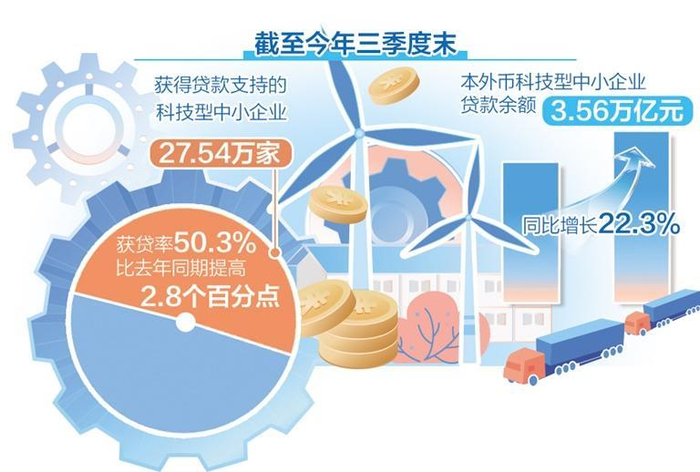
Core Viewpoint - The Chinese government is enhancing financial support for new industrialization through various banks and financial institutions, aiming to strengthen the manufacturing sector and promote technological innovation [2][3][4]. Group 1: Financial Support Initiatives - The People's Bank of China and other departments issued guidelines to accelerate financial support for new industrialization, with banks like China Construction Bank and Bank of China developing implementation plans [2]. - China Construction Bank aims to provide over 5 trillion yuan in financing to various manufacturing entities over the next three years, focusing on key areas and weak links in new industrialization [2]. - Bank of China reported a supply chain financing balance and loans to technology enterprises exceeding 2.3 trillion yuan, indicating strong growth in financial support for industrial sectors [3]. Group 2: Technological Innovation Financing - The financing support for technology-driven small and medium-sized enterprises (SMEs) has increased, with 275,400 SMEs receiving loans, achieving a loan approval rate of 50.3%, up by 2.8 percentage points year-on-year [4]. - The total loan balance for technology SMEs reached 3.56 trillion yuan, growing by 22.3% year-on-year, which is significantly higher than the growth rate of other loan categories [4]. - Banks are innovating their credit models to assess technology and team capabilities, moving towards a comprehensive financial service model for technology enterprises [4][5]. Group 3: Diversification of Financing Channels - Banks are enhancing their offerings by developing technology innovation bonds and knowledge property pledge loans, creating a service ecosystem that combines debt, equity, and platforms [6]. - China Construction Bank has actively participated in the issuance of technology innovation bonds, with the first bond launched in May, aimed at funding technology enterprises and strategic emerging industries [6]. - Bank of China has provided over 20 billion yuan in financing support for mergers and acquisitions of quality technology enterprises across various cities [6]. Group 4: Collaborative Financial Ecosystem - The construction of a technology finance ecosystem should focus on the comprehensive needs of technology enterprises, integrating resources for collaborative development [7]. - There is a call for enhancing direct financing mechanisms, particularly in stock and bond markets, to better support technology enterprises [7]. - The establishment of a market mechanism for "patient capital" is essential to attract various long-term investments to support technological innovation [7].

实施已逾两月—— 消费贷贴息政策初见成效
Jing Ji Ri Bao· 2025-11-15 21:47
Core Insights - The implementation of the personal consumption loan interest subsidy policy has shown initial positive effects, with increased loan issuance reported by several banks [1][2][3] Group 1: Policy Overview - The subsidy policy is applicable for personal consumption loans issued from September 1, 2025, to August 31, 2026, covering various consumption categories including household vehicles, education, and healthcare [1] - The policy aims to reduce interest expenses for residents and stimulate consumer spending through a combination of financial incentives [2] Group 2: Bank Performance - China Construction Bank reported a month-on-month and year-on-year increase in personal consumption loans in September, indicating a positive response to the subsidy [1] - Bank of China disbursed 47.4 billion yuan in September, an increase of 11 billion yuan from August and 14.7 billion yuan from September of the previous year [1] - Traffic Bank's consumer loan issuance grew over 20% month-on-month, particularly in the household vehicle and home decoration sectors [1] Group 3: Implementation Challenges - Construction Bank has an 80% success rate for subsidy applications, but challenges remain, such as discrepancies in invoice details and complex consumer transaction scenarios [3] - Issues like unclear invoice images and the difficulty in accurately identifying consumption transactions hinder the subsidy process [3] - Zhejiang Bank also faces challenges with its identification technology, particularly when consumer behavior changes or when loans are repaid early [3] Group 4: Recommendations - Financial institutions are encouraged to optimize the subsidy application and disbursement processes, while consumers should apply for loans based on actual needs and avoid misuse of funds [4]

603122,14天12涨停!600829,5连板!这一概念火了,多只牛股诞生
Zheng Quan Shi Bao· 2025-11-15 14:47
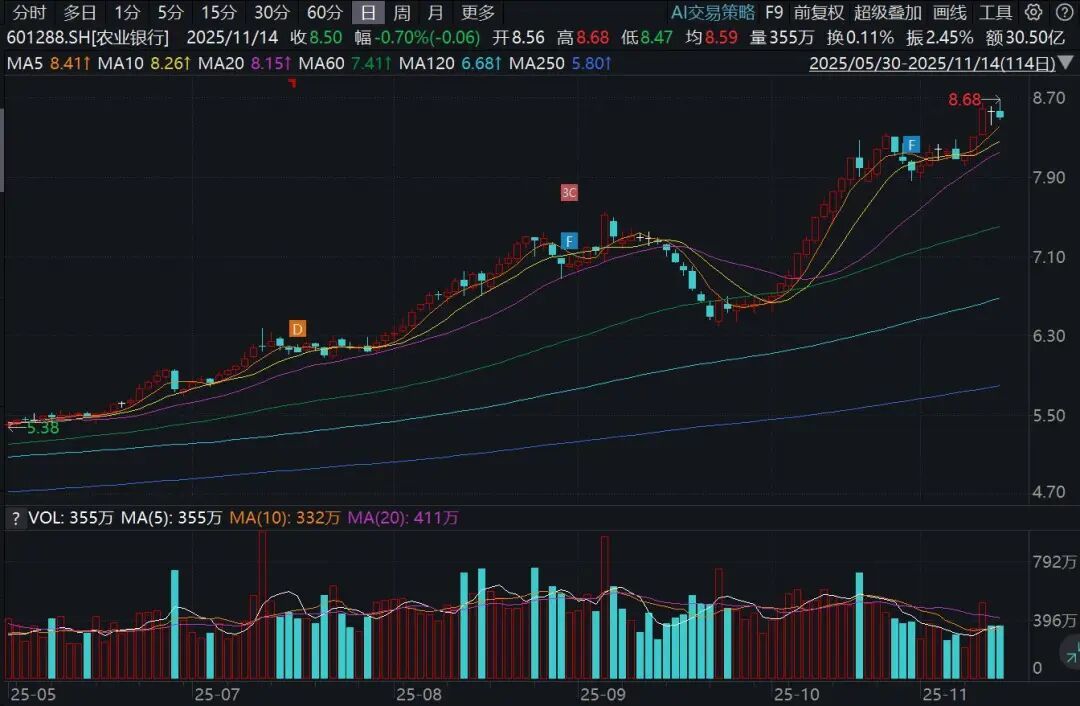
Group 1: Market Overview - The health industry continues to strengthen, with several stocks performing exceptionally well [1][6] - A-shares experienced fluctuations, with major indices slightly declining after reaching a 10-year high [1] - The total trading volume for the week was approximately 10.22 trillion yuan, with daily turnover around 2 trillion yuan [1] Group 2: Financing Trends - Cumulative net financing for the year reached 634 billion yuan, with over 12.6 billion yuan net bought this week [2] - The power equipment sector saw over 5.3 billion yuan in net purchases, while the non-ferrous metals and basic chemicals sectors each received over 3 billion yuan [2] - The pharmaceutical and biotechnology sectors attracted over 30.5 billion yuan in net inflows, while the electronics sector faced a net outflow of over 16.1 billion yuan [2] Group 3: Banking Sector Performance - The banking sector has been performing strongly, with indices frequently reaching historical highs [3] - Over the past three years, bank stocks have increased by 94%, significantly outperforming the Shanghai Composite Index [3] - Agricultural Bank of China has shown remarkable growth, with a cumulative increase of 317% over four years [3] Group 4: Policy and Future Outlook - Policies aimed at optimizing bank credit structures and enhancing interest margins are expected to support the banking sector [5] - The health industry is projected to grow significantly, with estimates suggesting a market size of 17.4 trillion yuan by 2025 and 29.1 trillion yuan by 2030 [8] - The market is expected to stabilize, with structural trends becoming more pronounced, particularly in the TMT sector and coal and banking investments [9]


上市公司全年纳税近4万亿元,前10名是这几家→
第一财经· 2025-11-15 12:46
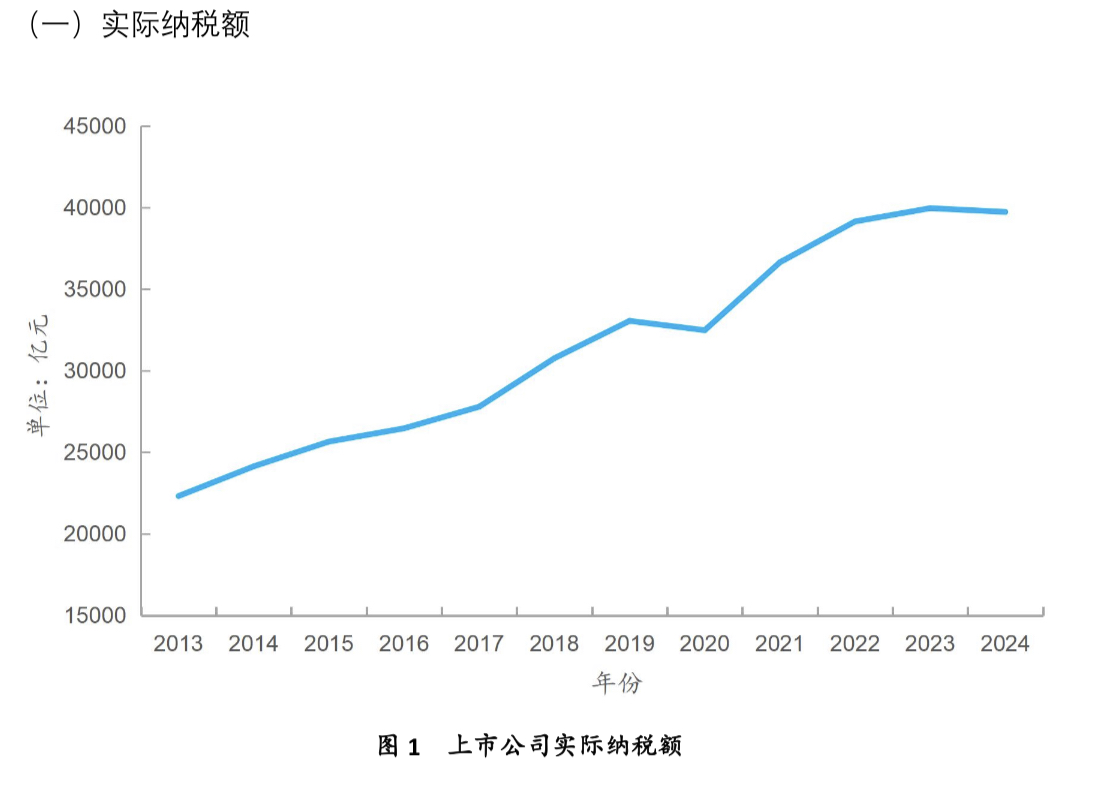
Core Insights - The report reveals that in 2024, 5,091 listed companies in China contributed approximately 39,727 billion yuan in actual tax payments, remaining stable compared to 2023, accounting for about 22.7% of the national tax revenue [3][4]. Group 1: Tax Contributions and Distribution - The top 100 listed companies contributed around 73% of the total tax payments, indicating a significant concentration of tax contributions among a small number of firms [5]. - Major contributors include China National Petroleum (3,961 billion yuan) and Sinopec (3,313 billion yuan), with several banks and other companies also exceeding 1,000 billion yuan in tax payments [5]. - The average tax payment per listed company was 7.8 million yuan, with a median of 0.53 million yuan [6]. Group 2: Industry Contributions - The mining, financial, and manufacturing sectors accounted for nearly 77% of the total tax contributions from listed companies, with mining alone contributing about 1 trillion yuan [8]. - The manufacturing sector saw the highest growth in tax contributions, increasing by approximately 22.6 billion yuan, while the real estate sector experienced the largest decline at around -28% [12]. Group 3: Ownership Structure and Tax Burden - State-owned enterprises represented about 30% of listed companies but contributed nearly 80% of the total tax payments, highlighting the dominance of state-owned firms in tax contributions [12]. - The average tax burden for listed companies has decreased over the years, with the tax payment per 100 yuan of revenue dropping to approximately 5.6 yuan in 2024 [13]. - The mining and financial sectors had the highest tax payment per 100 yuan of revenue at around 12 yuan, while the manufacturing sector had a lower tax burden of about 4 yuan [14].



上市公司贡献全国两成多税收,采矿、金融、制造行业贡献最大
Sou Hu Cai Jing· 2025-11-15 11:22
Core Insights - The report from Southwest University of Finance and Economics reveals the tax contributions of listed companies in China for 2024, indicating a total actual tax payment of approximately 39,727 billion yuan, which remains stable compared to 2023 [1] Group 1: Tax Contributions - A total of 5,091 listed companies contributed an actual tax amount of about 39,727 billion yuan in 2024, accounting for approximately 22.7% of the national tax revenue [1] - The top 100 listed companies contributed around 73% of the total actual tax payments made by all listed companies [1] Group 2: Industry Contributions - The industries with the highest tax contributions are concentrated in mining, finance, and manufacturing [1] - China National Petroleum Corporation and Sinopec ranked first and second in actual tax payments, contributing 3,961 billion yuan and 3,313 billion yuan, respectively [1] - Major banks such as Industrial and Commercial Bank of China, China Construction Bank, Agricultural Bank of China, and Bank of China each contributed over 1,000 billion yuan, ranking third to seventh [1] - Kweichow Moutai, China State Construction Engineering, and China Mobile each contributed over 500 billion yuan, ranking eighth to tenth [1]
上市公司贡献全国两成多税收,平均综合税负约5.6%
Di Yi Cai Jing· 2025-11-15 10:16
Core Insights - The report reveals that in 2024, 5,091 listed companies in China contributed approximately 39,727 billion yuan in actual tax payments, remaining stable compared to 2023, accounting for about 22.7% of the national tax revenue [1][2] Group 1: Tax Contributions and Distribution - The top 100 listed companies contributed around 73% of the total tax payments, indicating a significant concentration of tax contributions among a small percentage of companies [3] - Major contributors include China National Petroleum (3,961 billion yuan) and Sinopec (3,313 billion yuan), followed by major banks and companies like Agricultural Bank of China and China Mobile, each exceeding 1,000 billion yuan in tax payments [3] - The average tax payment per listed company was 7.8 million yuan, with a median of 0.53 million yuan [4] Group 2: Industry Contributions - The mining, financial, and manufacturing sectors accounted for nearly 77% of the total tax contributions from listed companies, with the mining sector alone contributing about 1 trillion yuan [4][9] - The manufacturing sector saw the highest growth in tax contributions, increasing by approximately 226 million yuan, while the real estate sector experienced the largest decline at -28% [9] Group 3: Ownership Structure and Tax Burden - State-owned enterprises represented about 30% of listed companies but contributed nearly 80% of the total tax payments, highlighting the dominance of state-owned firms in tax contributions [9] - The average tax burden for listed companies has decreased to approximately 5.6% in 2024, down from 8.9 yuan per 100 yuan of revenue in 2015, reflecting the impact of tax reduction policies [10] - The mining and financial sectors had the highest tax burden per 100 yuan of revenue, at around 12 yuan, while the manufacturing sector had a lower burden of about 4 yuan [10] Group 4: Emerging Sectors - Companies related to digital currency and digital government concepts had relatively low tax contributions, indicating potential for growth in tax contributions from these sectors [11]
建行广东省茂名市分行:“贷款明白纸” 落地见效 护航企业融资无忧
Sou Hu Cai Jing· 2025-11-15 07:48
Core Viewpoint - The Bank of China Maoming Branch is promoting the use of the "Comprehensive Financing Cost List for Corporate Loans" to enhance transparency in loan costs and protect the rights of financial consumers, ultimately aiming to reduce the overall financing costs for the real economy [1][3]. Group 1: Promotion of Transparency - The bank is implementing the "Comprehensive Financing Cost List" to clearly outline all cost components associated with loans, including annual interest rates, guarantee fees, and assessment fees, helping enterprises accurately understand their total financing costs [1][3]. - The bank utilizes its physical branches to promote this initiative, with electronic displays and promotional materials aimed at informing clients about the financing cost details [3]. Group 2: Client Engagement and Trust Building - During the loan application process, client managers fill out the "Comprehensive Financing Cost List" with clients, ensuring that all financing fees are transparently presented and confirmed by both parties [3]. - A specific example is provided where a company applying for a loan of 10 million yuan is informed of a clear annual interest rate of 3.0%, with the total financing cost also being 3.0%, and the bank covering assessment and mortgage registration fees [3]. - The initiative aims to eliminate information asymmetry regarding financing costs, fostering a trusting relationship between banks and enterprises, which is essential for local economic development [3].