LBX(603883)

Search documents
老百姓:医药集团累计减持2.38%股份
Ge Long Hui· 2025-08-18 09:08
格隆汇8月18日丨老百姓(603883.SH)公布,在本次减持计划实施期间,医药集团于2025年6月20日、6月 23日、7月30日通过集中竞价交易和大宗交易方式合计减持公司股份18,110,700股,占公司总股本的 2.38%,截至本公告披露日,医药集团持有公司股份180,453,475股,占公司目前总股本的23.74%,控股 股东医药集团及其一致行动人陈秀兰合计持股比例由27.91%降低至25.53%。 ...

老百姓大药房控股股东提前终止减持计划,减持2.38%股份
Xin Lang Cai Jing· 2025-08-18 09:01
老百姓大药房连锁股份有限公司发布公告,控股股东老百姓医药集团有限公司提前终止减持计划。减持 计划实施前,医药集团持有公司股份198,564,175股,占总股本26.12%。2025年5月7日,公司披露减持 计划,医药集团拟减持不超22,802,868股(不超3%)。6月20日至7月30日,医药集团通过集中竞价和大 宗交易合计减持18,110,700股,占总股本2.38%,减持总金额340,973,023元,减持价格区间17.60 - 21.55 元/股。截至公告日,医药集团持有公司股份180,453,475股,占比23.74%,其与一致行动人陈秀兰合计 持股比例降至25.53%。 ...
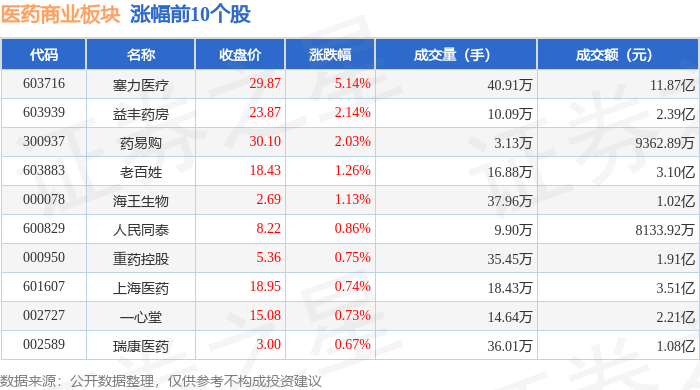
医药商业板块8月18日涨0.67%,塞力医疗领涨,主力资金净流出1086.35万元
Zheng Xing Xing Ye Ri Bao· 2025-08-18 08:39
Market Performance - The pharmaceutical commercial sector increased by 0.67% compared to the previous trading day, with Saily Medical leading the gains [1] - The Shanghai Composite Index closed at 3728.03, up 0.85%, while the Shenzhen Component Index closed at 11835.57, up 1.73% [1] Individual Stock Performance - Saily Medical (603716) closed at 29.87, up 5.14%, with a trading volume of 409,100 shares and a transaction value of 1.187 billion [1] - Yifeng Pharmacy (603939) closed at 23.87, up 2.14%, with a trading volume of 100,900 shares and a transaction value of 239 million [1] - Other notable performers include Yaoyigou (300937) at 30.10 (+2.03%), Laobaixing (603883) at 18.43 (+1.26%), and Haiwang Biological (000078) at 2.69 (+1.13%) [1] Capital Flow Analysis - The pharmaceutical commercial sector experienced a net outflow of 10.8635 million from institutional investors, while retail investors saw a net inflow of 12.0341 million [2] - The overall capital flow indicates a mixed sentiment, with institutional investors withdrawing funds while retail investors increased their positions [2] Detailed Capital Flow for Selected Stocks - Saily Medical had a net outflow of 95.4222 million from institutional investors, while retail investors contributed a net inflow of 45.8725 million [3] - Guoyao Co. (600511) saw a net inflow of 38.7702 million from institutional investors, but a net outflow of 35.7166 million from retail investors [3] - Other stocks like Zhejiang Zhenyuan (000705) and Ruikang Pharmaceutical (002589) also showed varied capital flows, indicating differing investor sentiments across the sector [3]





“存款搬家”,居民存款减少1.11万亿,老百姓的钱到底去哪了?
Sou Hu Cai Jing· 2025-08-17 03:17
Core Insights - The phenomenon of "deposit migration" in China's financial market reflects a significant shift of residents' funds from traditional bank deposits to non-bank financial institutions, driven by low deposit interest rates and attractive stock market performance [1][2][5] Group 1: Deposit Migration Dynamics - In July 2025, residents' deposits decreased by 1.11 trillion yuan, a year-on-year drop of 780 billion yuan, while non-bank financial institutions saw an increase of 1.39 trillion yuan, marking a near ten-year high [1] - The decline in bank deposit attractiveness is attributed to a continuous drop in interest rates, with many small and medium banks reducing rates by 10 to 40 basis points since April, leading to annualized rates below 2% [1][2] - The stock market's strong performance in July, with over 2 million new stock accounts opened, indicates a growing participation of ordinary citizens in equity investments [2][3] Group 2: Changing Investment Landscape - The diversification and convenience of investment channels have contributed to this trend, with mobile technology enabling easy access to various investment products [2][3] - A shift in the public's financial mindset is evident, as individuals now recognize that idle funds equate to depreciation due to inflation and rising living costs [2][5] - The younger generation, particularly those born after 2000, shows a higher acceptance of investment, actively engaging in the stock market and driving new investment trends [3][5] Group 3: Policy and Economic Implications - Recent monetary policy changes, including a reduction in loan market quotation rates and deposit rates by major banks, have further encouraged the flow of funds into alternative investment channels [3][5] - The "deposit migration" phenomenon is seen as a "seesaw effect" between resident deposits and non-bank deposits, where declining bank deposit yields push funds towards higher-yielding investments [5] - This shift is expected to enhance liquidity in the stock market, expand asset management for fund companies, and increase premium income for insurance firms, indicating a transformative impact on the financial ecosystem [5][7] Group 4: Future Outlook - The trend of "deposit migration" is likely to persist in the short term due to ongoing low bank deposit rates and deepening capital market reforms [7] - As the financial market matures, wealth management for residents is anticipated to become more diversified and professional, with bank deposits remaining a key option for risk-averse investors [7][9] - The overall societal impact of this shift is positive, promoting market activity, improving resource allocation efficiency, and creating more wealth opportunities for the public [9]

老百姓:关于控股股东部分股份解除质押的公告
Zheng Quan Ri Bao Zhi Sheng· 2025-08-15 14:30
Core Viewpoint - The announcement indicates that the controlling shareholder of the company, Lao Baixing Pharmaceutical Group, has partially lifted the pledge on its shares, which may reflect a positive development in the company's financial health and shareholder confidence [1] Group 1 - The controlling shareholder, Lao Baixing Pharmaceutical Group, has released a portion of its pledged shares [1] - On August 13, 2025, the group lifted the pledge on 12,810,000 shares from China Construction Bank and 6,000,000 shares from China Merchants Bank [1] - The shares were processed for release at the China Securities Depository and Clearing Corporation Limited [1]
老百姓:控股股东及一致行动人累计质押股份数量约为1亿股
Mei Ri Jing Ji Xin Wen· 2025-08-15 10:53
2024年1至12月份,老百姓的营业收入构成为:医药零售占比85.46%,加盟和联盟及分销占比13.89%, 其他占比0.65%。 每经AI快讯,老百姓(SH 603883,收盘价:18.2元)8月15日晚间发布公告称,控股股东及一致行动人 合计持有公司股份数量约为1.94亿股,占公司总股本比例为25.53%,累计质押股份数量约为1亿股,占 其所持股份比例为51.61%,占公司总股本比例为13.17%。 (记者 曾健辉) 截至发稿,老百姓市值为138亿元。 每经头条(nbdtoutiao)——华康股份11亿元并购疑云:收购对象的大客户两年前已深陷债务危机,如 何贡献巨额营收? ...
老百姓(603883) - 关于控股股东部分股份解除质押的公告
2025-08-15 10:46
证券代码:603883 证券简称:老百姓 公告编号:2025-036 老百姓大药房连锁股份有限公司 关于控股股东部分股份解除质押的公告 本公司董事会及全体董事保证本公告内容不存在任何虚假记载、 误导性陈述或者重大遗漏,并对其内容的真实性、准确性和完整性承 担法律责任。 重要内容提示: ●截至本公告日,老百姓大药房连锁股份有限公司(以下简称"公司")控股股 东老百姓医药集团有限公司(以下简称"医药集团")持有公司股份 180,453,475 股, 占公司股份总数的 23.74%;本次解除质押 18,810,000 股后,医药集团持有公司股份累 计质押数量为 100,140,000 股,占其持股总数的 55.49%,占公司总股本的 13.17%。控 股股东及一致行动人(医药集团与陈秀兰)合计持有公司股份数量为 194,019,173 股, 占公司总股本比例为 25.53%,累计质押股份数量为 100,140,000 股,占其所持股份比 例为 51.61%,占公司总股本比例为 13.17%。 2025 年 8 月 13 日,医药集团将其分别在中国建设银行长沙湘江支行、招商银行长 沙分行质押的 12,810,000 ...
王兴兴:人形机器人每个月都在进步,目前离老百姓还有点远
Bei Ke Cai Jing· 2025-08-15 07:47
新京报讯(记者孙海光)"对普通人来说,1500米比赛已经跟不上机器人了。"宇树科技创始人王兴兴表示。8月15日,2025世界人形机器人运动会1500米比 赛举行,宇树科技的两台机器人分获冠军和季军,其中一台机器人的夺冠成绩为6分34秒40,已达到一个普通成年人的水平。 "机器人行业非常热,上半年大部分公司业绩都非常好,下半年有这样的比赛,可以拉动行业发展得更好。"王兴兴表示,世界人形机器人运动会对整个人形 机器人行业有促进作用。除田径等竞技类项目,本届运动会还设有很多场景类赛事,需要机器人在医院、酒店、工厂场景下比赛。王兴兴呼吁大家多关注这 些比赛,毕竟发展人形机器人的最终目的是给大家提供更好的服务。 8月15日是首个比赛日,有的机器人发挥非常稳定,也有机器人多次出现失误,甚至未能完成比赛,王兴兴希望大家能给机器人多一点包容。"有些人会说, 机器人发展有十几二十年了,为什么没什么太大进步?其实,当下人形机器人用的技术都是最新的,大部分都是最近两三年的。在某种意义上,这个行业也 就发展了两三年。大家可以看到,基本上每个月、每半年、每一年的进步都立竿见影。"王兴兴表示,对任何一个行业来说,两三年的发展只能说还处在 ...

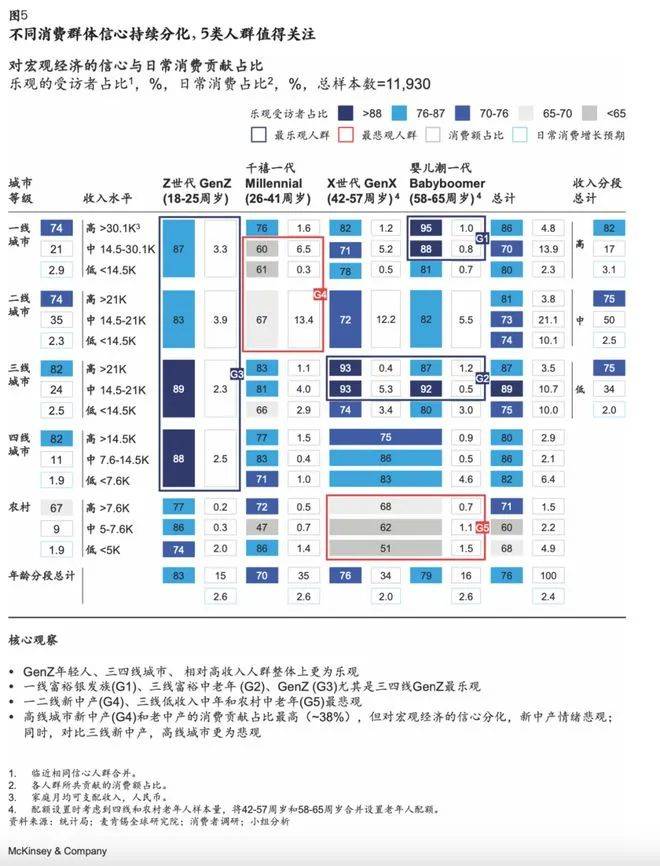
为什么老百姓希望物价下跌,经济学家却希望上涨?
3 6 Ke· 2025-08-15 02:48
Core Viewpoint - The article discusses the disparity between the general public's desire for falling prices and economists' preference for moderate inflation, highlighting the psychological factors influencing these perspectives [1][3][21]. Economic Perspectives - Economists advocate for a moderate annual inflation rate of around 2% to stimulate consumption and investment, as it encourages spending rather than delaying purchases due to anticipated lower prices [1][3]. - Inflation is seen as beneficial for governments as it helps dilute debt burdens, while businesses prefer it because wages are rigid and can only increase [1][3]. Individual vs. Macro Perspectives - The article illustrates the difference between individual experiences and macroeconomic data through various examples, such as the disconnect between low GDP growth and rising stock markets in the U.S. [4][5]. - It highlights that while large corporations and wealthy individuals benefit from economic growth, small businesses and ordinary citizens face stagnating wages and increased living costs [5][6]. Youth Employment and Satisfaction - Despite a high youth unemployment rate of 14.5%, many young individuals report higher satisfaction levels compared to the overall population, indicating a complex relationship between employment and personal fulfillment [7][11]. - The phenomenon of "youth unemployment" is partly attributed to a preference for quality jobs over any job, supported by family wealth [14][16]. Housing Market Dynamics - The article discusses the dual effects of rising housing prices: the "wealth effect," which encourages spending due to perceived increased wealth, and the "squeeze effect," which limits disposable income for other expenditures [17][18]. - It argues that the wealth effect is more pronounced and persistent compared to the initial squeeze effect experienced by homeowners [18]. Inventory Management Strategies - The concept of "price increases to reduce inventory" is explored, suggesting that while consumers may prefer lower prices, businesses may benefit from raising prices to stimulate demand and manage excess inventory [19][20]. - This strategy reflects the ongoing tension between individual consumer preferences and broader economic strategies aimed at stabilizing markets [21].

为什么老百姓想物价下跌,经济学家却希望上涨?
Hu Xiu· 2025-08-14 14:09
Group 1 - The article discusses the divergence between the general public's desire for falling prices and economists' preference for moderate inflation, highlighting the psychological factors influencing these perspectives [1][5][6] - Economists argue that a moderate annual inflation rate of around 2% is ideal as it encourages consumption and investment, preventing consumers from delaying purchases in anticipation of lower prices [2][3] - The article emphasizes that while inflation can benefit government debt management and corporate profits, it can exacerbate income inequality, as asset prices often rise faster than consumer prices during inflationary periods [4][12] Group 2 - The article presents examples of the disparity between individual experiences and overall economic data, such as the contrast between low GDP growth and rising stock markets in the U.S., where 73% of companies exceeded earnings expectations in the second quarter [7][9] - It highlights the phenomenon of high youth unemployment rates coexisting with high satisfaction levels among young people, suggesting that many young individuals prefer to wait for better job opportunities rather than accept unsatisfactory positions [15][23][25] - The article also discusses the wealth effect versus the squeeze effect of rising housing prices, indicating that while higher home values can boost consumer spending, they can also increase financial burdens for homeowners [27][28] Group 3 - The article addresses the paradox of price increases being used as a strategy to reduce inventory, noting that while consumers may prefer lower prices, macroeconomic trends show that falling prices can lead to decreased spending and increased savings [29][30] - It concludes that the ongoing tension between individual pain points related to living costs and economists' optimistic views on overall growth reflects a broader struggle in economic discourse [32]