Novosense(688052)

Search documents
纳芯微股价涨5.02%,银河基金旗下1只基金位居十大流通股东,持有265.98万股浮盈赚取2601.28万元
Xin Lang Cai Jing· 2025-10-13 02:59
Group 1 - The core point of the news is the performance and financial status of Naxin Microelectronics, which saw a stock price increase of 5.02% to 204.55 CNY per share, with a total market capitalization of 29.154 billion CNY [1] - Naxin Microelectronics focuses on the research and sales of high-performance and high-reliability analog integrated circuits, with revenue composition from signal chain products (38.45%), power management products (34.09%), sensor products (27.11%), and others (0.35%) [1] - The company is located in Suzhou Industrial Park, Jiangsu Province, and was established on May 17, 2013, with its listing date on April 22, 2022 [1] Group 2 - Among the top ten circulating shareholders of Naxin Microelectronics, a fund under Galaxy Fund, Galaxy Innovation Mixed A (519674), increased its holdings by 1.2798 million shares in the second quarter, now holding 2.6598 million shares, which accounts for 1.87% of the circulating shares [2] - The estimated floating profit for Galaxy Innovation Mixed A from this investment is approximately 26.0128 million CNY [2] - Galaxy Innovation Mixed A has a total scale of 13.293 billion CNY, with a year-to-date return of 51.41% and a one-year return of 76.79% [2]

纳芯微10月9日获融资买入6727.16万元,融资余额8.40亿元
Xin Lang Cai Jing· 2025-10-10 01:42
Core Viewpoint - Naxin Microelectronics experienced a slight decline in stock price on October 9, with a trading volume of 565 million yuan, indicating a high level of trading activity and investor interest in the company [1]. Group 1: Financial Performance - For the first half of 2025, Naxin Microelectronics reported a revenue of 1.524 billion yuan, representing a year-on-year growth of 79.49% [2]. - The company recorded a net profit attributable to shareholders of -78.01 million yuan, which is a 70.59% increase compared to the previous period [2]. - Cumulative cash dividends since the A-share listing amount to 162 million yuan, with 80.85 million yuan distributed over the past three years [2]. Group 2: Shareholder and Market Activity - As of June 30, 2025, the number of shareholders increased to 8,026, a rise of 5.25% from the previous period [2]. - The average number of circulating shares per shareholder increased by 45.09% to 17,758 shares [2]. - On October 9, Naxin Microelectronics had a net financing purchase of 21.53 million yuan, with a total financing balance of 840 million yuan, accounting for 2.96% of the market capitalization [1]. Group 3: Business Overview - Naxin Microelectronics, established on May 17, 2013, focuses on the research and sales of high-performance and high-reliability analog integrated circuits [1]. - The company's revenue composition includes signal chain products (38.45%), power management products (34.09%), sensor products (27.11%), and other products (0.35%) [1].
中国磁传感器,激荡三十年
半导体行业观察· 2025-10-03 01:56
Core Viewpoint - The article discusses the rapid capital operations and integration within the magnetic sensor chip industry in China, highlighting significant milestones and developments over the past 30 years, leading to a shift from fragmented small-scale operations to a more consolidated and strategic industry landscape [2][3]. Industry Development - Over the past 30 years, the magnetic sensor industry in China has evolved from relying entirely on imports to achieving over 30% of the global market share, with domestic chip localization rates exceeding 25% [3][4]. - The industry has seen a transition from small workshop-style development to a phase of deep restructuring supported by capital and strategic initiatives [3][4]. Technological Evolution - Magnetic sensors are categorized into Hall effect sensors and magnetoresistive sensors, with the latter including anisotropic magnetoresistance (AMR), giant magnetoresistance (GMR), and tunnel magnetoresistance (TMR) sensors [6][8]. - The commercialization of magnetic sensors began in the 1970s and 1980s in Western countries, with significant advancements in Hall effect sensors and the eventual emergence of AMR, GMR, and TMR technologies [8][9][10]. Market Dynamics - By the mid-1990s, foreign companies dominated the magnetic sensor core chip market, with major players like AKM, Honeywell, and TI producing various types of Hall chips [10]. - In 1995, there were only 41 domestic companies producing magnetic sensors in China, with a total output of 27.8 million units, significantly lower than Japan's production levels [17][19]. Capital Movements - Recent capital activities include the listing application of Anhui Xici Technology on the Hong Kong Stock Exchange and acquisitions such as the 100% stake in Xingan Semiconductor by Biyimi [3][4]. - The article outlines a series of mergers and acquisitions, indicating a trend towards consolidation in the magnetic sensor industry [3][4]. Key Players and Innovations - Companies like Nanjing Zhongxu Microelectronics and Shanghai Yanhua Electronics have emerged as significant players in the domestic market, focusing on various sensor technologies and applications [24][47]. - The establishment of firms such as Suzhou Naxin Microelectronics and Shanghai Xirui Technology reflects the growing innovation and competitive landscape in the magnetic sensor sector [56][52]. Future Outlook - The magnetic sensor industry is expected to continue its growth trajectory, driven by advancements in technology and increasing applications in sectors like automotive, industrial automation, and consumer electronics [43][44].



纳芯微股价涨5.15%,银华基金旗下1只基金重仓,持有35.34万股浮盈赚取355.17万元
Xin Lang Cai Jing· 2025-09-30 03:50
Core Insights - Naxin Microelectronics experienced a 5.15% increase in stock price, reaching 205.36 CNY per share, with a trading volume of 432 million CNY and a turnover rate of 1.50%, resulting in a total market capitalization of 29.27 billion CNY [1] Company Overview - Naxin Microelectronics, established on May 17, 2013, and listed on April 22, 2022, is located in Suzhou Industrial Park, Jiangsu Province, and focuses on the research and sales of high-performance, high-reliability analog integrated circuits [1] - The company's main revenue sources are signal chain products (38.45%), power management products (34.09%), sensor products (27.11%), and other products (0.35%) [1] Fund Holdings - According to data, one fund under Yinhua Fund has a significant holding in Naxin Microelectronics, with the Kexin 100 (588190) fund holding 353,400 shares, accounting for 1.95% of the fund's net value, making it the eighth-largest holding [2] - The Kexin 100 fund, established on September 6, 2023, has a latest scale of 3.155 billion CNY and has achieved a year-to-date return of 54.75%, ranking 530 out of 4220 in its category [2] - Over the past year, the fund has returned 85.5%, ranking 413 out of 3846, and since its inception, it has returned 38.07% [2] Fund Manager Profiles - The fund managers of Kexin 100 are Ma Jun and Zhang Yichi, with Ma having a cumulative tenure of 13 years and 30 days, managing a total fund size of 33.304 billion CNY, with the best return during his tenure being 144.61% and the worst being -75.62% [3] - Zhang Yichi has a cumulative tenure of 4 years and 130 days, managing a total fund size of 7.781 billion CNY, with the best return during his tenure being 53.59% and the worst being -35.59% [3]
一家国产芯片公司的“上车”回忆录
经济观察报· 2025-09-28 11:47
Core Viewpoint - The most challenging aspect of the chip industry is breaking through from 0 to 1. Once this is achieved, Chinese companies excel at continuous iteration from 1 to 100, making their progress unstoppable in various industries [2][4]. Group 1: Market Evolution - Over a decade ago, the automotive chip market in China was dominated by Western giants, with little to no contribution from Chinese companies. However, recent years have seen Chinese firms, like Naxin Micro, emerging in the automotive chip sector, particularly in the automotive analog chip market [2][4]. - Naxin Micro's founder emphasized that the breakthrough from 0 to 1 was critical, and without external forces, achieving this would be difficult. The company’s early focus on automotive electronics positioned it well for the electric and intelligent transformation of the automotive industry [4][5]. Group 2: Product Development and Innovation - Naxin Micro's first automotive-grade chip was launched in 2016, marking its entry into the automotive chip market. The company has since developed products addressing high-voltage safety requirements in electric vehicles, achieving significant market share in digital isolators and isolation sampling chips [5][6]. - The company aims to expand its product roadmap to cover various automotive applications, including body control, intelligent cockpit, and autonomous driving, with a focus on innovative designs tailored to the needs of Chinese automakers [5][6]. Group 3: Competitive Landscape - As of 2023, the chip market has shifted from a supply-driven environment to a competitive landscape, with international giants adopting aggressive pricing strategies that challenge emerging Chinese chip companies. By 2025, Naxin Micro aims to compete directly with these international players in high-pressure core areas of the automotive industry [8][9]. - Naxin Micro has captured nearly half of the market share in domestic new energy vehicles, leveraging its advanced technologies to compete on performance, reliability, and functional safety rather than just price [8][9]. Group 4: Strategic Partnerships and Client Engagement - The automotive industry's shift towards integrated electronic architectures necessitates closer collaboration between chip manufacturers and automakers. Naxin Micro has adapted by forming dedicated sales teams to engage with automakers early in the vehicle development process [13][14]. - The company emphasizes the importance of tight communication with both automakers and Tier 1 suppliers to manage production pressures and respond flexibly to market demands [15]. Group 5: Industry Consolidation and Future Outlook - The chip industry is entering a phase of differentiation, where only companies with core competencies will thrive. Naxin Micro's acquisition of another chip company, Maigen, exemplifies the trend towards consolidation and the pursuit of technological synergies [17][18]. - The company is also preparing for an IPO in Hong Kong to enhance its international presence and secure additional funding for overseas market expansion, with overseas revenue accounting for approximately 15% in 2024 [19].

一家国产芯片公司的“上车”回忆录
Jing Ji Guan Cha Wang· 2025-09-27 06:54
Core Insights - The article highlights the significant progress of Chinese companies in the automotive chip market, particularly focusing on Naxin Micro, which has emerged as a leading player in the automotive analog chip sector in China [2][4]. Group 1: Market Evolution - Over a decade ago, the automotive chip market in China was dominated by Western giants, with little to no presence from Chinese firms [2]. - Five years ago, domestic chips were largely overlooked in the automotive supply chain, but the landscape has changed dramatically [2]. - Naxin Micro's early focus on automotive electronics positioned it well to capitalize on the electrification and intelligent transformation of the Chinese automotive industry [3][4]. Group 2: Product Development and Innovation - Naxin Micro launched its first automotive-grade chip in 2016, marking its entry into the automotive chip sector [4]. - The company has developed products addressing critical safety issues in electric vehicles, such as high-voltage isolation technology [5]. - By 2023, Naxin Micro's products had achieved significant market penetration, with 164 million units shipped in the automotive electronics sector [5]. Group 3: Competitive Landscape - The chip market has shifted from a supply-driven environment to a more competitive landscape, with international giants adjusting their strategies to counter emerging Chinese firms [7]. - Naxin Micro's products are now competing directly with international brands in high-pressure core areas of electric vehicles, focusing on performance, reliability, and functional safety [8][9]. - The company aims to provide over 2000 yuan worth of chip products per electric vehicle, reflecting confidence in the growing demand for automotive chips [9]. Group 4: Strategic Partnerships and Client Engagement - Naxin Micro has adapted to the changing dynamics of the automotive supply chain, moving towards a more integrated and collaborative model with automakers [12][13]. - The company has established dedicated sales teams to engage directly with automakers, ensuring that chip selection aligns with vehicle design from the early stages [13][14]. - This shift emphasizes the importance of close communication and collaboration among chip manufacturers, Tier 1 suppliers, and automakers to manage the complexities of modern vehicle production [14]. Group 5: Industry Consolidation and Future Outlook - The chip industry is entering a phase of differentiation, where only companies with core competencies will thrive [15]. - Naxin Micro's acquisition of Maguan represents a strategic move towards industry consolidation, enhancing its capabilities in magnetic sensor technology [16]. - The company is also preparing for an IPO in Hong Kong to support its international expansion and increase its overseas revenue, which is projected to be around 15% in 2024 [18][20].

纳芯微9月25日获融资买入6292.90万元,融资余额7.80亿元
Xin Lang Zheng Quan· 2025-09-26 01:28
Core Viewpoint - The company Nanxin Microelectronics experienced a decline in stock price and significant trading activity, indicating high investor interest and potential volatility in the market [1][2]. Financing and Trading Activity - On September 25, Nanxin Microelectronics' stock fell by 1.35%, with a trading volume of 657 million yuan. The financing buy-in amount for the day was 62.93 million yuan, while the financing repayment was 59.32 million yuan, resulting in a net financing buy of 3.61 million yuan [1]. - As of September 25, the total financing and securities lending balance for Nanxin Microelectronics was 791 million yuan, with a financing balance of 780 million yuan, accounting for 2.78% of the circulating market value, which is above the 90th percentile of the past year [1]. - In terms of securities lending, on the same day, 1,145 shares were repaid, with no shares sold, and the remaining securities lending balance was 58,000 shares, valued at approximately 11.42 million yuan, also above the 90th percentile of the past year [1]. Company Overview - Nanxin Microelectronics, established on May 17, 2013, and listed on April 22, 2022, is located in Suzhou, Jiangsu Province. The company focuses on the research and sales of high-performance and high-reliability analog integrated circuits [1]. - The revenue composition of Nanxin Microelectronics includes signal chain products (38.45%), power management products (34.09%), sensor products (27.11%), and other products (0.35%) [1]. Financial Performance - For the first half of 2025, Nanxin Microelectronics reported a revenue of 1.524 billion yuan, representing a year-on-year growth of 79.49%. However, the net profit attributable to shareholders was a loss of 78.01 million yuan, which is a 70.59% increase in loss compared to the previous period [2]. - Since its A-share listing, Nanxin Microelectronics has distributed a total of 162 million yuan in dividends, with 80.85 million yuan distributed over the past three years [2]. Shareholder Structure - As of June 30, 2025, the number of shareholders for Nanxin Microelectronics was 8,026, an increase of 5.25% from the previous period. The average circulating shares per person rose by 45.09% to 17,758 shares [2]. - Among the top ten circulating shareholders, notable changes include a decrease in holdings by the fifth-largest shareholder, Xingquan Helun Mixed A, and an increase in holdings by the seventh-largest shareholder, Galaxy Innovation Mixed A [2].
纳芯微股价涨5.02%,工银瑞信基金旗下1只基金重仓,持有46.34万股浮盈赚取429.13万元
Xin Lang Cai Jing· 2025-09-24 03:44
Company Overview - Naxin Microelectronics Co., Ltd. is located in Suzhou Industrial Park, Jiangsu Province, and was established on May 17, 2013. The company went public on April 22, 2022. Its main business focuses on the research and sales of high-performance, high-reliability analog integrated circuits [1] - The revenue composition of the company includes signal chain products (38.45%), power management products (34.09%), sensor products (27.11%), and others (0.35%) [1] Stock Performance - On September 24, Naxin Micro's stock rose by 5.02%, reaching a price of 193.76 CNY per share, with a trading volume of 637 million CNY and a turnover rate of 2.36%. The total market capitalization is 27.616 billion CNY [1] Fund Holdings - According to data from the top ten holdings of funds, one fund under ICBC Credit Suisse, the ICBC New Manufacturing Mixed A (009707), holds 463,400 shares of Naxin Micro, accounting for 2.89% of the fund's net value, making it the ninth-largest holding. The estimated floating profit today is approximately 4.2913 million CNY [2] - The ICBC New Manufacturing Mixed A fund was established on August 20, 2020, with a latest scale of 1.208 billion CNY. Year-to-date returns are 62.3%, ranking 512 out of 8173 in its category. Over the past year, returns are 148.64%, ranking 153 out of 7996, and since inception, returns are 183.5% [2]
为何是模拟芯片?
半导体行业观察· 2025-09-20 01:55
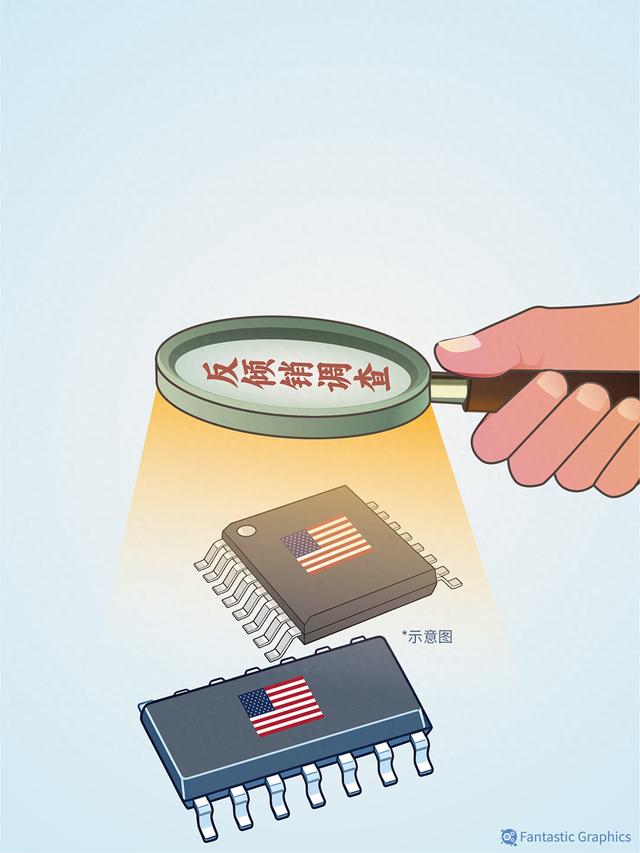
Core Viewpoint - The article highlights China's initiation of an anti-dumping investigation into imported analog chips from the U.S., marking a significant escalation in the ongoing semiconductor trade tensions between the two countries. This investigation focuses on specific analog chip categories, indicating that the chip conflict is expanding beyond high-end GPUs and advanced process logic chips to include analog chips as well [2][3][20]. Group 1: Investigation Details - The Ministry of Commerce announced the investigation on September 13, 2025, based on a request from the Jiangsu Semiconductor Industry Association, targeting analog chips from four major U.S. companies: Broadcom, Texas Instruments (TI), Onsemi, and Analog Devices (ADI) [2][3]. - The investigation will cover the period from January 1, 2024, to December 31, 2024, with a damage investigation period from January 1, 2022, to December 31, 2024, and is expected to conclude by September 13, 2026, unless extended [7]. Group 2: Market Context - The global analog chip market is projected to reach $79.433 billion in 2024, with China accounting for approximately $28 billion (around 200 billion RMB), representing nearly one-third of the global market [3]. - The share of the investigated products in China's total imports of similar products has been increasing, with proportions of 47.81%, 53.06%, and 62.14% from 2022 to 2024, indicating a growing reliance on these imports [4]. Group 3: Price Trends and Impact - The average price of the investigated products has been declining significantly, from 3.36 RMB per unit in 2022 to 1.62 RMB per unit in 2024, a cumulative decrease of 51.77% [5]. - Domestic analog chip manufacturers have been forced to lower their prices in response, with their weighted average prices dropping by 27.38% from 2022 to 2024 [5][6]. Group 4: Financial Health of Domestic Manufacturers - Domestic manufacturers are experiencing financial strain, with pre-tax profits declining and some companies entering a state of severe losses, which increased by 7.05% in 2024 compared to 2023 [6]. - The labor productivity has decreased by 27.41%, and the inventory levels have risen by 21.39% from 2022 to 2024, indicating operational challenges [6]. Group 5: Reactions from U.S. Companies - Following the announcement of the investigation, stock prices of major U.S. analog chip companies fell, with TI down 3.1%, Onsemi down 2%, and ADI down 3% on September 15 [8][10]. - TI, being a major player in the analog chip market, is particularly vulnerable as approximately 20% of its revenue comes from customers based in China, which could face increased costs if trade measures are implemented [10]. Group 6: Opportunities for Domestic Firms - The anti-dumping investigation presents a unique opportunity for domestic analog chip manufacturers to capture market share, especially in the context of growing demand in sectors like electric vehicles and industrial control [12][14]. - Companies like 圣邦股份 (Sankang Micro), 纳芯微 (Naxin Micro), and 思瑞浦 (Sirius) have shown significant revenue growth and are well-positioned to benefit from potential shifts in the market dynamics [16][17][18].




反倾销调查背后:四家芯片大厂倾销幅度达300%
Zhong Guo Jing Ying Bao· 2025-09-19 20:11
Core Viewpoint - The Chinese Ministry of Commerce has initiated an anti-dumping investigation against imported analog chips from the United States, which has led to a surge in stock prices for domestic analog chip companies [2][3][4]. Group 1: Anti-Dumping Investigation Details - The investigation targets analog chips using 40nm and above process technology, specifically general interface chips and gate driver chips from major US companies including Texas Instruments, Analog Devices, Broadcom, and ON Semiconductor [2][4]. - The application for the investigation was submitted by the Jiangsu Semiconductor Industry Association, citing a 37% increase in import volume and a 52% decrease in import prices from 2022 to 2024, which harmed domestic sales [3][4]. - The investigation period for dumping is set from January 1, 2024, to December 31, 2024, while the period for assessing industry damage is from January 1, 2022, to December 31, 2024 [4]. Group 2: Market Impact and Reactions - Following the announcement, domestic analog chip stocks saw significant gains, with leading companies like Shengbang Co. and Shanghai Beiling hitting their daily price limits [3][4]. - Market observers note that the investigation reflects both the impact of dumping on domestic industries and the growing supply capabilities of local companies [3][4]. - The anti-dumping measures are expected to create a fairer market environment for domestic chips and may accelerate the replacement of imported products [6][7]. Group 3: Industry Context and Trends - China is the largest market for analog chips, with a market size exceeding $28 billion, accounting for about one-third of the global market [5]. - The analog chip sector has been experiencing a price war due to low-priced imports, which has pressured domestic manufacturers [5][6]. - The domestic analog chip industry has seen significant growth, with many companies reporting substantial increases in revenue and profit margins in recent quarters [9][10]. Group 4: Future Outlook - If the investigation confirms substantial dumping, high anti-dumping duties may be imposed on US imports, potentially benefiting domestic manufacturers [7][8]. - The domestic analog chip market is expected to continue evolving, with companies focusing on expanding product lines and improving performance to compete effectively [10][11].