Jinko Solar(688223)

Search documents
晶科能源:2025年全年预计净亏损69.00亿元—59.00亿元
2 1 Shi Ji Jing Ji Bao Dao· 2026-01-29 09:25
Core Viewpoint - JinkoSolar has announced a profit warning, projecting a net loss attributable to shareholders of the parent company for the year 2025 to be between -6.9 billion and -5.9 billion yuan [1] - The company also expects a net loss of -7.8 billion to -6.7 billion yuan after deducting non-recurring gains and losses for the same period [1] Group 1: Financial Projections - The projected net profit loss for 2025 is significant, indicating a challenging financial outlook for the company [1] - The anticipated losses reflect a deterioration in profitability due to various market pressures [1] Group 2: Reasons for Loss - The primary reasons for the expected losses include intensified price fluctuations across the global photovoltaic industry chain [1] - Trade protection policies in overseas markets have further disrupted the profitability of various segments within the photovoltaic component integration [1] - The overall low pricing of photovoltaic components has led the company to adopt a cautious approach, resulting in the recognition of asset impairment provisions for long-term assets showing signs of impairment [1]

晶科能源:2025年预计净亏损59亿-69亿元
Xin Lang Cai Jing· 2026-01-29 09:15
晶科能源公告称,经初步测算,2025年预计归属于母公司所有者的净利润为-69.00亿元到-59.00亿元, 扣非净利润为-78.00亿元到-67.00亿元。业绩变动主因全球光伏产业链价格波动、海外贸易保护政策扰 动,组件盈利承压,且公司对长期资产计提减值准备。不过,公司组件出货量维持行业领先,未来将推 进产能技术升级改造改善盈利能力。 ...
工信部召开座谈会,强调以产能调控等手段破除光伏“内卷”
Di Yi Cai Jing· 2026-01-29 06:08
Core Viewpoint - The Chinese photovoltaic industry is undergoing a governance initiative to combat "involution" and promote rational competition, with the government emphasizing the need for coordinated efforts across various departments to address issues such as overcapacity, low-price competition, and quality control [1][3]. Group 1: Industry Governance and Regulation - The Ministry of Industry and Information Technology (MIIT) held a meeting on January 28, 2026, to discuss the "anti-involution" measures in the photovoltaic sector, highlighting the need for collaboration among departments to ensure a return to healthy competition [1]. - The MIIT aims to utilize market-oriented and legal methods to regulate the industry, including capacity control, standard setting, quality supervision, and intellectual property protection [1][3]. - The government has initiated multiple actions since the second half of 2025 to address the chaotic state of the photovoltaic industry, including a meeting on August 19, 2025, to emphasize capacity regulation and support industry self-discipline [3]. Group 2: Industry Performance and Financial Impact - The domestic photovoltaic manufacturing output value surged from 750 billion yuan in 2021 to 1.75 trillion yuan in 2023, with expectations to maintain over 1 trillion yuan in 2024 [1]. - However, the industry faces significant challenges, including a supply-demand mismatch and severe low-price competition, leading to widespread losses since the fourth quarter of 2023 [2]. - Major companies like Longi Green Energy, JinkoSolar, and Tongwei Co. are projected to incur substantial losses in 2025, with estimates ranging from 60 billion to 100 billion yuan [2]. Group 3: Quality and Compliance Issues - The photovoltaic industry has seen a decline in product quality, with the overall qualification rate of photovoltaic modules dropping from 100% in 2019 to 62.9% in 2024, indicating that over one-third of products have quality issues [2]. - In 2025, nearly 16% of the components tested from 36 companies were found to be non-compliant, with significant issues related to mechanical load and power misrepresentation [2]. Group 4: Market Recovery and Profitability - The ongoing "anti-involution" efforts are beginning to show positive effects, with the profitability of the main photovoltaic industry chain improving in the first three quarters of 2025, despite a total loss of 310.39 billion yuan among 31 companies [4]. - The gross profit margin for the main industry chain reached 5.61% in the third quarter of 2025, an increase from 3.64% in the previous quarters [4]. - By November 2025, the average prices of polysilicon, silicon wafers, battery cells, and modules had increased by 38.9%, 2.2%, 0.4%, and 2.3%, respectively, compared to the beginning of the year [4].


晶科能源股价涨5.12%,鹏华基金旗下1只基金重仓,持有1290.54万股浮盈赚取438.78万元
Xin Lang Cai Jing· 2026-01-29 03:54
截至发稿,闫冬累计任职时间6年319天,现任基金资产总规模217.96亿元,任职期间最佳基金回报 456.3%, 任职期间最差基金回报-42.07%。 数据显示,鹏华基金旗下1只基金重仓晶科能源。鹏华科创板新能源ETF(588830)四季度增持330.13 万股,持有股数1290.54万股,占基金净值比例为6.3%,位居第一大重仓股。根据测算,今日浮盈赚取 约438.78万元。 鹏华科创板新能源ETF(588830)成立日期2024年7月31日,最新规模11.55亿。今年以来收益16.42%, 同类排名426/5551;近一年收益59.88%,同类排名877/4285;成立以来收益70.22%。 鹏华科创板新能源ETF(588830)基金经理为闫冬。 1月29日,晶科能源涨5.12%,截至发稿,报6.98元/股,成交11.06亿元,换手率1.64%,总市值698.36亿 元。 资料显示,晶科能源股份有限公司位于上海市闵行区申长路1466弄1号晶科中心,成立日期2006年12月 13日,上市日期2022年1月26日,公司主营业务涉及太阳能光伏组件、电池片、硅片的研发、生产和销 售以及光伏技术的应用和产业化,并以 ...
商业航天为何会成为2026年的主线?
Soochow Securities· 2026-01-29 00:20
Investment Rating - The report maintains an "Overweight" rating for the commercial aerospace industry, indicating a positive outlook for the sector in the coming months [1]. Core Insights - The commercial aerospace industry is expected to undergo a significant transformation by 2026, driven by advancements in launch capabilities and the successful deployment of domestic rockets, which will remove previous constraints on industry growth [8][9]. - The competition in commercial aerospace is fundamentally a "land grab" for space sovereignty and resource allocation, emphasizing the need for increased launch frequency to secure China's position in low Earth orbit [10]. - The report highlights the strategic importance of commercial aerospace in national defense and resource acquisition, particularly in the context of lunar resources like Helium-3, which could reshape global energy dynamics [12]. - Key catalysts for the industry include domestic policy support and capital market developments, with significant IPOs expected from leading aerospace companies in 2026 [13][15]. Summary by Sections 1. Why has the domestic commercial aerospace industry reached a qualitative change? - The industry has transitioned from a limited payload capacity to a robust launch capability, marked by the successful launch of the Zhuque-3 rocket, which signifies a shift from speculative themes to a narrative driven by operational capacity [8]. 2. How to understand the importance of commercial aerospace? - The scarcity of low Earth orbit resources has made the commercial aerospace race a critical national strategy, with the need to enhance launch frequency to secure space assets and maintain competitive advantages [10][11]. 3. What subsequent catalysts are worth paying attention to in commercial aerospace? 3.1. Domestic: Accelerated release of policy and capital dividends - The report anticipates significant policy support and capital market activity, with major aerospace companies expected to enter the IPO market in 2026, reflecting the strategic importance of the sector [13]. 3.2. International: Clear policy framework and tight planning timeline - The U.S. has shifted from a public to a private ownership model for space resources, establishing a legal framework that encourages commercial investment in space resource development [15][16]. 4. Investment Recommendations 4.1. SpaceX Concept - Companies that could potentially enter the SpaceX supply chain are highlighted, indicating a strong future in commercial aerospace [17]. 4.2. Rocket Sector: "Many Stars, Few Rockets" Expected to Breakthrough - The report suggests that advancements in large-capacity reusable rocket technology will lead to significant changes and valuation adjustments in the sector [19]. 4.3. Satellite Sector: Certainty in Implementation - The urgency to secure low Earth orbit resources is driving domestic satellite constellations from planning to large-scale deployment [20]. 4.4. Space Computing and Space Photovoltaics: Next-Generation Core Tracks - The report identifies space computing and space photovoltaics as critical future sectors, emphasizing their role in supporting lunar economies and global intelligence ecosystems [22].



马斯克的“太空光伏梦”,离不开中国供应链
3 6 Ke· 2026-01-28 11:06
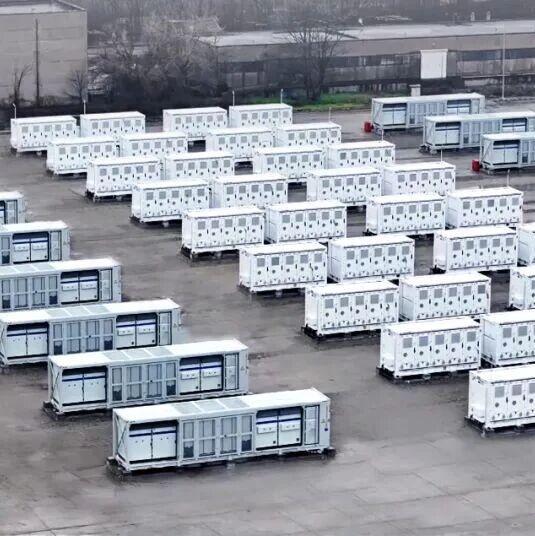
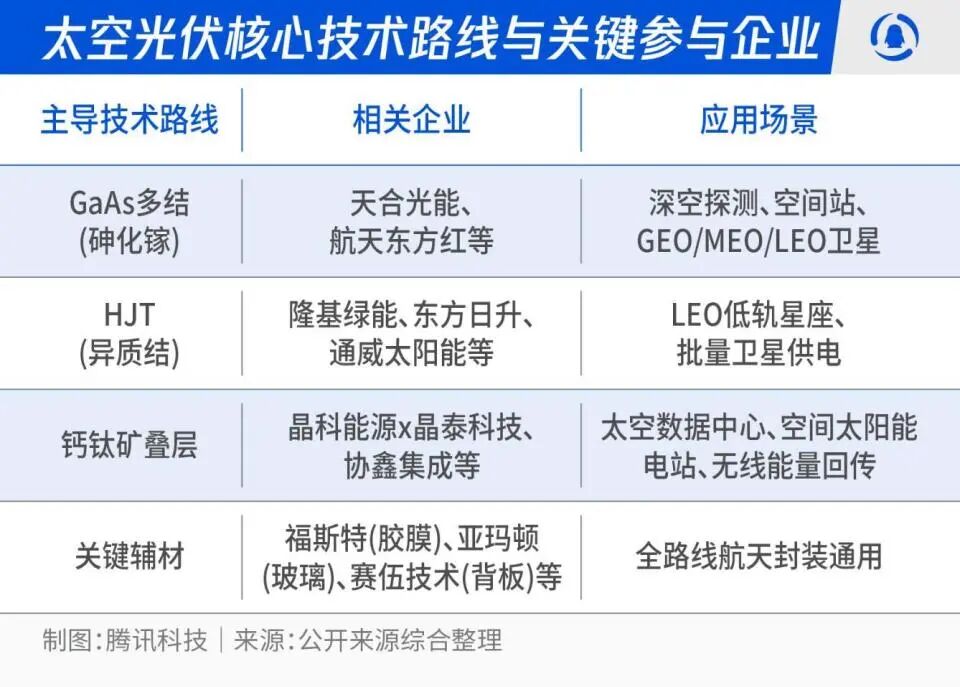
Core Viewpoint - The emergence of "space photovoltaics" is reshaping the value proposition for Chinese solar companies, positioning them as essential players in Elon Musk's space energy vision [1][4]. Group 1: Market Dynamics - The recent surge in the A-share market for solar stocks is driven by Musk's announcement at the Davos Forum about SpaceX and Tesla's plan to establish a solar production base with an annual capacity of 200GW, which is projected to meet nearly a quarter of the U.S. electricity demand [1][3]. - The excitement in the capital market is not merely speculative; it reflects a structural shift in the global energy landscape, with China having a significant role due to its established solar manufacturing capabilities [4][6]. Group 2: Industry Challenges and Opportunities - The solar industry has faced significant challenges over the past two years, including overcapacity and price wars, leading to widespread losses among companies, with projected losses totaling around 400 billion yuan [7]. - Musk's focus on space photovoltaics offers a new growth narrative for the industry, potentially alleviating some of the pressures from the current overcapacity situation [7][8]. Group 3: Technological Advancements - The global space photovoltaic market is expected to reach between $500 billion and $1 trillion by 2030, driven by the removal of traditional constraints faced by ground-based solar [3]. - The technology roadmap for space photovoltaics is anticipated to evolve through three phases, starting with GaAs cells for high-value applications, followed by HJT technology for low Earth orbit satellites, and eventually transitioning to perovskite tandem cells for large-scale deployments [9][10]. Group 4: Chinese Supply Chain Advantage - Chinese companies dominate over 70% of the global solar manufacturing supply chain, making them indispensable for any large-scale space photovoltaic initiatives, regardless of where the production is localized [5][11]. - The integration of space photovoltaics into China's existing energy infrastructure and policy frameworks positions the country favorably for future developments in this sector [5][12]. Group 5: Competitive Landscape - Various companies are exploring different technological pathways in the space photovoltaic sector, with some focusing on efficiency breakthroughs and others leveraging existing aerospace supply chain experience [11][12]. - The competition in space photovoltaics will involve not only technological advancements but also the ability to meet stringent aerospace certification requirements, which can create significant barriers to entry for new players [11][12].




光伏反内卷攻坚,政企同心方得始终
第一财经· 2026-01-27 13:08
Core Viewpoint - The photovoltaic industry is undergoing a deep reform to combat internal competition, with regulatory measures and policy adjustments reflecting a commitment to high-quality development. However, many companies are still facing significant losses, indicating that this battle is not a short-term fix but a necessary step to resolve structural issues within the industry [2][5]. Industry Performance - Major companies like Tongwei Co., Ltd. and LONGi Green Energy are projected to incur substantial losses in 2025, with estimated net losses of 9 to 10 billion yuan and 6 to 6.5 billion yuan respectively. Other companies such as JA Solar, JinkoSolar, and Trina Solar are also expected to report significant losses, highlighting the severe challenges faced by the industry [2][3]. - The average gross margin for the entire industry is only 3.64%, with many companies trapped in a cycle of "production equals loss" due to oversupply and rising raw material costs [3][4]. Causes of Losses - The industry's performance crisis is primarily attributed to excessive homogenous production capacity and fierce price competition, compounded by soaring raw material costs. The supply of silicon materials is projected to exceed global demand by more than double over the next three years, leading to a significant imbalance [3][4]. - The price of silver, a key material in photovoltaic cells, has surged by 231% in 2025, pushing companies to adopt cost-cutting measures at the expense of technological innovation and quality [4][5]. Recommendations for Improvement - Companies must shift their focus from price competition to technological innovation and quality improvement, investing in advanced battery technologies such as TOPCon, BC, and ABC to enhance efficiency and reduce costs [4][6]. - The industry needs to establish self-regulatory standards to combat unfair competition practices, such as selling below cost and misrepresenting product capabilities, while promoting collaboration among companies to consolidate resources [4][6]. Government Role - Government policies and regulatory actions are crucial for supporting the industry's reform efforts. A unified and clear policy direction is necessary to stabilize market expectations and foster industry consensus [5][6]. - Regulatory bodies should enhance oversight on low-price dumping and set higher energy consumption and environmental standards for mature production stages, while also optimizing bidding rules to prioritize technology and quality over price [5][6]. Future Outlook - The photovoltaic industry is at a critical juncture, with the potential for recovery as companies begin to reduce losses and improve profitability. Analysts suggest that the industry may see a turning point in profitability by early 2026 [6][7]. - A collaborative effort between companies and government is essential to ensure that innovation becomes the cornerstone of industry development, allowing China to transition from a manufacturing hub to a center of innovation in the global energy transformation [7].


多数光伏企业2025年延续亏损状态,部分企业锚定2026年业绩扭亏
第一财经· 2026-01-27 12:49
Core Viewpoint - The photovoltaic (PV) industry in A-shares is facing significant losses, with many leading companies projecting substantial pre-loss figures for 2025 due to a challenging operating environment and supply-demand imbalances [2][3]. Group 1: Financial Performance and Projections - Major PV companies are expected to report significant pre-loss figures for 2025, including Tongwei Co. with a projected loss of 9 to 10 billion yuan, LONGi Green Energy with 6 to 6.5 billion yuan, and JinkoSolar with 5.9 to 6.9 billion yuan [2]. - The overall operating environment remains difficult, with many companies experiencing nine consecutive quarters of losses since Q4 2023, driven by price declines and insufficient end-demand [3]. Group 2: Industry Dynamics - The PV module prices are under pressure due to "involutionary competition" and a lack of terminal demand, with market transaction prices around 0.6 yuan per watt expected in mid-2025 [3]. - The industry is witnessing a supply surplus, with production rates declining across various segments, while core material prices, such as silver, continue to rise [3]. Group 3: Recovery Efforts and Future Goals - Some companies are beginning to emerge from the loss cycle, with LONGi Green Energy projecting a maximum reduction in losses of 30.38% and Aiko Solar up to 77.44% compared to 2024 [4]. - The China Photovoltaic Industry Association noted a 16.9% year-on-year decline in revenue for the main industry chain in the first three quarters of 2025, but an improvement in gross margins to 3.64% [4]. - Several leading PV companies have set profit targets for 2026, with Trina Solar aiming for a net profit of no less than 200 million yuan and LONGi Green Energy targeting positive net profits in subsequent years [5].

多数光伏企业2025年延续亏损状态,部分企业锚定2026年业绩扭亏
Di Yi Cai Jing· 2026-01-27 10:56
Core Viewpoint - The keyword "pre-loss" has become prominent in the 2025 performance forecasts of various photovoltaic companies, indicating that most firms continue to face losses due to operational challenges and supply-demand imbalances in the industry [1] Group 1: Financial Performance - Leading photovoltaic companies are forecasting significant losses for 2025, with Tongwei Co. expecting a loss of 9 to 10 billion yuan, LONGi Green Energy forecasting a loss of 6 to 6.5 billion yuan, and JinkoSolar projecting a loss of 5.9 to 6.9 billion yuan [1] - The overall photovoltaic industry has experienced nine consecutive quarters of losses since Q4 2023, driven by a decline in component prices due to intense competition and insufficient end-user demand [1][2] Group 2: Industry Challenges - The photovoltaic industry is facing a supply surplus, with core raw material prices rising while product prices continue to decline, leading to significant operational pressure on companies [2] - The ongoing low operating rates and the deepening market reforms in the domestic electricity sector, along with increasing trade barriers abroad, have created a complex and challenging operating environment for photovoltaic companies [2] Group 3: Recovery Efforts - Some companies are beginning to emerge from the loss cycle, with LONGi Green Energy expecting to reduce losses by up to 30.38% and Aiko Solar by up to 77.44% compared to 2024 [2] - The China Photovoltaic Industry Association reported a 16.9% year-on-year decline in revenue for the main industry chain in the first three quarters of 2025, although gross margins improved to 3.64% [2] Group 4: Future Goals - Companies like Trina Solar have set profit targets for 2026, aiming for a net profit of no less than 200 million yuan, with increasing targets for subsequent years [3] - LONGi Green Energy's employee stock ownership plan also includes targets for positive net profit in 2026, with specific profit goals for 2027 and 2028 [3] Group 5: Price Adjustments - Trina Solar has raised its component prices three times this month, with prices now ranging from 0.88 to 0.92 yuan per watt, reflecting a response to industry self-discipline [4] - Major component manufacturers are increasing prices by 0.02 to 0.04 yuan per watt, and there is a growing willingness among intermediate suppliers to support price increases [4]
超2.4GWh!宁德时代、比亚迪储能等新项目集中落地
行家说储能· 2026-01-27 10:05
Core Insights - The article highlights the latest developments in energy storage projects from leading companies such as CATL, BYD, EVE Energy, Haibo Sichuang, Trina Storage, and Jinko Solar, with a total scale exceeding 2.4 GWh [2] Group 1: CATL - CATL's Sivrihisar project in Turkey, with a capacity of 49.2 MWp solar and 34.1 MWh storage, is the first hybrid asset approved under the DGES framework in Turkey [4][6] - The project utilizes CATL's EnerC series liquid-cooled battery system, enhancing safety and cycle life while maintaining stable charging and discharging efficiency in Turkey's arid climate [6] Group 2: BYD - BYD has successfully implemented a 100 MW/200 MWh energy storage station in Hezhou, marking the city's first centralized shared energy storage facility [7] - Additionally, BYD partnered with ContourGlobal to establish a 500 MWh standalone battery energy storage system in Bulgaria, which is one of the largest independent storage projects in Eastern Europe [9] - BYD has delivered over 500 energy storage projects globally, covering more than 110 countries and regions [9] Group 3: EVE Energy - EVE Energy has launched a 628 Ah energy storage battery technology at the Guangzhou Baiyun comprehensive energy storage demonstration project [10] - The 628 Ah battery, named "Mr. Big," features a capacity of 2 kWh and a cycle life exceeding 12,000 times, with a strategic collaboration with the National New Energy Storage Innovation Center [12] Group 4: Haibo Sichuang - Haibo Sichuang's 343 MWh emergency power storage project for coal mines utilizes advanced liquid-cooled storage systems designed for harsh environments [13][14] - The project aims to ensure stable operation under extreme conditions and provide emergency power to critical loads in coal mines [14] Group 5: Trina Storage - Trina Storage has successfully delivered a 1.7 GWh energy storage project in the Asia-Pacific region, which is the company's largest overseas project to date [17] - The project employs Trina's Elementa 2 storage system, featuring AI bionic liquid cooling technology for stable operation across a wide temperature range [17] Group 6: Jinko Solar - Jinko Solar has completed a 10 MWh energy storage project in Handan, Hebei, utilizing two Blue Whale SunTera G2 liquid-cooled storage systems [19][21] - The project aims to reduce operational costs through peak-valley electricity price arbitrage and improve the reliability of power supply for local merchants [21] - Despite reporting significant losses, Jinko Solar emphasizes rapid growth in its energy storage business and the effectiveness of its solar-storage synergy [21]