
BeiGene(688235)

Search documents
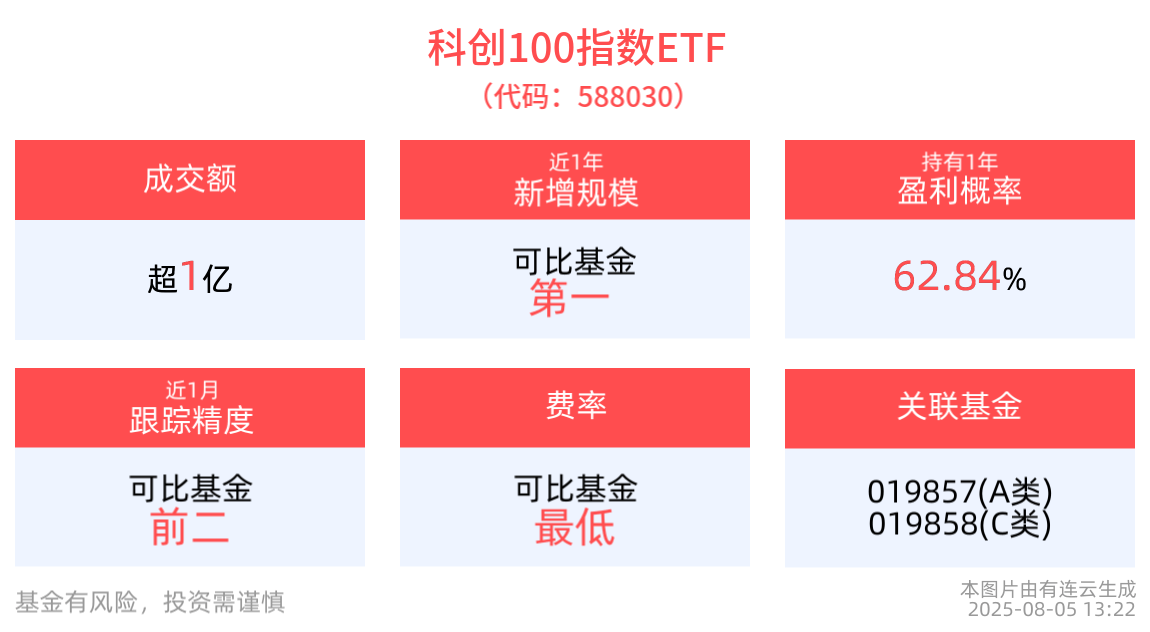
科创100指数ETF(588030)拉升翻红,近1年日均成交额超4亿元,上海政策支持企业加大基础研究投入力度
Sou Hu Cai Jing· 2025-08-05 05:41
Group 1 - The Shanghai Stock Exchange Sci-Tech Innovation Board 100 Index (000698) has shown a slight increase of 0.28% as of August 5, 2025, with notable gains from individual stocks such as Borui Pharmaceutical (688166) up by 6.56% and Huaheng Biological (688639) up by 5.88% [3][4] - The Sci-Tech 100 Index ETF (588030) has reported a 1.74% increase over the past week, with a current price of 1.11 yuan and a trading volume of 1.14 billion yuan [3][4] - The ETF has experienced a significant growth in scale, increasing by 13.55 million yuan over the past year, ranking first among comparable funds [4] Group 2 - The Shanghai Municipal Government has issued measures to support enterprises in enhancing basic research, particularly in critical fields such as integrated circuits, biomedicine, and artificial intelligence [4] - According to CITIC Securities, mainstream and niche storage prices are expected to rise in Q3 2025, with a focus on recommending leading storage chip design companies [4] - The latest financing buy-in amount for the Sci-Tech 100 Index ETF reached 11.4961 million yuan, with a financing balance of 177 million yuan [4] Group 3 - The Sci-Tech 100 Index ETF has achieved a net value increase of 22.98% over the past six months, ranking in the top 9.90% among equity funds [5] - The ETF has a management fee rate of 0.15% and a custody fee rate of 0.05%, which are among the lowest in comparable funds [5] - The ETF closely tracks the Sci-Tech Innovation Board 100 Index, which consists of 100 securities selected for their market capitalization and liquidity [6]


广生堂乙肝新药I期数据获《柳叶刀》背书,科创生物医药ETF(588250)备受关注
Xin Lang Cai Jing· 2025-08-05 05:32
Group 1: Breakthroughs in Innovative Drugs - The innovative drug sector has achieved significant breakthroughs, with Guangshantang's hepatitis B new drug Phase I data endorsed by The Lancet, targeting low-viral-load patients unresponsive to existing therapies, indicating a broad commercialization prospect [1] - Hanyu Pharmaceutical is exploring drug revenue rights tokenization, pioneering a new financing model in the biopharmaceutical sector [1] Group 2: Future Trends in Innovative Drugs - Dongwu Securities highlights four key points regarding the future of innovative drugs: 1) The fundamentals of two major leaders have changed, with BeiGene's revenue and profit expected to turn around by 2025, and Heng Rui's innovative drug proportion expected to exceed 50% in 2024 [2] - 2) The logic behind the two innovative drug bull markets differs, with the 2021 and 2025 markets driven by domestic commercialization and strategic overseas expansion, respectively [2] - 3) China is the second-largest source of quality innovative drug pipelines globally, holding 22% of global FIC pipelines, with a potential market share of $275 billion if the global market reaches $1.1 trillion by 2024 [2] - 4) The market capitalization of the healthcare sector in A-shares, Hong Kong, and U.S. markets is lower than that of the U.S., indicating structural growth opportunities for domestic innovative drug companies [2] Group 3: Performance of Biopharmaceutical Index - The STAR Market Biopharmaceutical Index (000683) includes 50 large-cap companies from various sectors, reflecting the overall performance of representative biopharmaceutical companies in the STAR Market [3] - As of July 31, 2025, the top ten weighted stocks in the STAR Market Biopharmaceutical Index accounted for 49.14% of the index, indicating a concentration of market value among leading companies [3]


这些股票,融资客大幅加仓
天天基金网· 2025-08-05 03:35
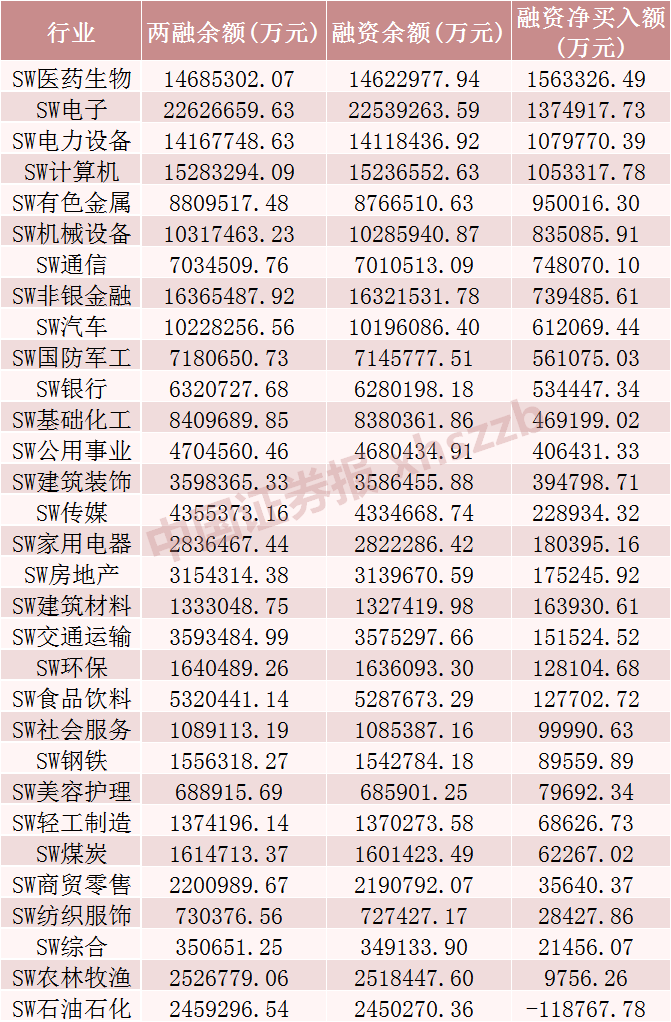
Core Viewpoint - Since July, the A-share market has rebounded, leading to a continuous increase in financing balance, reaching a record high in over 10 years by July 31 [1][3]. Financing Balance Overview - As of August 1, the A-share market financing balance was reported at 1,966.27 billion yuan, with a margin trading balance of 135.83 billion yuan. The financing balance increased by 128.13 billion yuan since July [1][3]. - In July, there were 24 trading days, with financing balance increases on 21 days, accounting for nearly 90%. Notably, on July 21, 22, 28, and 29, the financing balance increased by over 15 billion yuan each day [3]. Industry Performance - Among the 31 primary industries, 30 saw an increase in financing balance since July. The pharmaceutical and biological industry led with a net buying amount of 15.63 billion yuan, followed by electronics at 13.75 billion yuan and electric power equipment at 10.80 billion yuan [3][5]. - The only industry to experience net selling was the oil and petrochemical sector, with a net selling amount of 1.19 billion yuan [3]. Individual Stock Performance - The top ten stocks with the highest net buying amounts since July include: - Xinyi Technology: 3.18 billion yuan - Northern Rare Earth: 2.18 billion yuan - Shenghong Technology: 1.49 billion yuan - Feilihua: 1.46 billion yuan - Jianghuai Automobile: 1.41 billion yuan - WuXi AppTec: 1.37 billion yuan - CATL: 1.31 billion yuan - China Power Construction: 1.17 billion yuan - Kweichow Moutai: 1.08 billion yuan - Changjiang Electric Power: 1.07 billion yuan [7][8]. - The majority of these stocks have seen significant price increases, with Feilihua rising nearly 60% [7]. Net Selling Overview - Since July, 83 stocks experienced net selling exceeding 100 million yuan, with the top ten being: - CITIC Securities: -1.11 billion yuan - Sunshine Power: -767 million yuan - Wuliangye: -627 million yuan - Sifang Jingchuang: -569 million yuan - BOE Technology: -489 million yuan - BeiGene: -425 million yuan - Ningbo Bank: -395 million yuan - Muyuan Foods: -386 million yuan - GF Securities: -382 million yuan - Hengli Petrochemical: -367 million yuan [10][11]. Margin Trading Overview - As of August 1, the A-share market's margin trading balance was 135.83 billion yuan, with an increase of 1.28 billion yuan since July [13]. - The stocks with the highest margin trading balances included Kweichow Moutai, China Merchants Bank, and Ping An Insurance [13]. Conclusion - The A-share market has shown a robust increase in financing activities, particularly in the pharmaceutical and electronics sectors, indicating strong investor confidence and potential growth opportunities in these industries [1][3][5].






中国制药与生物技术行业的崛起-China Pharma and Biotech_Summer Healthcare Teach-in Series The Rise of China Biotechs
2025-08-05 03:20
Summary of China Pharma and Biotech Sector Conference Call Industry Overview - The Chinese pharmaceutical and biotech sector is experiencing a significant rally, with the Hang Seng Biotech and MSCI China Healthcare indices showing year-to-date (YTD) returns of 57% and 38%, respectively, outperforming broader market indices which are at 16-20% [1][10][26] - Public financing has increased fourfold in the first half of 2025 compared to the same period in 2024, driving IPO activity on the Hong Kong Stock Exchange, particularly in biotech [1][40] - Despite the rally, valuations have sharply re-rated, with China's biotech price-to-sales multiples now aligning with global peers, suggesting limited further upside compared to the peaks of 2020-2021 [1][11] Key Growth Drivers - Oncology and metabolic diseases are identified as primary growth drivers, with significant market potential in PD-1-based bispecific antibodies and GLP-1 drug classes [3][4] - The global market for PD-1-based bispecific antibodies could reach US$70-80 billion, while the domestic GLP-1 market is projected to hit CNY87 billion by 2035 [3] - Chinese companies are competitive in clinical results, particularly in lung cancer treatments, and domestic GLP-1 drugs are matching international efficacy [3][4] Company Highlights - **Akeso**: Leading in PD-1/VEGF bispecific antibodies with multiple phase 3 trials; however, overall survival results remain uncertain [4] - **Innovent**: Offers a diversified portfolio across various disease areas and leads in advanced antibody modalities [4] - **Hansoh**: Transitioning to innovation-driven growth with strong sales in its 3rd-generation EGFR inhibitor and significant GLP-1 business development deals [4] R&D and Innovation - The sector is shifting from me-too drugs to best-in-class and first-in-class assets, focusing on novel targets and drug combinations [2][38] - Clinical trial activity is robust, with Chinese assets comprising over 50% of new global trials in 2025 [2][42] - The number of new clinical trials has shown stable growth, with a notable increase in innovative drug approvals [42][65] Policy Environment - Government policies have fluctuated but are currently favorable, balancing innovation stimulation with price control [2][43] - Recent supportive policies include initiatives to cover innovative drugs under commercial insurance, indicating a long-term positive outlook for the sector [43] Out-Licensing Trends - Out-licensing activity has surged in 2025, with total deal value reaching US$59 billion, surpassing the previous year's total [72] - The focus has shifted from PD-1 drugs to PD-1/VEGF and GLP-1 assets, with significant deal values and upfront payments [75][72] - Despite the increase in total deal value, upfront payments in China still lag behind developed markets, indicating a need for caution regarding the sustainability of this growth [73][81] Investment Implications - Companies such as Akeso, Hansoh, Innovent, and Hengrui are rated as Outperform, while BeiGene, CSPC, Sino Biopharm, and Zai Lab are rated as Market-Perform [7] - The current rally may require new catalysts beyond existing out-licensing deals to sustain momentum, as valuation headroom appears limited [5][22] Conclusion - The Chinese pharma and biotech sector is evolving into a mature, innovation-driven industry with growing global competitiveness, tempered by valuation caution and sector uncertainties [5][11]
百济神州20250804
2025-08-05 03:15
Summary of BeiGene Conference Call Company Overview - **Company**: BeiGene - **Date**: August 4, 2025 Key Industry Insights - BeiGene is positioned to achieve profitability due to the market expansion of products like Zanubrutinib, supported by significant R&D investments totaling hundreds of billions [2][8] - The company is advancing in the CDK inhibitor space, particularly focusing on selective CDK4 inhibitors to enhance safety, with preliminary efficacy data disclosed [2][5] - BeiGene is actively pursuing global multi-center clinical development to reduce costs and accelerate timelines, which enhances asset value and lowers risk [2][6] Core Points and Arguments - **R&D Investment**: BeiGene has invested hundreds of billions in R&D, utilizing both expensing and capitalization methods to support self-sustaining capabilities and global clinical development [2][8] - **CDK Inhibitors**: The company plans to initiate a Phase III study for second-line HR-positive breast cancer in Q4 2025, with ongoing exploration of CDK12 and CDK2 products [2][11] - **Clinical Development Strategy**: By independently conducting clinical trials, BeiGene has reduced costs and improved speed, allowing for quicker proof of concept (POC) results [2][6] - **Protag Platform**: The BDK protect product has entered Phase III trials, showing a progression-free survival (PFS) of 22.8 months, significantly outperforming similar drugs [2][12] - **ADC Developments**: BeiGene's B7H4 ADC has shown an overall response rate (ORR) of 48%, with plans to start Phase III trials in 2026 [2][17] - **Collaboration Opportunities**: As early pipelines yield POC results, BeiGene is expected to gain leverage in partnerships, particularly in the HR-positive breast cancer market [2][7] Additional Important Insights - **Safety Concerns**: BeiGene is addressing safety issues associated with CDK4/6 inhibitors, with initial results indicating a favorable safety profile compared to competitors [2][10] - **Future Plans**: The company anticipates 2025 to be a pivotal year for transitioning to profitability, with multiple early pipeline data readouts expected [2][23] - **Innovative Approaches**: BeiGene is exploring new drug mechanisms in the KRAS inhibitor space and has developed multi-specific antibody technologies [2][19][22] - **Market Potential**: The PRMT5 target for MTAP mutant tumors presents significant market potential, with plans for combination therapies to enhance efficacy [2][21] This summary encapsulates the critical insights and strategic directions of BeiGene as discussed in the conference call, highlighting its commitment to innovation and market expansion in the biopharmaceutical industry.

中证香港100医药卫生指数报1091.30点,前十大权重包含百济神州等
Jin Rong Jie· 2025-08-04 07:38
Core Points - The China Securities Hong Kong 100 Pharmaceutical and Health Index (H100 Pharmaceutical, L11185) reported a significant increase, with a 20.90% rise over the past month, 36.74% over the past three months, and an impressive 88.77% year-to-date [1] Group 1 - The index is classified according to the China Securities industry classification standards, with all securities in each industry forming the corresponding industry index sample [1] - The base date for the index is December 31, 2004, with a base point of 1000.0 [1] - The index is fully composed of stocks listed on the Hong Kong Stock Exchange, with a 100.00% allocation [1] Group 2 - The composition of the H100 Pharmaceutical Index includes 54.55% in chemical drugs, 19.02% in biological drugs, 15.26% in pharmaceutical and biotechnology services, and 11.18% in medical commerce and services [1] - The index sample is adjusted biannually, with adjustments occurring on the next trading day after the second Friday of June and December [2] - Weight factors are generally fixed until the next scheduled adjustment, with special circumstances allowing for temporary adjustments [2]
这些股票,融资客大幅加仓
Zhong Guo Zheng Quan Bao - Zhong Zheng Wang· 2025-08-04 04:44
Core Insights - Since July, the A-share market has rebounded, leading to a continuous increase in financing balance, reaching 19,662.74 billion yuan as of August 1, with a net increase of 1,281.25 billion yuan in July, marking a new high in over 10 years [1][2] Financing Balance Overview - As of August 1, the A-share market's total margin balance is reported at 19,798.57 billion yuan, with the financing balance at 19,662.74 billion yuan, reflecting an increase of 1,281.25 billion yuan since July [2] - In the 24 trading days since July, financing balance increased on 21 days, accounting for nearly 90% of the time, with significant increases on July 21, 22, 28, and 29, each exceeding 150 billion yuan [3] Industry Performance - Among the 31 primary industries, 30 saw an increase in financing balance since July, with the pharmaceutical and biological industry leading with a net increase of 156.33 billion yuan, followed by electronics and power equipment [3] - The computer industry also reported a net increase of over 100 billion yuan, while only the oil and petrochemical industry experienced a net sell-off of 11.88 billion yuan [3] Stock Performance - The top ten stocks with the highest net buying amounts since July include Xinyi Technology (31.80 billion yuan), Northern Rare Earth (21.76 billion yuan), and Shenghong Technology (14.91 billion yuan), with most of these stocks showing significant price increases, particularly Feilihua, which rose nearly 60% [3] - Conversely, the top ten stocks with the highest net selling amounts include CITIC Securities (11.11 billion yuan) and Sunshine Power (7.67 billion yuan), with most of these stocks also experiencing price increases, notably Guangfa Securities, which rose over 15% [5] Margin Trading Overview - As of August 1, the margin trading balance reached 135.83 billion yuan, with an increase of 12.79 billion yuan since July, and a total of 28.72 billion shares available for margin trading [6] - The stocks with the highest margin trading balances include Kweichow Moutai (0.97 billion yuan), China Merchants Bank (0.68 billion yuan), and Ping An Insurance (0.68 billion yuan) [6]




特朗普逼跨国药企砍价:哪些中国企业获益?
Hu Xiu· 2025-08-03 05:34
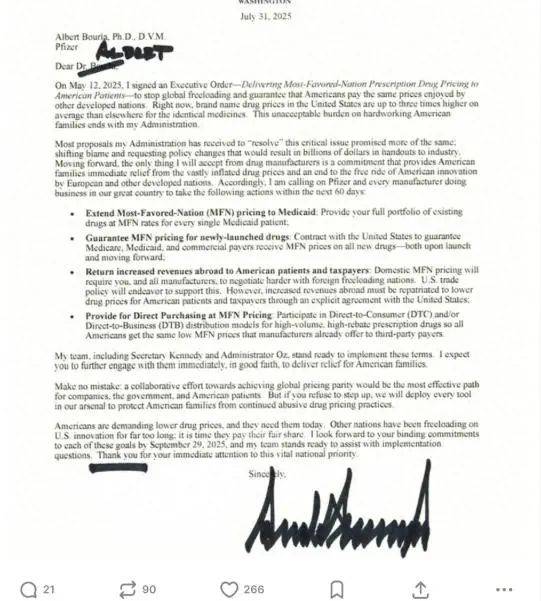
Core Viewpoint - The article discusses the significant price disparity of prescription drugs in the U.S. compared to other developed countries, leading to new policies aimed at price control and the potential impact on multinational pharmaceutical companies and emerging markets [1][2]. Group 1: U.S. Drug Pricing Policies - U.S. prescription drug prices are 2-3 times higher than those in other developed countries, with some innovative drugs priced at 10 times higher than in China [1] - New policies require pharmaceutical companies to provide "most favored nation pricing" to U.S. Medicare, sign contracts for price locking, renegotiate overseas prices to "repatriate profits," and promote direct sales for price transparency [1][2] - The Pharmaceutical Research and Manufacturers of America (PhRMA) criticized these policies, claiming they would undermine U.S. innovation [1][2] Group 2: Multinational Pharmaceutical Companies' Strategies - Companies like Johnson & Johnson, Pfizer, and Merck are adopting multi-faceted strategies to balance profits and compliance, including adjusting global pricing strategies [3] - Some companies are lowering prices in the U.S. while increasing prices in other markets to maintain profit margins, with AstraZeneca already announcing price reductions for certain drugs in the U.S. [3][4] - To offset profit losses, companies may raise prices in emerging markets like China, where the annual treatment cost for PD-1 drugs is approximately 1.16 million yuan, ten times higher than in China [4] Group 3: Cost Optimization Strategies - Cost reduction is a core objective, leveraging China's low-cost advantages, where biopharmaceutical R&D costs are 1/5 to 1/10 of those in the U.S. [5] - Pfizer has signed over $1 billion in CDMO orders with Chinese companies to transfer some biopharmaceutical production to China, reducing production costs by 30% [5][6] - Companies are also transferring non-core technologies to China to avoid tariffs and lower costs, such as Pfizer's collaboration with Chinese firms to establish PD-1 production bases [6][7] Group 4: Legal and Policy Maneuvering - Industry associations and pharmaceutical companies are using legal and political avenues to resist new policies, with PhRMA planning to appeal to the WTO regarding the "most favored nation pricing" requirement [10] - They are lobbying Congress, arguing that foreign price controls could reduce U.S. R&D investment by $10 billion annually [10] Group 5: Opportunities and Challenges for Chinese Companies - Chinese companies are positioned to benefit from accelerated domestic substitution, with local biosimilars gaining price advantages [11] - CDMO businesses are expanding, with WuXi Biologics reporting a 144% year-on-year increase in CDMO revenue in the first half of 2025 [12] - Chinese pharmaceutical companies are also achieving breakthroughs in international markets through licensing agreements, with total upfront payments reaching $2.329 billion in the first half of 2025 [13] Group 6: Beneficiary Companies - Companies in the biosimilar sector, such as Innovent Biologics and Antengene, are expected to gain market share as multinational firms raise prices in China [16] - WuXi Biologics is recognized as a leading global CDMO, while other companies like Eastone and Hengrui are also expanding their CDMO projects [17] - Chinese firms that have established production facilities in India and Southeast Asia, like Huahai Pharmaceutical, are likely to benefit from reduced reliance on the U.S. market [19]


创新药板块持续领涨 医药主题基金强势回归市场C位
Huan Qiu Wang· 2025-08-03 01:44
Core Viewpoint - The innovative drug sector has emerged as a hot investment theme in the capital market this year, driven by a combination of policy, technology, and capital dynamics, leading to a significant recovery in the overall valuation of the pharmaceutical industry and making pharmaceutical-themed funds a major attraction for investors [1][3]. Group 1: Market Performance - Since the beginning of the year, the innovative drug sector has outperformed the market, with stocks like Heng Rui Medicine and BeiGene reaching new highs, contributing to a more than 25% increase in the pharmaceutical and biotechnology index [3]. - In July, the index saw a monthly increase of over 12%, fueled by a wave of mergers among global pharmaceutical giants and successful overseas licensing of domestic innovative drugs [3]. - Over 80% of the more than 200 pharmaceutical-themed funds achieved positive returns year-to-date, with the top-performing fund, Yongying Pharmaceutical Health A, leading with a 34.2% monthly increase [3][4]. Group 2: Investor Sentiment and Fund Flows - The recovery of pharmaceutical funds is notable, with nine out of the top ten actively managed equity funds focusing on the pharmaceutical sector, contrasting sharply with last year's lack of interest [4]. - Recent surveys indicate that investor interest in pharmaceutical funds has reached its highest level since 2021, with over 40% of newly launched funds focusing on healthcare themes [4]. - Northbound capital saw a net purchase of over 8 billion yuan in the pharmaceutical and biotechnology sector in July, leading all sectors [4]. Group 3: Long-term Outlook - The pharmaceutical industry is still valued below its historical median, but the innovation cycle is irreversible, with domestic companies transitioning from "following innovation" to "source innovation" [4]. - The next 3-5 years are expected to see the emergence of globally competitive companies in the pharmaceutical sector, creating excess returns for investors [4][5]. - Analysts suggest that despite increased short-term trading activity, the strategic value of the pharmaceutical sector remains unchanged, recommending investors focus on the innovative drug supply chain, high-end medical devices, and consumer healthcare sectors [5].

百济神州(688235) - 港股公告:翌日披露报表
2025-08-01 09:00
FF305 翌日披露報表 (股份發行人 ── 已發行股份或庫存股份變動、股份購回及/或在場内出售庫存股份) 表格類別: 股票 狀態: 新提交 公司名稱: 百濟神州有限公司 (根據瑞士法律註冊成立的公司) 呈交日期: 2025年8月1日 如上市發行人的已發行股份或庫存股份出現變動而須根據《香港聯合交易所有限公司(「香港聯交所」)證券上市規則》(「《主板上市規則》」)第13.25A條 / 《香港聯合交易所有限公司GEM證券 上市規則》(「《GEM上市規則》」)第17.27A條作出披露,必須填妥第一章節 。 | 第一章節 | | | | | | | | | --- | --- | --- | --- | --- | --- | --- | --- | | 1. 股份分類 | 普通股 | 股份類別 | 不適用 | | 於香港聯交所上市 | 是 | | | 證券代號 (如上市) | 06160 | 說明 | | | | | | | A. 已發行股份或庫存股份變動 | | | | | | | | | | | | 已發行股份(不包括庫存股份)變動 | | 庫存股份變動 | | | | 事件 | | 已發行股份(不包括庫存股 ...