Cambricon(688256)

Search documents
寒武纪:预计2025年净利润18.5亿元至21.5亿元,同比扭亏为盈
Zheng Quan Ri Bao Wang· 2026-02-08 13:48
证券日报网讯1月30日,寒武纪发布公告称,预计2025年归属于上市公司股东的净利润为18.50亿元至 21.50亿元,同比扭亏为盈。报告期内,受益于人工智能行业算力需求的持续攀升,公司凭借产品的优 异竞争力持续拓展市场,积极推动人工智能应用场景落地,本期营业收入较上年同期大幅增长,进而带 动公司整体经营业绩提升,净利润实现扭亏为盈。 ...

避险情绪升温科技板块深度调整,节前A股风格显著切换
Di Yi Cai Jing Zi Xun· 2026-02-08 10:04
Core Viewpoint - The A-share market experienced a significant style switch in the first week of February, with the technology sector undergoing a deep adjustment while defensive sectors like liquor and real estate showed resilience [1][4]. Group 1: Technology Sector Performance - The technology sector faced a comprehensive pullback, with the electronic industry market capitalization dropping by approximately 890 billion yuan, and leading stocks like Zhongji Xuchuang and Xinyi Sheng seeing weekly declines exceeding 13% [1][2]. - The electronic industry recorded a trading volume of 313.9 billion yuan, marking a new high for the year, while the industry index fell by 5.22% and the communication sector by 6.94% [2][3]. - The ChiNext 50 index, representing the technology sector, experienced its largest weekly decline since November 2025, with a drop of 5.76% [2]. Group 2: Market Dynamics and Investor Behavior - The market's risk appetite for technology stocks has notably decreased, with many stocks retreating 20% to 30% from their recent highs, indicating a significant sell-off [3][4]. - The upcoming Spring Festival led to increased risk aversion among investors, prompting them to shift from high-volatility sectors to those with stronger earnings certainty [1][4]. - High valuations in the technology sector, with the electronic industry's price-to-earnings ratio at 69.76, have created substantial internal adjustment pressure [4][5]. Group 3: Factors Influencing the Adjustment - Multiple factors contributed to the technology sector's deep pullback, including seasonal trading patterns, high valuations prompting profit-taking, and increased market volatility due to external macroeconomic conditions [4][5]. - The anticipation of rising interest rates in the U.S. has negatively impacted technology stock valuations, as indicated by market reactions to Federal Reserve signals [5][6]. - The shift of funds from technology stocks to defensive sectors like liquor and real estate suggests a phase of market style transition, with investors seeking stability amid uncertainty [6].




AI周报 | 微信屏蔽元宝、千问红包链接;马斯克宣布SpaceX收购xAI
Di Yi Cai Jing Zi Xun· 2026-02-08 01:05
微信屏蔽元宝、千问红包链接 2月4日上午,记者在微信群中点入好友发出的元宝红包,显示"网页包含诱导分享、关注等诱导行为", 提醒用户可以通过浏览器访问。随后,元宝红包在微信的分享改为口令的形式。微信安全中心公众号发 文称,微信对以春节为主题集中爆发的过度营销、诱导分享等违规行为进行打击。2月6日,千问在春节 活动的第一天,微信链接也被屏蔽了,部分用户在千问APP点击分享活动至微信好友时,已自动改为复 制口令形式。 【点评】:这场争夺AI入口的春节"撒币"大战,正变得前所未有地复杂与激烈。各厂商抢夺AI入口,但 可能都没有预料到,最激烈的竞争出现在国内最大的社交平台微信上。目前看来,或许微信社交裂变的 方式无法成为任何一家AI应用厂商扩大用户池的杀手锏。或许各大厂商接下来要靠产品实力说话了。 SpaceX收购xAI,马斯克打造AI太空帝国 当地时间2月2日,马斯克旗下的太空探索技术公司SpaceX宣布收购人工智能初创公司xAI。在公告中, 马斯克强调,将xAI并入SpaceX,旨在打造一个"垂直整合的创新引擎",覆盖从地面到太空的完整技术 链条。该公告发布于xAI官网,并由马斯克本人署名。据外媒援引知情人士消息 ...



中国500强,上海增速第一!
财联社· 2026-02-06 14:58
Core Insights - The total value of the top 500 companies in China increased by 21 trillion yuan (38%), reaching 77 trillion yuan, with an average value growth of 41.5 billion yuan, now at 153 billion yuan [4][5] - The entry threshold for the list rose to 34 billion yuan, an increase of 7.5 billion yuan from the previous year, marking a historical high [4][5] - The technology sector continues to be a growth engine, with significant increases in the number and market value of companies in semiconductor, biomedicine, artificial intelligence, and new energy sectors [4][6] Industry Performance - The semiconductor sector has emerged as a leading industry, surpassing life sciences to become the second-largest sector in the list, with TSMC's value increasing by 3.5 trillion yuan, making it the highest-valued private enterprise in China [6][7][12] - New entrants in the semiconductor industry have become crucial for growth, with 95 new companies on the list, including two new semiconductor firms valued over 100 billion yuan [7][12] - The life sciences sector remains robust, with companies like BeiGene and Hansoh Pharmaceutical showing significant value increases, indicating steady growth despite being overtaken by semiconductors [7][12] Regional Highlights - Shanghai has 57 companies on the list, an increase of 7 from the previous year, making it the city with the fastest growth in the number of listed companies [14][15] - The city is a preferred research and development base, with 101 companies establishing their main R&D facilities there, highlighting its strategic importance in the tech sector [14][15] - Shanghai's companies are primarily concentrated in high-tech sectors such as semiconductors and life sciences, aligning with national trends towards innovation-driven industries [15][16] Emerging Trends - Nearly 40% of this year's listed companies were not on the list four years ago, indicating a dynamic shift in the corporate landscape [6][13] - The focus on hard technology is evident, with a significant number of new companies in AI computing, consumer electronics, and new energy sectors [6][10] - The integration of the Yangtze River Delta region has fostered a collaborative development environment, with 161 companies from this area making it to the list, accounting for 32% of the total [16]


科创板企业扎堆登陆“中国500强”
3 6 Ke· 2026-02-06 10:55
Group 1 - The total value of the top 500 companies in China increased by 21 trillion yuan (38%), reaching 77 trillion yuan, with an average value growth of 41.5 billion yuan, now at 1.53 trillion yuan [1][2] - The entry threshold for the list rose to 34 billion yuan, an increase of 7.5 billion yuan from the previous year, marking a historical high [1][2] - The technology sector continues to be a growth engine, with significant increases in the number and market value of companies in semiconductor, biomedicine, artificial intelligence, and new energy sectors [1][2] Group 2 - Nearly 40% of this year's listed companies were not on the list four years ago, with new entrants primarily from consumer electronics, AI computing, and new energy sectors [2] - The semiconductor industry surpassed the life sciences sector to become the second-largest industry in the list, with TSMC leading the growth [3] - Notable semiconductor companies include TSMC, which saw a value increase of 3.5 trillion yuan, and Cambrian, which grew by 370 billion yuan [3] Group 3 - The new energy sector also performed well, with CATL's value increasing by 690 billion yuan, and other companies like Sungrow and EVE Energy showing significant growth [4] - The Shanghai region had 57 companies on the list, an increase of 7 from the previous year, making it the city with the fastest growth in the number of listed companies [10] - Shanghai is a key research and development hub, with 101 companies establishing their main R&D bases there, reflecting its strong innovation capabilities [10][11] Group 4 - The STAR Market (科创板) has a strong presence in the list, with 45 companies, showcasing the focus on hard technology sectors like semiconductors and biomedicine [6][7] - The semiconductor sector is particularly prominent among STAR Market companies, with many of the highest-valued startups in this field [8] - The overall trend indicates that STAR Market companies are in a high-growth phase, aligning with the broader trend of nearly 40% of this year's companies being new entrants [9]



寒武纪股价连续5天下跌累计跌幅17.84%,摩根士丹利基金旗下1只基金持4657股,浮亏损失104.57万元
Xin Lang Cai Jing· 2026-02-06 07:33
Group 1 - The core point of the news is that Cambricon Technologies has experienced a significant decline in stock price, dropping 2.27% to 1034.34 yuan per share, with a total market capitalization of 436.166 billion yuan and a cumulative drop of 17.84% over the past five days [1] - Cambricon Technologies, established on March 15, 2016, and listed on July 20, 2020, specializes in the research, design, and sales of artificial intelligence core chips for various cloud servers, edge computing devices, and terminal equipment [1] - The company's main business revenue composition is as follows: cloud products account for 99.62%, other (supplementary) 0.32%, edge products 0.05%, and IP licensing and software 0.00% [1] Group 2 - From the perspective of major fund holdings, Morgan Stanley has one fund heavily invested in Cambricon, with a reduction of 1,855 shares in the fourth quarter, holding a total of 4,657 shares, which represents 4.85% of the fund's net value [2] - The fund, named Morgan Stanley Emerging Industries Stock (010322), has a current scale of 130 million yuan and has reported a year-to-date return of 0.67% [2] - The fund manager, Chen Xiuzhu, has been in position for 2 years and 345 days, with the best fund return during the tenure being 22.59% and the worst being -22.63% [2]
芯片龙头ETF(516640)开盘跌1.75%,重仓股寒武纪跌1.49%,中芯国际跌1.48%
Xin Lang Cai Jing· 2026-02-06 06:43
Group 1 - The core viewpoint of the article highlights the performance of the Chip Leader ETF (516640), which opened down by 1.75% at 1.122 yuan on February 6 [1] - Major holdings in the Chip Leader ETF experienced declines, with notable drops including Cambrian (down 1.49%), SMIC (down 1.48%), and GigaDevice (down 2.43%) [1] - The ETF's performance benchmark is the CSI Chip Industry Index return, managed by Fortune Fund Management Co., Ltd., with a return of 14.35% since its inception on August 19, 2021, and a return of 2.83% over the past month [1]



半导体ETF(159813)开盘跌1.34%,重仓股中芯国际跌1.48%,海光信息跌1.00%
Xin Lang Cai Jing· 2026-02-06 05:40
Group 1 - The semiconductor ETF (159813) opened down 1.34% at 1.182 yuan on February 6 [1] - Major holdings in the semiconductor ETF experienced declines, including SMIC down 1.48%, Haiguang Information down 1.00%, and Cambrian down 1.49% [1] - The performance benchmark for the semiconductor ETF is the National Securities Semiconductor Chip Index return rate, managed by Penghua Fund Management Co., Ltd. [1] Group 2 - Since its establishment on April 17, 2020, the semiconductor ETF has returned 79.62%, with a return of 3.35% over the past month [1]
科创芯片ETF(588200)开盘跌1.60%,重仓股中芯国际跌1.48%,海光信息跌1.00%
Xin Lang Cai Jing· 2026-02-06 01:41
Core Viewpoint - The Sci-Tech Chip ETF (588200) opened with a decline of 1.60%, indicating a negative market sentiment towards the semiconductor sector on February 6 [1] Group 1: ETF Performance - The Sci-Tech Chip ETF (588200) opened at 2.525 yuan, reflecting a decrease of 1.60% [1] - Since its establishment on September 30, 2022, the ETF has achieved a return of 157.22% [1] - The ETF has recorded a return of 4.60% over the past month [1] Group 2: Major Holdings Performance - Key holdings in the ETF include: - SMIC (中芯国际) down 1.48% [1] - Haiguang Information (海光信息) down 1.00% [1] - Cambricon (寒武纪) down 1.49% [1] - Lattice Semiconductor (澜起科技) down 1.87% [1] - Zhongwei Company (中微公司) down 1.23% [1] - Tuojing Technology (拓荆科技) down 0.37% [1] - Chipone (芯原股份) down 3.69% [1] - Hua Hong Semiconductor (华虹公司) down 1.90% [1] - Hu Silicon Industry (沪硅产业) unchanged [1] - Dongxin Co. (东芯股份) down 1.37% [1]


利空来袭!寒武纪一个月暴跌30%、三只明星芯片股正在被市场抛弃
Sou Hu Cai Jing· 2026-02-06 01:24
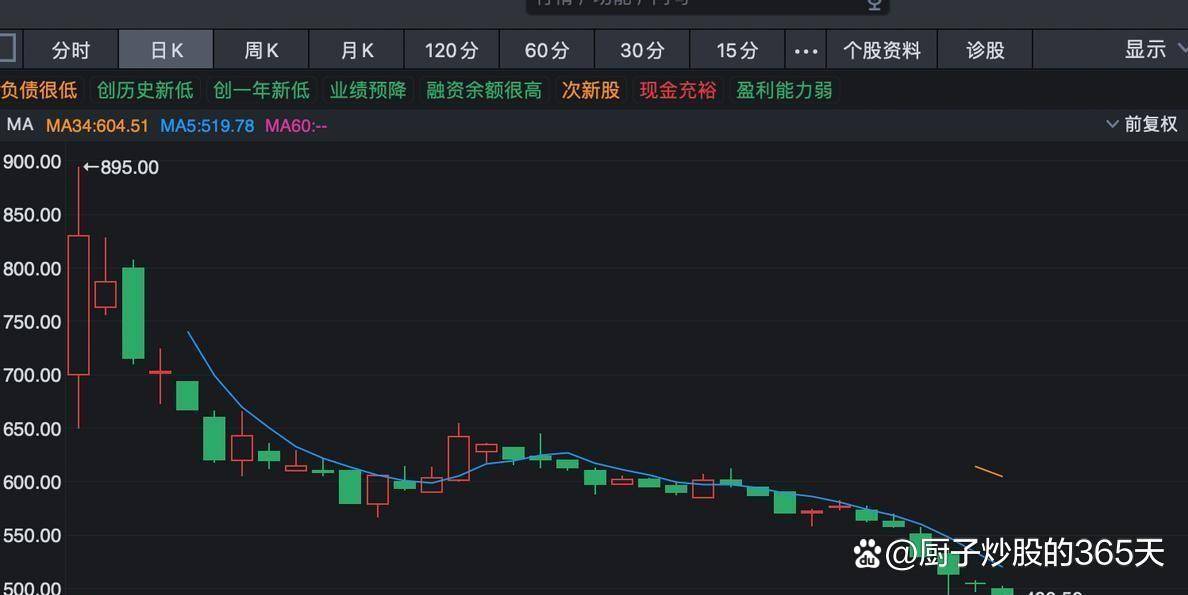
Core Viewpoint - The A-share technology sector, particularly in the chip and AI markets, is experiencing a significant downturn, with previously high-flying companies like Cambricon, Moore Threads, and Muxi falling sharply in stock prices, raising concerns about the end of the tech bull market [1][3]. Company Analysis - Cambricon was once a star in the AI chip sector, with its stock price peaking above 1500 yuan but has since dropped to 1058 yuan, a decline of over 30% in just one month [3]. - Moore Threads has seen its stock plummet from a high of 941 yuan to 539 yuan, a drop exceeding 40% [3]. - Muxi, which peaked at 895 yuan, is now nearing a 50% decline, currently at 490 yuan [3]. - The AI computing chip sector saw a net outflow of 2.454 billion yuan in a single day, indicating a significant withdrawal of capital [3]. Financial Performance - Cambricon projects revenues of 6 to 7 billion yuan by 2025, a growth of 4 to 5 times, and anticipates turning a profit [4]. - However, its net profit showed a decline in the fourth quarter, raising doubts about the sustainability of its earnings [4][6]. - Cambricon's revenue is heavily reliant on a few major clients, making it vulnerable to changes in their orders [6]. - Moore Threads and Muxi are facing even more severe challenges, with projected losses of 650 million to 798 million yuan and 950 million to 1.06 billion yuan, respectively, for 2025 [7]. Market Dynamics - The competitive landscape for domestic AI chips has intensified, with major players like Huawei and Alibaba capturing significant market shares, leaving smaller companies like Moore Threads and Muxi struggling to gain traction [10]. - The return of NVIDIA's high-end chips to the Chinese market poses a further threat to domestic chip companies, as clients may prefer more established products [10]. - The rapid pace of technological advancement in the chip industry necessitates continuous investment in R&D, which is costly and can lead to financial strain [11]. Investor Sentiment - The shift in market sentiment from speculative investments to a focus on tangible performance has led to a reevaluation of these companies' valuations, resulting in significant stock price declines [13]. - The AI computing chip sector experienced a net outflow of 2.454 billion yuan, highlighting the lack of investor confidence [13]. - Companies like Muxi and Moore Threads have high financing ratios, which could exacerbate stock price declines if they hit margin call thresholds [13]. Conclusion - The combination of weak financial performance, intense competition, and changing investor sentiment has created a perfect storm for these companies, leading to dramatic stock price declines [14]. - The market's focus has shifted from growth potential to survival, raising concerns about the future viability of these firms [14].