TRINA(688599)

Search documents
华福证券,遭警示函“连击”
Shen Zhen Shang Bao· 2025-11-24 07:35
近日,华福证券因在江平生物2021年、2022年2次定向发行推荐工作中未能充分勤勉尽责,被厦门证监局出具警示函。 公告称,华福证券作为原新三板挂牌公司江平生物的主办券商,在江平生物2021年、2022年2次定向发行推荐工作中,未能充分勤勉尽责,未对其有关信 息披露文件和定向发行申请文件认真履行审慎核查职责,未能及时发现江平生物定向发行说明书存在虚假记载的情形,未能保证公司所出具的推荐工作报 告以及对其定向发行说明书核查意见的真实性、准确性。 根据相关规定,厦门证监局决定对华福证券采取出具警示函的监督管理措施,并将相关情况记入诚信档案。华福证券应充分关注挂牌公司财务内控有效 性,健全挂牌公司持续督导及定向发行推荐业务内控制度,落实勤勉尽责要求,切实提高执业质量水平。 这并非华福证券今年首次因投行业务违规被警示。就在今年5月,上交所已对华福证券出具书面警示函,原因是其在某发行人非公开发行公司债券项目的 挂牌申请中,对于发行人贸易业务商业合理性及收入确认依据核查不充分,相关尽调程序执行不到位,质控部门未提示项目组重点核查,内核部门也未进 行重点审议。 此外,华福证券分公司今年也曾被警示。4月,上海证监局对华福证券上 ...



共话"十五五"新能源产业: 光储氢如何实现高质量发展?
2 1 Shi Ji Jing Ji Bao Dao· 2025-11-24 03:17
Core Insights - The rapid development of China's new energy industry is highlighted, with a focus on the "14th Five-Year Plan" and the upcoming "15th Five-Year Plan" emphasizing the need for a new energy system and high-quality development in the sector [1][2] - The transition towards green and low-carbon energy is a key focus, with energy security being identified as a primary task for the industry during the "15th Five-Year Plan" [2][4] - The integration of various energy sources, particularly solar and storage technologies, is seen as essential for achieving high-quality growth and meeting future energy demands [5][6] Group 1: Industry Development - The "15th Five-Year Plan" aims to promote quantum technology, hydrogen energy, and new energy storage as new economic growth points [1] - The average cost of wind and solar energy has significantly decreased over the past decade, with wind power costs dropping over 60% and solar power costs falling over 80% [2] - The Chinese energy industry has established a comprehensive manufacturing and design system for wind and solar energy, with a significant portion of global components sourced from China [2][3] Group 2: Technological Trends - The solar photovoltaic industry is expected to focus on optimizing silicon technology, with a shift towards using less silver and more cost-effective metals like copper and aluminum [3] - Lithium-ion batteries, particularly lithium iron phosphate batteries, are projected to maintain a dominant market share in new energy storage for the next five years [3] - The development of hydrogen energy is entering a critical phase, with expectations for commercial viability by 2030 [4] Group 3: Market Dynamics - The energy sector is transitioning from a focus on scale and cost to a more integrated approach that emphasizes system synergy and efficiency [4][5] - The competition in the energy storage market is shifting from scale to comprehensive capabilities in technology, application scenarios, and service [5][6] - The need for market rule restructuring is emphasized to support healthy industry development and effective price risk management [5][6] Group 4: Case Studies and Innovations - A series of innovative applications and technologies in the new energy sector have been recognized, showcasing advancements in green technology and low-carbon solutions [8][9] - The "21st Century New Energy New Quality" initiative has identified exemplary cases that reflect the high-quality development of the new energy industry [8][9] - The launch of the "Energy Digitalization Development White Paper" aims to explore the integration of digital technology in the energy sector, promoting smart and efficient energy management [11][12]




天合光能受累行业周期前9月亏42亿高海纯推动产业战略跃迁谋突围
Chang Jiang Shang Bao· 2025-11-24 02:28
●长江商报记者 沈右荣 一场喜事将市场的目光聚焦于光伏巨头天合光能(688599.SH)。 1997年起步于江苏常州的小作坊,在高纪凡的引领下不断成长壮大,如今已跃升为全球光伏组件巨头。 数据显示,2024年,天合光能组件出货量突破80GW,连续6年位居全球前三,业务覆盖180多个国家。 有人总结过,过去20多年,天合光能曾多次穿越行业周期。 不过,时下的光伏"寒冬",天合光能受到冲击。继2024年亏损后,2025年前三季度,公司再亏42亿元。 高纪凡、高海纯父女已经推动了天合光能产业转型,培育了第二个增长曲线——分布式智慧能源业务, 形成了"光伏制造 + 能源解决方案" 双轮驱动的业务模式。 2025年6月,高纪凡曾在一次会展期间表示,未来两三年,天合光能的解决方案的收入占比将超过 50%。 天合光能借助研发创新支撑其产业升级。2025年前三季度,公司研发投入约32亿元,超过了2024年全 年。 "二代"高海纯承担着天合光能突围的重任,她能顺利到达成功的彼岸吗? 高纪凡27年打造组件帝国 此后,天合光能继续在全球市场加码布局,成长为全球光伏组件巨头。 2004年,欧盟对中国光伏组件发起反倾销调查,硅料价格暴 ...
基金经理的“光伏局”: 谁在黎明前转向 谁又在等天亮
Zhong Guo Zheng Quan Bao· 2025-11-23 21:40
Core Viewpoint - The photovoltaic (PV) industry is experiencing a significant turnaround after a prolonged downturn, with the PV index rising over 30% from July 1 to November 14 this year, indicating renewed investor interest and potential recovery in the sector [1][2]. Group 1: Industry Performance - The PV sector was previously a high-performing area for many fund managers, particularly between 2020 and 2022, driven by favorable conditions such as tight silicon supply, high installation growth, and strong policy support [1]. - In 2023, a price war emerged, leading to a decline in the performance of leading companies and a significant drop in the stock prices of many star PV stocks [2]. - As of the third quarter of 2025, major companies like Sungrow Power and JA Solar have consistently remained in the top holdings of various funds, indicating a continued belief in the sector despite recent challenges [2]. Group 2: Fund Manager Strategies - Some fund managers, like Zheng Chengran from GF Fund, have maintained their positions in the PV sector, believing that the industry is on the verge of a new upward cycle, with expectations for recovery starting in early 2024 [2][3]. - Other managers, such as Lu Bin from HSBC Jintrust, have also shown confidence in the sector, reporting over 40% cumulative returns in their funds due to strategic investments in leading PV stocks [3]. - Conversely, some fund managers have exited the PV sector after significant losses, missing the recent rebound that began in July [4][5]. Group 3: Market Dynamics - The industry is witnessing a fundamental improvement in supply-demand dynamics, with a report indicating that the PV industry is moving towards price recovery and reduced losses for companies [6][7]. - The price of polysilicon has rebounded from a low of 35,000 yuan/ton to over 50,000 yuan/ton, reflecting the impact of policy interventions and industry self-discipline [7]. - The overall market sentiment is shifting positively, with public funds increasing their allocation to the PV sector as valuations remain attractive [7].


茶饮新贵迎娶“光伏二代” 豪门“联姻规则”正在改写
Mei Ri Jing Ji Xin Wen· 2025-11-23 12:36
Core Insights - The marriage between Zhang Junjie, founder of Bawang Chaji, and Gao Haichun, daughter of Trina Solar's founder, has sparked significant attention and discussion regarding its potential impact on both brands [1][3] - Bawang Chaji is experiencing strong growth, with a reported global store count of 7,038 and a total GMV of 8.1031 billion yuan in Q2 2025, reflecting a year-on-year increase of 15.5% [1] - Trina Solar, established in 1997, is facing challenges with a market capitalization of 42.518 billion yuan and a reported revenue decline of 20.87% year-on-year for the first three quarters of 2025 [2] Brand Impact - The marriage is expected to create a synergistic effect, enhancing Bawang Chaji's brand capital while increasing Trina Solar's public visibility [1][3] - Bawang Chaji's consumer-facing brand strength may help elevate Trina Solar's recognition in the broader market, which has traditionally been more focused on enterprise clients [3] Industry Trends - The trend of marriages among the "second generation" of entrepreneurs is becoming more common, reflecting a shift from traditional wealth matching to compatibility in cognitive levels, business philosophies, and social circles [1][4] - Recent examples show that such unions can positively influence financial performance, as seen with Xtep Group and Seven Wolves, which both reported significant stock price increases and profit growth following their respective marriages [5] Strategic Considerations - The marriage could serve as a strategic marketing move, allowing both companies to present a united front and potentially collaborate in business or capital ventures while maintaining operational independence [5] - However, the inherent uncertainties of marriage could pose risks to corporate governance and control structures, necessitating clear boundaries between the businesses involved [5]
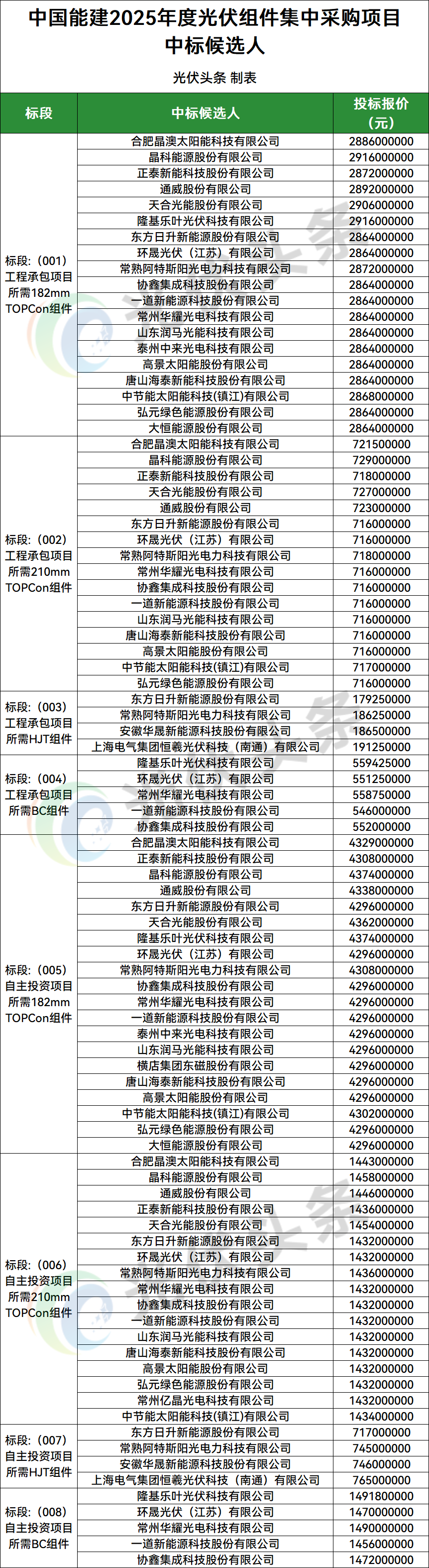
中国能建17GW光伏组件集采:晶澳、正泰、通威、天合、隆基、华晟、东方日升、阿特斯、协鑫、中来光电、高景等23企入围
Xin Lang Cai Jing· 2025-11-23 12:11
Core Insights - The China Energy Construction Corporation has announced a centralized procurement project for photovoltaic modules for the year 2025, with an estimated total scale of 17GW, divided into 8 bidding packages [4]. Group 1: Bidding Candidates and Prices - The bidding candidates for the first package (001) for 182mm TOPCon components include: - Hefei JA Solar Technology Co., Ltd. with a bid of 2,886 million yuan - JinkoSolar Holding Co., Ltd. with a bid of 2,916 million yuan - Trina Solar Limited with a bid of 2,906 million yuan - LONGi Green Energy Technology Co., Ltd. with a bid of 2,916 million yuan - Other candidates include Chint New Energy Technology Co., Ltd. and Tongwei Co., Ltd. with bids ranging from 2,864 million to 2,892 million yuan [1][5]. - For the second package (002) for 210mm TOPCon components, the bids are as follows: - Hefei JA Solar Technology Co., Ltd. with a bid of 721.5 million yuan - JinkoSolar Holding Co., Ltd. with a bid of 729 million yuan - Trina Solar Limited with a bid of 727 million yuan - Other candidates include Tongwei Co., Ltd. and LONGi Green Energy Technology Co., Ltd. with bids around 716 million to 723 million yuan [1][5]. - The third package (003) for HJT components has bids from: - Dongfang Risheng New Energy Co., Ltd. with a bid of 179.25 million yuan - Changshu Artes Solar Power Technology Co., Ltd. with a bid of 186.25 million yuan - Anhui Huasheng New Energy Technology Co., Ltd. with a bid of 186.5 million yuan [1][5]. Group 2: Project Overview - The centralized procurement project is part of China's efforts to enhance its solar energy capacity, with a significant focus on various types of photovoltaic components [4]. - The project is expected to stimulate competition among leading solar manufacturers in China, potentially leading to more competitive pricing and innovation in solar technology [4].


共话“十五五”新能源产业:光储氢如何实现高质量发展?
2 1 Shi Ji Jing Ji Bao Dao· 2025-11-23 11:49
Core Insights - The rapid development of China's new energy industry is highlighted, with a focus on the "14th Five-Year Plan" achievements and the upcoming "15th Five-Year Plan" emphasizing energy security and the transition to a new energy system [1][5][9]. Group 1: Industry Development - The "15th Five-Year Plan" aims to promote quantum technology, biomanufacturing, hydrogen energy, and new energy storage as new economic growth points [1]. - During the "14th Five-Year Plan," China's energy consumption structure improved significantly, with the average cost of global wind power projects decreasing by over 60% and solar photovoltaic (PV) project costs dropping by over 80% in the past decade [3][5]. - The new energy sector is expected to transition from subsidy-dependent growth to a market-driven high-quality development phase during the "15th Five-Year Plan" [15]. Group 2: Technological Trends - The solar PV industry is focusing on optimizing silicon technology to maintain cost advantages, with a shift towards using less silver and more affordable metals like copper and aluminum [7]. - Lithium-ion batteries, particularly lithium iron phosphate batteries, are projected to dominate the new energy storage market, maintaining over 90% market share in the next five years [9]. - The integration of digital technologies in energy management is becoming crucial for enhancing operational efficiency and enabling smart decision-making in the energy sector [26][27]. Group 3: Market Dynamics - The global market for energy equipment is expected to reach approximately $1.27 trillion in 2024, with significant growth potential in the energy digitalization sector, projected to reach $173 billion by 2025 [27][28]. - The focus is shifting from merely increasing installed capacity to achieving efficient collaboration across the energy system, enhancing the penetration and reliability of new energy sources [11]. - The energy storage industry is urged to achieve equal treatment in capacity pricing with other flexible resources, emphasizing the need for fair compensation for the services provided by energy storage [9][15]. Group 4: Policy and Strategic Initiatives - The "15th Five-Year Plan" emphasizes the importance of energy security as a primary task for the energy industry, necessitating a shift towards a new energy system and collaborative strategies [5][13]. - The launch of the "Energy Digitalization Development White Paper" aims to explore the strategic significance and implementation paths for energy digitalization in China [28].


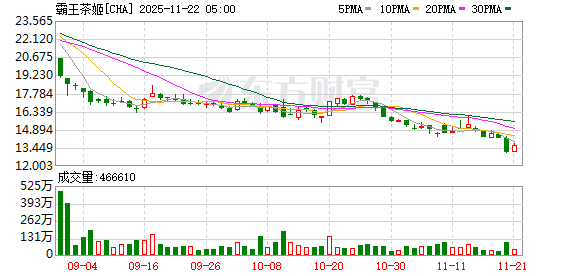
霸王茶姬创始人迎娶“最美光伏二代”,公司股价大涨,女方公司今年已亏超40亿元
Mei Ri Jing Ji Xin Wen· 2025-11-22 23:36
Core Viewpoint - The marriage between the founders of Bawang Chaji and Trina Solar is expected to create complementary and expansive effects for both brands, enhancing brand recognition and public attention for Trina Solar while providing brand capital endorsement for Bawang Chaji [6][8]. Group 1: Company Performance - Bawang Chaji reported a total GMV of 8.1031 billion yuan in Q2 2025, a year-on-year increase of 15.5%, with net income of 3.3319 billion yuan, up 10.2% [7]. - Trina Solar, established in 1997, has a current market value of 42.518 billion yuan, but has faced challenges, with a 20.87% year-on-year decline in revenue to 49.97 billion yuan and a net loss of 4.201 billion yuan in the first three quarters [7]. Group 2: Brand Impact - The marriage is seen as a strategic alliance that can enhance public awareness of Trina Solar, which has strong influence in its vertical field but limited public recognition [8]. - Bawang Chaji's high brand awareness can potentially elevate Trina Solar's visibility, while Trina Solar's established reputation can lend credibility to Bawang Chaji [8]. Group 3: Industry Trends - The trend of second-generation entrepreneurs marrying across industries is noted, reflecting a shift from traditional wealth matching to compatibility in cognitive levels, business philosophies, and social circles [6][10]. - Such unions are viewed as a means to strengthen brand image and instill confidence for long-term development, as seen in other successful partnerships [12].

霸王茶姬创始人迎娶“最美光伏二代”,公司股价大涨!女方公司今年已亏超40亿元!专家:豪门联姻规则改变,“门当户对”不只是财富匹配
Mei Ri Jing Ji Xin Wen· 2025-11-22 16:30
每经记者|徐肖逍 每经编辑|段炼 陈星 近日,关于霸王茶姬创始人张俊杰和天合光能创始人之女、公司联席董事长高海纯结婚的消息,引发广泛关注和热议。 左:张俊杰;右:高海纯。图片来源:红星资本局 11月20日,天合光能回应,双方相识于青年企业家学习活动,已登记结婚。此外双方公司均为上市公司,目前尚未有任何关联交易或商业合作。 11月21日,霸王茶姬股价大涨,截至收盘涨4.51%,总市值25.07亿美元(约合人民币178亿元)。与此同时,天合光能股价却迎来三连跌,截至收盘跌超 5%,总市值425.18亿元。 一位是茶饮"创一代",一位是光伏"创二代",两位的结合将会对双方品牌带来什么样的影响?品牌专家、瞻胜传播创始合伙人庞瑞接受《每日经济新闻》 记者采访时表示:"如果我们仅仅从对品牌客观影响的角度来看,此次联姻带来的效应具备互补性与扩展性。霸王茶姬或可借此增强品牌资本背书,而天 合光能则通过此事件获得更广泛的公众关注。" 记者观察到,近年来多个知名企业的二代们频频联姻。庞瑞告诉记者,企业二代联姻在当下呈现出新的趋势。"今天的'门当户对'已超越了单纯的财富匹 配,更演进为认知水平、经营理念乃至社会圈层的高度契合。" ...

茶饮新贵迎娶“最美光伏二代”,豪门联姻的规则正在改写
Mei Ri Jing Ji Xin Wen· 2025-11-22 11:43
Core Viewpoint - The marriage between Zhang Junjie, founder of Bawang Chaji, and Gao Haichun, daughter of the founder of Trina Solar, has sparked significant attention, with implications for both brands in terms of public recognition and market influence [2][4]. Group 1: Brand Impact - The union is expected to create a complementary and expansive effect on both brands, enhancing Bawang Chaji's brand capital and increasing public awareness for Trina Solar [4]. - Bawang Chaji, as a new consumer brand, reported a total GMV of 8.1031 billion yuan in Q2 2025, a 15.5% year-on-year increase, with overseas GMV reaching 235.2 million yuan, up 77.4% [2]. - Trina Solar, established in 1997, has a current market value of 42.518 billion yuan but is facing challenges, with a 20.87% year-on-year decline in revenue to 49.97 billion yuan and a net loss of 4.201 billion yuan [3]. Group 2: Trends in Corporate Alliances - The trend of second-generation entrepreneurs marrying across industries is becoming more common, reflecting a shift from traditional wealth matching to alignment in cognitive levels, business philosophies, and social circles [4][8]. - Such unions not only strengthen brand image through public attention but also inject confidence into long-term business development [8]. Group 3: Strategic Alliances - Marriages between company leaders can create strategic alliances that help avoid competition and foster collaboration in business or capital [11]. - Maintaining business independence post-marriage is crucial for risk management, as changes in personal relationships could impact corporate governance and control [12][13].