SMIC(688981)

Search documents
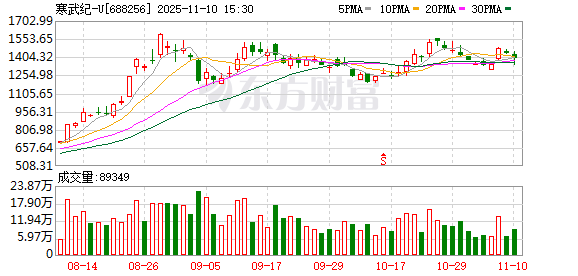
科创板百元股达69只,寒武纪-U股价最高
Zheng Quan Shi Bao Wang· 2025-11-10 09:21
Group 1 - The average stock price of the Sci-Tech Innovation Board is 40.80 yuan, with 69 stocks priced over 100 yuan, and the highest priced stock is Cambrian-U at 1391.50 yuan [2][3] - Among the stocks priced over 100 yuan, 37 stocks increased in price today, with an average increase of 0.56%, while 32 stocks decreased [2][3] - The average premium of the latest closing price relative to the issue price for stocks over 100 yuan is 502.60%, with the highest premiums seen in companies like Shunwei New Materials and Cambrian-U [2][3] Group 2 - The net outflow of main funds for stocks over 100 yuan today totaled 3.607 billion yuan, with the highest net inflows seen in companies like Purun Co. and Tengjing Technology [3] - The total margin balance for stocks over 100 yuan is 94.857 billion yuan, with Cambrian-U and SMIC having the highest margin balances [3][4] - The stock list of companies over 100 yuan includes various sectors, with a concentration in electronics, pharmaceuticals, and computers [2][3]




科创板资金动向:8股主力资金净流入超亿元
Zheng Quan Shi Bao Wang· 2025-11-10 09:19
Market Overview - The main funds in the Shanghai and Shenzhen markets experienced a net outflow of 31.427 billion yuan, with the Sci-Tech Innovation Board seeing a net outflow of 5.743 billion yuan [1] - A total of 248 stocks saw net inflows, while 343 stocks experienced net outflows [1] Sci-Tech Innovation Board Performance - On the Sci-Tech Innovation Board, 332 stocks rose, with four stocks hitting the daily limit up, including Fangyuan Co. and Jindike [1] - The top three stocks with the highest net inflows were: - Purun Co. with a net inflow of 214 million yuan - Shengkong Co. with 171 million yuan - Trina Solar with 150 million yuan [1] Continuous Fund Flow Analysis - There are 60 stocks that have seen continuous net inflows for more than three trading days, with Zhonggang Luoni leading at 13 consecutive days of inflow [2] - Conversely, 125 stocks have experienced continuous net outflows, with Bayi Space leading at 14 consecutive days of outflow [2] Top Net Inflow Stocks - The top stocks by net inflow include: - Purun Co. with 21.363 million yuan and a 13.47% increase - Shengkong Co. with 17.116 million yuan and a 20% increase - Trina Solar with 15.042 million yuan and a 0.09% increase [2][3] Top Net Outflow Stocks - The stocks with the highest net outflows include: - SMIC with a net outflow of 699 million yuan and a 1.72% decrease - Guodun Quantum with 543 million yuan outflow - Lanqi Technology with 499 million yuan outflow [1]





中金列出港股产业趋势组合名单:腾讯、中芯国际、联想等在列
Ge Long Hui· 2025-11-10 09:10
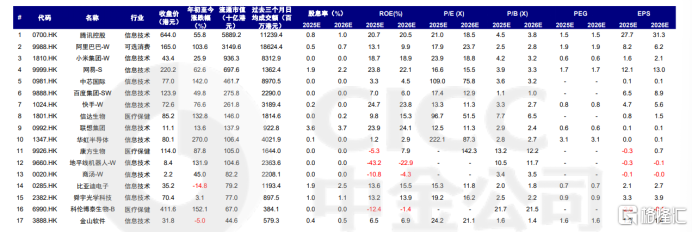
Core Viewpoint - The outlook for the Hong Kong stock market in 2026 is optimistic, with 2025 being characterized as a bull market driven by various factors including industry trends, fundamental improvements, and liquidity narratives [1] Market Trends - The Chinese market in 2025 is expected to exceed expectations across multiple dimensions, supported by trends in AI and improvements in fundamentals due to fiscal stimulus and private credit recovery [1] - The Hang Seng Tech Index has seen a 30% increase, primarily driven by risk premium contributions [1] Market Phenomena - Notable market phenomena in 2025 include: 1. Assets with differing underlying logic, such as gold, dividends, and growth stocks, often rising together [1] 2. A concentrated market structure where 15 stocks contributed to 70% of the index's gains, while half of the stocks underperformed the index [1] 3. Significant rotation among sectors, with internet stocks leading in Q1, new consumption in Q2, innovative pharmaceuticals in Q3, and a return to internet stocks in Q4 [1] Key Drivers for 2026 - The core drivers for the market's upward movement in 2026 include liquidity narratives, fundamental improvements, and technological trends [1] - Distinguishing between temporary recoveries and sustainable trends will be crucial for assessing the next steps in the bull market [1] Industry Trend Portfolio - The report includes a list of industry trend stocks with various metrics such as market capitalization, dividend yield, and price-to-earnings ratios for 2025 and 2026, highlighting key players in sectors like information technology and healthcare [1]
互联网龙头财报密集披露,港股科技ETF(513020)涨超1%,集齐互联网+新能源+创新药等科技龙头
Mei Ri Jing Ji Xin Wen· 2025-11-10 06:40
Core Viewpoint - The Hong Kong stock market, particularly the technology sector, is experiencing a strong rebound, with the Hong Kong Technology ETF (513020) rising over 1% [1]. Group 1: Market Sentiment - The U.S. Senate has reached an agreement to end the federal government "shutdown," leading to a gradual release of risks in the external market [2]. - The upcoming earnings reports from major internet companies like Tencent and Meituan are expected to catalyze the Hong Kong technology market [2]. Group 2: Sector Analysis - Huayuan Securities highlights that the earnings reports of leading internet companies will showcase the resilience of their fundamental performance, driven by platform advantages [2]. - The core of industry development and market transactions remains focused on the research and investment in AI foundational technologies, as well as the implementation of AI application products [2]. Group 3: Investment Opportunities - The Hong Kong Technology ETF (513020) tracks the CSI Hong Kong Stock Connect Technology Index, which includes leading stocks in the internet, new energy, and innovative pharmaceuticals sectors, featuring popular companies like Alibaba, Xiaomi, Tencent, Meituan, Lenovo, BYD, and SMIC [2]. - According to Guotai Haitong Securities, the combination of improving fundamental expectations and a continuously improving capital environment suggests that the Hong Kong stock market may reach new highs in the fourth quarter [2]. Group 4: Future Outlook - The narrative around the internet is shifting towards "AI empowerment," coupled with increased policy support, which is expected to enhance fundamental expectations for the Hong Kong market [2]. - The influx of foreign capital and sustained southbound fund inflows are strengthening the incremental capital market in Hong Kong [2]. - Under the influence of AI, the technology sector in Hong Kong remains the main line of the market trend [2].




芯片ETF基金(159599)开盘涨0.14%,重仓股中芯国际涨0.02%,寒武纪跌0.17%
Xin Lang Cai Jing· 2025-11-10 06:05
Core Viewpoint - The Chip ETF Fund (159599) opened with a slight increase of 0.14%, indicating a stable market performance for the fund and its holdings [1] Group 1: Fund Performance - The Chip ETF Fund (159599) opened at 2.079 yuan [1] - Since its establishment on April 19, 2024, the fund has achieved a return of 107.62% [1] - The fund's performance over the past month has seen a decline of 6.84% [1] Group 2: Major Holdings - Key stocks in the Chip ETF Fund include: - SMIC (中芯国际) opened up by 0.02% [1] - Cambricon (寒武纪) decreased by 0.17% [1] - Haiguang Information (海光信息) fell by 0.29% [1] - Northern Huachuang (北方华创) remained unchanged [1] - Lattice Semiconductor (澜起科技) increased by 1.48% [1] - Zhaoyi Innovation (兆易创新) rose by 3.41% [1] - Zhongwei Company (中微公司) gained 1.28% [1] - OmniVision (豪威集团) increased by 0.10% [1] - Chipone (芯原股份) remained unchanged [1] - Changdian Technology (长电科技) rose by 0.59% [1] Group 3: Management Information - The fund is managed by Dongcai Fund Management Co., Ltd. [1] - The fund manager is Wu Yi [1] - The performance benchmark for the fund is the CSI Chip Industry Index return [1]

中芯国际11月7日获融资买入5.90亿元,融资余额139.38亿元
Xin Lang Cai Jing· 2025-11-10 04:30
Core Insights - SMIC's stock price decreased by 2.19% on November 7, with a trading volume of 4.694 billion yuan, indicating market volatility [1] - The financing data shows a net financing outflow of 209 million yuan on the same day, with a total financing and securities balance of 13.968 billion yuan [1] - The company reported a significant increase in revenue and net profit for the first half of 2025, with revenue reaching 32.348 billion yuan, a year-on-year growth of 23.14%, and net profit of 2.301 billion yuan, up 39.76% [2] Financing and Margin Trading - On November 7, SMIC had a financing buy-in of 590 million yuan, with a total financing balance of 13.938 billion yuan, accounting for 5.71% of its market capitalization [1] - The financing balance is above the 80th percentile of the past year, indicating a high level of investor engagement [1] - The short selling data shows a repayment of 19,800 shares and a short selling amount of 48,370 yuan, with a short selling balance of 3.0045 million yuan, also above the 80th percentile of the past year [1] Shareholder Structure - As of June 30, 2025, SMIC had 252,300 shareholders, a decrease of 2.20% from the previous period, while the average number of circulating shares per person increased by 2.26% to 8,223 shares [2] - Major institutional shareholders include various ETFs, with notable increases in holdings, indicating growing institutional interest [2] - The top five shareholders include 华夏上证科创板50成份ETF and 易方达上证科创板50ETF, reflecting a trend of increasing institutional investment in SMIC [2]
港股半导体概念股走弱,中芯国际、华虹半导体领跌恒生科技一众成分股
Mei Ri Jing Ji Xin Wen· 2025-11-10 03:23
Group 1 - The Hang Seng Technology Index experienced fluctuations, with semiconductor stocks weakening and tech stocks showing mixed performance [1] - The largest A-share ETF in the same sector, the Hang Seng Technology Index ETF (513180), followed the index's movements, with leading stocks including Tongcheng Travel, BYD, Kingsoft, Tencent, and Kingdee, while SMIC, Hua Hong Semiconductor, Xpeng Motors, and Horizon Robotics lagged [1] - According to Zhongtai Securities, the current investment focus in A-shares may shift towards strategic upstream industries and the expansion of technology applications under the "anti-involution" theme, with short-term attention on consumption-boosting policies leading to structural rebounds [1] Group 2 - As of November 7, the latest valuation (PETTM) of the Hang Seng Technology Index ETF (513180) was 22.69 times, which is in the historical low valuation range, being below 72% of the time since the index was launched [2] - The Hong Kong tech sector is expected to benefit from the current trends represented by AI, with potential foreign capital inflow exceeding expectations due to the backdrop of Federal Reserve interest rate cuts, alongside continuous increases in southbound capital [2] - Investors without a Hong Kong Stock Connect account may consider the Hang Seng Technology Index ETF (513180) for exposure to core Chinese AI assets [2]
消费电子概念股走低,相关ETF跌超2%
Sou Hu Cai Jing· 2025-11-10 02:25
Core Viewpoint - The consumer electronics sector is experiencing a decline, with significant drops in key stocks and ETFs tracking the sector, despite a long-term growth outlook driven by AI innovations [1][2]. Group 1: Stock Performance - Major consumer electronics stocks such as Cambrian-U, Industrial Fulian, and Luxshare Precision have fallen over 5%, while SMIC and Huagong Technology have decreased by more than 2% [1]. - ETFs tracking the CSI Consumer Electronics Theme Index have also seen declines, with the Consumer Electronics ETF down by over 2% [1]. Group 2: ETF Details - The following ETFs have reported declines: - Consumer Electronics ETF (561310): 1.178, down 2.56% - Consumer Electronics ETF Fortune (561100): 1.304, down 2.40% - Consumer Electronics ETF (561600): 1.216, down 2.33% - Consumer Electronics 50 ETF (159779): 1.154, down 2.20% - Consumer Electronics ETF E Fund (562950): 1.245, down 2.12% [2]. Group 3: Market Outlook - Analysts suggest that the long-term growth logic of the consumer electronics sector remains solid, with clear trends in AI innovation. Leading companies in the domestic supply chain, characterized by strong R&D capabilities and a solid fundamental base, are expected to benefit significantly from the AI terminal innovation wave [2].




278只科创板股融资余额环比增加
Zheng Quan Shi Bao Wang· 2025-11-10 02:08
Core Insights - The total margin financing balance on the STAR Market decreased by 3.86 billion yuan, while the margin short selling balance decreased by 31.21 million yuan, indicating a reduction in overall trading activity [1] - As of November 7, the total margin balance reached 260.39 billion yuan, with financing balance at 259.47 billion yuan and short selling balance at 0.92 billion yuan [1] - A total of 278 stocks saw an increase in financing balance, while 102 stocks experienced an increase in short selling balance [1] Financing Balance Summary - The stock with the highest financing balance is Cambrian (寒武纪) at 15.192 billion yuan, followed by SMIC (中芯国际) at 13.938 billion yuan and Haiguang Information (海光信息) at 8.860 billion yuan [1] - Notable increases in financing balance include Wanrun New Energy (万润新能) with a 59.61% increase, Zhuoyue New Energy (卓越新能) with a 25.85% increase, and Huasheng Lithium Battery (华盛锂电) with a 25.03% increase [1] - Significant decreases in financing balance were observed in Foxit Software (福昕软件) with a 23.56% decrease, Jepter (杰普特) with a 14.22% decrease, and Jiehuate (杰华特) with an 11.90% decrease [1] Short Selling Balance Summary - The stock with the highest short selling balance is Haiguang Information (海光信息) at 4.3 million yuan, followed by Cambrian (寒武纪) at 3.9 million yuan and SMIC (中芯国际) at 3.0 million yuan [2] - A total of 102 stocks saw an increase in short selling balance, while 175 stocks experienced a decrease [2] - Notable increases in short selling balance include Yuekang Pharmaceutical (悦康药业) with a 90.77% increase, Dongwei Semiconductor (东微半导) with a 64.43% increase, and Bolite (铂力特) with a 53.67% increase [2] - Significant decreases in short selling balance were observed in Weijie Chuangxin (唯捷创芯) with a 61.44% decrease, Liyuanheng (利元亨) with a 58.71% decrease, and Fangbang Co. (方邦股份) with a 50.48% decrease [2]


美国脖子没那么好卡,稀土还是中国的王牌,这张牌最好用
Sou Hu Cai Jing· 2025-11-09 21:22
Core Viewpoint - China's export control on rare earths has become a significant tool in the ongoing US-China rivalry, marking a shift from passive to active defense strategies [1] Group 1: Export Control and Economic Warfare - The recent export control measures on rare earths are seen as a direct response to aggressive US policies, including the "50% ownership penetration" rule and exorbitant fees for Chinese ships entering US ports [1] - The "long-arm jurisdiction" policy not only restricts the export of raw materials but also applies to processed rare earth products that utilize Chinese technology, effectively controlling global supply chains [1] Group 2: Dependency on Chinese Supply Chains - The US estimates that it will take at least seven to eight years to completely eliminate dependence on Chinese rare earths, requiring hundreds of billions in federal investment annually [4] - Key industries such as lithium batteries, semiconductors, and pharmaceuticals are heavily reliant on Chinese materials, with over 70% of basic pharmaceutical raw materials sourced from China [7][8] Group 3: Challenges in Alternative Supply Chains - The US attempts to build alternative supply chains for rare earths face significant challenges, particularly in refining capabilities, where China holds a monopoly on advanced processing techniques [1][4] - The semiconductor industry is also at risk, with China capturing 31% of the market share in mature processes, and US manufacturers relying on Chinese firms for critical components [5] Group 4: Broader Implications of the US-China Rivalry - The geopolitical landscape is shifting, with the potential for resource management strategies extending beyond rare earths to include nickel, cobalt, and lithium [10] - The competition is not just about technology but also about systemic resilience, with China demonstrating a strong ability to adapt and innovate under pressure [15]