
PAB(000001)

Search documents
债市“收官战”,无虑银行兑现浮盈
Changjiang Securities· 2025-10-31 11:12
1. Report's Industry Investment Rating No information about the industry investment rating is provided in the report. 2. Core Viewpoints of the Report - The report analyzes the self - investment performance of banks in 2025 based on the semi - annual report and forecasts their behavior in the fourth quarter. It concludes that bond allocation is expected to support bank expansion, and although there is still room for banks to realize floating profits, the impact on the bond market is expected to be relatively mild [4][11][12]. 3. Summary According to the Directory 3.1 From the 2025 Semi - annual Report: Bank Self - investment Performance 3.1.1 Financial Market Returns: Increased Contribution of Realized Floating Profits - The revenue contribution of banks' self - investment business fluctuates upward. Since 2023, the proportion of investment income and fair - value changes in revenue has increased. In the first half of 2025, banks sold old bonds to realize floating profits to cope with the rising bond - market yields [20][23][26]. 3.1.2 Asset Allocation: Financial Investment Drives Balance - sheet Expansion - Since 2024, the year - on - year growth rate of bank financial investment has been rising, and its proportion in total assets has also increased. By the end of June 2025, the year - on - year growth rate of listed banks' financial investment was 14.9%. The OCI account's proportion has been increasing, and large state - owned banks have continuously increased their allocation of government bonds [31]. - In terms of duration, the overall duration of bank financial investment has been extended, but the space for continuous extension may be limited. Structurally, state - owned banks' AC accounts maintain a high duration, and joint - stock banks' OCI accounts have a more obvious duration - extension action [57][59][74]. 3.1.3 Liability Side: Decreased Liability Cost Rate and Declined Inter - bank Certificate of Deposit Balance in Q3 - In the first half of 2025, the weighted average interest - bearing liability cost rate of banks decreased by about 29BP compared with 2024, mainly due to the concentrated maturity and repricing of deposits. The deposit cost rate decreased by 25BP [86]. - Since the second quarter, the central bank's liquidity injection has been abundant, and the balance of inter - bank certificates of deposit has declined. Large state - owned banks have reduced their reliance on inter - bank certificates of deposit, while small and medium - sized banks have shortened the issuance term of inter - bank certificates of deposit to control costs [101][103][115]. 3.2 Outlook for Banks' Behavior in Q4 2025 3.2.1 Asset Side: Bond Allocation Expected to Continue Supporting Balance - sheet Expansion - In the fourth quarter, credit growth is expected to remain weak, and financial investment will still be the main driving force for bank balance - sheet expansion. The decline in liability cost rate has opened up space for bank bond allocation, and the current high spread between 10 - year treasury bonds and 1 - year inter - bank certificates of deposit has increased banks' willingness to allocate bonds [118][121][122]. - Large state - owned banks' pressure to undertake government bond issuance is expected to weaken, and small and medium - sized banks will continue to tilt available funds towards bond investment [128][131]. 3.2.2 Liability Side: Focus on the Issuance Scale of Banks' Inter - bank Certificates of Deposit - Banks may face "deposit migration" pressure in the fourth quarter, and some deposits will mature. Banks may issue inter - bank certificates of deposit preventively when liquidity is relatively loose. The issuance term of large state - owned banks is expected to be longer, while that of small and medium - sized banks is expected to be medium - short [136][138]. 3.2.3 Realizing Floating Profits: Still Some Space, but Limited Impact on the Bond Market - Banks need to smooth their performance in the fourth quarter, and there is still pressure to sell old bonds, but the impact on the bond market is expected to be relatively mild. There are limitations in selling old bonds, including accounting classification rationality, reinvestment pressure, and performance base pressure for 2026 [142][143]. - There is still some demand for banks to realize floating profits in Q4 2025, but the amount of floating profits that can be realized is limited. AC accounts have some selling constraints, and excessive realization of floating profits in OCI accounts may increase the performance base pressure for 2026 [144][151].

中行农行收巨额罚单
Bei Jing Ri Bao Ke Hu Duan· 2025-10-31 10:12
Group 1 - The National Financial Supervision Administration has imposed significant fines on several major banks in China for various regulatory violations [1] - China Bank was fined 97.9 million yuan for issues related to corporate governance, loan management, and asset quality [1] - Agricultural Bank of China received a fine of 27.2 million yuan for non-compliance in product sales and credit fund management [1] Group 2 - China Minsheng Bank was fined 58.65 million yuan for imprudent management of loans and regulatory data reporting [1] - Ping An Bank faced a fine of 18.8 million yuan due to issues in internet loans and related business management [1] - Shanghai Pudong Development Bank was fined 12.7 million yuan for similar violations in internet loan management [1]
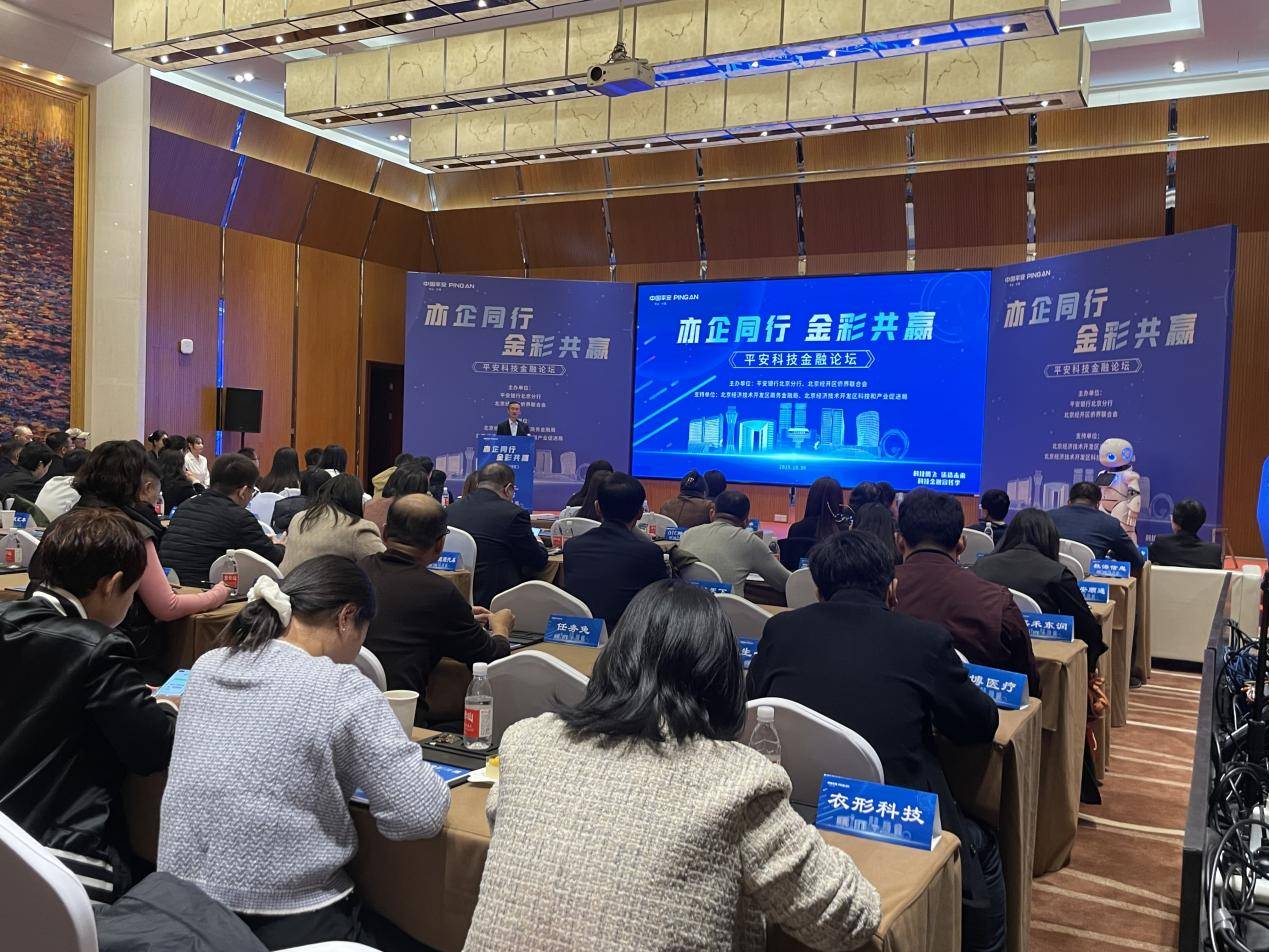
平安银行北京分行在经开区成功举办“亦企同行·金彩共赢”平安科技金融论坛
Cai Fu Zai Xian· 2025-10-31 09:15
Core Insights - The forum "Yiqi Tongxing · Jincai Gongying" organized by Ping An Bank's Beijing branch focused on the integration of technology and finance, attracting over 90 quality tech innovation enterprises for in-depth discussions and exchanges [1][3]. Group 1: Event Overview - The event was part of Ping An Bank's "Technology Soaring, Building the Future" promotional season, supported by various governmental bodies [1]. - The forum emphasized the importance of finance as a core support for technological innovation and aimed to enhance the collaborative environment between government, enterprises, and banks [3]. Group 2: Strategic Initiatives - Ping An Bank's Beijing branch outlined its strategic layout and innovative practices in the technology finance sector over the past year, aiming to provide comprehensive financial solutions for enterprises at all stages of development [5]. - The launch of the "Technology Financial Service Package" for the Beijing region was a key highlight, designed to offer precise financial support to local tech innovation enterprises [9]. Group 3: Policy and Financial Support - Experts from the Economic and Technological Development Zone provided insights on policies related to foreign investment, financial support systems, and the "Twenty Articles on Industrial Finance" and "Twenty Articles on Technological Innovation" [11]. - Ping An Bank showcased its technology finance support system and core products like "Tech Innovation Loans" and "Specialized and New Loans" to meet diverse enterprise needs [11]. Group 4: Future Directions - The forum concluded with presentations from industry leaders showcasing advancements in wireless communication and innovative antibody drug development, highlighting the potential of tech innovation [11]. - Ping An Bank plans to continuously upgrade its technology finance service system to align with enterprise needs and contribute to high-quality regional economic development [11].


股份制银行板块10月31日跌0.73%,光大银行领跌,主力资金净流出3.81亿元
Zheng Xing Xing Ye Ri Bao· 2025-10-31 08:42
Market Overview - On October 31, the share price of the banking sector fell by 0.73% compared to the previous trading day, with Everbright Bank leading the decline [1] - The Shanghai Composite Index closed at 3954.79, down 0.81%, while the Shenzhen Component Index closed at 13378.21, down 1.14% [1] Individual Bank Performance - Industrial Bank (601166) saw a closing price of 20.23, with an increase of 1.00% and a trading volume of 887,900 shares, totaling 1.793 billion yuan [1] - Huaxia Bank (600015) remained unchanged at 6.81, with a trading volume of 670,600 shares, totaling 45.6 million yuan [1] - Ping An Bank (000001) closed at 11.32, down 0.53%, with a trading volume of 970,200 shares, totaling 1.099 billion yuan [1] - China Merchants Bank (600036) closed at 40.89, down 0.75%, with a trading volume of 702,600 shares, totaling 2.882 billion yuan [1] - Zheshang Bank (601916) closed at 2.99, down 0.99%, with a trading volume of 1.6683 million shares, totaling 501 million yuan [1] - Minsheng Bank (600016) closed at 3.91, down 1.01%, with a trading volume of 4.6781 million shares, totaling 1.834 billion yuan [1] - CITIC Bank (601998) closed at 7.74, down 1.28%, with a trading volume of 915,000 shares, totaling 705 million yuan [1] - Shanghai Pudong Development Bank (600000) closed at 11.49, down 1.29%, with a trading volume of 1.4353 million shares, totaling 1.658 billion yuan [1] - Everbright Bank (601818) closed at 3.34, down 3.19%, with a trading volume of 5.9154 million shares, totaling 1.987 billion yuan [1] Capital Flow Analysis - The banking sector experienced a net outflow of 381 million yuan from main funds, while speculative funds saw a net inflow of 433 million yuan, and retail investors had a net outflow of 51.53 million yuan [1] - Specific capital flows for individual banks indicate varying trends, with Shanghai Pudong Development Bank experiencing a main fund net inflow of 241 million yuan but a net outflow from retail investors of 181 million yuan [2] - Industrial Bank had a main fund net inflow of 56.7 million yuan, while retail investors saw a net outflow of 48.09 million yuan [2] - CITIC Bank recorded a main fund net inflow of 30.28 million yuan, with a net outflow from retail investors of 47.03 million yuan [2] - Everbright Bank faced a significant main fund net outflow of 65.63 million yuan, despite a net inflow from speculative funds of 111 million yuan [2] - China Merchants Bank had a substantial main fund net outflow of 2.71 billion yuan, while speculative funds saw a net inflow of 3.15 billion yuan [2] - Minsheng Bank experienced a main fund net outflow of 3.17 billion yuan, with a net inflow from retail investors of 2.37 billion yuan [2]



平安银行海口分行重阳节开展义诊暨金融宣教活动
Zhong Guo Jin Rong Xin Xi Wang· 2025-10-31 05:18
Group 1 - The core event was a joint health consultation and financial education activity organized by Ping An Bank Haikou Branch and Hainan Provincial Geriatric Hospital on October 29, coinciding with the Double Ninth Festival, aimed at providing dual care for the elderly [1] Group 2 - Medical staff from Hainan Provincial Geriatric Hospital offered free health consultations and basic health check-ups, receiving widespread praise for their professional guidance on common elderly diseases [3] - Ping An Bank Haikou Branch focused on the theme of "Protecting Personal Information and Safeguarding Property Security," using case studies, distributing educational materials, and providing on-site Q&A to enhance financial knowledge among the elderly [3] - The event emphasized personal information protection, prevention of common financial scams, and basic anti-money laundering knowledge, effectively improving the self-protection awareness and risk prevention capabilities of the elderly [3] - Volunteers from the "Ping An Little Orange Hat" initiative engaged with the elderly in a friendly manner, addressing their concerns and reminding them to be cautious of unfamiliar information to protect their financial security [3] - The activity not only imparted practical prevention skills but also conveyed Ping An Bank's deep care for the elderly community, with plans to continue providing warm and effective financial services in the future [3]

金价波动银行出新招:积存金起点金额启动“浮动”机制
Zhong Guo Jing Ying Bao· 2025-10-31 05:08
Core Viewpoint - The recent volatility in gold prices has led banks to increase the investment threshold for gold accumulation services, with some institutions adjusting the minimum investment amount to fluctuate with gold prices, enhancing market responsiveness and risk management [1][2][8]. Group 1: Market Adjustments - Banks like the Bank of Communications and Agricultural Bank of China are shifting their gold accumulation plans to a model where the minimum investment amount is tied to real-time gold prices, requiring that the investment amount be greater than or equal to the current gold price [2][3]. - The new model allows for dynamic adjustments to the investment threshold, addressing the lag in pricing that occurs with traditional fixed-amount models [4][5]. Group 2: Characteristics of the New Model - The "floating with gold prices" model is characterized by three main features: dynamism, flexibility, and risk diversification, allowing for real-time adjustments to the investment threshold based on market fluctuations [4][5]. - The model also maintains a flexible trading unit, accommodating both small investors and risk management, which helps reduce operational complexity and liquidity management pressures for banks [4][5]. Group 3: Future Market Environment - The gold accumulation business is expected to face a more complex market environment, with increased volatility driven by international political situations, economic data, and dollar movements [8][9]. - Investor demand is anticipated to become more differentiated, with a growing emphasis on the long-term value of gold as a hedge against inflation, while short-term speculative behaviors may lead to losses due to price fluctuations [8][9]. Group 4: Regulatory and Competitive Landscape - Regulatory bodies and banks are focusing on risk prevention, with dynamic adjustments to investment thresholds and improved redemption rules to protect investor interests [9]. - Increased competition may drive product innovation, with some banks exploring mechanisms to enhance attractiveness, potentially integrating digital tools to improve transaction efficiency and transparency [9].




多家银行上调积存金业务起购金额 防范市场过度投机
Xin Lang Cai Jing· 2025-10-30 23:35
Core Viewpoint - Recent fluctuations in international gold prices have led multiple commercial banks to raise the minimum investment amounts for gold accumulation services, reflecting an industry response to escalating market risks [1] Group 1: Changes in Investment Thresholds - Several banks have increased the minimum investment amounts for gold accumulation services, with some banks raising the threshold to over 1,000 yuan [1] - The highest increase in minimum investment amounts observed is nearly 20% [1] - Ping An Bank has raised the minimum investment for its gold accumulation service from 900 yuan to 1,100 yuan [1] - Industrial Bank has adjusted the minimum investment for its gold accumulation services from 1,000 yuan to 1,200 yuan [1] - Industrial and Commercial Bank of China has increased the minimum investment for its gold accumulation service from 850 yuan to 1,000 yuan [1] Group 2: Market Response and Trends - In addition to raising minimum investment amounts, some banks are adjusting their accumulation plans to be based on fluctuating gold prices [1] - These changes are seen as a shift in the participation dynamics for ordinary investors in response to market volatility [1]
净息差现企稳迹象 上市银行三季报传暖意
Shang Hai Zheng Quan Bao· 2025-10-30 18:28
Core Insights - The overall performance of listed banks in China has shown signs of recovery, with many banks reporting improved profitability in the third quarter of 2025, supported by a stabilization in net interest margins [1][2][3]. Group 1: Financial Performance - The six major banks reported varying net profits and revenue growth rates for the first three quarters of 2025, with Industrial and Commercial Bank of China leading in net profit at 269.91 billion yuan, a year-on-year growth of 0.33% [1]. - Several banks, including China Merchants Bank and Huaxia Bank, demonstrated positive revenue growth in the third quarter, with China Merchants Bank achieving a revenue growth rate of 2.11% [3]. - Regional banks like Nanjing Bank and Chongqing Bank exhibited robust performance, with both reporting revenue and net profit growth rates exceeding 8% for the first three quarters [3]. Group 2: Asset Quality and Stability - The asset quality of listed banks has generally improved, with banks like Chongqing Bank and Shanghai Pudong Development Bank reporting declines in non-performing loan ratios [4]. - The stability of net interest income and the recovery of non-interest income are identified as key factors supporting the banks' profitability [4]. Group 3: Net Interest Margin - The net interest margin has shown signs of stabilization and recovery, which is a critical highlight in the current performance cycle of the banking sector [5]. - Regional banks such as Jiangyin Bank and Ruifeng Bank reported increases in their net interest margins, indicating effective management of asset-liability structures [5]. Group 4: Impact of Bond Market Volatility - The volatility in the bond market has emerged as a significant variable affecting non-interest income for some banks, leading to revenue pressures [6]. - For instance, China Merchants Bank reported a decline in revenue due to losses in fair value changes, attributed to fluctuations in the bond market [6]. - Huaxia Bank also experienced a substantial drop in fair value gains, which negatively impacted its revenue performance [6][7].





多家银行调整黄金积存金购买规则
21世纪经济报道· 2025-10-30 11:35
Group 1 - The article discusses the recent volatility in gold prices, with fluctuations reaching nearly $500 per ounce, and current spot gold prices above $3900 per ounce [1] - Several banks, including Bank of Communications and Agricultural Bank of China, are shifting to a floating mechanism for gold accumulation plans, allowing investment amounts to adjust with real-time gold prices [3][4] - The article highlights that despite the trend towards floating mechanisms, many banks still maintain fixed investment thresholds, with recent adjustments in minimum investment amounts across various banks [4][5] Group 2 - In Q3, global gold demand reached a record high of 1313 tons, a 5% year-on-year increase, with total demand exceeding $100 billion for the first time [6][8] - Central bank gold purchases have slowed but remain strong at 186 tons for the quarter, with total purchases for the year at 694 tons, consistent with the previous year [8] - The article notes a 12% decline in gold jewelry consumption, yet its total value increased by 13% to over $360 billion, indicating a shift towards lighter gold products [8]

多家银行调整积存金起投门槛
Jing Ji Wang· 2025-10-30 02:12
Core Viewpoint - The international gold price has been fluctuating at high levels, leading banks to adjust their precious metal business strategies, particularly by optimizing the minimum investment thresholds for gold accumulation products [1][2]. Group 1: Strategy Adjustments by Banks - Many banks have recently optimized the minimum investment thresholds for gold accumulation products in response to the current high volatility in gold prices and increased market risks [1][4]. - The Bank of Communications has introduced a floating mechanism for its gold accumulation plan, where the minimum investment amount will be adjusted according to real-time gold prices starting from October 27, 2025 [2][3]. - Other banks, including Agricultural Bank of China, have also announced similar adjustments to their gold accumulation products, moving towards a model that reflects real-time market conditions [2][4]. Group 2: Market Trends and Compliance - The floating mechanism linked to real-time gold prices helps avoid frequent manual adjustments and aligns with regulatory requirements, thus enhancing risk management and compliance [3][4]. - Several banks, including ICBC and Bank of China, have raised their minimum investment amounts for gold accumulation products in October, reflecting the need to ensure compliance and manage risks associated with rising gold prices [4][5]. - The increase in minimum investment thresholds is seen as a measure to curb speculative behavior among investors amid rising gold prices [4][6]. Group 3: Investor Education and Risk Management - Banks are also intensifying investor education by issuing risk warnings, advising clients to pay attention to market changes and manage their positions carefully [5][6]. - The combination of adjusting investment thresholds and providing risk warnings is aimed at enhancing risk control while ensuring compliance and protecting consumer rights [6].