PAB(000001)

Search documents
金融中报观|银行零售业务梯队格局背后,谁在领跑,谁在补课
Bei Jing Shang Bao· 2025-09-03 14:17
Core Insights - The competitive landscape of retail banking in A-shares is becoming clearer as the 2025 mid-year reports are disclosed, revealing a distinct tiered structure in retail AUM (Assets Under Management) [1][2] - The first tier consists of major state-owned banks and China Merchants Bank, all exceeding 16 trillion yuan in retail AUM, while the second tier includes joint-stock banks and some leading city commercial banks [1][2] - The retail business performance is mixed, with many banks facing pressure on retail revenue and net profit, highlighting a structural issue of profit growth without revenue increase [1][6] Tiered Structure of Retail AUM - The first tier banks, including Industrial and Commercial Bank of China (ICBC) and Agricultural Bank of China (ABC), lead with AUM exceeding 16 trillion yuan, with ICBC at over 24 trillion yuan and ABC at 23.68 trillion yuan [2][3] - China Construction Bank (CCB) and Postal Savings Bank of China also show strong performance, with CCB managing over 22 trillion yuan and Postal Savings Bank at 17.67 trillion yuan [2] - China Merchants Bank, known as the "king of retail," has a retail AUM of 16.03 trillion yuan, reflecting a 7.39% increase from the previous year [2] Second Tier Performance - The second tier banks have retail AUM ranging from 1 trillion to 6 trillion yuan, with notable growth from banks like Bank of Communications at 5.79 trillion yuan and Industrial Bank at 5.52 trillion yuan [3] - Joint-stock banks are active in this tier, with CITIC Bank and Shanghai Pudong Development Bank also showing significant growth in retail AUM [3] Third Tier Characteristics - The third tier banks have retail AUM mostly below 1 trillion yuan, with Nanjing Bank and Shanghai Rural Commercial Bank showing notable growth rates of 14.25% and 3.99% respectively [4] - Regional banks are leveraging local advantages to deepen market penetration, but face challenges in competing with larger banks [5] Retail Profitability Challenges - The retail banking sector is undergoing significant adjustments, with a shift in customer demand towards diversified financial solutions, which raises the bar for product innovation and service customization [6] - Leading banks like ICBC and China Merchants Bank are showing resilience, with ICBC's net profit rising by 46.05% despite a slight revenue decline [6][7] - However, some banks, including ABC and Ping An Bank, are experiencing declines in both revenue and net profit, indicating a challenging environment [7] Asset Quality Concerns - The retail banking sector is facing challenges in asset quality, particularly in personal loans, with rising non-performing loan (NPL) ratios reported by several banks [9][10] - For instance, China Merchants Bank's retail loan NPL ratio increased to 1.04%, while Chongqing Rural Commercial Bank's rose to 2.04% [9] - Some banks, like Ping An Bank and Industrial Bank, have managed to improve their asset quality through refined risk management practices [10] Strategic Recommendations - Analysts suggest that banks, especially smaller ones, should focus on enhancing their support for small and micro enterprises and optimizing financial resource allocation to uncover new growth points [8] - There is a call for banks to improve their digital capabilities and customer experience to better compete with larger institutions [8]




半年新增15万高净值客户,私人银行成中收增长动力
2 1 Shi Ji Jing Ji Bao Dao· 2025-09-03 11:01
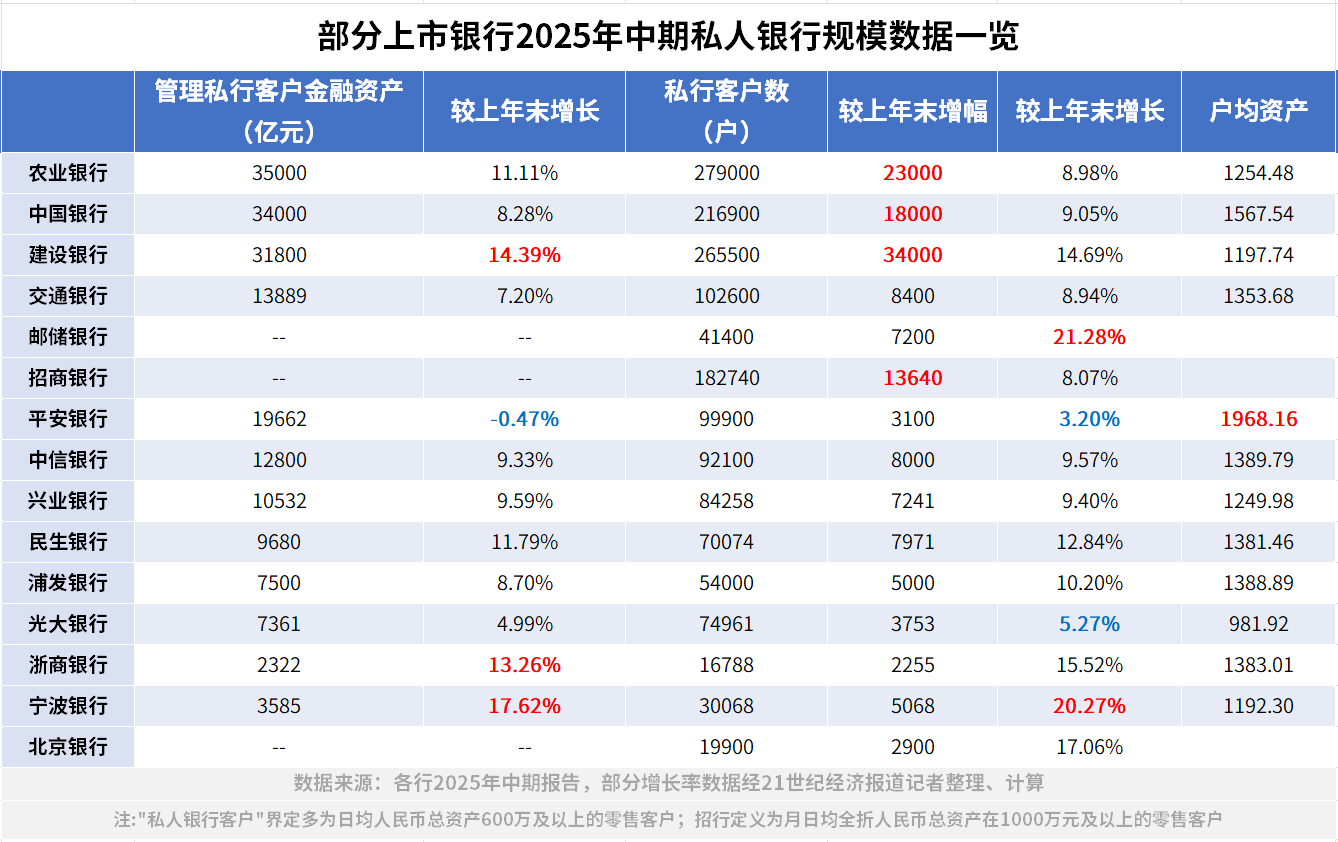
Core Insights - The private banking sector has shown robust growth in the first half of 2025, with many banks reporting double-digit increases in both client numbers and assets under management (AUM) despite a complex economic environment [1][2][5] - The total number of private banking clients across 15 banks exceeded 1.63 million, with an increase of nearly 150,000 clients, reflecting a growth rate of over 10% [1] - Major banks like Agricultural Bank and China Bank have AUM exceeding 3 trillion yuan, while Industrial Bank has crossed the 1 trillion yuan mark for the first time [1][4] Client and AUM Growth - Agricultural Bank's AUM reached 3.5 trillion yuan, growing by 11.11%, with client numbers increasing by 23,000 to 279,000 [2][4] - China Bank's AUM stood at 3.4 trillion yuan with 216,900 clients, while Construction Bank reported a 14.39% increase in AUM, reaching 3.18 trillion yuan and 265,500 clients [2][4] - The overall expansion of private banking clients and AUM indicates a strong performance among large banks, which continue to dominate the market [2][5] Performance of Listed Banks - Among listed banks, the performance varied, with some banks like Ping An Bank experiencing a slight decline in AUM by 0.47% [4] - Industrial Bank reported a significant increase in private banking clients, reaching 92,100, with AUM at 1.28 trillion yuan [5] - Regional banks like Ningbo Bank and Beijing Bank also showed impressive growth, with Ningbo Bank's AUM increasing by 17.62% [5][4] Focus on High-Net-Worth Clients - The industry is shifting from rapid expansion to a more refined approach, focusing on high-net-worth clients and family trusts [1][8] - Banks are implementing differentiated services for ultra-high-net-worth clients, with some banks reporting a 40.96% increase in such clients [8][9] - Family trusts have become a key area of development, with banks like Everbright Bank and China Bank reporting significant growth in this segment [9] Wealth Management and Revenue Growth - Private banking is increasingly contributing to banks' middle-income revenue, with Beijing Bank reporting a 16.89% increase in product sales, boosting its middle-income revenue by 17.77% [10] - Construction Bank noted that over 60% of its fee income comes from wealth management and related services, indicating a strategic focus on enhancing its advisory capabilities [11] - The establishment of private banking centers is accelerating, with banks like Construction Bank and China Bank expanding their networks to improve client retention and service quality [10]



深圳金融的服务样本:平安银行以“三专机制”助力特区科技集群再腾飞
券商中国· 2025-09-03 09:10
Core Viewpoint - Shenzhen Special Economic Zone has achieved remarkable growth over 45 years, with significant contributions from both technology and finance sectors, exemplified by the development of Ping An Bank and its support for local tech enterprises [1][2]. Group 1: Shenzhen Economic Development - Shenzhen has 4.508 million business entities, including 25,000 national high-tech enterprises, averaging 12 per square kilometer [1]. - The city's R&D investment is projected to account for 6.46% of GDP in 2024, with PCT international patent applications leading the nation for 21 consecutive years [1]. Group 2: Ping An Bank's Role - Ping An Bank's value added in the financial sector grew from 0.16 billion yuan at the establishment of the special zone to 471.1 billion yuan in 2024 [1]. - The bank has provided significant financial support to technology enterprises, including a 20 million yuan credit loan to XWD for expansion, which later successfully listed on the Sci-Tech Innovation Board [2]. Group 3: Financial Services for Technology Enterprises - Ping An Bank's financial services for XWD represent a broader strategy of "relay financing" to support the entire lifecycle of tech enterprises [3]. - The bank has provided 600 billion yuan in credit support to a specific new energy vehicle company, facilitating financing for approximately 700 downstream dealers [3]. Group 4: Organizational and Product Innovation - Ping An Bank has established a Technology Finance Center to address the needs of tech enterprises at various stages, creating a comprehensive financial service system [4]. - The bank has developed innovative products like "Tengfei Loan" and "Listing Loan" to cater to the high-growth characteristics of tech companies [5]. Group 5: Financial Performance Indicators - As of June, Ping An Bank's corporate deposit balance reached 2.37 trillion yuan, with corporate loan balance at 1.68 trillion yuan [6]. - The bank issued 239.77 billion yuan in new loans to foundational industries and 123.82 billion yuan to emerging industries in the first half of the year [6].

股份制银行板块9月3日跌1.09%,平安银行领跌,主力资金净流出2.73亿元
Zheng Xing Xing Ye Ri Bao· 2025-09-03 08:45
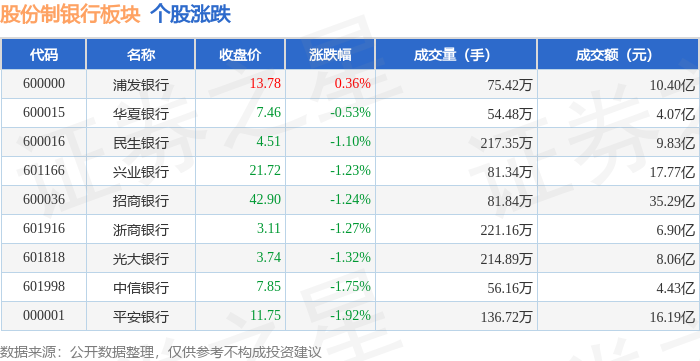
Market Overview - On September 3, the shareholding banks sector declined by 1.09%, with Ping An Bank leading the drop [1] - The Shanghai Composite Index closed at 3813.56, down 1.16%, while the Shenzhen Component Index closed at 12472.0, down 0.65% [1] Individual Bank Performance - The closing prices and changes for key banks are as follows: - Shanghai Pudong Development Bank: 13.78, up 0.36% - Huaxia Bank: 7.46, down 0.53% - Minsheng Bank: 4.51, down 1.10% - Industrial Bank: 21.72, down 1.23% - China Merchants Bank: 42.90, down 1.24% - Zhejiang Commercial Bank: 3.11, down 1.27% - Everbright Bank: 3.74, down 1.32% - CITIC Bank: 7.85, down 1.75% - Ping An Bank: 41.75, down 1.92% [1] Capital Flow Analysis - The shareholding banks sector experienced a net outflow of 273 million yuan from institutional investors and 224 million yuan from speculative funds, while retail investors saw a net inflow of 497 million yuan [1] - Detailed capital flow for individual banks shows: - Shanghai Pudong Development Bank: 157 million yuan net inflow from institutions, 47 million yuan net outflow from speculative funds, and 11 million yuan net outflow from retail investors - Minsheng Bank: 68 million yuan net inflow from institutions, 51 million yuan net outflow from speculative funds, and 17 million yuan net outflow from retail investors - Huaxia Bank: 25 million yuan net inflow from institutions, 9 million yuan net outflow from speculative funds, and 16 million yuan net outflow from retail investors - Other banks like CITIC Bank and Ping An Bank also showed significant net outflows from institutional and speculative funds [2]
信用卡失速消费贷补位,上市银行零售信贷的“跷跷板”能稳吗
Nan Fang Du Shi Bao· 2025-09-03 04:01
Core Viewpoint - The retail credit market is experiencing a significant divergence between traditional credit card business contraction and the expansion of personal loans, driven by consumer demand and policy support [2][11]. Credit Card Business - The total number of credit cards and credit card loans has declined for 11 consecutive quarters, with a reduction of 12 million cards compared to the end of last year [2]. - Among 15 listed banks, 11 reported a decrease in credit card loan balances compared to the end of last year, highlighting a pronounced industry-wide contraction [3]. - The most significant decline in credit card loan balances was observed at Bank of China, with a drop of 13.89%, followed by Postal Savings Bank at 5.67% [4]. - Credit card transaction volumes have also decreased, leading to a decline in non-interest income, with some banks reporting drops exceeding 15% [2][6]. Personal Loans - In contrast to the credit card sector, personal loans, particularly consumer loans, have seen robust growth, with several banks reporting increases exceeding 10% [11]. - Among state-owned banks, personal loans and consumer loans have both shown positive growth, with Agricultural Bank leading at 5.60% [12]. - The consumer loan segment has become a key growth driver for banks, with many institutions launching tailored products to stimulate demand [2][11]. Asset Quality - The asset quality of retail credit is under pressure, with rising non-performing loan (NPL) ratios for personal loans and credit cards across many banks [16]. - State-owned banks generally exhibit higher NPL ratios, with notable increases in personal loan NPLs for several institutions [17]. - Credit card NPL ratios have also risen, particularly at Industrial and Commercial Bank of China, which reported a rate of 3.75% [18][20]. Market Dynamics - The decline in credit card usage reflects a broader shift in consumer spending patterns, with an increase in smaller, more frequent transactions [6][8]. - The overall market for credit cards is facing significant challenges, with many banks reporting double-digit declines in credit card income [9][10].




上市银行竞逐移动端 加速迭代提升服务质效
Zheng Quan Ri Bao Zhi Sheng· 2025-09-02 16:39
Core Insights - Mobile banking has evolved from a simple financial tool to a comprehensive service platform, emphasizing banks' overall service capabilities [1][3] - The competition for customer acquisition on mobile platforms is intensifying, with major state-owned banks leading in personal mobile banking user numbers [1][2] Group 1: Personal Mobile Banking Performance - As of June 2023, Industrial and Commercial Bank of China (ICBC) leads with 600 million personal mobile banking users, followed by Agricultural Bank of China (ABC) with 586 million, and China Construction Bank (CCB) with 432 million [1] - Postal Savings Bank of China (PSBC) has 386 million personal mobile banking customers, while Bank of China (BOC) has over 302 million signed customers [1] - Among joint-stock banks, Ping An Bank's mobile app has 17.8 million registered users, a 2% increase from the end of 2022 [1] Group 2: Corporate Mobile Banking Development - Corporate mobile banking is focusing on enhancing payment, cross-border finance, and foreign exchange services, with ICBC reporting 17.87 million corporate mobile banking clients and 7.59 million monthly active users [2] - Agricultural Bank of China's corporate mobile banking registered clients increased by 960,000 to 9.7 million [2] - BOC is promoting a multi-version service system for corporate mobile banking, enhancing features for cross-border finance [2] Group 3: Digital Transformation and Ecosystem Development - The trend in mobile banking development is characterized by "dual-core driving and ecological integration," with personal banking focusing on user scale and experience, while corporate banking emphasizes specialized services [3] - Banks are deepening AI applications and exploring various mobile banking scenarios to enhance online service quality [4] - The adaptation to the HarmonyOS system is becoming standard, with banks like PSBC and CCB launching features that improve user experience and operational efficiency [4][5] Group 4: User Experience and Future Directions - Banks are encouraged to build sustainable user experience management systems and enhance customer experience through AI-driven solutions [6] - The focus is on creating personalized financial solutions and improving service delivery through advanced technology [6]
狂买49亿股!险资二季度重仓买了这些,投资者能“抄作业”吗
Bei Ke Cai Jing· 2025-09-02 14:24
Core Viewpoint - Insurance companies have significantly increased their equity investments, particularly in high-dividend stocks, as they seek to enhance returns amid a declining interest rate environment [3][5][10]. Group 1: Insurance Companies' Stock Holdings - As of the end of Q2, insurance companies held a total of 926.99 billion shares across 731 stocks, an increase of 49.24 billion shares from the previous quarter [2][6]. - The total balance of funds utilized by insurance companies exceeded 36 trillion yuan, marking a year-on-year growth of 17.4%, with stock investments reaching 3.07 trillion yuan, up by 640.6 billion yuan in the first half of the year [5][6]. - The top ten stocks heavily held by insurance companies include Minsheng Bank, Shanghai Pudong Development Bank, and China Unicom, with each holding over 10 billion shares [6]. Group 2: Investment Strategy and Market Outlook - Insurance companies are increasingly focusing on equity assets to match the duration of their liabilities and improve yield, especially as fixed-income returns have become insufficient [3][11][12]. - The majority of insurance institutions maintain an optimistic outlook for the A-share market in the second half of the year, particularly favoring stocks within the CSI 300 index [4][17]. - A survey indicated that stocks are the preferred investment asset for insurance institutions in the latter half of the year, followed by bonds and mutual funds [16]. Group 3: Sector Preferences and Future Investments - Insurance companies are particularly interested in sectors such as pharmaceuticals, electronics, banking, and communications, with a focus on high-dividend and innovative stocks [17]. - The trend of insurance companies increasing their equity investments is expected to continue, driven by the need for better returns and the potential for collaboration with banks through shareholding [12][13][14]. - Companies like China Life and Ping An have expressed confidence in the market, emphasizing the importance of high-dividend stocks in stabilizing overall investment returns [17].


股份行零售排位“争夺赛”:亮眼增速下,座次有何变化?
Nan Fang Du Shi Bao· 2025-09-02 11:26
Core Viewpoint - The retail banking sector is experiencing intensified competition, with significant growth in retail assets under management (AUM) and private banking clients among major banks, despite previous challenges in the market [2][4][7]. Retail AUM - The top three banks in retail AUM are China Merchants Bank (CMB) with 16.03 trillion yuan, Industrial Bank with 5.52 trillion yuan, and CITIC Bank with 4.99 trillion yuan [6][5]. - CMB's AUM growth is 7.39%, while Industrial Bank and CITIC Bank have growth rates of 8.00% and 6.52%, respectively [6]. - Notably, the AUM of several banks has increased significantly, with Zhejiang Commercial Bank and Pudong Development Bank showing growth rates of 12.48% and 10.55% [4][6]. - CMB's AUM surpasses that of its competitors by over 10 trillion yuan, establishing a substantial lead in the retail banking sector [4][5]. Private Banking Clients - The number of private banking clients has also seen substantial growth, with Zhejiang Commercial Bank leading at 15.52% growth, followed by Huaxia Bank, Minsheng Bank, and Pudong Development Bank with growth rates of 13.79%, 12.84%, and 10.15%, respectively [7]. - CMB, CITIC Bank, and Industrial Bank also reported increases in private banking clients, all exceeding 8% growth [7]. Wealth Management Revenue - Wealth management income has shown significant increases, with CMB reporting an 11.89% growth in fees and commissions, marking the first positive growth in three years [8]. - CITIC Bank's wealth management income growth reached a four-year high at 10.3%, while Industrial Bank's retail wealth income grew by 13.45% [8]. Retail Loan Quality - Retail loan non-performing ratios vary significantly among banks, with Bohai Bank having the highest at 4.43%, while CMB and Industrial Bank maintain the lowest at 1.03% and 1.22%, respectively [11][9]. - Despite CMB's strong performance, its non-performing ratio increased by 0.07 percentage points compared to the previous year [11]. Retail Strategy - The introduction of consumer loan interest subsidies is expected to enhance the competitive landscape, shifting focus from price wars to technology, service, and quality differentiation [12][13]. - Banks are emphasizing asset allocation and the application of AI models in their retail strategies, with CMB planning to integrate AI assistants to improve efficiency and workflow [14][15].



流量的游戏:冰与火之歌
3 6 Ke· 2025-09-02 08:10
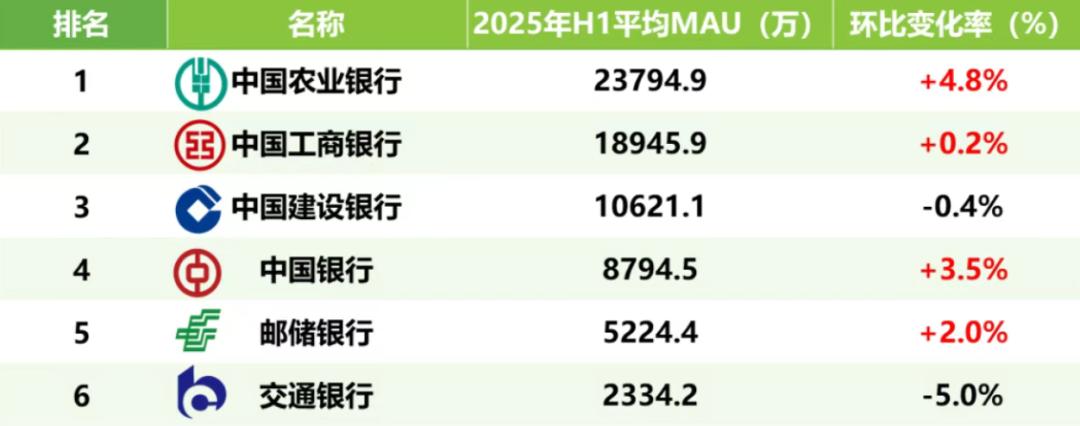
Core Insights - The digital transformation of commercial banks is entering a new phase, with increasing competition in banking apps and challenges such as insufficient personalized recommendations and product service homogenization [1] - Major state-owned banks are solidifying their leading positions by implementing diversified platform strategies, focusing on credit card services to enhance digital life services [2] User Engagement and Market Dynamics - As of the first half of 2025, the mobile banking app market has transitioned to a saturated competition phase, with user growth plateauing and daily usage time decreasing from 4.93 minutes to 2.70 minutes [3][4] - The six major state-owned banks maintain a dominant position in mobile banking user engagement, with Agricultural Bank of China leading with 238 million monthly active users (MAU), a 4.8% year-on-year increase [4][5] Operational Strategies - State-owned banks are shifting from functional apps to ecosystem platforms, integrating financial services into high-frequency life scenarios to maintain user engagement [5][6] - The average MAU for major banks shows a decline in user activity for joint-stock banks, with China Merchants Bank experiencing a 1.2% decrease in MAU [6][7] Challenges for Joint-Stock Banks - Joint-stock banks face challenges from state-owned banks' market penetration and local banks' enhanced services, leading to a squeeze in their middle market [7][8] - The homogenization of financial products and changing user behaviors, with services increasingly embedded in third-party platforms like Alipay and WeChat, are impacting the usage of standalone banking apps [7][10] Future Directions - The evolution of banking apps towards comprehensive financial "super apps" is essential, expanding beyond financial transactions to cover various user needs [10][12] - The integration of AI technologies is crucial for enhancing user experience and operational efficiency, with banks focusing on intelligent interaction, risk control, and personalized marketing [15][16] Conclusion - The management and marketing of mobile banking should adopt an internet mindset, focusing on market, user, traffic, and product thinking to enhance customer acquisition and operational efficiency [18]


洪偌馨:零售银行「过冬」
Xin Lang Cai Jing· 2025-09-02 01:57
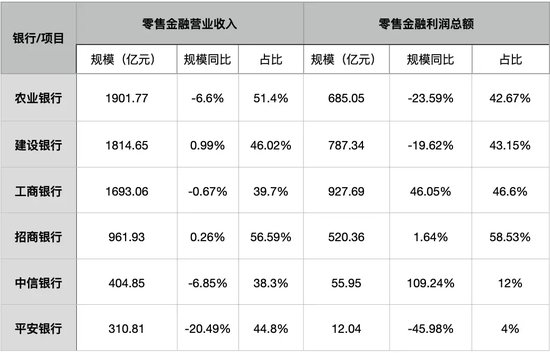
Core Viewpoint - The retail banking sector in China is facing significant challenges, with banks like Ping An Bank experiencing a decline in retail business performance due to past strategies that prioritized high-risk, high-reward approaches. The industry is now reflecting on these strategies as they navigate a difficult economic environment [1][2][4]. Retail Banking Performance - In the first half of 2025, major banks reported a decline in retail financial income and profits, with Agricultural Bank of China, China Construction Bank, and Industrial and Commercial Bank of China all showing varying degrees of downturn in personal financial business [5][6][7]. - Ping An Bank's retail banking revenue fell by over 20% year-on-year, with its pre-tax profit dropping to 1.2 billion yuan, contributing only 4% to total profits, down from 7% [8][10]. Asset Quality and Credit Risk - The retail banking sector is under pressure regarding asset quality, with rising non-performing loan ratios impacting profitability. For instance, Ping An Bank's retail loan non-performing rate was 1.27% [13][14]. - The overall economic environment, including a downturn in real estate investment and sluggish consumer demand, has led to a significant reduction in retail business income across the board [12][16]. Wealth Management Transition - Banks are attempting to shift their focus from traditional retail lending to wealth management, which requires long-term strategic investment and organizational capability [16][20]. - Despite the challenges, some banks, like China Merchants Bank, have shown resilience in their wealth management capabilities, with a notable increase in their wealth management income [24]. Future Strategies - Banks are re-evaluating their strategies, emphasizing quality and efficiency over mere scale. For example, China Merchants Bank is focusing on core banking functions while enhancing digital services and AI integration [18][19]. - The shift towards wealth management is seen as essential for banks to maintain competitiveness, especially as deposit trends shift towards investment products [19][22].