
ZTE(000063)

Search documents
11月25日融资余额24387.95亿元,相较上个交易日增加40.39亿元
Sou Hu Cai Jing· 2025-11-26 00:56
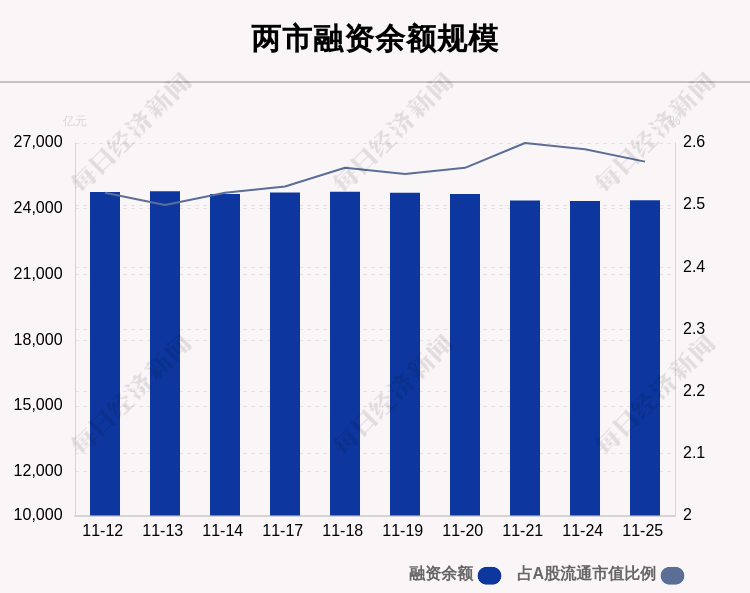
Summary of Key Points Core Viewpoint - As of November 25, the margin financing and securities lending balance in the Shanghai and Shenzhen markets reached 24,555.38 billion yuan, an increase of 44.12 billion yuan compared to the previous trading day, indicating a growing interest in leveraged investments [1]. Market Overview - The financing balance was 24,387.95 billion yuan, up by 40.39 billion yuan from the previous day. The Shanghai market's margin balance was 12,515.82 billion yuan, increasing by 15.99 billion yuan, while the Shenzhen market's balance was 12,039.56 billion yuan, rising by 28.14 billion yuan [1]. Stock Performance - A total of 1,661 stocks experienced net inflows of financing funds. Among these, 60 stocks had net buy amounts exceeding 10% of their total transaction volume, with New Fengguang, Jingsong Intelligent, and Kangwei Century leading the ranks with net buy ratios of 24.27%, 19.93%, and 18.83% respectively [2][3]. Top Stocks by Net Buy Amount - The top three stocks by net buy amount were: - New Fengguang: 24.48 million yuan, with a closing price of 41.34 yuan and a price change of 1.52% [4]. - Jingsong Intelligent: 6.81 million yuan, closing at 24.03 yuan with a price change of 3.76% [4]. - Kangwei Century: 8.97 million yuan, closing at 31.16 yuan with a price change of 1.17% [4]. Significant Net Buy Amounts - There were 25 stocks with net buy amounts exceeding 100 million yuan, with New Yiseng, Guangku Technology, and ZTE Corporation being the top three, with net buy amounts of 513 million yuan, 340 million yuan, and 333 million yuan respectively [8].





数字经济板块11月25日涨1.49%,佳缘科技领涨,主力资金净流出23.14亿元



Sou Hu Cai Jing· 2025-11-25 09:28
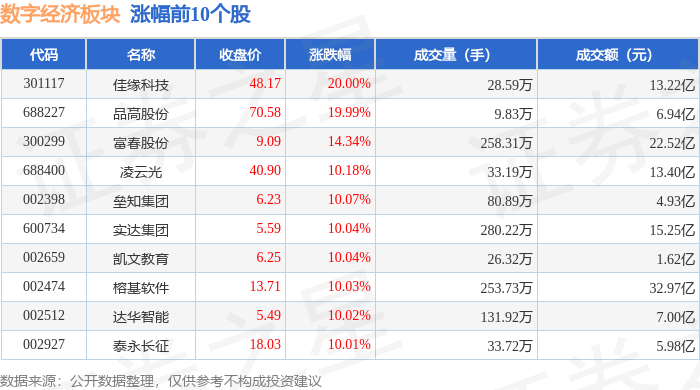
Market Overview - The digital economy sector increased by 1.49% on November 25, with Jiarun Technology leading the gains [1] - The Shanghai Composite Index closed at 3870.02, up 0.87%, while the Shenzhen Component Index closed at 12777.31, up 1.53% [1] Top Gainers in Digital Economy Sector - Jiarun Technology (301117) closed at 48.17, up 20.00% with a trading volume of 285,900 shares and a transaction value of 1.322 billion [1] - Pinggao Co., Ltd. (688227) closed at 70.58, up 19.99% with a trading volume of 98,300 shares and a transaction value of 694 million [1] - Fuchun Co., Ltd. (300299) closed at 9.09, up 14.34% with a trading volume of 2,583,100 shares and a transaction value of 2.252 billion [1] - Lingyun Optics (688400) closed at 40.90, up 10.18% with a trading volume of 33,190 shares and a transaction value of 1.340 billion [1] - Lezhi Group (002398) closed at 6.23, up 10.07% with a trading volume of 808,900 shares and a transaction value of 493 million [1] Top Losers in Digital Economy Sector - Yingfang Software (688435) closed at 53.96, down 6.51% with a trading volume of 75,200 shares and a transaction value of 423 million [2] - ST Dongyi (002713) closed at 15.15, down 4.66% with a trading volume of 669,000 shares and a transaction value of 1.019 billion [2] - ST Tianyu (300205) closed at 4.52, down 3.62% with a trading volume of 54,700 shares and a transaction value of 25.194 million [2] Capital Flow Analysis - The digital economy sector experienced a net outflow of 2.314 billion from institutional investors, while retail investors saw a net inflow of 2.859 billion [2][3] - Major stocks like Yangguang Electric (300274) had a net inflow of 1.058 billion from institutional investors, while ZTE Corporation (000063) had a net inflow of 410 million [3] - Fuchun Co., Ltd. (300299) had a net inflow of 177 million from institutional investors, but a net outflow of 143 million from retail investors [3]
中兴通讯午后涨超4% 自研车规级芯片“撼域”M1已搭载埃安旗下车型
Zhi Tong Cai Jing· 2025-11-25 09:21
Core Viewpoint - ZTE Corporation's stock rose over 4% following the announcement of its self-developed high-performance chip "Han域" M1, which has been integrated into GAC Group's Aion brand electric vehicle model [1] Group 1: Company Developments - ZTE's subsidiary, ZTE Microelectronics, has developed the "Han域" M1 chip, which features high computing power, high bandwidth, large storage, and high security [1] - The "Han域" M1 chip is classified as an automotive-grade central computing platform SOC chip, designed to support various application scenarios in future domain-centric architectures [1] Group 2: Product Features - The chip utilizes a self-developed network acceleration engine to achieve seamless switching between three networks, enhancing its versatility [1] - It incorporates a multi-core heterogeneous system that supports cross-network forwarding and switching, along with a hardware acceleration engine for information security [1] - The on-chip storage capacity is high, and the real-time domain performance is improved by 25% compared to similar products in the international market [1]
通信行业资金流入榜:永鼎股份等13股净流入资金超亿元
Zheng Quan Shi Bao Wang· 2025-11-25 09:05
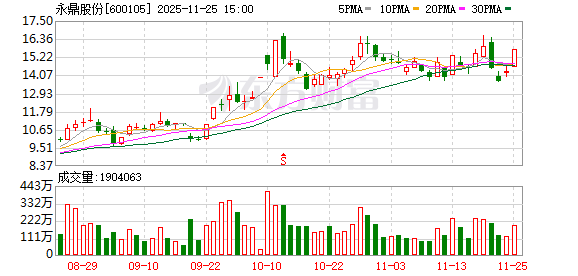
Core Points - The Shanghai Composite Index rose by 0.87% on November 25, with 29 out of 31 sectors experiencing gains, led by the communication and media sectors, which increased by 3.54% and 2.85% respectively [2] - The net inflow of capital in the two markets was 13.215 billion yuan, with 19 sectors seeing net inflows, particularly the electronics sector, which had a net inflow of 5 billion yuan and a rise of 2.14% [2] - The defense and military industry and transportation sectors were the only ones to decline, with decreases of 0.32% and 0.11% respectively [2] Industry Summary - The communication sector saw a significant increase of 3.54%, with a total net capital inflow of 4.881 billion yuan. Out of 124 stocks in this sector, 113 rose, and 8 hit the daily limit [3] - The top three stocks in terms of net capital inflow within the communication sector were Yongding Co. with 935 million yuan, followed by Zhongji Xuchuang and Xinyi Sheng with 687 million yuan and 651 million yuan respectively [3] - The communication sector also had 5 stocks with net outflows exceeding 50 million yuan, led by Shida Group, Data Port, and Hengxin Oriental, which saw outflows of 289 million yuan, 237 million yuan, and 6.38 million yuan respectively [5] Capital Flow Summary - The top inflow stocks in the communication sector included Yongding Co. (10.01% increase), Zhongji Xuchuang (5.00% increase), and Xinyi Sheng (4.00% increase) [4] - The top outflow stocks included Shida Group (10.04% decrease), Data Port (3.58% decrease), and Hengxin Oriental (-0.67% decrease) [5]



港股异动 | 中兴通讯(00763)午后涨超4% 自研车规级芯片“撼域”M1已搭载埃安旗下车型
Zhi Tong Cai Jing· 2025-11-25 06:33
Core Viewpoint - ZTE Corporation's stock price increased by over 4% following the announcement of its new chip, the "Han域" M1, which has been integrated into GAC Group's Aion brand electric vehicle model, the "Hao Bo GT Climbing Edition" [1] Group 1: Company Developments - ZTE Corporation's subsidiary, ZTE Microelectronics, has developed the "Han域" M1 chip, which is a high-performance, high-bandwidth, high-storage, and high-security multi-domain fusion high-speed connection chip [1] - The "Han域" M1 chip is classified as an automotive-grade central computing platform SOC chip, featuring a self-developed network acceleration engine that enables seamless switching between three networks [1] - The chip supports multi-core heterogeneous systems for cross-network forwarding and switching, enhancing real-time domain performance by 25% compared to similar products in the international market [1] Group 2: Market Impact - As of the report, ZTE Corporation's stock was trading at HKD 29.88, with a trading volume of HKD 548 million [1]
主力资金流入前20:蓝色光标流入11.43亿元、数据港流入8.06亿元
Jin Rong Jie· 2025-11-25 03:24
Group 1 - The top 20 stocks with significant capital inflow as of November 24 include BlueFocus (1.143 billion yuan), DataPort (806 million yuan), and 360 (794 million yuan) [1] - Other notable stocks in the top 20 by capital inflow are Provincial Advertising Group (587 million yuan), China Shipbuilding (440 million yuan), and Zhangjiang Hi-Tech (403 million yuan) [1] - Additional companies with substantial inflows include Changxin Bochuang (357 million yuan), China Shipbuilding Defense (347 million yuan), and Leike Defense (317 million yuan) [1] Group 2 - The list also features Huajian Group (286 million yuan), Aerospace Development (269 million yuan), and ZTE Corporation (259 million yuan) [1] - Other companies in the top 20 include GAC Group (253 million yuan), Changying Precision (253 million yuan), and Great Wall Military Industry (248 million yuan) [1] - The final entries in the top 20 are Zhongfu Circuit (248 million yuan), Leo Group (243 million yuan), Kunlun Wanwei (240 million yuan), Midea Group (233 million yuan), and Nanwei Software (223 million yuan) [1]




AI产业迎催化,港股科技股反弹!港股通科技ETF招商(159125)涨超2%
2 1 Shi Ji Jing Ji Bao Dao· 2025-11-25 03:18
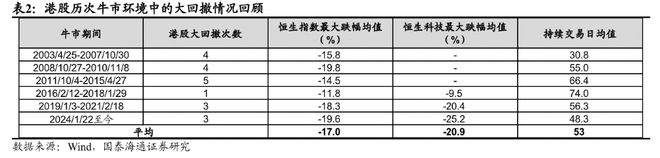
Group 1 - The core viewpoint of the news highlights a significant rise in Hong Kong's stock market, particularly in technology stocks, following the announcement of the "Genesis Plan" by the U.S. government to leverage artificial intelligence for scientific research [1] - The Hang Seng Index and Hang Seng Tech Index opened strongly, with notable gains in companies like Bilibili, Xiaomi, and ZTE, indicating a positive market sentiment towards tech stocks [1] - The Nasdaq Golden Dragon Index, which tracks Chinese tech stocks, rose by 2.82%, with major players like Baidu and Alibaba experiencing substantial increases in their stock prices [1] Group 2 - There is a strong expectation for interest rate cuts by the Federal Reserve, with a probability of 82.9% for a 25 basis point cut in December, which could influence market dynamics positively [2] - Historical data shows that the Hang Seng Index and Hang Seng Tech Index have experienced significant declines recently, with average maximum drawdowns of approximately 17% and 21% respectively during past market corrections [2][3] - The current valuation of the Hong Kong Stock Connect Technology ETF is at a price-to-earnings ratio of 23.55, which is at a historically low level, suggesting potential for recovery [3] Group 3 - The Hong Kong Stock Connect Technology Index has shown greater elasticity compared to similar indices, with a remarkable increase of 170% from February to September 2024, outperforming other indices [4]

中原证券通信行业2026年度策略:智启新质 算力互联破浪前行
智通财经网· 2025-11-25 02:52
Core Viewpoint - The report from Zhongyuan Securities indicates that a series of AI industry catalytic events will occur in 2026, strengthening the leading position of top optical module manufacturers due to their technological, customer, and scale advantages. The current valuation of the communication industry index is below the ten-year average, and the industry maintains a "stronger than the market" investment rating based on performance growth expectations and valuation levels [1][2]. Summary by Sections Review of 2025 - In early 2025, the DeepSeek large model boosted market sentiment, and the three major operators completed the deployment of DeepSeek computing power private networks, enhancing their cloud service capabilities. Domestic cloud manufacturers provided positive capital expenditure guidance, leading to an increase in industry valuations. However, from February to April, the industry index experienced significant fluctuations due to concerns over U.S. tariff policies and future demand for optical modules. By mid-April, the easing of tariff policies and validation of AI computing power demand led to a gradual recovery in the industry index and valuations. In late July, North American cloud manufacturers raised their capital expenditure guidance, further catalyzing the industry. Since September, leading manufacturers faced short-term performance fatigue due to product iterations and customer structure adjustments, raising concerns about unclear downstream business models [2]. Outlook for 2026 - A series of AI industry catalytic events are expected, including the mass production of NVIDIA's next-generation Rubin GPU, the release of Google's new large model Gemini, and clear capital expenditure guidance from cloud manufacturers. AI smartphones equipped with large models are anticipated to become personalized smart assistants, potentially driving the next wave of smartphone upgrades. The development of key 6G technologies by telecom operators is expected to accelerate revenue growth from AI computing power. The report is optimistic about the high industry prosperity and strong growth potential of optical modules, optical devices, optical chips, and the increasing penetration of AI smartphones, as well as the stable operations of quality dividend assets in telecom operators [3][4]. Capital Expenditure Outlook for Leading Cloud Manufacturers - The demand for 800G is increasing, and the industry is transitioning from 800G to 1.6T technology. Leading optical module manufacturers are expected to further highlight their advantages due to technological leadership, stable customer relationships, and scalable delivery capabilities. The development of AI is driving the construction of large data centers, benefiting optical device manufacturers. The long R&D and expansion cycles for optical chips create high barriers in technology, talent, customer validation, and capital, leading to a persistent supply-demand gap for certain optical chips. The increasing demand for domestic controllable solutions is expected to translate into performance for domestic computing power. Recommended companies to watch include: NewEase, Huagong Technology, Guangxun Technology, Yuanjie Technology, Shijia Photon, and Taicheng Light [4]. AI Smartphones and Market Trends - Generative AI smartphones are set to provide users with new interactive experiences, multimodal content generation capabilities, personalized services, and innovative application ecosystems. The continuous improvement of edge AI computing power and large model capabilities is expected to further increase the market penetration of AI smartphones. Innovations and upgrades in AI smartphones are likely to lead to higher average selling prices and improved profit margins. The growth in edge AI shipments will drive sustained growth in core product lines of consumer electronics components [5]. Telecom Operators' Performance - The three major telecom operators are considered quality dividend assets with high dividend yield potential, offering cash dividends twice a year. The quality of traditional business revenue is improving, and a decrease in capital expenditure is expected to lower future depreciation and amortization costs, maintaining stable operations. Additionally, telecom operators are likely to leverage their advantages in data centers, big data, and network infrastructure to reconstruct business models with the help of AI. Investment recommendations include focusing on the optical module, optical device, and optical chip sectors, as well as AI smartphone and telecom operator sectors [6].

