
GF SECURITIES(000776)

Search documents
广发证券:环保高股息资产26年值得期待 重点关注固废、水务方向
智通财经网· 2026-01-06 02:24
Group 1 - The EU carbon tariff will officially be implemented on January 1, 2026, initially affecting industries such as cement, steel, aluminum, fertilizers, electricity, and hydrogen, with potential expansion to chemicals, plastics, ceramics, paper, and organic basic chemicals by 2027 [1] - The current EU ETS carbon price is approximately €80-90 per ton, which is about 13 times higher than China's current carbon price, significantly increasing the cost of exports to the EU [1] - Companies are encouraged to focus on reducing carbon emissions and adapting to carbon tariffs through the circular economy, particularly in sectors like recycled resources, recycling systems, green steam, and green methanol [1] Group 2 - Recent debt resolution actions by listed companies, such as Chuangye Environmental and Mongolian Grass Ecology, indicate a rapid advancement in local debt resolution processes [2] - Local governments are optimizing cash flow through one-time payments of historical debts, early termination of PPP projects, and debt restructuring, which is expected to enhance the market value of many environmental companies [2] - Companies with significant accounts receivable, particularly from government-funded projects, are likely to see notable improvements in market value and profit recovery, especially in solid waste, water services, sanitation, ecological restoration, and water treatment sectors [2] Group 3 - High dividend assets remain attractive, with environmental companies achieving significant excess returns despite a weaker overall dividend environment in 2025 [3] - Notable stock price increases for companies such as China Everbright Environment and Huaneng Environment, with annual growth rates of 31.7%, 26.3%, 46.7%, and 30.6% respectively [3] - The expectation of continued dividend increases is supported by reduced funding needs due to fewer new project orders, making companies like Huaneng Environment, Shanghai Industrial Holdings, and others worthy of attention [3]
“医药健康+金融资本”双轮驱动 走中医药现代化发展之路
Zheng Quan Ri Bao· 2026-01-05 22:49
Core Viewpoint - The Chinese traditional medicine industry is experiencing significant growth driven by policy support and increasing health demands, with a focus on balancing tradition and innovation [1] Group 1: Company Strategy - Jilin Aodong Pharmaceutical Group Co., Ltd. adopts a dual-driven strategy of "medicine health + financial capital" to modernize traditional Chinese medicine [1] - The company has established a robust capital collaborative network, holding 20.11% of Guangfa Securities and being a major shareholder in several pharmaceutical companies, which supports its main business [2][3] - Financial returns from investments in Guangfa Securities contributed 12.43 billion yuan and 17.49 billion yuan in 2023 and 2024 respectively, providing continuous financial support for the pharmaceutical business [3] Group 2: Financial Empowerment - The financial layout allows Jilin Aodong to maintain stable and abundant returns, which are reinvested into the pharmaceutical sector to alleviate the high risks and long cycles of research and development [3] - The company emphasizes a principle of "main business first, financial empowerment," ensuring that financial gains are directed back to support the core pharmaceutical operations [3] Group 3: Technological Innovation - Jilin Aodong places technological innovation at the core of its strategy, focusing on the research of key raw materials and advancing in fields like anti-aging and regenerative medicine [5] - The company has developed a closed-loop industrial chain around the breeding, processing, and quality control of deer antler, ensuring the quality and traceability of raw materials [5][6] - The implementation of modern technology in traditional practices is seen as essential for unlocking the core value of traditional Chinese medicine [5][6] Group 4: Industry Development - The modernization of traditional Chinese medicine is supported by national policies aimed at enhancing quality, digital transformation, and new drug development [4] - Jilin Aodong aims to reshape production factors through technological innovation, transitioning from resource-dependent to innovation-driven models [6] - The company is committed to continuous investment in research and development, enhancing its intelligent layout across the entire industrial chain, and maintaining its heritage as a time-honored brand [7]

辽宁成大股份有限公司关于拟非公开发行可交换公司债券的公告
Shang Hai Zheng Quan Bao· 2026-01-05 19:28
Core Viewpoint - The company plans to issue non-public exchangeable corporate bonds to enhance its financing capabilities and improve capital liquidity, with a total issuance scale not exceeding 4 billion RMB [3][44]. Group 1: Issuance Details - The type of bonds to be issued is exchangeable for A-shares of GF Securities Co., Ltd. [2][42]. - The total scale of the bond issuance will not exceed 40 billion RMB, which can be issued in one go or in tranches [3][44]. - The bonds will have a fixed interest rate and a term of no more than 5 years [4][46]. - Each bond will have a face value of 100 RMB and will be issued at par [5][48]. - The issuance will be conducted through non-public methods, including book-building and agreement-based issuance [6][50]. Group 2: Target Investors and Terms - The target investors for the bond issuance will be professional investors who meet the relevant regulatory requirements, with a maximum of 200 participants [7][52]. - The bonds will pay interest annually without compounding, with the principal and final interest paid at maturity [8][54]. - The initial exchange price for the bonds will not be lower than the closing price of the underlying stock on the trading day prior to the announcement [9][56]. Group 3: Security and Fund Usage - The company will use part of its legally owned A-shares of GF Securities as collateral to ensure timely payment of bond principal and interest [10][58]. - The funds raised from the bond issuance will be used to repay interest-bearing debts and other legally compliant purposes [11][61]. Group 4: Approval and Authorization - The bond issuance plan requires approval from the shareholders' meeting, which is scheduled for January 21, 2026 [20][78]. - The board of directors will be authorized to handle all matters related to the bond issuance, including adjustments to the issuance terms based on market conditions [71][75].

吉林敖东董事长李秀林:“医药健康+金融资本”双轮驱动 走中医药现代化发展之路
Zheng Quan Ri Bao· 2026-01-05 16:47
Core Viewpoint - The Chinese traditional medicine industry is experiencing significant growth driven by policy support and increasing health demands, with a focus on balancing heritage and innovation [1] Group 1: Company Strategy - Jilin Aodong Pharmaceutical Group Co., Ltd. adopts a dual-driven strategy of "pharmaceutical health + financial capital" to modernize traditional Chinese medicine [1] - The company has established a robust capital collaborative network, holding 20.11% of Guangfa Securities and being a major shareholder in several pharmaceutical companies, which supports its main business [2][3] Group 2: Financial Performance - In 2023 and 2024, the investment in Guangfa Securities is expected to contribute 1.243 billion and 1.749 billion yuan in revenue, respectively, with a total of 8.757 billion yuan in cash dividends provided to the company [3] - Financial returns are reinvested into the pharmaceutical business, alleviating the high risks and long cycles associated with research and development [3] Group 3: Technological Innovation - The modernization of traditional Chinese medicine relies on modern technology to unlock its core value, transitioning from "experience inheritance" to "scientific decoding" [4] - Jilin Aodong focuses on core material research and is actively involved in cutting-edge fields such as anti-aging and regenerative medicine [4][5] Group 4: Production and Quality Control - The company has developed a closed-loop industrial chain around the breeding, processing, and quality control of its core product, the Aodong deer antler [4][6] - Investments exceeding 46 million yuan have been made to upgrade disease prevention facilities and implement a digital quality control system across its standardized breeding bases [6] Group 5: Future Outlook - Jilin Aodong aims to deepen its dual-driven advantages and integrate new productive forces throughout its industrial development process, focusing on continuous investment in research and intelligent layout [7]
广发证券(000776) - H股公告
2026-01-05 10:45
股份發行人及根據《上市規則》第十九B章上市的香港預託證券發行人的證券變動月報表 截至月份: 2025年12月31日 狀態: 新提交 致:香港交易及結算所有限公司 公司名稱: 廣發証券股份有限公司 呈交日期: 2026年1月5日 I. 法定/註冊股本變動 | 1. 股份分類 | 普通股 | 股份類別 | H | | 於香港聯交所上市 (註1) | | 是 | | | --- | --- | --- | --- | --- | --- | --- | --- | --- | | 證券代號 (如上市) | 01776 | 說明 | 廣發証券H股 | | | | | | | | | 法定/註冊股份數目 | | | 面值 | | 法定/註冊股本 | | | 上月底結存 | | | 1,701,796,200 | RMB | | 1 RMB | | 1,701,796,200 | | 增加 / 減少 (-) | | | 0 | | | RMB | | | | 本月底結存 | | | 1,701,796,200 | RMB | | 1 RMB | | 1,701,796,200 | | 2. 股份分類 | 普通股 | 股份 ...
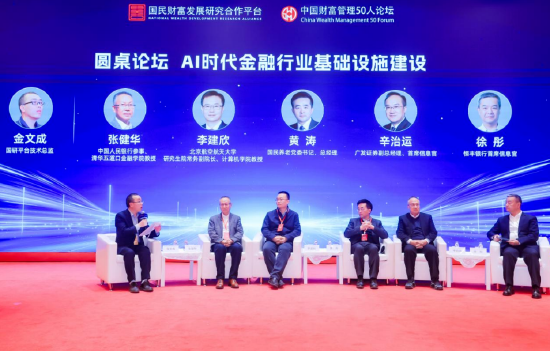
辛治运谈AI转型:聚焦投研与编程场景 呼吁共建行业智能计算基础设施
Xin Lang Cai Jing· 2026-01-05 09:14
专题:中国财富管理50人论坛2025年会 1月5日金融一线消息,中国财富管理50人论坛2025年会近日在京召开,本届年会的主题是"迈向'十五 五'建设金融强国"。在"AI时代金融行业基础设施建设"圆桌论坛上,广发证券副总经理、首席信息官辛 治运分析了目前AI最新的行业动态,他认为"十五五"规划中单独将科技自主自强列为主要目标,也特别 强调了全面实施"人工智能+"行动,标志着AI的应用进入了深水区。金融业要全面落实实施"人工智能 +"行动,推动智能化的转型。作为证券公司,应聚焦应用场景、推动建立行业公共的智能计算基础设 施、加强风险防范措施。同时他结合广发证券的工作,讲述了在财经天玑智融、卖方投研、买方投研、 AI辅助编程、数据中台五个方面的最新实践。 专题:中国财富管理50人论坛2025年会 1月5日金融一线消息,中国财富管理50人论坛2025年会近日在京召开,本届年会的主题是"迈向'十五 五'建设金融强国"。在"AI时代金融行业基础设施建设"圆桌论坛上,广发证券副总经理、首席信息官辛 治运分析了目前AI最新的行业动态,他认为"十五五"规划中单独将科技自主自强列为主要目标,也特别 强调了全面实施"人工智能+" ...

翻倍股、“红包雨”!盘点广东资本市场2025年八大关键词
Nan Fang Du Shi Bao· 2026-01-05 09:08
Group 1 - In 2025, China's capital market achieved a historic milestone with A-shares' total market value surpassing 100 trillion yuan, marking the beginning of a new journey towards high-quality development [2] - Guangdong's capital market showcased significant advancements in investor returns, technological innovation, wealth management models, and investor protection, reflecting the region's robust industrial foundation and reform vitality [2] - The "2025 Guangdong Financial Annual Keywords" report highlights key developments across various sectors, including capital markets, banking, insurance, and consumer finance, emphasizing Guangdong's financial industry's solid progress and responsibilities [2] Group 2 - The A-share market entered the trillion-yuan era, with 540 companies doubling their stock prices in 2025, of which 53 were from Guangdong, representing nearly 10% of the national total [3] - The surge in doubling stocks is primarily concentrated in emerging industries such as artificial intelligence, advanced manufacturing, and new materials, aligning with Guangdong's industrial upgrade direction [3] - By the end of 2025, Guangdong had 465 A-share listed companies with a total market value of 7 trillion yuan, a 31% increase from the beginning of the year, and reported a total operating income of 2.82 trillion yuan and a net profit of 178.4 billion yuan, reflecting year-on-year growth of 7.69% and 9.8% respectively [3] Group 3 - Guangdong listed companies provided substantial cash dividends to investors, contributing to a stable and sustainable return, described as a "red envelope rain" [4] - In 2024, the total cash dividends from Guangdong A-share listed companies reached a record high of 121.86 billion yuan, with an average dividend payout ratio of 53.5%, leading the nation by 16 percentage points [5] - Notable companies like Midea Group and Gree Electric ranked highest in dividend payouts, with Midea distributing 26.72 billion yuan and Gree 16.76 billion yuan, while several others exceeded 2 billion yuan in dividends [5] Group 4 - The "scientific content" of Guangdong's capital market continued to rise, driven by "technology empowerment + restructuring optimization" [6] - During the 14th Five-Year Plan period, Guangdong saw 255 new IPOs, with over 95% being technology companies, injecting innovative vitality into the capital market [6] - Guangdong's capital market also innovated in debt financing, issuing 209 technology innovation bonds totaling 160.59 billion yuan, with an annual growth rate exceeding 120% [6] Group 5 - The growth of local financial institutions is crucial for the capital market's service to the real economy, with the IPO processes of local brokerages like Dongguan Securities and Wanlian Securities gaining attention [7] - The Guangdong government has emphasized supporting leading brokerages to enhance their core competitiveness and encouraging smaller firms to adopt differentiated operations [7] - By the end of September 2025, Guangdong's securities firms had a net capital of 139.36 billion yuan and total assets of 1.01 trillion yuan [7] Group 6 - Guangdong's public fund industry, home to major institutions like E Fund and GF Fund, has shifted focus from "scale" to "investor returns," promoting the expansion of equity products [8] - By the end of November 2025, the equity fund size managed by Guangdong firms reached 1.76 trillion yuan, a year-on-year increase of 27.81%, accounting for 41.41% of total managed assets [8] - The region launched 79 new equity funds in 2025, with a total scale of 54.88 billion yuan, representing 80.61% of all new funds [8] Group 7 - Guangdong's public fund industry has responded positively to the "fee reduction and benefit sharing" initiative, with over 4.5 billion yuan returned to investors since July 2023 [9] - The Guangdong Securities Regulatory Bureau is focused on improving long-term assessment mechanisms and facilitating long-term equity investments by insurance funds [9] Group 8 - In 2025, several key financial institutions in Guangdong underwent management changes, reflecting strategic adjustments in response to market challenges [10] - The leadership transitions at firms like GF Securities and Dongguan Securities indicate a demand for enhanced professional capabilities and strategic vision in the financial sector [10] Group 9 - Guangdong has made significant strides in wealth management innovation, aiming to become the "national investment advisory capital" through initiatives like establishing investment advisory academies and research institutes [11] - By the end of October 2025, three pilot fund advisory institutions in Guangdong managed 62.27 billion yuan, with over 80% of clients achieving positive returns [11] - The introduction of AI in wealth management is supported by government measures aimed at digital transformation in the advisory sector [11] Group 10 - The protection of investors' rights is crucial for a high-quality capital market, with Guangdong enhancing its investor protection framework through regulatory enforcement and educational initiatives [12] - The Guangdong Securities Regulatory Bureau has maintained a strict stance against illegal activities in the securities market, addressing 238 non-compliance reports and recovering nearly 1.4 million yuan for investors [12] - Innovative investor education services have been launched to integrate educational resources and improve the quality of investor services [12]

广发证券(01776) - 截至二零二五年十二月三十一日止股份发行人的证券变动月报表
2026-01-05 08:01
股份發行人及根據《上市規則》第十九B章上市的香港預託證券發行人的證券變動月報表 截至月份: 2025年12月31日 狀態: 新提交 致:香港交易及結算所有限公司 公司名稱: 廣發証券股份有限公司 呈交日期: 2026年1月5日 I. 法定/註冊股本變動 | 1. 股份分類 | 普通股 | 股份類別 | H | | 於香港聯交所上市 (註1) | | 是 | | | --- | --- | --- | --- | --- | --- | --- | --- | --- | | 證券代號 (如上市) | 01776 | 說明 | 廣發証券H股 | | | | | | | | | 法定/註冊股份數目 | | | 面值 | | 法定/註冊股本 | | | 上月底結存 | | | 1,701,796,200 | RMB | | 1 RMB | | 1,701,796,200 | | 增加 / 減少 (-) | | | 0 | | | RMB | | | | 本月底結存 | | | 1,701,796,200 | RMB | | 1 RMB | | 1,701,796,200 | | 2. 股份分類 | 普通股 | 股份 ...
广发证券:牛肉进口实施配额制及配额外关税 看好肉牛价格周期上行
智通财经网· 2026-01-05 07:25
Core Viewpoint - The report from GF Securities indicates that China's total beef import quota for 2026 will be 2.688 million tons, with Brazil accounting for 1.106 million tons, Argentina for 0.511 million tons, Uruguay for 0.324 million tons, and Australia for 0.205 million tons. The implementation of the import quota system is expected to alleviate supply pressure on imported beef and support a price increase in domestic beef, enhancing the performance of livestock companies [1][2]. Group 1: Import Quota and Market Impact - The Ministry of Commerce announced that starting January 1, 2026, a safeguard measure will be implemented for imported beef, which includes country-specific quotas and an additional 55% tariff on imports exceeding the quota. This measure is set to last for three years [1][2]. - In 2024, beef imports are projected to account for 27% of total supply, with a total import volume of 2.87 million tons, reflecting a 5% year-on-year increase. The import volumes from Brazil, Argentina, Uruguay, and Australia are 1.34 million tons, 0.59 million tons, 0.24 million tons, and 0.21 million tons, respectively [2]. Group 2: Price Trends and Industry Outlook - The beef price cycle is on the rise due to previous losses in cattle farming leading to reduced supply. As of Q3 2025, the national cattle inventory was 99.32 million heads, showing a 0.6% quarter-on-quarter decline and a 2.4% year-on-year decline. It is expected that beef prices will continue to rise in 2026, providing significant profit elasticity for livestock companies [3]. - The report suggests focusing on investment opportunities linked to both beef and dairy cattle, highlighting companies such as Yuran Agriculture (09858) and Modern Farming (01117) as key targets [4].
金融工程:大类资产配置分析月报(2025年12月):PMI回升至荣枯线以上,当前看多权益资产-20260105
GF SECURITIES· 2026-01-05 07:05
Quantitative Models and Construction Methods 1. Model Name: Fixed Proportion + Macro Indicators + Technical Indicators Combination - **Model Construction Idea**: This model combines fixed proportion asset allocation with adjustments based on macroeconomic and technical indicators to optimize portfolio performance[35][36] - **Model Construction Process**: - Select seven asset classes, including equities, bonds, commodities, and currencies - Set a fixed proportion as the baseline allocation for each asset class - Adjust the weights of non-currency assets based on the latest monthly signals from macroeconomic and technical indicators, while correspondingly increasing or decreasing the allocation to currency assets[37] - **Model Evaluation**: The model effectively integrates macro and technical signals to enhance portfolio performance and reduce risk[36] 2. Model Name: Classic Asset Allocation Model + Macro Indicators + Technical Indicators Combination - **Model Construction Idea**: This model incorporates classic asset allocation strategies, such as risk parity and volatility control, with macroeconomic and technical indicators to achieve better risk-adjusted returns[43] - **Model Construction Process**: - Use the same seven asset classes as the previous model - Set baseline weights based on risk parity or a 6% annualized volatility control - Adjust weights monthly based on macroeconomic and technical signals - Impose constraints on asset allocation proportions (e.g., equity allocation capped at 30%, commodity allocation capped at 20%) and turnover rates (e.g., single asset monthly turnover capped at 20%, total monthly turnover capped at 30%)[43] - **Model Evaluation**: The model balances risk and return effectively, with constraints improving feasibility and stability[43] --- Model Backtesting Results 1. Fixed Proportion + Macro Indicators + Technical Indicators Combination - Annualized Return: 10.22%[40] - Maximum Drawdown: 9.34%[40] - Annualized Volatility: 6.24%[40] 2. Classic Asset Allocation Model + Macro Indicators + Technical Indicators Combination - **Volatility Control (6%) + Macro Indicators + Technical Indicators Combination**: - Annualized Return: 9.10%[47] - Maximum Drawdown: 5.06%[47] - Annualized Volatility: 4.94%[47] - **Risk Parity + Macro Indicators + Technical Indicators Combination**: - Annualized Return: 8.28%[47] - Maximum Drawdown: 4.47%[47] - Annualized Volatility: 3.40%[47] --- Quantitative Factors and Construction Methods 1. Factor Name: Macroeconomic Trend Factor - **Factor Construction Idea**: Analyze the impact of macroeconomic indicator trends (upward or downward) on asset returns[10] - **Factor Construction Process**: - Use historical moving averages to determine the trend of a macroeconomic indicator - Conduct a t-test to evaluate whether asset returns differ significantly under upward and downward trends - Formula: $ t = \frac{\overline{R_1} - \overline{R_2}}{\sqrt{\frac{(n_1-1)S_1^2 + (n_2-1)S_2^2}{n_1+n_2-2} \left(\frac{1}{n_1} + \frac{1}{n_2}\right)}} \sim t_{n_1+n_2-2} $ where $\overline{R_1}$ and $\overline{R_2}$ are the average monthly returns under upward and downward trends, $S_1$ and $S_2$ are the standard deviations, and $n_1$ and $n_2$ are the number of months in each trend[10] - **Factor Evaluation**: The factor effectively identifies significant differences in asset returns under different macroeconomic trends[10] 2. Factor Name: Trend Indicator Factor - **Factor Construction Idea**: Use historical price data to measure the trend of different asset classes[16] - **Factor Construction Process**: - For equities: $(\text{2-month LLT average monthly return} - \text{(T-12 to T-2) month average monthly return})$ - For bonds: $(\text{2-month closing price average monthly return} - \text{(T-12 to T-2) month average monthly return})$ - For industrial commodities: $(\text{2-month closing price average monthly return})$ - For gold: $(\text{6-month closing price average monthly return})$[16] - **Factor Evaluation**: The factor provides a robust method for identifying asset price trends[16] 3. Factor Name: Valuation Indicator Factor - **Factor Construction Idea**: Use the equity risk premium (ERP) to measure equity valuation levels[21][27] - **Factor Construction Process**: - Calculate ERP as the inverse of the CSI 800 Index PE (TTM) minus the 10-year government bond yield - Define the 5-year historical percentile of ERP as: $ \text{Percentile} = \frac{\text{Current ERP} - \text{5-year ERP Minimum}}{\text{5-year ERP Maximum} - \text{5-year ERP Minimum}} $ - Assign scores based on the percentile: - >90%: +2 - 70%-90%: +1 - 30%-70%: 0 - 10%-30%: -1 - <10%: -2[22] - **Factor Evaluation**: The factor effectively captures valuation levels, with higher percentiles indicating lower valuations[22] 4. Factor Name: Fund Flow Indicator Factor - **Factor Construction Idea**: Measure the net fund flow into the CSI 800 Index to assess market sentiment[27][32] - **Factor Construction Process**: - Calculate the monthly active net inflow as: $(\text{1-month active net inflow} - \text{6-month average monthly active net inflow})$ - Positive values indicate fund inflow, while negative values indicate fund outflow[27][32] - **Factor Evaluation**: The factor provides a clear signal of market sentiment based on fund flow dynamics[32] --- Factor Backtesting Results 1. Macroeconomic Trend Factor - Equity: PMI (3-month moving average) → Positive trend, score: +1[15] - Bond: PMI (3-month moving average) → Negative trend, score: -1[15] - Gold: US M2 YoY (12-month moving average) → Positive trend, score: +1[15] - Industrial Commodities: PMI (3-month moving average) → Positive trend, score: +1[15] 2. Trend Indicator Factor - Equity: 2-month LLT average return → 0.38%, upward trend, score: +1[21] - Bond: 2-month closing price average return → -0.15%, downward trend, score: -1[21] - Gold: 6-month closing price average return → 4.20%, upward trend, score: +1[21] - Industrial Commodities: 2-month closing price average return → -0.09%, downward trend, score: -1[21] 3. Valuation Indicator Factor - Equity: 5-year ERP percentile → 51.77%, neutral valuation, score: 0[27] 4. Fund Flow Indicator Factor - Equity: 1-month active net inflow → 1863 billion RMB, fund inflow, score: +1[32]