ZGXT(000831)

Search documents
中国稀土:公司生产经营平稳有序;协鑫能科:控股股东拟协议转让部分公司股份 | 新能源早参
Mei Ri Jing Ji Xin Wen· 2025-06-29 22:26
每经记者|朱成祥 每经编辑|马子卿 丨2025年6月30日 星期一丨 NO.1 协鑫能科:控股股东拟协议转让5.92%公司股份 6月27日,协鑫能科公告称,公司控股股东上海其辰拟通过协议转让方式向浙江金证资产管理有限公司 (代表"金证得胜1号私募证券投资基金")转让其持有的公司9613万股股份,占公司总股本的5.92%。标 的股份的转让价格为每股10.17元,转让价格总额(税前)为9.78亿元。本次协议转让股份事项不触及要 约收购,不构成关联交易,不会导致公司控股股东、实际控制人发生变更。 点评:协鑫能科控股股东上海其辰拟转让部分股份予浙江金证资产,总价9.78亿元,彰显市场对公司价 值的认可。此次转让不涉及控股权变更,有利于优化股权结构,提升公司治理。投资者应关注新股东带 来的战略资源及对公司长期发展的积极影响。 NO.2 厦钨新能:股东宁波海诚拟减持不超过1%公司股份 6月27日,厦钨新能公告称,股东宁波海诚因自身资金需求,计划自公告披露之日起十五个交易日后的 三个月内,通过集中竞价方式减持公司股份,减持数量不超过420万股,即不超过目前公司总股本的 1%。此外,公司计划进行权益分派,预计总股本将增加至5 ...


中国稀土: 澄清公告
Zheng Quan Zhi Xing· 2025-06-29 16:17
近期,中国稀土集团资源科技股份有限公司(以下简称"公司"或"中国 稀土")关注到有网民发布公司部分非独立董事和高级管理人员职务变动方面 的不实信息。为避免相关不实信息对社会各界和投资者造成误导,现予以澄清 说明。 二、澄清说明 经公司核查,并向实际控制人中国稀土集团有限公司(以下简称"中国稀 土集团")确认,对相关不实信息澄清如下:近期,公司部分非独立董事和高 级管理人员因工作原因辞任,公司董事会已同步补选了相关高级管理人员,并 根据股东提名提请股东会补选非独立董事。公司根据相关法律法规和《公司章 程》的有关规定及时履行了补选程序,并对外披露。本次部分非独立董事和高 级管理人员调整系公司和中国稀土集团根据工作需要,为优化公司治理结构、 提升管理效能,严格按制度及监管规定开展的正常人事安排,程序合规透明, 相关人员职务调整后仍在中国稀土集团其他岗位任职。当前,公司的生产经营 平稳有序,未因董事和高级管理人员变动调整产生影响。 三、风险提示 证券代码:000831 证券简称:中国稀土 公告编号:2025-040 中国稀土集团资源科技股份有限公司 感谢社会各界和广大投资者对公司的关注与支持。公司郑重提醒广大投资 者 ...
行业周报:有色金属周报:伦铜铝库存持续下行,关注基本金属机会-20250629
SINOLINK SECURITIES· 2025-06-29 15:08
Investment Rating - The report does not explicitly provide an investment rating for the industry Core Insights - The copper market shows a steady upward trend with LME copper prices increasing by 2.26% to $9,879.00 per ton, while domestic copper prices rose by 2.47% to 79,900 yuan per ton. Supply-side pressures are evident as the processing fee for imported copper concentrate has dropped to -$44.81 per ton, indicating potential supply constraints [1][13] - The aluminum market is stabilizing at the bottom, with LME aluminum prices up by 1.31% to $2,595.00 per ton. However, the operating rate of leading aluminum cable enterprises has decreased to 61.8%, reflecting ongoing demand challenges [2][14] - Gold prices have decreased by 2.90% to $3,286.10 per ounce, influenced by geopolitical tensions and a reduction in SPDR gold holdings, indicating a temporary decline in gold's safe-haven appeal [3][15] - The rare earth sector is experiencing upward momentum, driven by export controls and stable production levels, with expectations of improved supply-demand dynamics and potential price support [3][27][30] Summary by Sections 1. Overview of Bulk and Precious Metals Market - Copper prices are on the rise, with a slight increase in inventory and a decrease in processing fees indicating potential supply issues [1][13] - Aluminum prices are stabilizing, but demand remains weak as indicated by declining operating rates in the industry [2][14] - Precious metals, particularly gold, are facing downward pressure due to geopolitical factors and reduced investment interest [3][15] 2. Updates on Bulk and Precious Metals Fundamentals 2.1 Copper - The copper market is experiencing a robust demand outlook, with potential supply constraints due to declining processing fees and reduced operating rates in key sectors [1][13] 2.2 Aluminum - The aluminum market is stabilizing, but the demand outlook remains weak, as evidenced by declining operating rates in the aluminum cable sector [2][14] 2.3 Precious Metals - Gold prices are under pressure due to geopolitical tensions and a decrease in ETF holdings, reflecting a temporary decline in its safe-haven status [3][15] 3. Updates on Minor Metals and Rare Earths - The rare earth sector is expected to benefit from improved supply-demand dynamics and stable production levels, with potential price support anticipated [3][27][30] - The antimony market is facing downward price pressure, but upcoming regulatory changes may provide a demand boost [4][31] - Molybdenum prices are stabilizing, with low inventory levels and strong demand from the steel sector indicating a positive outlook [4][32] 4. Updates on Energy Metals - Lithium prices have shown slight declines, but production levels are increasing, indicating a stable supply outlook [5] - Cobalt prices have increased, reflecting strong demand in battery applications, while nickel prices are mixed with slight fluctuations [5]


A股、港股,重大调整;央行:加力实施增量政策……周末,大消息!
Zheng Quan Shi Bao· 2025-06-29 10:28
Group 1: Monetary Policy and Economic Support - The People's Bank of China emphasized the need to implement incremental policies to stimulate economic recovery and support technology innovation and consumption [1] - The meeting highlighted the importance of financing support in key areas such as "two new" and "two heavy" sectors, and maintaining capital market stability through various financial instruments [1] Group 2: Trade Relations and Tariffs - The Chinese Ministry of Commerce condemned the unilateral imposition of "reciprocal tariffs" by the U.S., asserting that it undermines multilateral trade systems [2] - The U.S. has indicated it may set tariffs unilaterally on countries that do not reach trade agreements by July 9, which China firmly opposes [2] Group 3: Corporate Developments - The China Securities Regulatory Commission announced severe penalties for Nanjing Yuebo Power System Co., Ltd. for information disclosure violations, indicating a crackdown on corporate misconduct [5] - Xiaomi responded to media reports regarding a fire incident involving its YU7 Max vehicle, clarifying that the incident was due to high temperatures during testing and did not affect the vehicle's braking system [13] Group 4: Market Adjustments - The Shanghai and Shenzhen stock exchanges proposed to adjust the price fluctuation limits for risk-warning stocks from 5% to 10%, which is currently in the feedback stage [6][7] - The Hong Kong Stock Exchange announced an increase in transaction fees from 0.002% to 0.0042%, affecting trading costs for mainland investors [9] Group 5: Investment Insights - Analysts from Everbright Securities expect the market index to remain volatile, with a focus on domestic consumption and the impact of U.S. policies [18] - Dongwu Securities predicts a significant possibility for the index to surpass last year's high, with a focus on growth stocks in sectors like AI and commercial aerospace [19]

中国稀土发布澄清公告 生产经营有序未受人员变动影响
Zheng Quan Shi Bao Wang· 2025-06-29 10:25
公开资料显示,中国稀土集团主要从事稀土资源开发、冶炼分离、精深加工以及稀土产品进出口贸易 等,业务范围涵盖科技研发、勘探开采、冶炼分离、精深加工、再生资源综合利用、新材料研发制造、 成套装备、技术咨询服务、进出口及贸易等稀土全业务领域、全产业链条,产业遍及江西、广西、湖 南、四川、江苏、山东、云南、广东和福建等地及东南亚有关国家和地区。 此前在6月23日晚间,中国稀土曾同时披露了多项公司董事、高管变动公告。 其中,中国稀土收到闫绳健提交的书面辞职报告,其因工作原因,提请辞去公司总经理职务,辞职后继 续担任公司党委书记、董事等职务。公司23日审议通过了《关于聘任公司总经理的议案》,同意聘任梅 毅为公司总经理。 同时,中国稀土收到副总经理贾江涛提交的书面辞职报告,其因工作原因,提请辞去公司副总经理职 务。公司23日审议通过了《关于聘任公司副总经理的议案》,同意聘任徐建新为公司副总经理。 在近期披露部分董事、高管职务调整消息后,6月29日晚间中国稀土(000831)发布公告,针对关注到有 网民发布公司部分非独立董事和高级管理人员职务变动方面的不实信息予以澄清说明,以避免相关不实 信息对社会各界和投资者造成误导。 中 ...

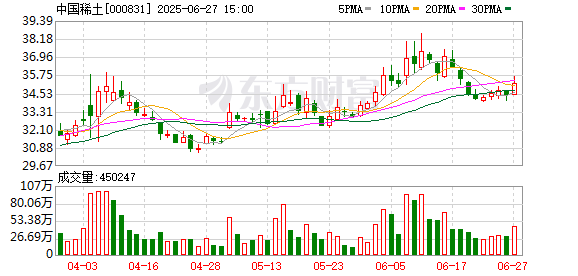
中国稀土(000831) - 澄清公告
2025-06-29 08:30
二、澄清说明 经公司核查,并向实际控制人中国稀土集团有限公司(以下简称"中国稀 土集团")确认,对相关不实信息澄清如下:近期,公司部分非独立董事和高 级管理人员因工作原因辞任,公司董事会已同步补选了相关高级管理人员,并 根据股东提名提请股东会补选非独立董事。公司根据相关法律法规和《公司章 程》的有关规定及时履行了补选程序,并对外披露。本次部分非独立董事和高 级管理人员调整系公司和中国稀土集团根据工作需要,为优化公司治理结构、 提升管理效能,严格按制度及监管规定开展的正常人事安排,程序合规透明, 相关人员职务调整后仍在中国稀土集团其他岗位任职。当前,公司的生产经营 平稳有序,未因董事和高级管理人员变动调整产生影响。 三、风险提示 证券代码:000831 证券简称:中国稀土 公告编号:2025-040 中国稀土集团资源科技股份有限公司 澄清公告 本公司及董事会全体成员保证信息披露内容的真实、准确、完整, 没有虚假记载、误导性陈述或重大遗漏。 一、传闻情况 近期,中国稀土集团资源科技股份有限公司(以下简称"公司"或"中国 稀土")关注到有网民发布公司部分非独立董事和高级管理人员职务变动方面 的不实信息。为避免相关不 ...
中国稀土集团郑重声明!
券商中国· 2025-06-29 05:24
Core Viewpoint - China Rare Earth Group Co., Ltd. issued a statement addressing recent misinformation regarding personnel changes in its listed company, China Rare Earth (000831.SZ), emphasizing that the adjustments are part of normal operations aimed at optimizing governance and management efficiency [1] Group 1 - The personnel changes at China Rare Earth are conducted in compliance with regulations and are transparent, with affected individuals remaining in other positions within the group [1] - The company warns against the spread of false information that could mislead the public and disrupt market order, reserving the right to pursue legal action against such behaviors [1] - China Rare Earth Group was established on December 23, 2021, through the restructuring of rare earth assets from several state-owned enterprises and includes two listed companies: China Rare Earth and Guangsheng Nonferrous [1]
中国稀土集团郑重声明!
财联社· 2025-06-29 05:15
本次"中国稀土"部分董事、高管职务调整系中国稀土集团和"中国稀土"根据工作需要,为优化公司 治理结构、提升管理效能,严格按制度及监管规定开展的正常人事安排,程序合规透明,相关人员 职务调整后仍在中国稀土集团其他岗位任职。 当前,中国稀土集团和"中国稀土"各项工作未因 相关人员变动受到影响。 对于任何试图通过传播不实信息、误导公众、扰乱市场秩序的行为,中国稀土集团保留追究其 法律责任的权利。希望广大网友自觉抵制谣言,共同营造清朗网络空间,维护良好市场秩序。 中国稀土集团6月29日发布声明,针对近期有网民发布的中国稀土集团有限公司(简称"中国 稀土集团")旗下上市公司"中国稀土"(000831.SZ)部分董事、高管职务变动方面的不实信 息,中国稀土集团郑重声明如下: ...

中国稀土资源骤减,牺牲环境低价出口,将来百倍价格也难以买回
Sou Hu Cai Jing· 2025-06-29 04:38
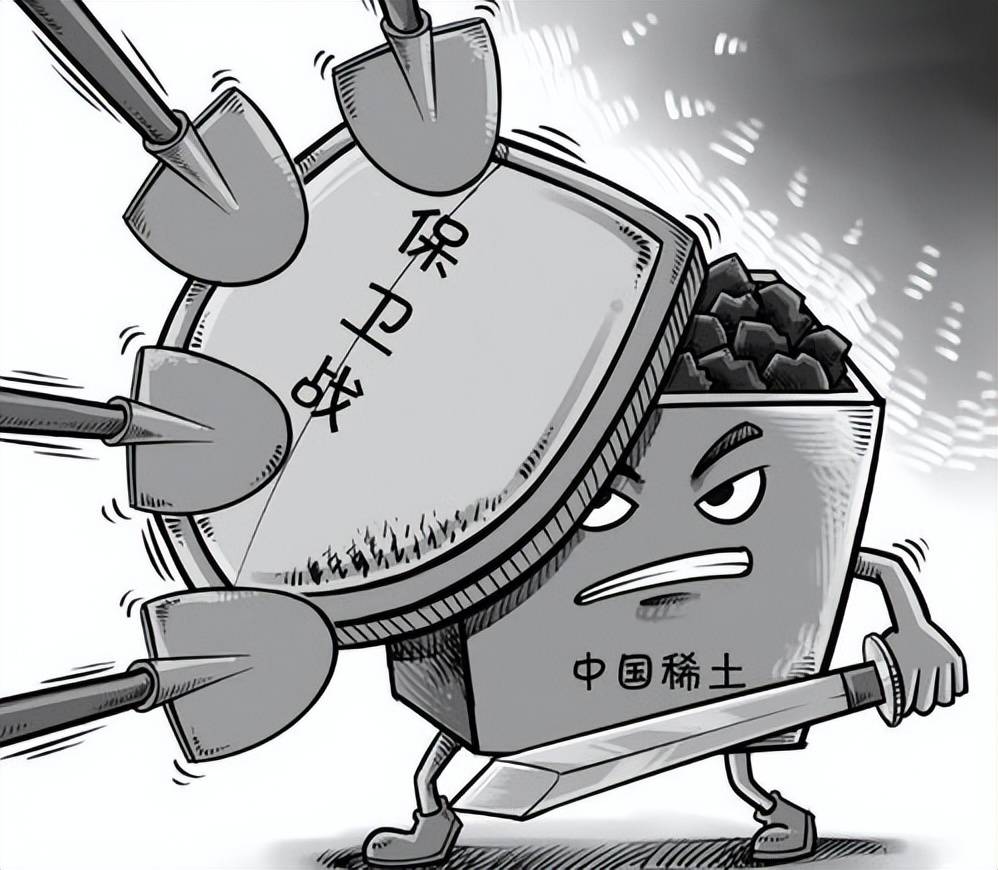
Core Viewpoint - Rare earth resources play a crucial role in global competition, with China holding approximately 37% of global rare earth reserves and supplying over 90% of the world's demand. However, the extraction of these resources has significant environmental impacts, and China's reserves are depleting, raising concerns about future availability and pricing [6][11][15]. Group 1: Importance of Rare Earth Elements - Rare earth elements are extremely rare and have complex extraction processes, making them valuable. There are 17 important rare earth metals, and only about 10 are suitable for modern smelting conditions [7][9]. - The extraction technology for rare earths has matured over the years, with elements categorized into light and heavy rare earths based on their atomic structure and properties [8]. Group 2: China's Rare Earth Production and Challenges - China has historically dominated rare earth production, but its share of global reserves has decreased from 71.1% to 23% due to over-extraction, leading to a potential future shortage [11][15]. - The unrestricted extraction has led to artificially low export prices, with foreign companies manipulating the market, causing domestic suppliers to engage in unhealthy competition [12]. Group 3: Global Demand and Strategic Importance - The United States faces a significant shortfall in rare earth resources, producing less than half of China's output, which raises concerns about its technological and military capabilities [13]. - Rare earths are essential in various applications, including military technology, electronics, and renewable energy, highlighting their strategic importance [17][19]. Group 4: Future Considerations and Sustainability - Experts predict that by 2040, China may need to import rare earths, leading to potential price surges and scarcity [15]. - There is a pressing need for China to manage its rare earth resources sustainably, avoiding over-exploitation and ensuring long-term availability for future technological advancements [21].
中国稀土集团声明!
第一财经· 2025-06-29 04:10
中国稀土集团6月29日发布声明,针对近期有网民发布的中国稀土集团有限公司(简称"中国稀土集团") 旗下上市公司"中国稀土"(000831.SZ)部分董事、高管职务变动方面的不实信息,中国稀土集团郑重 声明如下:本次"中国稀土"部分董事、高管职务调整系中国稀土集团和"中国稀土"根据工作需要,为优化 公司治理结构、提升管理效能,严格按制度及监管规定开展的正常人事安排,程序合规透明,相关人员职 务调整后仍在中国稀土集团其他岗位任职。当前,中国稀土集团和"中国稀土"各项工作未因相关人员变动 受到影响。对于任何试图通过传播不实信息、误导公众、扰乱市场秩序的行为,中国稀土集团保留追究其 法律责任的权利。希望广大网友自觉抵制谣言,共同营造清朗网络空间,维护良好市场秩序。 ...