ZGXT(000831)

Search documents
中国稀土集团声明:中国稀土集团和“中国稀土”各项工作未因相关人员变动受到影响
news flash· 2025-06-29 03:35
Core Viewpoint - China Rare Earth Group issued a statement addressing recent misinformation regarding personnel changes among the board and executives of its listed company, China Rare Earth (000831.SZ), emphasizing that these adjustments are part of normal operations aimed at optimizing governance and management efficiency [1] Group 1 - The personnel adjustments at China Rare Earth are conducted in accordance with institutional and regulatory requirements, ensuring compliance and transparency in the process [1] - The affected individuals will continue to hold positions within China Rare Earth Group in other roles after the adjustments [1] - The operations of both China Rare Earth Group and its listed entity remain unaffected by these personnel changes [1] Group 2 - China Rare Earth Group reserves the right to pursue legal action against those spreading false information that misleads the public and disrupts market order [1] - The company encourages the public to resist rumors and contribute to a clear online environment, thereby maintaining a sound market order [1]

中国稀土行业人事变动频繁,核心人员离职为哪般?国家已出手!
Sou Hu Cai Jing· 2025-06-28 07:14
Core Insights - The recent wave of resignations among key personnel in the rare earth industry raises concerns about potential leaks of sensitive technology and knowledge [2][4][6] - The battle for dominance in the rare earth sector has shifted from mining resources to securing human capital and expertise [4][19] - The loss of a single key individual can have a far greater impact than the physical loss of resources, as demonstrated by past incidents of technology theft [8][11] Industry Dynamics - The rare earth industry is experiencing significant personnel turnover, with experienced executives and technical experts leaving their positions [2][4] - The historical context highlights that China once sold raw materials at low prices while relying on foreign technology for refinement, leading to a strategic shift towards developing domestic capabilities [13][15] - The establishment of proprietary technologies, such as the "cascade extraction theory," has allowed China to become a leader in rare earth production and significantly reduce global prices [17][19] Security Measures - In response to the threat of talent loss, the government is implementing strict regulations on key personnel, including restrictions on employment with foreign companies for several years after leaving [21][22] - Additional measures include monitoring the overseas education of employees' children and considering the use of tracking systems for key technical staff [21][24] - New technological barriers are being established, such as blockchain and electronic watermarks, to protect sensitive information and track unauthorized access [24][26] Regulatory Framework - Upcoming regulations, including the 2024 Rare Earth Management Regulations and revisions to the Anti-Espionage Law, aim to strengthen legal protections against technology leaks [26][28] - The industry is adapting to these stringent rules, recognizing the importance of safeguarding intellectual property and human resources [28][29]

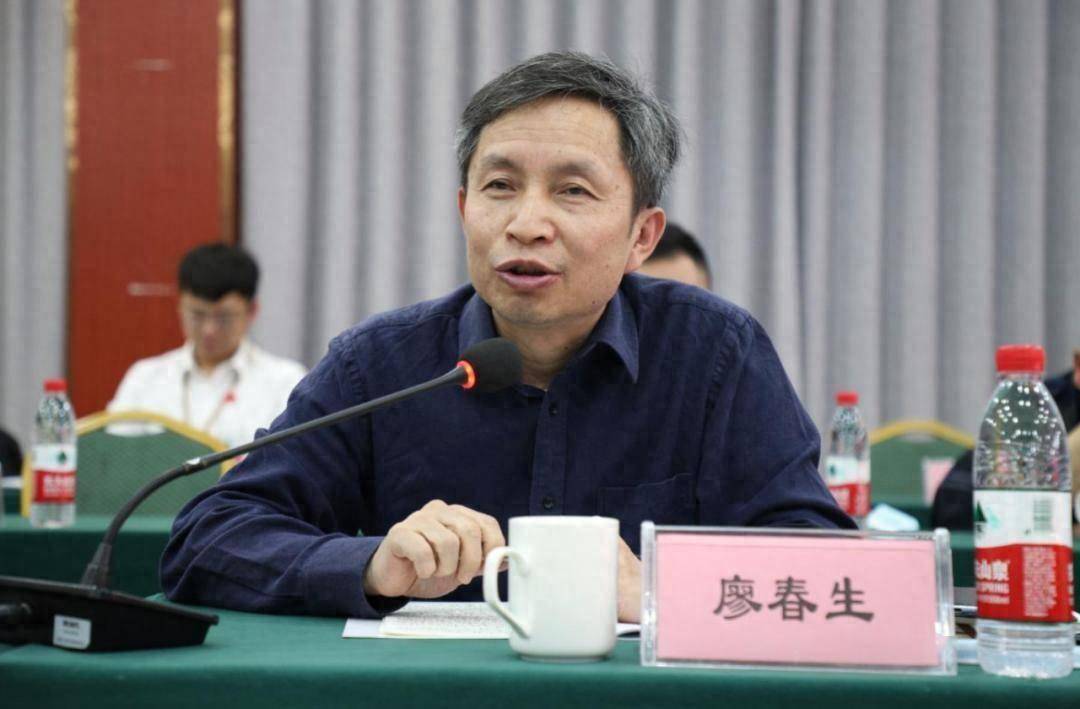
24小时换三帅!稀土巨头突发人事地震,一粒稀土芯,万里国土安
Sou Hu Cai Jing· 2025-06-28 04:52
Core Viewpoint - China is accelerating the review of rare earth export license applications to stabilize global supply chains, establishing a green channel for eligible EU applications, which alleviates trade friction with Europe and strengthens the global rare earth supply chain [2][12] Group 1: Personnel Changes - The resignation of three key figures from China Rare Earth Group, including Chairman Yang Guoan, has raised concerns about the future direction of China's rare earth strategy amidst ongoing geopolitical tensions [4][6] - The rapid appointment of new non-independent directors, including Guo Liangjin, Mei Yi, and Yang Weny, indicates a strategic response to the crisis, with all new appointees possessing significant industry experience [8][14] Group 2: Strategic Importance of Rare Earths - Rare earth elements, comprising 17 metals, are critical for modern industries such as automotive, semiconductors, aerospace, and defense, with China controlling 69% of global rare earth production and 92.3% of separation capacity [10][12] - The strategic advantage of rare earths allows China to maintain a dominant position in geopolitical negotiations, as demonstrated by past actions to impose export controls in response to U.S. pressures [12][14] Group 3: Global Supply Chain Dynamics - China's establishment of a green channel for rare earth exports to the EU reflects its commitment to global cooperation while managing its national interests, potentially reducing tensions in trade relations [2][12] - The recent personnel changes within China Rare Earth Group may be a necessary measure to navigate complex international circumstances and uphold national interests in the rare earth sector [14]
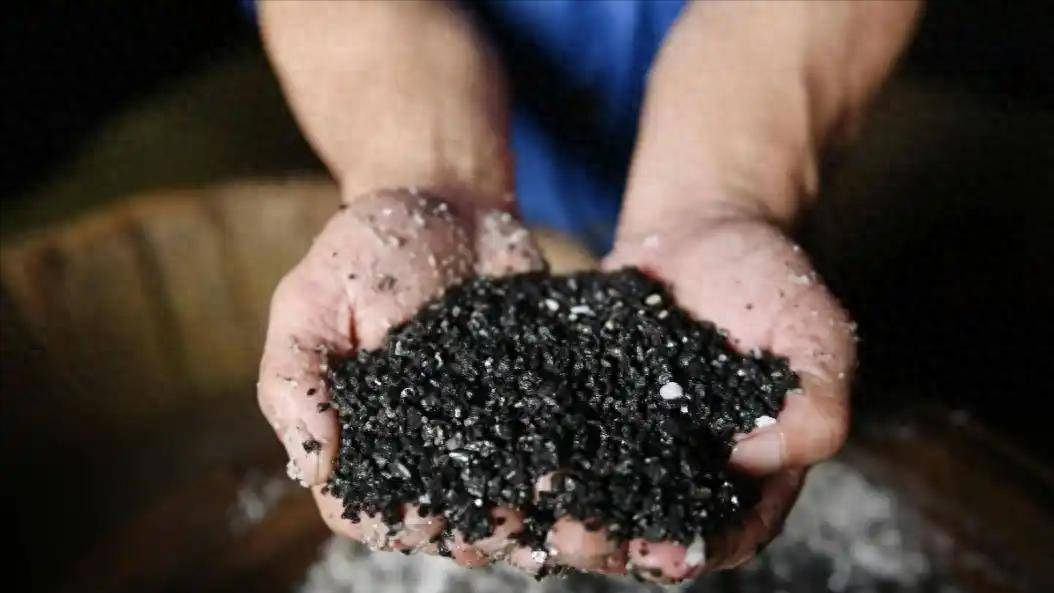
中美俄稀土储量差距,美国180万吨,中国稀土资源是多少呢?
Sou Hu Cai Jing· 2025-06-27 20:31
Core Insights - Rare earth elements are crucial for modern technology, including smartphones, electric vehicles, and military applications, despite their name suggesting scarcity [2][14] - China dominates the global rare earth market with 44 million tons of reserves, accounting for 36.67% of the total 120 million tons worldwide, while the US has only 1.5% [2][10] - The US faces significant challenges in rare earth production due to environmental regulations and high costs, leading to a reliance on Chinese imports for 70% of its needs [7][10] Group 1: China's Dominance - China's geological conditions are favorable for rare earth deposits, with significant mining operations in Inner Mongolia and Jiangxi [4][5] - Technological advancements, such as the "cascade extraction theory" developed in the 1970s, have allowed China to produce high-purity rare earth products efficiently [5][10] - In 2023, China produced 240,000 tons of rare earths, representing 68% of global output, supported by its extensive mining and processing capabilities [9][10] Group 2: US Challenges - The US has historically relied on the Mountain Pass mine, which ceased operations in 1998 due to environmental concerns and high costs [7][10] - Efforts to revive domestic production have been slow, with the US producing only 20,000 tons in 2022, far below its demand [10][11] - The US government has initiated plans to build a domestic rare earth supply chain, but significant technological and financial hurdles remain [10][15] Group 3: Russia's Position - Russia holds 10 million tons of rare earth reserves, primarily located in Siberia, but faces high extraction costs and outdated technology [9][12] - The country aims to develop its rare earth industry by 2030, but progress has been slow, and current production is insufficient to meet domestic demand [11][12] - Russia's strategy includes seeking international cooperation for technology transfer, but challenges in infrastructure and investment persist [12][17] Group 4: Market Dynamics - Global demand for rare earths is expected to double in the next decade, driven by advancements in clean energy and high-tech industries [14][17] - China's strict export controls and environmental regulations have led to increased prices for rare earths, benefiting its economy while straining foreign buyers [14][15] - The competitive landscape is evolving, with countries like the US and Australia attempting to enhance their production capabilities to reduce reliance on China [14][17]
中国稀土集团总部直属党委开展“传承红色基因 弘扬优良作风”主题党日活动
Ren Min Wang· 2025-06-27 13:13
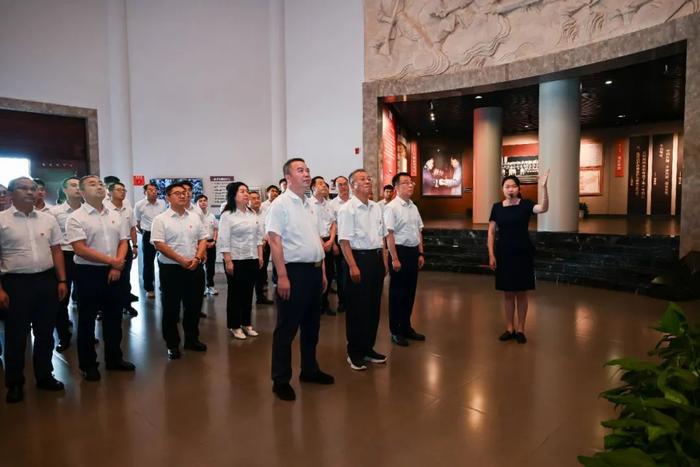
中国稀土集团总部直属党委开展"传承红色基因 弘扬优良作风"主题党日活动。 为庆祝中国共产党成立104周年,激励集团公司广大党员干部职工继承和发扬党的光荣传统和优良作 风,6月26日,中国稀土集团公司总部直属党委组织党员干部职工赴兴国县将军馆、苏区干部好作风陈 列馆开展"传承红色基因 弘扬优良作风"深入贯彻中央八项规定精神学习教育主题党日活动,集团公司 党委书记、董事长刘雷云,党委副书记、董事、工会主席杨国安,党委委员、副总经理、总法律顾问、 首席合规官王涛参加活动。 在兴国县将军馆,大家怀着崇敬之情,观看珍贵的革命文物、详实的历史照片和文献资料,深刻领 会"三大纪律八项注意"精神实质 ;在苏区干部好作风陈列馆,大家通过观看"自带干粮去办公"等历史 场景复原和重温入党誓词,深刻领悟"苏区干部好作风"的优良作风,回溯入党初心、坚定理想信念;在 苏区干部好作风陈列馆会议室内,大家集中学习贯彻中央关于集中整治违规吃喝的通知精神并紧密结合 自身体会和工作实际,围绕"转变作风,服务基层"开展学习研讨。 全体党员面对党旗庄严宣誓。 回程途中,大家纷纷表示,将以革命先辈为镜,对照中央八项规定及其实施细则精神,认真检视自身在 ...
西方企业不满足中国稀土磁铁“勉强够用”,想得寸进尺…
Guan Cha Zhe Wang· 2025-06-27 05:08
Core Viewpoint - The article discusses China's recent export control measures on rare earth materials, highlighting the impact on Western companies and the geopolitical significance of these actions [1][3][4]. Group 1: Export Control Measures - In mid-June, China approved a certain number of compliant applications for rare earth exports, yet Western companies continue to express concerns over a "rare earth shortage" and the implications of China's export licensing system [1][3]. - Following the imposition of high tariffs by the U.S. in April, China's export of rare earth magnets to the U.S. plummeted by 93% year-on-year in May, significantly affecting global manufacturers in the automotive, defense, and electronics sectors [3][4]. - China's establishment of an export licensing system is perceived as a strategic move to maintain control over critical supply chains, with Western manufacturers fearing that these restrictions may persist indefinitely [4][5]. Group 2: Impact on Western Companies - Western companies, including Ford, have reported that the rare earth magnets they receive are barely sufficient, leading to supply chain disruptions and forced production relocations to avoid factory shutdowns [1][3]. - Some manufacturers are exploring alternative methods to produce products without the strongest magnets, indicating a significant adaptation challenge within the industry [1][3]. - A Chinese magnet manufacturer has warned clients seeking to import larger quantities of magnets that they may need to justify the business rationale behind such orders, reflecting the tightening control over exports [4]. Group 3: Geopolitical Implications - China's recent request for rare earth companies to provide detailed personnel information aims to create a formal registry of professionals, ensuring that sensitive commercial information is not leaked abroad [4]. - The article emphasizes that rare earth materials are crucial for various applications, including automotive, electronics, and military equipment, making them a focal point in U.S.-China trade relations [4].
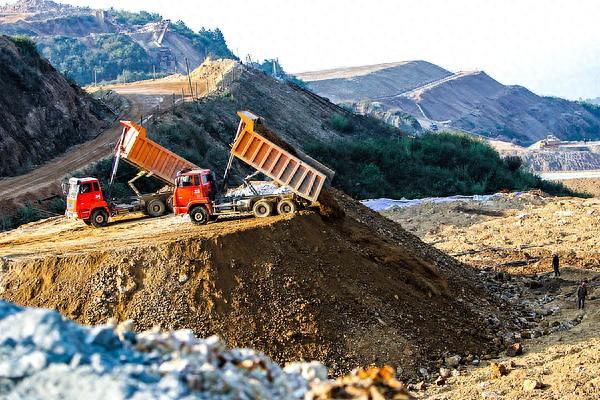
“中方已发放出口许可证”,欧盟官员仍对中国稀土喋喋不休
Guan Cha Zhe Wang· 2025-06-27 00:55
Core Viewpoint - The European Union (EU) is intensifying its narrative around the issue of rare earth magnets, accusing China of "weaponizing" these resources, while China has begun issuing export licenses for compliant applications from EU companies [1][5]. Group 1: EU's Position and Concerns - European governments and businesses have been lobbying China to ease export restrictions, viewing the situation as a "structural problem" in the bilateral agenda with China [2][4]. - EU officials express uncertainty about whether China's actions are a deliberate strike against EU companies or if they are collateral damage in the US-China competition [2][4]. - The EU is seeking a long-term solution and hopes for the restoration of open trade in rare earth magnets by April next year, or at least exemptions for non-military related EU companies [4][5]. Group 2: China's Response and Export Policies - China's Ministry of Commerce has confirmed the approval of a certain number of compliant export applications for rare earth magnets, emphasizing the importance of maintaining global supply chain stability [8]. - The Chinese government has implemented export control measures that have expanded in scope, affecting not only rare earths but also critical raw materials and technologies [5][7]. - China asserts that its export control measures are in line with international practices and are non-discriminatory, not targeting specific countries [5][8]. Group 3: Trade Dynamics and Economic Impact - The EU's trade surplus with China has increased by nearly 23% in the first five months of this year, reaching a record $117 billion, despite claims of unfair competition [7]. - EU officials have highlighted the severe impact of magnet shortages on European companies, urging China to address these issues promptly [7][8]. - The EU is concerned about becoming a battleground in the strategic competition between the US and China, particularly in the rare earth sector [4][5].

中国稀土限出口,美国芯片围堵战升级!欧盟被迫选边站,谁是最后的赢家?
Sou Hu Cai Jing· 2025-06-25 08:04
Group 1 - The U.S. is leveraging its recent gains in rare earth negotiations with China to exert pressure on companies like Samsung and TSMC, indicating a strategic game rather than mere national security concerns [1] - China controls 90% of rare earth refining capabilities, making it a crucial player in high-tech weaponry and advanced manufacturing [1] - China's advancements in technology, such as Huawei's Harmony OS and SMIC's 7nm process, demonstrate its growing independence and resilience against U.S. trade pressures [1] Group 2 - The EU is caught in a dual dilemma, expressing dissatisfaction with China's "strangulation strategy" while needing to negotiate with Beijing for rare earth supplies [2] - The lack of resolution regarding the ASML lithography machine ban significantly undermines the EU's bargaining power in negotiations with China [2] - A tightening of China's rare earth exports could pose severe risks to Europe's electric vehicle and wind energy sectors [2] Group 3 - The ongoing competition over rare earths and chips transcends traditional trade wars, focusing on technological gaps, resource leverage, and trust issues among allies [4] - U.S. export controls aim to hinder China's semiconductor industry, but the feasibility of this strategy is increasingly questioned as external pressures mount [6] - The potential inability of Samsung and TSMC to access the Chinese market could lead to significant losses, raising questions about the Korean government's compliance with U.S. demands [6]
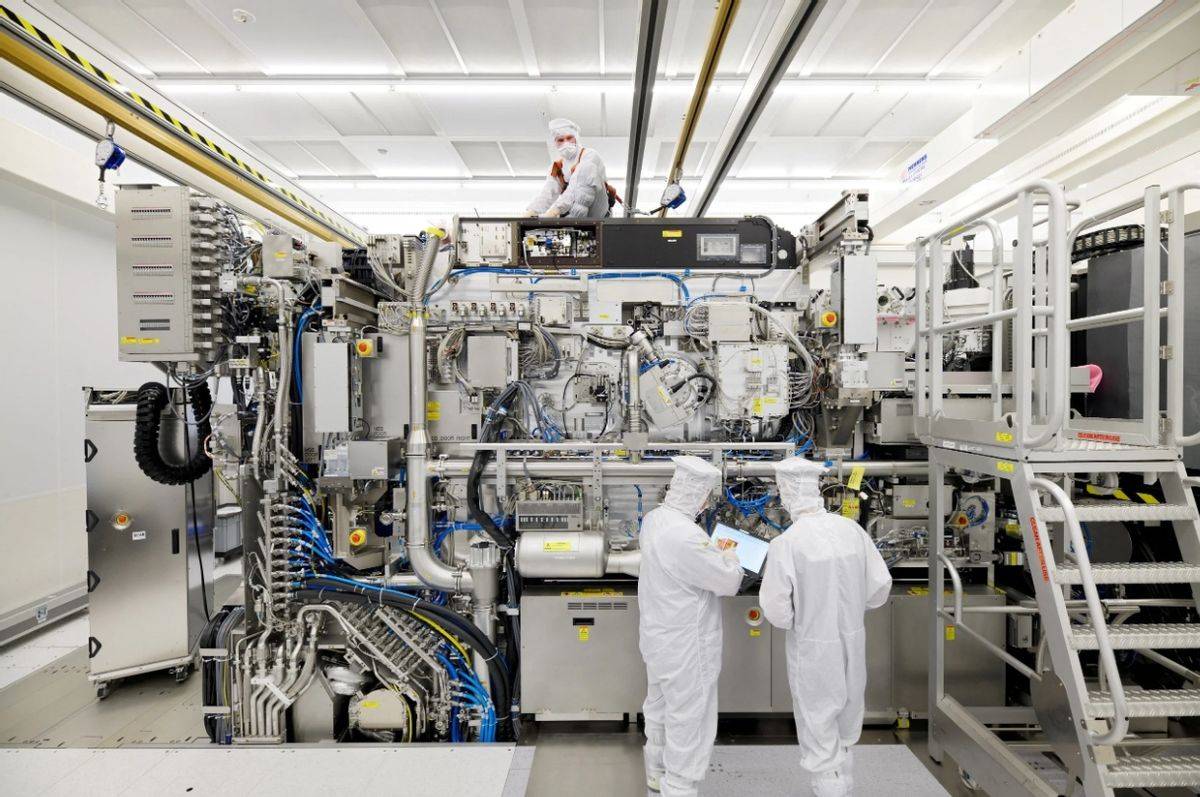
国际产业新闻早知道:5月中国稀土出口量锐减,比亚迪海外热销
Chan Ye Xin Xi Wang· 2025-06-25 05:41
Group 1: EU Trade Measures - The EU is preparing to implement additional tariff countermeasures against the US, with a proposal to impose tariffs on $95 billion worth of US goods [5] - The EU aims to coordinate its stance internally before the July 9 deadline for US-EU trade negotiations [5] Group 2: China-UK Trade Dynamics - Chinese exports to the UK have significantly increased, reaching levels not seen in years, indicating a shift in trade routes to avoid US tariffs [6][7] - In April, the UK imported goods worth £6 billion (approximately $10.4 billion) from China, marking an 11% year-on-year increase [10] Group 3: Germany's Investment Plans - Germany's federal cabinet approved a budget draft proposing over €800 billion in debt over five years to boost public investment [11] - The planned federal investment for 2025 is €115.7 billion (approximately $171.8 billion), increasing to €123.6 billion in 2026 [12] Group 4: UK Industrial Strategy - The UK government announced a ten-year industrial strategy aimed at reducing energy costs and supporting key industries like advanced manufacturing and clean energy [16] - Starting in 2027, the "Industrial Competitiveness Plan" will provide significant electricity cost reductions for around 7,000 high-energy-consuming businesses [16] Group 5: AI and Technology Investments - SK Group and Amazon are investing approximately $5.1 billion to build Korea's largest AI data center [18] - Goldman Sachs has launched an AI assistant tool across the company to enhance productivity [22] Group 6: Semiconductor Industry Insights - The global semiconductor foundry market revenue reached $72.29 billion in Q1 2025, a 13% year-on-year increase, driven by demand for AI and HPC chips [40] - Meta's self-developed MTIA v2 chip is set to enter mass production by the end of the year, aimed at enhancing social media algorithms [41] Group 7: Robotics and Automation - Neura Robotics is seeking to raise up to €1 billion (approximately $1.16 billion) to launch humanoid robot products [25] - Nvidia is in talks with Foxconn to deploy humanoid robots in its Houston AI factory, marking a significant milestone in robotics application [33][34] Group 8: Rare Earth Exports - China's rare earth magnet exports fell to 1,238 tons in May, a 52.9% decrease from April, marking the lowest level in over five years [74][75] Group 9: Lithium Production Initiatives - Gradiant plans to build a lithium production facility in Pennsylvania's Marcellus Shale, utilizing a new extraction technology [78][80] - The facility aims to achieve over 95% lithium recovery and supply battery-grade lithium to manufacturers [80] Group 10: Automotive Developments - BYD's factory in Hungary is set to commence production this year, with plans to introduce its Tengshi and Yangwang brands to the European market [55][56] - Xiaomi's YU7 is nearing large-scale production, with initial units already being dispatched to various stores [57]



33年的逆袭! 中国稀土是如何做到,从“按吨卖”转向“按克算”
Sou Hu Cai Jing· 2025-06-24 11:01
Core Viewpoint - The article highlights the significant contributions of Xu Guangxian, known as the "Father of Rare Earth," in transforming China's rare earth industry from a resource-rich country to a technology-driven powerhouse through innovative research and breakthroughs in rare earth separation technology [1][3][20]. Group 1: Xu Guangxian's Contributions - Xu Guangxian dedicated his life to rare earth research, overcoming technological barriers to enhance the value of rare earth elements from being sold by ton to gram [1][20]. - He played a crucial role in developing the separation technology for rare earth elements, particularly praseodymium and neodymium, which are vital for national defense equipment [3][5]. - His work led to the establishment of a scientific operating system for the rare earth industry, enabling efficient production processes and high-purity outputs [16][20]. Group 2: Technological Breakthroughs - Xu's team developed a theoretical breakthrough known as "cascade extraction," which allowed for the rapid and efficient separation of rare earth elements, significantly improving production capabilities [18][22]. - The application of this technology resulted in China producing over 90% of the world's rare earth separation output, giving the country a dominant position in the global market [20][22]. - By the 1990s, China's high-purity rare earth market share reached 90%, effectively disrupting the rare earth industries of France, the United States, and Japan [22]. Group 3: Industry Impact and Policy Advocacy - Xu Guangxian's advocacy for the protection of rare earth resources led to the implementation of national policies aimed at sustainable management and conservation of these resources [24][25]. - His decision to not patent his research and instead share it publicly fostered the overall development of China's rare earth industry, influencing generations of chemists and engineers [25][27]. - The technologies he developed are now integral to various modern applications, including smartphones, wind turbines, and electric vehicles, showcasing the lasting impact of his work on contemporary technology [27][28].