WLY(000858)

Search documents
11只白酒股下跌贵州茅台1435元/股收盘
Xin Lang Cai Jing· 2025-09-26 21:04
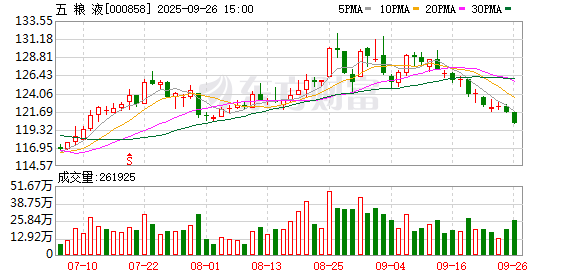
从个股来看,贵州茅台收盘价达1435.00元/股,下跌0.28%;五粮液收盘价达120.17元/股,下跌1.11%;山西汾酒收盘价达191.16元/股,下跌0.64%;泸州老窖收盘价达127.58元/股, 华创食饮在其研报中指出,当前阶段,酒企报表受损但维护渠道生态,酒企端不再强硬压货,并放缓回款进度要求,减少渠道资金占用,持续为渠道纾压,因此经销商虽订单、出货总额有所下滑 北京商报讯(记者 刘一博 冯若男)9月26日尾盘,沪指3828.11点下跌0.65%。白酒板块2239.12点收盘下跌0.41%,其中11只白酒股下跌。 ...




11只白酒股下跌 贵州茅台1435元/股收盘
Bei Jing Shang Bao· 2025-09-26 15:48
Core Viewpoint - The liquor sector is experiencing a decline in stock prices, with major companies like Kweichow Moutai and Wuliangye seeing decreases, while the overall cash flow situation for distributors is gradually improving despite lower order volumes [1] Industry Summary - The Shanghai Composite Index closed at 3828.11 points, down 0.65%, with the liquor sector index at 2239.12 points, down 0.41% [1] - Eleven liquor stocks reported declines, including Kweichow Moutai at 1435.00 CNY per share (down 0.28%), Wuliangye at 120.17 CNY (down 1.11%), Shanxi Fenjiu at 191.16 CNY (down 0.64%), Luzhou Laojiao at 127.58 CNY (down 1.45%), and Yanghe Brewery at 67.95 CNY (down 0.59%) [1] Company Summary - Huachuang Food and Beverage's report indicates that while liquor companies are facing damaged financial statements, they are focusing on maintaining channel ecosystems and are not aggressively pushing inventory [1] - Companies are easing the pressure on cash flow by slowing down the collection of payments, which reduces the financial burden on distributors [1] - Distributors are managing cash flow more cautiously, cleaning up accounts receivable from end customers, and requiring cash payments for purchases, leading to a gradual improvement in cash flow [1]

举杯共享“和美”佳节 五粮液中秋国庆双节文旅活动即将启幕
Xin Hua Cai Jing· 2025-09-26 11:29
为提升游客体验,假期景区将增派观光车循环运营,提供逾千个免费停车位,并配套医疗点、购酒优惠 与机场免费打包等服务保障,全面保障游客轻松出行、尽兴而归。 业内人士表示,五粮液此次双节活动,既体现作为龙头企业支持地方发展的社会担当,也展示了通过场 景化、互动化等创新体验传播品牌文化的积极探索。这种将工业旅游、文化传承与消费体验深度融合的 模式,为传统名优企业赋能地方文旅产业提供了新思路,以及可借鉴的实践样本。(徐丹宁) 当诗酒文墨遇上现代旅游,一场别开生面的文化盛宴即将在宜宾"和美"上演。2025年中秋、国庆双节假 期将至,酒城宜宾处处洋溢着团圆与欢庆的和美氛围,作为宜宾市的金名片,五粮液将以"金秋聚五粮 举杯庆佳节"为题,深度参与宜宾市双节文旅活动,并在五粮液景区精心策划一系列兼具传统韵味与当 代趣味的特色体验活动,邀请全国游客共赴一场舌尖与心灵的双重盛宴。 本次活动中,五粮液将积极参与宜宾重点文旅项目建设,助力提升城市旅游能级。备受期待的宜宾"五 粮液501古窖池中国白酒文化圣地"将于国庆节期间开街试运营,其中由五粮液打造的东楼业态和溯源博 物馆已准备就绪,同时将配备专业讲解团队,带领游客系统领略中国白酒的文 ...

食品饮料行业资金流入榜:贵州茅台等10股净流入资金超千万元
Zheng Quan Shi Bao Wang· 2025-09-26 09:41
Market Overview - The Shanghai Composite Index fell by 0.65% on September 26, with 10 industries experiencing gains, led by the petroleum and petrochemical sector, which rose by 1.17%, and the environmental protection sector, which increased by 0.38% [1] - The computer and electronics sectors saw the largest declines, with drops of 3.26% and 2.75%, respectively [1] - Overall, there was a net outflow of 83.579 billion yuan in the main funds across the two markets, with 5 industries seeing net inflows [1] Industry Performance - The automotive industry had the highest net inflow of funds at 0.882 billion yuan, despite a decline of 0.56% in its stock price [1] - The banking sector also saw a slight increase of 0.08% with a net inflow of 0.566 billion yuan [1] - A total of 26 industries experienced net outflows, with the electronics sector leading with a net outflow of 29.836 billion yuan, followed by the computer sector with a net outflow of 13.807 billion yuan [1] Food and Beverage Sector - The food and beverage industry declined by 0.15% but had a net inflow of 0.128 billion yuan, with 69 out of 124 stocks rising [2] - Guizhou Moutai led the inflow with 0.373 billion yuan, followed by Jinzi Ham and Wancheng Group with inflows of 0.115 billion yuan and 0.0429 billion yuan, respectively [2] - The sector also had 17 stocks with net outflows exceeding 10 million yuan, with Wuliangye, Yangyuan Beverage, and ST Juewei leading the outflows at 0.125 billion yuan, 0.0729 billion yuan, and 0.0409 billion yuan, respectively [2][4] Fund Flow in Food and Beverage Sector - Top inflow stocks included: - Guizhou Moutai: -0.28% change, 0.373 billion yuan inflow [2] - Jinzi Ham: +6.61% change, 0.115 billion yuan inflow [2] - Wancheng Group: +0.43% change, 0.0429 billion yuan inflow [2] - Top outflow stocks included: - Wuliangye: -1.11% change, -0.125 billion yuan outflow [4] - Yangyuan Beverage: +10.01% change, -0.0729 billion yuan outflow [4] - ST Juewei: -3.40% change, -0.0409 billion yuan outflow [4]


白酒板块午盘微跌 贵州茅台下跌0.29%
Bei Jing Shang Bao· 2025-09-26 08:16
Core Viewpoint - The stock market experienced a decline on September 26, with the Shanghai Composite Index falling by 0.18% to 3846.33 points, indicating a bearish trend in the market [1] Industry Summary - The liquor sector closed at 2244.21 points, down 0.19%, with the stock of JiuGuiJiu leading the decline at 1.87% [1] - Major liquor companies saw the following closing prices and percentage changes: - Kweichow Moutai: 1434.79 CNY, down 0.29% - Wuliangye: 120.29 CNY, down 1.01% - Shanxi Fenjiu: 189.82 CNY, down 1.34% - Luzhou Laojiao: 127.04 CNY, down 1.87% - Yanghe Brewery: 67.94 CNY, down 0.60% [1] Research Insights - Huachuang Food and Beverage's report indicates that the liquor industry is undergoing a cyclical bottoming process in three phases: supply clearance, supply-demand rebalancing, and demand improvement [1] - The upcoming third-quarter reports may signal the first turning point in supply and demand, with expectations of "accelerated pressure relief in reports and marginal demand improvement," marking a potential first layout opportunity for the sector [1] - The focus for the next year will be on continuously sensing forward-looking signals and gradually confirming a positive cycle [1]

国泰海通:即时零售或为白酒变革期新尝试 预计将持续扩容
智通财经网· 2025-09-26 05:52
Core Viewpoint - The rapid expansion of instant retail in China's liquor market is expected to maintain double-digit growth in the coming years, driven by the competitive landscape of food delivery services by 2025 [1][3] Group 1: Instant Retail Growth - China's retail industry has evolved through traditional retail, e-commerce, and new retail, with instant retail significantly shortening delivery times and enhancing consumer choices [1][2] - The liquor instant retail market has seen a surge since its inception on platforms like 1919 and Jiuxiaoer, with four main channel models emerging: vertical, platform-based, warehouse-store integrated, and front warehouse models [1][2] Group 2: Drivers of Instant Retail - The rise of instant retail in liquor is attributed to changing consumer habits, with a growing demand for convenience and quick fulfillment of spontaneous needs [2] - Cost efficiency is achieved by reducing distribution layers and operational costs, coupled with subsidies from some platforms, leading to significant price advantages [2] - Supply-side drivers include channel partners seeking to capture new growth and brand owners willing to collaborate with channels for new product launches and promotions [2] Group 3: Impact on the Liquor Industry - Instant retail presents both opportunities and challenges for the liquor industry, offering efficient fulfillment and better reach to younger consumers, while potentially impacting brand image and pricing structures [3] - Historical trends indicate that changes in the liquor cycle often coincide with channel transformations, and the current deep adjustment in the industry necessitates adaptation to instant retail [3] - The instant retail market for liquor in China is projected to reach 100 billion yuan by 2027, with a compound annual growth rate approaching the mid-double digits, benefiting core categories like baijiu and beer [3] Group 4: Investment Recommendations - The liquor retail channel is undergoing structural growth, with instant retail emerging as a highlight; recommended stocks include leading national brands and regional players with strong channel development capabilities [4] - Specific recommendations for baijiu include Guizhou Moutai, Shanxi Fenjiu, Wuliangye, Luzhou Laojiao, Yingjia Gongjiu, Jiansiyuan, and Guqingongjiu, while short-term elastic stocks include Zhenjiu Lidu and Shede Liquor [4] - For beer, which is the second-largest category in liquor, recommended stocks include Qingdao Beer, Zhujiang Beer, and China Resources Beer, reflecting high participation in instant retail [4]


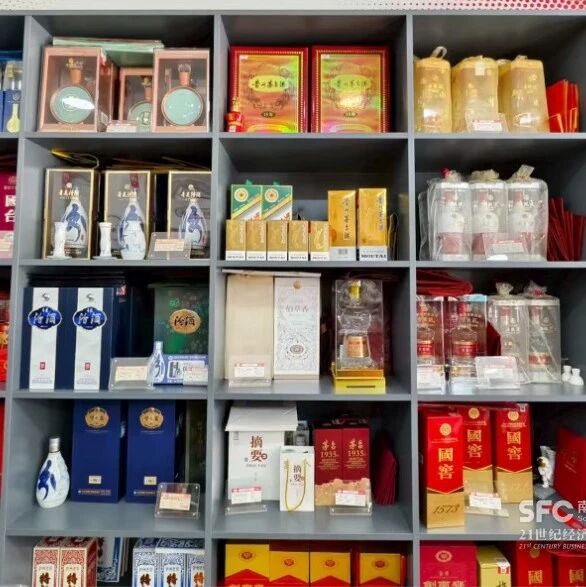
白酒双节行情记:名酒需求回暖 价格普遍低于往年
2 1 Shi Ji Jing Ji Bao Dao· 2025-09-26 00:21
Core Insights - The demand for high-end liquor has been declining, leading to a significant drop in sales for many liquor retailers, particularly during the second quarter of the year [1][2] - Despite a recent uptick in inquiries and orders, the overall sales volume and prices of high-end liquor remain lower than in previous years, with many retailers reporting a double-digit decline in orders for the upcoming holidays [1][9] - Marketing strategies among liquor brands are diversifying, with a focus on mid-range products and promotional activities to stimulate sales during the holiday season [4][7] Group 1: Market Trends - Retailers have observed a noticeable increase in inquiries and orders for high-end liquor in the last two weeks, particularly for brands like Moutai and Wuliangye, primarily for gifting and gatherings [2][3] - The overall sales of high-end and mid-range liquor are still below last year's levels, with many retailers relying on lower-priced products to maintain revenue [1][5] - The price of Moutai has seen slight fluctuations, with retail prices ranging from 1900 to 2000 yuan, but overall, prices have not significantly rebounded from earlier declines [5][6] Group 2: Brand Strategies - Major liquor brands are intensifying their marketing efforts for the upcoming Mid-Autumn Festival and National Day, with companies like Wuliangye and Moutai launching various promotional campaigns [4][7] - There is a notable price stabilization for certain high-end products, such as Guojiao 1573, which has maintained a consistent wholesale price, contrasting with the fluctuating prices of other brands [7][8] - The competitive landscape is shifting, with brands like Wuliangye and Guojiao 1573 experiencing different pricing strategies, reflecting their unique market positioning and sales focus [7][8] Group 3: Consumer Behavior - The majority of recent purchases are for gatherings or banquets, with many consumers opting for smaller quantities rather than bulk purchases, indicating a cautious approach to spending [5][9] - Retailers report that customers are increasingly price-sensitive, with many opting for promotions and discounts available through online platforms [6][10] - The overall sentiment among retailers is one of caution, with expectations that this year's holiday sales will not match the previous year's performance [9]
白酒双节行情记:名酒需求回暖 价格普遍低于往年 |双节看消费
2 1 Shi Ji Jing Ji Bao Dao· 2025-09-25 11:41
Core Insights - The demand for high-end liquor has been declining, leading to a significant drop in sales for many liquor retailers, particularly in the context of the upcoming Mid-Autumn Festival and National Day [1][3][6] - Recent weeks have shown a slight recovery in liquor sales, but overall prices for high-end and mid-range liquors remain lower than in previous years, with some retailers reporting a double-digit decline in orders compared to last year [1][3][6][14] Sales Trends - Liquor sales have seen a noticeable increase in the last two weeks, particularly for well-known brands like Moutai and Wuliangye, driven by gift-giving and social gatherings [1][3][4] - Despite the uptick in sales, the prices of high-end liquors have not significantly rebounded, with many products still priced lower than during the same period last year [1][3][6][14] Marketing Strategies - Liquor companies are focusing more on marketing for the Mid-Autumn Festival and National Day, with various promotional activities being launched both online and offline [6][7] - Major brands like Wuliangye and Moutai are collaborating with media events to enhance visibility and drive sales during the festive season [6][7] Pricing Dynamics - The pricing strategies among different brands have diverged, with some brands maintaining stable prices while others are offering discounts to stimulate sales [10][12] - The price gap between major brands has narrowed, particularly between Wuliangye and Guojiao 1573, indicating a shift in market dynamics [10][12] Inventory Management - Retailers are cautious about stocking high-end liquors due to fluctuating prices and uncertain demand, often limiting their inventory to a few cases [9][14] - The trend of purchasing smaller quantities has become prevalent, with customers opting to buy only what they need for immediate consumption rather than stocking up [9][14] Market Outlook - Despite recent improvements in sales, the overall sentiment in the market remains cautious, with expectations that this year's festive sales will not match last year's performance [14] - Increased competition from online platforms and promotional activities is further complicating the market landscape for traditional liquor retailers [14]
双节名酒量价回升,飞天茅台本周微涨
2 1 Shi Ji Jing Ji Bao Dao· 2025-09-25 11:15
Core Insights - The liquor market is experiencing a seasonal recovery, particularly in the lead-up to the National Day and Mid-Autumn Festival, but overall sales remain below last year's levels [1][12] - High-end liquor prices are generally lower than in previous years, with significant price sensitivity among consumers [2][9] - There is a noticeable shift in consumer purchasing behavior, with customers buying smaller quantities and focusing on well-known brands for gifting and gatherings [1][7] Market Trends - Business demand for high-end liquor has declined, leading companies to emphasize marketing for festive gatherings and family reunions [2][5] - Sales of premium brands like Moutai and Wuliangye have seen some recovery, but overall sales volume and prices are still lower than in previous years [3][4][10] - The price of Moutai has fluctuated between 1900 to 2000 yuan per bottle, with minimal significant increases observed recently [7][10] Consumer Behavior - Consumers are increasingly cautious, purchasing only a few bottles at a time rather than bulk buying as in previous years [1][12] - The majority of recent purchases are for gatherings, with many stores reporting that leftover liquor can be returned [7][12] - There is a growing trend of promotional activities from online platforms, which adds competitive pressure on traditional liquor retailers [12] Brand Strategies - Different brands are adopting varied strategies in response to market conditions, with some focusing on maintaining stable prices while others prioritize sales volume [9][11] - The price gap between major brands is widening, with Moutai and Wuliangye maintaining their market positions while other brands struggle to keep up [10][11] - Promotions and collaborations with events like the CCTV Mid-Autumn Festival Gala are being utilized by brands to boost visibility and sales [5][6]
双节名酒量价回升,飞天茅台本周微涨
21世纪经济报道· 2025-09-25 11:08
Core Viewpoint - The demand for high-end liquor has declined significantly, leading to a cautious market environment where brands are adjusting their strategies to cope with lower sales and price sensitivity [4][10][14]. Group 1: Market Trends - Recent months have seen a noticeable decline in the demand for high-end liquor, with many retailers relying on lower-priced options to maintain sales [4][10]. - As the Mid-Autumn Festival and National Day approach, there has been a slight recovery in liquor sales, but overall sales remain below last year's levels, with some retailers reporting a double-digit percentage drop in orders [6][12][14]. - The prices of high-end liquor are generally lower than in previous years, with many brands experiencing only slight price increases recently [5][10][14]. Group 2: Consumer Behavior - The majority of recent liquor purchases are for gatherings or banquets, with customers typically buying only a few bottles at a time rather than bulk orders [10][12]. - Retailers have noted that customers are increasingly price-sensitive, leading to a cautious approach in inventory management, with many stores limiting their stock of high-end liquor [12][14]. Group 3: Brand Strategies - Major liquor brands are focusing on marketing strategies for the upcoming holidays, with companies like Moutai and Wuliangye launching promotional campaigns [8][9]. - There is a noticeable divergence in pricing strategies among brands, with some maintaining stable prices while others are more aggressive in discounting to stimulate sales [11][14]. - The competitive landscape is intensifying, with online platforms frequently offering promotions that challenge traditional retail sales [15].