
NEW HOPE(000876)

Search documents
农林牧渔行业周报:双十一宠物龙头表现亮眼,生猪超卖及寒潮降温对猪价形成支撑-20251116
KAIYUAN SECURITIES· 2025-11-16 09:46
Core Insights - The report maintains a positive investment rating for the agricultural sector, particularly highlighting the resilience and growth potential in the pet food market and the cyclical recovery in the pig farming industry [1] Group 1: Pet Industry Performance - The pet food sales during the 2025 Double Eleven shopping festival reached 9.4 billion yuan, showcasing significant growth in the pet sector [11][12] - Major brands like Mai Fudi and Frigat led sales on platforms such as JD and Tmall, indicating strong competitive advantages [11][12] - The trend towards high-end and refined pet products is evident, with new processing techniques gaining market share [11][12][16] Group 2: Pig Farming Market Dynamics - As of November 14, 2025, the average price of pigs was 11.66 yuan/kg, reflecting a week-on-week decrease of 0.22 yuan/kg and a year-on-year decline of 4.79% [4][15] - The supply side is expected to contract due to overproduction in October and a reduction in breeding stock, while demand may increase due to seasonal consumption patterns [4][15] - The report suggests that the pig farming sector may enter a favorable investment phase as losses accelerate and market conditions stabilize [5][26] Group 3: Market Performance Overview - From November 10 to November 14, the agricultural index outperformed the broader market by 2.87 percentage points, with a 2.70% increase in the agricultural index compared to a 0.18% decline in the Shanghai Composite Index [28][29] - Key stocks such as Yuegui Co. and ST Jiawo saw significant gains, indicating strong performance within the agricultural sector [28][33] Group 4: Feed Industry Insights - The domestic feed market is benefiting from the recovery in livestock numbers and strong overseas demand, with a projected increase in feed production [26] - The report highlights the growth in feed production from 162 million tons in 2010 to 315 million tons in 2024, with a compound annual growth rate (CAGR) of 4.86% [26]



广发证券:10月整体亏损持续 上市猪企整体出栏量增长提速 销售均重环比上升
智通财经网· 2025-11-14 03:25
Core Viewpoint - The report from GF Securities indicates that several listed companies have released monthly operational data, showing an overall increase in pig output in October 2025, despite a recent decline in pig prices below 12 yuan/kg, leading to continued losses across the industry. The expectation is for low piglet prices to persist in the upcoming months due to the off-peak season for restocking, with a recommendation to prioritize leading companies with cost advantages given the current low valuation of the sector [1]. Group 1: Listed Companies' Output Tracking - In October 2025, the overall pig output from 15 listed companies increased by 23.7% month-on-month and 46.4% year-on-year, totaling 18.43 million pigs. Excluding Muyuan Foods, the output was 11.35 million pigs, reflecting a month-on-month increase of 21.8% and a year-on-year increase of 73.0% [2]. - From January to October 2025, the total pig output from listed companies reached 154.79 million, marking a year-on-year growth of 35.0%. Excluding Muyuan Foods, the output was 90.39 million, with a year-on-year increase of 27.5% [2]. - Major companies like Muyuan Foods, Wens Foodstuff Group, New Hope, and Dekang Agriculture reported significant increases in pig output, with Muyuan Foods alone contributing 7.08 million pigs in October, reflecting a month-on-month increase of 27.0% and a year-on-year increase of 14.6% [2]. Group 2: Small and Medium-sized Breeding Enterprises - In October, small and medium-sized enterprises such as Tangrenshen, Tiankang Biological, Shennong Group, and Juxing Agriculture reported pig outputs of 619,000; 304,000; 335,000; and 459,000 respectively, with month-on-month increases of 50.7%, 13.7%, 46.5%, and 30.6% [3]. - From January to October 2025, these companies had cumulative outputs of 4.38 million; 2.59 million; 2.45 million; and 3.39 million pigs, with year-on-year increases of 33.2%, 6.5%, 31.0%, and 64.4% respectively [3]. Group 3: Sales Price Analysis - In October, the average sales price for listed companies (excluding Dongrui) was 11.46 yuan/kg, reflecting a month-on-month decrease of 11.8%. Variations in sales prices were influenced by factors such as sales regions, product quality, and piglet sales proportions [4]. - The average weight of pigs sold in October was approximately 119.74 kg per head, showing a month-on-month increase of 0.8% [4]. Group 4: Investment Recommendations - The report highlights that the recent decline in pig prices has led to ongoing losses across the industry, with piglet prices expected to remain low in the near term. The current industry losses, combined with a trend towards reducing production capacity, suggest a potential acceleration in the pace of capacity reduction [5]. - The report recommends focusing on leading companies with cost advantages, specifically highlighting Wens Foodstuff Group and Muyuan Foods as key investment targets, while also suggesting attention to Dekang Agriculture and New Hope. For potential recovery plays, Zhengbang Technology is noted, along with small and medium-sized enterprises like Tiankang Biological, Shennong Group, and Tangrenshen [5].


畜牧ETF(159867)盘中净申购700万份,能繁母猪调降仍有空间
Xin Lang Cai Jing· 2025-11-13 05:35
Group 1 - The China Livestock Breeding Index (930707) increased by 0.43% as of November 13, 2025, with notable gains in constituent stocks such as Bio-Stock (600201) up 8.27%, Huaying Agriculture (002321) up 4.82%, and others [1] - The price difference between standard pigs and fat pigs is currently larger than the same period last year, with a standard fat price difference of -0.68 yuan/kg as of November 7, indicating potential seasonal benefits for fat pigs as temperatures drop [1] - The weekly slaughter volume in the downstream market has shown a slight recovery of 0.27% compared to the previous week, suggesting a stabilization in demand [1] Group 2 - As of October 31, 2025, the top ten weighted stocks in the China Livestock Breeding Index accounted for 65.58% of the index, including companies like Muyuan Foods (002714) and Wens Foodstuff Group (300498) [2] - The index tracks companies involved in livestock feed, veterinary drugs, and livestock farming, reflecting the overall performance of listed companies in the livestock breeding sector [2]


青岛民营企业“领头羊”易主:年入576亿元,反超山东新希望六和集团
Sou Hu Cai Jing· 2025-11-12 21:49
Group 1 - The private economy is a strong engine for Qingdao's development, contributing 60.3% of the city's tax revenue, 86.2% of urban new employment, and 99.5% of business entities by the third quarter of 2025 [2] - The "2025 Qingdao Top 100 Private Enterprises" list serves as an important observation window for the private economy, with the West Coast New Area leading with 24 companies [2] - The top ten companies have seen significant changes, with Qingjian Group and JD Qingdao dropping out of the top ten, while Nengchain Group and Riri Shun Supply Chain entered the top ten [6][7] Group 2 - Nengchain Group, established in May 2016, focuses on energy digitization and achieved a revenue of 41.089 billion yuan last year, serving over 250 million users [6] - Riri Shun, originally Haier Logistics, has become the third-largest end-to-end supply chain management service provider in China, expanding its services to various industries [6] - Sailun Group ranked sixth with a revenue of 31.802 billion yuan, showing a year-on-year growth of 22.42%, and is investing 291 million USD in a new tire project in Egypt [9] Group 3 - Century Ruifeng, engaged in international trade of bulk commodities, saw a revenue decline of 17.6% to 38.988 billion yuan, while Xinhua Jin Group moved from fifth to third place with a revenue of 44.326 billion yuan [11] - Wanda Guomao Group became the leader among Qingdao's private enterprises with a revenue of 57.647 billion yuan, marking a 5.1% increase [11] - The Qingdao West Coast International Energy Free Trade Port was officially launched, with Wanda Guomao Group among the first batch of 48 enterprises to settle there [12]


今年前三季度,新希望的养猪业务亏损约1.8亿元
Xin Jing Bao· 2025-11-12 15:20
Core Insights - The company has reported a significant decline in pig prices since the third quarter, leading to overall losses in the pig farming sector, although the feed business remains profitable, resulting in a slight overall profit for the third quarter [1][2] - For the first three quarters of the year, the company's pig farming business incurred cumulative losses of approximately 180 million yuan, with a loss of 230 million yuan in the third quarter alone, although this represents a reduction in losses of 270 million yuan compared to the same period last year [1] - The company has seen a decrease in pig farming costs, with the cost of fattened pigs dropping to 12.9 yuan/kg in the third quarter, and further reductions to 12.7 yuan/kg in September and 12.5 yuan/kg in October [1] Industry Analysis - The recent sharp decline in pig prices is attributed to several factors, including a peak in the number of breeding sows last November, effective disease control measures, and increased production efficiency, leading to a surplus of pigs in the market [1] - The company believes that the current price drop is not alarming, as the overall market supply is relatively stable, and the excess capacity must be resolved through sales, which may accelerate market clearing [1] - The industry is facing widespread losses at current prices around 11 yuan/kg, with many leading enterprises also experiencing losses, which may force weaker players to exit the market, ultimately benefiting larger, cash-rich companies in the long run [1]
猪价跌至11元/公斤,新希望第三季度净利仅513万元,连开策略会应对
Mei Ri Jing Ji Xin Wen· 2025-11-12 08:39
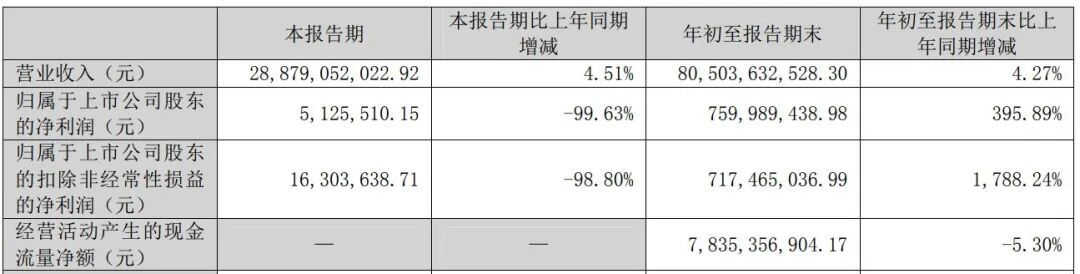
Core Viewpoint - The recent decline in pig prices and the adjustment of breeding capacity have become hot topics in the industry, with New Hope acknowledging significant losses in its pig farming business due to low prices around 11 yuan/kg, leading to widespread losses across the sector [1][5]. Financial Performance - In the first three quarters of the year, New Hope reported a net profit attributable to shareholders of 7.6 billion yuan, a nearly 400% increase year-on-year, with the third quarter contributing a net profit of 513 million yuan [3]. - The company's feed business generated a net profit of 10.3 billion yuan in the first three quarters, up 23% year-on-year, maintaining a monthly profit level above 1 billion yuan [3]. - The pig farming segment, however, faced a cumulative loss of 180 million yuan in the first three quarters, with a significant loss of 230 million yuan in the third quarter due to rapidly falling pig prices [4][5]. Market Conditions - The rapid decline in pig prices since the third quarter has shifted the industry from profit to loss, with many leading enterprises experiencing losses across most of their operations [5]. - The current price of approximately 11 yuan/kg has led to a situation where many enterprises are unable to sustain operations, resulting in forced sell-offs that may accelerate market clearing [5]. Production Adjustments - New Hope plans to gradually reduce the number of breeding sows by the end of January next year, which will also lead to a decrease in the number of pigs marketed [1][7]. - The company is increasing the proportion of self-breeding and self-fattening pigs, moving from a previous ratio of 30:70 to 35:65, as the cost of self-breeding becomes more competitive [8]. Strategic Focus - New Hope is not in a hurry to expand its pig farming capacity overseas, focusing instead on optimizing domestic idle capacity under favorable policy conditions [8]. - The company has seen significant growth in its overseas feed business, with a sales growth rate of 21% in the first three quarters, supported by new production capacities coming online [9].
“猪价跌至11元/公斤,已使行业全面亏损”,新希望连开策略会应对!第三季度净利仅513万元,养猪业务亏损2.3亿元
Mei Ri Jing Ji Xin Wen· 2025-11-12 07:58
Core Viewpoint - The recent decline in pig prices and the adjustment of breeding capacity are significant topics of discussion in the industry, with New Hope facing substantial losses in its pig farming business due to low market prices [2][5]. Group 1: Financial Performance - New Hope reported a net profit of 7.6 billion yuan for the first three quarters, a year-on-year increase of nearly 400%, with a net profit of 513 million yuan in the third quarter [3]. - The company's feed business generated a net profit of 10.3 billion yuan in the first three quarters, up 23% year-on-year, maintaining a monthly profit level exceeding 1 billion yuan [3]. - However, the pig farming segment incurred a cumulative loss of 180 million yuan in the first three quarters, with a loss of 230 million yuan in the third quarter alone due to rapidly falling pig prices [4][5]. Group 2: Market Conditions - The current pig price is around 11 yuan per kilogram, leading to widespread losses across the industry, affecting many leading enterprises [2][5]. - The decline in pig prices is attributed to high breeding stock levels from last year, resulting in a peak in market supply and increased efficiency in pig farming [5]. Group 3: Strategic Adjustments - New Hope plans to gradually reduce the breeding sow inventory by the end of January next year, which will also lead to a decrease in the number of pigs marketed [2][7]. - The company is shifting its breeding strategy to increase the proportion of self-breeding and self-fattening pigs, moving from a previous ratio of 30:70 to 35:65 [7]. - New Hope is not currently pursuing overseas expansion in pig farming but is focusing on optimizing domestic production capacity under favorable policy conditions [7][8]. Group 4: Overseas Business Development - New Hope has seen significant growth in its overseas feed business, with a sales growth rate of 21% in the first three quarters, supported by improved financial conditions [8]. - The company aims to increase its overseas feed production capacity to 10 million tons by 2028, aligning with a sales target of 9 million tons [8].

开源证券:年前生猪供给压力逐步积累 猪价低位运行去化延续
智通财经网· 2025-11-12 06:27
Core Insights - The report from Kaiyuan Securities indicates a significant decline in the average selling price of live pigs in October 2025, with a decrease of 10.74% month-on-month and 33.56% year-on-year, suggesting ongoing pressure on pig prices in the near future [1] - The slaughter volume in October 2025 was 5.0352 million heads, reflecting a month-on-month increase of 10.40% and a year-on-year increase of 9.55%, indicating a temporary oversupply situation [1] - The report highlights that the proportion of large pigs being sold is lower than in the same period in 2024, while the inventory of large pigs is increasing, suggesting a potential easing of supply in the future [1] Industry Overview - The gross white price difference as of November 6, 2025, was 4.18 yuan/kg, showing a month-on-month increase of 0.08 yuan/kg but a year-on-year decrease of 0.84 yuan/kg, indicating mixed market conditions [2] - The national frozen product inventory rate was reported at 20.03%, up 4.06 percentage points year-on-year, which may exert downward pressure on future pig prices due to high inventory levels [2] - In October 2025, the industry faced significant losses, with self-breeding and self-raising operations losing 167.97 yuan per head, reflecting a worsening financial situation for producers [3] - The breeding stock decreased by 0.77% month-on-month as of November 7, 2025, indicating a trend of reduction in breeding capacity [3] Company Performance - In October 2025, 12 listed pig companies reported a total of 16.9469 million heads sold, a year-on-year increase of 29.29%, with individual companies like Muyuan Foods and Wens Foodstuffs showing significant increases in their sales volumes [4] - The average selling price for major listed pig companies fell month-on-month, with prices for companies like Muyuan Foods and Wens Foodstuffs decreasing by 10.3% and 12.2% respectively [5] - The average weight of pigs sold by major companies also saw a decline, with Dabeinong reporting an average weight of 110.1 kg per head, down 18.8 kg from the previous month [4]


新希望:海外饲料业务加速成长 国内“猪周期”有望触底回升
Quan Jing Wang· 2025-11-12 05:48
Group 1 - The core viewpoint of the article highlights the significant growth in the overseas feed business of the company, with a sales growth rate of 21% in the first three quarters of the year, accelerated by increased production capacity and credit sales [1] - The company has strategically focused on countries such as Indonesia, Vietnam, Egypt, Bangladesh, and the Philippines for its overseas feed business, achieving an average sales growth rate of around 10% over the past three years [1] - The company plans to reach an overseas feed production capacity of 10 million tons by 2028 to support a sales target of 9 million tons [2] Group 2 - Regarding the pig farming business, the company anticipates that despite short-term fluctuations, it is expected to achieve breakeven and release operational profits within 1-2 years [2] - The company expects its operational situation to gradually improve and recover over the next 1-2 years [2]
中国房地产周度综述- 市场活动全面放缓;政策信号点燃新希望-China Property Weekly Wrap_ Week 45 Wrap - Market activities slowed broadly; policy hints ignited new hopes
2025-11-12 02:20
Summary of China Property Weekly Wrap Industry Overview - The report focuses on the **Chinese property market**, highlighting recent trends and policy changes affecting housing consumption and market performance. Key Highlights - **Policy Changes**: The proposal for the 15th Five-Year Plan suggests removing irrational restrictions on housing consumption. A MOHURD-affiliated outlet indicated that Tier-1 cities (Beijing, Shanghai, Shenzhen) could fully cancel home purchase restrictions. Proposed stimulus measures include: - Nationwide interoperability of housing provident funds - Lower VAT exemption period for secondary home sales - Pilot programs for personal income tax deductions on home renovation - Optimized criteria for defining first and second homes - New mechanisms for property purchase tax rebates - **Market Reaction**: Following these announcements, shares of covered developers rose by an average of **4%** on Monday, contrasting with a flat performance of the CSI 300/MSCI China index [1][1][1]. Market Performance - **Transaction Volumes**: - Primary transaction volume fell by **29%** week-over-week (wow) and **37%** year-over-year (yoy). - Secondary transactions moderated by **4%** wow and **23%** yoy. - Secondary home visitations and new listings declined by **5%** and **8%** wow, respectively [2][2][2]. - **Average Transaction Prices**: The average transaction price in 15 cities fell by **2%** wow and was **3%** below the October level [2][2][2]. Key Data Points - **New Home Sales**: - New home sales volume decreased by **29%** wow and **37%** yoy, with Tier-1 and Central & Western cities outperforming. - Secondary transactions were down **4%** wow and **23%** yoy, with agents expecting stronger price appreciation than homeowners [5][5][5]. - **Year-to-Date Performance**: - Primary Gross Floor Area (GFA) sold was down **10%** yoy, with Tier-1 and Central & Western cities outperforming. - Secondary GFA sold was up **6%** yoy [6][6][6]. Inventory and Completions - **Inventory Levels**: - Inventory balance decreased by **0.2%** wow and **3.7%** from the end of 2024, with inventory months at **26.5** [14][14][14]. - **Completions**: - GSPC tracker indicates flattish yoy completions for October 2025, with a projected **10%** yoy decline for FY25E [41][41][41]. Valuation Insights - **Developer Valuations**: - Offshore coverage developers saw an average share price increase of **4%** wow, while onshore developers averaged **3%** wow. - Offshore coverage trades at an average **38%** discount to end-2025E NAV, while onshore coverage trades at a **9%** discount [48][48][48]. Implications for Investors - The report suggests that the recent policy changes and market reactions could present both opportunities and risks for investors in the Chinese property market. The ongoing decline in transaction volumes and prices, coupled with potential policy support, creates a complex investment landscape [7][7][7].