
IFLYTEK(002230)

Search documents
两大AI龙头爆了!“卖铲人”工业富联预计净利超350亿,AI服务器卖爆;科大讯飞“翻身”,四季度大赚近10亿
Sou Hu Cai Jing· 2026-01-28 10:52
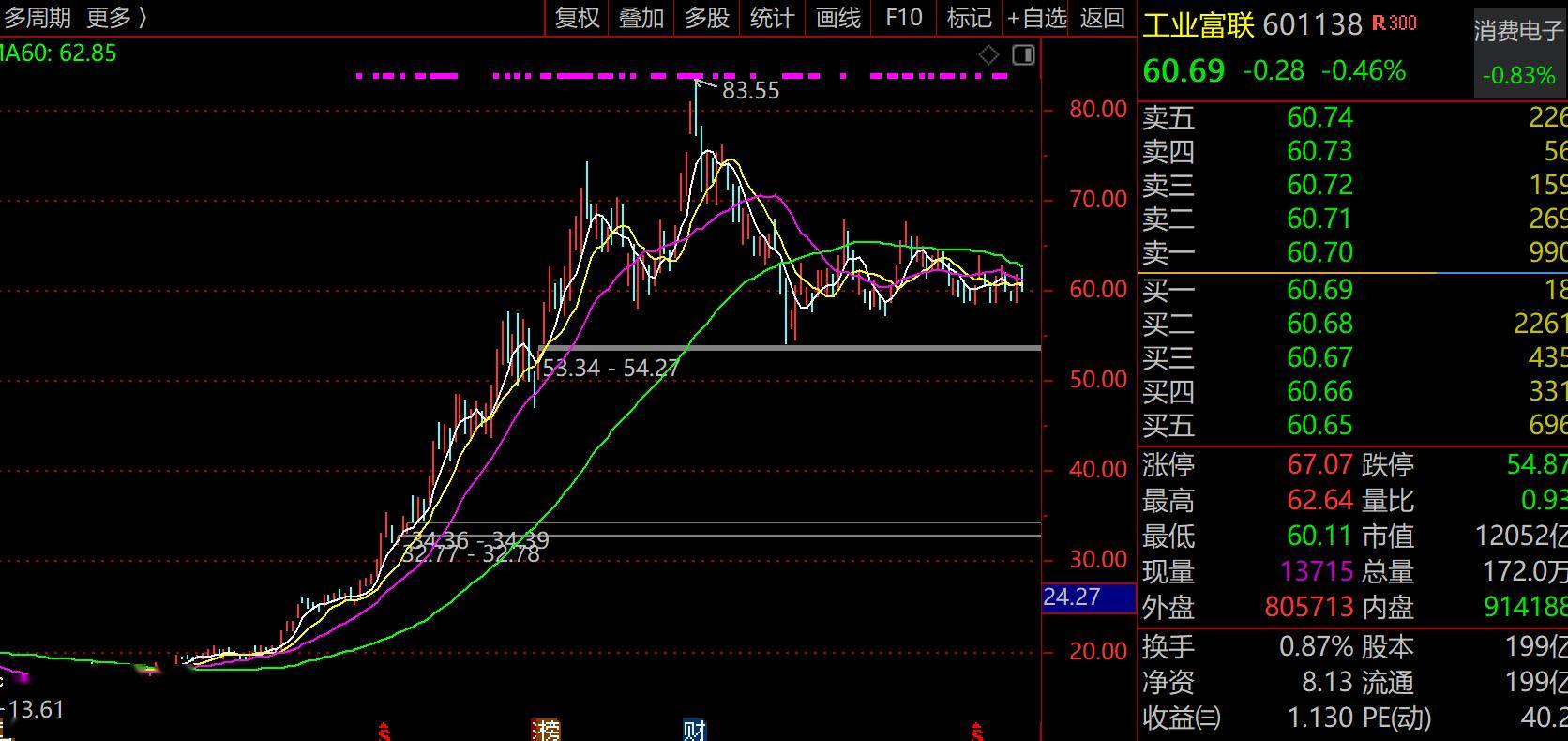
Group 1 - Industrial Fulian (601138.SH) expects a net profit attributable to shareholders of 35.1 billion to 35.7 billion yuan for the year 2025, an increase of 11.9 billion to 12.5 billion yuan compared to the previous year, representing a year-on-year growth of 51% to 54% [1] - In Q4, Industrial Fulian's net profit is projected to be between 12.6 billion to 13.2 billion yuan, an increase of 4.5 billion to 5.1 billion yuan year-on-year, reflecting a growth of 56% to 63% [1] - The revenue from 800G and above high-speed switch business is expected to grow by 13 times year-on-year in 2025, with Q4 revenue increasing over 4.5 times compared to the same period last year [1] - The revenue from AI servers for cloud service providers is anticipated to grow over 3 times year-on-year in 2025, with Q4 revenue increasing over 50% quarter-on-quarter and over 5.5 times year-on-year [1] Group 2 - Keda Xunfei (002230.SZ) forecasts a net profit attributable to shareholders of 785 million to 950 million yuan for 2025, representing a growth of 40% to 70% compared to the previous year [3] - The performance change is primarily due to the large-scale application of artificial intelligence, with the "Xunfei Spark" model accelerating its deployment in the consumer sector [3] - For Q3 2025, Keda Xunfei reported a net profit of 172 million yuan, leading to an estimated Q4 net profit of 852 million to 1.017 billion yuan, indicating a quarter-on-quarter growth of 394% to 490% [3]



晚间公告|1月28日这些公告有看头
Di Yi Cai Jing· 2026-01-28 10:28
Group 1 - Chihong Zn & Ge plans to increase capital by 3.3 billion RMB to its wholly-owned subsidiary, Hulunbuir Chihong Mining, primarily for repaying internal loans, supplementing working capital, and constructing lead-zinc smelting projects. Post-increase, the registered capital will rise to 3.515 billion RMB [2] - Yuguang Gold Lead's stock price has surged by 59.52% over six trading days, but the future of silver prices remains uncertain, which could adversely affect the company's profitability if prices decline [3] - Changjiang Investment expects a net loss of 30 to 45 million RMB for 2025, with potential delisting risk due to failing to meet the 300 million RMB revenue threshold [4] Group 2 - Kewan Technology's subsidiary has not generated revenue, and the company anticipates a significant net profit decrease of 72.90% to 80.42% for 2025 [5] - Hainan Mining is planning to acquire control of Fengrui Fluorine Industry through a combination of cash and stock issuance, with trading suspended for up to 10 days [6] - Chifeng Gold's stock has shown abnormal trading fluctuations, with significant increases in gold product prices expected to impact its operating performance [7] Group 3 - Jin Hui Co. reports that silver product revenue constitutes a low percentage of total revenue, with silver sales accounting for 12.46% of total revenue in the first three quarters of 2025 [8] - Western Gold emphasizes its focus on gold mining and smelting as its main business amid rising market interest [9] - Gehua Cable plans to invest 100 million RMB in a private equity fund focused on the smart robotics industry, aiming to enhance synergy with its broadcasting business [10] Group 4 - Keda Manufacturing intends to acquire a 51.55% stake in Tefu International, with trading resuming on January 29, 2026 [11] - Hai Xin Food has successfully entered the Sam's Club retail channel, launching customized products to enhance brand image and product value [12] - Shangwei New Materials warns of potential further stock suspensions if prices continue to rise, as its new product development is still in the early stages [13] Group 5 - Xie Chuang Data expects a net profit increase of 51.78% to 80.69% for 2025, projecting profits between 1.05 billion to 1.25 billion RMB [15] - Industrial Fulian anticipates a net profit of 35.1 billion to 35.7 billion RMB for 2025, reflecting a growth of 51% to 54% [17] - Mingyang Smart Energy forecasts a net profit increase of 131.14% to 188.92% for 2025, driven by significant growth in wind turbine deliveries and sales [18] Group 6 - Keda Technology expects a net profit increase of 40% to 70% for 2025, projecting profits between 785 million to 950 million RMB [19] - Hunan Silver anticipates a net profit increase of 67.88% to 126.78% for 2025, supported by increased production and rising market prices for silver and gold [21] - Honghe Technology projects a substantial net profit increase of 745% to 889% for 2025, driven by rising demand for electronic-grade glass fiber cloth [22] Group 7 - Zhongtian Rocket expects a net loss of 95 million to 115 million RMB for 2025, a shift from a profit of 19.56 million RMB in the previous year due to increased competition and price declines in its core business [23] - Zotye Auto anticipates a net loss of 281 million to 417 million RMB for 2025, primarily due to operational issues and fixed costs [24] Group 8 - Huaguang Huaneng's controlling shareholder plans to reduce its stake by up to 1% through market transactions [25] - Bozhong Precision's major shareholder intends to reduce its stake by up to 1% due to funding needs [26] Group 9 - ST Songfa's subsidiary has signed a contract for the construction of container ships worth approximately 3.4 billion to 4 billion RMB, with delivery expected in 2028 [27]





科大讯飞:2025年净利同比预增40%-70% 人工智能应用规模化落地取得成效
Feng Huang Wang· 2026-01-28 10:14
Core Viewpoint - The company expects a significant increase in net profit for 2025, driven by the successful implementation of artificial intelligence applications and the rapid deployment of its "Xunfei Spark" large model in the consumer market [1] Financial Performance - The projected net profit for 2025 is estimated to be between 785 million and 950 million yuan, representing a growth of 40% to 70% compared to the previous year [1] Industry Position - In the large model sector, the company achieved the highest number of project bids and bid amounts in the industry for 2025, with a total bid amount of 2.316 billion yuan, surpassing the combined total of the second to sixth places [1] Developer Ecosystem - The developer community on the Xunfei open platform has exceeded 10 million, including 564,000 overseas developers [1] - In 2025, the company added over 2.24 million new developers, with 1.27 million being large model developers, indicating a rapid growth in the developer base and accelerating industry empowerment [1]
氪星晚报|字节跳动旗下公司等入股弋途科技;SpaceX考虑于6月中旬进行IPO;曦望发布新一代推理芯片S3
3 6 Ke· 2026-01-28 09:31
Group 1: Company Performance - iFlytek expects a net profit of 785 million to 950 million yuan in 2025, representing a year-on-year growth of 40% to 70% [1] - SK Hynix reported an annual operating profit of 47.2 trillion won and a sales revenue of 97.1 trillion won for the year [2] - Good Idea announced that its subsidiary, Mingming Henmang, officially listed on the Hong Kong Stock Exchange, with the company holding 5.8355% of the shares [3] Group 2: Investment and Financing - Goldman Sachs predicts an influx of 3.6 trillion yuan into the Chinese stock market by 2026, driven by individual and institutional investors [2] - Digital Edge plans to invest 4.5 billion USD in building a large-scale data center park in Indonesia, marking its largest infrastructure project to date [8] Group 3: New Products and Innovations - Sunrise launched its new generation inference chip S3, which features a fourfold increase in memory capacity compared to the previous generation [9] - Black Sesame Intelligence released the FAD2.0 open platform, marking the A2000's entry into large-scale application [10]


科大讯飞:2025年净利润同比预增40%至70%
Xin Hua Cai Jing· 2026-01-28 09:16
Core Viewpoint - The company, iFlytek, forecasts a significant increase in net profit for 2025, driven by the successful scaling of artificial intelligence applications and sustained investment in core technology [2] Financial Performance - iFlytek expects a net profit attributable to shareholders of between 785 million to 950 million yuan for 2025, representing a growth of 40% to 70% compared to the previous year [2] - The company anticipates a non-GAAP net profit of between 245 million to 301 million yuan, reflecting a growth of 30% to 60% year-on-year [2] - Total sales receipts exceeded 27 billion yuan, marking an increase of over 4 billion yuan from the previous year [2] - The net cash flow from operating activities surpassed 3 billion yuan, both figures setting historical highs [2] Research and Development - iFlytek's R&D investment increased by over 20% year-on-year, emphasizing the company's commitment to maintaining control over core AI technologies [2] - The company has validated its leading position in AI core technology research and model training systems, focusing on self-controlled algorithms, computing power, and data [2] Marketing and Brand Development - iFlytek is enhancing its high-end brand development, particularly in consumer AI products, including the iFlytek AI learning machine [2] - The company is increasing marketing investments for international expansion, with sales expenses rising by over 25% [2]
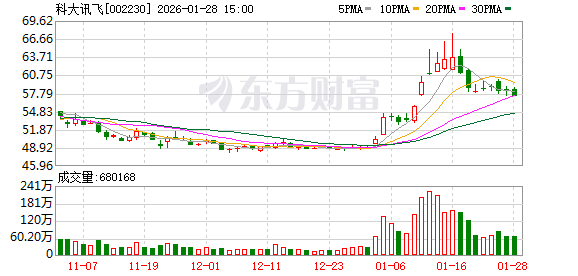
科大讯飞:2025年净利同比预增40%~70%
Mei Ri Jing Ji Xin Wen· 2026-01-28 08:52
Core Viewpoint - The company expects a significant increase in net profit for 2025, driven by advancements in artificial intelligence and government subsidies [1] Group 1: Financial Performance - The company forecasts a net profit attributable to shareholders of between 785 million to 950 million yuan for 2025, representing a growth of 40% to 70% compared to the previous year [1] - The increase in performance is primarily attributed to the successful implementation of large-scale artificial intelligence applications [1] Group 2: Technological Advancements - The "Xunfei Spark" large model technology is noted to be leading in the industry and is accelerating applications in both consumer and industry sectors [1] - The company achieved the highest bid amount in the industry, indicating strong competitive positioning [1] Group 3: Government Support - The company anticipates an increase of approximately 300 million yuan in government subsidies, classified as non-recurring gains [1]
科大讯飞(002230) - 2025 Q4 - 年度业绩预告
2026-01-28 08:50
Financial Projections - The company expects net profit attributable to shareholders for 2025 to be between CNY 78.5 million and CNY 95 million, representing a year-on-year growth of 40% to 70%[3] - The net profit after deducting non-recurring gains and losses is projected to be between CNY 24.5 million and CNY 30.1 million, indicating a growth of 30% to 60% compared to the previous year[3] - Total sales receipts are expected to exceed CNY 27 billion, an increase of over CNY 4 billion year-on-year, marking a historical high[5] - The net cash flow from operating activities is expected to exceed CNY 3 billion, also a historical high[5] Research and Development - The company has increased its R&D investment by over 20% year-on-year to capitalize on opportunities in general artificial intelligence[6] - The "Xunfei Spark" large model has achieved a project bidding amount of CNY 2.316 billion, surpassing the combined total of the second to sixth competitors[7] Developer Engagement - The number of developers on the Xunfei open platform has exceeded 10 million, with 2.24 million new developers added in 2025, including 1.27 million large model developers[7] Government Support - The company anticipates receiving approximately CNY 300 million in government subsidies due to undertaking significant projects, classified as non-recurring gains[6] Marketing and Sales - Sales expenses have increased by over 25% year-on-year as the company enhances brand promotion and marketing efforts for its AI products[6] Industry Positioning - The company emphasizes its commitment to maintaining a leading position in AI technology and further solidifying its status as a national team in the industry[7]
科大讯飞:2025年归母净利润预增40%-70%
Xin Lang Cai Jing· 2026-01-28 08:48
Core Viewpoint - The company expects a significant increase in net profit for the year 2025, driven by the large-scale application of artificial intelligence technology [1] Financial Performance - The projected net profit attributable to shareholders is estimated to be between 785 million to 950 million yuan, representing a year-on-year growth of 40% to 70% [1] - The net profit after deducting non-recurring gains and losses is expected to be between 245 million to 301 million yuan, with a year-on-year increase of 30% to 60% [1] Growth Drivers - The growth in performance is attributed to the large-scale implementation of artificial intelligence applications, with core operational indicators showing positive growth [1] - Research and development investment has increased by over 20% year-on-year, indicating a strong focus on innovation and technology advancement [1] - Sales expenses have risen by over 25% year-on-year, reflecting accelerated deployment of large model technology in the consumer sector and leading industry contract amounts [1]
代码生产的AI时代来了!B端刚需爆发,国产AI编程生态迎黄金风口,产业链核心企业解读
Xin Lang Cai Jing· 2026-01-27 12:24
Group 1: Large Model + Code Intelligence Core - iFlyCode by iFLYTEK is the first domestic intelligent programming tool with voice interaction features, supporting code generation, explanation, bug correction, unit test generation, and intelligent Q&A across major programming languages [1][18] - StarRing Technology focuses on AI code generation for big data development, achieving over 90% accuracy in code generation and serving over 200 paying enterprise clients by 2025 [1][19] - Tuya Technology integrates NLP capabilities with AI programming solutions for government and financial sectors, enhancing system development efficiency and reducing maintenance costs [2][20] Group 2: IDE + AI Programming Tools Core - ZTE Information has developed SnapDevelop, an AI-assisted programming tool that increases software development efficiency by 2-3 times and supports multiple programming languages [3][22] - Wanjing Technology targets lightweight development scenarios with AI programming tools, significantly lowering the development barrier for small and medium enterprises [4][23] - CaiXun Co. provides AI programming solutions tailored for the financial sector, enhancing software development efficiency and compliance risk management [5][24] Group 3: Low-Code + AI Programming Integration - Puyuan Information integrates AI programming capabilities into its low-code development platform, improving enterprise application development efficiency by over 40% [7][24] - Jinxianda focuses on the electric power industry, utilizing a proprietary model to enhance development efficiency and customer advantages in AI programming and low-code applications [8][26] - Zhiyuan Interconnect's low-code platform has served over 10,000 enterprise clients, reducing development cycles by over 50% through AI programming capabilities [9][27] Group 4: Industry Solutions + AI Programming - Hengsheng Electronics has developed a low-code platform that integrates AI programming for the financial sector, improving development efficiency by over 60% [11][28] - Saiyi Information focuses on the manufacturing sector, providing AI programming tools that enhance software development efficiency by over 50% [12][29] - Keda Guochuang integrates AI programming into its software development for the electric power and government sectors, reducing development costs by approximately 30% [13][30] Group 5: Enterprise-Level AI Programming Solutions - New Jue Network combines AI programming with intelligent operation and maintenance services, achieving a customer repurchase rate of 83% in 2024 [15][31] - Yonyou Network integrates AI programming into its ERP systems, enhancing development efficiency by over 50% for various enterprise scenarios [16][32]





马斯克量产倒计时!脑机接口进入潜伏期,脑机接口商业化前夜,近期国内布局加速!优质企业详细解读
Xin Lang Cai Jing· 2026-01-27 12:24
Group 1 - Tianqi Co., Ltd. has entered the brain-computer interface (BCI) sector by investing in Suzhou Huahui Chip, focusing on high-density flexible neural electrode technology, achieving animal testing stages, and becoming a key player in domestic BCI hardware localization. The developed flexible neural electrode has 1024 channels, with signal acquisition precision and anti-interference capabilities at an internationally advanced level. The company has also completed biocompatibility surface modification technology to reduce inflammation after electrode implantation, with core patents authorized by the National Intellectual Property Administration [1][2][3] - Innovation Medical, through its subsidiary Boling Brain Machine, is one of the first companies in China to commercialize BCI rehabilitation products. The core product, Cyberlink AC5, was officially launched in October 2025, generating sales revenue of 114,000 yuan in 2025. Another product, Cyberlink AM5, has completed multi-center clinical trials and is progressing through the approval process. The company plans to establish five additional clinical cooperation centers to accelerate the application of BCI technology in treating neurological diseases [4][5][6] - iFlytek is a leading company in the non-invasive BCI field, leveraging its artificial intelligence technology to develop BCI collaborative technology. The company has established long-term partnerships with universities for research and development. Its non-invasive BCI system has been piloted in 120 schools nationwide, improving student attention by 30%. In the medical field, a collaboration with Beijing Tiantan Hospital has achieved a 92% accuracy rate in identifying abnormal brain signals for epilepsy [7][8][9] Group 2 - Jiahe Intelligent focuses on the research and mass production of BCI hardware, particularly EEG acquisition devices and core components, serving both consumer and medical-grade markets. The company has achieved large-scale production of EEG acquisition headphones with a signal recognition accuracy of 92%, primarily used in sleep monitoring and attention training. It plans to expand into overseas BCI hardware markets by 2026 [10][11][12] - Tom Cat is the first company in China to apply BCI technology in consumer scenarios, focusing on interactive games and rehabilitation training products. The company launched a mind-controlled game product in 2025, which quickly gained over 500,000 users. It also collaborates with rehabilitation institutions to develop BCI rehabilitation training systems, showing a 35% average improvement in patient motor function scores [13][14][15] - Hanwei Technology, through its subsidiary Weisheng Technology, is a leading company in the EEG sensor field, with an annual shipment of over 2 million units. The company has developed an epilepsy early warning system with an 88% accuracy rate in clinical tests. It also focuses on flexible pressure sensors for invasive BCI electrodes, addressing industry pain points [16][17][18] Group 3 - StarNet Ruijie leverages its network communication technology to develop low-power, high-stability EEG signal transmission systems and data encryption modules, becoming a core supplier for BCI data links. The developed transmission system supports real-time transmission of 1024-channel EEG signals with a latency of less than 10ms and a stability of 99.9% [19][20][21] - Yijiahe focuses on the integration of BCI and embodied intelligent robots, exploring applications in smart healthcare. The company has signed a strategic cooperation agreement to develop real-time emotional companionship and brain-controlled robots, enhancing the emotional care capabilities of robots [22][23][24] - Lihua Technology is focused on incubating and investing in the BCI sector, successfully incubating three high-tech companies in the field. The company collaborates with the Shenzhen Institute of Advanced Technology to provide comprehensive services for incubated companies, addressing development pain points [25][26][27] Group 4 - Sanbo Neurosurgery is a leading private hospital in the neurosurgery field, focusing on the clinical application and research of BCI. The company has successfully conducted an interventional BCI surgery, accumulating valuable experience for clinical applications. It is also recruiting participants for ongoing clinical trials [28][29][30] - Shiyun Circuit is a core enterprise in the PCB field, providing customized PCB products for BCI devices. The company focuses on high-density, flexible PCB designs, achieving low signal loss rates below 2% [31][32][33] - Meihua Medical is a leading supplier of core components for BCI, having entered the core supply chain for invasive BCI products. The company has developed components that have passed biocompatibility tests, ensuring long-term stability and safety for implanted devices [34][35][36]


