IFLYTEK(002230)

Search documents
讯飞星辰智能体平台升级:Agent正式从“对话框”进化为“数字合伙人”
Xin Lang Cai Jing· 2026-01-26 11:09
Core Insights - The article discusses the evolution of intelligent agents from mere digital tools to physical entities capable of enhancing productivity through multi-modal interactions and real-world applications [1][28]. Group 1: Intelligent Agent Capabilities - The upgraded Xingchen intelligent agent platform allows agents to perceive the physical world, understand complex contexts, and communicate in a multi-modal manner, transforming them into "digital partners" with sensory and motor capabilities [1][28]. - The integration of voice, vision, motion, and execution enables agents to seamlessly connect with various smart hardware, facilitating applications in industrial, household, and consumer scenarios [7][32]. - The platform's AIUI integration allows for personalized interactions, enhancing user experience through quick command recognition and execution [6][32]. Group 2: Cost Efficiency and Effectiveness - The intelligent agents can significantly reduce labor and time costs while improving interaction efficiency and effectiveness [8][32]. - Demonstrations of the desktop robot "Xiao Fei" showcased its ability to accurately respond to commands and autonomously navigate environments, highlighting the practical benefits of the technology [8][34]. Group 3: Multi-modal Interaction and Emotional Engagement - The upgraded multi-modal interaction technology allows agents to engage in natural conversations, utilizing voice, facial recognition, and environmental cues to enhance user interaction [11][37]. - The emotional expressiveness of the agents has improved, enabling them to respond more naturally and empathetically, which is crucial for user retention and engagement [14][37]. Group 4: Automation and RPA Integration - The integration of intelligent agents with Robotic Process Automation (RPA) allows for the automation of repetitive tasks, enhancing productivity by enabling agents to perform physical actions [21][44]. - New capabilities such as intelligent components and data tables simplify the automation process, making it accessible to users without technical backgrounds [22][45]. Group 5: Global Expansion and Market Reach - The Xingchen intelligent agent platform is expanding its capabilities to international markets, particularly in the Middle East and Southeast Asia, to support global enterprises [26][47]. - The platform's applications span various sectors, including public services, transportation, and finance, driving innovation and efficiency in global business operations [26][49].



海南政协委员谈AI产业如何聚链成群:“链主”赋能 政企协同
Zhong Guo Xin Wen Wang· 2026-01-26 09:42
Core Insights - Artificial intelligence (AI) is identified as a core driver of global economic development and industrial transformation, with Hainan Free Trade Port aiming to leverage its unique policy advantages, geographical location, and ecological endowments to attract AI industry investments [1][2] Group 1: AI Industry Development Strategy - Hainan's AI industry has a foundational basis and aims to utilize the advantages of the Free Trade Port's closure policy to become a significant global connection point [1] - The strategy for attracting AI investments includes four key elements: attracting intelligent computing infrastructure service providers, core algorithm and platform service providers, high-quality data service providers, and providers with significant industry solutions [1] - The role of leading enterprises (chain leaders) is emphasized, suggesting they should establish their strategic direction and new business units in Hainan to enhance industry cohesion [1] Group 2: Collaborative Efforts and Ecosystem Building - Chain leaders are encouraged to open their core algorithm and technology platforms to empower small and medium-sized enterprises, with a focus on reducing technical usage fees for companies entering the Hainan Free Trade Port headquarters [2] - The importance of government and enterprise collaboration is highlighted, advocating for a joint development plan for "business-led investment" and the deepening of industry data and scenario openness [2] - A development mechanism combining government intervention and market dynamics is proposed, emphasizing that openness and innovation are essential for a thriving ecosystem [2]
2026年中国无障碍产业政策、产业链、市场规模、竞争企业及发展趋势研判:随着老龄化加速和残障群体需求升级,无障碍产业迎来前所未有的发展机遇[图]
Chan Ye Xin Xi Wang· 2026-01-26 01:40
Core Viewpoint - The accessibility industry is emerging as a significant economic growth point in China, transitioning from a welfare-focused sector to a market-driven one, driven by the aging population and the increasing needs of disabled groups [1][2]. Group 1: Industry Definition and Service Objects - The accessibility industry aims to improve, compensate, or replace human functions for groups such as the disabled, elderly, patients, and pregnant women, enhancing their quality of life and promoting social inclusion [1][2]. Group 2: Current Development Status - The market size of China's accessibility industry is projected to grow from 78 billion yuan in 2020 to 140 billion yuan by 2025, with an expected increase to 163 billion yuan by 2026 [2]. Group 3: Industry Chain - The upstream of the accessibility industry includes raw materials like metals, plastics, and electronic components, while the midstream consists of software systems and hardware products, and the downstream applications are found in homes, public buildings, and rehabilitation institutions [3]. Group 4: Development History - The accessibility industry in China has undergone four stages: the embryonic stage (2001-2007), the regulatory stage (2008-2014), the smart transformation stage (2015-2023), and the service ecosystem stage (2024-present) [3]. Group 5: Policy Environment - Recent national policies, such as the "Barrier-Free Environment Construction Law," have established a legal framework for the development of the accessibility industry, enhancing the construction of urban accessibility facilities [4]. Group 6: Competitive Landscape - Major companies in the accessibility software sector include iFlytek, SenseTime, and Tencent, while hardware companies include Yuyue Medical, Kefu Medical, and Shanghai Construction Group, among others [5][6]. - Kefu Medical reported a revenue of 1.496 billion yuan in the first half of 2025, with rehabilitation aids contributing 563 million yuan, accounting for 37.63% of total revenue [7][8]. - Yuyue Medical is a leading supplier of medical consumables, with a focus on rehabilitation care products, generating 234 million yuan in revenue from these products in the first half of 2025 [6]. Group 7: Future Development Trends - The accessibility industry is expected to expand significantly due to the aging population, with a shift from physical accessibility standards to digital, cultural, and social service areas, indicating a trend towards high-value software services and integrated solutions [9][10].




科学与健康丨AI时代,职业生态如何变化?
Xin Hua Wang· 2026-01-25 10:21
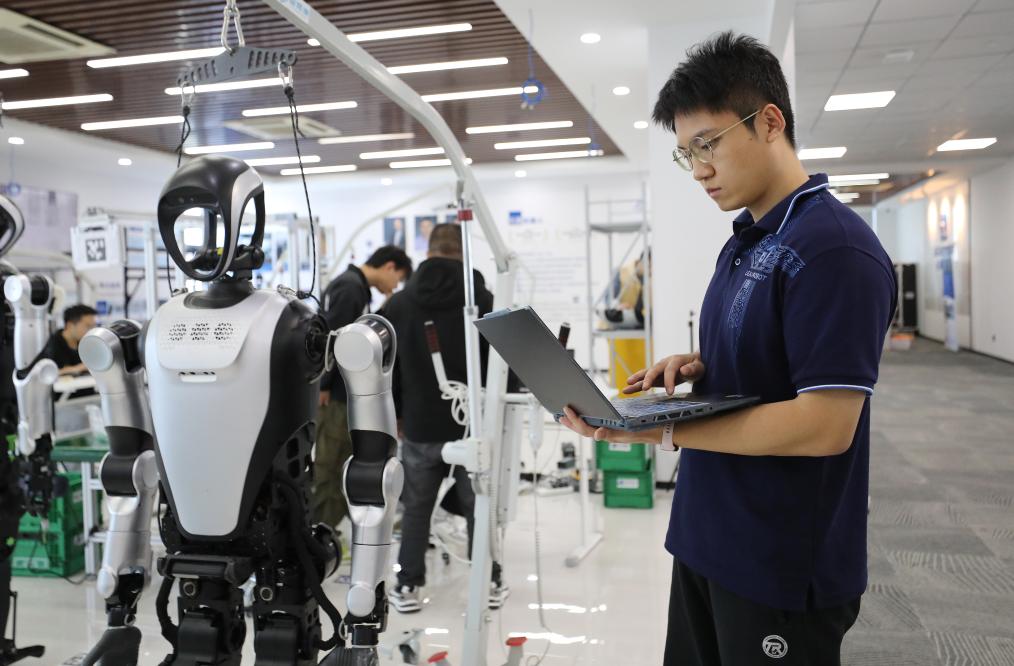
Core Insights - The article discusses how artificial intelligence (AI) is reshaping the job landscape, creating new professions and changing the skills required for workers to adapt to the AI era [1][3]. Group 1: New Job Opportunities - New professions such as AI trainers, AI product managers, and AI ethics reviewers are emerging as AI technology integrates into various industries [1][3]. - The demand for hybrid and application-oriented talent is increasing, with a significant rise in job openings related to AI applications [3]. - According to PwC, the average salary premium for workers with AI skills has reached 56%, doubling from the previous year [3]. Group 2: Impact on Traditional Industries - AI is becoming a crucial infrastructure for intelligent societies, enhancing traditional industries and creating new business models [4]. - In the robotics sector, advancements in embodied intelligence are leading to the development of humanoid robots with greater autonomy and human-machine collaboration capabilities, generating new job opportunities across various applications [5]. Group 3: Entrepreneurship and New Business Models - The rise of "one-person companies" (OPC) is facilitated by AI tools, allowing individuals to manage content production, product operations, and service delivery independently [7]. - This entrepreneurial model is gaining traction, with cities promoting OPC as a preferred startup model [7]. Group 4: Skills and Education for the Future - Experts emphasize the importance of human skills such as imagination, judgment, aesthetic ability, critical thinking, and emotional interaction in the context of human-AI collaboration [8]. - There is a call for educational systems to enhance interdisciplinary skills and develop training programs for new AI-related professions to support workforce transitions [8][10]. - The concept of "slash" careers, where individuals possess multiple skills, is predicted to become a prevalent lifestyle, necessitating a dynamic knowledge system and a focus on ethical guidance in AI [10].
科学与健康|AI时代,职业生态如何变化?
Xin Hua She· 2026-01-25 10:17
Core Insights - The rise of new professions such as AI trainers, AI product managers, and AI ethics reviewers is reshaping the job landscape, demanding new skills from workers [1][2] - The integration of AI across various industries is creating a significant demand for hybrid and application-oriented talent, with a notable increase in job opportunities related to AI [2][3] Group 1: Employment Opportunities - AI is driving the emergence of new job roles, including data annotators and AI content creators, leading to a growing need for professionals with AI skills [2][3] - According to PwC's 2025 global AI employment forecast, nearly all AI-related job positions are increasing, with average salaries for AI-skilled workers experiencing a 56% premium compared to the previous year [2] - A report from 58.com indicates the emergence of nearly 50 types of "human-machine collaboration" jobs and 40 new intelligent services [2] Group 2: Technological Transformation - AI is fundamentally transforming the employment ecosystem and skill structures, pushing labor towards higher value-added roles characterized by human-machine collaboration [3] - Advances in embodied intelligence and world modeling are enabling AI to move from language processing to understanding and modeling the physical world [3] - The robotics sector is seeing advancements in humanoid robots, which are expected to create numerous new job opportunities across various applications, including industrial and healthcare settings [3] Group 3: Entrepreneurship and New Business Models - The concept of "one-person companies" (OPC) is gaining traction, allowing individuals to leverage AI tools for content creation, product management, and service delivery [3][4] - Cities like Suzhou are positioning themselves as hubs for OPC entrepreneurship, supported by community initiatives and policies [3] Group 4: Skills and Education - Future talent development should emphasize interdisciplinary skills and comprehensive capabilities, alongside the establishment of training systems for new AI professions [6] - Experts suggest that a "slash" career approach may become prevalent, encouraging individuals to diversify their skills to enhance resilience against job market fluctuations [6] - Young people are advised to adopt an "AI mindset" to improve their ability to navigate AI technologies and to develop a dynamic knowledge system that integrates interdisciplinary learning and ethical considerations [6]
“广货行天下”走进华强北,消费电子专场促销活动正式启动!
Sou Hu Cai Jing· 2026-01-25 09:37
Group 1 - The "Guangdong Goods Going Global" Spring Action for consumer electronics was launched on January 25, organized by the Guangdong Provincial Department of Industry and Information Technology and the Shenzhen Municipal Government, featuring 50 leading consumer electronics companies [2] - The event showcased innovations from "Made in Guangdong" and "Created in Shenzhen" in the context of the AI technology wave, aiming to meet diverse and high-quality consumer demands [2] - The exhibition attracted a large number of foreign buyers from regions such as the Middle East, Southeast Asia, and Europe, highlighting the international appeal of the products [5] Group 2 - Exhibiting companies offered significant discounts, including a 15% national subsidy and additional store-specific promotions, with some mobile devices having store discounts up to 700 yuan [7] - The event included a special exhibition showcasing the entrepreneurial history and achievements of Huaqiangbei, emphasizing its unique entrepreneurial spirit and industrial strength [7] - Advanced technologies are rapidly being integrated into electronic products, wearable devices, and home products, transforming them into "New Year gifts" that are both innovative and emotionally engaging [7]


计算机行业研究:动态漫Agent,景气的极致
SINOLINK SECURITIES· 2026-01-25 07:50
Investment Rating - The report indicates a positive investment outlook for the industry, highlighting a "golden window period" for the short drama sector, with expectations for significant growth in the coming years [2][11]. Core Insights - The short drama industry has reached a scale of nearly 1 trillion yuan, surpassing both the film and long video sectors, with a projected compound annual growth rate (CAGR) of over 50% from 2023 to 2026 [11]. - The market for animated dramas is expected to exceed 22 billion yuan by 2026, contributing 50% of the incremental growth in the short drama industry [11]. - ByteDance is positioned as the absolute leader in the animated drama sector, leveraging its "traffic + IP + AI" integrated strategy to dominate the market [2][17]. - The application of AI technology is transforming the production paradigm of animated dramas, reducing production cycles from over 50 days to under 30 days and significantly lowering costs [3][21]. Summary by Sections Section 1: The Golden Window for Short Dramas - The short drama market has surpassed 1 trillion yuan, with user engagement increasing, and the average daily viewing time expected to exceed 100 minutes by 2025 [11]. - The market has entered a phase of rapid growth and commercialization, with significant increases in both supply and demand for animated dramas [11][12]. Section 2: AI Reshaping Production Paradigms - AI technologies are enabling a shift from manual production to industrialized generation, with production costs dropping to the thousand-yuan level [3][21]. - The integration of AI in production processes is expected to streamline workflows, reducing the number of steps from 11 to 5 and cutting costs by 60% [3][24]. Section 3: Trends in AI Applications - The report anticipates a significant uptick in AI applications by 2026, driven by the need for software to leverage substantial computational investments [4][31]. - Companies are increasingly integrating AI into their business models, with some reporting that AI-related revenues account for over 10% of total income [4][31]. Section 4: Related Investment Targets - Key investment targets include companies such as DeCai Co., Zhaochi Co., and Wanxing Technology, among others, which are positioned to benefit from the growth in the animated drama and AI sectors [5][40].



2025Q4计算机持仓环比回落1.1pct,处在历史低位,增配空间明显
GUOTAI HAITONG SECURITIES· 2026-01-24 15:14
Investment Rating - The report assigns an "Overweight" rating to the computer industry [5][13]. Core Insights - As of Q4 2025, institutional holdings in the computer sector have decreased to 2.1%, down 1.1 percentage points from Q3, marking a historical low. This level is only slightly above the 2.0% recorded in Q2 2022. There is significant potential for increase as the current holdings are far below the highs of over 6% seen in 2020 and 2023, and well below the 12% level in 2015 [3][5][7]. - The report highlights that institutions are increasing their positions in sub-sectors such as AI applications and commercial aerospace, while still heavily invested in large models, intelligent computing, and domestic innovation [5][7]. - The top ten companies by number of institutional holders in Q4 2025 include Kingsoft Office, Southern Power Digital, iFlytek, Inspur Information, and others. In terms of market value, Kingsoft Office leads with 139 billion, followed by iFlytek with 108 billion [7][8]. Summary by Sections - **Institutional Holdings Analysis**: The report details that institutional holdings in the computer industry have fluctuated significantly over the past five years, with a notable rise to 6.2% in late 2022, followed by a decline to 2.1% in Q4 2024. The report emphasizes the potential for recovery given the historical context [5][6][7]. - **Sector Performance**: The report indicates that the computer sector is currently underweight, with a significant gap from previous highs, suggesting a favorable environment for future investment [5][6]. - **Key Companies**: The report lists the top ten companies by institutional holdings, noting changes in the composition of these holdings compared to Q3 2025, with new entries and exits among the top firms [7][8].


【兴业计算机】2025Q4持仓分析:低配1.46%,环比Q3末下降0.17个百分点
兴业计算机团队· 2026-01-24 15:03
Core Viewpoint - The article discusses the current state and trends in the computer industry, highlighting the allocation of public funds and the performance of key stocks within the sector. Group 1: Industry Allocation and Performance - The relative allocation of public funds in the computer industry shows a significant interest in top stocks, with the most held stocks being Kingsoft Office, Hikvision, and Inspur Information [6][9]. - The top twenty stocks by fund holdings include notable companies such as Kingsoft Office, Keda Xunfei, and Deepin Technology, indicating a concentrated investment strategy among funds [6][9]. - The market value held by funds in these top stocks reflects a strong confidence in their performance, with Kingsoft Office leading with a market value of 184 billion [9]. Group 2: Fund Holdings and Changes - The article lists the top twenty stocks with the highest fund holdings, emphasizing the dominance of companies like Keda Xunfei and Kingsoft Office in terms of both number of funds and market value [9][10]. - The stocks with the highest increase in fund holdings include Keda Xunfei and Zhongke Xingtai, suggesting a growing interest and potential bullish sentiment towards these companies [8][10]. - The analysis of fund holdings indicates a strategic shift towards companies that are perceived to have strong growth potential in the computer sector [6][8].


计算机行业周报 20260119-20260124:计算机板块持仓分析!CPU、沙箱、Agent全面分析!-20260124
Shenwan Hongyuan Securities· 2026-01-24 14:10
Investment Rating - The report indicates a positive outlook for the computer industry, suggesting that it has fundamental support for investment and potential for future growth [1][2]. Core Insights - The computer sector is expected to experience a rebound in performance due to the recovery of the macro economy and advancements in AI technology, which are anticipated to enhance profitability [1][10]. - The report highlights a significant increase in demand for CPUs, driven by the rise of AI applications and the need for high-performance computing [16][19]. - The introduction of sandbox environments for AI agents is seen as a critical development, enhancing system security and performance in high-concurrency scenarios [22][29]. Summary by Sections Investment Allocation - In Q4 2025, the public fund allocation for the computer industry was 1.6%, a decrease of 0.8 percentage points from the previous quarter, ranking it 14th among 30 sectors [2][3]. - The top ten holdings in the computer sector included Inspur Information, Kingsoft Office, and Sangfor Technologies, with notable changes in the composition of these holdings [4][5]. Valuation Metrics - As of January 23, 2026, the PE (TTM) for the computer industry was 94.6x, placing it in the 94.80th percentile historically, while the PS (TTM) was 4.0x, in the 71.40th percentile [10][11]. - The report suggests that despite high PE levels, there is still room for growth in PS and PCF valuations as the market sentiment improves [10][11]. CPU Price Expectations - Intel and AMD are expected to raise server CPU prices by 10% to 15% in Q1 2026 due to supply constraints and increased demand from AI applications [16][21]. - The report emphasizes the growing importance of CPUs in AI workloads, particularly in managing complex tasks and ensuring system stability [19][40]. Key Investment Themes - The report identifies several key investment themes, including leadership in the digital economy, AIGC applications, and the importance of data elements and new industrialization [41][42]. - Specific companies recommended for investment include Inspur Information, Kingsoft Office, and various firms involved in AI and data solutions [41][42].