GoerTek(002241)

Search documents
全球化再均衡之下AI + 元宇宙仍是锚点,歌尔股份(002241.SZ)引领生态重构
Ge Long Hui· 2025-04-09 01:14
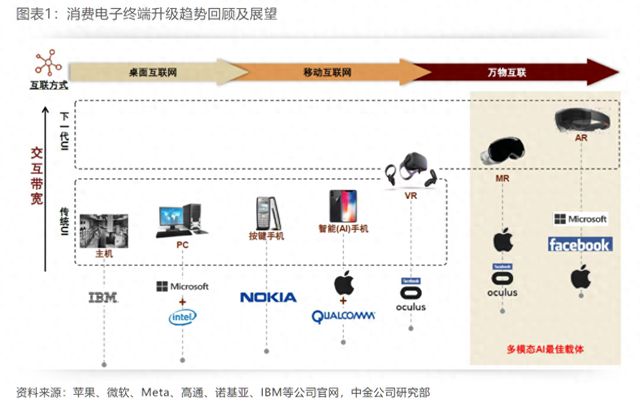
Group 1: Industry Overview - The global consumer electronics industry is experiencing a multi-dimensional recovery driven by the AI hardware revolution, with VR/MR headset shipments expected to reach 9.6 million units in 2024, a year-on-year increase of 8.8% [1] - The integration of AI large models with display technologies like waveguides and MicroLED is accelerating the evolution of smart glasses from entertainment tools to productivity tools, marking the beginning of a "battle of hundreds of glasses" [1] - The smartphone remains a crucial hardware product for AI technology implementation, with global smartphone shipments projected to reach 1.26 billion units in 2025, reflecting a 2.3% year-on-year growth [1] Group 2: AI and Metaverse Synergy - The collaborative evolution of AI and the metaverse has created a symbiotic relationship, where generative AI supports digital identity creation and virtual environment construction [2] - AI is expanding the boundaries of the metaverse, exemplified by AI agents like Luna, which autonomously operate multiple social media accounts and evolve through social interactions [2] - The metaverse provides a dynamic ecosystem for AI growth, offering a rich training sample library through user behavior data and interaction information [3] Group 3: Market Dynamics and Competition - Traditional smartphone manufacturers, internet giants, VR/AR companies, AI startups, and cross-industry players are competing in the "battle of hundreds of glasses" [4] - Major companies like Huawei, Xiaomi, and ByteDance are entering the AI glasses market, with Xiaomi targeting a production of 300,000 units by Q2 2025 [4] - The competition is expected to mature by 2025, with mainstream manufacturers completing product scenario validation and entering a phase of scaled production [4] Group 4: Company Spotlight - GoerTek - GoerTek is positioned as a key player in the AI and metaverse industry, providing essential technical and ecological support for the development and application of AI glasses and VR/AR technologies [5][8] - GoerTek holds a 70% market share in the high-end VR headset segment, serving as the exclusive manufacturer for top products like Meta Quest Pro and Sony PS VR2 [5] - The company is collaborating with major manufacturers like Xiaomi to develop AI glasses, with internal sales expectations set at 300,000 units [5] Group 5: Technological Advancements - GoerTek is building a strong technological moat through advancements in SiP packaging, acoustic technology, optical micro-displays, and smart sensing technologies [8][9] - The SiP module technology allows for the integration of high-performance processors and sensors in limited spaces, crucial for VR/AR devices [9] - GoerTek's acoustic technology enhances immersive experiences in the metaverse, while its optical micro-display innovations support lightweight and high-performance VR/AR devices [9][10] Group 6: Financial Performance - GoerTek reported a revenue of 100.95 billion yuan in 2024, a year-on-year increase of 2.41%, with a net profit of 2.665 billion yuan, reflecting a significant growth of 144.93% [11] - The company is expected to reach a critical point in its technology compounding curve, leveraging its technological reserves and ecological partnerships for future growth [11] - The ongoing advancements in AI and the metaverse are anticipated to provide GoerTek with new growth opportunities and potential valuation reassessment [11]


歌尔股份:美国加征关税对公司直接影响有限
news flash· 2025-04-08 12:59
Core Viewpoint - The direct impact of the U.S. tariffs on GoerTek is limited due to the FOB terms commonly used in the consumer electronics export industry, where import tariffs are generally borne by importers [1] Group 1: Company Positioning - GoerTek emphasizes its core competitiveness built through long-term innovation and R&D investments, particularly in the "AI + Metaverse" sector [1] - The company highlights its strategic partnerships with leading clients and its significant position within the relevant industry supply chain [1] Group 2: Market Sentiment - The company acknowledges the understandable short-term volatility in the capital markets but expresses confidence in its long-term healthy development [1] - Management and employees are optimistic about the company's future and aim to convey this confidence to investors [1]
【国信电子胡剑团队】歌尔股份:盈利能力回升全面拥抱AIOT终端新机遇
剑道电子· 2025-04-08 10:06
点击 关注我们 报告发布日期:2025年4月7日 报告名称:《歌尔股份(002241.SZ) - 盈利能力回升全面拥抱AIOT终端新机遇 》 分析师:胡剑 S0980521080001/胡慧 S0980521080002/ 叶 子 S0980522100003 / 詹浏洋 S0980524060001 / 张大为 S0980524100002 联系人:连欣然 完整报告请扫描下方二维码 电声器件全球龙头,充分受益AIoT发展趋势 歌尔股份成立于2001年6月,以微型声学元器件起家,2010年公司切入北美大客户,进入爆发式增长期,2015 年,公司提出"精密零组件+智能硬件整机"战略,形成精密零组件、智能声学整机和智能硬件产品三大产品矩 阵(2024年公司三大板块营收分别占比14.9%、26.0%、56.7%),逐步成长为电声器件全球龙头。2024年公司 实现营业收入1009.54亿元(YoY +2.41%),实现归母净利润26.65亿元(YoY +144.93%),对应4Q24实现营业收入 313.08亿元(YoY +27.13%,QoQ +6.99%),实现归母净利润3.20亿元(YoY +63.23%,Qo ...
【国信电子胡剑团队】歌尔股份:盈利能力回升全面拥抱AIOT终端新机遇
剑道电子· 2025-04-08 10:06
Core Viewpoint - The article emphasizes that GoerTek Inc. is experiencing a recovery in profitability while fully embracing new opportunities in AIoT terminals, driven by the increasing demand for voice interaction in smart devices [3][4][7]. Company Overview - GoerTek was established in June 2001, initially focusing on micro-acoustic components, and has since evolved into a global leader in electro-acoustic devices. The company has diversified its product matrix into precision components, smart acoustic systems, and smart hardware [3][7]. - In 2024, GoerTek achieved a revenue of 100.95 billion yuan (YoY +2.41%) and a net profit of 2.67 billion yuan (YoY +144.93%) [3][4]. Business Segments - The smart acoustic system segment generated a revenue of 26.30 billion yuan (YoY +8.73%) with a gross margin of 9.47%. The precision components segment achieved a revenue of 15.05 billion yuan (YoY +15.85%) with a gross margin of 21.51% [4][20]. - The revenue distribution among the three main business segments in 2024 was 14.9% for precision components, 26.0% for smart acoustic systems, and 56.7% for smart hardware [20]. Market Trends - The demand for voice interaction in AI terminals is driving an increase in both volume and price for precision acoustic components. Smart devices such as smartphones, PCs, glasses, toys, and speakers are increasingly adopting voice input as a primary interaction method [4][5]. - The global shipment of VR, MR, and AR devices is projected to reach approximately 7.6 million units in 2024, with AI glasses sales exceeding 2 million units [5]. Strategic Initiatives - GoerTek is strategically positioning itself in high-value segments of new terminal products, including acoustic components, assembly, optical modules, and diffractive waveguides. The company has established deep partnerships with leading brands like Meta, Sony, and Pico [5][9]. - The company has launched a lightweight AR reference design, Mulan 2, featuring holographic waveguide lenses and Micro LED optics, and has invested in optical lens company Konnate [5][9]. Financial Performance - From 2015 to 2024, GoerTek's revenue CAGR was approximately 24.89%. In 2023, the company faced a revenue decline of 6.03% due to weak demand in the consumer electronics sector, but a recovery is anticipated in 2024 driven by AI technology integration [15][18]. - The company's net profit CAGR from 2015 to 2024 was about 8.76%, with significant profit recovery expected in 2024 due to improved operational efficiency [18][19]. Cost Management - GoerTek has maintained stable expense ratios over the past five years, with a gradual decrease in gross margins due to changes in product mix. The overall gross margin improved to 11.09% in 2024, aided by enhanced operational efficiency [19][20].

歌尔股份连跌7天,华泰柏瑞基金旗下1只基金位列前十大股东
Sou Hu Cai Jing· 2025-04-07 09:27
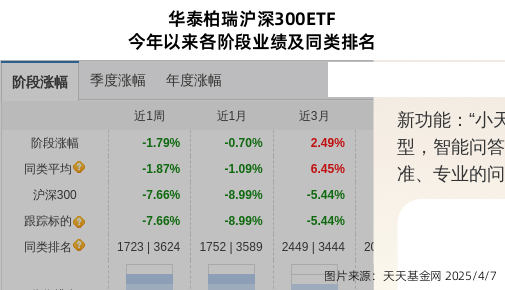
Group 1 - The core point of the news is that GoerTek Inc. has experienced a significant decline in stock price, with a cumulative drop of -21.89% over seven consecutive trading days [1] - GoerTek Inc. was established in June 2001 and listed on the Shenzhen Stock Exchange in May 2008, focusing on the research, manufacturing, and sales of precision components and high-end equipment in various fields [1] - Huatai-PineBridge Fund's Huatai-PineBridge CSI 300 ETF is among the top ten shareholders of GoerTek, having reduced its holdings in the last quarter of the previous year [1] Group 2 - The performance of Huatai-PineBridge CSI 300 ETF shows a year-to-date return of -1.67%, ranking 2607 out of 3442 in its category [1] - The ETF's performance over different periods includes a weekly decline of -1.79%, a monthly decline of -0.70%, and a quarterly increase of 2.49% [2] - The ETF's performance compared to its peers indicates a worse performance in the year-to-date and weekly periods, with the CSI 300 index down -7.66% year-to-date [2] Group 3 - The fund manager of Huatai-PineBridge CSI 300 ETF is Liu Jun, who has extensive experience in fund management and has been with Huatai-PineBridge since 2004 [3][4] - Liu Jun has managed various funds over his career, including the Huatai-PineBridge CSI 300 ETF since May 2012, and has held multiple leadership roles within the company [3][4] - Huatai-PineBridge Fund Management Co., Ltd. was established in November 2004, with its major shareholders being PineBridge Investment LLC and Huatai Securities Co., Ltd. [4]
歌尔股份(002241):2024年净利率修复,AI/AR眼镜蓄势待发
Bank of China Securities· 2025-04-07 06:31
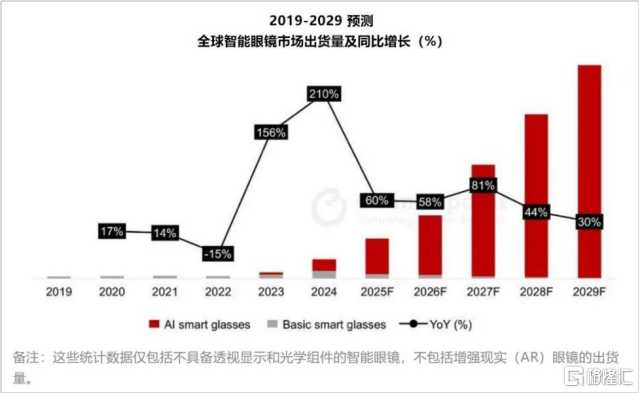
Investment Rating - The report maintains a "Buy" rating for the company [2][4][5] Core Views - The company reported a slight increase in revenue for 2024, but a significant growth in net profit, driven by improved gross margins across various business segments. The AI/AR glasses industry is expected to grow rapidly, and the company is well-positioned to benefit from this trend [4][5][8] Financial Summary - The company’s revenue for 2024 is projected at RMB 100,954 million, a year-on-year increase of 2.41%. The net profit attributable to the parent company is expected to reach RMB 2,665 million, reflecting a growth of 144.93% [7][8] - The gross margin for 2024 is estimated at 11.09%, an increase of 2.14 percentage points year-on-year, while the net margin is projected at 2.56%, up by 1.53 percentage points [8] - The company’s earnings per share (EPS) for 2025 is forecasted to be RMB 1.04, with a corresponding price-to-earnings (P/E) ratio of 22.4 [5][10] Business Segments Performance - The smart hardware business generated revenue of RMB 572 billion, accounting for 56.66% of total revenue, despite a year-on-year decline of 2.57%. The gross margin for this segment improved by 1.90 percentage points [8] - The smart acoustic products segment saw revenue increase by 8.73% to RMB 263 billion, with a gross margin improvement of 2.73 percentage points [8] - The precision components segment achieved a revenue growth of 15.85% to RMB 151 billion, with a gross margin increase of 1.02 percentage points [8] Future Outlook - The AI/AR glasses market is anticipated to experience significant growth, with global shipments of AI smart glasses expected to increase by 210% in 2024, surpassing 2 million units for the first time. The AR device shipments are projected to reach 6.9 million units by 2028, with a compound annual growth rate of approximately 78% from 2025 to 2028 [8][9] - The company has made substantial investments in the AI/AR glasses sector, launching new products that are expected to accelerate industry growth [8][9]
构建产业链高地,歌尔股份紧抓消费电子创新周期机遇
2 1 Shi Ji Jing Ji Bao Dao· 2025-04-06 06:44
Group 1 - The global consumer electronics market is showing signs of recovery in 2024, driven by innovations featuring AI technology from major companies and emerging brands [1] - Goer Holdings reported a revenue of 100.95 billion yuan and a net profit of 2.665 billion yuan for 2024, marking a year-on-year increase of 144.93%, indicating a higher level of industry prosperity [1] - The integration of AI and XR technologies is reshaping human interaction with information, leading to a transition from single sensory experiences to immersive multi-sensory experiences [2][4] Group 2 - The market for AI wearable devices is expected to grow significantly, with predictions of over 90 million units sold by 2030 and a market size reaching 500 billion yuan for AI glasses alone [2] - The CES 2025 event highlighted the importance of AI applications in consumer electronics, showcasing innovative products that leverage AI to solve real-world problems [5][6] - Goer Holdings is positioned as a key player in the next generation of smart hardware, benefiting from its comprehensive technology ecosystem and strong innovation capabilities [7][10] Group 3 - Goer Holdings has made significant advancements in system-in-package (SiP) technology, which is crucial for the development of lightweight AI devices, enhancing performance while reducing size and power consumption [8] - The company has introduced several innovative technologies in the audio sector, including a one-stop audio solution for XR and advanced noise reduction technology for AI glasses [9] - Goer Holdings' optical division has achieved global leadership in VR and AR optical technology, providing a full range of optical components and systems [9] Group 4 - The rise of AI-driven consumer electronics is expected to create a trillion-dollar market, with Goer Holdings playing a central role in building a prosperous AI+XR ecosystem [11][12] - The strategic positioning of Goer Holdings within the supply chain is critical, as the company collaborates with various brands to enhance product interconnectivity and user experience [12]
同花顺果指数概念下跌6.26%,主力资金净流出18股
Zheng Quan Shi Bao Wang· 2025-04-03 09:40
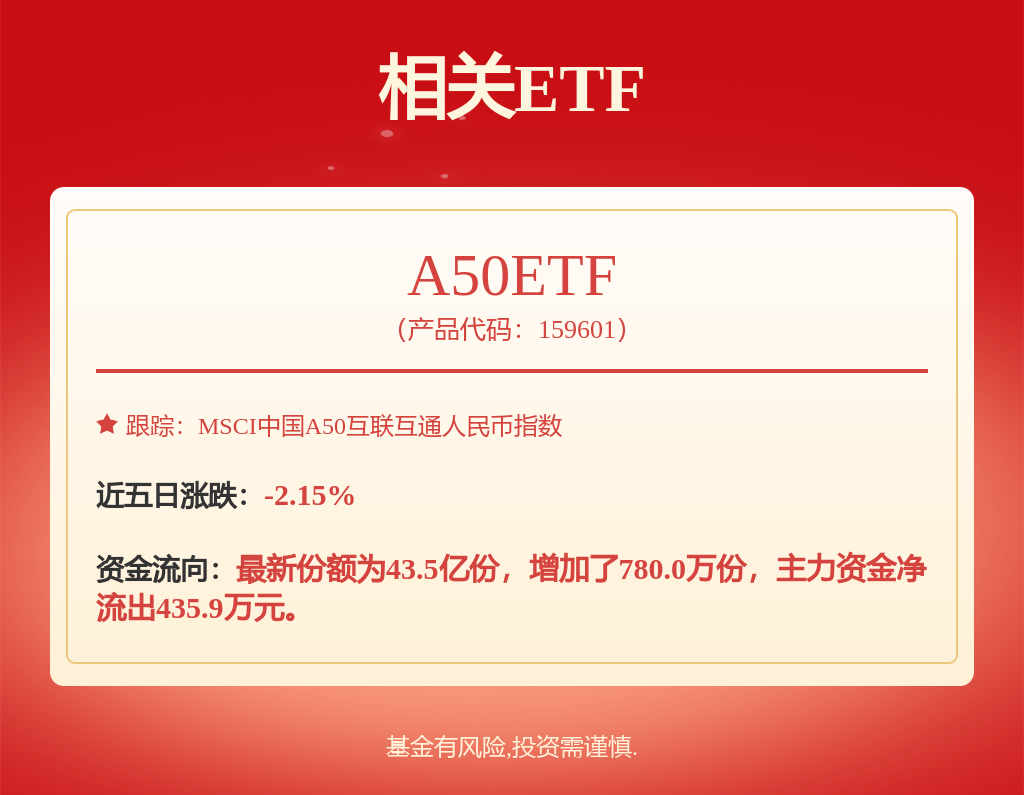
Group 1 - The Tonghuashun Fruit Index concept fell by 6.26%, ranking among the top declines in the concept sector, with stocks like Dongshan Precision, GoerTek, and Pengding Holdings hitting the daily limit down [1][2] - Major outflows of capital from the Tonghuashun Fruit Index concept amounted to 5.13 billion yuan, with 18 stocks experiencing net outflows, and 11 stocks seeing outflows exceeding 100 million yuan [2] - The stock with the highest net outflow was Luxshare Precision, with a net outflow of 1.11 billion yuan, followed by GoerTek, Changying Precision, and Dongshan Precision with net outflows of 1.05 billion yuan, 494 million yuan, and 460 million yuan respectively [2] Group 2 - The top gainers in the concept sector included the China-Korea Free Trade Zone, which rose by 5.66%, while the AI PC concept fell by 3.53% [2] - Among the stocks with significant capital inflows, Zhongshi Technology and Lante Optics saw net inflows of 51.18 million yuan and 22.30 million yuan respectively [2] - The performance of the A50 ETF, which tracks the MSCI China A50 Connect Index, showed a decline of 2.15% over the past five days, with a net outflow of 4.36 million yuan [4]




对等关税力度超预期,提振内需逻辑不断强化
格隆汇APP· 2025-04-03 09:02
Market Performance - The three major stock indices collectively declined, with the Shanghai Composite Index down 0.24%, the Shenzhen Component down 1.4%, and the ChiNext Index down 1.86% [1] - Market sentiment was low in the morning, with a brief rebound before maintaining fluctuations in the afternoon. Over 3,000 stocks fell, while 2,000 rose. The total trading volume increased to 1.13 trillion, up 163.1 billion from the previous day [1] Sector and Hotspot Analysis - The consumer sector outperformed, driven by the U.S. imposing a 10% "minimum baseline tariff" on all trade partners, with cumulative tariffs on China expected to rise to 54%. This situation emphasizes the importance of domestic demand for the economy, with potential policy support for infrastructure and key industries [2] - Specific sectors like tourism, retail, liquor, and aquaculture saw significant gains, with stocks like Guizhou Moutai showing a stable annual performance (2024 revenue growth of 15.66%) boosting consumer confidence [2] - The electricity sector was positively impacted by electricity price reform policies, while real estate stocks surged due to housing development plans in Guangzhou [2] - Pharmaceutical stocks remained active, supported by expectations of innovative drug policies and performance catalysts [3] - Conversely, high export-oriented stocks plummeted, particularly in the technology sector, with significant declines in consumer electronics, photovoltaics, and AI applications [3] Market Influencing Factors - The tariff policy announced by Trump caused global market fluctuations, with the Chinese government indicating it would take countermeasures, leading to a partial recovery in market sentiment. A potential 54% tax rate could impact GDP by 1.2 percentage points, with a more significant effect on corporate profits [4] - The high tariffs may push the EU and ASEAN to strengthen cooperation with China [5] Future Tracking Points - Domestic policies aimed at expanding internal demand are expected to be intensified, with potential interest rate cuts on the horizon. The first quarter GDP growth is projected at 5.2%, with a decline anticipated in the second quarter, particularly affecting exports and corporate profits [7] - Ongoing negotiations regarding tariffs are crucial, as the potential for tariff adjustments remains uncertain [7] Fund Flow and Style Shift - There is a shift in funds from high-valuation technology stocks to defensive consumer and undervalued blue-chip stocks, indicating a decrease in market risk appetite. High-dividend sectors like banking and public utilities are gaining institutional attention [8] Institutional Views and Market Outlook - Short-term market fluctuations are expected to continue, with a balanced focus on first-quarter performance stocks and policy-driven consumer and technology sectors [9] - Long-term opportunities are seen in the consumer and cyclical sectors, benefiting from policy support and low valuation advantages [10] - The technology sector may present entry opportunities following adjustments, particularly in artificial intelligence and robotics [11] Summary - The A-share market faced declines due to external tariff shocks and technology stock corrections, while defensive sectors like consumer and electricity showed resilience. Attention should be paid to the effectiveness of policy implementations and first-quarter performance validations, with recommendations for balanced allocations prioritizing undervalued blue chips and high-certainty industries, while remaining cautious of policy risks for high-export companies [12]


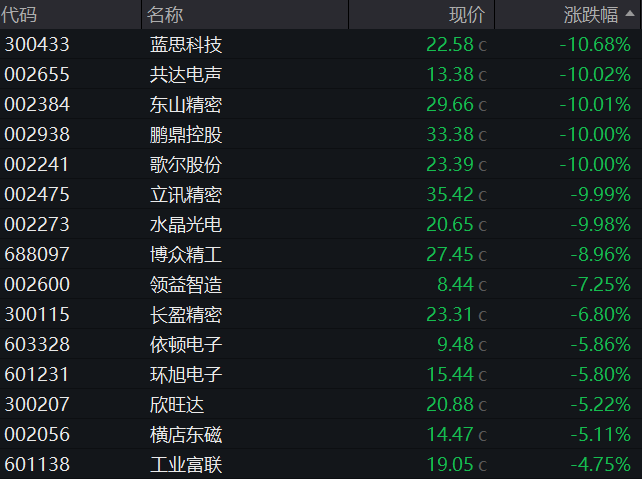
特朗普“对等关税”落地,苹果遭到冲击!盘前跌超6%,A股苹果产业链也大幅下挫,立讯精密、歌尔股份跌停、蓝思科技跌超10%
Jin Rong Jie· 2025-04-03 08:40
Core Viewpoint - The implementation of "reciprocal tariffs" by Trump has significantly impacted the U.S. technology sector, particularly affecting Apple and its supply chain companies, leading to substantial stock declines across the board [1][2]. Group 1: Stock Performance - U.S. tech stocks experienced a pre-market decline, with Apple falling over 6%, AMD over 5%, and other major companies like Amazon, Nvidia, and Tesla dropping more than 4% [1]. - In the Hong Kong market, Apple-related stocks such as GoerTek, East Japan Group, and AAC Technologies saw declines exceeding 10%, while BYD Electronics dropped over 8% [1]. - In the A-share market, Lixun Precision fell to its daily limit, with a market cap exceeding 250 billion yuan, and other Apple-related stocks like GoerTek and East Mountain Precision also hit their daily limits [1]. Group 2: Company-Specific Insights - Lixun Precision has been deeply integrated with Apple since 2011, with Apple accounting for over 75% of its revenue in 2023, amounting to approximately 174.5 billion yuan [3]. - GoerTek entered Apple's supply chain in 2010, providing audio products, and by 2019, it captured 30% of the AirPods manufacturing share. However, its revenue from Apple has also posed risks, with Apple contributing 42.49% to its total revenue in 2021 [4]. - Lens Technology became a core supplier for Apple's glass covers in 2006, with revenue growing from 6 billion yuan in 2011 to 69.8 billion yuan in 2024, indicating strong reliance on Apple [5]. - Lens Technology's financials show that from 2022 to 2024, sales to its largest customer (likely Apple) accounted for 71.0%, 57.8%, and 49.5% of total revenue, respectively, highlighting continued dependence on Apple [6].