
BANK OF SUZHOU(002966)

Search documents
苏州银行(002966) - 第五届董事会第二十五次会议决议公告
2025-06-23 10:45
一、审议通过了关于金融市场板块职能及架构调整的方案的议案 本议案同意票 12 票,反对票 0 票,弃权票 0 票。 证券代码:002966 证券简称:苏州银行 公告编号:2025-059 苏州银行股份有限公司 第五届董事会第二十五次会议决议公告 本行及董事会全体成员保证信息披露内容的真实、准确和完整,没有虚假 记载、误导性陈述或重大遗漏。 苏州银行股份有限公司(以下简称"本行")于 2025 年 6 月 17 日以电子邮 件和书面方式向全体董事发出关于召开第五届董事会第二十五次会议的通知,会 议于 2025 年 6 月 20 日采用书面传签表决的方式召开。本行应出席董事 12 人, 实际出席 12 人。本次会议符合《公司法》《深圳证券交易所股票上市规则》和本 行章程的规定,合法有效。审议通过了以下议案: 二、审议通过了关于苏州银行收购东吴村镇银行其他股东之股权的议案 本议案同意票 12 票,反对票 0 票,弃权票 0 票。 特此公告。 苏州银行股份有限公司董事会 2025 年 6 月 23 日 ...
苏州银行乌海银行等公告新增服务收费项目 净息差收窄压力尚存
Xin Jing Bao· 2025-06-18 08:32
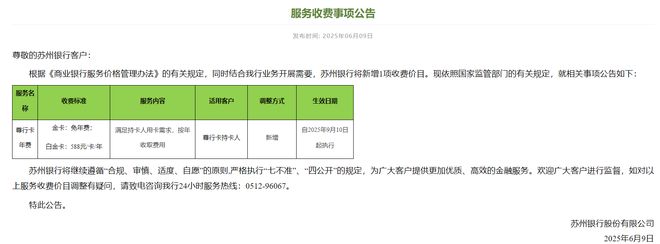
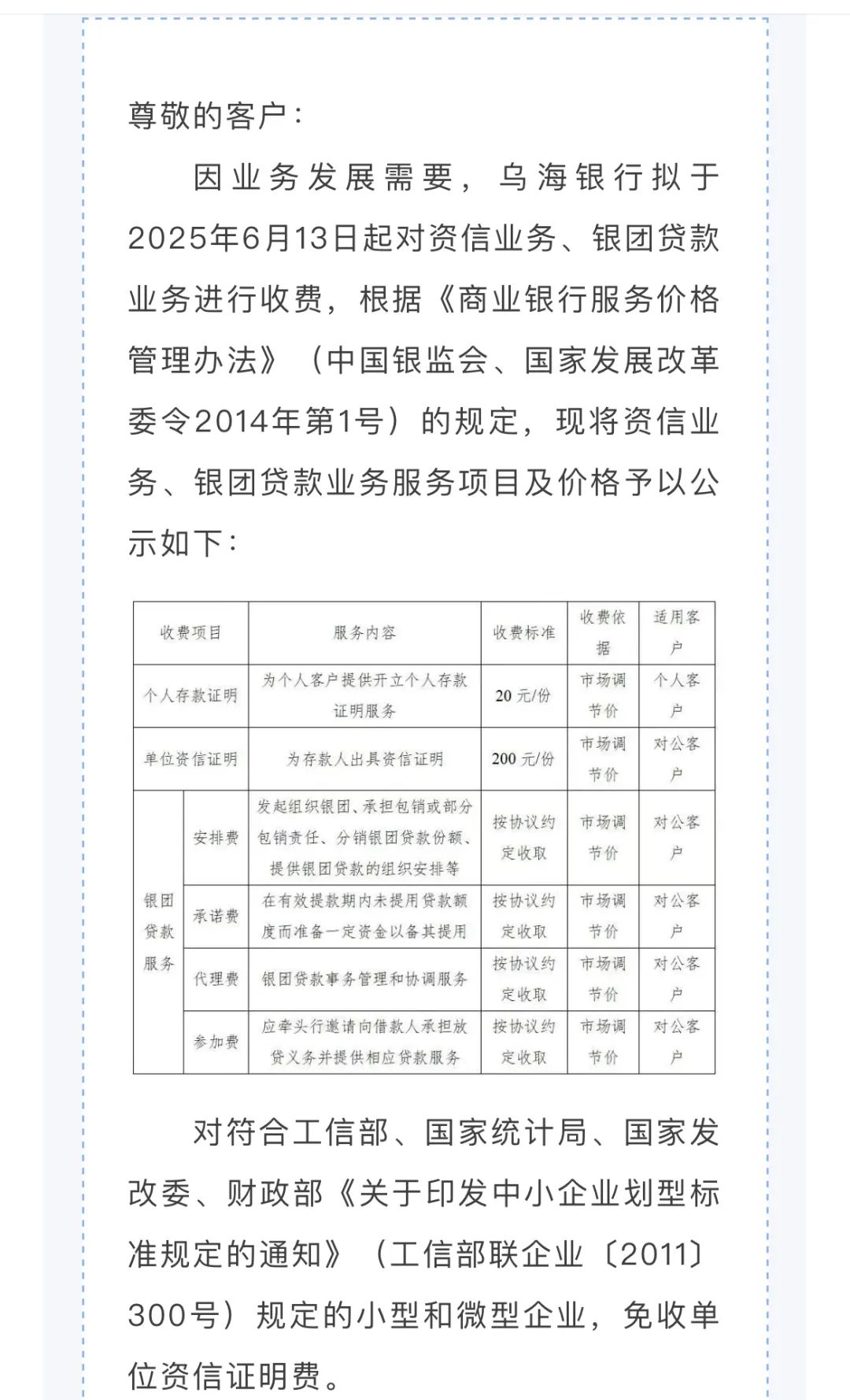
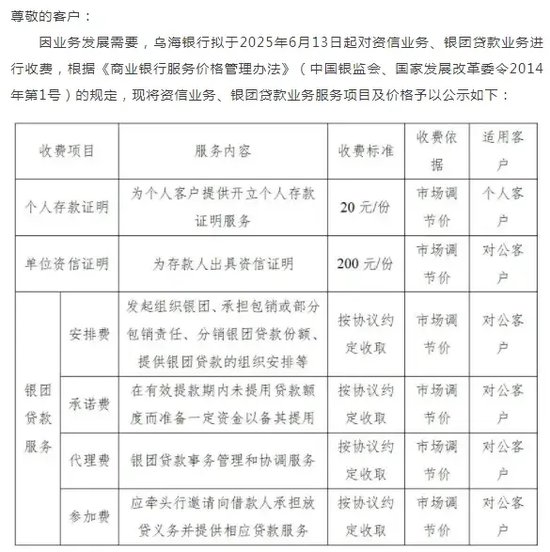
Core Viewpoint - The banking industry is facing pressure on net interest margins, leading to an increase in service fees to cover operational costs and improve service quality [1][7]. Group 1: Service Fee Adjustments - Multiple banks have announced new or increased service fees, including account management fees, transfer fees, and credit card annual fees [1][2]. - Suzhou Bank introduced a new service fee for its "Zunxing Card" with an annual fee of 588 yuan for the platinum card, effective from September 10, 2025 [2]. - Uihai Bank will charge for credit business and syndicate loan services starting June 13, 2025, with fees for personal deposit certificates set at 20 yuan per certificate and credit certificates at 200 yuan each [4]. - Several rural commercial banks have also raised service fees, such as the adjustment of ATM withdrawal fees from free to 3.3 yuan per transaction by Lujiang Rural Commercial Bank [4][6]. Group 2: Net Interest Margin Pressure - The overall net interest margin for commercial banks was reported at 1.43% in Q1 2025, a decrease of 9 basis points from the previous quarter [8]. - Different types of banks experienced varying changes in net interest margins, with rural commercial banks seeing the largest decline of 15 basis points to 1.58% [8]. - The adjustments in service fees are seen as a response to the pressures from market competition and rising operational costs, including technology investments and risk management [7][8]. Group 3: Future Strategies - The adjustments in service fees are expected to become a regular strategy for banks as they seek to balance supporting the real economy with their profitability needs [7][8]. - Banks are likely to focus on optimizing business structures, enhancing service efficiency, and leveraging financial technology to manage costs while supporting small and medium enterprises [8].


多家银行调整服务收费
Jin Rong Shi Bao· 2025-06-18 02:14
Core Viewpoint - Recent adjustments in service fees by multiple banks have sparked widespread market attention, with changes affecting various services such as credit verification, annual fees for bank cards, ATM cross-bank withdrawals, and cross-border wealth management [1][10]. Fee Adjustments - Uuhai Bank announced that starting June 13, it will charge for credit verification and syndicate loan services, with personal deposit verification costing 20 yuan per piece and corporate credit verification costing 200 yuan per piece [1][3]. - Suzhou Bank will introduce a new service fee for its "Zunxing Card," with the gold card exempt from annual fees and the platinum card costing 588 yuan per card per year, effective from September 10, 2025 [4][6]. - Lujian Rural Commercial Bank will change its ATM cross-bank withdrawal fee from free to 3.3 yuan per transaction starting September 1, with social security cards exempting the first two transactions each month [7]. - Bank of China will adjust several service fees related to credit card settlements starting June 10, 2025, including a new fee structure based on a percentage of the withdrawal amount [8]. Industry Trends - Many banks are adjusting service fees to enhance service quality, strengthen risk management, and cover operational costs, as traditional interest income is narrowing [10]. - The first quarter performance report indicates that among the six major state-owned banks, only Postal Savings Bank and Bank of China saw a year-on-year increase in net income from fees and commissions, while others experienced declines [10]. - There is speculation about a potential "fee war" among banks, with compliance emphasized as each fee adjustment requires regulatory approval and public notice [11]. Consumer Impact - Changes in fee structures directly affect consumer interests, with many consumers considering fees as a significant factor when choosing banking services [12][13]. - Experts suggest that banks need to improve communication with customers regarding the rationale behind fees and the value of services to balance profitability and customer satisfaction [14].

多家银行新增服务费,涉资信业务、ATM取现等
Xin Lang Cai Jing· 2025-06-17 00:35
Group 1 - The core viewpoint of the articles highlights that banks are facing increasing pressure on net interest margins due to declining market interest rates, prompting them to seek new revenue channels through the introduction of service fees [1][15][16] - Recently, Wuhai Bank announced that it will start charging fees for credit services and syndicated loan services effective June 13, 2025, as part of its strategy to enhance revenue [3][5] - Other banks, such as Suzhou Bank, have also introduced new service fees, including an annual fee for their credit card services, indicating a broader trend among banks to adjust their fee structures in response to revenue pressures [8][11] Group 2 - Wuhai Bank's new fee structure includes charges for personal deposit certificates at 20 yuan per certificate and corporate credit certificates at 200 yuan per certificate, with exemptions for small and micro enterprises [6][5] - The bank's syndicated loan services will have various fees, including arrangement fees, commitment fees, and agency fees, all charged according to agreements with corporate clients [6][4] - Suzhou Bank has introduced an annual fee of 588 yuan for its platinum credit card and has also adjusted fees for third-party cooperation services related to credit cards, effective from September 2025 [8][10] Group 3 - The overall banking sector is experiencing a decline in revenue growth, with major state-owned banks reporting varying degrees of revenue decline in the first quarter of the year, highlighting the need for banks to diversify income sources [17][18] - The net interest margin for commercial banks has narrowed to 1.43% in the first quarter, a decrease of 9 basis points from the previous quarter, further emphasizing the urgency for banks to enhance non-interest income through service fees [18][19] - Analysts suggest that the introduction of new service fees can be an effective means for banks to increase their intermediary business income and improve overall revenue performance [18]
更加重视中间业务收入 多家银行新增或调整服务收费
Zheng Quan Ri Bao· 2025-06-16 16:40
Core Viewpoint - Recent announcements from multiple banks regarding the addition or adjustment of various service fees have sparked widespread market attention, indicating a shift in the banking sector's revenue strategies in response to ongoing pressure on net interest margins [1][4]. Service Fee Adjustments - Suzhou Bank announced a new service fee for its "Respect Card" with an annual fee of 588 yuan for platinum cards, effective from September 10, 2025 [2]. - Uihai Bank will start charging for credit business and syndicate loan services, with personal deposit certificate fees set at 20 yuan per copy and credit certificate fees at 200 yuan per copy [2]. - Other local banks, such as Qingyang Rural Commercial Bank and Lujiang Rural Commercial Bank, have also announced fee adjustments, including a new ATM withdrawal fee of 3.3 yuan per transaction for debit cards starting September 1 [2]. - China Bank will adjust its credit card settlement service fees starting June 10, 2025, with changes to transaction fees based on a percentage of the withdrawal amount [2]. Reasons for Fee Adjustments - The recent adjustments in service fees are attributed to the banks' need to respond to the earlier "fee reduction and benefit" policies, which expanded the range of free services [3]. - Banks are increasingly focusing on non-interest income to counteract the pressure on net interest margins, leading to the introduction of new service fees within regulatory compliance [3][4]. Exploring New Revenue Paths - Banks are actively seeking new revenue channels through the addition of service fees, which can help optimize their income structure and enhance sustainability in serving the real economy [4]. - The adjustments in service fees necessitate improved communication with customers to explain the rationale behind the fees and the value of services provided, balancing profitability with customer satisfaction [4]. Diversification of Revenue Sources - In addition to new service fees, banks are encouraged to explore diversified revenue paths through business expansion and product innovation [5]. - Strategies include moving beyond traditional lending models to offer comprehensive financial services and developing specialized credit products aligned with emerging industries and societal trends [5].
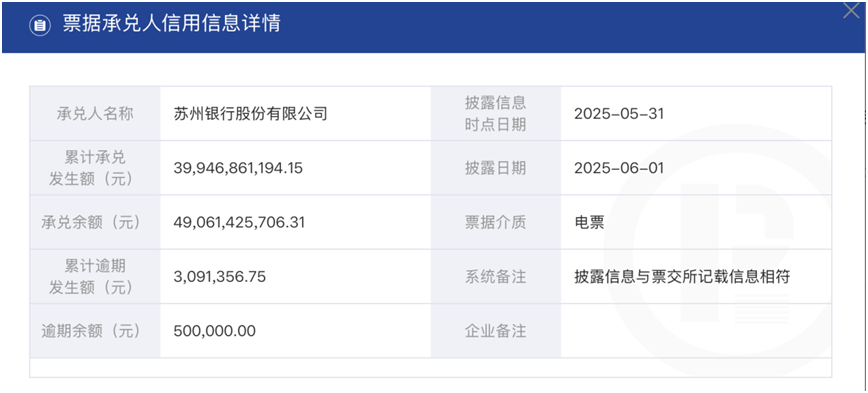
苏州银行现50万元票据逾期,累计逾期发生额309万元
Qi Lu Wan Bao· 2025-06-16 00:36
Core Viewpoint - Suzhou Bank has recently reported overdue bills, raising concerns about its financial management and operational efficiency [1][2]. Group 1: Overdue Bills and Financial Data - Suzhou Bank has an overdue bill balance of 500,000 yuan, with a cumulative overdue amount of 3,091,356.75 yuan as of June 1, 2025 [1][2]. - The total acceptance amount for Suzhou Bank is approximately 39.95 billion yuan, with an acceptance balance of about 49.06 billion yuan [2]. - The bank has not issued any announcements regarding the settlement of these overdue bills, which is unusual for a financial institution [3]. Group 2: Company Background and Performance - Suzhou Bank was established as Jiangsu Dongwu Rural Commercial Bank and rebranded in September 2010, transitioning from a rural commercial bank to an urban commercial bank [3]. - The bank was listed on the Shenzhen Stock Exchange in August 2019 and has expanded its operations significantly within Jiangsu province and the Yangtze River Delta region [3]. - In 2024, Suzhou Bank reported revenue of 12.22 billion yuan, a year-on-year increase of 3.01%, and a net profit attributable to shareholders of 5.07 billion yuan, up 10.16% [3]. Group 3: Loan Structure and Profitability - The bank's loan structure shows a significant increase in corporate loans, which grew by 23.21% year-on-year, while individual loans experienced a decline of 5.67% [4]. - The contribution of personal business to total profit has decreased sharply, with total profit from personal loans dropping by 43.93% year-on-year [4]. - As of the reporting period, overdue loans amounted to 3.45 billion yuan, representing 1.04% of total loans, an increase of 0.32 percentage points from the previous year [4].
2025年5月金融数据点评:信贷预期内少增,期待M1持续正增
Shenwan Hongyuan Securities· 2025-06-15 04:57
Investment Rating - The report maintains an "Overweight" rating for the banking sector, indicating a positive outlook for the industry compared to the overall market performance [2]. Core Insights - The report highlights that credit growth remains subdued, with May's new loans totaling 620 billion, a year-on-year decrease of 330 billion. However, the total credit volume from January to May is stable at 10.7 trillion, compared to 11.1 trillion in the same period last year [2][3]. - The report anticipates that the overall credit increment for 2025 will remain stable, projecting a credit growth rate of approximately 7.1% for the year [2]. - The report notes that the demand for retail credit has not shown signs of improvement since the second quarter, with May's household credit increasing by only 54 billion, a year-on-year decrease of 21.7 billion [2]. - Government bond issuance has exceeded 1 trillion, supporting stable social financing growth, while corporate bonds have also seen an increase due to a low-interest-rate environment [2][3]. - The report emphasizes the importance of focusing on regional banks with stable profit growth expectations and suggests specific banks such as Chongqing Bank, Suzhou Bank, and Chengdu Bank for investment [2]. Summary by Sections Credit Growth Analysis - In May, new credit was 620 billion, down 330 billion year-on-year, with total credit from January to May at 10.7 trillion [2]. - The report attributes the subdued credit growth to weak demand, debt replacement, and structural optimization [2]. Corporate Lending Trends - Corporate short-term loans increased by 110 billion, while medium to long-term loans decreased by 170 billion, primarily due to debt replacement affecting infrastructure investment [2]. - The report indicates that the government bond issuance has been robust, contributing to the overall social financing growth [2]. Retail Lending Insights - Retail credit demand remains weak, with May's household credit showing a net increase of only 54 billion, reflecting a cautious attitude from banks towards consumer loans [2]. - The report notes a decline in short-term household loans, indicating a challenging environment for retail lending [2]. Investment Recommendations - The report recommends focusing on banks with stable growth prospects and suggests specific banks for investment, including Agricultural Bank of China and other regional banks [2].



银行股持续走强 多只银行可转债触发强赎
Zheng Quan Ri Bao· 2025-06-12 16:40
Core Viewpoint - The recent announcements from Nanjing Bank and other banks regarding the triggering of conditional redemption clauses for convertible bonds indicate a significant trend in the banking sector, driven by the recovery of bank stock valuations in a low-interest-rate environment [1][2][3]. Group 1: Triggering of Redemption Clauses - Nanjing Bank announced that its "Nanjing Convertible Bond" has triggered the conditional redemption clause, with the stock price exceeding 130% of the conversion price for 15 out of 19 trading days [2]. - Other banks, including Hangzhou Bank and Suzhou Bank, have also triggered similar redemption clauses for their convertible bonds this year [2][3]. - The trend of triggering redemption clauses is attributed to the strong performance of bank stocks, which have been bolstered by a focus on absolute returns and low volatility strategies attracting long-term capital [3]. Group 2: Supply Constraints in the Market - The supply of new convertible bonds is expected to remain low due to stringent regulatory requirements and the financial health of banks, with many banks currently trading below their net asset value [5]. - The low willingness of bondholders to convert their bonds into equity further complicates the situation, making forced redemption a crucial mechanism for banks to enhance their core Tier 1 capital [4][5]. - As a result, the market for bank convertible bonds is likely to experience a slowdown in issuance and a reduction in overall scale, while existing bonds may attract significant investor interest due to their scarcity [5].



银行股持续上扬!可转债频现强赎,资本补充再提速
Bei Jing Shang Bao· 2025-06-12 13:30
Group 1 - The core viewpoint of the articles highlights the strong performance of bank stocks, with several banks experiencing significant price increases, driven by valuation recovery and policy support [1][3][4] - On June 12, 34 out of 42 listed bank stocks saw price increases, with Qingdao Bank leading at a 3.5% rise, followed by Xi'an Bank and Nanjing Bank at 3.08% and 2.63% respectively [3][4] - The net inflow of funds into the banking sector on June 12 was 988 million yuan, with Agricultural Bank receiving the highest net inflow of 178 million yuan [3] Group 2 - Since 2025, bank stocks have shown strong performance due to high dividend yields, macro policy support, and valuation recovery, despite a narrowing net interest margin [4][6] - The implementation of asymmetric interest rate cuts and effective liquidity management by the People's Bank of China has helped stabilize banks' interest margins [4][6] - The trend of strong redemption in convertible bonds is linked to rising bank stock prices, which enhances banks' capital strength and reduces interest expenses [5][6][7] Group 3 - Several banks, including Nanjing Bank and Hangzhou Bank, have triggered strong redemption clauses for their convertible bonds due to stock prices exceeding specified thresholds [5][6] - The conversion of convertible bonds into equity enhances banks' core tier one capital, providing a solid foundation for future growth and profitability [6][7] - The overall economic environment and policy encouragement are leading to increased investor interest in bank stocks, accelerating capital replenishment processes [7]


苏州银行(002966) - 2025年6月12日投资者关系活动记录表
2025-06-12 10:16
Group 1: Deposit Growth - As of the end of Q1 2025, the total deposit balance of the group reached CNY 463.014 billion, an increase of CNY 46.049 billion from the beginning of the year, representing a growth rate of 11.04% [1] - Corporate deposits amounted to CNY 218.007 billion, with a growth of 12.64% compared to the beginning of the year [1] - Personal deposits totaled CNY 245.007 billion, reflecting a growth of 9.67% since the start of the year [1] Group 2: Net Interest Margin Outlook - The net interest margin at the end of Q1 2025 was 1.34%, a decrease of 4 basis points compared to 2024, which is better than the industry average [1] - The bank plans to maintain a customer-centric integrated operating strategy to enhance and refine management, aiming to mitigate the narrowing of the interest margin through both quantitative growth and qualitative improvement [1] Group 3: Loan Distribution in Different Regions - The bank has been actively promoting loan distribution in key regions outside its primary area, with loans in other regions of Jiangsu Province accounting for over 40% of the total loan balance [2] - Future strategies will focus on adapting to local markets and extending service reach to fully explore the financial service needs across the province [2]