Risen Energy(300118)

Search documents
利好来袭!高盛偷偷布局、太空光伏成新主线,22家龙头集体涨停
Sou Hu Cai Jing· 2026-01-23 17:26
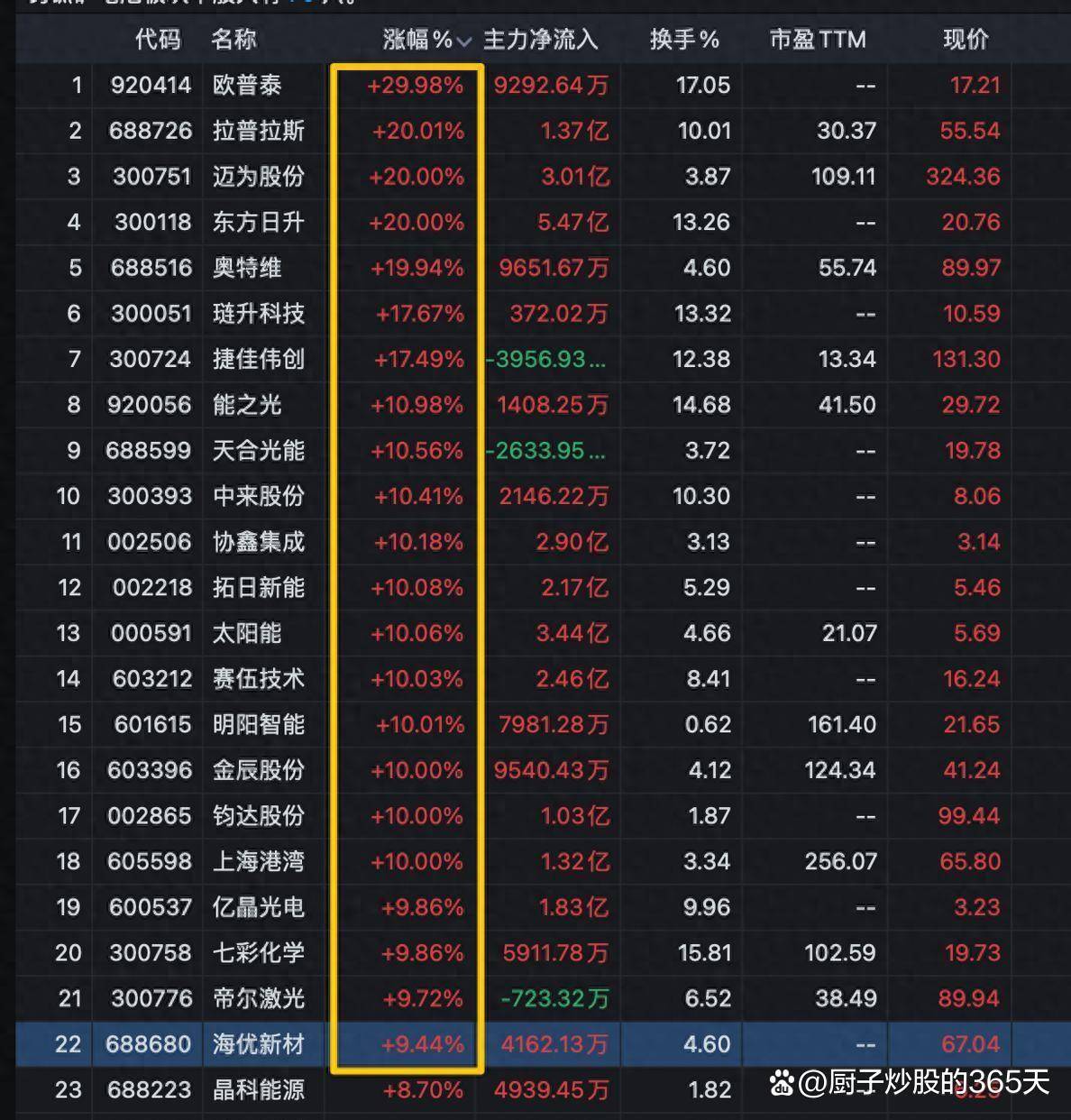
Core Viewpoint - The emergence of the "space photovoltaic" concept has led to a significant surge in stock prices for 22 related companies, despite many companies in the terrestrial photovoltaic industry struggling with losses. This reflects a strong market sentiment driven by the rapid development of commercial space ventures [1][18]. Group 1: Market Dynamics - A total of 22 stocks related to space photovoltaic technology reached their daily limit up, indicating a robust market reaction to the potential of this new industry [1][18]. - The market is responding to the anticipated demand for solar panels for satellites, with projections suggesting a market size approaching 200 billion RMB if 10,000 satellites are launched annually [7][22]. Group 2: Technological Advancements - The shift from traditional low-power satellites to high-performance satellites resembling "mini data centers" has drastically increased energy demands, making solar energy the primary power source [6][7]. - New technologies, such as Heterojunction (HJT) and perovskite solar cells, are being explored for space applications, potentially reducing costs significantly compared to traditional gallium arsenide cells [11][13]. Group 3: Policy and Investment Trends - The Chinese government has classified commercial space as a strategic emerging industry, providing policy support that encourages investment in this sector [14][22]. - Major investment firms, including Goldman Sachs, have begun to position themselves in companies involved in space photovoltaic technology, indicating strong institutional interest [19][21]. Group 4: Industry Challenges and Opportunities - The terrestrial photovoltaic industry is facing overcapacity and declining profits, prompting companies to seek new growth avenues, such as space photovoltaic technology [16][17]. - The current market for space photovoltaic is seen as a high-margin opportunity, attracting companies looking to leverage their technological expertise in a new domain [17][22].




电源设备、商业航天大涨!下周A股怎么走?
Guo Ji Jin Rong Bao· 2026-01-23 16:19
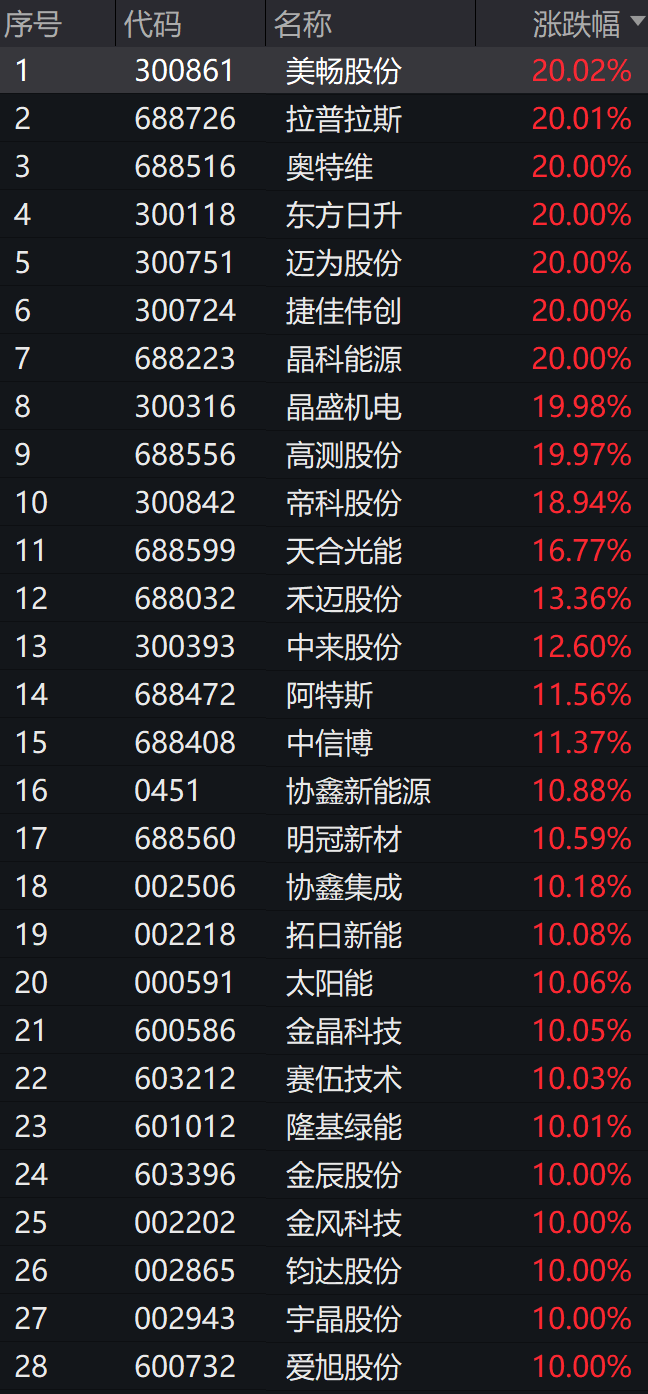
Core Viewpoint - The market shows signs of recovery with a significant increase in trading volume and a majority of stocks rising, indicating a shift in investor sentiment towards riskier assets and sectors with high growth potential [1][4][14]. Market Performance - On January 23, the market's trading volume exceeded 3.12 trillion yuan, with nearly 4,000 stocks closing higher, reflecting a strong market sentiment [1][4][14]. - Major indices experienced moderate gains, with the North Stock 50 index surging nearly 4%, while the Shanghai Composite Index rose by 0.33% [1][4][14]. Sector Performance - Leading sectors included aerospace, marketing services, and power equipment, while consumer sectors remained weak [1][4][7]. - The power equipment sector saw a notable increase, with 28 stocks hitting the daily limit up, indicating strong investor interest [6][10]. - The non-consumer sectors, particularly those related to economic recovery and technology, are attracting more capital, while traditional sectors like banking and consumer goods are underperforming [13][18]. Investment Strategy - Investors are advised to focus on sectors with strong fundamentals and growth potential, such as power equipment, non-ferrous metals, and defense industries, while avoiding high-valuation stocks that have recently surged [3][17][18]. - New investors should adopt a cautious approach, emphasizing gradual accumulation of stocks with solid earnings prospects and reasonable valuations [3][17][18].


光伏行业:太空光伏创造光伏行业新需求
GF SECURITIES· 2026-01-23 15:35
Investment Rating - The industry investment rating is "Buy" [2] Core Insights - The report highlights that SpaceX and Tesla plan to build a total of 200GW of photovoltaic capacity in the U.S. over the next three years, primarily for ground data centers and space AI satellites [6] - The advantages of space computing centers are emphasized, including better convenience and real-time service compared to ground data processing, as well as significant cost reductions in communication infrastructure [6] - The report predicts that global photovoltaic demand will continue to grow, with an expected 580GW of new installations in 2026, representing a year-on-year increase of 6%. The total global photovoltaic demand is projected to reach 645GW, a year-on-year growth of 18.6% [6] Summary by Sections Industry Overview - The report discusses the emergence of new demand in the photovoltaic industry driven by space photovoltaic technology [1] Key Developments - Space photovoltaic technology is being developed in China, with three generations of solar battery technology tailored for different spacecraft, achieving international advanced performance levels [6] - Several domestic companies are accelerating their investments in space photovoltaic technology, including partnerships for the production of combined products [6] Investment Recommendations - The report suggests focusing on companies that have established early advantages in space photovoltaic layouts, such as Junda Co., Oriental Sunrise, JinkoSolar, Longi Green Energy, Foster, and others [6]




一图看懂 | 太空光伏概念股
市值风云· 2026-01-23 12:55
Core Viewpoint - Elon Musk, CEO of Tesla, supports space photovoltaics and reveals key production plans during a discussion with Larry Fink, CEO of BlackRock, at the World Economic Forum in Davos [3]. Group 1: Solar Energy Production - SpaceX and Tesla aim to achieve an annual solar manufacturing capacity of 100GW within the next three years [3]. Group 2: Related Companies and Technologies - Key players in the solar energy sector include: - Core battery manufacturers: Qianzhao Optoelectronics, Dongfang Risen, Junda Co., Trina Solar, Tuojiri New Energy, and Sanan Optoelectronics [4]. - Upstream equipment and materials: Jing Sheng Machinery, Juhe Materials, Zhonglai Co., and Maiwei Co. [4]. - Midstream packaging and components: Lushan New Materials and Lens Technology [4]. - Downstream system integration and on-orbit verification: Shanghai Port and Wan [4]. - Frontier technology investments and layouts: Xizi Clean Energy [4].



马斯克点燃太空光伏!大面积涨停!钙钛矿是下个“王炸”?
Sou Hu Cai Jing· 2026-01-23 12:41
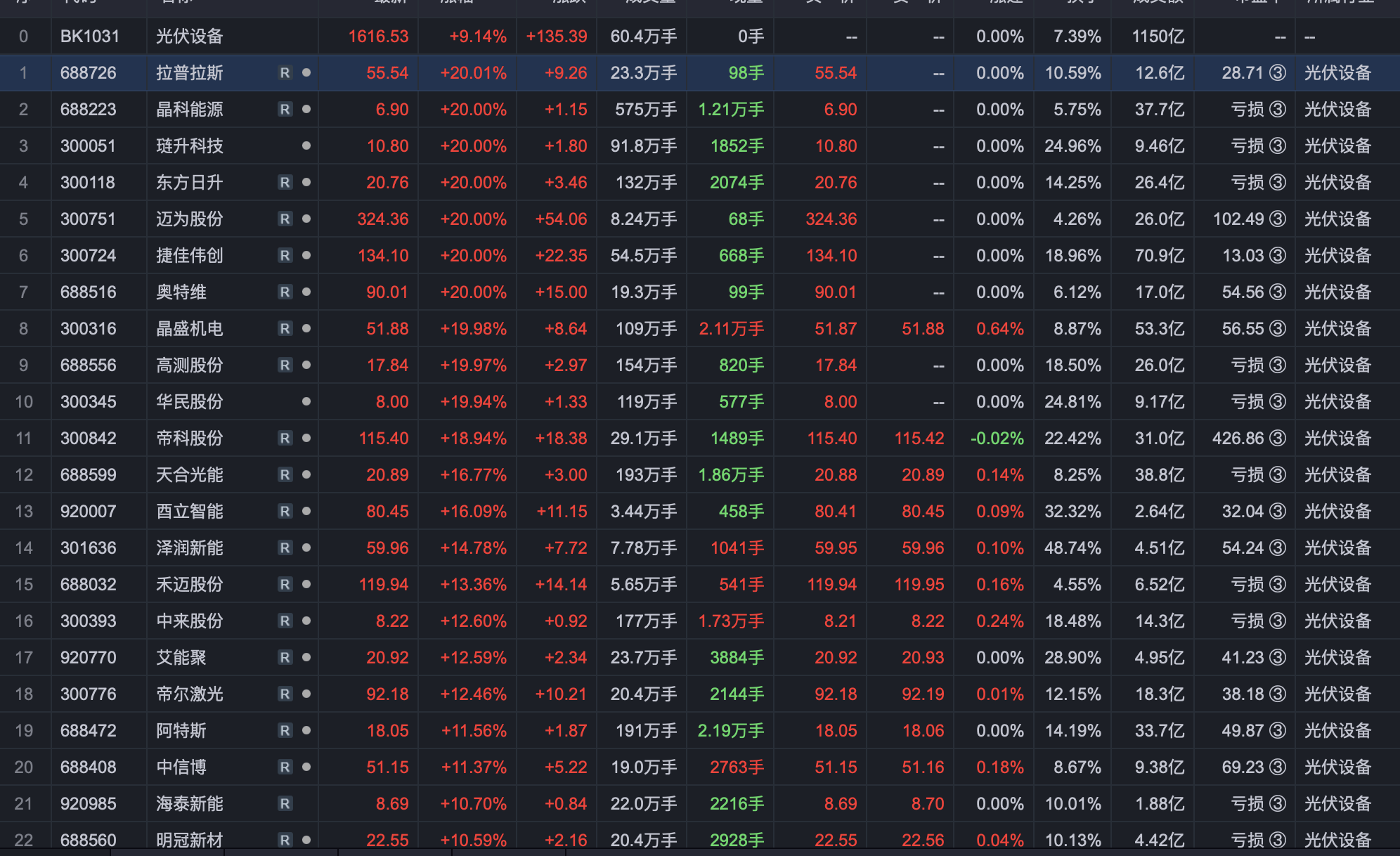
Group 1: Market Performance - The photovoltaic sector experienced a significant surge, with photovoltaic equipment (BK1031) closing at 1616.53, marking a 9.14% increase as of January 23 [1] - Several stocks, including Dongfang Risen (300118.SZ), Aotwei (688516.SH), Maiwei Co. (300751.SZ), and Longi Green Energy (601012.SH), reached their daily limit, while Tongwei Co. (600438.SH) saw an increase of over 7% [1][2] Group 2: Key Developments - Elon Musk, CEO of Tesla, expressed strong support for space photovoltaics during a discussion at the World Economic Forum, revealing plans for a solar manufacturing capacity of 100GW annually over the next three years [1] - The concept of "space photovoltaics" is highlighted as a critical energy source for satellites, providing long-term, stable, and lightweight power in extreme space environments [3] Group 3: Technological Insights - Perovskite batteries are emerging as a potential next-generation technology for space applications, offering advantages such as low material costs and high power-to-weight ratios [4] - Current applications of perovskite technology in commercial space are still in the testing phase, with successful in-orbit trials reported [6] Group 4: Company Strategies - Shanghai Portway (605598.SH) is actively involved in the satellite energy system sector, focusing on perovskite battery technology [7] - Companies like Maiwei Co. and Jiejia Weichuang are engaging in contracts related to perovskite supply and equipment solutions [7] - Trina Solar (688599.SH) is pursuing long-term strategies in various solar technologies, including perovskite and multi-junction cells [7] Group 5: Industry Challenges - Despite the recent market rally, the photovoltaic industry is facing significant challenges, with many companies, including Longi Green Energy, forecasting substantial losses due to ongoing supply-demand imbalances and competitive pressures [9][11] - The industry is currently in a cyclical downturn, with several firms reporting losses and facing increased operational costs due to rising material prices [11][12]

市场成交重回3万亿
Tebon Securities· 2026-01-23 11:36
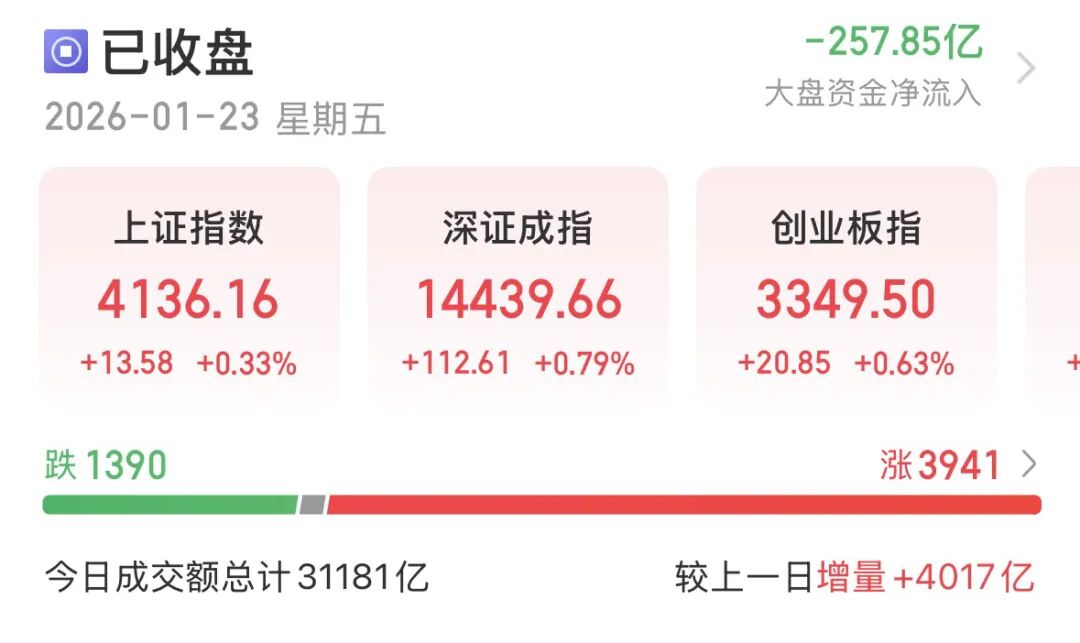
Market Analysis - The A-share market is experiencing a volatile upward trend with significant trading volume, as the Shanghai Composite Index closed at 4136.16 points, up 0.33%, and the Shenzhen Component Index rose 0.79% to 14439.66 points, with a total market turnover of 3.12 trillion, an increase of approximately 400 billion (+14.8%) from the previous trading day [2][5][7] - The market is characterized by a broad-based rally, with 3938 stocks rising and 1389 falling, indicating a strong profit-making effect [2] Sector Performance - The photovoltaic equipment sector led the market with a significant increase of 9.95% in the photovoltaic selection index, driven by new market hotspots in space photovoltaics, following support from Tesla's CEO Elon Musk at the World Economic Forum [5][9] - The commercial aerospace sector also showed strength, with several stocks hitting the daily limit, supported by upcoming events and the launch of China's first commercial manned spacecraft [5][9] - Conversely, the financial sector faced pressure, with the optical module and insurance selection indices declining by 2.24% and 1.81%, respectively, reflecting a continued shift in market style [5][7] Policy and Market Trends - The market is currently driven by a dual engine of policy and industry trends, with high trading volumes indicating active capital flow from undervalued financial sectors to high-growth sectors, particularly in small and mid-cap growth stocks [7][13] - The report suggests focusing on sectors such as photovoltaics (including space photovoltaics and HJT technology), commercial aerospace, and precious metals (gold and silver), while being cautious of pure concept stocks that may face delisting risks [7][13] Bond Market - The bond market saw a slight increase in government bond futures, with the 30-year main contract rising by 0.07% to close at 112.30 yuan, supported by a net liquidity injection of 1 trillion yuan by the central bank this month [7][9] - The central bank's actions indicate a clear expectation of continued monetary easing, which is expected to support bond prices [7][9] Commodity Market - The commodity market is maintaining an upward trend, with the Nanhua Commodity Index rising by 1.14%, driven by precious and new energy metals, while some sectors like energy and agricultural products faced localized pressure [7][9] - Silver prices are approaching the $100 mark, with the main contract closing at 24,965 yuan/kg, reflecting strong demand driven by both financial and industrial factors [7][9] Trading Hotspots - Recent hot sectors include AI applications, commercial aerospace, nuclear fusion, quantum technology, brain-computer interfaces, robotics, and consumer goods, with a focus on policy support and technological advancements [10][13] - The report emphasizes the importance of monitoring developments in these sectors, particularly in terms of application scenarios and project progress [10][13]

商业航天28股封板,巨头密集砸钱入局
2 1 Shi Ji Jing Ji Bao Dao· 2026-01-23 10:53
Core Insights - The commercial space sector in China has seen significant growth since 2025, with 50 commercial launches accounting for 54% of total space launches that year [1] - The commercial space index (886078.TI) surged by 73.13% in 2025, indicating a strong market performance [1] - The traditional dominance of state-owned enterprises in the space sector is being challenged as private capital and venture capitalists increasingly enter the market [1][10] Investment Trends - Corporate venture capital (CVC) investments in commercial space have nearly doubled from 19 events in 2023 to 35 in 2025, reflecting a growing interest in the sector [3] - CVC investments are characterized by a trend towards earlier and smaller investments, with 9 seed and angel round investments and 16 A-round investments in 2025 [5] - The geographical distribution of CVC investments shows Beijing leading with 8 events, followed by Jiangsu with 6 and Guangdong with 4 [7] Notable Investments - The largest disclosed investment in 2025 was a 300 million yuan (approximately 43 million USD) Pre-A round for Shaanxi Xingyi Space Technology Co., backed by a consortium of 8 investors [7] - Beijing Lizheng Technology Co., which provides drone control solutions, also secured 300 million yuan in a C+ round from 7 institutions [7] Industry Expansion - CVC investments are expanding beyond traditional rocket and launch services to include areas such as engines, aerospace electronics, and downstream applications [8] - Notable investments include Shenzhen Xiandeng Aerospace Technology Co., which focuses on ground support for rockets, and Hunan Lanyue Electromechanical Technology Co., which manufactures satellite components [8] Investment Institutions - The investment landscape includes three main types of institutions: state-owned enterprises and national capital platforms, local state-owned capital, and industry leaders' investment platforms [9] - Examples include China Electronics Technology Group's investment arm and local funds like Shenzhen Innovation Capital [9] Cross-Industry Involvement - Increasingly, non-space industry giants from sectors like automotive, oil, and AI are investing in commercial space, indicating a shift in investment dynamics [12] - Companies like Huichuan Technology, a leader in industrial automation, have made significant investments in the space sector, reflecting a broader trend of cross-industry capital flow [13] Market Dynamics - The commercial space industry is evolving into a competitive landscape focused on large-scale delivery and system capabilities, with leading firms gaining market share through technological and operational advantages [15] - The entry of diverse capital sources is expected to enhance the growth potential of the commercial space sector, making it more integrated into the broader industrial ecosystem [10][15]



硅能源概念涨4.85%,主力资金净流入40股
Zheng Quan Shi Bao Wang· 2026-01-23 10:24
Group 1 - The silicon energy concept index rose by 4.85%, ranking 7th among concept sectors, with 56 stocks increasing in value, including Liancheng CNC at 30% limit up, and others like Dongfang Risheng and Jiejia Weichuang at 20% limit up [1] - Notable gainers in the silicon energy sector included Jingao Technology, Hongyuan Green Energy, and Daqo New Energy, which rose by 8.86%, 8.67%, and 8.19% respectively [1] - The sector saw significant inflows, with a net capital inflow of 2.837 billion yuan, led by Longi Green Energy with a net inflow of 2.762 billion yuan [2] Group 2 - The top stocks by net capital inflow included Dongfang Risheng, Daozhi Technology, and YF Electronics, with net inflows of 681.73 million yuan, 477.63 million yuan, and 428.89 million yuan respectively [2] - The highest net inflow ratios were observed in Shuangliang Energy, Tuori New Energy, and YF Electronics, with ratios of 63.66%, 58.40%, and 40.80% respectively [3] - The trading volume and turnover rates for leading stocks in the silicon energy sector were significant, with Longi Green Energy showing a turnover rate of 6.58% and a trading volume of 276.22 million yuan [4]

数据复盘丨钙钛矿电池、商业航天等概念走强 191股获主力资金净流入超1亿元




Zheng Quan Shi Bao Wang· 2026-01-23 09:56
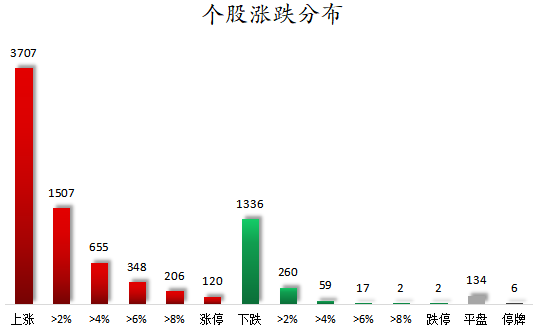
Market Overview - The Shanghai Composite Index closed at 4136.16 points, up 0.33%, with a trading volume of 1.3369 trillion yuan. The Shenzhen Component Index rose 0.79% to 14439.66 points, with a trading volume of 1.7484 trillion yuan. The ChiNext Index increased by 0.63% to 3349.50 points, with a trading volume of 822.63 billion yuan. The STAR Market 50 Index closed at 1553.71 points, up 0.78%, with a trading volume of 110.8 billion yuan. The total trading volume of both markets was 3.0853 trillion yuan, an increase of 393.5 billion yuan compared to the previous trading day [1]. Sector Performance - The market saw more sectors gaining than losing, with notable increases in power equipment, non-ferrous metals, precious metals, defense and military, steel, media, computer, environmental protection, and textile and apparel sectors. Concepts such as perovskite batteries, commercial aerospace, satellite internet, sapphire, lithium mining, cultivated diamonds, small metals, gold, and interactive short dramas were particularly active. In contrast, sectors like communication, insurance, banking, coal, and home appliances experienced declines [1]. Individual Stock Performance - A total of 3707 stocks rose, while 1336 stocks fell, with 134 stocks remaining flat and 6 stocks suspended. Excluding newly listed stocks, there were 120 stocks hitting the daily limit up and 2 stocks hitting the limit down [2]. - Among the stocks that hit the daily limit up, 23 stocks had consecutive limit-up days of 2 or more, with Fenglong Co., Ltd. leading with 18 consecutive limit-ups [3]. Capital Flow - The net capital outflow from the two markets was 4.167 billion yuan, with the ChiNext seeing a net inflow of 1.515 billion yuan. The CSI 300 index experienced a net outflow of 1.005 billion yuan, while the STAR Market saw a net outflow of 3.171 billion yuan. Out of 31 sectors, 13 sectors had net capital inflows, with the power equipment sector leading with a net inflow of 8.977 billion yuan [4][6]. - The top sectors with net inflows included non-ferrous metals (4.552 billion yuan), media (2.173 billion yuan), and defense and military (2.157 billion yuan). Conversely, the communication sector had the highest net outflow of 7.992 billion yuan, followed by electronics (6.350 billion yuan) and machinery (5.077 billion yuan) [4][6]. Notable Stocks - 191 stocks had net capital inflows exceeding 1 billion yuan, with Jin Feng Technology receiving the highest net inflow of 1.861 billion yuan. Other notable stocks included Lens Technology (1.594 billion yuan), Qian Zhao Optoelectronics (1.267 billion yuan), and Xian Dao Intelligent (1.217 billion yuan) [7][8]. - Conversely, 116 stocks experienced net capital outflows exceeding 1 billion yuan, with Xin Yi Sheng leading with a net outflow of 3.471 billion yuan, followed by Zhong Ji Xu Chuang (3.103 billion yuan) and Li Ou Shares (2.604 billion yuan) [10][11]. Institutional Activity - Institutional investors had a net selling of approximately 1.02 billion yuan, with 22 stocks seeing net purchases and 14 stocks net sales. Jin Feng Technology was the most purchased stock by institutions, with a net purchase amount of approximately 266 million yuan [13][14].
A股光伏板块掀起涨停潮 竟因马斯克的一句话?
2 1 Shi Ji Jing Ji Bao Dao· 2026-01-23 09:34
Core Viewpoint - The A-share photovoltaic sector experienced a significant surge on January 23, with a collective rise in stock prices across various companies, driven by market sentiment related to Elon Musk's support for space-based solar power [1][4][6]. Group 1: Market Performance - On January 23, the photovoltaic index (884045.WI) closed at 4411.60 points, marking a substantial increase of 7.46% [3]. - A total of 24 photovoltaic stocks reached their daily limit, with many companies in the sector, including Meichang Co. (300861.SZ), Laplace (688726.SH), and JinkoSolar (688223.SH), seeing price increases of up to 20% [2][4]. - Other notable companies such as Longi Green Energy (601012.SH) and Aiko Solar (600732.SH) also hit their price limits, with increases of 10% [4]. Group 2: Influencing Factors - The surge in the photovoltaic sector is attributed to Elon Musk's remarks at the World Economic Forum, where he expressed strong support for space-based solar power and outlined plans for significant solar production capacity [4][5]. - Musk indicated that SpaceX and Tesla aim to achieve an annual solar manufacturing capacity of 100GW within the next three years, which has generated optimism in the market [5]. - The global interest in space-based solar power is intensifying, with a competitive landscape emerging where state-owned enterprises lead core aerospace tasks while private companies pursue commercial opportunities [5][6]. Group 3: Industry Insights - Musk's acknowledgment of China's solar energy production capabilities, which reach 1500GW annually, highlights the potential for collaboration and support for expanding solar capacity [6]. - The Chinese photovoltaic industry, with its comprehensive supply chain, is positioned to play a crucial role in supporting Musk's future solar production plans [6]. - Current research indicates that Tesla is actively exploring partnerships with Chinese photovoltaic companies, focusing on silicon wafer and module manufacturers, as well as heterojunction technology [6].