Sungrow Power Supply(300274)

Search documents
品牌工程指数 上周收报1956.62点
Zhong Guo Zheng Quan Bao· 2025-10-19 22:33
Core Viewpoint - The market experienced a correction last week, but certain stocks within the brand index showed resilience, indicating potential investment opportunities in sectors like electronics, new energy, new consumption, and real estate as uncertainties ease [1][4]. Market Performance - The market indices saw declines: Shanghai Composite Index down 1.47%, Shenzhen Component down 4.99%, ChiNext down 5.71%, and CSI 300 down 2.22%. The brand index fell 3.58% to 1956.62 points [2]. - Notable gainers in the brand index included Shanghai Jahwa up 9.42%, Changbai Mountain up 7.19%, and Darentang up 5.34%. Other stocks like Luzhou Laojiao and Yiling Pharmaceutical also saw gains exceeding 4% [2]. Stock Performance Since H2 - Since the beginning of the second half of the year, Zhongji Xuchuang has surged 156.40%, leading the gains, followed by Sunshine Power at 114.27%. Other significant performers include Lanke Technology and Yiwei Lithium Energy, both up over 60% [3]. Market Outlook - Looking ahead, the market is expected to maintain upward momentum as uncertainties gradually diminish. Liquidity is anticipated to remain supportive, with domestic interest rates low and overseas liquidity remaining loose, encouraging investment in Chinese equity assets [4][5]. - The current market environment is characterized by a shift in investment styles, with a focus on sectors that offer higher investment certainty, particularly in electronics, new energy, new consumption, and real estate [5].


品牌工程指数上周收报1956.62点
Zhong Guo Zheng Quan Bao· 2025-10-19 20:13
Group 1 - The core index of the Xinhua National Brand Project reported 1956.62 points, with several constituent stocks rising against the market trend [1] - Shanghai Jahwa increased by 9.42%, leading the gains among constituent stocks, followed by Changbaishan at 7.19% and Darentang at 5.34% [1] - The overall market saw declines, with the Shanghai Composite Index down 1.47% and the Shenzhen Component Index down 4.99% [1] Group 2 - Since the second half of the year, Zhongji Xuchuang has risen by 156.40%, ranking first in gains, followed by Sunshine Power at 114.27% [2] - The market is expected to maintain upward momentum, with liquidity driving potential growth and fundamental support gradually increasing [2] - Domestic interest rates remain low, and overseas liquidity is expected to remain loose, indicating continued capital allocation towards Chinese equity assets [2] Group 3 - Recent market adjustments are attributed to a decline in global market risk appetite and a shift in investment style towards defensive sectors [3] - The current market environment is characterized by high levels, increased uncertainty, and a slowdown in previous catalysts, leading to cautious trading [3] - Investors are encouraged to seek opportunities in sectors with higher investment certainty, particularly in electronics, new energy, new consumption, and real estate [3]




锦浪科技:2025 年第三季度利润低于预期;更青睐阳光电源和德业股份,因其储能系统(ESS)销售占比更高
2025-10-19 15:58
Summary of Ginlong Technologies 3Q25 Earnings Call Company Overview - **Company**: Ginlong Technologies (300763.SZ) - **Industry**: Solar Inverter and Energy Storage Systems Key Financial Highlights - **Net Profit**: Increased by 29.4% year-over-year (yoy) to Rmb865 million in the first nine months of 2025 (9M25) - **3Q25 Net Profit**: Decreased by 16.8% yoy and 35.4% quarter-over-quarter (qoq) to Rmb263 million, missing consensus estimates which forecasted a profit increase of 68% yoy to Rmb1,158 million for 2025E [1][2] - **Revenue**: Grew by 3.4% yoy to Rmb1,869 million in 3Q25, with total revenue for 9M25 at Rmb5,663 million, reflecting a 9.7% yoy increase [2][9] - **Gross Profit Margin**: Improved by 2.4 percentage points yoy to 36.0% in 9M25, with a slight increase of 0.4 percentage points to 36.8% in 3Q25 [2][9] - **SG&A Expenses**: Increased by 4.8 percentage points yoy to 19.4% in 3Q25, primarily due to higher administrative and selling expenses [1][2] Earnings Miss Analysis - **Reasons for Earnings Miss**: - Low revenue growth attributed to a decline in PV inverter demand, despite increased sales of energy storage Power Conversion Systems (PCS) [1] - Higher selling, general, and administrative (SG&A) expenses impacting profitability [1][2] Competitive Positioning - **Market Comparison**: Ginlong's revenue growth is lagging behind peers with a higher sales mix of energy storage products: - Deye: 64% revenue mix from energy storage - Sungrow: 41% revenue mix from energy storage - Ginlong: 21% revenue mix from energy storage in 1H25 [1][8] - **Valuation Concerns**: Ginlong's 2026E price-to-earnings (PE) ratio is 33.1x, which is considered expensive compared to Deye (15.1x) and Sungrow (16.4x) [1][8] Future Outlook - **Convertible Bonds Issuance**: Approval to issue Rmb1,677 million in convertible bonds, with proceeds allocated to various projects including solar power stations and a new high-voltage PV inverter production facility [3][7] - **Target Price**: The target price for Ginlong is set at Rmb55.00 per share, indicating a potential downside of 37.4% from the current price of Rmb87.90 [5][11] Risks and Considerations - **Upside Risks**: Potential for higher-than-expected solar installations and favorable changes in trade policies affecting solar exports [12] - **Downside Risks**: Lower-than-expected demand for energy storage and increased competition in the inverter market [14][16] Conclusion - **Recommendation**: Maintain a Sell rating on Ginlong due to concerns over revenue growth and high valuation relative to peers, alongside a disappointing earnings report for 3Q25 [1][8]

电力设备行业跟踪周报:锂电需求旺盛涨价诉求强、AIDC潜力可观-20251019
Soochow Securities· 2025-10-19 15:05
Investment Rating - The report maintains an "Accumulate" rating for the electric equipment industry [1] Core Views - The demand for lithium batteries is strong, with price increase demands evident, and the potential for AIDC (Automatic Identification and Data Capture) is considerable [1] - The report highlights significant growth in energy storage installations, with a year-on-year increase of 205% in new installations in September 2025 [3] - The electric vehicle market is also showing robust growth, with domestic sales of electric vehicles reaching 1.604 million units in September, a year-on-year increase of 25% [3] Industry Trends - The electric equipment sector has seen a decline of 5.3%, underperforming compared to the broader market [3] - The report notes that the human-shaped robot sector is experiencing rapid advancements, with significant investments and developments in the industry [3][7] - The energy storage market is expected to grow at a compound annual growth rate (CAGR) of 30-50% from 2025 to 2028, driven by increasing demand and supply constraints [3] Company Performance - Si Yuan Electric reported a revenue of approximately 13.827 billion yuan for the first three quarters of 2025, a year-on-year increase of 32.86% [3] - Container Technology's revenue for the same period was approximately 8.986 billion yuan, down 20.64% year-on-year [3] - Sunshine Power announced a cash dividend of 9.50 yuan per 10 shares, totaling 1.95 billion yuan [3] Investment Strategy - The report suggests a strong outlook for energy storage, with expectations of significant growth in both domestic and international markets [3] - It emphasizes the potential for lithium battery manufacturers, particularly in light of increasing demand and price stability [3] - The report recommends several companies for investment, including Ningde Times, Sunshine Power, and Yiwei Lithium Energy, highlighting their strong market positions and growth potential [3][6]



特高压启动招标,电动汽车充电设施“三年倍增”方案发布
GOLDEN SUN SECURITIES· 2025-10-19 12:37
Investment Rating - Maintain "Buy" rating for the industry [6] Core Insights - The power equipment industry is transitioning from "ultra-low price competition" to "structural correction," with significant price increases expected due to changes in export tax policies and supply-side reforms [16][17] - The report highlights three key areas of focus: supply-side reform leading to price increases, long-term growth opportunities from new technologies, and industrialization opportunities from perovskite solar cells [17] Summary by Sections 1. New Energy Generation 1.1 Photovoltaics - The photovoltaic industry is experiencing a critical shift, with expected global component price increases of approximately 9% starting Q4 2025 due to the cancellation of VAT rebates on solar cell exports [16][17] - Domestic component prices have entered an upward trend since July 2025, with N-type component average prices rising by about 3.6% from July to September 2025 [16][17] 1.2 Wind Power & Grid - A new VAT policy for offshore wind power will be implemented from November 2025, allowing a 50% VAT rebate on self-produced electricity, which is expected to accelerate offshore wind development [18][19] - The first project under Jiangsu's 14th Five-Year Plan for offshore wind has been approved, indicating a boost in offshore wind capacity [18][19] 1.3 Hydrogen & Energy Storage - Sinopec's first green hydrogen ammonia synthesis project has been initiated, with a planned hydrogen production capacity of 20,000 tons/year and ammonia production of at least 100,000 tons/year [23] - Energy storage project bidding prices for October 2025 range from 0.4118 to 0.6 CNY/Wh, indicating a competitive market [24][30] 2. New Energy Vehicles - The National Development and Reform Commission has issued a plan to double the charging infrastructure by 2027, aiming to build 28 million charging facilities to support over 80 million new energy vehicles [35][36] - The plan includes enhancing urban rapid charging networks and expanding charging facilities in rural areas [35][36]





“AI+储能”站上风口:宁德等企业抢滩,算力与数据安全瓶颈待破
Di Yi Cai Jing· 2025-10-18 13:51
Core Insights - The integration of AI with energy has been officially included in the national strategic framework, with specific goals set for 2027 and 2030 [1] - The application of AI in energy storage is expected to enhance operational efficiency, safety, and economic returns across the industry [2][3] Group 1: National Strategy and Goals - The National Development and Reform Commission and the Energy Administration have issued implementation opinions that include "AI + Energy Storage" in the national energy strategy [1] - By 2027, the goal is to establish over five specialized large models in the energy sector and over ten replicable demonstration projects, with a target of achieving world-leading AI technology in energy by 2030 [1] Group 2: AI Applications in Energy Storage - AI technology is recognized for its potential to improve the operational efficiency and safety of energy storage systems, with companies increasing investments in AI [2] - Companies like Haibo Shichuang are planning to expand independent energy storage projects and leverage AI and big data for backend operations [2] - Cross-industry collaborations, such as the partnership between Nenghui Technology and Ant Group, aim to develop AI applications for energy project management [2] Group 3: Operational Efficiency and Safety - AI is crucial for optimizing energy dispatch decisions in large power plants, directly impacting revenue maximization [3] - AI diagnostic technologies can accurately identify battery faults and provide early warnings, enhancing the safety and lifespan of energy storage systems [3] - The shift from reactive to proactive maintenance through AI can significantly improve operational efficiency [4] Group 4: Market Potential and Economic Returns - The overall service market for energy storage is projected to reach between 40 billion to 50 billion yuan by 2030 [5] - AI-driven algorithms can optimize trading strategies, enhance energy utilization efficiency, and maximize operational returns [6] - Major companies are launching their own AI solutions, indicating a consensus on the importance of AI in the energy storage sector [6][7] Group 5: Challenges and Bottlenecks - Despite the potential of AI, challenges such as data security and the need for robust computational power remain significant [8][9] - The development of AI in energy storage may exacerbate existing power supply and demand issues, particularly in the context of renewable energy integration [8] - The collaboration between AI and energy storage faces commercial viability challenges due to high energy consumption and uncertain returns [9] Group 6: Future Outlook - The industry views the application of AI in renewable energy as an opportunity that outweighs the challenges, with a focus on data security and effective data management [10]
独家调查|“AI+储能”站上风口:宁德等企业抢滩,算力与数据安全瓶颈待破
Di Yi Cai Jing· 2025-10-18 13:40
Core Insights - AI technology can enhance the operational efficiency, safety, and economic viability of energy storage systems, and its integration into national energy strategies has been formalized [1][3][9] Group 1: National Strategy and Goals - The National Development and Reform Commission and the Energy Administration have issued implementation opinions that include "AI + Energy" as part of the national energy strategy, aiming to establish over five specialized large models and ten replicable demonstration projects by 2027 [1] - By 2030, the overall AI technology in energy is expected to reach a world-leading level, with a fully developed synergy between computing power and electricity [1] Group 2: Industry Applications and Investments - Energy companies are increasing investments in AI from perspectives of safety assurance, operational efficiency, and revenue enhancement [3] - HaiBoSiChuang plans to expand independent energy storage projects over the next 3-5 years, leveraging its existing AI and big data capabilities [3] - A strategic partnership between NengHui Technology and Ant Group aims to develop "Energy AI Intelligent Agents" to reconstruct management paradigms in renewable energy projects [3] Group 3: Operational Efficiency and Safety - AI can significantly improve operational efficiency in energy storage, transitioning from reactive maintenance to proactive monitoring [5][6] - AI technologies can predict battery health and lifespan, reducing failure rates and enhancing safety through precise diagnostics [4][5] - The integration of AI in operational processes allows for real-time monitoring and predictive maintenance, optimizing energy management and maximizing returns [6][7] Group 4: Market Potential and Economic Impact - The overall service market for energy storage is projected to reach between 40 billion to 50 billion yuan by 2030 [6] - AI-driven algorithms can enhance trading operations by providing accurate price forecasts and optimizing charging and discharging strategies [6][8] Group 5: Challenges and Bottlenecks - Despite the potential of AI, challenges such as data security, privacy protection, and the need for robust computational power remain [9][10] - The development of AI in energy storage is constrained by the need for advanced data centers (AIDC) and the associated high energy consumption [10][11] - The synergy between AI and energy storage must overcome commercial viability challenges due to the uncertain returns of storage projects [10][11]



资金情绪持续谨慎市场出现风格切换迹象
Zhong Guo Zheng Quan Bao· 2025-10-17 20:19
Market Overview - On October 17, the A-share market experienced a broad decline, with major indices such as the Shanghai Composite Index, Shenzhen Component Index, and ChiNext Index falling by 1.95%, 3.04%, and 3.36% respectively [2][4] - The total market turnover was 1.95 trillion yuan, marking a slight increase of 57 billion yuan from the previous trading day, but it has been below 2 trillion yuan for two consecutive days [2][4] - A total of 602 stocks rose, while 4,783 stocks fell, indicating a significant market downturn [2] Sector Performance - The sectors leading the decline included power equipment, electronics, and machinery, with respective drops of 4.99%, 4.17%, and 3.69% [3][5] - Defensive sectors such as banking, coal, and public utilities showed relative strength, with the banking sector seeing stocks like Xiamen Bank and Qingdao Bank rising over 2% [3][5] - The technology growth sector faced significant selling pressure, with notable declines in electronic, media, and automotive industries, which fell by 7.14%, 6.27%, and 5.99% respectively [5] Capital Flow - The market has shown signs of style rotation, with dividend-paying sectors gaining strength while technology growth stocks have been under pressure [5][8] - Main capital outflows were observed, with over 790 billion yuan leaving the market on October 17 alone, and a total of 5 consecutive days of net outflows [5][7] - The A-share market's total market capitalization decreased by 2.56 trillion yuan to 113.02 trillion yuan as of October 17 [7] Market Sentiment and Future Outlook - Analysts attribute the market's adjustment to a combination of external shocks, internal concerns, and technical factors, with global market conditions, particularly in the U.S., impacting investor sentiment [4][8] - Despite short-term volatility, the core drivers of the market remain unchanged, with expectations of continued favorable liquidity trends [8] - The upcoming disclosure of Q3 earnings reports is anticipated to create opportunities for valuation adjustments and structural rebalancing in the market [8]


阳光电源向港交所提交上市 申请书
Mei Ri Jing Ji Xin Wen· 2025-10-17 14:31
Core Viewpoint - Sunshine Power Co., Ltd. has submitted a listing application to the Hong Kong Stock Exchange, with China International Capital Corporation as the exclusive sponsor [2] Company Summary - Sunshine Power Co., Ltd. is seeking to go public on the Hong Kong Stock Exchange [2] - The exclusive sponsor for the listing is China International Capital Corporation [2]
199.44亿元主力资金今日撤离电力设备板块
Zheng Quan Shi Bao Wang· 2025-10-17 10:09
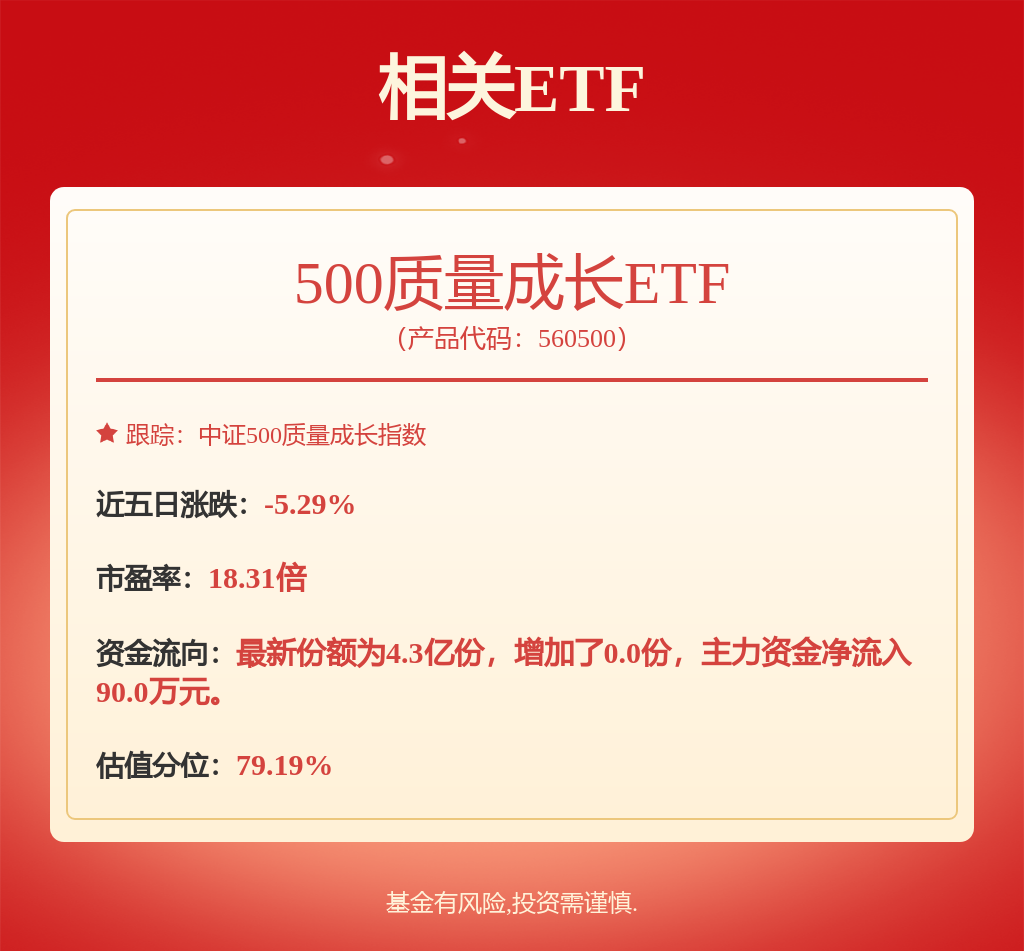
Core Points - The Shanghai Composite Index fell by 1.95% on October 17, with the power equipment and electronics sectors experiencing the largest declines of 4.99% and 4.17%, respectively [1] - The power equipment sector saw a net outflow of 19.944 billion yuan, with only 13 out of 363 stocks in the sector rising, and 350 stocks declining [1] - Notable stocks with significant net inflows included Tianji Co. with 177.35 million yuan, followed by Wolong Electric Drive and Shuangyi Technology [1] - Major stocks with significant net outflows included Sunshine Power, CATL, and TBEA, with outflows of 1.687 billion yuan, 1.1 billion yuan, and 840 million yuan, respectively [1][2] Power Equipment Sector Summary - The power equipment sector had a total of 363 stocks, with 13 gaining and 350 losing value on the day [1] - The top three stocks with the highest net inflows were: - Tianji Co. (5.96% increase, 177.35 million yuan inflow) - Wolong Electric Drive (-0.92% change, 152.98 million yuan inflow) - Shuangyi Technology (6.11% increase, 85.73 million yuan inflow) [1] - The top three stocks with the highest net outflows were: - Sunshine Power (-10.91% change, 1.6868215 billion yuan outflow) - CATL (-2.81% change, 1.1003243 billion yuan outflow) - TBEA (-5.88% change, 839.5423 million yuan outflow) [2] ETF Information - The 500 Quality Growth ETF (code: 560500) tracks the CSI 500 Quality Growth Index and has seen a decline of 5.29% over the past five days [4] - The ETF has a price-to-earnings ratio of 18.31 times and a net inflow of 900,000 yuan, with the latest share count at 430 million [4]