
Petpal Tech.(300673)

Search documents
东方证券农林牧渔行业周报(20251229-20260104):年底猪价延续偏强,关注补库进程影响-20260104
Orient Securities· 2026-01-04 05:30
Investment Rating - The industry investment rating is "Positive" and is maintained [5] Core Viewpoints - The pig farming sector is expected to benefit from recent policies and market dynamics that promote capacity reduction, leading to a potential price turning point in Q2 2026, with long-term performance improvements anticipated for related stocks [3][43] - The structural growth trend in the post-cycle sector continues, with profits likely to gradually transmit downstream if the current round of pig capacity reduction proceeds smoothly, benefiting the animal health sector [3] - The planting chain shows a confirmed upward trend in grain prices, indicating favorable fundamentals for planting and seed industries, highlighting significant investment opportunities [3] - The pet food sector is experiencing growth and price increase logic, with continuous recognition of domestic brands and sustained growth of leading companies [3] Summary by Sections Pig Farming - The average price of live pigs as of December 31 was 12.76 yuan/kg, a week-on-week increase of 10.38%, while the average price of 15 kg piglets was 19.44 yuan/kg, up 2.21% week-on-week [12][51] - The supply side shows a widening price gap for fattened pigs, supporting price increases, while demand is boosted by consumption expectations during the New Year holiday [12][17] Poultry - The price of white feather broilers increased to 7.82 yuan/kg, up 6.39% week-on-week, and chick prices rose to 3.59 yuan/chick, up 1.7% week-on-week [17][51] - The supply of meat chickens has increased, leading to a more relaxed market supply, while demand has weakened due to some slaughterhouses reducing operations [17] Feed Sector - The prices of corn, wheat, and soybean meal have risen, with corn averaging 2351.57 yuan/ton, up 0.57% week-on-week, and soybean meal at 3172.29 yuan/ton, up 0.96% week-on-week [27][51] - Increased selling enthusiasm among farmers is noted, although the pace of supply remains slow [27] Major Agricultural Products - The domestic natural rubber futures price was 15605 yuan/ton as of December 31, down 0.29% week-on-week, with inventory levels increasing [38][51] - The current down cycle for sugar prices continues, with no significant recovery expected [39]




农林牧渔展望2026行业报告:周期破晓见曦,成长擎画新篇
GUOTAI HAITONG SECURITIES· 2026-01-03 14:20
Investment Rating - The report assigns an "Accumulate" rating for the agricultural industry [9] Core Insights - In 2026, the pig and beef cattle farming sectors are expected to reach a cyclical turning point, with clear growth potential in the pet sector and significant opportunities in specialty planting [2][13] - Companies with complete production, sales, and research capabilities in the pet industry are likely to succeed amid competitive pressures [8] Summary by Sections Pig Farming - Price: The pig price is expected to remain low in the first half of 2026, leading to continued low profits in the industry [3] - Capacity: Policy and cyclical adjustments are driving capacity reduction, with a focus on cost improvement and growth potential in pig farming enterprises [3][27] - Debt Reduction: The average debt-to-asset ratio for listed pig farming companies has decreased to 56.27%, indicating improved financial health [27] Poultry Farming - White Chicken: The industry is experiencing deep price declines, with a return to supply-demand balance expected to take time [4][30] - Yellow Chicken: Prices may see slight recovery, supported by promotional activities for native chicken varieties [35] Beef Farming - Long Cycle: The beef farming cycle is lengthy, with a fragmented supply structure impacting pricing dynamics [39] - Price Outlook: A supply contraction is expected to support continued price increases for beef from 2025 onwards [46] Feed and Animal Health - Feed: The feed sector is anticipated to see growth in sales, with a positive outlook for 2026 as livestock numbers remain high [49] - Animal Health: Demand for animal health products may face pressure due to low profits in farming, but breakthroughs in key products are worth monitoring [58][59] Planting - Grain Prices: Grain prices are expected to trend upwards, driven by increased focus on food security and innovation in seed varieties [7][64] - Specialty Planting: Opportunities in specialty crops like blueberries and mushrooms are highlighted, with a focus on innovation and market demand [7][70] Pet Industry - Growth Potential: The pet market is thriving, with strong consumer willingness to spend, indicating clear growth prospects [8][13] - Competitive Landscape: Companies with integrated production, sales, and research capabilities are rare and likely to outperform in the competitive environment [8][13]

暴利的宠物,大厂的坟墓
36氪· 2026-01-03 13:08
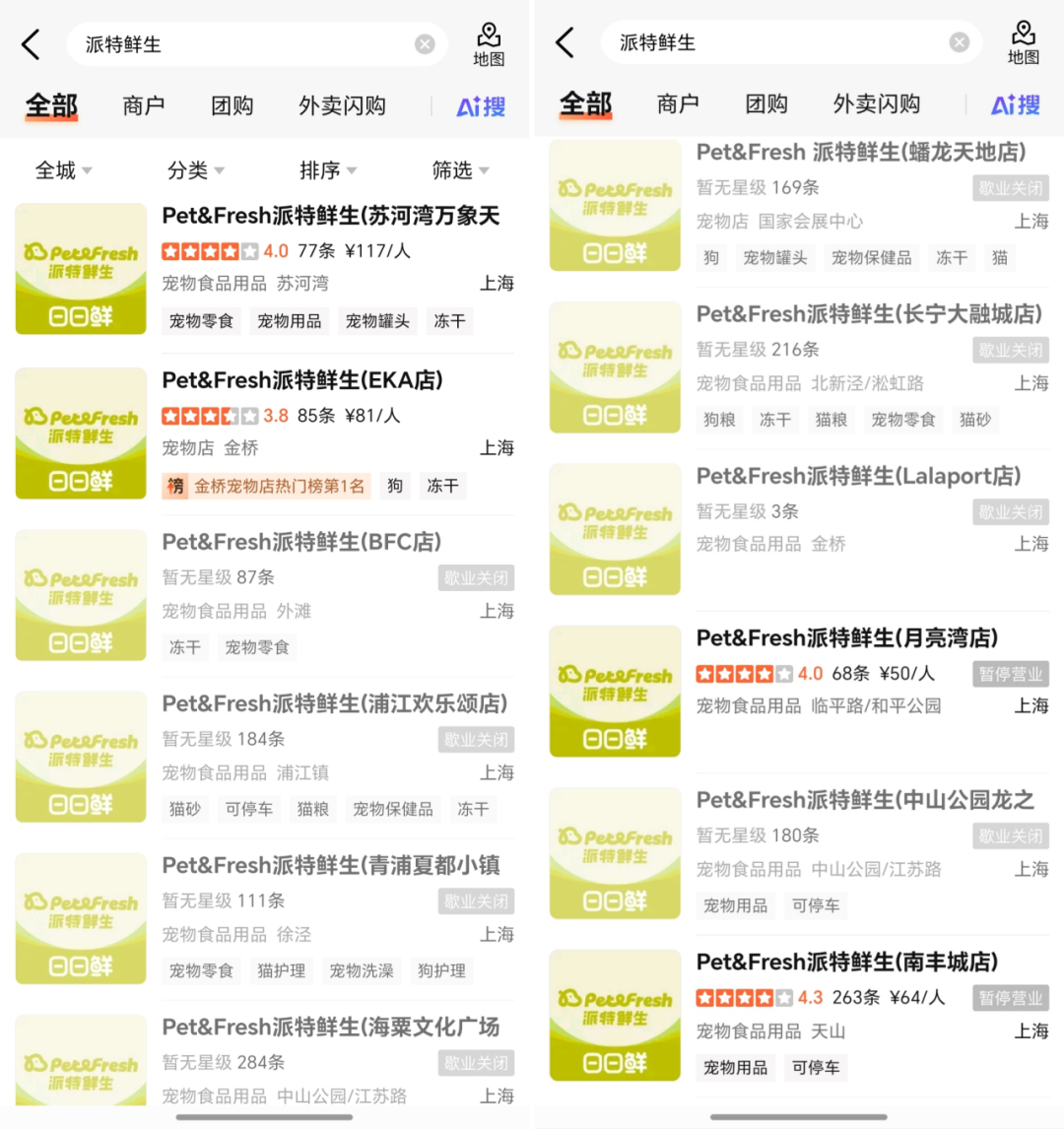
Core Viewpoint - The pet economy, while appearing lucrative with a market size of 300 billion and gross margins up to 50%, is not a profitable venture for large companies due to high operational costs and reliance on human capital rather than scalable business models [4][10][30]. Industry Overview - The pet economy is characterized by high gross margins, particularly in pet food, where domestic brands can achieve margins of 40%-50% [10][11]. - Service sectors such as grooming and veterinary care also show high potential margins, but the actual profitability for companies is often low due to high operational costs [10][15]. Company Performance - Major players like Pet Fresh and others have faced significant losses, with Pet Fresh closing 18 stores after burning through 178 million RMB in just nine months, averaging losses of over 200,000 RMB per store monthly [5][11]. - Companies like Zhongchong Co. and Petty Co. report low net profit margins, with Zhongchong's gross margin at 28.16% and net margin at only 9.33% [11][12]. Marketing and Sales Costs - The cost of acquiring customers through KOLs (Key Opinion Leaders) and marketing has skyrocketed, with sales expenses for companies like Guibao Pet increasing from under 100 million RMB in 2017 to 500 million RMB in 2024, leading to diminished net profit margins despite increased sales [13][14]. Challenges in Scaling - The pet economy is heavily reliant on personal relationships and trust between pet owners and service providers, making it difficult for large companies to replicate the success of smaller, independent businesses [27][30]. - The high costs associated with maintaining quality service and customer trust, such as expensive store locations and high employee wages, hinder profitability for larger firms [15][28]. Comparison with Other Industries - Similar challenges are observed in other high-margin industries like beauty and medical services, where the core value lies in skilled personnel rather than scalable business operations [19][20][24]. - The pet industry exemplifies a trend where the most profitable segments are those that rely on individual expertise and customer relationships, rather than mass-market strategies [30].


宠物经济,暴利的烂生意
Tai Mei Ti A P P· 2025-12-31 09:15
Core Insights - The pet economy, with a market size of 300 billion and gross margins reaching 50%, appears to be a lucrative business, but the reality is more complex and challenging for large companies [1][4]. Group 1: Market Dynamics - Major players like Hema have entered the pet market with high expectations, but have faced significant losses, exemplified by Pet Fresh's closure of 18 stores after just 9 months, with an average monthly loss exceeding 200,000 RMB per store [2][6]. - Despite the high gross margins in pet food, with domestic brands achieving 40%-50% margins, the actual profitability for many companies is low, with some reporting negative net margins [5][6]. Group 2: Cost Structure - The high gross margins in the pet industry are offset by substantial marketing and operational costs, particularly in advertising through KOLs (Key Opinion Leaders), which can consume a significant portion of revenue [8][10]. - Companies like Zhongchong and Peidi have shown that even leading firms struggle with profitability, with Zhongchong's gross margin at 28.16% and net margin at only 9.33% [6][9]. Group 3: Business Model Challenges - The pet economy is characterized by a reliance on personal relationships and trust between pet owners and service providers, making it difficult for large companies to replicate the success of smaller, independent operators [22][23]. - The expansion of large pet service providers often leads to operational inefficiencies and customer dissatisfaction, as seen with companies like Jichongjia, which faced closures after rapid expansion [22][24]. Group 4: Comparison with Other Industries - The challenges faced in the pet economy mirror those in other high-margin industries like beauty and medical services, where the core value often lies in individual expertise rather than scalable business models [14][20]. - The pet industry, much like the beauty and medical sectors, is fundamentally a "people-driven" business, where success is tied to individual skills and customer relationships rather than just operational efficiency [20][23].
饲料板块12月31日跌1.08%,天康生物领跌,主力资金净流出7586.85万元
Zheng Xing Xing Ye Ri Bao· 2025-12-31 08:56
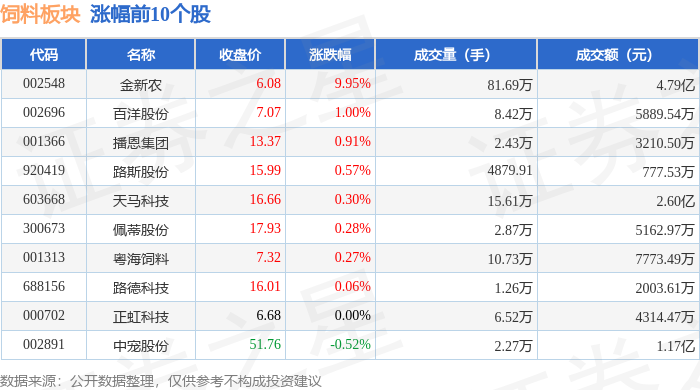
Market Overview - The feed sector experienced a decline of 1.08% on December 31, with TianKang Biological leading the drop [1] - The Shanghai Composite Index closed at 3968.84, up 0.09%, while the Shenzhen Component Index closed at 13525.02, down 0.58% [1] Individual Stock Performance - JinXinNong (002548) saw a significant increase of 9.95%, closing at 6.08, with a trading volume of 816,900 shares and a transaction value of 479 million [1] - TianKang Biological (002100) declined by 3.03%, closing at 7.37, with a trading volume of 337,500 shares and a transaction value of 250 million [2] - Other notable performers include ZhiYang Co. (002696) with a 1.00% increase, and Boen Group (001366) with a 0.91% increase [1] Capital Flow Analysis - The feed sector experienced a net outflow of 75.87 million from institutional investors, while retail investors saw a net inflow of 22.40 million [2] - JinXinNong had a net inflow of 64.54 million from institutional investors, but a net outflow of 36.08 million from retail investors [3] - TianMa Technology (603668) had a net inflow of 11.83 million from institutional investors, while retail investors experienced a net outflow of 13.32 million [3]


A股头条:2026年“国补”政策来了;汽车以旧换新补贴实施细则出炉;个人出售购买满2年的住房免征增值税
Jin Rong Jie· 2025-12-31 00:38
Group 1 - The National Development and Reform Commission and the Ministry of Finance announced a subsidy policy for consumer electronics and appliances, providing a 15% subsidy for purchases of certain products, including smartphones and smart home devices, starting in 2026 [1] - Consumers can receive a subsidy of up to 500 yuan for each eligible smart product purchased, with a maximum subsidy of 1500 yuan for major appliances [1] - The policy aims to stimulate consumption and support the transition to smart and energy-efficient products, indicating a clear direction towards intelligent technology [1] Group 2 - A total of 625 billion yuan in special long-term bonds has been allocated to support the old-for-new consumption policy, with funds being distributed ahead of the New Year and Spring Festival to meet seasonal demand [2] - The National Development and Reform Commission will oversee the implementation of this policy, ensuring effective use of the subsidy funds and monitoring throughout the process [2] Group 3 - The Ministry of Finance and the State Taxation Administration announced a new tax policy, exempting individuals from value-added tax when selling homes purchased for over two years, effective January 1, 2026 [3] - The tax rate for homes sold within two years has been reduced from 5% to 3%, although the overall impact on the market is expected to be limited [3] Group 4 - The Ministry of Industry and Information Technology and three other departments released a digital transformation plan for the automotive industry, aiming to enhance smart manufacturing capabilities by 2027 [4] - Key targets include increasing the digitalization level of component manufacturers, improving labor productivity by 10%, and reducing product development and delivery cycles by 20% [4] Group 5 - iMoutai announced plans to launch a new product line in 2026, with production volumes aimed at preventing market speculation and ensuring supply-demand balance [5] Group 6 - The U.S. stock market faced pressure with declines in major indices, influenced by internal divisions within the Federal Reserve, while some tech stocks showed mixed performance [6] - The Nasdaq China Golden Dragon Index experienced fluctuations, reflecting the volatility in the market [6] Group 7 - The agricultural sector is focusing on increasing soybean oil production and self-sufficiency, alongside the development of modern livestock and aquaculture industries [10] - The initiative aims to enhance agricultural productivity and establish a diversified food supply system while maintaining strict land use regulations [10] Group 8 - The Ministry of Education plans to introduce policies to integrate artificial intelligence into education, aiming to cultivate high-quality talent for the future [11] - The initiative will focus on different educational stages and promote AI literacy among students [11]



A股股票回购一览:28家公司披露回购进展
Mei Ri Jing Ji Xin Wen· 2025-12-30 23:52
Summary of Key Points Core Viewpoint - On December 31, a total of 28 companies announced 30 stock repurchase updates, indicating a significant trend in corporate buybacks in the market [1] Group 1: Stock Repurchase Plans - 9 companies disclosed stock repurchase plans for the first time, with the highest proposed amounts being 600 million yuan from Zhongju Gaoxin, 200 million yuan from Baili Tianheng, and 150 million yuan from Polaroid [1] Group 2: Shareholder Approval - 5 companies had their repurchase plans approved by shareholder meetings, with the highest proposed repurchase amounts being 4 million yuan from Maide Medical, 642,740 yuan from Leisai Intelligent, and 253,720 yuan from Hengtong Optic-Electric [1] Group 3: Implementation Progress - 5 companies reported progress on their repurchase plans, with the highest repurchase amounts being 300 million yuan from Titan Chemical, 167 million yuan from Hualu Hengsheng, and 48.99 million yuan from Petty [1] Group 4: Completed Repurchases - 9 companies have completed their stock repurchases, with the highest completed amounts being 50.10 million yuan from Demais, 24.28 million yuan from Yuxin Co., and 12.47 million yuan from Guanghe Tong [1]


佩蒂股份(300673.SZ):累计回购1.08%股份
Ge Long Hui A P P· 2025-12-30 08:40
Group 1 - The company, Petty Co., has announced the implementation of a share repurchase plan, which will continue until December 29, 2025 [1] - As of the latest update, the company has repurchased a total of 2,677,250 shares, representing 1.08% of its current total share capital [1] - The total amount spent on the share repurchase is approximately RMB 48,987,275.80, excluding transaction fees, with an average transaction price of RMB 18.30 per share [1] Group 2 - The highest transaction price recorded during the repurchase was RMB 19.01 per share, while the lowest was RMB 17.61 per share [1]
佩蒂股份:回购股份比例达1.08%,成交近4900万元
Xin Lang Cai Jing· 2025-12-30 08:30
Group 1 - The company, Petty Co., announced a share buyback plan approved by its board on November 24, 2025, with a budget of 50 million to 70 million yuan, at a maximum price of 26 yuan per share [1] - The buyback is intended for equity incentives or employee stock ownership plans, with the first implementation occurring on November 26 [1] - As of December 29, the company had repurchased a total of 2.67725 million shares, representing 1.08% of the total share capital, with a total transaction amount of 48.9873 million yuan and an average transaction price of 18.30 yuan per share [1]
佩蒂股份:累计回购1.08%股份
Ge Long Hui· 2025-12-30 08:28
格隆汇12月30日丨佩蒂股份(300673.SZ)公布,自首次实施本次回购方案始至2025年12月29日收市,公 司通过股份回购专用证券账户以集中竞价交易方式累计回购公司股份2,677,250股,占公司当前总股本的 比例1.08%,成交总金额为人民币48,987,275.80元(不含交易费用),成交均价18.30元/股,最高成交价 19.01元/股,最低成交价17.61元/股。 ...