Petpal Tech.(300673)

Search documents
佩蒂股份(300673) - 关于变更注册资本及修订《公司章程》的公告
2026-02-25 09:15
| 证券代码:300673 | 证券简称:佩蒂股份 | 公告编号:2026-005 | | --- | --- | --- | | 债券代码:123133 | 债券简称:佩蒂转债 | | 佩蒂动物营养科技股份有限公司 关于变更注册资本及修订《公司章程》的公告 本公司及董事会全体成员保证公告内容的真实、准确和完整,没有虚假记载、 误导性陈述或者重大遗漏。 2026年2月25日,佩蒂动物营养科技股份有限公司(以下简称公司)召开第四届董事 会第十七次会议,审议通过了《关于变更注册资本的议案》和《关于修订<公司章程>的 议案》,因公司发行的可转债(债券简称:佩蒂转债,债券代码:123133)转股导致公司 股本总额发生变化,需变更注册资本并同步修订《公司章程》的相关条款,现将具体内 容公告如下: 一、可转债转股基本情况 经深圳证券交易所审核同意,中国证监会《关于同意佩蒂动物营养科技股份有限公 司向不特定对象发行可转换公司债券注册的批复》(证监许可〔2021〕3596号)同意注 册,公司向不特定对象发行面值不超过人民币72,000.00万元的可转换公司债券。 公司本次发行可转换公司债券的名称为佩蒂转债,每张面值为人民币1 ...

佩蒂股份(300673) - 关于召开2026年第一次临时股东会的通知
2026-02-25 09:15
| 证券代码:300673 | 证券简称:佩蒂股份 | 公告编号:2026-007 | | --- | --- | --- | | 债券代码:123133 | 债券简称:佩蒂转债 | | 佩蒂动物营养科技股份有限公司 关于召开 2026 年第一次临时股东会的通知 本公司及董事会全体成员保证公告内容的真实、准确和完整,没有虚假记载、误导 性陈述或者重大遗漏。 一、召开会议的基本情况 1、股东会届次:2026 年第一次临时股东会。 2、股东会的召集人:董事会。 3、本次会议的召集、召开符合《中华人民共和国公司法》《上市公司治理准则》 《深圳证券交易所创业板股票上市规则》《深圳证券交易所上市公司自律监管指引第 2 号—创业板上市公司规范运作》等法律、行政法规、部门规章、规范性文件及《公司 章程》的有关规定。 4、会议时间: (1)现场会议时间:2026 年 03 月 13 日 15:00。 (2)网络投票时间:通过深圳证券交易所系统进行网络投票的具体时间为 2026 年 03 月 13 日 9:15-9:25,9:30-11:30,13:00-15:00;通过深圳证券交易所互联网投 票系统投票的具体时间为 2026 ...
佩蒂股份(300673) - 第四届董事会第十七次会议决议公告
2026-02-25 09:15
| 证券代码:300673 | 证券简称:佩蒂股份 | 公告编号:2026-004 | | --- | --- | --- | | 债券代码:123133 | 债券简称:佩蒂转债 | | 佩蒂动物营养科技股份有限公司 第四届董事会第十七次会议决议公告 本公司及董事会全体成员保证公告内容的真实、准确和完整,没有虚假记载、误导 性陈述或者重大遗漏。 一、会议召开情况 本次会议为佩蒂动物营养科技股份有限公司(以下简称公司)第四届董事会第十 七次会议(临时会议),召开情况如下: 二、会议审议情况 (一) 审议通过《关于变更注册资本的议案》 1 1. 会议通知的时间和方式:2026 年 2 月 21 日(星期六)以通讯、电子邮件或 书面呈报等方式向参会/列席人员发出通知; 2. 会议召开的时间:2026 年 2 月 25 日(星期三)下午 13:00; 3. 会议召开方式:通讯方式; 4. 现场会议地点:无; 5. 会议召集人:董事长陈振标先生; 6. 会议主持人:董事长陈振标先生; 7. 会议表决方式:投票表决; 8. 会议出席情况:本次会议应参会董事七名,实际参会董事七名;全体董事均 以通讯方式出席会议,无董事缺席 ...
国泰海通:春节宠物消费增长快 关注宠物经济蓬勃之势
智通财经网· 2026-02-24 06:20
Group 1 - The core growth driver of the "pet economy" is the consumption of seasonal holiday products, with the search term "New Year pet gift box" on Tmall showing a year-on-year growth of over 20% [1][2] - Sales of pet clothing for the New Year increased by 330%, while sales of pet New Year dinners grew by 290% according to Tmall data [1][2] - The pet product category has formed a comprehensive matrix covering "food + clothing + decoration + services," extending from cats and dogs to exotic pets [2] Group 2 - There has been a 46% month-on-month increase in demand for pet boarding services as reported by 58 Daojia [2] - The pilot program for pet transportation on high-speed trains has expanded to cover 110 stations and 170 trains, while the "pet in cabin" service for airlines now includes 31 airports and 110 flight routes [2] - Major pet exhibitions in South China and North China are scheduled for March, with leading domestic brands expected to launch new products at these events [2] Group 3 - After the Spring Festival, it is anticipated that pig prices will enter a seasonal decline due to decreased demand and increased supply [3] - The price is expected to drop into a low phase, leading to potential losses in the breeding sector as slaughterhouses resume operations after the holiday [3] Group 4 - Recommended stocks in the pig breeding sector include Muyuan Foods (002714.SZ) and Wens Foodstuff Group (300498.SZ) [4] - Other recommended stocks in the agricultural product supply chain include Morning Light Bio (300138.SZ) and Noposion (002215.SZ) [4] - In the pet sector, recommended stocks include Guibao Pet (301498.SZ) and Zhongchong Co., Ltd. (002891.SZ) [4]



春节宠物消费增长快,关注宠物经济蓬勃之势
GUOTAI HAITONG SECURITIES· 2026-02-24 00:45
Investment Rating - The report maintains an "Overweight" rating for the pet economy sector, highlighting its rapid growth during the Spring Festival [4][7]. Core Insights - The pet consumption during the Spring Festival has seen significant growth, with a 20%+ year-on-year increase in searches for "New Year pet gift boxes" on Tmall. The sales of pet clothing surged by 330%, and pet New Year's dinners increased by 290% [7]. - The report emphasizes the comprehensive nature of pet services, with a 46% month-on-month increase in pet boarding demand. The expansion of pet transport services on high-speed trains and airlines is also noted [7]. - Upcoming pet exhibitions in March are expected to further stimulate market interest, with major brands likely to launch new products [7]. Summary by Sections Important Industry Data Overview - The agricultural sector index stands at 2,858.1, with a year-on-year increase of 14.28%. The wholesale price index for agricultural products is at 129.6, reflecting a 4.95% year-on-year increase [10]. - The average price of live pigs is 12.3 yuan/kg, down 15.81% year-on-year, while the average price of piglets is 471.0 yuan/head, down 25.24% year-on-year [10]. Pig Farming Sector - The report anticipates a seasonal decline in pig prices post-Spring Festival, with expectations of low prices leading to potential losses in farming [5][12]. - Recommended stocks in the pig farming sector include Muyuan Foods and Wens Foodstuffs, with additional recommendations in the agricultural product supply chain [5]. Poultry Sector - The report discusses the white feather broiler market, noting a decrease in chick prices and stable prices for broiler meat [19][20]. - The average price of broiler chicks is reported at 2.4 yuan/chick, with a 4.35% increase month-on-month [10]. Feed Sector - The report indicates stable feed prices, with corn prices at 2,372.2 yuan/ton and soybean meal prices at 3,167.7 yuan/ton [10][30]. - The analysis highlights the fluctuations in import prices for soybeans and corn, impacting the feed sector [32]. Key Company Profit Forecasts and Valuations - The report provides earnings per share (EPS) forecasts for key companies, with Muyuan Foods projected at 2.54 yuan for 2025 and 4.81 yuan for 2026, maintaining an "Overweight" rating [36]. - Other companies such as Wens Foodstuffs and Petty Holdings also receive "Overweight" ratings, indicating strong growth potential [36].


农林牧渔行业月报:猪价企稳回升,《一号文件》再提生物育种
Zhongyuan Securities· 2026-02-13 08:24
Investment Rating - The report maintains an investment rating of "Outperform" for the agriculture, forestry, animal husbandry, and fishery industry [8] Core Insights - The report highlights the stabilization and rebound of pig prices, with the January average price for external three yuan pigs at 12.68 yuan/kg, reflecting a month-on-month increase of 9.58% but a year-on-year decrease of 19.52% [8][21] - The "No. 1 Document" emphasizes the promotion of biological breeding industrialization, which is crucial for achieving self-sufficiency in seed sources and enhancing grain production capacity [19][20] - The pet food sector shows a positive trend, with December 2025 pet food exports reaching 37,700 tons, a year-on-year increase of 15.49% [35] Summary by Sections Market Review - In January 2026, the agriculture, forestry, animal husbandry, and fishery index rose by 1.63%, ranking 23rd among 30 sectors, while the Shanghai and Shenzhen 300 index increased by 1.65% [11] - The animal health sector performed well, while the forestry processing sector saw declines [11] Biological Breeding - The "No. 1 Document" calls for the implementation of actions to revitalize the seed industry and accelerate the breeding and promotion of breakthrough varieties [19][20] - The focus is on stabilizing grain and oil production and enhancing yield levels [19] Livestock and Poultry Data Tracking - Pig prices showed a rebound in January, with a tight supply supporting price increases [21] - The average price of white feather chickens rose to 3.73 yuan/jin, with a month-on-month increase of 1.36% [28] Pet Food Exports - Pet food exports maintained a year-on-year growth, with total exports for 2025 reaching 361,300 tons, a 7.78% increase [35] Investment Recommendations - The report suggests focusing on companies such as Muyuan Foods, Pulaike, Qiule Seed Industry, Guobao Pet, Zhongchong Co., and Petty Holdings, as the industry’s price-to-earnings and price-to-book ratios are below historical averages, indicating potential for valuation recovery [8]

农林牧渔行业月报:猪价企稳回升,《一号文件》再提生物育种-20260213
Zhongyuan Securities· 2026-02-13 07:56
Investment Rating - The report maintains an investment rating of "Outperform" for the agricultural, forestry, animal husbandry, and fishery industry [8] Core Insights - The report highlights the stabilization and rebound of pig prices, with the "No. 1 Document" reiterating the importance of biological breeding [8] - The report emphasizes the significance of the biological breeding industry for achieving self-sufficiency in seed sources and enhancing grain production capacity [19][20] - The report indicates that the industry is currently undervalued, with price-to-earnings (P/E) and price-to-book (P/B) ratios below historical averages, suggesting potential for valuation recovery [8] Summary by Sections Market Review - In January 2026, the agricultural, forestry, animal husbandry, and fishery index rose by 1.63%, underperforming the Shanghai and Shenzhen 300 index, which increased by 1.65% [11] - The animal health sector showed strong performance, while the timber processing sector lagged [11] Biological Breeding - The "No. 1 Document" emphasizes the need to promote the industrialization of biological breeding, which is crucial for achieving self-reliance in seed sources and enhancing grain production [19][20] Livestock Farming Data Tracking - In January 2026, the average price of pigs was 12.68 yuan/kg, reflecting a month-on-month increase of 9.58% but a year-on-year decrease of 19.52% [21] - The average price of white feather chickens rose to 3.73 yuan/jin, with a month-on-month increase of 1.36% and a year-on-year increase of 2.75% [28] Pet Food Exports - In December 2025, pet food exports reached 37,700 tons, a year-on-year increase of 15.49%, while the total export value for the year was 1.41 billion USD, a decrease of 4.62% [35] Investment Recommendations - The report suggests focusing on companies such as Muyuan Foods, Pulike, Qiule Seed Industry, Guobao Pet, Zhongchong Co., and Petty Co., as they are expected to benefit from the industry's recovery [8]
申万宏源:宠物食品行业景气依旧 迎接科学养宠时代
智通财经网· 2026-02-10 06:32
Core Viewpoint - The pet food industry in China is showing strong growth resilience despite overall consumption pressures, with an expected GMV of 30.71 billion yuan in 2025, reflecting a year-on-year increase of 10.2% [1] Long-term Outlook - The number of "new pet owners" is expected to continue growing, driven by the demographic of 20-35 year-olds, with a sustained increase in the number of graduates from 2025 to 2038 [1] - Historical data from Japan indicates that pet food prices can maintain long-term resilience, with China's current pet consumption still below that of Japan [1] Mid-term Trends - The pet food industry is undergoing a consumption upgrade, with high-end cat and dog food segments (60-100 yuan/kg) expected to outpace overall industry growth from 2024 to 2025 [2] - Innovations in production processes and raw materials are driving this consumption upgrade, reflecting the competitive landscape among domestic brands [2] Short-term Insights - The pet food market is experiencing strong growth, with online GMV projected to reach 30.71 billion yuan in 2025, and a significant increase in market share for leading platforms like Taobao and Douyin [4] - The concentration of the industry is increasing, with the top five brands capturing 25.3% of the market share, indicating a trend towards market consolidation [4] Future Industry Outlook - The trend of consumption upgrading is expected to continue, with high-end product segments showing significant growth while low-end segments face declines [6] - The market share of foreign brands is anticipated to rise, particularly in the prescription food segment, as consumer awareness increases [6] - Product innovation is becoming crucial, with functional and prescription foods likely to emerge as new industry trends [6]

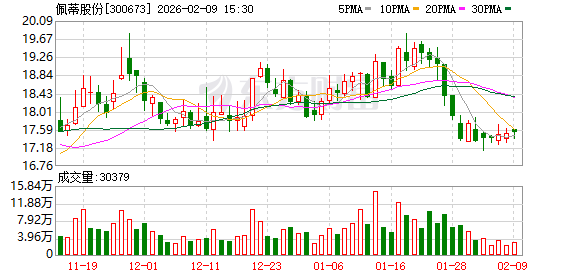
佩蒂股份:股价受宏观经济环境、行业景气度、市场情绪及基本面等多重因素综合影响
Zheng Quan Ri Bao Wang· 2026-02-09 13:21
Group 1 - The core viewpoint of the article emphasizes that Petty Co., Ltd. (300673) acknowledges that its stock price is influenced by multiple factors, including macroeconomic environment, industry prosperity, market sentiment, and fundamentals [1] - The pet industry is highlighted as having vast development potential, indicating a positive outlook for growth opportunities within the sector [1] - The management of the company is committed to maintaining strategic focus and is actively implementing measures to strengthen its internal capabilities, including deepening global layout and advancing self-owned brand initiatives [1] Group 2 - The company is optimizing its production capacity structure and continuously enhancing its capacity layout to expand its business boundaries [1] - Management expresses confidence in the company's future development and is dedicated to improving operational quality while actively listening to various opinions [1] - The company aims to create long-term value for its shareholders through these strategic initiatives [1]
佩蒂股份:新西兰主粮工厂目前正处于商业化运营的初期关键阶段
Zheng Quan Ri Bao· 2026-02-09 12:37
Core Viewpoint - Petty Co. is in the early critical stage of commercial operation for its New Zealand staple food factory, focusing on brand building and contract manufacturing to enhance capacity utilization [2] Group 1 - The company is implementing a dual strategy of "factory brand building" and "contract manufacturing" to drive growth [2] - Significant growth in capacity utilization is expected by 2026 based on current business expansion progress [2]