Mindray(300760)

Search documents
2025深圳国际高性能医疗器械展暨创新医药展举行 医疗黑科技“千款竞技”
Shen Zhen Shang Bao· 2025-12-18 23:17
Group 1 - The 2025 Shenzhen International High-Performance Medical Device and Innovative Pharmaceutical Exhibition showcased over 1,000 innovative products from more than 300 leading global pharmaceutical and medical device companies, covering the latest achievements in high-end medical devices, innovative drugs, and AI applications [1] - The exhibition featured ten major exhibition areas, including medical imaging, emergency rescue, rehabilitation, and artificial intelligence, creating a comprehensive platform for display, communication, and collaboration within the pharmaceutical and medical device industry [1] - The event was organized by the China Medical Equipment Association, the National High-Performance Medical Device Innovation Center, and the Shenzhen Medical Device Industry Association [1] Group 2 - The exhibition highlighted advancements in future medical technologies, such as robotic surgery, advanced imaging equipment, brain-machine interfaces, and AI-assisted rehabilitation tools, demonstrating the potential of these innovations [2] - Notable products included the multi-port and single-port laparoscopic surgical robots from Qingfeng Medical, and an AI-based drug-device research public service platform from Particle Technology, which significantly reduces traditional research and development timelines [2] - Major companies like Mindray and Siemens showcased their cutting-edge medical equipment, emphasizing the clinical applications and enhanced imaging capabilities of their products [2] Group 3 - The pharmaceutical and medical device industry in Shenzhen has seen continuous growth, with an industry output value reaching 157.6 billion yuan in 2024, including over 102.8 billion yuan from medical devices, maintaining the top position in the country for ten consecutive years [3] - Shenzhen has nurtured 35 listed companies and 143 enterprises with an output value exceeding 100 million yuan in the pharmaceutical and medical device sector, with leading firms such as Mindray and Xintai emerging in various market segments [3] - The exhibition served as a platform for the release of significant collaborations and innovations, including a $1.64 billion strategic partnership between Pruijin and Kite for in vivo CAR-T therapies, showcasing the global push for cell therapy technologies [3]

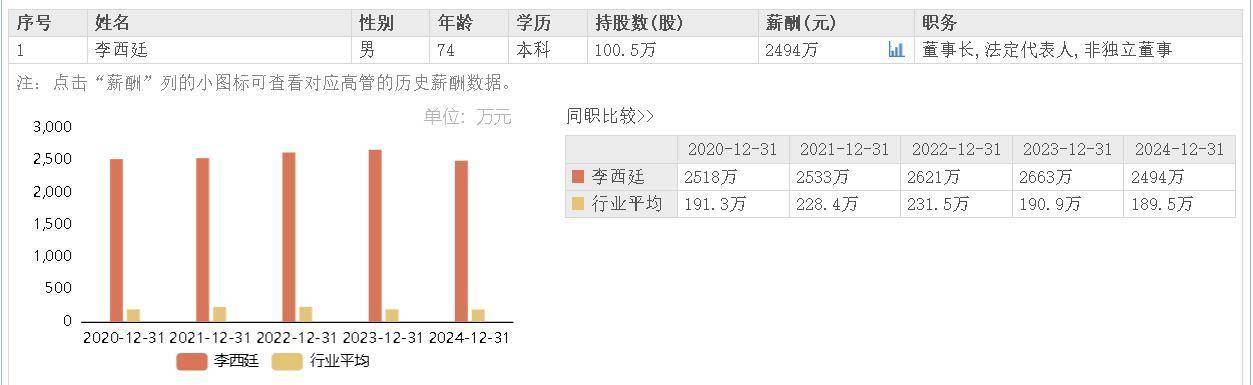
迈瑞医疗74岁董事长李西廷2亿元增持完毕,去年领薪近2500万元
Sou Hu Cai Jing· 2025-12-18 11:44
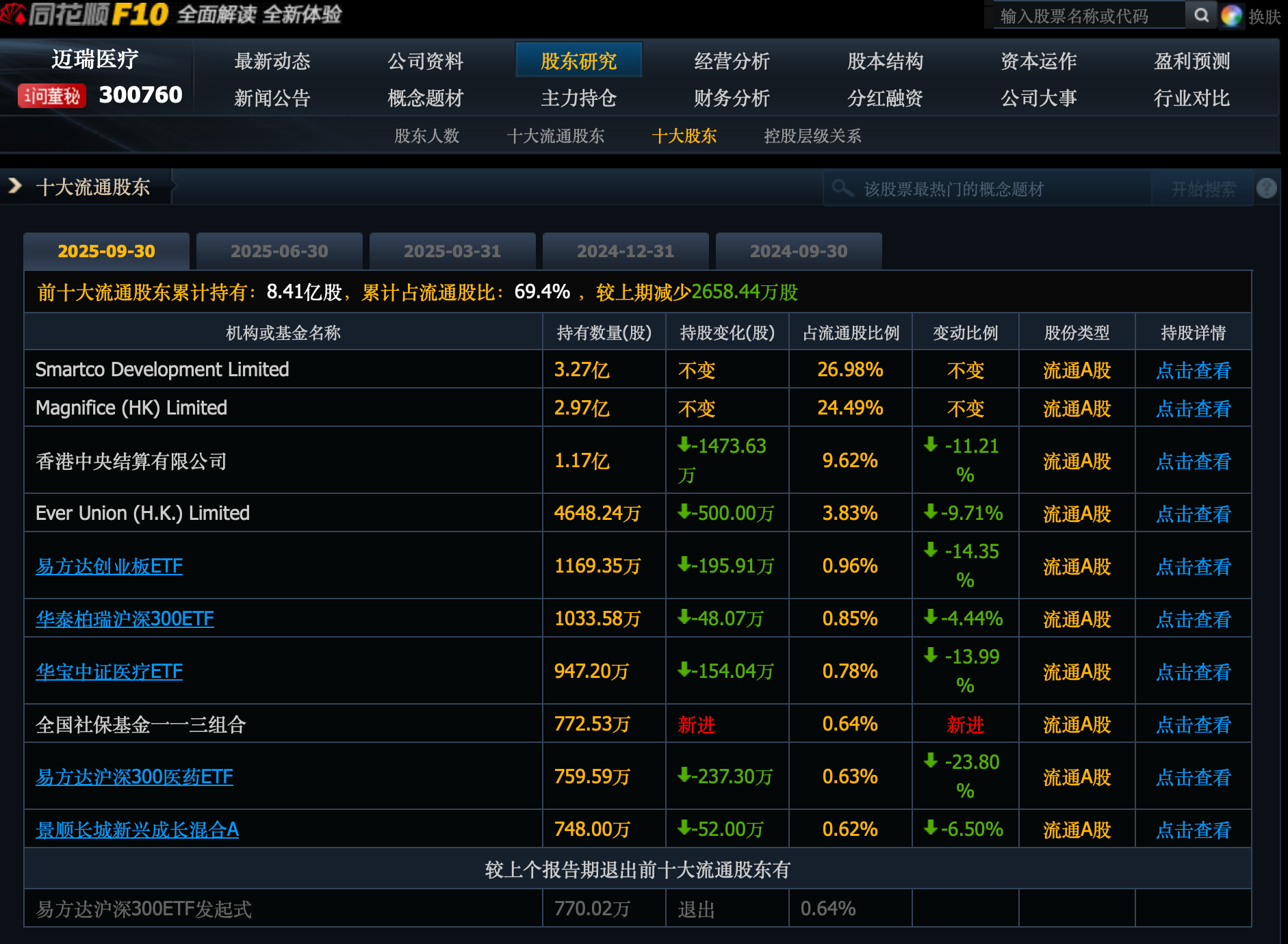
Core Viewpoint - Mindray Medical (SZ300760) announced the completion of a share buyback plan by its chairman, Li Xiting, who invested 200 million yuan in the company, reflecting confidence in its intrinsic value and future development [1][2]. Group 1: Share Buyback Details - Li Xiting's share buyback plan was initiated on November 27, 2025, and completed ahead of schedule by December 12, 2025, during which he acquired 1,005,381 shares, representing 0.08% of the company's total shares [1]. - The total investment for the buyback was 200 million yuan, including transaction fees, and there is a lock-up period of six months following the completion of the buyback [1]. Group 2: Shareholding Structure - Prior to the buyback, Li Xiting did not hold shares directly but controlled 327,072,335 shares (26.98%) indirectly through Smartco Development Limited, while his associate Xu Hang controlled 296,951,000 shares (24.49%) through Magnifice (HK) Limited [2]. - After the buyback, Li Xiting directly holds 1,005,381 shares, while the indirect holdings of Smartco Development and Magnifice (HK) remain unchanged, resulting in a total control of 625,028,716 shares (51.55%) by Li Xiting and his associates [2]. Group 3: Financial Performance - Mindray Medical reported a decline in both revenue and profit for the first three quarters of 2025, with total revenue of 25.834 billion yuan, a year-on-year decrease of 12.38%, and a net profit of 7.570 billion yuan, down 28.83% [4]. - The basic earnings per share for the same period were reported at 6.25 yuan [4]. Group 4: Company Background - Mindray Medical, established on January 25, 1999, is located in Shenzhen, Guangdong Province, and specializes in the research, manufacturing, marketing, and service of medical devices [5].

迈瑞医疗:2025年前三季度公司营收达258.34亿元
Zheng Quan Ri Bao Zhi Sheng· 2025-12-18 11:42
(编辑 任世碧) 证券日报网讯 12月18日,迈瑞医疗在互动平台回答投资者提问时表示,2025年前三季度,公司营收达 258.34亿元,净利润75.70亿元。前三季度国际业务占公司整体收入的比重已经超过了一半,随着持续深 入的本地化平台建设,未来几年国际收入占整体收入的比重将不断提升,尤其发展中国家将维持快速增 长的趋势,并且伴随收入结构中高端客户占比持续提升,国际业务的盈利水平有望稳步提升。通过提高 试剂核心原料自制率、提升高毛利业务和高端客户收入占比,以及发展中国家持续高增长,公司有能力 在一个竞争激烈的环境中维持较高的盈利水平,同时确保各业务线的市场份额进一步扩大。 ...
迈瑞医疗:截至2025年9月30日公司股东总数为108835户
Zheng Quan Ri Bao Wang· 2025-12-18 11:10
证券日报网讯12月18日,迈瑞医疗(300760)在互动平台回答投资者提问时表示,截至2025年9月30 日,公司股东总数为108835户。 ...
李西廷2亿元增持迈瑞医疗,李西廷名下持股平台曾套现超百亿
Di Yi Cai Jing· 2025-12-18 08:30
Group 1 - The core viewpoint of the article highlights that despite a significant drop in the stock price of Mindray Medical, its actual controller, Li Xiting, has recently increased his stake by approximately 200 million yuan, which is relatively minor compared to previous large-scale reductions [1] - Since the beginning of 2023, Li Xiting and his holding platforms have significantly reduced their stakes, cashing out around 2.5 billion yuan in a single quarter, totaling over 10 billion yuan [1] - Industry insiders believe that the domestic medical and consumables procurement continues to face challenges, and the fundamental aspects of the industry have not yet bottomed out, while overseas operations are facing tariff-related risks [1] Group 2 - As of June 2023, the four holding platforms still collectively held 50 million shares of Mindray Medical, but by June 2025, they are expected to disappear from the list of the top ten shareholders [2] - The estimated cash-out amount from these reductions over the two-year period could exceed 10 billion yuan based on average stock prices [2]
李西廷2亿增持迈瑞医疗,名下持股平台曾套现超百亿
第一财经· 2025-12-18 08:19
Core Viewpoint - The stock price of Mindray Medical (300760.SZ) has fallen below 200 yuan, significantly down from its historical high of nearly 500 yuan, indicating a substantial decline in market value. The actual controller, Li Xiting, has recently increased his stake by approximately 200 million yuan, but this is minor compared to the over 10 billion yuan he has cashed out through significant reductions in shareholding over the past three years. Analysts suggest that while the company faces ongoing challenges in the domestic medical supply market and overseas tariff risks, there may be potential for a turnaround in both stock price and fundamentals after four years of adjustment [3][4][5][9]. Group 1: Shareholding Changes - From November 27 to December 12, Li Xiting used 200 million yuan to acquire 1.005 million shares of Mindray Medical, representing 0.08% of the total share capital. This buyback was completed ahead of the originally planned six-month period [4]. - Following the buyback, Li Xiting and his associates hold a total of 625 million shares, accounting for 51.55% of the company [4]. - Over the past three years, Li Xiting's platforms have significantly reduced their holdings, cashing out approximately 25 billion yuan in a single quarter and over 10 billion yuan in total [5]. Group 2: Financial Performance - In the first three quarters of the year, Mindray Medical reported revenue of 25.834 billion yuan, a year-on-year decrease of 12.38%, and a net profit of 7.57 billion yuan, down 29%. However, the third quarter showed signs of recovery with a revenue of 9.091 billion yuan, a year-on-year increase of 1.53% [8]. - Analysts predict that with the recovery of domestic bidding and accelerated overseas expansion, the company's revenue and profit may gradually stabilize. However, the sales net profit margin has decreased to 30.2%, down 6.1 percentage points year-on-year [8]. Group 3: Market Outlook and Challenges - Mindray Medical has submitted an application for H-share issuance and main board listing, indicating a strategic move to enhance its market position [9]. - Despite the recent increase in shareholding by Li Xiting, analysts express concerns that this may signal a reduction in future support for share buybacks or increases. The ongoing pressure from domestic medical supply procurement and overseas tariff risks could further impact the company's profitability [9]. - The company faces challenges from pricing pressures and increased competition due to healthcare reforms and policies that may lead to price reductions in medical devices, which could affect future profitability [9].

李西廷2亿增持迈瑞医疗,名下持股平台曾套现超百亿
Di Yi Cai Jing· 2025-12-18 07:57
Core Viewpoint - The recent share buyback by the actual controller of Mindray Medical, Li Xiting, is seen as a weak response to the significant share reduction that has occurred over the past few years, with the company's stock price dropping sharply from nearly 500 yuan to around 200 yuan, indicating a potential undervaluation in the market [1][2][8]. Group 1: Share Buyback and Ownership - Li Xiting has increased his stake in Mindray Medical by approximately 200 million yuan, acquiring 1.005 million shares, which represents only 0.08% of the total share capital [2][3]. - After the buyback, Li Xiting and his associates hold a total of 625 million shares, accounting for 51.55% of the company [4]. - The buyback was completed ahead of the planned six-month period, indicating a swift response to the declining stock price [3]. Group 2: Historical Share Reduction - Since the beginning of 2023, Li Xiting and his holding platforms have significantly reduced their stakes, cashing out approximately 2.5 billion yuan in a single quarter and over 10 billion yuan in total [2][5]. - In the second quarter of 2023, while the stock price hovered around 300 yuan, Li Xiting's platforms collectively sold 8 million shares [4]. Group 3: Financial Performance - For the first three quarters of the year, Mindray Medical reported revenues of 25.834 billion yuan, a year-on-year decrease of 12.38%, and a net profit of 7.57 billion yuan, down 29% [6]. - The third quarter showed a slight recovery with revenues of 9.091 billion yuan, reflecting a year-on-year growth of 1.53%, although net profit still declined by 19% [6][7]. Group 4: Market Outlook and Challenges - Analysts suggest that with the recovery of domestic bidding and accelerated overseas expansion, the company's revenue and profit may gradually stabilize [7]. - However, the company faces ongoing price pressures and rising costs, with a projected decline in net profit margins for the year [7][8]. - The competitive landscape is intensifying due to increased supply and demand challenges, which may impact the company's future profitability [8].
2025年中国生命支持医疗器械行业产业链、市场规模、竞争格局及发展趋势研判:行业具有高增长潜力,国产化率将持续快速提升[图]
Chan Ye Xin Xi Wang· 2025-12-18 01:43
Core Insights - The global life support medical device market is projected to reach $75.1 billion in 2024 and is expected to exceed $80 billion in 2025, with a potential to surpass $100 billion in the next five years [3][5] - The domestic life support medical device market in China is rapidly growing, with an estimated market size of 55.7 billion yuan in 2024, expected to reach 61.95 billion yuan in 2025, and potentially reaching 93.2 billion yuan in the next five years [5] Industry Definition and Classification - Life support medical devices are critical equipment used to replace or assist the function of vital organs in emergency situations, primarily utilized in ICUs, emergency rooms, operating rooms, and pre-hospital care [2][3] - Key categories of life support medical devices include blood purification equipment, monitors, ventilators, anesthesia machines, ECG machines, defibrillators, and CPR devices [2][3] Current Industry Development - The life support medical device sector is characterized by high-risk equipment that plays a crucial role in medical rescue and care [3] - The industry has seen rapid market expansion, with significant growth expected in the coming years [3][5] Industry Chain - The upstream of the life support medical device industry includes raw materials, electronic components, biological materials, high-performance batteries, precision sensors, packaging materials, and software systems [5] - The midstream focuses on the research and manufacturing of life support medical devices, while the downstream includes medical institutions, home users, and rehabilitation centers [5] Competitive Landscape - The life support medical device market is marked by high technical barriers and growth potential, with leading domestic companies including Mindray, Yuyue Medical, and Weigao [7] - The market is relatively concentrated, with foreign companies dominating the high-end segment while domestic brands are making breakthroughs in the mid-to-low end and advancing towards high-end products [7] Development Trends - The life support medical device industry is increasingly recognized as essential in modern medicine, with a focus on integrated, precise, and intelligent technologies [10] - The demand for life support medical devices is expected to grow due to the aging population and the rising need for critical care related to severe and emergency patients [10]


医疗设备行业11月更新:招采金额环比延续增长态势
Changjiang Securities· 2025-12-17 15:03
Investment Rating - The report maintains a "Positive" investment rating for the medical device industry [3]. Core Insights - The medical device industry is expected to return to positive growth in 2025 after two consecutive years of decline in 2023 and 2024, driven by increased demand for hospital equipment due to equipment renewal policies [10]. - Monthly procurement data shows a continuous recovery trend, with November 2025 procurement amounting to 208.76 billion yuan, reflecting a month-on-month increase of 26.93% [18]. - The domestic production rate of medical devices has increased from 19% in 2019 to 48% in November 2025, indicating a significant shift towards local manufacturing [21]. Summary by Sections Equipment Procurement - The medical device procurement is showing a sustained recovery, with a projected annual procurement scale for 2025 estimated between 1,884 billion yuan and 2,422 billion yuan based on the first half's performance [14]. - The procurement amount for November 2025 was 208.76 billion yuan, with a year-on-year decrease of 0.25% but a month-on-month increase of 26.93% [18]. Market Segmentation - The procurement scale for ultrasound devices in November 2025 reached 22.40 billion yuan, showing a year-on-year growth of 17.60% and a month-on-month growth of 41.67% [27]. - CT device procurement in November 2025 was 25.36 billion yuan, with a year-on-year increase of 27.58% and a month-on-month increase of 22.82% [28]. - MRI procurement in November 2025 was 23.94 billion yuan, reflecting a year-on-year growth of 5.68% and a month-on-month growth of 29.94% [31]. - Digestive endoscope procurement in November 2025 was 7.30 billion yuan, with a year-on-year increase of 3.26% and a month-on-month increase of 41% [36]. - Surgical robot procurement in November 2025 was 5.60 billion yuan, showing a year-on-year growth of 8.33% but a month-on-month decrease of 11.53% [37]. Company Performance - Mindray Medical's procurement in November 2025 was 13.18 billion yuan, with a year-on-year increase of 12.16% and a month-on-month increase of 38.34% [44]. - United Imaging's procurement in November 2025 reached 14.33 billion yuan, reflecting a year-on-year growth of 30.40% and a month-on-month growth of 31.15% [46]. - KAILI Medical's procurement in November 2025 was 2.47 billion yuan, with a year-on-year increase of 62.15% and a month-on-month increase of 17.95% [50]. - Aohua Endoscopy's procurement in November 2025 was 1.09 billion yuan, showing a year-on-year growth of 59.95% and a month-on-month growth of 62.14% [54].


《2025胡润全球高质量企业TOP1000》榜单在深发布 15家深圳企业上榜全球1000强
Shen Zhen Shang Bao· 2025-12-17 00:30
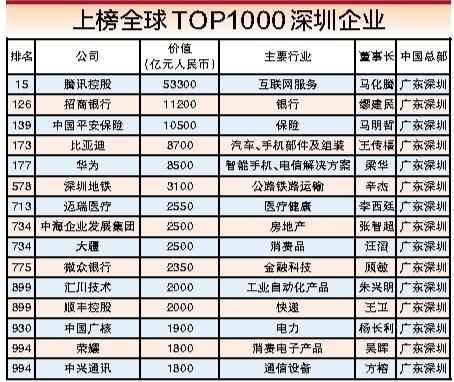
Group 1 - The "2025 Hurun Global High-Quality Enterprises TOP 1000" list was released, highlighting global economic trends, with the US leading with 410 companies, followed by China with 158, and Japan with 63 [2] - Nvidia surpassed Microsoft and Apple to become the world's most valuable company, valued at 3.28 trillion RMB, while Apple remains second at 2.86 trillion RMB [2] - Walmart is noted as the highest revenue-generating company on the list, with an annual income of 4.8 trillion RMB, while Alphabet holds the title for the highest profit at 790 billion RMB [2] Group 2 - Shenzhen ranks 11th globally with 15 companies on the list, an increase of 3 from the previous year, with 5 companies located in the Futian District [3] - The Greater Bay Area has 38 companies listed, accounting for 24% of China's total, indicating significant regional economic strength [3] - Notably, 8 non-Chinese companies have established their China headquarters in Shenzhen, ranking fourth among Chinese cities [3] Group 3 - The list reflects the concentration of wealth driven by artificial intelligence, with 11 companies valued at over 1 trillion USD, up from 4 five years ago [4] - The top 10 companies have doubled in value to 18.4 trillion RMB, nearing the total market capitalization of A-shares and H-shares combined [4] - Companies like TSMC and Tencent showed remarkable performance, with TSMC increasing by 410 billion RMB and Tencent by 200 billion RMB [4] Group 4 - Companies experiencing significant value declines include Meituan (down 200 billion RMB) and Shein (down 100 billion RMB), along with others like GF Securities, Mindray Medical, Wanhua Chemical, and Sinopec [5]