Amazon(AMZN)

Search documents
大手笔AI投资之后:亚马逊、谷歌、Meta要花光现金流了?
硬AI· 2026-02-08 06:18
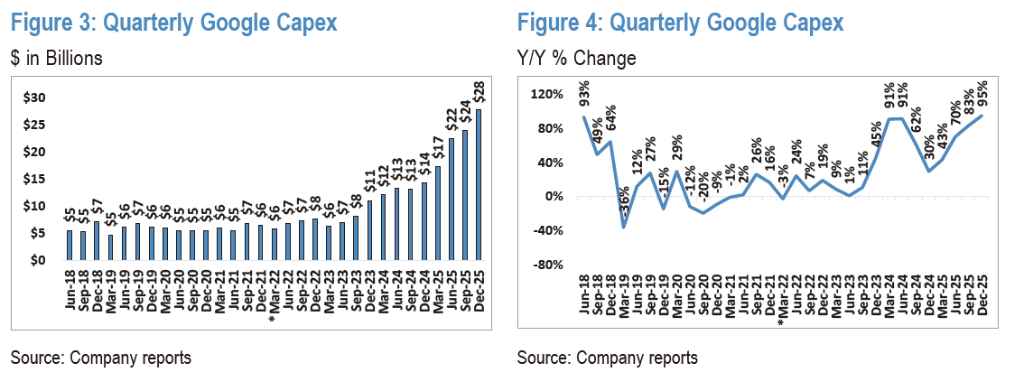
Core Viewpoint - The article highlights a looming cash flow crisis for major tech companies, with a projected capital expenditure of $645 billion by 2026, raising concerns about their ability to convert investments into tangible revenue growth [2][34]. Group 1: Capital Expenditure Projections - The total capital expenditure for the four major U.S. cloud giants—Amazon, Google, Meta, and Microsoft—is expected to reach $645 billion by 2026, a 56% year-over-year increase, with an additional $230 billion in new spending [3]. - Google's capital expenditure guidance has been raised to between $175 billion and $185 billion for 2026, reflecting a staggering 97% year-over-year growth [5]. - Amazon's capital expenditure is projected at approximately $200 billion for 2026, a 52% increase, but its operating cash flow is estimated to be only $178 billion, leading to a significant cash outflow [10]. Group 2: Financial Health and Cash Flow - Meta's capital expenditure is expected to grow by 75% to between $115 billion and $135 billion, which will nearly eliminate its free cash flow, straining its previously strong financial position [15]. - Microsoft is projected to have a capital expenditure exceeding $103 billion, a growth of over 60%, but is expected to generate around $66 billion in free cash flow, allowing it to cover its substantial spending [23]. - Oracle's net debt has surged to $88 billion, more than double its EBITDA, serving as a cautionary example of excessive leverage [29][30]. Group 3: Shareholder Returns and Financial Strategies - The ability of tech giants to return capital to shareholders through stock buybacks is under pressure, with Meta likely to reduce its buyback efforts due to shrinking free cash flow [21]. - Google and Meta paid approximately $10 billion and $5 billion in dividends, respectively, which may further strain their cash flow in the coming year [22]. - Amazon has not engaged in stock buybacks since 2022 and has never paid dividends, making it less vulnerable to cash flow pressures in this regard [22]. Group 4: Debt Management and Future Outlook - Google maintains a "zero net debt" status, with cash reserves of $127 billion exceeding its $47 billion debt, indicating a strong financial position despite increased spending [32]. - Amazon holds $123 billion in cash and has issued $15 billion in bonds, preparing for potential large-scale debt issuance to manage its cash flow challenges [32].





大手笔AI投资之后:亚马逊、谷歌、Meta要花光现金流了?
Hua Er Jie Jian Wen· 2026-02-08 05:23
随着AI基础设施建设的军备竞赛进入"深水区",一个令投资者不安的转折点已然浮现:为了支撑AI算力需求,亚马逊、谷歌和Meta正面临自由现 金流被耗尽甚至透支的风险。 根据摩根大通2026年2月5日发布的研究报告,美国四大云巨头——亚马逊、谷歌、Meta和微软,2026年总资本支出预计将达到6450亿美元,同比 激增56%,新增支出将达到惊人的2300亿美元。 对于投资者而言,2026年,或将是紧盯科技巨头资产负债表的一年。 谷歌的97%增速与亚马逊的"现金赤字" 在这场基建狂潮中,谷歌的投入非常激进。 2026年,谷歌的资本支出指引已上调至1750亿至1850亿美元,同比增速高达97%,其资金正疯狂涌向服务器和技术基础设施。 如果说谷歌还只是在"疯狂花钱",那么亚马逊则堪称"透支未来"。 2026年,亚马逊的资本支出指引约为2000亿美元(同比增长52%)。但问题的核心在于,亚马逊赚回来的现金已经盖不住支出了——据标普全球 市场分析师预测,亚马逊2026年的运营现金流(OCF)约为1780亿美元。 这意味着,亚马逊的资本支出将超过其运营现金流,导致实质性的现金净流出(Burn Cash)。此外,据《The I ...

豪赌!四家巨头狂砸4.6万亿押注AI!“没有一家愿意输!”黄仁勋力挺:AI需求火爆,庞大支出合理、可持续
雪球· 2026-02-08 05:04
Group 1 - The core viewpoint of the article is that major tech companies are significantly increasing their capital expenditures on AI infrastructure, with a total expected spending of $660 billion (approximately 4.58 trillion RMB) this year, which is a 60% increase compared to 2025 and more than double the spending of 2024 [4][5] - Companies like Amazon, Google, Meta, and Microsoft are leading this investment trend, with Amazon projected to spend $200 billion by 2026, exceeding analyst expectations by 38% [5] - The competition among these tech giants has shifted from business operations to a focus on the underlying computational power needed for AI, indicating a strategic pivot in the industry [5][6] Group 2 - The massive capital expenditures have raised concerns about the financial performance of these companies, leading to a collective decline in their stock prices, with Google, Microsoft, Amazon, and Meta experiencing drops of 4.48%, 6.77%, 12.11%, and 7.68% respectively [8] - Analysts predict that these high capital expenditures may negatively impact free cash flow, with forecasts indicating Amazon's free cash flow could be -$17 billion by 2026 and Alphabet's could plummet nearly 90% this year [10] - The market sentiment has shifted rapidly from fear of missing out (FOMO) to a defensive stance against tail risks, reflecting growing concerns over the sustainability of such high spending [8] Group 3 - NVIDIA's CEO Jensen Huang supports the substantial investment in AI infrastructure, describing it as reasonable and sustainable, driven by high demand for computational power [12][15] - Huang emphasizes that as long as companies continue to profit from AI, they will keep increasing their investments, highlighting the potential for ongoing growth in the sector [15] - He notes that this investment wave represents one of the largest infrastructure builds in human history, driven by the needs of AI companies and large-scale enterprises [15]


Think AWS Is Losing To Azure and Google Cloud? You Need To Hear This Quote From Amazon CEO Andy Jassy
The Motley Fool· 2026-02-08 04:30
Core Insights - Amazon remains the leader in cloud computing despite losing market share to Google Cloud and Microsoft Azure, with AWS reporting a 20% growth compared to Google Cloud's 36% and Azure's 39% in 2025 [1][2][5] Group 1: Market Position and Growth - Amazon's AWS generated over $21.2 billion in revenue in 2025, significantly outpacing Google Cloud's $15.5 billion growth and Azure's approximately $19 billion growth [5] - AWS's annualized run rate reached $142 billion, with a year-over-year growth of 24%, marking its fastest revenue growth in 13 quarters [3][6] - AWS's chips business, focused on AI, achieved a $10 billion annual revenue run rate, growing at triple digits [3] Group 2: Financial Performance - In 2025, AWS operating income rose to $45.6 billion, compared to $13.9 billion for Google Cloud, highlighting AWS's profitability advantage [6] - Amazon's total revenue for the quarter increased by 14% to $213.4 billion, with operating income up 18% to $25 billion [10] Group 3: Capital Expenditure and Future Outlook - Amazon plans to invest $200 billion in capital expenditures in 2025, primarily for AWS and AI workloads, indicating a commitment to maintaining its leadership position [6] - The company generated $139.5 billion in operating cash flow in 2025, suggesting that the $200 billion target may lead to negative free cash flow in 2026 [10] - The stock trades at a price-to-earnings ratio of less than 30, with adjustments indicating it is fairly valued, though the spending boom may limit short-term upside potential [11]
裁减近1.6万个工作岗位,员工还挺开心。
猿大侠· 2026-02-08 04:11
以下文章来源于数据结构和算法 ,作者博哥 数据结构和算法 . --------------下面是今天的算法题-------------- 来看下今天的算法题,这题是LeetCode的第 2976题:转换字符串的最小成本 I,难度是中等。 给你两个下标从 0 开始的字符串 source 和 target ,它们的长度均为 n 并且由小写英文字母组成。 另给你两个下标从 0 开始的字符数组 original 和 changed ,以及一个整数数组 cost ,其中 cost[i] 代表将字符 original[i] 更改为字符 changed[i] 的成本。 你从字符串 source 开始。在一次操作中,如果存在任意下标 j 满足 cost[j] == z 、original[j] == x 以及 changed[j] == y 。你就可以 选择字符串中的一个字符 x 并以 z 的成本将其更改为字符 y 。 返回将字符串 source 转换为字符串 target 所需的最小成本。如果不可能完成转换,则返回 -1 。 注意,可能存在下标 i 、j 使得 original[j] == original[i] 且 ch ...

科技周报|苹果CEO库克谈退休、马云现身阿里千问春节项目组
第一财经网· 2026-02-08 03:36
库克深入谈及退休规划,腾讯、阿里、百度掀起春节前AI大模型的红包大战,松下宣布裁员规模可能 增至1.2万人。 2月5日,苹果CEO库克主持召开一场全员大会,描绘了人工智能(AI)将如何重塑苹果的未来,同时 深入谈及了退休和继任规划。他谈到:"大家都清楚,人到了一定年纪,有些人会选择退休,这是很自 然的事。"库克表示自己花很多时间思考5年后、10年后,甚至15年后谁会坐在这个房间里。思考这些事 情并制订计划,是领导力的重要组成部分。 【点评】:已经年满65岁的库克退休传闻去年下半年开始升温。目前,新任首席运营官萨比·汗已全面 接手运营工作,并正致力于解决行业内普遍面临的内存芯片短缺问题。随着苹果继任者规划逐渐浮出水 面,苹果面临的问题是,公司需要的是一位创新者,还是另一位精明的管理者?是一位像库克那样通过 让公司变得更具可预测性和渐进性而成功的领导者,还是一位像乔布斯那样通过冒险来押注未来的富有 远见的产品规划师? 腾讯、阿里、百度春节撒45亿红包 2026年马年春节前夕,红包大战再度升级,腾讯、阿里、百度三大巨头累计投入超45亿元,且首次将 AI作为核心驱动,开启"红包+AI"的全新玩法。阿里千问斥资最高,达 ...




AMZN, GOOG, MSFT, META, ORCL Plan $700 Billion in Largely AI-Related Capex in 2026. Where the Cash Comes From
Wolfstreet· 2026-02-08 02:48
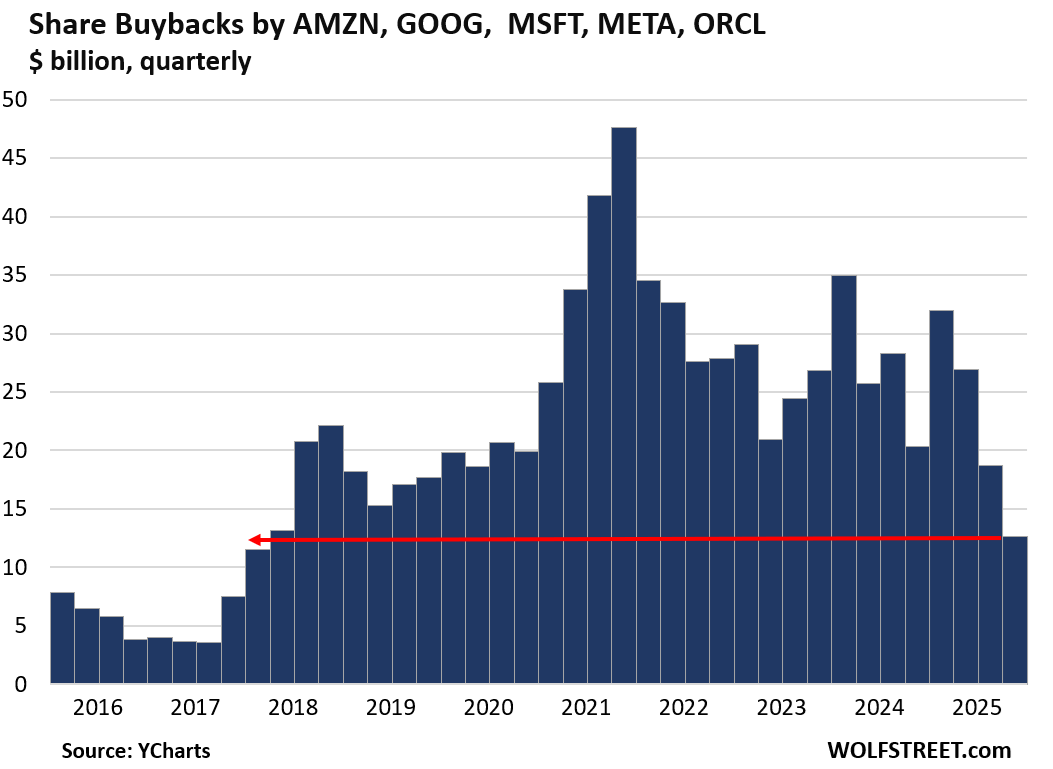
Core Viewpoint - Big Tech companies are planning to invest approximately $700 billion in capital expenditures by 2026, primarily focused on AI infrastructure, which includes data centers and related equipment [1][21]. Investment Plans - The five major companies are expected to contribute to 2.1% of current-dollar GDP through these investments [2]. - Other companies are also increasing capital expenditures, indicating a broader economic stimulus as long as this trend continues [3]. Share Buybacks and Funding Sources - Concerns exist that the increased spending may come at the expense of share buybacks, which have already begun to decline [2][7]. - The funding for the $700 billion investment will come from various sources, including reduced share buybacks, new share issuances, and debt issuances [5][9][19]. - Specific companies have already shifted from share buybacks to issuing new shares, such as Oracle, which issued $2.1 billion in new shares in 2025 [5][13]. Financial Performance and Debt - In Q4, share buybacks for the five companies dropped to $12.6 billion, the lowest since Q1 2018, compared to a peak of $149 billion in 2021 [7]. - Companies like Amazon and Meta have significantly reduced their share buybacks to allocate funds for AI investments [6][8]. - Oracle's recent bond offerings have seen high demand, indicating strong investor interest in corporate debt [16][19]. Operating Cash Flow - The operating cash flows for these companies are substantial, with Amazon generating $126 billion and Alphabet $127 billion in 2025, which can help fund the planned investments [20][23]. - Utilizing operating cash flow for investments is seen as a positive contribution to economic growth [23]. Economic Impact - The shift from share buybacks to investments in AI infrastructure is expected to stimulate economic growth, although it may not be well-received by shareholders [21][22]. - The overall investment strategy is viewed as a significant stimulus for the economy, provided that financial markets remain stable [23].


通信行业周报:北美云厂商业绩超预期,关注CPO及产业链公司投资机会
GUOTAI HAITONG SECURITIES· 2026-02-08 02:45
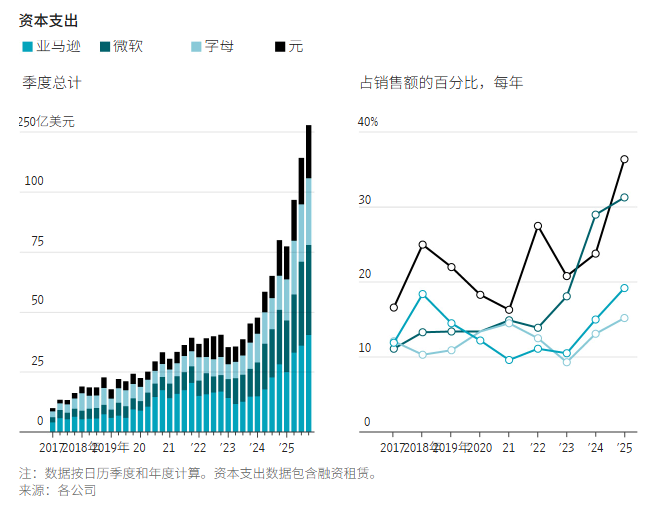
Investment Rating - The report maintains a positive outlook on the communication equipment and services industry, particularly focusing on investment opportunities in CPO and related supply chain companies [3][11]. Core Insights - North American cloud vendors have reported better-than-expected earnings, with significant capital expenditure guidance increases from major players like Google and Amazon, indicating strong growth in the AI computing industry chain [3][11]. - The report highlights the rapid growth of the optical communication industry driven by AI applications, with leading companies achieving record highs in stock performance [6][9]. - The transition from Scale-OUT to Scale-UP in optical applications is emphasized, suggesting a broadening of application scenarios and increased demand for optical modules and components [6][9]. Summary by Sections Weekly Viewpoint - The optical communication sector is experiencing unprecedented growth, with major cloud companies significantly increasing capital expenditures, leading to a strong performance in the optical communication supply chain [9]. - The report notes that while the market is currently experiencing fluctuations, long-term investment opportunities are becoming more apparent, particularly in the context of rising prices for optical fibers and components [9]. Industry News - Major cloud service providers like Google and Amazon have substantially raised their capital expenditure forecasts for 2026, with Google estimating between $175 billion and $185 billion, nearly double that of 2025, and Amazon projecting around $200 billion, a 50% increase from the previous year [11][24][25]. - The report discusses the implications of a recent tax increase on value-added services in China, which may impact the revenue and profit margins of major telecom operators [12]. Investment Highlights - The report indicates that the proportion of holdings in the optical communication sector has increased, reflecting a positive market sentiment driven by AI-related infrastructure investments [11][41]. - The domestic new generation computing infrastructure is set to enter a new cycle, with significant opportunities arising from the ongoing global infrastructure wave [11][41]. - The report suggests that the AI-driven network upgrades will enhance communication capabilities, leading to rapid advancements in network innovation and technology applications [11][41].


AI交易“被忽视的风险”:万一,天量资本开支“花不出去”
Hua Er Jie Jian Wen· 2026-02-08 02:17
Group 1 - The core narrative is that the story of AI is shifting from "software eating the world" to "hardware being constrained by the world," highlighting a growing risk in the investment landscape due to political and physical limitations on data center expansion [1][15] - A rare bipartisan consensus has emerged between Senator Bernie Sanders and Governor Ron DeSantis regarding the need to halt the rapid increase of data centers, driven by public concerns over the negative impacts of AI [2][3] - The political landscape is changing, with states like New York, Arizona, Georgia, and Texas considering legislation to pause new data center projects or eliminate tax incentives, reflecting a growing backlash against the expansion of AI infrastructure [2][3] Group 2 - The anticipated capital expenditure of approximately $600 billion in 2026 faces skepticism regarding its feasibility, as major tech companies plan to spend $670 billion on AI infrastructure this year alone [4][6] - The energy demand from data centers is projected to double by 2035, raising concerns about whether the current U.S. power grid can meet this demand, which is already causing regulatory issues in Texas [8][9] - The financial markets are reacting to the risk of unspent capital, leading to significant sell-offs in tech stocks and a shift towards defensive sectors, indicating a potential reevaluation of the AI investment landscape [10][12][13]
突发大抛售!热门交易全线溃败!空头暴赚1660亿元
天天基金网· 2026-02-08 01:37
Group 1 - The core viewpoint of the article highlights a significant sell-off in software stocks, leading to a substantial profit of $24 billion (approximately 166 billion RMB) for short sellers amid a broader market downturn in technology stocks [2][3]. - S3 Partners reported that short sellers have increased their positions in major tech stocks, particularly in the software sector, despite many leading companies experiencing significant price declines [3][4]. - The software sector has seen a market capitalization loss of $1 trillion, with notable short-selling activity in companies like Microsoft, Amazon, Oracle, and Broadcom [3][4]. Group 2 - The article discusses a shift in investor sentiment, with a noticeable move towards defensive strategies as the market faces valuation concerns and a potential withdrawal of funds from previously favored assets like tech stocks and cryptocurrencies [5][6]. - Analysts have pointed out that the current environment reflects a structural sell-off in the software industry, with some investors questioning the relevance of software companies in the age of artificial intelligence [6]. - Despite the prevailing skepticism, some analysts argue that the software industry is not obsolete and can still thrive, as evidenced by companies like Palantir [6].