ASML Holding(ASML)

Search documents
蛇鼠一窝!主动请缨做美国在华耳目?阿斯麦急发声,都是假的
Sou Hu Cai Jing· 2025-11-26 06:29
Core Viewpoint - The news reveals that ASML, a leading photolithography machine company, is allegedly involved in espionage activities in China and has even requested to act as an informant for the U.S. in China, challenging the previously held perception of the company as a neutral entity [1][3][5] Group 1: ASML's Alleged Espionage Activities - ASML is reported to have not only cooperated with U.S. pressures to limit its operations in China but has also actively sought to serve U.S. interests by acting as an informant [3][5] - A new book titled "The Most Important Machine in the World" claims that ASML's involvement as a U.S. informant was voluntary, contradicting the narrative of being coerced by the U.S. [3][5] - ASML's executives have denied these allegations, labeling them as fake news, yet the situation raises questions about the company's true intentions and actions [5][7] Group 2: Implications for the Semiconductor Industry - The controversy surrounding ASML coincides with issues faced by TSMC, including leaks of advanced 2nm technology and the potential loss of core technical data due to a former executive's actions [8] - The U.S. is encouraging increased investment from Taiwan, which could lead to significant shifts in the semiconductor industry landscape [8][10] - The overall situation highlights the fragility of the semiconductor supply chain and the increasing importance of national security in the industry [5][10]



Mutual Funds Gobble Up This Energy Stock And This Chip Equipment Name
Investors· 2025-11-25 14:44
Group 1 - Institutional backing is crucial for stock performance, with large purchases by big money managers positively impacting share prices [1] - The IBD Screen Of The Day identified 29 stocks that mutual funds are currently buying, highlighting ASML Holding and Valaris as notable mentions [1] - Valaris received a Relative Strength Rating upgrade, indicating improved technical performance [2][4] Group 2 - Valaris stock rating has increased following a surge in earnings and share price [4] - ASML stock is nearing highs due to strong orders and a positive outlook for 2026 [4] - Taiwan Semiconductor Manufacturing Company (TSMC) is leading the chipmaking sector, contributing to a list of hot tech stocks [4]

全球半导体设备_DRAM 资本支出上行周期_ Global Semiconductor Equipment_ DRAM capex upcycle_
2025-11-25 01:19
Summary of Global Semiconductor Capital Equipment Conference Call Industry Overview - The conference call focused on the **Global Semiconductor Capital Equipment** industry, particularly the **DRAM** and **foundry** sectors, with insights into **China's** capital expenditure (CapEx) trends and forecasts for wafer fab equipment (WFE) spending. Key Points and Arguments 1. **WFE Forecast Adjustments** - The WFE forecast for **2025** has been raised to **$119 billion** (+10% YoY) from **$114 billion** (+6% YoY) - The forecast for **2026** is now **$132 billion** (+10% YoY) from **$120 billion** (+5% YoY) - For **2027**, the forecast is adjusted to **$131 billion** (flat YoY) from **$115 billion** (-3%) - The upward revisions are primarily due to improved outlooks for **Global DRAM** and **China CapEx** [2][21][43] 2. **China WFE Demand** - China WFE demand has been significantly revised up by **$5.2 billion** in **2025**, **$7.0 billion** in **2026**, and **$8.4 billion** in **2027** - The increase is driven by higher demand for local AI chips and the need for more DRAM capacity to support future local HBM manufacturing - The anticipated IPO of **CXMT** is expected to provide additional cash for capacity expansion [4][43] 3. **Global DRAM and Foundry CapEx** - Global DRAM WFE is raised by **$4.2 billion** to grow **25% YoY** in **2026** (previously +13%) and another **10%** in **2027** - Foundry/logic WFE is slightly increased by **$0.8 billion** to **8% YoY** in **2026** and another **$1.4 billion** to **6% YoY** in **2027** - The increases reflect a more optimistic capex outlook from **TSMC** [3][21] 4. **Company Ratings and Price Targets** - **AMAT** (Applied Materials) and **LRCX** (Lam Research) are rated **Outperform** with price targets raised to **$260** and **$175**, respectively - Both companies are expected to benefit from key leading-edge inflections, with AMAT having more exposure to a stronger DRAM trajectory [5][17][47] 5. **Regional Insights** - In **Japan**, **Tokyo Electron** and **Kokusai** are preferred due to stronger memory capex - In **Europe**, **ASML** is viewed positively due to better advanced logic capex, although caution remains due to litho intensity and China market concerns [6][12][13][61] 6. **Chinese Semiconductor Companies** - **AMEC**, **NAURA**, and **Piotech** maintain an **Outperform** rating, with expectations of accelerated capacity expansion driven by domestic memory and advanced logic [7][62] Other Important Insights - The semiconductor industry is experiencing a shift towards **3D architectures**, which may impact future EUV adoption rates - There is a cautious outlook for **China's** WFE revenue in **2026**, with expectations of a significant decline despite strong performance in **2025** - The overall sentiment indicates a potential for short-term upside in China WFE, which could support margins due to its margin-accretive nature [13][46][63] This summary encapsulates the key insights and forecasts discussed during the conference call, highlighting the evolving landscape of the semiconductor capital equipment industry.


一本新书的猛料,让ASML陷入国际舆论漩涡,多次下场“对线”
Tai Mei Ti A P P· 2025-11-25 00:58
Core Viewpoint - The publication of the book "The Most Important Machine" has sparked significant controversy surrounding ASML, a leading company in the global semiconductor lithography machine sector, due to allegations of its involvement in geopolitical tensions and proposals to monitor Chinese clients for the U.S. government [1][2]. Group 1: Book Content and Impact - The book is described as a political thriller about ASML, highlighting its critical role in international power struggles, particularly between the U.S. and China [2]. - The authors claim to have disclosed previously confidential information, using exclusive sources, including participants in U.S.-China negotiations regarding ASML [4]. - The book emphasizes ASML's lithography technology's importance for AI, autonomous driving, and next-generation weapons, suggesting that ASML holds significant influence over future global dynamics [5]. Group 2: Allegations and Responses - The book alleges that ASML broke agreements to limit sales of DUV lithography machines to China, leading to dissatisfaction from Dutch and U.S. officials [5]. - It is reported that the former CEO of ASML, Peter Wennink, suggested that the company should continue servicing Chinese clients and even proposed that ASML engineers gather internal development intelligence from Chinese companies [5][6]. - A senior U.S. government official is quoted as saying that ASML could act as an informant for Washington regarding China, although this proposal was rejected by U.S. National Security Advisor Jake Sullivan [6]. Group 3: ASML's Official Stance - ASML has publicly rejected the claims made in the book, stating that the allegations are factually incorrect and damaging to the company's reputation [1]. - The company has reiterated its compliance with all applicable laws and regulations, emphasizing that it has never proposed to act on behalf of any government [1][6].

“监控中国客户”:一本新书引发ASML“风暴眼”的背后
3 6 Ke· 2025-11-25 00:36
Core Viewpoint - The controversy surrounding ASML's alleged proposal to "monitor Chinese customers" highlights the intersection of corporate actions and geopolitical tensions in the global semiconductor industry, reflecting a shift in the international technology order that warrants deeper attention beyond the accusations themselves [1][6][13] Group 1: Background of the Controversy - The controversy originated from a book co-authored by former Bloomberg journalists, which portrays ASML as being drawn into the U.S. export restriction framework, suggesting a narrative that may exaggerate the situation [2][4] - The book claims that during a transitional period of U.S.-Dutch export restrictions in 2023, ASML sold more DUV lithography machines than contracted, leading to U.S. dissatisfaction and a proposal from ASML's CEO to provide internal customer data in exchange for service permissions [4][5] - ASML's rapid denial of these claims emphasizes its compliance with GDPR, privacy laws, and strict confidentiality agreements with clients, indicating that sharing customer information poses significant legal and commercial risks [5][10] Group 2: Strategic Context - ASML is undergoing a leadership transition, with the current CEO set to retire in 2024, and the new management aims to reshape the company's brand and political image, making the allegations particularly sensitive [5][11] - Ongoing negotiations between the U.S. and Europe regarding further export restrictions complicate ASML's position, as the company must balance its revenue interests against geopolitical pressures [5][11] - The rapid advancement of China's semiconductor manufacturing capabilities raises concerns within the West about ASML's role in China, further politicizing the narrative surrounding the company [5][12] Group 3: ASML's Unique Position - ASML operates as a highly globalized entity, relying on multiple countries for strategic resources, which complicates its ability to remain neutral in geopolitical conflicts [7][11] - China represents a significant market for ASML, accounting for 40%-50% of its DUV equipment revenue, making it essential for the company to maintain trust with Chinese clients [9][12] - The Dutch government faces a strategic dilemma, wanting to support its domestic technology sector while also aligning with U.S. security interests and maintaining trade relations with China [9][12] Group 4: Implications of the Controversy - The incident illustrates how corporate actions in the technology sector are increasingly interpreted through a geopolitical lens, with narratives being constructed around compliance and rule adherence [6][11][13] - ASML's actions, such as accelerating contract fulfillment before restrictions take effect, are often viewed through a political framework, complicating its business decisions [11][12] - The controversy serves as a reminder that in the current geopolitical climate, the boundaries between corporate behavior and national narratives are becoming increasingly blurred, necessitating a new balance for global technology companies [13]

今夜,暴涨!
中国基金报· 2025-11-24 16:14
Group 1 - The core viewpoint of the article highlights a significant rise in technology stocks, particularly in the U.S. markets, with the Nasdaq index surging nearly 2% [2][3] - Major semiconductor companies like AMD and Micron, along with tech giants such as Tesla and Alphabet, saw substantial stock price increases, contributing to the overall market rally [3] - The market sentiment is largely influenced by rising expectations for a potential interest rate cut by the Federal Reserve, with the probability of a cut next month reaching nearly 80% [4][5] Group 2 - The article notes that the Boston Fed President Susan Collins does not see an urgent need for rate cuts, while New York Fed President John Williams indicated that there may be reasons for a cut in the near term [5] - Analysts express that the current economic data is subject to various interpretations due to delays in official data releases, complicating the economic outlook [7] - Chinese stocks also performed well, with the China concept stock index rising approximately 2.5%, and Xiaomi's ADR increasing over 4% following a significant share buyback by its founder Lei Jun [7][8]






ASML被曝为美国监控中国客户!
国芯网· 2025-11-24 11:55
Core Viewpoint - The article discusses the controversy surrounding ASML's alleged proposal to monitor Chinese customers for the U.S. government, which ASML has strongly denied, asserting that the claims are false and misleading [3][5]. Group 1: Allegations and Responses - A new Dutch book titled "The Most Important Machine in the World" claims that ASML's CEO suggested monitoring Chinese clients in exchange for continued service to them [3]. - ASML issued a statement refuting the claims, emphasizing that it has never proposed to act on behalf of any government or intended to violate export control agreements [3][5]. - The company stated that it had informed the author of the book in writing prior to publication that many statements in the book were seriously inaccurate [4][5]. Group 2: Compliance and Legal Stance - ASML reiterated its commitment to comply with all applicable laws and regulations in its business operations, including export control regulations [5]. - The company reserves the right to take further legal action due to the damage to its reputation caused by the book's claims [5].

ASML辟谣
半导体芯闻· 2025-11-24 10:28
Group 1 - ASML has issued a statement regarding a recently published book in Dutch that focuses on the company, stating that it does not recognize the content of the book [2] - The company has previously informed the author in writing that several statements in the book are seriously inaccurate and damaging to ASML's reputation, and it reserves the right to take further action [2] - ASML denies any claims that it has made proposals to any government to "act on its behalf," asserting that such statements are misleading and untrue [2] Group 2 - ASML emphasizes its compliance with all applicable laws and regulations in its business operations, including relevant export control regulations [2]
主动请缨做“美国在华耳目”?光刻机巨头阿斯麦急发声
Guan Cha Zhe Wang· 2025-11-24 09:43
Core Viewpoint - The news discusses ASML's alleged proposal to provide sensitive information to the U.S. government in exchange for leniency regarding export restrictions to China, which ASML has denied as inaccurate and damaging to its reputation [1][4][5]. Group 1: ASML's Alleged Proposal - ASML's former CEO, Peter Wenningk, reportedly suggested that if the U.S. allowed ASML engineers to continue servicing Chinese clients, the company could provide intelligence on Chinese chip factories [4]. - This proposal was characterized as unusual, indicating a willingness from a private Dutch company to share sensitive information with the U.S. government for favorable policy treatment [4]. - The U.S. National Security Advisor, Jake Sullivan, rejected the proposal, expressing concerns about giving China an opportunity to close the gap in chip manufacturing [4][5]. Group 2: U.S.-Netherlands Relations - Following ASML's alleged breach of an agreement with the U.S. regarding the export of lithography machines to China, Dutch Prime Minister Mark Rutte warned that this could jeopardize the Netherlands' standing with a key ally [3]. - Rutte emphasized that restoring U.S. trust was not only a requirement from the U.S. government but also in ASML's own interest [3]. Group 3: ASML's Response - ASML has publicly denied the claims made in the book, stating that the content is severely inaccurate and has harmed the company's reputation [1][5]. - The company asserted that it has always complied with applicable laws and regulations and operates within the framework of relevant export control regulations [5]. Group 4: Broader Industry Implications - The narrative suggests that U.S. export restrictions may inadvertently strengthen China's semiconductor capabilities, as noted by industry experts [7]. - The ongoing restrictions could lead to increased investment in domestic semiconductor equipment manufacturing in China, potentially creating strong competitors in the international market [7].
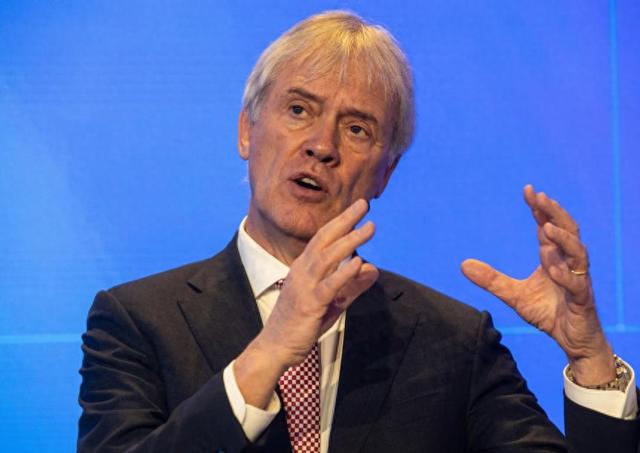
主动请缨做美国在华耳目?光刻机巨头急发声
Guan Cha Zhe Wang· 2025-11-24 08:56
Core Viewpoint - The news discusses the controversy surrounding ASML's alleged proposal to provide sensitive information to the U.S. government in exchange for leniency in export restrictions to China, which ASML has denied as inaccurate and damaging to its reputation [1][4][5]. Group 1: ASML's Alleged Proposal - ASML's former CEO, Peter W., reportedly suggested that if the U.S. allowed ASML engineers to continue servicing Chinese clients, the company could provide intelligence on Chinese chip factories [4]. - This proposal was characterized as unusual, indicating a willingness from a private Dutch company to share sensitive information with the U.S. government for favorable policy treatment [4]. - The U.S. National Security Advisor, Jake Sullivan, rejected the proposal, fearing it would allow China to close the gap in chip manufacturing capabilities [4]. Group 2: U.S.-Netherlands Relations - The Dutch Prime Minister, Mark Rutte, warned that ASML's actions could jeopardize the Netherlands' standing with the U.S. and emphasized the need to rebuild trust [3]. - The U.S. and Netherlands reached an agreement in January 2023 to further restrict exports of lithography machines to China, with a ban effective from September 2023 and full implementation in 2024 [1][3]. - ASML was allowed to deliver a limited number of previously contracted deep ultraviolet lithography machines (DUV) to China, but exceeded the agreed quantity, leading to U.S. anger [1][3]. Group 3: ASML's Response - ASML has publicly denied the claims made in the book "The Most Important Machine in the World," stating that the content is severely inaccurate and harmful to its reputation [1][5]. - The company emphasized its compliance with all applicable laws and regulations, including export control laws, and stated it has not proposed any actions that would violate agreements with the U.S. or other governments [5]. - ASML's statement highlighted its commitment to maintaining a fair and open international trade environment [5]. Group 4: Broader Implications - The article suggests that U.S. export restrictions may inadvertently strengthen China's semiconductor industry by pushing it towards self-reliance [7]. - Experts have indicated that the U.S. policymakers may underestimate China's capabilities in semiconductor equipment manufacturing, which could lead to increased competition in the international market [7].