BABA(BABA)

Search documents
行业报告:阿里速卖通成“美国大赢家”,消费者持续追捧
Ge Long Hui· 2026-01-30 13:17
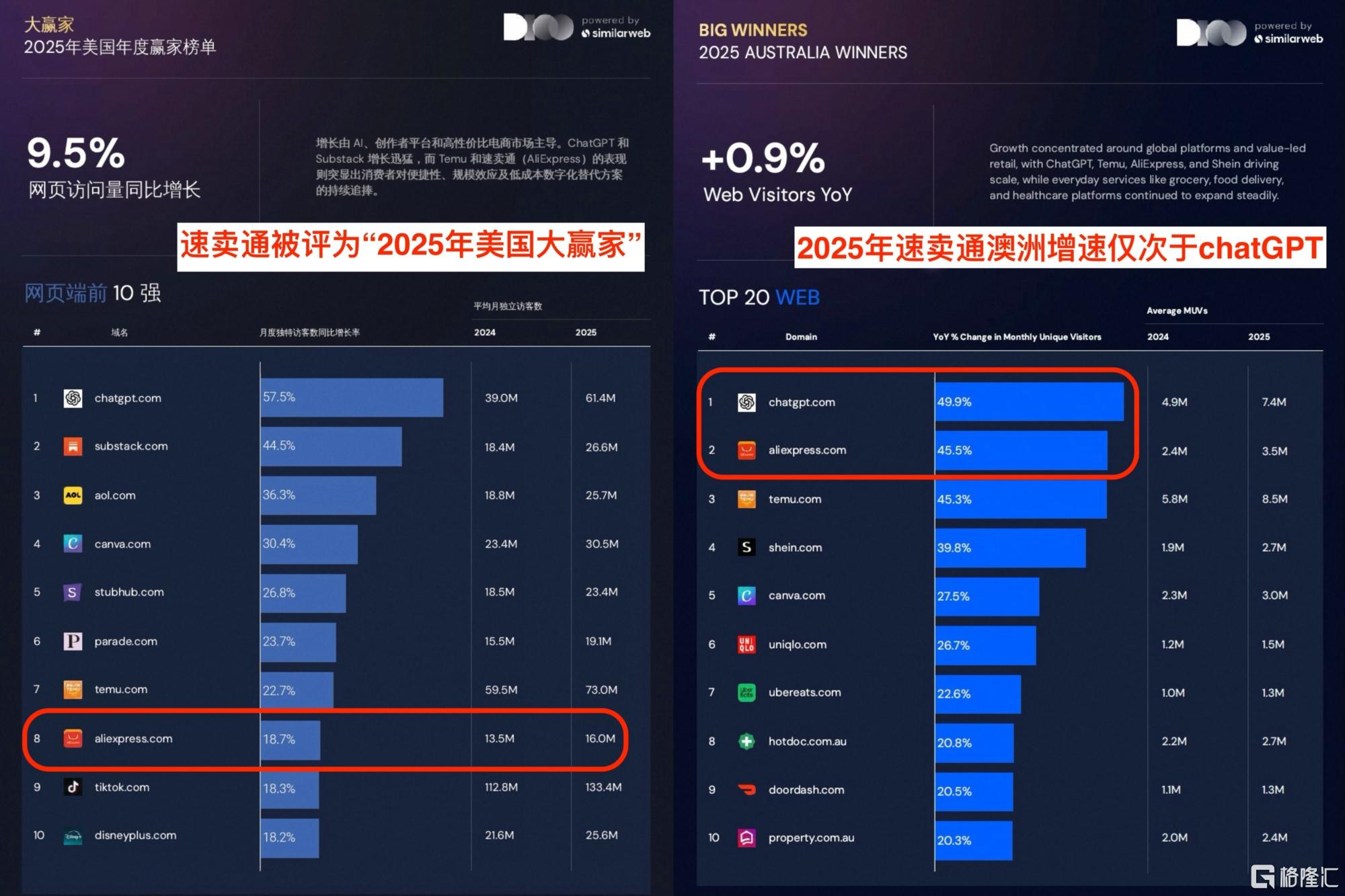
值得注意的是,上述四国均为全球电商成熟度高、竞争激烈的市场。速卖通能在这些地区同步实现两位数以上的用户增长,是速卖通自2024年起全面转 向"品牌化+本地化"布局的结果。 过去几年,跨境电商一度陷入"低价内卷"困局,但2025年的市场反馈表明,单纯依靠价格战难以维持可持续增长。相反,那些能在目标市场提供稳定物流、 清晰售后规则、品牌力强的平台,更能收获消费者的长期青睐。 速卖通在品牌赛道的大力投入,甚至已经开始悄然蚕食亚马逊的中高端商家护城河。 2025年,速卖通推出"超级品牌出海计划",帮品牌用亚马逊一半成本实现更高成交。目前该计划已经吸引包括小米、荣耀、倍思等50多家超级头部品牌签 约。 1月28日消息,互联网数据分析机构Similarweb发布2026年度Digital 100报告。 阿里旗下跨境电商平台速卖通AliExpress在美国、英国、德国、澳洲等多个发达国家市场均跻身综合平台增速前10。差异化的品牌策略和坚定的本地化投 入,成为其在高竞争、高门槛市场持续增长的关键优势。 在美国,速卖通2025全年网站访问量同比增长18.7%,成为美国增速最快的十大平台之一,被评为"2025年美国大赢家"。美国 ...

5秒出4张2K大图!阿里提出2步生成方案,拉爆AI生图进度条
Sou Hu Cai Jing· 2026-01-30 12:44
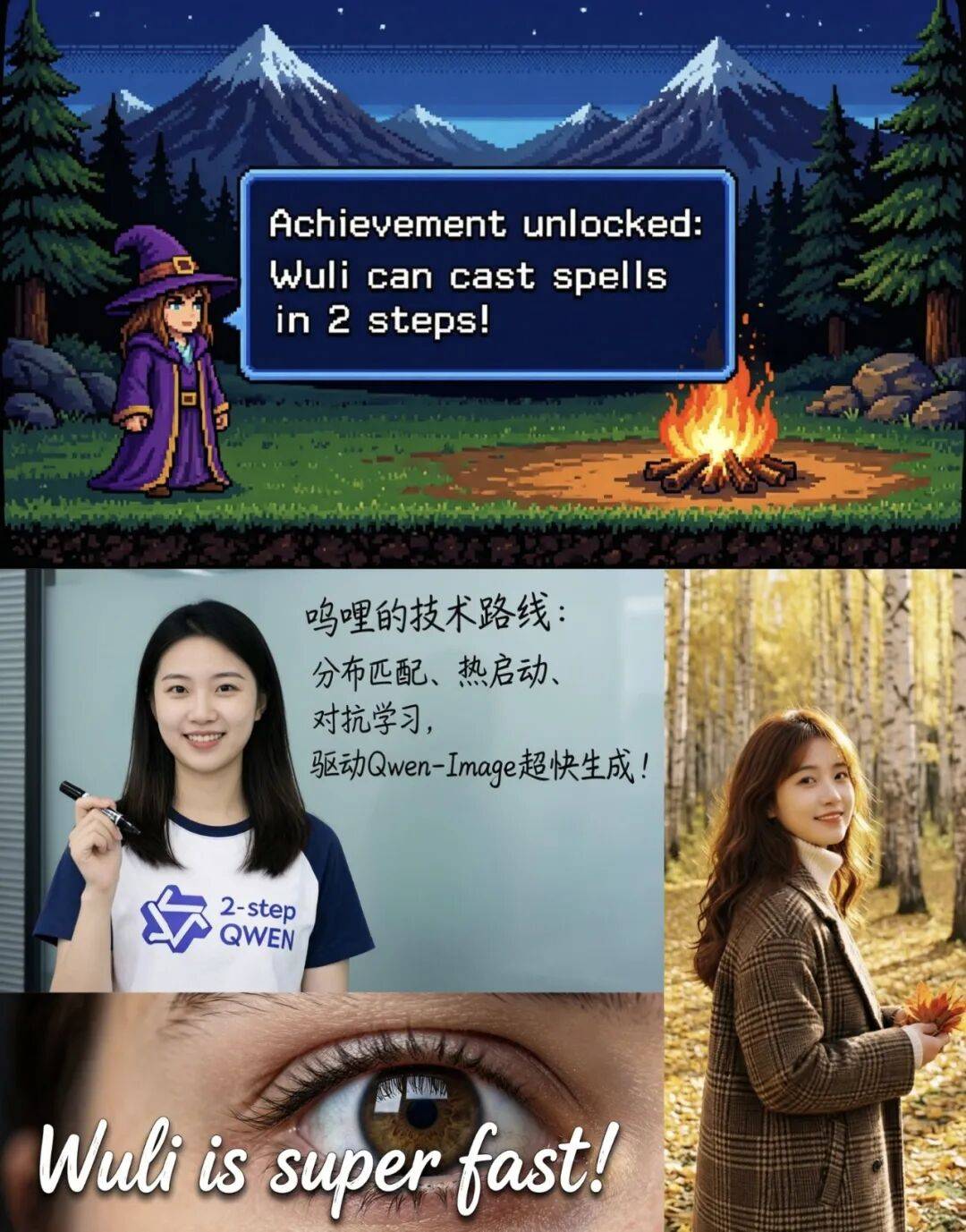
在主流扩散模型还在迭代中反复"磨叽"、让用户盯着进度条发呆时,阿里智能引擎团队直接把进度条"拉爆"了—— 5秒钟,到手4张2K级高清大图。 针对Qwen最新开源模型,将SOTA压缩水平从80-100步前向计算,骤降至2步(Step),速度提升整整40倍。 允中 发自 凹非寺 量子位 | 公众号 QbitAI AI生成一张图片,你愿意等多久? 这意味着,此前像Qwen-Image这样需要近一分钟才能吐出来的一张图片,现在真的成了"眨眼之间"。 目前,团队已将相应的Checkpoint发布至HuggingFace和ModelScope平台,欢迎开发者下载体验: 同时,该模型已经集成到呜哩AI平台上(https://www.wuli.art)支持调用。 上述这种近乎"物理外挂"般的蒸馏方案,究竟是怎么做到的?一起来看。 HuggingFace:https://huggingface.co/Wuli-art/Qwen-Image-2512-Turbo-LoRA-2-Steps ModelScope:https://www.modelscope.cn/models/Wuli-Art/Qwen-Image-2512-Tu ...
春节红包大战,是互联网从流量博弈到AI智能生态的变革
Huan Qiu Wang· 2026-01-30 12:23
【环球网科技综合报道】2026年春节的"抢红包"多了一个新主角——AI。 从各大平台陆续公布的红包活动玩法可以看到,不同于过往移动支付主导的红包对决,今年的战场核心 转向AI助手,字节跳动、腾讯、阿里、百度四大互联网巨头悉数入局。 当普通用户为手气最佳欢呼时,互联网巨头的较量,正从移动支付的流量争夺,转向AI时代的生态卡 位。 春节流量场变 AI 角力场 互联网大厂重启红包大战 作为年度流量巅峰的央视春晚,成为巨头们的首个角力场。字节跳动以最高价码拿下关键合作,旗下火 山引擎成为2026年央视春晚独家AI云合作伙伴,其智能助手豆包将同步上线多种互动玩法,借助春晚 的国民级曝光实现品牌突围。这一布局延续了字节移动互联网时代的流量打法,通过超级生态产品的流 量浇灌,为AI助手争取高频触达用户的机会。 曾在2015年凭借微信红包创造现象级传播的腾讯,虽已多年未冠名晚会类节目,却深知春节场景的战略 价值。除了时隔多年重启春节发红包外,腾讯CEO马化腾甚至特意关切元宝团队的GPU资源储备,全力 保障其在峰值时段的算力支撑,避免因技术掣肘影响用户体验。为重现当年荣光,腾讯元宝拿出10亿元 现金红包激励,同时推出全新AI社 ...

十亿红包拉开春节大战,AI应用争夺「全民时刻」
3 6 Ke· 2026-01-30 11:35
Core Insights - Major tech companies are launching aggressive marketing campaigns for AI applications during the upcoming Spring Festival, reminiscent of past strategies that successfully attracted users through cash giveaways [2][3][5] - Tencent, ByteDance, and Baidu are among the key players planning to distribute significant amounts of cash, with Tencent's WeChat expected to issue 1 billion yuan in red envelopes, aiming to replicate the success of previous years [2][3] - The competition for user acquisition during the Spring Festival is not merely a marketing tactic but a strategic move to secure a dominant position in the AI market [3][5] Group 1: AI Red Envelope War - Tencent's WeChat is set to launch a red envelope campaign with a total of 1 billion yuan, with individual users eligible for up to 10,000 yuan [2] - ByteDance's Doubao will partner with CCTV for the Spring Festival Gala, introducing various interactive features, including red envelopes [2] - Baidu's Wenxin will distribute a total of 500 million yuan in cash red envelopes from January 26 to March 12, also becoming the chief AI partner for the Beijing TV Spring Festival Gala [2][3] Group 2: Historical Context and Strategic Importance - The Spring Festival has historically been a critical battleground for internet products, with past successes like WeChat's red envelope feature leading to significant user growth [3][5] - The combination of the Spring Festival and the Spring Festival Gala has proven to be a powerful strategy for reshaping user habits and achieving exponential growth [5][7] - The competition during this period is seen as a pivotal moment for AI applications to gain traction and establish a user base [8][11] Group 3: Challenges and Opportunities for Smaller Companies - Smaller AI companies face challenges in competing with the financial might of larger firms during the Spring Festival, leading them to focus on enhancing their technology and user experience [13][14] - Companies like DeepSeek and Kimi are working on improving their models to create differentiated offerings, with DeepSeek expected to launch its next-generation AI model around the Spring Festival [13][14] - The influx of new users attracted by the major companies' red envelope campaigns may ultimately benefit the entire AI industry by increasing overall market demand [14][15]
计算机行业双周报(2026/1/16-2026/1/29):互联网巨头打响AI红包大战,争夺C端流量入口-20260130
Dongguan Securities· 2026-01-30 11:24
Investment Rating - The report maintains an "Overweight" rating for the computer industry, expecting the industry index to outperform the market index by over 10% in the next six months [2][33]. Core Insights - The report highlights a competitive landscape in AI applications among major internet companies, with significant cash giveaways during the Spring Festival to attract users and enhance engagement with AI products. This marks a new phase in AI application competition, aiming for widespread adoption and commercialization [2][28]. - The computer industry index has shown a decline of 5.32% over the past two weeks, underperforming the CSI 300 index by 5.37 percentage points, ranking last among 31 sectors. However, it has increased by 9.08% in January, outperforming the CSI 300 index by 6.40 percentage points [10][20]. - The current price-to-earnings (PE) ratio for the SW computer sector stands at 59.79 times, placing it in the 96.66 percentile for the past five years and 91.70 percentile for the past ten years, indicating high valuation levels [20][22]. Summary by Sections Industry Performance Review - The SW computer sector has experienced a two-week decline of 5.32%, ranking 31st among 31 sectors. In January, it rose by 9.08%, outperforming the CSI 300 index by 6.40 percentage points [10][13]. Valuation Situation - As of January 29, 2026, the SW computer sector's PE TTM is 59.79 times, indicating a high valuation compared to historical data [20][22]. Industry News - Major announcements include Tencent's cash giveaway of 1 billion RMB for the Spring Festival, the launch of new AI models by Alibaba and ByteDance, and price increases for server CPUs by Intel and AMD due to high demand [22][24][25]. Company Announcements - Notable company forecasts include iFlytek expecting a net profit of 785 million to 950 million RMB for 2025, and SuperMap Software projecting a profit turnaround from a previous loss [25][26][27]. Weekly Insights - The report emphasizes the strategic moves by leading internet companies to capture AI traffic during the Spring Festival, suggesting a focus on investment opportunities related to AI applications and partnerships with leading firms [28][29].



5秒出4张2K大图!阿里提出2步生成方案,拉爆AI生图进度条
量子位· 2026-01-30 11:02
Core Insights - The article discusses advancements in AI image generation, particularly focusing on the Qwen model, which has significantly reduced image generation time from nearly one minute to just 5 seconds for 4 high-definition images [1][3]. Group 1: Model Performance Improvements - The Qwen model's latest open-source version has achieved a state-of-the-art (SOTA) compression level, reducing the forward computation steps from 80-100 to just 2 steps, resulting in a 40-fold speed increase [2]. - The introduction of the DMD2 algorithm has shifted the constraints from sample space to probability space, enhancing the quality of generated images by addressing detail loss issues [8][10]. - The Reverse-KL loss design in DMD2 allows the student model to generate images independently while receiving guidance from the teacher model, improving detail and realism in the generated images [11][12]. Group 2: Challenges and Solutions - Traditional trajectory distillation methods faced challenges in generating high-quality images with low iteration steps, often resulting in blurry outputs due to insufficient learning of detailed features [6][7]. - To mitigate distribution degradation issues, the team implemented a "warm start" using PCM distillation, which significantly improved the model's ability to generate realistic shapes [14][17]. - The introduction of adversarial learning (GAN) further enhanced the student model's performance by improving texture and detail in generated images [20][26]. Group 3: Future Directions - The team plans to continue releasing faster and more effective generative models, addressing limitations in complex scenarios where noise reduction steps may still require improvement [32]. - Ongoing efforts will focus on developing and iterating more diffusion acceleration technologies, with an emphasis on open-source contributions to the community [33][35]. - The advancements will be made available on the Wuli AI platform, aiming to provide accessible creative tools for designers, content creators, and AI enthusiasts [36].

字节阿里DeepSeek决战春节:一场关乎14亿人的重磅AI大战
3 6 Ke· 2026-01-30 11:01
去年,横空出世的 DeepSeek 在春节假期突袭了整个科技界。 数以亿计返乡的中国人,在漫长的假期里捧着手机,见证了 DeepSeek R1 如何在大洋彼岸的硅谷引发震动。 【导读】这个春节,中国 AI 迎来「决战时刻」。据《The Information》援引内部消息人士透露:字节或将祭出全模态三件套;阿里除了或将发布强大的 全新旗舰模型 Qwen 3.5 外,也会让千问打通支付与电商,挑战豆包;DeepSeek V4 或将携最强代码能力突袭。这不仅是技术竞赛,更是对 14 亿用户生活 入口与未来互联网秩序的终极争夺。 对于中国的互联网巨头而言,即将到来的春节注定无法平静。 那场突如其来的爆红,不仅让一家公司成为了民族骄傲,更重写了中国 AI 产业的竞争节奏。 如今,又是一年春节将至。 当数亿人准备再次陷入假期那种「有大把时间盯着屏幕」的状态时,中国科技圈的巨头们已经决定不再给对手留下任何独占舞台的机会。 一场关于 14 亿人未来如何生活、工作与思考的「群雄逐鹿」,正在字节跳动、阿里巴巴和 DeepSeek 之间悄然拉开帷幕。 字节跳动:三款多模态旗舰模型 在字节跳动的办公区,气氛比往年更加紧绷。 这家以 ...

15亿春节红包火力全开:字节守位、阿里反击、腾讯奇袭、百度猛追
Xin Lang Cai Jing· 2026-01-30 10:48
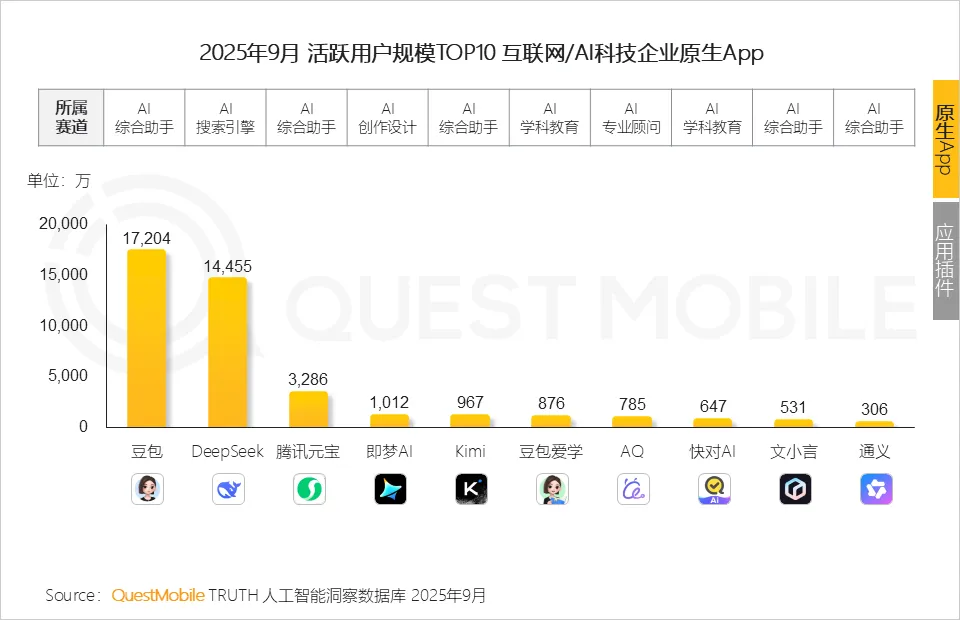
Group 1 - Major tech companies are competing for user attention during the Spring Festival by distributing cash red envelopes, with Tencent and Baidu collectively putting 1.5 billion cash red envelopes into the prize pool [1] - ByteDance's Doubao has surpassed 100 million daily active users and 172 million monthly active users, indicating a significant lead over competitors [2][4] - Doubao's collaboration with ZTE on the Nubia M153 smartphone has generated significant market interest, with the device's price skyrocketing in the second-hand market [4] Group 2 - ByteDance's Doubao is not only an AI application but also serves as a central hub for various tools, marking a shift towards a more complex "Agent" model in AI applications [4] - ByteDance's Volcano Engine has become a key player in the B2B market, with over 90% of major car manufacturers and 9 out of the top 10 global smartphone manufacturers as clients [5] - Alibaba's Tongyi, now renamed Qianwen, has shifted focus to the C-end market, achieving 700 million downloads and rapidly integrating with various Alibaba services [6] Group 3 - Tencent's Yuanbao is heavily investing in user acquisition, with an estimated 15 billion yuan allocated for marketing in 2025, although it has not seen significant user growth compared to Doubao [10] - Baidu's Wenxin AI assistant has also launched a cash red envelope campaign, offering 500 million yuan, but faces challenges in maintaining its advertising revenue due to AI-generated content dominating search results [13] - The competition among these companies is intensifying as they aim to establish themselves as the leading AI application during the critical Spring Festival period [13]
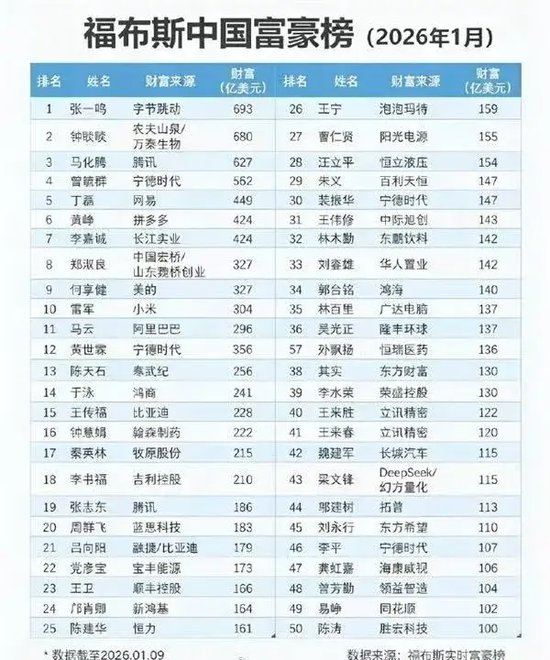
雷军身家304亿美元超马云,张一鸣693亿美元身家登顶内地富豪榜



Xin Lang Cai Jing· 2026-01-30 10:26
比亚迪的王传福(228亿美元)、顺丰王卫(166亿美元)、泡泡玛特王宁(159亿美元)、长城汽车魏 建军(115亿美元)和DeepSeek梁文峰(115亿美元)分别排名第15名、23名、26名、42名和43名。 | 排名 | 姓名 | 财富来源 | 财富 亿美元 | 排名 | 性名 | 財富来源 | 財富 亿美元) | | --- | --- | --- | --- | --- | --- | --- | --- | | 1 | 张一鸣 | 字节院动 | 693 | | 26 王宁 | 泡泡田特 | 128 | | 2 | 钟联顾 | 农夫山景/ 万秦生物 | 680 | 27 | ■仁贤 | 阳光电源 | 155 | | 3 | 马化腾 | 腾讯 | 627 | 28 | 正文平 | 恒立液压 | 154 | | 4 | 曾镀锌 | 宁德时代 | 562 | 29 | 朱义 | 自利大包 | 147 | | 5 | 丁晶 | 内方 | 440 | 30 | 装据表 | 宁德时代 | 147 | | 6 | 12 (4) | 拼多多 | 424 | 31 | 王伟修 | 中际儿创 | 143 | | 7 | ...
抖音“透明化”这一年:平台治理没有标准答案
第一财经· 2026-01-30 10:19
Core Viewpoint - The article discusses the evolving challenges of content governance on social media platforms, particularly focusing on Douyin's efforts to enhance transparency and tackle issues like misinformation and online violence through AI technology [1][2][4]. Group 1: Transparency Initiatives - Douyin initiated a "transparency" year in 2024, launching ten measures to improve algorithm and platform governance transparency [1][4]. - In 2025, Douyin established a Safety and Trust Center website to publicly disclose algorithm principles and address public concerns [1][6]. - The platform held over 30 algorithm communication meetings to gather feedback from scholars, experts, and creators [1][2]. Group 2: Misinformation Governance - Douyin introduced AI technology for rumor management, resulting in a 90% decrease in rumor exposure and a 74% drop in reports [2][7]. - The platform's AI model actively identifies and verifies misinformation, significantly improving response times compared to traditional methods [6][7]. - Douyin launched the "AI Truth" feature, providing users with fact-checking cards for potentially misleading content [8][10]. Group 3: Handling Controversial Events - Douyin's governance strategy includes a focus on managing controversial events to prevent emotional escalation and misinformation [12][13]. - The platform has implemented rules to prevent individuals involved in controversial events from monetizing their popularity [14][16]. - Douyin emphasizes the importance of promoting quality, rational content to build social consensus during heated discussions [16][18]. Group 4: Online Violence Management - Online violence has become a significant issue, with Douyin recognizing its complexity and the subjective nature of user experiences [20][21]. - The platform has developed a multi-layered defense system, including features for users to manage comments and provide legal support [22][23]. - Douyin aims to utilize AI to proactively identify potential victims of online violence and intervene early [22][23]. Group 5: Future Directions - Douyin plans to prioritize the management of controversial events in its 2026 initiatives, continuing to explore AI applications in governance [23][24]. - The platform will optimize recommendation algorithms to address issues like "anger bait" and promote rational discussions [23][24].