
BABA(BABA)

Search documents
中国消费级AI“激活年”,AI应用胜负未定,摩根大通更看好“二阶受益者”
Hua Er Jie Jian Wen· 2026-01-30 08:54
摩根大通指出,2026年将成为中国消费级AI的"激活年",聊天机器人正从尝鲜阶段转向用户习惯养成 阶段。 据追风交易台,1月30摩根大通发布最新报告认为,虽然大型互联网平台正试图塑造下一个流量门户, 但目前市场尚未准备好对AI应用的最终"赢家与输家"进行统一定价,早期的市场份额转移更多反映了 分发能力而非护城河。 基于此判断,摩根大通建议投资者避免在现阶段进行非黑即白的应用层押注,而是将交易锚定在"二阶 受益者"上。这包括因推理工作量增长而受益的AI基础设施、因行业营销强度提升而受益的广告平台, 以及内容密集型行业的生产力提升者。 摩根大通特别提到,字节跳动旗下豆包的日活跃用户(DAU)达到约1亿,这具有里程碑式意义,表明 通用聊天互动已跨过大众市场的门槛。与此同时,据路透社引述,OpenAI的ChatGPT周活跃用户数达到 8亿,这一全球趋势进一步印证了消费级AI一旦在产品实用性和分发上达成一致,将迎来极快的复合增 长。 随着聊天机器人演变为高频流量门户,摩根大通预计2026年中国主要互联网平台将展开激烈竞争。这种 竞争将带来两方面的直接市场影响:一是会话从偶尔查询变为每日多轮互动,加速Token消耗;二是 ...


阿里PPU芯片出货已数十万片!芯片设计板块V型翻红,科创芯片设计ETF、科创芯片设计ETF天弘涨超2%
Ge Long Hui A P P· 2026-01-30 08:52
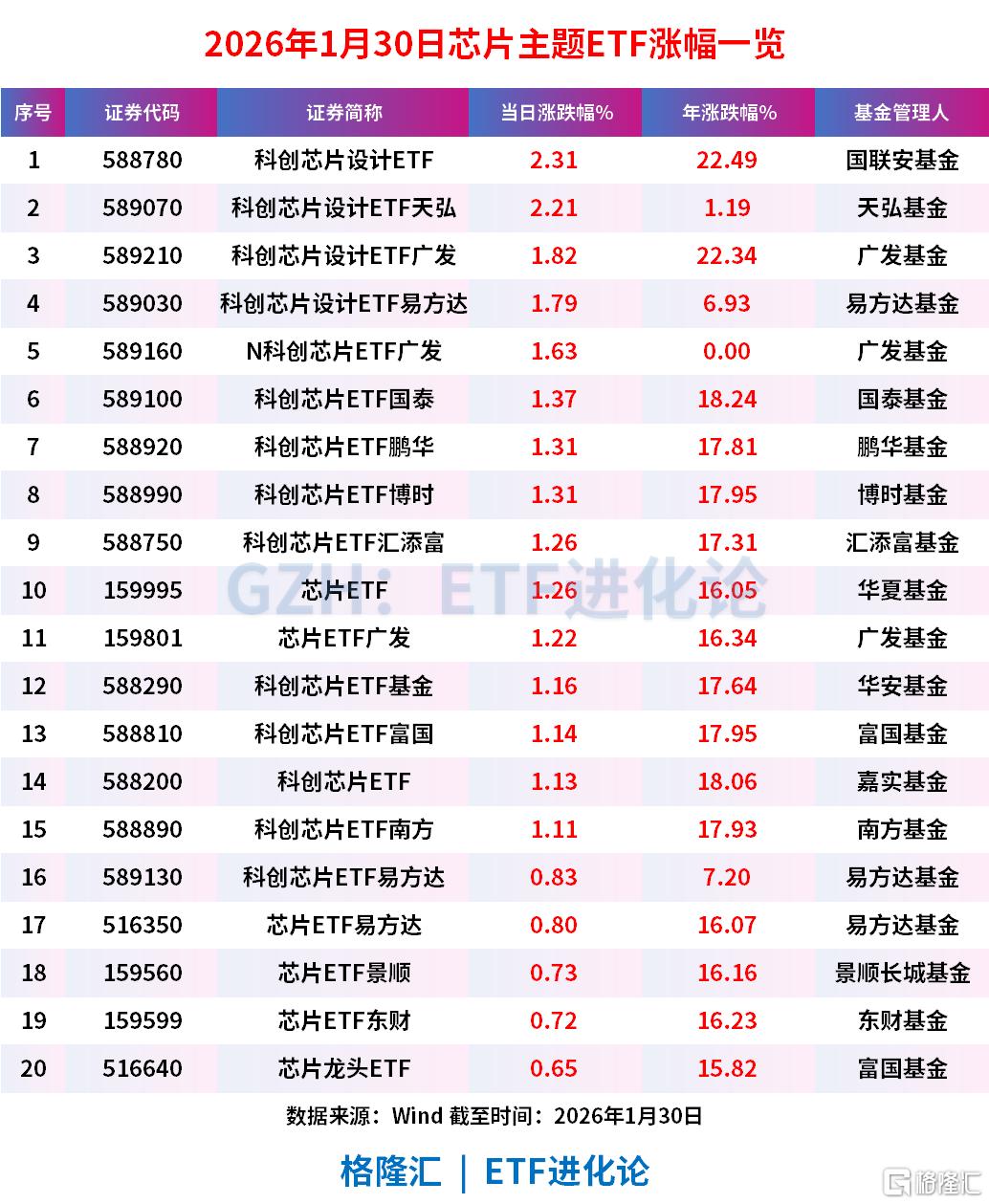
今日芯片设计板块上演V型反转,国联安基金科创芯片设计ETF、科创芯片设计ETF天弘、科创芯片设计ETF广发、科创芯片设计ETF易方达分别涨 2.31%、2.21%、1.82%和1.79%。 | 序号 | 证券代码 | 证券简称 | 当日涨跌幅% | 年涨跌幅% | 基金管理人 | | --- | --- | --- | --- | --- | --- | | 1 | 588780 | 科创芯片设计ETF | 2.31 | 22.49 | 国联安县金 | | 2 | 589070 | 科创芯片设计ETF天弘 | 2.21 | 1.19 | 天弘基金 | | 3 | 589210 | 科创芯片设计ETF广发 | 1.82 | 22.34 | 广发基金 | | 4 | 589030 | 科创芯片设计ETF易方达 | 1.79 | 6.93 | 易方达基金 | | 5 | 589160 | N科创芯片ETF广发 | 1.63 | 0.00 | 广发县金 | | 6 | 589100 | 科创芯片ETF国泰 | 1.37 | 18.24 | 国泰县金 | | 7 | 588920 | 科创芯片ETF鹏华 | 1.31 ...

复盘AI大厂的2025年:4.5亿存量搏杀下的生死突围
Mei Ri Jing Ji Xin Wen· 2026-01-30 07:30
Group 1 - The core viewpoint of the article highlights that four major AI companies—Tencent, Baidu, ByteDance, and Alibaba—are collectively launching initiatives during the Spring Festival, including red envelope promotions, gala collaborations, and new features, reflecting the competitive landscape of the AI industry by 2025 [1] Group 2 - The article notes that there is a significant differentiation in the user landscape of domestic AI applications by 2025, as revealed by exclusive data from QuestMobile [1] - It raises questions about whether the marketing strategies effective in the mobile internet era will still hold relevance in the AI era [1]

马云李彦宏,把最烧钱的业务送上IPO
投中网· 2026-01-30 07:12
Core Viewpoint - The independent progress of major internet companies in chip manufacturing has accelerated, with several companies preparing for IPOs, indicating a shift towards commercialization in the chip industry [5][6]. Group 1: Industry Background - The chip manufacturing wave among internet giants began in 2018, driven by geopolitical tensions and the surge in AI computing demand [7][14]. - Initially, these companies focused on creating chips to support their internal operations, but now they face the challenge of proving their viability as independent entities [8][22]. - The shift from internal cost-saving measures to providing market supply of computing power marks a significant evolution in the chip manufacturing strategy of these companies [23][30]. Group 2: Company Developments - Baidu was the first major internet company to enter the chip market, launching its first AI chip, Kunlun, in 2018 [11]. - Alibaba's chip company, Pingtouge, is preparing for an independent IPO, while Baidu's Kunlun chip has also submitted a listing application [5][22]. - Tencent's Suiyuan Technology is also planning to go public, indicating a broader trend of internet companies moving towards independent chip commercialization [5][6]. Group 3: Market Position and Financial Projections - Kunlun's revenue is projected to grow from approximately 2 billion RMB in 2024 to over 3.5 billion RMB in 2025, with expectations of achieving breakeven [23][25]. - Alibaba's Pingtouge has developed a comprehensive product line, including AI inference and general-purpose CPUs, with significant market penetration [27]. - The domestic AI chip market is rapidly evolving, with local manufacturers increasing their market share, projected to reach a 30% penetration rate by 2024 [29]. Group 4: IPO Trends and Valuations - A new wave of IPOs in the semiconductor sector is anticipated, with around 30 companies expected to enter the A-share market by 2025, aiming to raise nearly 100 billion RMB [34]. - The valuation of Kunlun is estimated to be around 21 billion RMB, with market rumors suggesting it could reach 100 billion HKD upon IPO [37]. - Morgan Stanley predicts Pingtouge's potential valuation could range from 25 billion to 62 billion USD, representing 6% to 14% of Alibaba's current market value [38]. Group 5: Challenges and Investment Needs - Despite the optimistic market outlook, many domestic AI chip companies face profitability challenges due to high R&D costs, which often exceed their revenue [39][43]. - The reliance on external funding through IPOs is becoming essential for these companies to sustain their R&D efforts and maintain their growth trajectory [43].

计算机行业AI2026算力系列(二):从云业务到千问APP,阿里算力需求保持旺盛态势
GF SECURITIES· 2026-01-30 07:10
[Table_Title] 计算机行业 AI 2026 算力系列(二) 从云业务到千问 APP,阿里算力需求保持 旺盛态势 [Table_Summary] 核心观点: [Table_Page] 跟踪分析|计算机 证券研究报告 | [Table_Grade] 行业评级 | 买入 | | --- | --- | | 前次评级 | 买入 | | 报告日期 | 2026-01-30 | [Table_PicQuote] 相对市场表现 -14% -4% 5% 15% 24% 34% 02/25 04/25 06/25 09/25 11/25 01/26 计算机 沪深300 | [分析师: Table_Author]刘雪峰 | | --- | | SAC 执证号:S0260514030002 | | SFC CE No. BNX004 | | 021-38003675 | | gfliuxuefeng@gf.com.cn | | 分析师: 周源 | | SAC 执证号:S0260523040001 | | 0755-23948351 | | shzhouyuan@gf.com.cn | | 请注意,周源并非香港证券及期货 ...
AI主线彰显韧性,低费率创业板人工智能ETF华夏(159381)涨超1%,天孚通信涨超8%,阿里加码AI投入
Xin Lang Cai Jing· 2026-01-30 05:09
创业板人工智能ETF华夏(159381)跟踪指数CPO权重近50%,同时覆盖国产软件+AI应用企业,具备 较高弹性。其中前三大权重股为中际旭创(15.64%)、新易盛(15.57%)、天孚通信(6.85%)。场内 综合费率仅0.20%,位居同类最低。场外联接(A类:025505;C类:025506); 通信ETF华夏(515050)深度聚焦电子(芯片、PCB、消费电子)+通信(光模块、服务器)算力硬 件。前五大持仓股:中际旭创、新易盛、立讯精密、工业富联、兆易创新。场外联接(A类:008086;C 类:008087) 中信证券研报称,近期,海外推理和训练算力需求旺盛,亚马逊云和谷歌云双双涨价。推理侧, MoltBot(原ClawdBot)、Claude Code等Agent产品加速落地,对于云计算资源的需求显著增加,2026 年年初以来Token调用量已经连续2—3周高速增长。训练侧,Grok-5、Veo4等模型仍然在持续迭代,工 业界持续探索Scaling上限,从而支撑训练算力需求。尽管当前AI应用大规模商业化落地能见度仍然不 足,但展望未来3—6个月,随着推理端AI应用落地的密集催化叠加训练端模型的持续迭 ...


阿里补齐最后一块拼图,但它不会成为第二个谷歌
财富FORTUNE· 2026-01-30 04:49
Core Viewpoint - Alibaba has completed a crucial piece in its AI strategy with the launch of the "Zhenwu 810E" chip, marking its full-stack self-research capability in AI, encompassing AI models, cloud computing, and core hardware [1][3]. Group 1: AI Chip Development - The "Zhenwu 810E" chip is a high-end AI chip developed entirely by Alibaba, which has already been validated in real-world applications, serving over 400 external clients including State Grid and Xiaopeng Motors [1]. - This chip signifies Alibaba's position among a select few companies globally that possess a complete self-research capability in AI, integrating AI models, computing platforms, and core hardware [3]. Group 2: Competitive Advantage - Alibaba's full-stack capability allows for significant cost advantages by eliminating supplier premiums across various segments such as computing power, networks, models, and software stacks, leading to lower marginal costs and higher iteration speeds [3][4]. - The importance of cost in AI competition is highlighted, with investors noting that companies with full-stack capabilities, like Google, have a unique edge in the market [4]. Group 3: Sustainability and Risk Management - Full-stack capabilities also imply sustainability; reliance on external resources can amplify systemic risks, while having controllable alternatives in key areas mitigates these risks [4]. - Alibaba's approach is increasingly resembling Google's, with both companies building comprehensive technology ecosystems, although their ecological positions differ [4][5]. Group 4: Distinct Market Position - Despite structural similarities, Alibaba is unlikely to become a second Google; it has its own strengths in integrating mature technologies into complex business systems, focusing on efficiency and cost reduction [5][6]. - Google has established itself as a rule-maker in the AI industry over the past two decades, while Alibaba's strength lies in embedding AI deeply within Chinese commercial scenarios rather than becoming a global knowledge processing standard [6][7]. Group 5: Future Outlook - Alibaba is evolving into a different type of AI giant, potentially serving as the intelligent infrastructure for China's commercial ecosystem, aligning with the country's economic structure [9].

阿里“通云哥”概念亮相;贵州茅台辟谣参与SpaceX融资
2 1 Shi Ji Jing Ji Bao Dao· 2026-01-30 03:28
Group 1: Technology Sector Developments - Alibaba's "Tongyun Ge" concept integrates "Cloud + AI + Chips" as a strategic support triangle for future technology initiatives, emphasizing AI as a core driver of change in cloud computing over the next decade [2] - ByteDance's CEO Liang Rubo announced the company's 2026 focus on "climbing to new heights," highlighting the importance of AI opportunities and the need to enhance talent density and incentives [5] - Waymo plans to launch fully autonomous ride-hailing services in London by Q4 2023, expanding its operations internationally despite regulatory challenges [7] Group 2: Market and Company News - Guizhou Moutai denied rumors of participating in SpaceX's Series A funding, with its stock closing at 1437.72 yuan per share, up 8.61%, and a market capitalization exceeding 1.8 trillion yuan [3] - Byte's new "Doubao" smartphone is expected to be released in late Q2 2026, with significant improvements over its predecessor, developed in collaboration with ZTE Nubia [4] - Meituan's new "one-shot" verification feature requires new restaurant partners to upload unedited videos showcasing their premises, aimed at enhancing platform integrity [8] Group 3: Industry Collaborations - Black Sesame Intelligence and Baidu's "萝卜快跑" signed a strategic cooperation agreement to develop a collaborative ecosystem for autonomous driving, focusing on technology research and product development [11] - Shanghai Xixi Intelligent Technology completed several million yuan in angel financing, aimed at integrating AI with flexible robotics for food processing solutions [12] Group 4: Consumer Electronics - Apple's iPhone 16 was the best-selling smartphone globally in 2025, with Apple and Samsung dominating the top ten list, holding seven and three positions respectively, indicating strong market leadership [10]


阿里官宣自研AI芯片,“通云哥”成AI时代梦之队
半导体行业观察· 2026-01-30 02:43
Core Viewpoint - Alibaba's Pingtouge has officially launched the high-end AI chip "Zhenwu 810E," which surpasses mainstream domestic GPUs and is comparable to NVIDIA's H20, marking a significant advancement in China's AI chip landscape [1][4]. Group 1: Pingtouge's Chip Development - The "Zhenwu 810" chip was secretly developed starting in 2020 and completed its research and scenario validation by early 2023, showcasing a strong performance and high demand in the market [4]. - The chip features a self-developed parallel computing architecture and inter-chip interconnection technology, with 96GB HBM2e memory and a bandwidth of 700 GB/s, suitable for AI training, inference, and autonomous driving [4]. - Pingtouge has extended its product line beyond computing chips to storage and edge chips, such as the SSD controller chip Zhenyue 510, which meets the low-latency and high-bandwidth requirements of AI applications [4]. Group 2: Collaboration with Alibaba Cloud and Tongyi Lab - Pingtouge collaborates closely with Alibaba Cloud and Tongyi Lab, creating a robust ecosystem that enhances their competitive edge in the AI market [6][8]. - Alibaba Cloud has established itself as a leader in AI infrastructure, serving over 5 million customers globally and holding a 35.8% market share in China's AI cloud market [6][7]. - Tongyi Lab has made significant strides in large model research, achieving over 200,000 derivative models and serving more than 1 million customers, positioning itself as a top choice for enterprise-level large models in China [7][8]. Group 3: Market Position and Future Prospects - The global AI market is highly competitive, with major players like Amazon, Microsoft, Google, and Alibaba holding over 80% of the cloud platform market share, but only Google and Alibaba have achieved a full-stack self-research layout [8][9]. - Alibaba Cloud's recent financial report indicates a quarterly revenue of 39.824 billion yuan, with AI-related product revenue growing for nine consecutive quarters, highlighting the importance of AI in Alibaba's growth strategy [9][10]. - The full-stack self-research model adopted by Alibaba is expected to yield significant benefits as the large model wave continues to evolve, potentially elevating Alibaba to the pinnacle of technology [12].
阿里明确“云+AI+芯片”战略,PPU芯片出货已数十万片
Xin Lang Cai Jing· 2026-01-30 02:18
Core Viewpoint - Alibaba has introduced a new concept called "Tongyun Ge," which integrates three key components: Tongyi Lab, Alibaba Cloud, and Pingtouge, referred to as the AI Golden Triangle. This strategy emphasizes the importance of "cloud + AI + chips" as the cornerstone of Alibaba's technological future [1] Group 1: Strategic Development - Alibaba's CEO, Wu Yongming, highlighted that the most significant growth and transformation in cloud computing over the next decade will be driven by AI [1] - The company is focusing on creating a highly coordinated AI model that integrates hardware and software, which is expected to be essential for the next generation of cloud computing companies [1] Group 2: Chip Production and Market Position - Pingtouge's Zhenwu PPU has achieved cumulative shipments of several hundred thousand units, surpassing competitors like Cambricon and positioning itself among the top tier of domestic GPU manufacturers [1] - Alibaba has decided to support Pingtouge's future independent listing, indicating a strategic move to enhance its chip business [1] Group 3: AI Ecosystem and Revenue Growth - Alibaba is attempting to build its own AI narrative by open-sourcing the Qianwen large model, betting on a broader ecosystem to expand its cloud business [1] - The company anticipates a revenue growth of 30%-40% in its cloud business for a single quarter, with stock price increases closely tied to developments in AI [1]