Workflow
BABA(BABA)
icon
Search documents
15亿春节红包火力全开:字节守位、阿里反击、腾讯奇袭、百度猛追
Xin Lang Cai Jing· 2026-01-30 10:48
Group 1 - Major tech companies are competing for user attention during the Spring Festival by distributing cash red envelopes, with Tencent and Baidu collectively putting 1.5 billion cash red envelopes into the prize pool [1] - ByteDance's Doubao has surpassed 100 million daily active users and 172 million monthly active users, indicating a significant lead over competitors [2][4] - Doubao's collaboration with ZTE on the Nubia M153 smartphone has generated significant market interest, with the device's price skyrocketing in the second-hand market [4] Group 2 - ByteDance's Doubao is not only an AI application but also serves as a central hub for various tools, marking a shift towards a more complex "Agent" model in AI applications [4] - ByteDance's Volcano Engine has become a key player in the B2B market, with over 90% of major car manufacturers and 9 out of the top 10 global smartphone manufacturers as clients [5] - Alibaba's Tongyi, now renamed Qianwen, has shifted focus to the C-end market, achieving 700 million downloads and rapidly integrating with various Alibaba services [6] Group 3 - Tencent's Yuanbao is heavily investing in user acquisition, with an estimated 15 billion yuan allocated for marketing in 2025, although it has not seen significant user growth compared to Doubao [10] - Baidu's Wenxin AI assistant has also launched a cash red envelope campaign, offering 500 million yuan, but faces challenges in maintaining its advertising revenue due to AI-generated content dominating search results [13] - The competition among these companies is intensifying as they aim to establish themselves as the leading AI application during the critical Spring Festival period [13]
雷军身家304亿美元超马云,张一鸣693亿美元身家登顶内地富豪榜
Xin Lang Cai Jing· 2026-01-30 10:26
比亚迪的王传福(228亿美元)、顺丰王卫(166亿美元)、泡泡玛特王宁(159亿美元)、长城汽车魏 建军(115亿美元)和DeepSeek梁文峰(115亿美元)分别排名第15名、23名、26名、42名和43名。 | 排名 | 姓名 | 财富来源 | 财富 亿美元 | 排名 | 性名 | 財富来源 | 財富 亿美元) | | --- | --- | --- | --- | --- | --- | --- | --- | | 1 | 张一鸣 | 字节院动 | 693 | | 26 王宁 | 泡泡田特 | 128 | | 2 | 钟联顾 | 农夫山景/ 万秦生物 | 680 | 27 | ■仁贤 | 阳光电源 | 155 | | 3 | 马化腾 | 腾讯 | 627 | 28 | 正文平 | 恒立液压 | 154 | | 4 | 曾镀锌 | 宁德时代 | 562 | 29 | 朱义 | 自利大包 | 147 | | 5 | 丁晶 | 内方 | 440 | 30 | 装据表 | 宁德时代 | 147 | | 6 | 12 (4) | 拼多多 | 424 | 31 | 王伟修 | 中际儿创 | 143 | | 7 | ...
抖音“透明化”这一年:平台治理没有标准答案
第一财经· 2026-01-30 10:19
Core Viewpoint - The article discusses the evolving challenges of content governance on social media platforms, particularly focusing on Douyin's efforts to enhance transparency and tackle issues like misinformation and online violence through AI technology [1][2][4]. Group 1: Transparency Initiatives - Douyin initiated a "transparency" year in 2024, launching ten measures to improve algorithm and platform governance transparency [1][4]. - In 2025, Douyin established a Safety and Trust Center website to publicly disclose algorithm principles and address public concerns [1][6]. - The platform held over 30 algorithm communication meetings to gather feedback from scholars, experts, and creators [1][2]. Group 2: Misinformation Governance - Douyin introduced AI technology for rumor management, resulting in a 90% decrease in rumor exposure and a 74% drop in reports [2][7]. - The platform's AI model actively identifies and verifies misinformation, significantly improving response times compared to traditional methods [6][7]. - Douyin launched the "AI Truth" feature, providing users with fact-checking cards for potentially misleading content [8][10]. Group 3: Handling Controversial Events - Douyin's governance strategy includes a focus on managing controversial events to prevent emotional escalation and misinformation [12][13]. - The platform has implemented rules to prevent individuals involved in controversial events from monetizing their popularity [14][16]. - Douyin emphasizes the importance of promoting quality, rational content to build social consensus during heated discussions [16][18]. Group 4: Online Violence Management - Online violence has become a significant issue, with Douyin recognizing its complexity and the subjective nature of user experiences [20][21]. - The platform has developed a multi-layered defense system, including features for users to manage comments and provide legal support [22][23]. - Douyin aims to utilize AI to proactively identify potential victims of online violence and intervene early [22][23]. Group 5: Future Directions - Douyin plans to prioritize the management of controversial events in its 2026 initiatives, continuing to explore AI applications in governance [23][24]. - The platform will optimize recommendation algorithms to address issues like "anger bait" and promote rational discussions [23][24].
阿里巴巴全栈AI布局浮出水面
Zheng Quan Ri Bao Wang· 2026-01-30 09:15
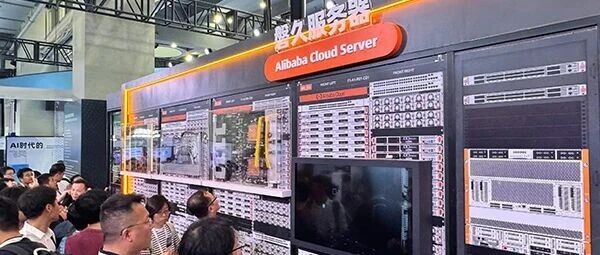
1月29日,平头哥半导体有限公司(以下简称"平头哥")官网上线一款名为"真武810E"的高端AI芯片, 代表着阿里自研芯片PPU(并行处理器)正式亮相。随着"真武"PPU的亮相,由通义实验室、阿里云、 平头哥组成的阿里巴巴AI黄金三角——"通云哥"首次浮出水面。 平头哥官网显示,"真武"PPU采用自研并行计算架构和片间互联技术,配合全栈自研软件栈,实现软硬 件全自研,可应用于AI训练、AI推理和自动驾驶。阿里巴巴已将"真武"PPU大规模用于千问大模型的训 练和推理,并结合阿里云完整的AI软件栈进行深度优化,为客户提供一体化产品和服务。 记者从多位行业从业者处获悉,从关键参数对比来看,"真武"PPU在性能稳定性与性价比方面表现突 出,整体性能与英伟达H20处于同等水平。 在业内人士看来,"真武"PPU的正式亮相,显示了平头哥积累多年的实力。阿里巴巴2009年创建阿里 云、2018年成立平头哥、2019年启动大模型研究,经过长期的战略投入和垂直整合,终于实现"通云 哥"全栈AI的完整布局。 有科技行业分析师对《证券日报》记者表示,阿里巴巴正在将"通云哥"打造成一台AI超级计算机,它同 时拥有全栈自研芯片平头哥、亚 ...
观察 | 春晚15亿红包背后,腾讯阿里字节的AI死战,太惨烈了
Core Viewpoint - The article discusses the intense competition among major Chinese tech companies in the AI space, particularly during the 2026 Spring Festival, highlighting their strategies and potential outcomes in the AI market [1]. Group 1: AI Competition Overview - ByteDance is the first to act, leveraging its products to create a "traffic-content-commerce" closed loop, with Doubao achieving nearly 170 million monthly active users and a daily model call volume exceeding 50 trillion, ten times that of the previous year [3]. - Alibaba adopts a different approach by integrating its AI capabilities across its ecosystem, launching over 400 AI service functions in the Qianwen app, which can handle tasks like food delivery and travel bookings [4]. - Tencent emphasizes long-term product competitiveness and user experience, launching a 10 billion cash red envelope campaign and integrating the DeepSeek-R1 model to enhance its AI capabilities [5]. - Baidu appears anxious, using a 5 billion red envelope strategy to encourage user engagement with its Wenxin assistant, reflecting its struggles in the search market [6]. Group 2: Strategic Analysis - ByteDance employs a dual strategy of direct engagement through Doubao and backend support via the Volcano Engine, aiming to dominate both consumer and business markets [10]. - Alibaba focuses on building foundational infrastructure for AI, integrating Qianwen with high-frequency services like Taobao and Alipay, aiming to redefine the "super app" concept [11]. - Tencent's strategy is characterized by a cautious approach, leveraging its strong user base on WeChat and the mini-program ecosystem, with a focus on gradual integration of AI capabilities [13]. Group 3: Future Predictions - All three companies are currently on a similar technological level, but the real competition will be about who can make AI a daily habit for users [16]. - ByteDance's strengths lie in rapid product iteration and early user habit formation, while its weaknesses include a lack of strong monetization scenarios [17]. - Alibaba has a comprehensive ecosystem and clear monetization paths but faces challenges with weak traffic entry points and high internal coordination costs [18]. - Tencent benefits from a strong traffic entry point and unique social DNA but risks falling behind due to slower decision-making and limited AI productization experience [19]. Group 4: The Nature of the AI Battle - The essence of the AI competition is framed as a cognitive battle, with ByteDance envisioning AI as ubiquitous, Alibaba treating it as essential infrastructure, and Tencent advocating for a more restrained approach [21]. - The article concludes that while aggressive strategies from ByteDance and Alibaba may yield short-term results, Tencent's long-term perspective may ultimately prove more beneficial [22].
2026春节红包大战:大厂们从“流量争夺”迈入“AI生态比拼”
Sou Hu Cai Jing· 2026-01-30 09:05
Core Insights - The annual Chinese New Year "red envelope war" has evolved from simple cash giveaways to a competition focused on user engagement and product ecosystem penetration, with AI technology now at the forefront [2][3][8] - Major companies like Tencent and Baidu are investing heavily in cash red envelopes, with Tencent announcing a distribution of 1 billion yuan and Baidu 500 million yuan, both integrating AI features into their campaigns [3][4][5] Group 1: Company Strategies - Tencent's strategy includes a 1 billion yuan cash giveaway through its Yuanbao app, with individual red envelopes reaching up to 10,000 yuan, and features like "share red envelopes" to enhance user engagement [3][4] - Baidu's approach involves a 500 million yuan red envelope campaign linked to its Wenxin assistant, offering various interactive AI experiences to users [4][5] - Alibaba is focusing on younger demographics by integrating AI content creation into its New Year's Eve events, while ByteDance is leveraging national-level events like the Spring Festival Gala to promote its AI technologies [5][6] Group 2: AI Integration - The integration of AI technology is a key highlight of this year's red envelope war, with companies aiming to popularize AI applications among the general public during the festive season [5][8] - The use of AI in red envelope campaigns is designed to lower the barriers for user interaction with AI, making it more accessible and familiar to everyday users [8][9] - The competition is not just about cash incentives but also about embedding AI into user experiences, transforming how users interact with technology [9][10] Group 3: Market Implications - The red envelope war represents a strategic move by companies to secure future digital traffic distribution rights, as traditional user acquisition methods become increasingly costly [9][10] - The shift towards AI-driven interactions is expected to redefine user engagement, allowing for personalized services through voice and text commands, thus changing the dynamics of information access [9][10] - The ongoing integration of AI into festive activities is anticipated to solidify AI's role as a central element in future industry competition, moving beyond mere tools to becoming essential components of user experience [10]
中国消费级AI“激活年”,AI应用胜负未定,摩根大通更看好“二阶受益者”
Hua Er Jie Jian Wen· 2026-01-30 08:54
摩根大通指出,2026年将成为中国消费级AI的"激活年",聊天机器人正从尝鲜阶段转向用户习惯养成 阶段。 据追风交易台,1月30摩根大通发布最新报告认为,虽然大型互联网平台正试图塑造下一个流量门户, 但目前市场尚未准备好对AI应用的最终"赢家与输家"进行统一定价,早期的市场份额转移更多反映了 分发能力而非护城河。 基于此判断,摩根大通建议投资者避免在现阶段进行非黑即白的应用层押注,而是将交易锚定在"二阶 受益者"上。这包括因推理工作量增长而受益的AI基础设施、因行业营销强度提升而受益的广告平台, 以及内容密集型行业的生产力提升者。 摩根大通特别提到,字节跳动旗下豆包的日活跃用户(DAU)达到约1亿,这具有里程碑式意义,表明 通用聊天互动已跨过大众市场的门槛。与此同时,据路透社引述,OpenAI的ChatGPT周活跃用户数达到 8亿,这一全球趋势进一步印证了消费级AI一旦在产品实用性和分发上达成一致,将迎来极快的复合增 长。 随着聊天机器人演变为高频流量门户,摩根大通预计2026年中国主要互联网平台将展开激烈竞争。这种 竞争将带来两方面的直接市场影响:一是会话从偶尔查询变为每日多轮互动,加速Token消耗;二是 ...
阿里PPU芯片出货已数十万片!芯片设计板块V型翻红,科创芯片设计ETF、科创芯片设计ETF天弘涨超2%
Ge Long Hui A P P· 2026-01-30 08:52
今日芯片设计板块上演V型反转,国联安基金科创芯片设计ETF、科创芯片设计ETF天弘、科创芯片设计ETF广发、科创芯片设计ETF易方达分别涨 2.31%、2.21%、1.82%和1.79%。 | 序号 | 证券代码 | 证券简称 | 当日涨跌幅% | 年涨跌幅% | 基金管理人 | | --- | --- | --- | --- | --- | --- | | 1 | 588780 | 科创芯片设计ETF | 2.31 | 22.49 | 国联安县金 | | 2 | 589070 | 科创芯片设计ETF天弘 | 2.21 | 1.19 | 天弘基金 | | 3 | 589210 | 科创芯片设计ETF广发 | 1.82 | 22.34 | 广发基金 | | 4 | 589030 | 科创芯片设计ETF易方达 | 1.79 | 6.93 | 易方达基金 | | 5 | 589160 | N科创芯片ETF广发 | 1.63 | 0.00 | 广发县金 | | 6 | 589100 | 科创芯片ETF国泰 | 1.37 | 18.24 | 国泰县金 | | 7 | 588920 | 科创芯片ETF鹏华 | 1.31 ...
复盘AI大厂的2025年:4.5亿存量搏杀下的生死突围
Mei Ri Jing Ji Xin Wen· 2026-01-30 07:30
Group 1 - The core viewpoint of the article highlights that four major AI companies—Tencent, Baidu, ByteDance, and Alibaba—are collectively launching initiatives during the Spring Festival, including red envelope promotions, gala collaborations, and new features, reflecting the competitive landscape of the AI industry by 2025 [1] Group 2 - The article notes that there is a significant differentiation in the user landscape of domestic AI applications by 2025, as revealed by exclusive data from QuestMobile [1] - It raises questions about whether the marketing strategies effective in the mobile internet era will still hold relevance in the AI era [1]
马云李彦宏,把最烧钱的业务送上IPO
投中网· 2026-01-30 07:12
Core Viewpoint - The independent progress of major internet companies in chip manufacturing has accelerated, with several companies preparing for IPOs, indicating a shift towards commercialization in the chip industry [5][6]. Group 1: Industry Background - The chip manufacturing wave among internet giants began in 2018, driven by geopolitical tensions and the surge in AI computing demand [7][14]. - Initially, these companies focused on creating chips to support their internal operations, but now they face the challenge of proving their viability as independent entities [8][22]. - The shift from internal cost-saving measures to providing market supply of computing power marks a significant evolution in the chip manufacturing strategy of these companies [23][30]. Group 2: Company Developments - Baidu was the first major internet company to enter the chip market, launching its first AI chip, Kunlun, in 2018 [11]. - Alibaba's chip company, Pingtouge, is preparing for an independent IPO, while Baidu's Kunlun chip has also submitted a listing application [5][22]. - Tencent's Suiyuan Technology is also planning to go public, indicating a broader trend of internet companies moving towards independent chip commercialization [5][6]. Group 3: Market Position and Financial Projections - Kunlun's revenue is projected to grow from approximately 2 billion RMB in 2024 to over 3.5 billion RMB in 2025, with expectations of achieving breakeven [23][25]. - Alibaba's Pingtouge has developed a comprehensive product line, including AI inference and general-purpose CPUs, with significant market penetration [27]. - The domestic AI chip market is rapidly evolving, with local manufacturers increasing their market share, projected to reach a 30% penetration rate by 2024 [29]. Group 4: IPO Trends and Valuations - A new wave of IPOs in the semiconductor sector is anticipated, with around 30 companies expected to enter the A-share market by 2025, aiming to raise nearly 100 billion RMB [34]. - The valuation of Kunlun is estimated to be around 21 billion RMB, with market rumors suggesting it could reach 100 billion HKD upon IPO [37]. - Morgan Stanley predicts Pingtouge's potential valuation could range from 25 billion to 62 billion USD, representing 6% to 14% of Alibaba's current market value [38]. Group 5: Challenges and Investment Needs - Despite the optimistic market outlook, many domestic AI chip companies face profitability challenges due to high R&D costs, which often exceed their revenue [39][43]. - The reliance on external funding through IPOs is becoming essential for these companies to sustain their R&D efforts and maintain their growth trajectory [43].