BHP(BHP)

Search documents
U.S. Markets Pause for New Year’s Day, Eyeing 2026 Kickoff After Strong 2025 Gains
Stock Market News· 2026-01-01 19:07
Core Viewpoint - U.S. financial markets are experiencing a pause for the New Year's Day holiday, with trading set to resume on January 2nd, 2026. Despite a recent pullback, 2025 was a strong year for major stock indexes, which posted significant gains. Market Performance - On December 31st, 2025, major U.S. stock indexes closed lower, continuing a four-session losing streak. The Dow Jones Industrial Average fell 0.6% to 48,063.29, the S&P 500 declined 0.7% to 6,845.50, and the Nasdaq Composite dropped 0.8% to 23,241.99. Trading volume was light as many institutional investors had closed their books for the year [2][3]. - Sector performance was predominantly negative, with technology stocks being a major drag. The Energy Select Sector SPDR rose 0.8%, while the Information Technology Select Sector SPDR, Financials Select Sector SPDR, and Industrials Select Sector SPDR all declined by 0.3% [4]. Notable Stock Movements - Ares Management Corporation saw a share decline of 3.4%. Micron Technology and Western Digital experienced drops of 2.5% and 2.2%, respectively. Corcept Therapeutics shares plunged significantly after the FDA did not approve its treatment. Conversely, Nike shares rose 4.1% following the CEO's purchase of approximately $1 million in company stock [5]. Year-End Market Drivers - The strong performance in 2025 was largely driven by optimism surrounding artificial intelligence, with companies like Micron Technology, Palantir, Advanced Micro Devices, Alphabet, and Nvidia being significant contributors. The S&P 500 finished 2025 up approximately 16.4%, the Nasdaq Composite surged around 20.4%, and the Dow Jones Industrial Average added roughly 13% [6]. Upcoming Economic Data - Key economic data releases are scheduled for early January, including Initial Claims data and Construction PDF on January 2nd, ISM Manufacturing index on January 5th, and various employment reports on January 7th. Important inflation indicators like the Consumer Price Index and Producer Price Index will be released on January 13th and 14th, respectively [8]. Federal Reserve Meeting - The U.S. Federal Reserve's Federal Open Market Committee meeting is set for January 28th, where market participants will seek guidance on monetary policy for 2026, particularly regarding inflation and potential interest rate adjustments [9]. Upcoming Earnings Releases - The earnings season for Q4 2025 will begin to gain momentum later in January, with notable companies like BHP Group, JPMorgan Chase, and Bank of America expected to report. These earnings will provide critical insights into corporate performance and outlooks for the new year [10].



DigitalBridge downgraded, Commvault initiated: Wall Street’s top analyst calls
Yahoo Finance· 2025-12-31 14:40
Upgrades - Argus upgraded BHP Group (BHP) to Buy from Hold with a price target of $68, citing firming prices for iron ore, copper, and coal as the global economy improves [1] Downgrades - Jefferies downgraded Mereo BioPharma (MREO) to Hold from Buy with a price target of $0.50, down from $7, due to Setrusumab missing primary endpoints in trials [2] - RBC Capital downgraded DigitalBridge (DBRG) to Sector Perform from Outperform with a price target of $16, down from $23, following SoftBank's acquisition announcement at $16 per share [3] Initiations - Stephens initiated coverage of Commvault (CVLT) with an Overweight rating and a $162 price target, highlighting its evolution in data protection and transition to Software-as-a-Service [4] - Stephens initiated coverage of Rubrik (RBRK) with an Overweight rating and a $105 price target, noting its attractive growth outlook in data protection and data security [4] - Stephens initiated coverage of Varonis (VRNS) with an Equal Weight rating and a $40 price target, emphasizing its growth potential in data security as a Software-as-a-Service platform [4] - Freedom Capital initiated coverage of Ero Copper (ERO) with a Buy rating and a $32 price target, citing its high-grade, low-cost asset portfolio in Brazil [4] - H.C. Wainwright initiated coverage of Terra Innovatum (NKLR) with a Buy rating and a $25 price target, believing its use of off-the-shelf components will reduce regulatory barriers [4]






New Strong Buy Stocks for December 31st
ZACKS· 2025-12-31 09:55
Group 1: Stocks Added to Zacks Rank 1 (Strong Buy) List - Baytex Energy (BTE) has seen a 33.3% increase in the Zacks Consensus Estimate for its current year earnings over the last 60 days [1] - BHP Group Limited (BHP) has experienced a 13% increase in the Zacks Consensus Estimate for its current year earnings over the last 60 days [2] - Samsara Inc. (IOT) has had an 8.5% increase in the Zacks Consensus Estimate for its current year earnings over the last 60 days [3] - Gitlab (GTLB) has seen a 7.2% increase in the Zacks Consensus Estimate for its current year earnings over the last 60 days [4] - Cummins (CMI) has experienced a 6.7% increase in the Zacks Consensus Estimate for its current year earnings over the last 60 days [5]

2025最后2天,中国铁矿石定价权扩大战果,2大巨头让步,新矿报捷
Sou Hu Cai Jing· 2025-12-31 08:12
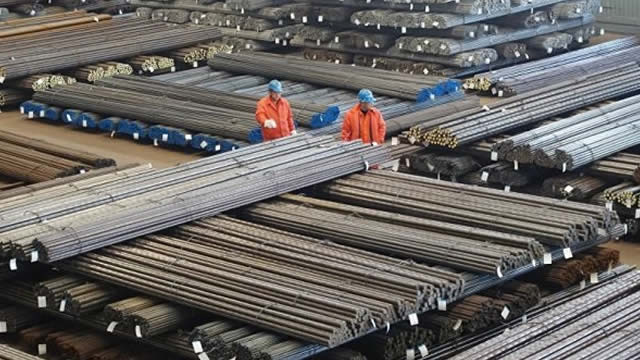
Core Viewpoint - The article discusses China's significant progress in gaining pricing power over iron ore, transitioning from a passive role to an active one in the global market, particularly by the end of 2025 [3][11][23]. Group 1: Historical Context - Since the establishment of the global iron ore long-term contract mechanism in 1981, China, as the largest consumer, has been dominated by Western countries like the US and Australia in pricing power, leading to substantial profit losses [1][3]. - The pricing system centered around the US S&P iron ore index has constrained Chinese enterprises for over four decades, limiting their negotiation power [5][7]. Group 2: Recent Developments - In December 2025, major mining companies, including Rio Tinto and Fortescue Metals Group, announced a shift from the US S&P index to pricing standards more aligned with China's market realities, marking a significant change in the pricing dynamics [11][13]. - This shift is a result of long-term negotiations with China's Mineral Resources Group, which has consolidated purchasing power, allowing China to negotiate on equal footing with global mining giants [9][11]. Group 3: Impact of Renminbi Internationalization - The move towards Renminbi (RMB) settlement for iron ore trade, initiated by BHP in October 2025, has opened avenues for reducing reliance on the US dollar, enhancing China's bargaining position [17][19]. - The transition to RMB settlement not only mitigates exchange rate risks for Chinese companies but also creates a closed-loop system for raw material imports and finished product exports, lowering transaction costs [19][21]. Group 4: Significance of Pricing Index Change - The adoption of local pricing indices, such as the "My Steel" index, reflects a shift in the international mining community's recognition of China's market influence, allowing China to move from being a price taker to a price maker [21][23]. - This change in pricing benchmarks is seen as a milestone, as it aligns more closely with China's actual supply and demand, benefiting the local steel industry [21][23].

憋屈30年,中国终于掀桌子!一纸退货令甩出,澳洲巨头彻底慌神
Sou Hu Cai Jing· 2025-12-31 06:57
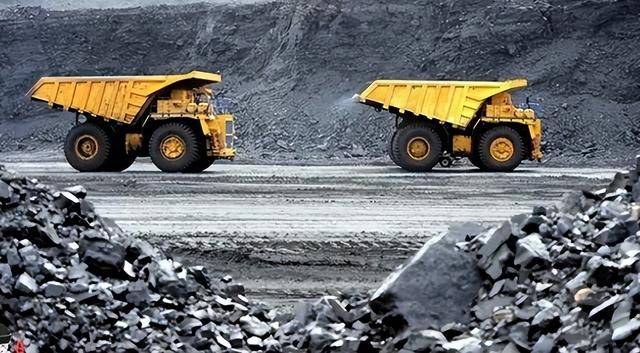
Core Viewpoint - The recent refusal of China to accept iron ore shipments from BHP signifies a shift in the long-standing dynamics of the iron ore market, where China, previously a passive buyer, is now asserting its negotiating power [1][5][7]. Group 1: Market Dynamics - China's rejection of BHP's iron ore is not merely a technical return but a clear statement of changing attitudes towards the iron ore supply chain [5][10]. - Historically, China has been a submissive buyer in the iron ore market, accepting subpar quality and high prices due to its dependency on steel production [3][12]. - The iron ore pricing power has been concentrated in the hands of a few Western mining companies, leading to a structural imbalance in profit distribution [8][14]. Group 2: Strategic Shifts - The refusal to accept BHP's shipment is a signal of a new phase in negotiations, where China is willing to challenge the old rules of engagement [10][16]. - The development of the Simandou iron ore project in Guinea is pivotal, as it offers higher quality ore and gives China a controlling stake, thus altering the supply dynamics [18][19]. - Simandou's strategic importance lies in its ability to provide a viable alternative to existing suppliers, enhancing China's bargaining position [19][22]. Group 3: Industry Implications - The shift in procurement strategy aims to reclaim lost bargaining power and support domestic steel companies, particularly smaller firms struggling with high costs [16][24]. - By emphasizing quality and introducing alternatives like Simandou, China is gradually reducing the excessive profits of mining companies, forcing them to adapt to a more competitive pricing environment [22][24]. - The evolving landscape indicates a move away from the previously accepted norms, suggesting that the era of passive acceptance in the iron ore market is coming to an end [24].
2026年商品年度报告黑色商品:供给作为主变量,2026年矿价或前高后低
Zhong Hui Qi Huo· 2025-12-31 01:56
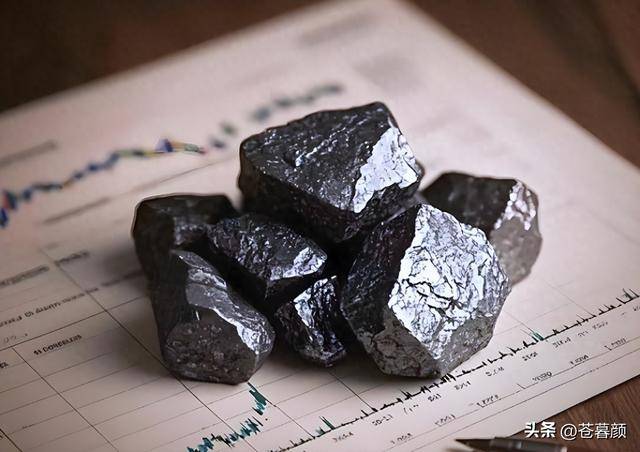
Report Industry Investment Rating No relevant content provided. Core Viewpoints of the Report - In 2026, the global iron ore supply-demand relationship is statically loose. The supply increase is mainly from non-mainstream mines and those in Guinea. The domestic demand faces downward pressure, while overseas demand will see a slight increase. Port inventories will continue to accumulate, and iron ore prices may face downward pressure, with the price center expected to drop to $85 - $90. In the first and second quarters, prices may be relatively strong due to supply contraction, steel mill复产, winter storage, and construction start expectations. In the third and fourth quarters, prices may face pressure as supply increases and demand remains weak [3][44]. - In terms of spot-futures and inter-month arbitrage, the mismatch between the realization of supply increase expectations and the fluctuation rhythm of hot metal production may bring arbitrage opportunities. For example, in March, attention can be paid to the 5 - 9 inter - period positive spread and spot - futures reverse spread [3][44]. - For inter - variety arbitrage, if the supply increase is realized, iron ore may change from a relatively strong variety in the black commodities to a relatively weak one. Opportunities for the contraction of the ratio of iron ore to coking coal and coke can be considered, as well as the expansion of the rebar - iron ore ratio after the supply increase of iron ore is realized [3][44][45]. Summary by Relevant Catalogs Chapter 1: Ore Demand Side - Weak at Home, Strong Abroad, with a Slight Steady Increase 1.1 Domestic Demand: Still Under Pressure - In 2025, from January to November, China's fixed - asset investment (excluding rural households) decreased by 2.6% year - on - year, with private fixed - asset investment down 5.3%. Infrastructure investment (excluding electricity) decreased by 1.1% year - on - year, and the decline widened by 1.0 percentage points compared with the first 10 months. Real estate development investment decreased by 15.9% year - on - year. Manufacturing investment increased by 1.9% year - on - year from January to November, but the growth rate slowed down [8][11][12]. - In 2025, China's steel consumption was 808 million tons, a year - on - year decrease of 5.4%. In 2026, the steel demand is expected to be 790 million tons, a year - on - year decrease of 1.7%. Due to the real estate market not bottoming out, the demand for construction steel in 2026 may be weaker than expected, with the national steel demand decreasing by more than 2.0% year - on - year [17]. - In 2026, constrained by the decline in domestic steel demand, steel mills may find it difficult to maintain profits under inventory pressure. According to the Steel Union's statistical caliber, the pig iron output is estimated to be 855 million tons, a year - on - year decrease of 1.0%. The iron ore demand is estimated to be 1.5 billion tons, a year - on - year decrease of about 16 million tons [23][26]. 1.2 Foreign Demand: Steady Growth - The Metallurgical Planning and Research Institute predicts that the global steel consumption in 2025 was 1.719 billion tons, a year - on - year decrease of 1.8%, and in 2026, the global steel demand will be 1.736 billion tons, a year - on - year increase of 1.0%. The World Steel Association expects that the global steel demand in 2026 will rebound moderately by 1.3% to 1.772 billion tons, mainly driven by the strong performance of India, some ASEAN, and Middle East and North African countries [24]. - Considering China's large base of steel demand, it is expected that the global steel demand will increase by 0.8% year - on - year in 2026. The steel demand of countries other than China will increase by 3.5% year - on - year, which translates to an increase of 33.5 million tons in 62% iron ore demand [24][26]. 1.3 Demand Summary - Domestically, the iron ore demand in 2026 is estimated to be 1.5 billion tons, a year - on - year decrease of about 16 million tons. Overseas, the iron ore demand is expected to increase by 33.5 million tons. Overall, the global iron ore demand will increase by about 17.5 million tons in 2026 [26]. Chapter 2: Ore Supply Side - Mainstream Mines are Stable, Focus on Increment from Emerging Mines 2.1 Australian and Brazilian Mainstream Mines: Goal - Oriented, with Steady Growth - In 2025, the world's four major iron ore giants all achieved or exceeded their annual production or shipment targets. In 2026, the total output of the four major mines is expected to reach 1.135 billion tons, an increase of 18 million tons compared with the actual output in 2025. The supply is abundant, and the sales volume in the second half of the year is generally higher than that in the first half, with a total sequential increase of 36.6 million tons [27][30][38]. - Vale and Rio Tinto will be the main contributors to the increase in the second half of the year, with sequential increases of 15 million tons and 13 million tons respectively. BHP's increase is the smallest, only 1.48 million tons, indicating limited production growth space. FMG's sales volume will increase by 7.12 million tons in the second half of the year, showing moderate expansion [30][38][40]. 2.2 Foreign Non - Mainstream Mines and Domestic Mines: Guinea and India Contribute the Main Increment - In 2025, the iron ore shipments from non - Australian and non - Brazilian regions increased significantly. In 2026, the Simandou project in Guinea will contribute the main increment, with an estimated output of 20 million tons from the north and south blocks combined. India's iron ore production and sales are expected to continue to grow. The estimated increment of non - mainstream mines in 2026 is 34 million tons [33]. - In 2025, the output of domestic iron concentrate was estimated to be 243 million tons, a year - on - year decrease of 8 million tons. In 2026, the supply increment of domestic iron concentrate is expected to be 2 - 3.5 million tons, mainly from the technological transformation and expansion of leading enterprises. However, due to resource, environmental protection, and international ore price constraints, the possibility of significant growth is low [35]. 2.3 Supply Summary - The total output of the four major foreign mines is expected to increase by 18 million tons in 2026. The estimated increment of non - mainstream mines is 34 million tons, and the supply increment of domestic iron concentrate is 2 - 3.5 million tons. Overall, the global iron ore supply will increase in 2026, with an estimated year - on - year increment of 54 - 55.5 million tons [38][40]. Chapter 3: Ore Inventory Side - Steel Mills Control Inventories, Ports Face Pressure 3.1 Port Inventory: There is still an expectation of inventory accumulation - At the end of December, the inventory of 45 ports was 159 million tons, an increase of 10 million tons compared with the beginning of the year, with a growth rate of 6.71%. In 2026, the iron ore supply - demand relationship is statically loose, and the port inventory may continue to accumulate [41]. 3.2 Steel Mills: Winter Storage is Delayed, and the Low - Inventory Model Continues - The current inventory level is at a low point in 2025. Due to steel mill maintenance in December and the late Spring Festival in 2026, the low - inventory model of steel mills remains unchanged. It is expected that steel mills will start to replenish inventory from January to February 2026 and then maintain a relatively low - inventory structure [42]. Chapter 4: Iron Ore Summary and Trading Opportunities in the Second Half of the Year - In terms of supply - demand pattern, in 2026, the global iron ore supply will increase by about 54 - 55.5 million tons, the demand will increase by about 17.5 million tons, and the port inventory may continue to accumulate. Steel mills maintain a cautious approach and adopt a low - inventory management strategy for raw materials [44]. - Overall, the iron ore price may face downward pressure, with the price center expected to drop to $85 - $90. In the first and second quarters, prices may be relatively strong, while in the third and fourth quarters, prices may face pressure. In terms of arbitrage, attention can be paid to spot - futures and inter - month arbitrage in March, as well as inter - variety arbitrage opportunities such as the contraction of the iron ore - coking coal/coke ratio and the expansion of the rebar - iron ore ratio [3][44][45].

Are You Looking for a Top Momentum Pick? Why BHP (BHP) is a Great Choice
ZACKS· 2025-12-30 18:00
Core Insights - Momentum investing focuses on following a stock's recent price trends, with the aim of buying high and selling higher [1] - The Zacks Momentum Style Score helps identify stocks with strong momentum, addressing the challenges in defining momentum [2] Company Overview: BHP - BHP currently holds a Momentum Style Score of A and a Zacks Rank of 2 (Buy), indicating strong potential for outperformance [3][4] - Over the past week, BHP shares increased by 4.33%, outperforming the Zacks Mining - Miscellaneous industry, which rose by 3.88% [6] - In the last month, BHP's price change was 9.46%, compared to the industry's 3.82% [6] - BHP shares have risen 7.9% over the past quarter and 23.8% over the last year, significantly outperforming the S&P 500, which increased by 3.98% and 16.97% respectively [7] Trading Volume - BHP's average 20-day trading volume is 2,810,768 shares, which serves as a bullish indicator when combined with rising stock prices [8] Earnings Outlook - Recent earnings estimate revisions for BHP show positive momentum, with three estimates moving higher and none lower, raising the consensus estimate from $3.99 to $4.51 over the past 60 days [10] - For the next fiscal year, three estimates have also increased with no downward revisions [10] Conclusion - BHP is positioned as a strong momentum pick with a 2 (Buy) rating and an A Momentum Score, making it a noteworthy option for investors seeking short-term gains [11][12]
DigitalBridge downgraded, Commvault initiated: Wall Street's top analyst calls
Yahoo Finance· 2025-12-30 14:36
Upgrades - Argus upgraded BHP Group (BHP) to Buy from Hold with a price target of $68, citing firming prices for iron ore, copper, and coal as the global economy improves [2] Downgrades - Jefferies downgraded Mereo BioPharma (MREO) to Hold from Buy with a price target of 50 cents, down from $7, due to Setrusumab missing primary endpoints in trials, impacting Mereo's future strategy [3] - RBC Capital downgraded DigitalBridge (DBRG) to Sector Perform from Outperform with a price target of $16, down from $23, following SoftBank's acquisition announcement at $16 per share, totaling a $4 billion enterprise value [4] Initiations - Stephens initiated coverage of Commvault (CVLT) with an Overweight rating and a $162 price target, highlighting its leadership in data protection and transition to Software-as-a-Service [5] - Stephens initiated coverage of Rubrik (RBRK) with an Overweight rating and a $105 price target, noting its strong growth outlook in data protection and expected margin expansion [5] - Stephens initiated coverage of Varonis (VRNS) with an Equal Weight rating and a $40 price target, emphasizing its growth potential in data security as a Software-as-a-Service platform [5] - Freedom Capital initiated coverage of Ero Copper (ERO) with a Buy rating and a $32 price target, pointing out its high-grade, low-cost assets in Brazil [5] - H.C. Wainwright initiated coverage of Terra Innovatum (NKLR) with a Buy rating and a $25 price target, believing its use of off-the-shelf components will lower regulatory and technological barriers [5]
Nickel Is Hated Enough To Be Loved - BHP Group (NYSE:BHP), First Quantum Minerals (OTC:FQVLF)
Benzinga· 2025-12-28 20:41
Core Viewpoint - Nickel is experiencing a bullish trend after a bearish year, with a 5.5% rally in a month, but its sustainability remains uncertain [1] Market Dynamics - Nickel prices fell significantly, reaching as low as $14,600 per ton last month, leading to major Western producers shutting down operations due to oversupply and battery substitution concerns [1][4] - The demand for stainless steel and electric vehicles (EVs) initially drove nickel production from 800,000 metric tons in 2019 to 2.2 million in 2024, resulting in a structural surplus [3][4] - The International Nickel Study Group projected a surplus of 179,000 tons in 2024, increasing to 198,000 tons in 2025, with LME warehouse inventories exceeding 254,000 tons [4] Demand Trends - Demand for nickel-rich battery chemistries is growing slowly, with nickel-free LFP batteries increasing by 7% year-on-year compared to just 1% for nickel-bearing batteries by late 2024 [5] - Policy changes, such as the repeal of the US$7,500 EV tax credit, have negatively impacted EV sales and sentiment [5] Supply Chain Risks - Indonesia dominates nickel production, accounting for over half of global output in 2025, but this concentration poses systemic risks due to environmental concerns and reliance on coal power [6][7] - Australia's nickel production has significantly declined from over 150,000 tons to about 60,000 tons due to high operational costs compared to Indonesia [8] Future Outlook - Nickel's demand outlook remains in the mid-single digits, with expectations of doubling battery demand by 2030 despite the LFP trend [10] - A potential shift from surplus to deficit in the late 2020s is anticipated, driven by the continued reliance on nickel-rich chemistries for high-performance EVs [11] - The market faces risks from Indonesia's continued output growth and the rapid adoption of alternative battery technologies [12] Investment Perspective - Nickel is viewed as a deep-value contrarian commodity, with potential for rebalancing despite current oversupply and dependence on a politically complex supplier [13]

New York copper price surges again, Shanghai sets record
MINING.COM· 2025-12-26 20:18
Core Viewpoint - Copper prices have surged to record highs, driven by supply disruptions and strong demand, particularly from the US and China, indicating a potential for continued price increases in the near future. Group 1: Price Movements - Copper trading on the London Metal Exchange reached a record high of $12,282 per tonne, while prices on the Shanghai Futures Exchange approached 100,000 yuan or $14,270 per tonne, marking a significant premium over US markets [1] - The most active copper contract for March delivery on the Comex in New York rose over 5% to an intraday high of $5.90345 per pound, equivalent to just over $13,000 per tonne, the highest level since July [2] Group 2: Supply Disruptions - Significant supply disruptions have been noted, including a deadly accident at the Grasberg mine in Indonesia, leading Freeport McMoRan to declare force majeure and reduce its output guidance for 2026 [3] - Other incidents, such as an underground flood at Ivanhoe's Kamoa-Kakula mine and a fatal rock blast at Codelco's El Teniente mine, have also impacted global copper production [4] Group 3: Future Price Predictions - BMO Capital Markets forecasts an average copper price of $12,500 per tonne by Q2 2026, anticipating that mine supply will eventually catch up [5] - Goldman Sachs predicts that copper prices will be constrained to $10,000 - $11,000 per tonne in 2026 due to a projected surplus, despite current supply challenges [16] - In contrast, Bank of America has raised its price forecasts to $11,313 per tonne for 2026 and $13,501 per tonne for 2027, citing mine disruptions and strong demand [20] Group 4: Market Dynamics - A Chinese trader has made significant investments in copper, holding a net long position of approximately 90 kilotonnes, reflecting confidence in the market despite volatility [22] - BloombergNEF anticipates a structural deficit in copper starting from 2026, driven by electrification demand outpacing supply, with a potential shortfall of 19 million tonnes by 2050 without new mines [25]