BIDU(BIDU)
Search documents
纳斯达克中国金龙指数盘初涨约0.5% 网易涨超4%


Mei Ri Jing Ji Xin Wen· 2025-12-01 14:55
每经AI快讯,12月1日,热门中概股开盘涨跌互现,纳斯达克中国金龙指数涨约0.5%,网易涨超4%,阿 里巴巴涨超2%,百度涨超1%,理想汽车、蔚来跌超2%,小鹏汽车跌超1%。 (文章来源:每日经济新闻) ...
百度启动大规模裁员!
国芯网· 2025-12-01 12:32
国芯网[原:中国半导体论坛] 振兴国产半导体产业! 多位来自百度内部的员工表示,此次裁员规模远超以往,不少员工直言 " 自 2018 年以来从未见过如此大规模的裁员 "。 从整体趋势来看,百度的人力收缩已持续多年。自 2021 年起,百度便不断进行组织瘦身。2022 年裁减约 4200 人,2023 年裁减 1500 人,2024 年裁减约 3900 人,四年累计减少员工近 1 万人。其中,研发人员缩减最为明显,从 27500 人下降至 19500 人,仅 2024 年一年便减少约 2300 人,销售和市场团队 则从 9800 人缩减至 7700 人。 而在本轮调整中,裁员覆盖多个业务线,其中移动生态事业群组(MEG)成为重点区域,部分部门优化比例达 20%-30%。其他业务线如智能云 (ACG)、基础架构部(TPG)等也有涉及。 ***************END*************** 不拘中国、 放眼世界 ! 关注 世界半导体论坛 ↓ ↓ ↓ 近日,有消息称百度正在进行新一轮裁员,并要求在 12 月底前完成。 从裁员对象看,本轮优化重点面向入职未满一年的新人、年龄偏大的资深员工,以及连续两年未晋 ...
百度:广告之外:云和AI芯片重塑投资叙事,上调评级至“增持”
2025-12-01 00:49
Summary of Baidu (BIDU US & 9888 HK) Conference Call Company Overview - **Company**: Baidu (BIDU US & 9888 HK) - **Market Capitalization**: Approximately $31.6 billion [2] Key Points and Arguments Investment Rating and Outlook - The investment rating for Baidu has been upgraded from "Neutral" to "Overweight" due to a changing narrative where cloud and AI are becoming the main growth engines and value drivers [1][26] - The forecast indicates that Baidu's cloud business revenue growth will increase to approximately 61% by 2026, up from about 23% in 2025, driven by a sixfold increase in Kunlun chip sales [1][26] Revenue Projections - The estimated valuation for Baidu's cloud business is around $34 billion, accounting for approximately 53% of the target price [1][26] - The target price for Baidu is set at $188, reflecting an increase from a previous estimate of $110 [2][26] AI and Cloud Business Growth - The demand for AI computing power in China remains strong, with large-scale cloud service providers increasingly sourcing from domestic suppliers [5] - Kunlun AI chip sales are expected to grow sixfold, reaching over $8.3 billion by 2026 [4][8] - GPU computing revenue is projected to double by 2026, with significant growth in AI cloud infrastructure [10][11] Advertising Revenue Dynamics - While AI marketing revenue is growing, traditional search advertising is facing challenges, with a projected decline of approximately 30% in traditional search and lead advertising revenue by Q3 2025 [4][16] - Overall, Baidu's core advertising revenue is expected to decrease by 7% in 2026, highlighting the need for a balance between traditional and AI-driven advertising [16] Financial Adjustments - Adjusted earnings per share for 2026 have been increased by 46% due to stronger-than-expected performance in AI business and reduced depreciation expenses [20][25] - The forecast for 2026 revenue has been raised by 11%, reflecting the robust growth momentum in AI [20][25] Risks and Catalysts - Downside risks include weaker-than-expected growth in core advertising due to competition and demand issues [29] - Potential upside catalysts include a quicker-than-expected recovery in industry sentiment and advertising revenue [30] Valuation Methodology - The valuation approach has shifted from a consolidated P/E method to a sum-of-the-parts valuation, with specific multiples assigned to different business segments [22][23] - The valuation framework includes core advertising, cloud (excluding Kunlun chip sales), and Kunlun chip revenue, with respective multiples of 5x, 6x, and 15x for 2026 [22][23] Additional Important Insights - Baidu's Kunlun chip initiative is seen as a key driver for domestic demand expansion, with significant orders from regulated industries [6][8] - The company is actively expanding its AI infrastructure, with a notable increase in the number of clients utilizing Kunlun chips [9][13] - The integration of AI into existing products like Baidu Wenku and Baidu Wangpan is expected to enhance product innovation and user retention [14][15] This summary encapsulates the critical insights from the conference call, focusing on Baidu's strategic direction, financial outlook, and market dynamics.
中国互联网:TMT 会议核心要点-China Internet_ TMT conference key takeaways
2025-12-01 00:49
Key Takeaways from the TMT Conference on China's Internet and AI Sector Industry Overview - The conference focused on the **China Internet** and **AI** sectors, particularly the advancements in **generative AI (GenAI)** applications and domestic AI chip solutions in 2025 [1][2]. Core Insights 1. **Surge in Generative AI Demand**: The demand for GenAI applications in China is rapidly increasing, supported by government policies and diverse use cases, leading to a significant rise in token consumption across various industries. The State Council's initiative aims for a penetration rate of intelligent terminals and AI agents to exceed 70% by 2027 and 90% by 2030 [2][3]. 2. **Shift to Domestic AI Chips**: Chinese hyperscalers are transitioning to domestic AI chip solutions, redirecting capital from foreign suppliers to local alternatives like Huawei's Ascend and Baidu's Kunlun. This shift is driven by U.S. export restrictions and government subsidies covering up to 50% of power costs for data centers using local chips [3][4]. 3. **Investment in AI Infrastructure**: Total investments in AI infrastructure in China are projected to reach **$98 billion** in 2025, with a focus on enhancing local sourcing and reducing supply chain vulnerabilities [3][4]. 4. **Advancements in AI Chip Technology**: Key players like Huawei and Baidu are producing competitive AI chips that meet the performance needs for GenAI deployment. Huawei's chips are now comparable to Nvidia's for inference tasks, enabling scalable applications [4][9]. 5. **Operational Efficiency Gains**: Enterprises are leveraging GenAI primarily for operational cost reductions and efficiency improvements, with sectors like internet, manufacturing, and finance adopting these tools for various applications [10][12]. 6. **Consumer Adoption of GenAI Tools**: General-purpose GenAI tools, such as chatbots and AI search engines, are gaining popularity in China, often provided for free to attract users. Meanwhile, specialized applications are emerging with monetization strategies [11][12]. 7. **Integration of GenAI in Mobile Apps**: Mid-to-large Chinese internet firms are embedding GenAI features into flagship mobile applications, enhancing user experiences and driving revenue growth. For instance, Tencent's Weixin reported a **15% year-over-year revenue increase** to **$27.1 billion** in Q3 2025, attributed to AI-driven ad monetization [12][13]. 8. **Evolution of GenAI Applications**: GenAI applications are evolving into sophisticated AI agents capable of autonomous task execution, with platforms like Baidu's GenFlow 3.0 serving over **20 million users** [13][14]. 9. **Market Opportunities for Custom AI Agents**: The emergence of marketplaces for custom AI agents indicates significant revenue potential, transforming GenAI from assistive tools to operational cores in e-commerce and other sectors [14][15]. Additional Important Insights - The strategic reallocation of resources towards domestic AI solutions not only enhances China's AI sovereignty but also aligns with government mandates for local sourcing in public data centers [3][4]. - The dual approach of offering free general-purpose tools while developing monetized vertical applications is driving growth in the overall AI ecosystem in China [11][12]. This summary encapsulates the key points discussed during the TMT conference, highlighting the rapid advancements and strategic shifts within China's internet and AI sectors.
百度集团-SW(09888):集中资源专注AI发展和变现,萝卜快跑价值将释放
Haitong Securities International· 2025-11-30 13:46
Investment Rating - The report initiates coverage on Baidu with an "OUTPERFORM" rating, indicating an expectation of performance exceeding the market average [1]. Core Insights - Baidu is focusing resources on the development and monetization of AI technologies, with AI-driven new business revenues growing by over 50% year-on-year, contributing 39% to core revenues [2][21]. - The Apollo Go business is expanding rapidly, with weekly fully driverless orders exceeding 250,000 and cumulative orders surpassing 17 million, indicating significant growth potential [3][22]. - Traditional advertising is under pressure, while cloud services continue to show strong growth, with expectations of a 14% decline in core advertising revenue and a 14% increase in cloud revenue in Q4 [3][24]. Financial Summary - Baidu's revenue for Dec-24 is projected at RMB 133,125 million, with a slight decline expected in subsequent years [17]. - Net profit is forecasted to decrease significantly in Dec-25 to RMB 18,707 million, before recovering in the following years [17]. - The gross profit margin is expected to decline from 50.3% in Dec-24 to 43.1% in Dec-25, with a gradual recovery anticipated thereafter [17]. Valuation and Price Target - The report employs a Sum-of-the-Parts (SoTP) valuation method, estimating a target price of HK$171 per share, corresponding to an 18x PE ratio for FY25 [4][25]. - Key components of the valuation include traditional search ads valued at US$2.2 billion, AI cloud services at US$3.5 billion, and Robotaxi at US$57.3 billion [4][25]. Business Segment Outlook - The traditional advertising segment is facing challenges, but the cloud business is expected to maintain high growth rates, driven by demand for large language models [10][24]. - AI-related businesses are being prioritized, with significant revenue growth reported in AI cloud infrastructure and AI-native marketing services [2][21][22].
Weekend Round-Up: TSMC Trade Secrets Lawsuit, Google Deepmind Scientist's Market Slam, Baidu Layoffs, Amazon's Court Victory And More
Benzinga· 2025-11-30 12:01
Group 1: TSMC and Intel - Taiwan prosecutors raided the home of former TSMC vice president Wei-Jen Lo over allegations of leaking trade secrets to Intel Corp, with computers and storage devices seized as evidence [2] Group 2: AI Hardware Market - A Google DeepMind researcher criticized the market's perception of AI hardware demand following a significant drop in Nvidia and AMD stocks, which fell after reports indicated that Meta might utilize Google's AI chips [3] Group 3: Baidu Layoffs - Baidu has initiated layoffs across multiple business units after a disappointing Q3 report, with potential job cuts reaching up to 40% in some teams, although the exact number of layoffs remains unspecified [4] Group 4: Amazon Legal Victory - Amazon won a legal battle against New York's new labor law, which would have allowed state intervention in private-sector union disputes, with a federal judge blocking the law's enforcement while Amazon's challenge is ongoing [5] Group 5: Meta Investigation - U.S. Senators Richard Blumenthal and Josh Hawley have called for an investigation into Meta Platforms over allegations that the company profits from fraudulent advertisements, with estimates suggesting potential earnings of $16 billion annually from such ads [6]
百度开启最大规模裁员? 所涉部门裁员比例15%到30%不等
Sou Hu Cai Jing· 2025-11-30 07:55
Group 1 - The core point of the article highlights that Baidu is undergoing its largest workforce reduction in recent years, with layoffs affecting various business lines and departments, with ratios ranging from 10% to 30% [2] - The layoffs are described as a normal year-end adjustment, with no specific target for the number of layoffs, and compensation packages include year-end bonuses, which are considered generous [2] - Employees report that the scale of this layoff exceeds previous year-end adjustments, and the severance pay can reach N+3.5, which includes years of service plus an additional 3.5 months of salary [2] Group 2 - Despite the large-scale layoffs, many employees do not feel personally targeted, and the continuation of year-end bonuses has led to a general lack of resentment among staff [2] - However, there are concerns that the ongoing layoffs may impact morale within the company [2]
速报!MEET2026嘉宾阵容再更新,观众报名从速
量子位· 2025-11-30 05:09
Core Insights - The MEET2026 Smart Future Conference will focus on cutting-edge technologies and industry developments that have garnered significant attention throughout the year [1] - The theme "Symbiosis Without Boundaries, Intelligence to Ignite the Future" emphasizes how AI and smart technologies penetrate various industries, disciplines, and scenarios, becoming a core driving force for societal evolution [2] Group 1: Conference Highlights - The conference will cover hot topics in the tech circle this year, including reinforcement learning, multimodal AI, chip computing power, AI in various industries, and AI going global [3] - It will feature the latest collisions between academic frontiers and commercial applications, showcasing leading technological achievements from infrastructure, models, and product industries [4] - The event will also include the authoritative release of the annual AI rankings and the annual AI trend report [5][116] Group 2: Notable Speakers - Zhang Yaqin, President of Tsinghua University's Intelligent Industry Research Institute and an academician of the Chinese Academy of Engineering, has extensive experience in AI and digital video technologies [11][12] - Sun Maosong, Executive Vice President of Tsinghua University's AI Research Institute, has led numerous national projects in AI research [15] - Wang Zhongyuan, Director of the Beijing Academy of Artificial Intelligence, has a strong background in AI core technology development and has published over 100 papers [19] Group 3: Industry Impact - The annual AI rankings initiated by Quantum Bit have become one of the most influential lists in the AI industry, evaluating companies, products, and individuals across three dimensions [117] - The annual AI trend report will analyze ten significant AI trends based on technological maturity, implementation status, and potential value, highlighting representative institutions and best cases [118] - The conference aims to attract thousands of tech professionals and millions of online viewers, establishing itself as an annual barometer for the smart technology industry [122]
【数智周报】 马斯克:Grok 5有10%概率实现AGI;国家数据局:支持数据交易所探索建立全链条服务体系;新AI模型可精准锁定人体致病突变……
Tai Mei Ti A P P· 2025-11-30 03:38
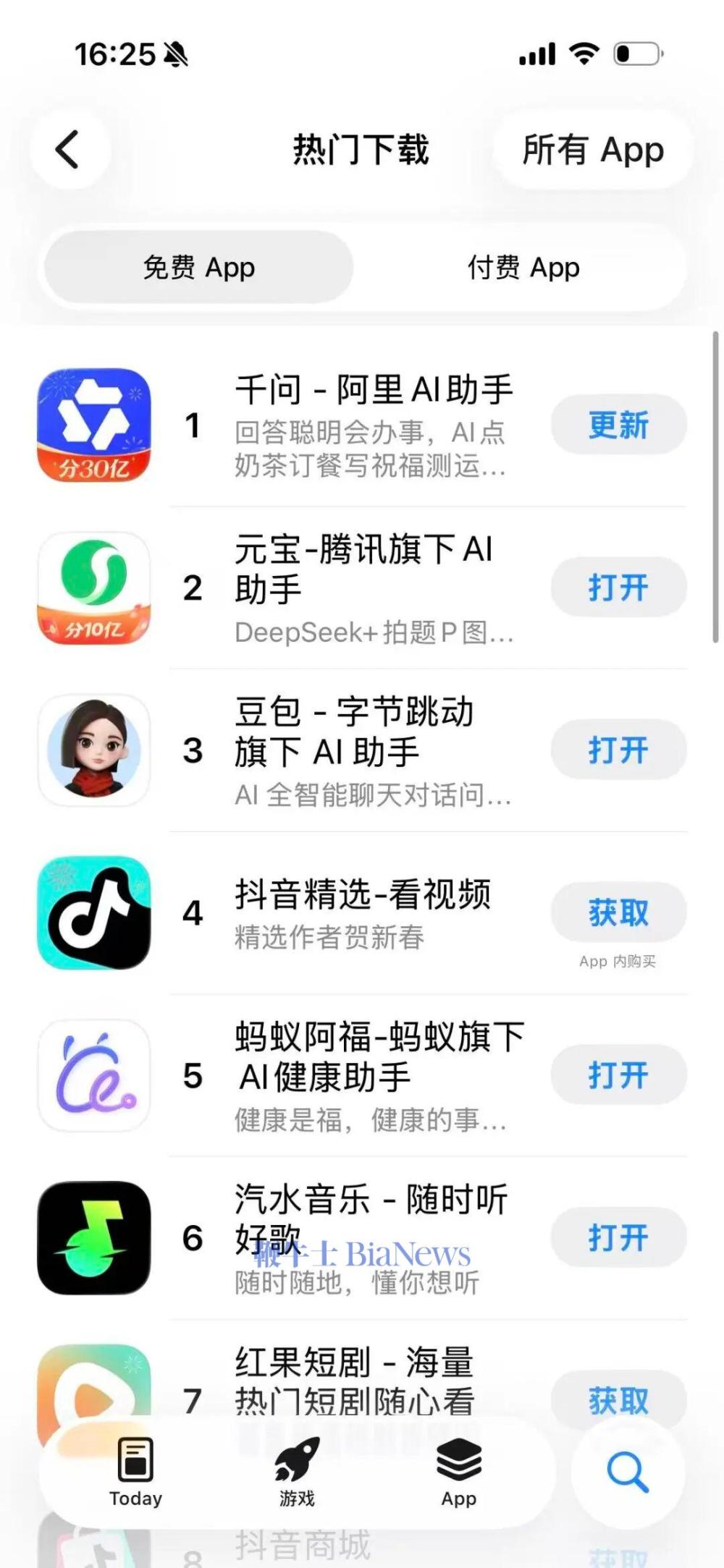
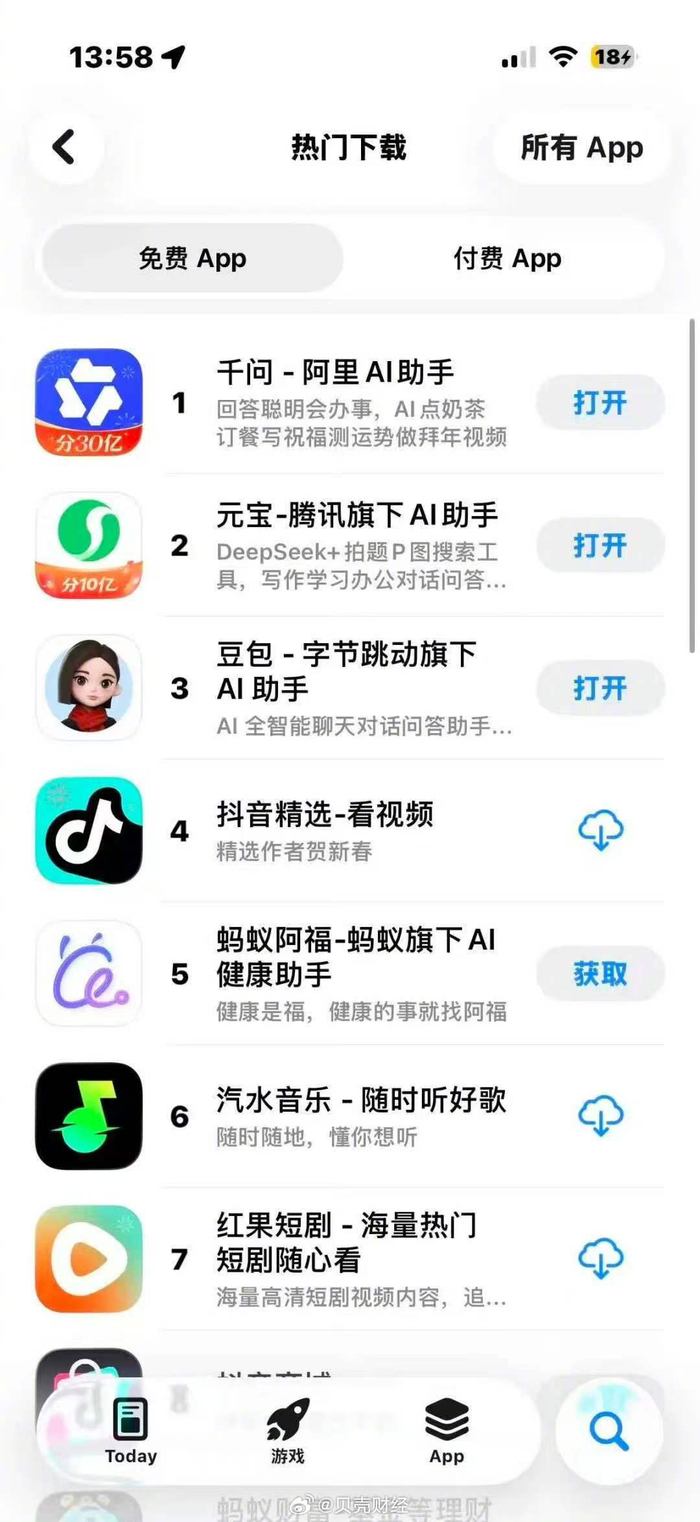
Group 1 - The Ministry of Science and Technology emphasizes the need for implementing major national technology tasks to achieve breakthroughs in key core technologies [2] - The focus is on enhancing high-quality technology supply and promoting deep integration of industry, academia, and research [2] - The government aims to strengthen the role of enterprises in technological innovation and support the establishment of innovation consortia [2] Group 2 - Liu Tieyan discusses the potential for AI to become an independent "scientist," highlighting the shift towards human-machine collaboration in research [3] - AI is expected to complement human intelligence, leading to a new era of collaborative evolution [3] Group 3 - Alibaba's CEO Wu Yongming states that an AI bubble is unlikely to occur in the next three years due to a supply-demand imbalance in AI resources [4] - Morgan Stanley Fund suggests that the expansion of AI applications will balance the significant capital investments made in the sector [5] Group 4 - Salesforce CEO Marc Benioff announces a shift from OpenAI's ChatGPT to Google's Gemini 3, citing significant advancements in reasoning and speed [6][7] - Elon Musk indicates that the upcoming Grok 5 model has a 10% chance of achieving Artificial General Intelligence (AGI) [8] Group 5 - OpenAI's former chief scientist Ilya Sutskever notes that the current paradigm of AI development is reaching its limits, advocating for a return to a research-focused approach [9] - The focus should shift from scaling models to enhancing their ability to learn and generalize [9] Group 6 - China Galaxy Securities predicts that by 2026, the trend of model democratization will drive AI applications from AI-enabled to AI-first [10] - The report emphasizes the importance of various AI application directions, including enterprise-level AI agents and vertical industry solutions [10] Group 7 - Alibaba's Q2 revenue reaches 247.8 billion yuan, with cloud intelligence group revenue growing by 34% year-on-year [16] - Dell Technologies reports a record high Q3 revenue of $27.005 billion, driven by strong demand for AI servers [17] Group 8 - EHang reports Q3 revenue of 92.5 million yuan, maintaining its annual revenue guidance of 500 million yuan [18] - The rapid growth of Alibaba's AI assistant, Qianwen, is highlighted, with downloads surpassing 10 million within a week [19] Group 9 - Tencent releases an open-source OCR model, HunyuanOCR, achieving state-of-the-art results in various applications [20] - Baidu establishes two new model research departments to focus on general AI and application-specific models [22] Group 10 - The Beijing AI industry is projected to exceed 450 billion yuan in scale by 2025, with significant growth in the core AI industry [33] - The launch of China's first AI incubation fund aims to foster innovation in the AI sector [34] Group 11 - Amazon allows businesses to test its Leo satellite service, competing with SpaceX's Starlink [35] - Analysts estimate that OpenAI's Sora incurs daily costs of $15 million, raising concerns about sustainability [36] Group 12 - HelloBoss launches an AI agent for recruitment, covering the entire hiring process [37] - South Korea plans to pilot an AI system for traffic management to alleviate congestion [38] Group 13 - Amazon encourages engineers to use its proprietary Kiro service over third-party AI coding tools [39] - A new AI model developed by Harvard and Barcelona researchers can accurately identify disease-causing mutations [40][41] Group 14 - Wedbush Securities supports the AI wave, betting on major tech stocks like Microsoft and Nvidia [42] - OpenAI removes Mixpanel from its production environment following a security incident [43] Group 15 - The Beijing government accelerates the commercialization of humanoid robots [46] - Shanghai's internet office initiates a crackdown on AI misuse [47] Group 16 - Beijing promotes the application of AI-assisted diagnostic technologies in healthcare [48] - The National Data Bureau supports the establishment of a comprehensive service system for data exchanges [49] Group 17 - The Ministry of Industry and Information Technology announces commercial trials for satellite IoT services [50] - Beijing's 14th Five-Year Plan emphasizes data legislation and high-quality data set construction [51][52] Group 18 - The National Bureau of Statistics reports a 12.8% growth in the computer and electronics manufacturing sector from January to October [54] - Tianjin's 14th Five-Year Plan includes building a supercomputing internet platform [55] Group 19 - The Ministry of Industry and Information Technology reports 515 million users of generative AI products by mid-year [56] - Beijing's action plan for "AI + audiovisual" aims to enhance algorithm breakthroughs in the media sector [57] Group 20 - Chongqing plans to establish a national integrated computing network hub [59]
AI周报 | DeepSeek开源奥数金牌水平模型;前OpenAI 联创称规模扩展时代已终结
Di Yi Cai Jing· 2025-11-30 00:48
Group 1: DeepSeek's New Model - DeepSeek has open-sourced a new model, DeepSeek-Math-V2, which is the first open-source model to reach IMO gold medal level in mathematics [1] - The performance of Math-V2 surpasses that of Google's Gemini DeepThink in certain aspects, as demonstrated in the IMO-ProofBench benchmark and recent math competitions [1] Group 2: AI Scaling Era Conclusion - Ilya Sutskever, CEO of Safe Superintelligence, claims that the era of AI scaling has ended, indicating a shift back to research paradigms rather than mere expansion [2] - He emphasizes that the current computational power cannot continuously yield better scaling, blurring the line between scaling and waste [2] Group 3: Baidu's AI Department Restructuring - Baidu has established two new AI departments: the Basic Model R&D Department and the Application Model R&D Department, both reporting directly to CEO Li Yanhong [3] - The restructuring reflects Baidu's commitment to enhancing its R&D capabilities in large models, with leadership from internally cultivated talents [3] Group 4: Nvidia's Response to Short Selling - Nvidia responded to Michael Burry's claims about the minimal real demand for AI products, clarifying that its strategic investments represent a small portion of its revenue [4] - Following a significant drop in Nvidia's stock price, the company aims to prove the sustained strength of AI demand [4] Group 5: Google's AI Glasses Project - Google is accelerating its new AI glasses project, with hardware manufacturing by Foxconn and chip supply from Qualcomm, expected to enter small-scale production [6] - The project is independent of the previously announced AR glasses and is led by a key figure from Google Labs [6] Group 6: HSBC's Warning on OpenAI's Profitability - HSBC forecasts that OpenAI will face severe financial pressure over the next decade, predicting it will struggle to achieve profitability even with a projected revenue of $213 billion by 2030 [7] - The analysis highlights the significant cash flow deficit OpenAI may encounter, amounting to $207 billion [7] Group 7: Industrial Fulian's Performance Clarification - Industrial Fulian clarified rumors regarding a downward adjustment of its Q4 performance targets, stating that operations are proceeding as planned [8] - The company's stock experienced fluctuations, reflecting market concerns about its relationship with Nvidia [8] Group 8: Denial of Google Order by Tianfu Communication - Tianfu Communication denied rumors of securing a $3 billion order from Google, amidst speculation about its role as a supplier [9] - The stock prices of related companies fluctuated based on market interest in optical module stocks [9] Group 9: Meta's Interest in Google's TPU - Meta is reportedly considering a multi-billion dollar purchase of Google's TPU for its data center development, which could mark the first external sale of Google's TPU [10] - This potential shift could impact Nvidia, as Meta is currently its largest GPU customer [10] Group 10: AI's Water Consumption - A Morgan Stanley report highlights that AI not only consumes significant electricity but also requires substantial water resources for data center operations [11] - The report points out the challenges of water resource allocation for AI data centers, particularly in regions facing water supply issues [12]