Citi(C)

Search documents
花旗集团对中兴通讯的多头持仓比例增至7.2%
Xin Lang Cai Jing· 2025-10-16 09:21
Core Insights - Citigroup's long position in ZTE Corporation's H-shares increased from 6.97% to 7.2% as of October 10, 2025 [1] Company Summary - Citigroup's stake in ZTE Corporation reflects a growing confidence in the company's performance and potential [1]


华尔街大行三季报超预期
第一财经· 2025-10-16 08:38
Core Viewpoint - Major U.S. banks, including Goldman Sachs, JPMorgan Chase, Citigroup, and Wells Fargo, reported better-than-expected Q3 earnings driven by active trading and corporate lending, despite concerns over the private credit market and economic outlook [3][4]. Group 1: Q3 Earnings Performance - U.S. stock market highs have led hedge funds and institutions to increase trading and borrowing, benefiting investment banks [5]. - The total profit of the six largest U.S. banks reached nearly $41 billion in the past three months, a 19% increase year-over-year [6]. - Goldman Sachs' investment banking revenue grew by 42% in Q3, while JPMorgan and Citigroup saw increases of 16% and 17% respectively [6]. Group 2: Debt Market Activity - Debt capital market activities surged, with Goldman Sachs' debt underwriting revenue increasing by 30% year-over-year [6]. - Initial public offerings (IPOs) have seen a resurgence, with Goldman Sachs' stock underwriting revenue growing by 21%, JPMorgan by 53%, and Citigroup by 35% [6][7]. Group 3: Market Concerns - Despite strong performance, bank stocks fell due to concerns over trade policies and potential government shutdowns, which could cost the U.S. economy up to $15 billion daily [9]. - Economic data has shown mixed signals, with a cooling job market and persistent inflation, raising concerns about the overall economic outlook [9][10]. - Executives from major banks expressed caution regarding geopolitical uncertainties and the potential for economic slowdown, emphasizing the need for vigilant risk management [10][11].


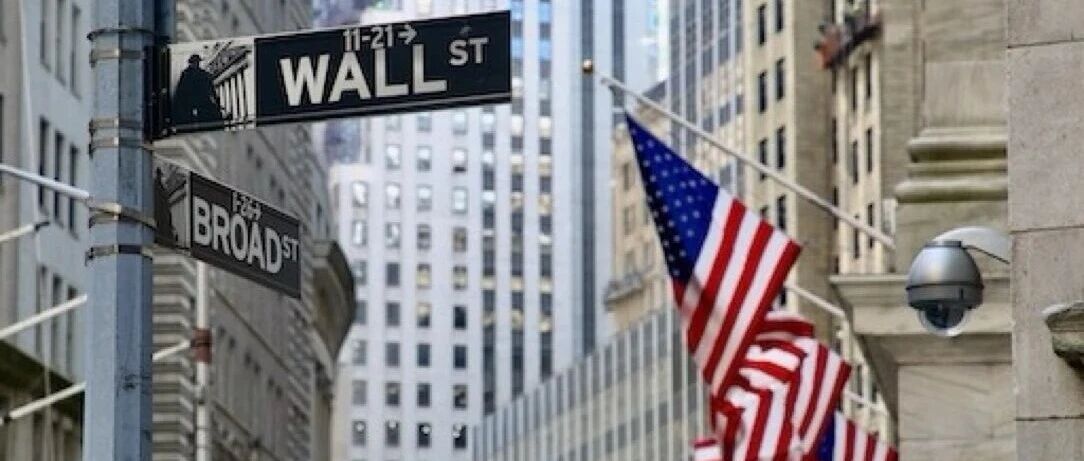
突发“黑天鹅”,“未来的新石油”能否成为下一个牛市品种?
Jing Ji Ri Bao· 2025-10-16 06:23
Core Viewpoint - Recent international copper prices have drawn attention, with LME copper futures nearing $11,000 per ton, indicating a potential new price floor and strategic value reassessment in the copper market [1][4] Supply and Demand Dynamics - Global copper supply is facing significant disruptions due to production issues at major mines, including the Grasberg mine in Indonesia, which has declared "force majeure" and anticipates a 35% drop in output by 2026, equating to a loss of approximately 270,000 tons of copper [1][2] - Other mines, such as Escondida in Chile and Kamoa-Kakula in the Democratic Republic of Congo, are also experiencing operational challenges, further tightening global copper supply [2] - The International Copper Study Group has revised its global mine production growth forecast for this year down from 2.3% to 1.4% due to these supply constraints [4] Demand Drivers - There is a surge in demand for copper driven by several factors, including the rise of artificial intelligence leading to increased data center construction, rising defense spending, and the acceleration of global electrification [4] - Goldman Sachs has characterized copper as "the new oil," emphasizing its critical role in AI and energy security, with expectations of a 70% increase in global copper demand by 2050 [4] Strategic Reserve Influence - The Federal Reserve's monetary policy also impacts copper prices; a weaker dollar and expectations of interest rate cuts enhance copper's investment appeal, leading to a shift of funds from bonds to physical commodities like copper [5] Short-term Price Outlook - The current market conditions suggest that copper prices are likely to rise in the short term due to supply shocks, especially as the market enters the traditional consumption peak season [6] - The supply tightness is expected to persist, making significant price declines unlikely unless an economic crisis occurs [6] Medium-term Price Challenges - For a substantial price rally to occur, demand must align with supply constraints; historical price surges have been linked to significant demand increases, which may not be replicated in the current environment [7] - While short-term price increases are anticipated, breaking through the high points of May 2024 will require stronger demand drivers [8]

华尔街大行三季报超预期 缘何这些高管仍对前景担忧?
Di Yi Cai Jing· 2025-10-16 05:43
受交易业务和企业贷款业务活跃推动,高盛、摩根大通、花旗集团和富国银行本周均陆续公布了超预期 的第三季度收入和利润。但在近期私募信贷市场持续爆雷的情况下,部分大行CEO对美国经济和市场前 景表达了一些担忧。 超预期三季报 今年以来,屡创新高的美股推动对冲基金和其他机构增加交易和借款,助推了投行多项业务。虽然美国 总统特朗普的政策增加了市场波动性,但无论是美国散户还是机构投资者,出于对TACO交易的押注, 均未离场,反而选择逢低买入。同时,企业对人工智能(AI)的巨额投资,以及数据中心和其他基础 设施的建设,也引发企业融资活动激增,并购交易不断增加。 比如,今年见证了美国有史以来最大的一笔杠杆收购,即游戏开发商艺电(Electronic Arts)的私有 化,该交易由高盛担任顾问,摩根大通提供了高达200亿美元的巨额融资。而美国银行也预计将获得有 史以来单家银行披露的最高交易费,金额高达1.3亿美元。 整体来看,美国六大银行在过去三个月里总计盈利近410亿美元,较上年同期增长19%。在咨询费的推 动下,高盛第三财季的投行业务收入增长了42%,并有望在主要投行和市场部门创下有史以来最佳年度 业绩。摩根大通和花旗集团 ...

华尔街大行三季报超预期,缘何这些高管仍对前景担忧?
Di Yi Cai Jing Zi Xun· 2025-10-16 05:35
Core Viewpoint - Major U.S. banks, including Goldman Sachs, JPMorgan Chase, Citigroup, and Wells Fargo, reported better-than-expected Q3 revenues and profits driven by active trading and corporate lending, despite concerns over the economic outlook due to recent turmoil in the private credit market [1][3]. Group 1: Financial Performance - The U.S. stock market's record highs this year have led hedge funds and other institutions to increase trading and borrowing, boosting various investment banking activities [3]. - The total profit of the six largest U.S. banks reached nearly $41 billion in the past three months, a 19% increase year-over-year [3]. - Goldman Sachs' investment banking revenue grew by 42% in Q3, while JPMorgan and Citigroup saw their investment banking fees rise by 16% and 17% respectively [3]. Group 2: Debt and Equity Markets - Debt capital market activities and corporate lending are surging, with Goldman Sachs' debt underwriting revenue increasing by 30% year-over-year [4]. - Initial public offerings (IPOs) are experiencing a resurgence, benefiting Wall Street investment banks, with Goldman Sachs' equity underwriting revenue up by 21% [4]. - Trading revenues in the post-pandemic era continue to set new highs, with JPMorgan and Goldman Sachs reporting year-over-year increases of 25% and 12% respectively [4]. Group 3: Economic Concerns - Despite strong performance, bank stocks declined due to concerns over trade policies and potential government shutdowns, which could cost the U.S. economy up to $15 billion daily [6]. - Economic data has been sending mixed signals, with a cooling job market and persistent inflation, raising concerns about the overall economic outlook [6]. - Executives from major banks expressed caution regarding geopolitical uncertainties and the potential impact of Federal Reserve policies on economic performance [7]. Group 4: Credit Market Risks - Recent bankruptcies in the automotive sector have raised alarms about underlying economic issues, with major banks exposed to these risks [8]. - JPMorgan's CEO warned that the current credit market conditions could indicate excessive speculation, suggesting that more similar situations may arise if the economy faces a downturn [8].
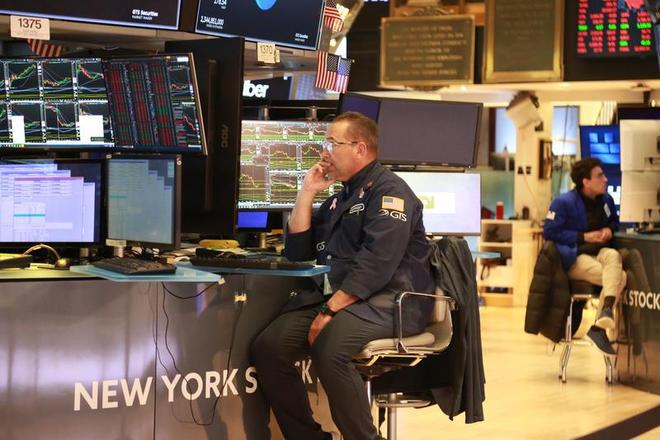
从AI狂潮赚的“盆满钵满”,华尔街高管也开始警告“AI泡沫”
美股IPO· 2025-10-16 04:17
Core Viewpoint - Major Wall Street executives express concerns about the potential for an AI bubble, drawing parallels to the internet bubble, while also reporting record earnings driven by AI-related market excitement [3][4]. Group 1: Executive Warnings - Goldman Sachs CEO David Solomon suggests that the current situation resembles the internet bubble, warning of the risks associated with massive investments in AI infrastructure that could lead to a divide between successful and failing companies [3][4]. - Citigroup CFO Mark Mason highlights concerns about overvaluation in certain sectors, stating it is hard not to believe that some areas may be experiencing a bubble [4]. - Goldman Sachs COO John Waldron acknowledges the significant bets placed on AI to drive economic growth but cautions that it is too early to determine if an AI bubble exists [4]. Group 2: Record Earnings - Despite the warnings, major banks have reported record earnings for the quarter, with trading activity and revenues reaching new highs, partly attributed to the excitement surrounding AI [3][4]. - Goldman Sachs reported its highest quarterly revenue for the same period in its history, while Citigroup's five major business segments also achieved record revenues [3]. Group 3: AI Deployment and Future Returns - Major banks are actively deploying AI technologies, with Bank of America introducing a virtual financial assistant named Erica and JPMorgan Chase focusing on cost savings through AI [8]. - JPMorgan's co-CEO Troy Rohrbaugh indicates that while the bank is beginning to see some benefits from AI investments, significant returns will take time to materialize [9]. - Morgan Stanley CFO Sharon Yeshaya emphasizes that the potential applications of AI are vast, and the industry has only scratched the surface of what AI can achieve [9].

华尔街大行预警AI投资泡沫风险
Huan Qiu Wang· 2025-10-16 02:08
Core Insights - Concerns about potential overvaluation and bubble risks in the AI investment sector have been raised by executives from Goldman Sachs and Citigroup [1][3] - The current AI infrastructure investment boom is compared to the internet bubble, with warnings of increasing corporate divergence where some companies thrive while others may fail [1][3] Group 1: Company Statements - Goldman Sachs CEO David Solomon indicated that the current AI investment landscape may mirror the internet bubble, highlighting the risk of corporate divergence [1][3] - Citigroup CFO Mark Mason expressed concerns about overvaluation in certain sectors, stating that it is difficult to ignore the possibility of bubbles given current stock valuations and price-to-earnings ratios [3] - Goldman Sachs COO John Waldron acknowledged the significant bets being placed on AI to drive economic growth but cautioned that it is too early to definitively claim a bubble exists [3] Group 2: Market Context - The recent surge in trading activity and revenue among Wall Street banks is partly attributed to optimism surrounding AI technologies, with Goldman Sachs reporting record third-quarter revenues [3] - Despite concerns about market risks, major financial institutions are actively pursuing AI applications, indicating a belief in the technology's potential despite its early development stage [4] - Notable investments in AI by financially stable companies like Meta and Amazon are seen as a key difference from the unsustainable startups of the past internet bubble [4]
创纪录业绩难掩担忧!华尔街高管齐声警告AI泡沫风险
智通财经网· 2025-10-16 01:53
Core Insights - Major U.S. banks reported record quarterly earnings driven by trading activity and receivables, partly fueled by the AI boom, but several Wall Street executives warned of potential overexuberance in the AI sector [1][2] Group 1: AI Implementation and Caution - Banks are actively deploying AI technologies in their operations, with examples including Bank of America's virtual financial assistant "Erica" and JPMorgan's cost-saving AI initiatives [1] - Despite optimism about AI's potential, executives like Citigroup's CFO Mark Mason expressed caution regarding high stock valuations and the presence of bubbles in certain sectors [1] - Goldman Sachs CEO David Solomon referenced the internet bubble, highlighting the risks associated with significant investments in AI infrastructure, noting that while some projects may thrive, others may struggle [1] Group 2: Market Sentiment and Comparisons - Investor concerns about a potential AI bubble are rising, as AI stocks have seen significant increases this year, with critics pointing to the cyclical nature of investments in unproven technologies [2] - Goldman Sachs COO John Waldron stated that the U.S. economy is making a substantial bet on AI for growth, but it is still too early to determine if a bubble has formed [2] - Morgan Stanley CFO Sharon Yeshaya emphasized that the technology has numerous applications, indicating that the industry has only begun to scratch the surface of AI's potential [2] - JPMorgan's co-CEO Troy Rohrbaugh noted that while the bank is investing in AI, the returns may not be immediate, suggesting that significant benefits will materialize in the future [2] - Evercore's founder Roger Altman argued that current AI investments differ from the internet bubble era, as today's major investors are large, profitable companies like Meta Platforms and Amazon, although he cautioned against the market's unsustainable rise [2]

从AI狂潮赚的“盆满钵满”,华尔街高管也开始警告“AI泡沫”
Hua Er Jie Jian Wen· 2025-10-16 00:17
尽管AI热潮助推华尔街银行创下交易和投行业务的纪录业绩,但多位大行高管在本周财报电话会议上 对AI行业的过度狂热发出警告。 10月16日,据媒体报道,高盛首席执行官David Solomon在周二的财报电话会议上暗示当前形势与互联 网泡沫存在相似之处,称该行意识到AI基础设施的巨额投资可能会导致"一些企业蓬勃发展而另一些则 走向失败的分化局面"。花旗首席财务官Mark Mason则更为直接地指出,"很难不认为某些板块可能存 在泡沫且估值过高"。 这些表态发生在银行业公布创纪录季度业绩的背景下。本季度交易活动和交易收入均创新高,部分归功 于AI带来的市场兴奋情绪。据见闻文章写道,高盛三季度营收创下公司历史上同期最高纪录,花旗三 季度五大业务板块收入均创纪录。 不过,尽管发出警示,华尔街各大银行仍在积极部署AI技术,从美国银行的虚拟助手Erica到摩根大通 的成本削减项目。高管们普遍认为AI应用仍处于早期阶段,真正的回报需要时间兑现。 他说:"这是一个重大区别,互联网泡沫实际上涉及无数从未具备可持续性的企业。"但他也警告称,市 场不可能"无限期"持续上涨。 银行积极部署AI但强调回报需时日 华尔街高官警告"AI泡 ...
Bank earnings: Key takeaways and analysis of Q3 results
Youtube· 2025-10-15 21:31
Core Insights - Major banks, including Goldman Sachs and JP Morgan, reported strong quarterly profits driven by increased deal-making activity on Wall Street, although concerns about economic risks persist, particularly highlighted by JP Morgan's CEO Jamie Dimon [1][28]. Group 1: JP Morgan Insights - JP Morgan reported $3.4 billion in provisions for credit losses, slightly above analyst expectations, indicating cautious sentiment regarding the job market and inflation [2][3]. - CEO Jamie Dimon pointed out potential fragilities in the economy, noting that while overall credit performance has been stable, there are areas of concern outside the banking system [5][7]. - Despite a 2% decline in JP Morgan's stock, the overall credit dynamics for banks appear favorable, with commercial and consumer loan portfolios performing well [6][8]. Group 2: Wells Fargo Insights - Wells Fargo's asset cap has been lifted, presenting opportunities for growth, and the bank reported flat guidance for net interest income for the full year, which was better than expected [11][13]. - The bank's loan growth is improving, and management expressed confidence in achieving a return on tangible common equity of 17-18% in the medium term [14]. Group 3: Goldman Sachs Insights - Goldman Sachs experienced a 42% year-on-year increase in investment banking revenue, although equity sales and trading did not meet high expectations, leading to a slight decline in stock price [17][18]. - The bank's results were solid, but the high expectations set by the market make it challenging to achieve further upside [19]. Group 4: Citigroup Insights - Citigroup reported a 9% increase in total revenue, with strong performance across all major business lines, indicating a positive outlook for profitability and growth [20][21]. - The bank's management is focused on improving business performance and has initiated a $5 billion stock buyback program, which is seen as a positive move for shareholder value [22]. Group 5: Market Trends and Economic Outlook - The overall banking sector is benefiting from a resurgence in capital markets activity, with significant increases in deal-making and trading revenues across major banks [56][59]. - Despite concerns about credit quality, banks are maintaining strong balance sheets and are well-capitalized, which bodes well for future performance [90][91]. - The economic environment remains resilient, but there are warnings about potential risks from geopolitical tensions, tariffs, and high asset prices [28][30].