DiDi(DIDIY)

Search documents
滴滴、曹操、T3、货拉拉等网约车货运平台被广西约谈,事关抽佣、运价和司机保障
Sou Hu Cai Jing· 2025-05-29 12:20
Core Viewpoint - The meeting held in Nanning on May 19 focused on addressing issues related to unreasonable commission rules, unfair pricing, and inadequate driver rights protection in the transportation industry, particularly concerning ride-hailing and freight platforms [2][3] Group 1: Regulatory Requirements - The meeting emphasized the need for ride-hailing and freight platforms to strengthen their responsibilities and adhere to legal regulations, specifically prohibiting the dispatch of orders to unlicensed vehicles and drivers [2] - It was noted that 12% of ride-hailing vehicles in Guangxi lack the required "Network Reservation Taxi Transport Certificate," and the approval rate for freight platform vehicle qualifications is only 78% [2] Group 2: Pricing Transparency - Platforms are required to ensure price transparency and fair competition, directly addressing concerns over dynamic pricing mechanisms that may lead to unfair practices [2] Group 3: Driver Rights Protection - The meeting called for improved channels for driver grievances and enhanced service guarantees, suggesting a shift from a single employment relationship to a more flexible model involving platforms, labor companies, and drivers [3]



氪星晚报 |滴滴海外包车上线11国26城;京东与小红书推出“红京计划”:小红书广告可跳转京东购物页面;小鹏MONA 03推出MAX版
3 6 Ke· 2025-05-29 10:33
Group 1: Corporate Initiatives - Lenovo has launched the "Youth with AI" educational discount program for university students, focusing on three core rights: purchase, service, and growth [1] - Didi has expanded its overseas car rental service to 11 countries and 26 cities, offering standard rental packages similar to its domestic model [3] - TEBIO has received approval for its Yipei growth hormone injection, aimed at treating growth hormone deficiency in children aged 3 and above [4] Group 2: Financial Performance - Li Auto reported a net profit of 647 million yuan for Q1 2025, a year-on-year increase of 9.4% but a quarter-on-quarter decline of 81.7%, with total vehicle deliveries reaching 92,864 units [5] - The top five NAND Flash brands reported a combined revenue of $12.02 billion in Q1 2025, a quarter-on-quarter decrease of nearly 24% due to inventory pressures and declining demand [15] Group 3: Market Trends - Tmall's 618 sales event saw a 283% year-on-year increase in transactions for national supplement categories, indicating strong consumer demand [7] - JD.com and Xiaohongshu have launched the "Red Jing Plan," allowing users to directly link advertisements to JD's shopping page, enhancing transaction conversion [8] - The domestic fuel surcharge for flights will be reduced starting June 5, 2025, which is expected to stimulate consumer demand during the upcoming summer travel season [6] Group 4: Investment and Financing - Shandong Zhongyue New Energy Co., Ltd. successfully completed a 48 million yuan Series A financing round, with funds allocated for upgrading core business areas, including solar power and energy storage [10] - AI infrastructure startup Chalk has completed a $50 million Series A financing round, with a valuation of $500 million, aimed at helping companies integrate proprietary data with AI and machine learning models [11] Group 5: Product Launches - Hongdao has launched an intelligent robot operating system, featuring a unique architecture that supports autonomous control for domestic robots [12] - XPeng Motors introduced the MONA M03 Max model, equipped with advanced driving capabilities and receiving over 12,566 pre-orders within the first hour of launch [13]
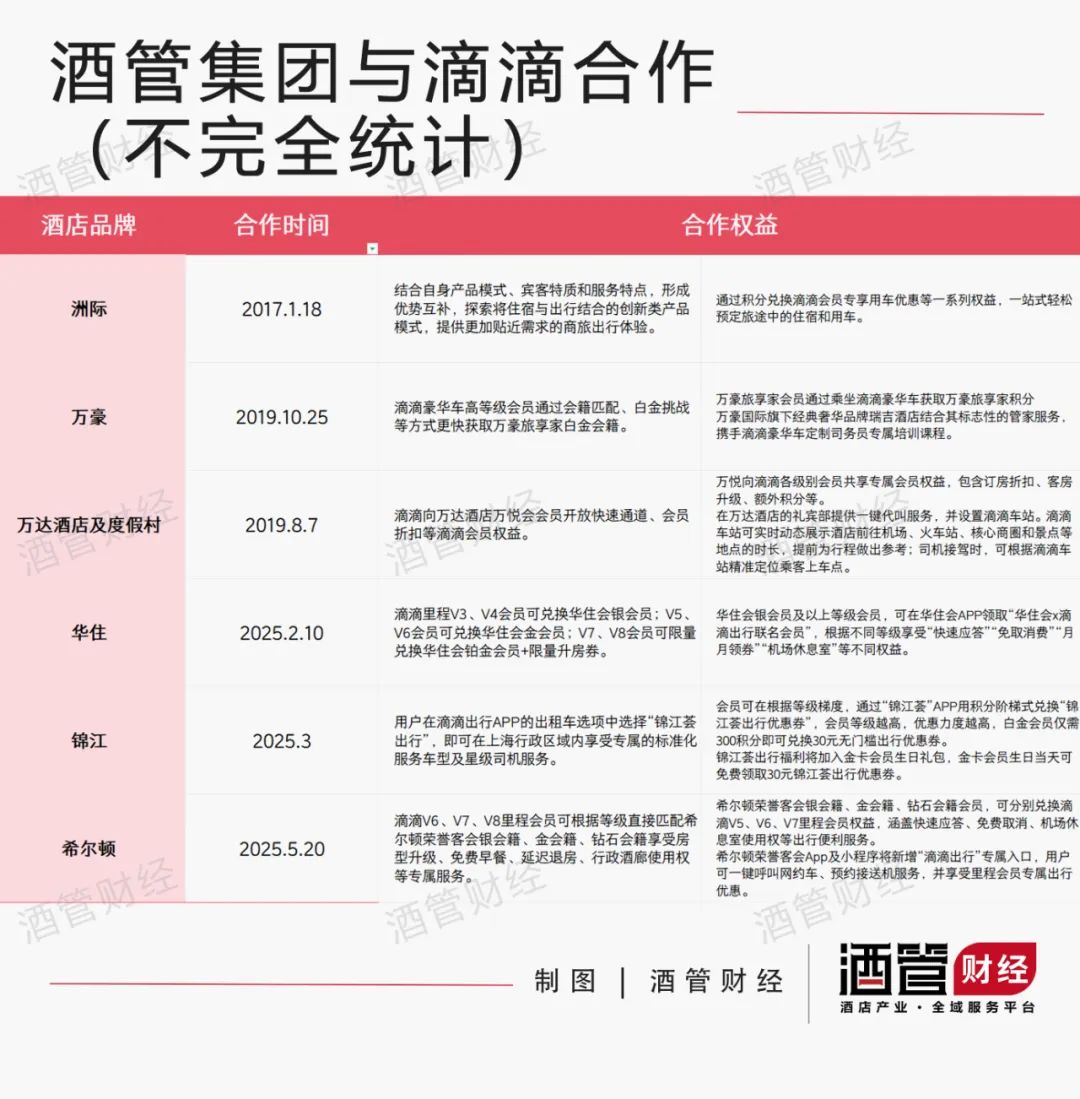
从餐饮到出行,万豪、希尔顿借美团、滴滴打通“住宿+”场景
Cai Jing Wang· 2025-05-29 09:16
Group 1 - Marriott and Hilton have partnered with Meituan and Didi to create a new "Accommodation+" model, responding to the demand for one-stop travel services and marking a shift from single accommodation to a diversified lifestyle ecosystem [1][2] - Marriott's collaboration with Meituan includes a joint membership program, allowing Meituan and Dazhong Dianping members to match their levels with Marriott membership, enhancing appeal to younger consumers [1][3] - Hilton's partnership with Didi focuses on integrating accommodation and transportation, offering customized benefits through membership level matching, enhancing user experience and solidifying Hilton's market position [2][3] Group 2 - Both collaborations reflect the hotel industry's deep response to the "Accommodation+" trend, with Marriott integrating Meituan's ecosystem and Hilton building a diverse experience matrix through cross-industry partnerships [3] - Marriott's new user acquisition in first-tier cities through Meituan accounts for 27.6%, providing a differentiated supplement to traditional OTA customer bases [3] - Hilton's research indicates that Chinese members prioritize recognition (73.3%), stay experience (69.7%), and point value (66.7%), highlighting consumer demand insights [3]


织密出行保障网络 滴滴推动“出行+文旅”双向赋能
Bei Jing Ri Bao Ke Hu Duan· 2025-05-29 03:09
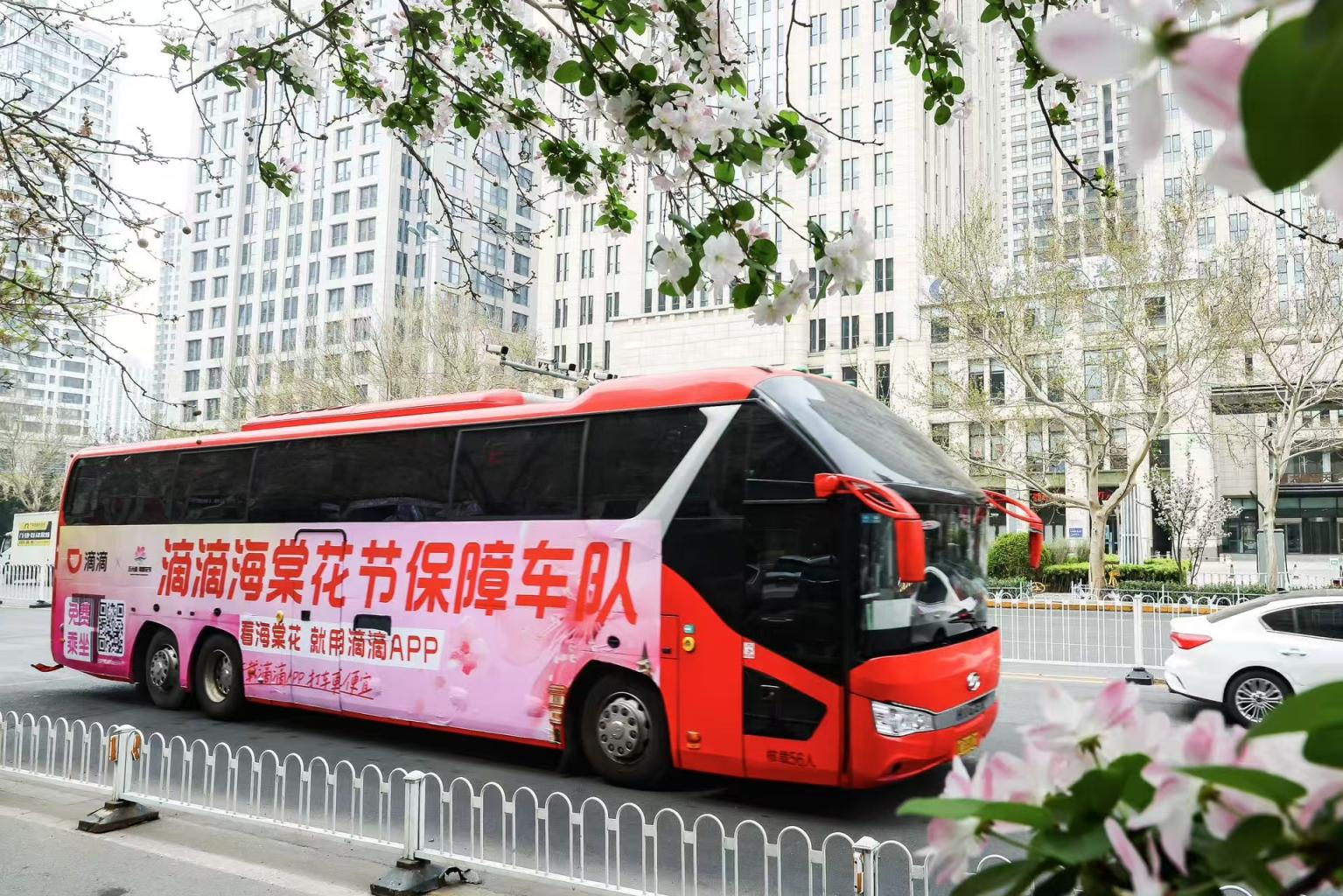
Core Insights - The travel market is experiencing steady growth as the Dragon Boat Festival approaches, with local and surrounding travel accounting for 50% of the market share [1] - The tourism market is shifting from a "scenery-first" approach to a focus on "service enhancement," emphasizing visitor management and transportation convenience [1] - Ride-hailing platforms are becoming crucial connectors between transportation networks and the tourism industry, fostering new service paradigms [1] Group 1: Travel Market Trends - The 2025 Dragon Boat Festival travel trend report indicates a significant preference for local and nearby travel, which dominates the travel market [1] - Popular tourist spots are increasingly focusing on visitor dispersal and event transportation, enhancing overall service quality [1] Group 2: Role of Ride-Hailing Platforms - Didi Chuxing is expanding its service network in the Beijing-Tianjin-Hebei region, innovating service models to promote synergy between transportation and tourism [1] - Didi's station bus service is addressing the "last mile" transportation challenge, providing a new travel experience by allowing users to book rides online and board nearby [3] Group 3: Enhancing Visitor Experience - Didi has implemented shuttle services during major events, such as the Taihu Jazz Festival, to facilitate easy access for attendees [3][5] - The company has also introduced measures to manage peak demand during events, ensuring a smooth exit for visitors [5] Group 4: Demand-Driven Growth - The surge in tourism activities is driving demand for ride-hailing services, with significant increases in ride requests during events like the Tianjin Sea of Flowers Festival [6] - In Beijing, ride requests surged by 45% during the Qingming Festival, indicating a strong correlation between tourism events and transportation demand [6] Group 5: Innovation and Service Integration - The integration of travel and tourism services is pushing the ride-hailing industry to innovate, offering enhanced user experiences and operational efficiencies [8] - Didi's thematic promotional initiatives during events, such as the Sea of Flowers Festival, exemplify the creative ways the company is engaging with customers [8]
从支付宝到滴滴,酒店集团下一个“会员联姻”对象会是谁?
3 6 Ke· 2025-05-29 01:05
Core Insights - Hotel groups are increasingly partnering with ride-hailing services like Didi to enhance their membership ecosystems, similar to previous collaborations with Alipay [2][3] - The collaboration between Hilton and Didi aims to integrate accommodation and transportation resources, creating a "one-stop" membership benefits system that enhances the travel experience for modern travelers [4][5] - The trend of binding hotel memberships with high-frequency services like transportation is driven by the need to activate "sleeping members" and increase engagement through daily usage scenarios [7][8] Hotel Group Collaborations - Multiple hotel brands, including InterContinental, Marriott, Wanda, and Huazhu, have established partnerships with Didi, offering various member benefits such as ride discounts and exclusive services [5][6] - The partnerships allow for reciprocal benefits, where members can exchange loyalty points and gain access to enhanced services across both platforms [7][8] Membership Engagement Challenges - Hotel membership systems traditionally focus on low-frequency usage, leading to low engagement rates, with some groups reporting active member rates below 10% [7] - The integration with Didi provides a solution by embedding hotel membership into daily commuting and travel needs, thus increasing the frequency of member engagement [8][12] Future Directions - The hotel industry is exploring further collaborations beyond transportation, potentially integrating fitness data or office services to create a more comprehensive membership experience [12][13] - The shift towards a "big membership" era reflects a broader transformation in the hotel industry, moving from a focus solely on accommodation to encompassing a full range of lifestyle services [14][15] User Loyalty and Value Creation - Membership systems are becoming critical for enhancing market competitiveness, with member contributions to direct sales reaching 45%-50% [14] - The evolution of loyalty programs into lifestyle currencies allows for greater user engagement and satisfaction, as members can utilize their points across various services beyond just hotel stays [16][17]
滴滴企业版成为3M国内首家出行服务商 高效方案提升运营便利
Ge Long Hui· 2025-05-28 10:45
Core Insights - Didi Enterprise Edition has officially become the first mobility service provider for 3M in China, a Fortune Global 500 company, offering innovative services such as paperless reimbursement and low-carbon travel solutions [1][3] Group 1: Partnership and Services - Didi Enterprise Edition will provide 3M with efficient, compliant, and sustainable travel management solutions through digital integration with 3M's internal expense control platform [3] - The service includes automatic comparison of employee itineraries with corporate travel policies, facilitating convenient travel without the need for invoicing [3] Group 2: Market Presence and Growth - Since entering China in 1983, 3M has become the company's second-largest market globally, supported by policies promoting foreign investment and sustainable development [3] - Didi Enterprise Edition has served over 3,000 foreign enterprises by 2025, including 237 large foreign companies, with a 39% year-on-year increase in ride volume for foreign clients in the past 12 months [3] Group 3: Sustainability Efforts - Didi Enterprise Edition has contributed to the green and low-carbon development of foreign enterprises in China, providing nearly 7 million low-carbon trips in the past year, which accounts for 70% of total trips [3] - The service has helped foreign enterprises save approximately 88 million yuan in comprehensive costs [3]

nova 14到手即享!60余款应用支持鸿蒙实况窗,轻松get支付宝、滴滴、美团新动态
Cai Fu Zai Xian· 2025-05-28 08:00
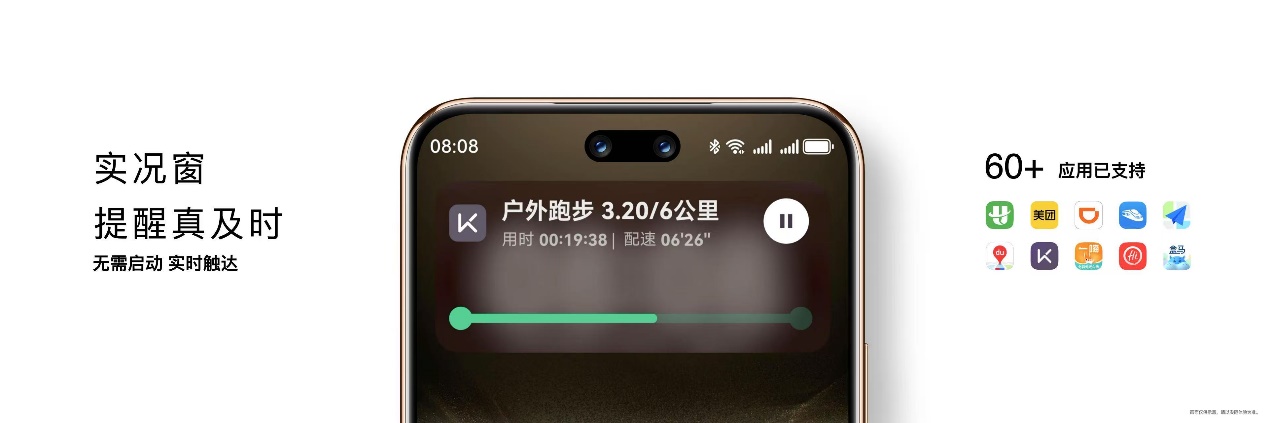
Core Viewpoint - The Huawei nova 14 series smartphones, equipped with HarmonyOS 5, enhance travel experiences by providing real-time service updates through the "Live Window" feature, allowing users to access important information without frequently opening applications [1][10]. Group 1: Travel Information Management - The HarmonyOS version of the High-speed Rail Manager and Flight Travel Companion apps support the Live Window, enabling users to check train departure and arrival times, platform numbers, and flight details effortlessly before their journeys [1]. - Users can view real-time updates on their travel itineraries, making the travel experience more organized and less stressful [1]. Group 2: Food Delivery and Local Cuisine - Upon arrival at their destination, users can order local delicacies through HarmonyOS versions of Meituan or JD, tracking delivery status in real-time via the Live Window [4]. - The Live Window feature allows users to monitor the progress of their food orders, enhancing convenience during their stay [4]. Group 3: Navigation and Transportation - Users can utilize HarmonyOS versions of Baidu Maps and Gaode Maps for sightseeing, with the Live Window displaying route information and navigation prompts without needing to open the app [6]. - The feature also provides real-time updates on ride-hailing orders, including vehicle details and estimated arrival times, ensuring a worry-free travel experience [6]. Group 4: Fitness and Health Tracking - The HarmonyOS version of Keep acts as a personal fitness coach, displaying key workout metrics such as duration, distance, and steps through the Live Window, allowing users to monitor their fitness without unlocking their phones [8]. - This feature supports users in maintaining their health routines while traveling [8]. Group 5: Future Developments and Additional Features - The Huawei nova 14 series and other HarmonyOS 5 devices will see an increase in applications supporting the Live Window, enhancing user experience with timely service notifications [10]. - Additional features include a parking Live Window in Alipay, providing users with real-time parking information and payment options, and a ticketing feature in Damai that shows countdowns for ticket sales [10].
滴滴的小弟们,不想再给高德打工了
3 6 Ke· 2025-05-26 00:54
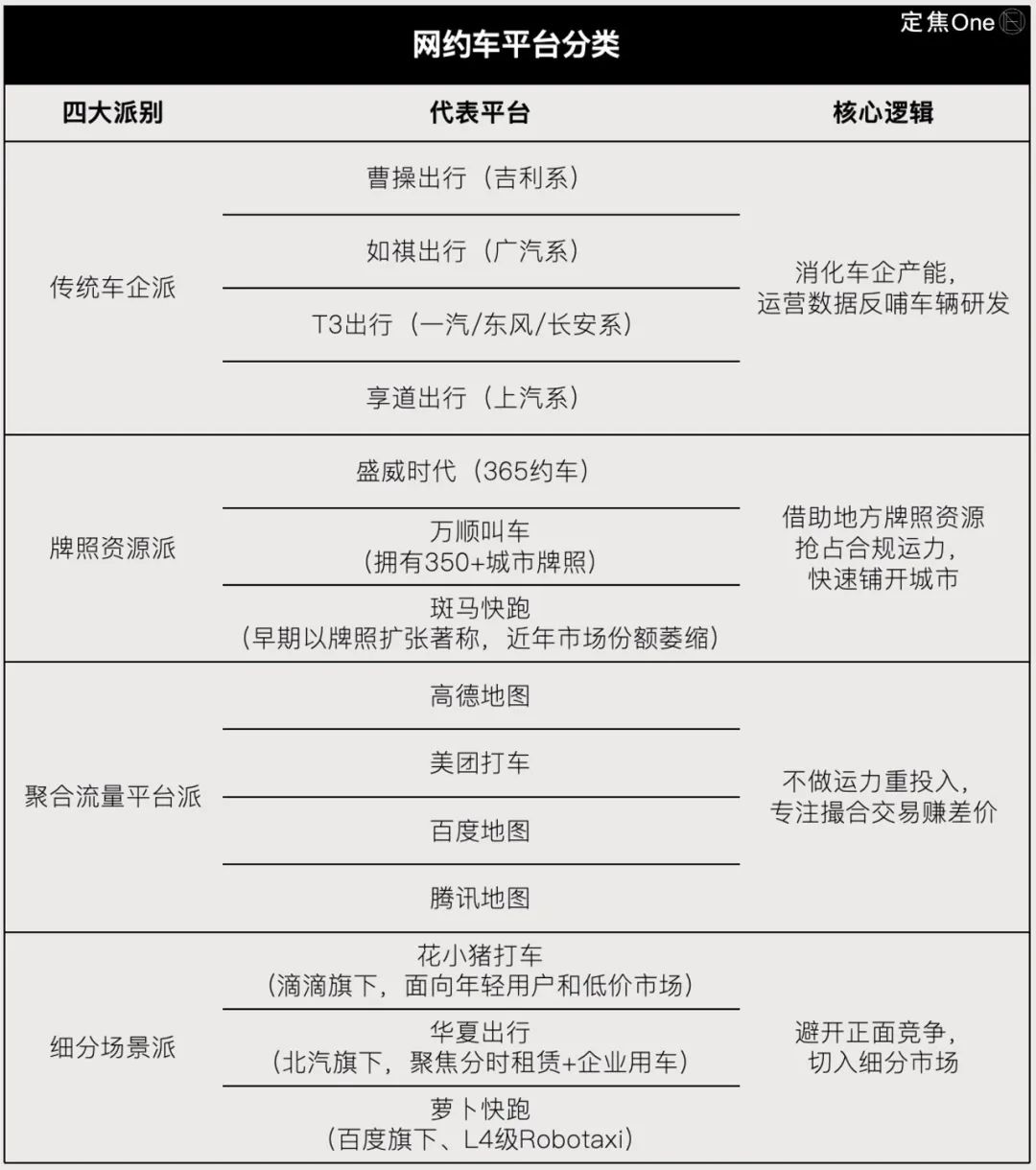
Core Viewpoint - The ride-hailing industry in China is experiencing a bifurcation, with second-tier platforms pushing for IPOs while facing market saturation and profitability challenges [1][3]. Group 1: IPO Activity - On April 30, Cao Cao Travel updated its prospectus for an IPO on the Hong Kong Stock Exchange, having received approval from the China Securities Regulatory Commission [2]. - On May 9, Enjoy Travel, a subsidiary of SAIC Group, announced it had completed a C-round financing of 1.3 billion yuan, marking the largest single financing in the industry in nearly three years, and is accelerating its IPO process [2]. - Other second-tier platforms, such as T3 Travel and Shengwei Times, are also at critical junctures in their IPO plans, with T3's CEO indicating that the IPO timeline is imminent [5]. Group 2: Market Saturation and Profitability Issues - Shengwei Times' IPO prospectus became invalid due to ongoing losses and regulatory penalties, highlighting the profitability struggles within the industry [3]. - The market is characterized by a "pyramid" competition structure, with Didi holding over 70% market share, while other players are fragmented into four distinct factions [3][7]. - Cao Cao Travel's reliance on third-party platforms for 85% of its orders indicates a shift from self-sourced to aggregated orders, raising concerns about profitability [5][12]. Group 3: Dependency on Aggregation Platforms - The increasing dependency on aggregation platforms has led to a significant rise in commission payments, with Cao Cao's commission expenses growing from 322 million yuan in 2022 to 1.046 billion yuan in 2024 [17][18]. - The share of orders from third-party platforms for Cao Cao has increased from 49.9% in 2022 to 85.4% in 2024, indicating a shift in the operational model [14][15]. - User retention rates are declining, with Cao Cao reporting a drop in user retention to below 28% in 2023 due to increased reliance on third-party platforms [19][21]. Group 4: Differentiation Strategies - To achieve higher valuations, second-tier platforms are attempting to tell differentiated stories, such as Cao Cao's focus on customized vehicles leveraging its parent company, Geely's resources [22][23]. - Enjoy Travel is pursuing a mixed operation model that includes Robotaxi services, although its commercial progress has been slow [24][25]. - The competition in the autonomous driving sector is intense, with significant barriers to entry, and the success of these strategies remains uncertain [25][28].
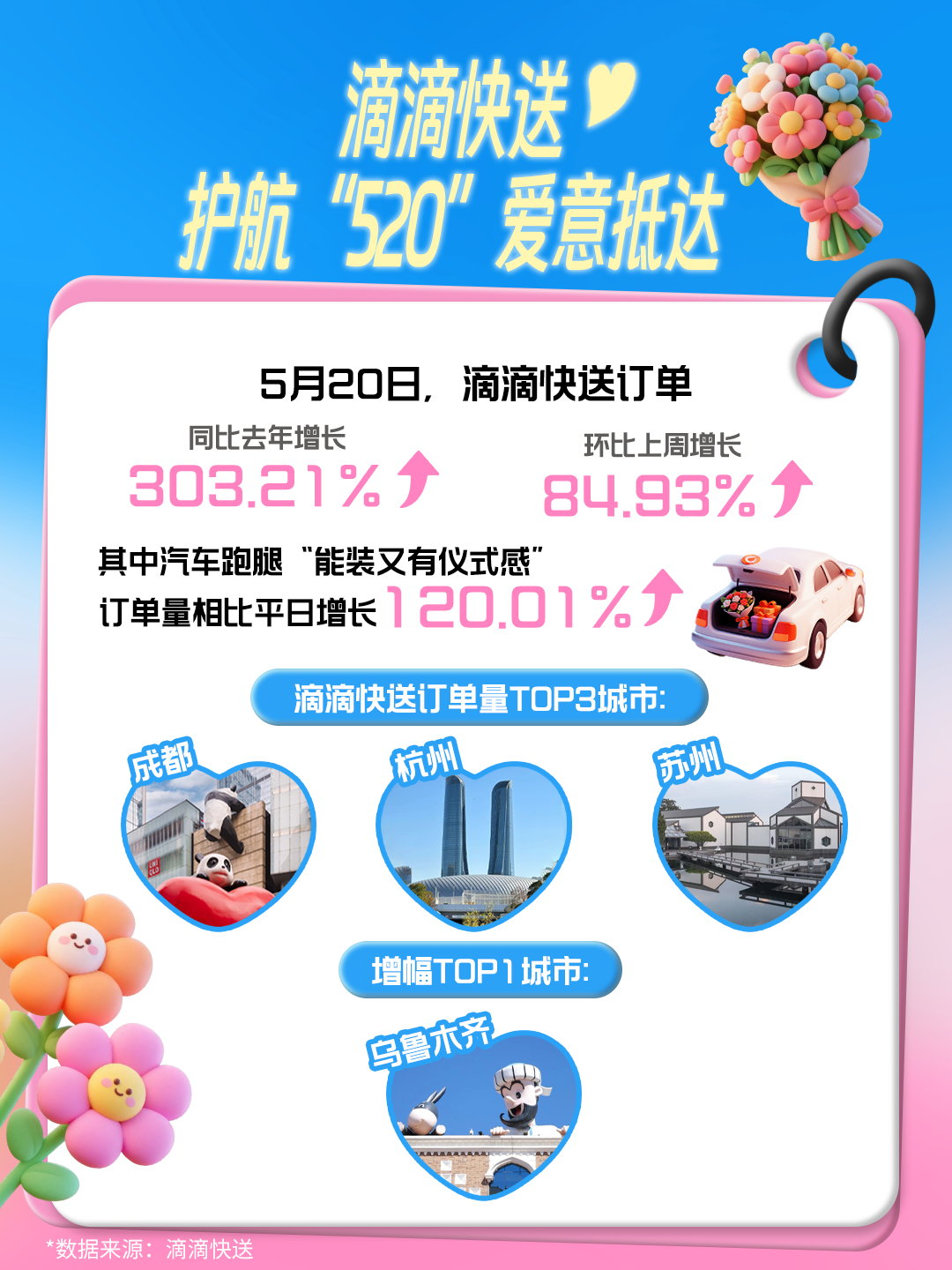
滴滴快送520浪漫加持,订单量狂涨超三倍!
Sou Hu Cai Jing· 2025-05-24 02:46
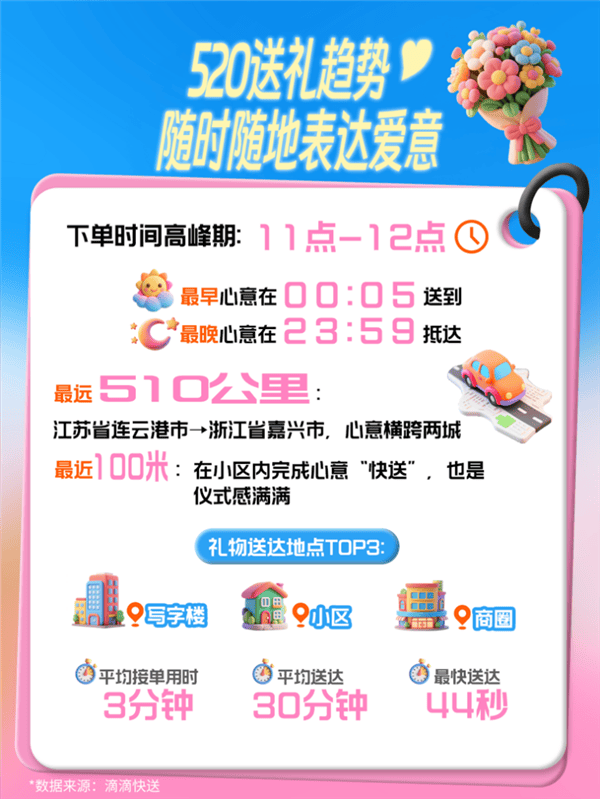
Core Insights - Didi Kuai Song reported a remarkable 303.21% increase in order volume on May 20 compared to the same day last year, and an 84.93% increase compared to the daily average from the previous week [1][2] - The automotive errand service saw over a 120% increase in orders, becoming the main driver of the surge in order volume on that day [1] Order Volume and City Rankings - The top three cities in terms of total order volume were Chengdu, Hangzhou, and Suzhou, indicating strong consumer spending in these areas during the holiday [1] - Urumqi exhibited the fastest growth rate in order volume, emerging as the city with the most rapid increase on that day [1] Consumer Preferences and Demographics - Flower and cake orders significantly increased, becoming the mainstream of holiday consumption, with a notable proportion of orders coming from the "post-00s" demographic, highlighting unique consumption preferences among younger consumers [1][2] Delivery Insights - The earliest order on May 20 was completed at 00:05, while the latest was delivered at 23:59, showcasing the platform's efficiency [2] - The longest delivery distance recorded was 510 kilometers from Lianyungang, Jiangsu to Jiaxing, Zhejiang, while the shortest was just 100 meters within a community, demonstrating the extensive coverage and efficient service of Didi Kuai Song [2] Service Expansion - Since its launch in June 2023, Didi Kuai Song has expanded its services to 360 cities nationwide, utilizing various transportation modes including electric vehicles, motorcycles, and cars [2] - The platform promises an average delivery time of 30 minutes, aiming to provide more convenient and efficient same-city delivery services [2]
滴滴快送“520”订单同比大涨 汽车跑腿成同城急送新力量
Di Yi Cai Jing· 2025-05-23 13:37
Core Insights - Didi Kuaisong reported a significant increase in orders during the 520 festival, with a year-on-year growth of 303.21% and a week-on-week growth of 84.93% [1][4] - The service's automobile delivery option has become increasingly popular, especially for large and delicate items like flowers and cakes, which require stable transportation [4][7] Delivery Performance - On May 20, the first order was completed at 00:05 and the last at 23:59, with the longest delivery spanning 510 kilometers from Lianyungang, Jiangsu to Jiaxing, Zhejiang [4] - The average time for couriers to accept an order was 3 minutes, with an average delivery time of 30 minutes, and the fastest delivery recorded at 44 seconds [4] User Demographics and Preferences - There was a notable increase in the proportion of users from the "post-00s" generation, who showed a preference for automobile delivery services [6] - The peak ordering time was between 11 AM and 12 PM, with office buildings being the most common delivery locations, followed by residential areas and commercial districts [6] Product Trends - On the 520 day, flower and cake orders accounted for 42.82% of total orders, representing a 30.95% increase compared to regular days, with Chengdu, Shanghai, and Hangzhou being the top cities for orders [7] - There is a growing trend for more elaborate floral arrangements, such as multi-layer rose towers and decorative items, indicating a shift towards quality and presentation in gift-giving [7] Service Standards and Expansion - Didi Kuaisong has implemented strict service standards for flower delivery to minimize damage during transport, including training for couriers and specific packaging requirements [7] - Since its launch in June 2023, Didi Kuaisong has expanded to cover 360 cities, offering various vehicle options for delivery, with the longest single delivery distance reaching 1649 kilometers [8]