
GM(GM)

Search documents
隔夜美股 | 三大指数本周收涨 苹果(AAPL.US)累涨13%
Zhi Tong Cai Jing· 2025-08-09 00:04
Stock Market Performance - All three major indices in the US closed higher this week, with the Dow Jones up 1.35%, S&P 500 up 2.43%, and Nasdaq up 3.87% [1] - On Friday, the Dow rose by 206.97 points (0.47%) to close at 44,175.61 points, Nasdaq increased by 207.32 points (0.98%) to 21,450.02 points, and S&P 500 gained 49.45 points (0.78%) to 6,389.45 points [1] - Nasdaq reached an intraday all-time high of 21,464.53 points during Friday's trading [1] Individual Stock Movements - Apple (AAPL.US) surged over 4% on Friday and accumulated a 13% increase for the week, marking its best weekly performance since July 2020 [1] - Tesla (TSLA.US) rose by 2.29%, while Google (GOOG.US) increased by 2.44% [1] - Freddie Mac (FMCC.US) saw a significant rise of over 20% [1] European Stock Market - The German DAX30 index fell by 38.84 points (0.16%) to 24,151.86 points, while the UK FTSE 100 index decreased by 13.02 points (0.14%) to 9,087.75 points [2] - The French CAC40 index rose by 33.68 points (0.44%) to 7,743.00 points, and the Spanish IBEX35 index increased by 145.70 points (0.99%) to 14,823.20 points [2] Asian Stock Market - The Nikkei 225 index in Japan rose over 1.8%, while the KOSPI index in South Korea fell by 0.55% [3] Commodity Prices - Light crude oil futures for September settled at $63.88 per barrel, unchanged from the previous day, while October Brent crude oil futures rose by 16 cents to $66.59 per barrel, a 0.24% increase [3] - Gold futures in New York rose by 0.13% to $3,458.2, reaching an intraday high of $3,534.1 [4] Cryptocurrency Market - Bitcoin decreased by 0.54% to $116,889.9, while Ethereum increased by over 3% to $4,044.24 [5] Employment Data in Canada - Canada saw a reduction of 40,800 jobs in July, with the employment rate dropping to 60.7%, the lowest level since the pandemic began [9] - The youth unemployment rate for those aged 15 to 24 rose to 14.6%, the highest level since September 2010, excluding the pandemic years [9] Company News - Tesla (TSLA.US) received approval for a rideshare license in Texas, paving the way for its autonomous taxi service [10] - The US government is preparing to list Freddie Mac and Fannie Mae (FMCC.US) later this year, potentially raising around $30 billion [11] - The automotive industry, particularly companies like Ford (F.US) and General Motors (GM.US), is facing significant losses due to tariffs, with projected losses of $7 billion in profits by 2025 [12]





多家跨国车企2025年上半年利润暴跌 业绩表现全线下滑
Cai Jing Wang· 2025-08-08 15:28
Core Viewpoint - Major multinational automotive manufacturers are facing significant performance declines due to intense market competition and trade tariffs, as evidenced by the financial reports for the second quarter and first half of 2025 [1][2][3]. Group 1: German Automakers - Volkswagen Group reported a revenue of €158.4 billion for the first half of 2025, remaining stable year-on-year, but its operating profit fell by approximately 33% to €6.7 billion, with net profit dropping over 38% to €4.477 billion [2]. - Mercedes-Benz Group's second-quarter revenue was €33.153 billion, down 9.8% from €36.743 billion the previous year, with net profit plummeting 68.7% to €0.957 billion [3]. - BMW Group's half-year revenue decreased by 8% to €67.685 billion, with net profit down 29% to €4.015 billion, although the company maintained its full-year financial outlook [6]. Group 2: Impact of Tariffs - The decline in profits for Volkswagen, Mercedes-Benz, and BMW has been attributed to new import tariffs imposed by the U.S. on electric vehicles and parts, resulting in significant cost burdens [6]. - Volkswagen reported an additional cost burden of €1.3 billion due to U.S. tariffs, while Porsche incurred about €0.4 billion in extra expenses [6]. - The German automotive industry is projected to see a combined cash flow reduction of approximately €10 billion due to U.S. tariff policies [7]. Group 3: Japanese and Korean Automakers - Toyota's net profit for the 2025 fiscal year is expected to drop by about 44% to ¥2.66 trillion (approximately €18.1 billion), with operating profit projected to decrease by 33% to ¥3.2 trillion [8]. - Honda reported a net profit of ¥196.6 billion for the second quarter, down 50.2% year-on-year, primarily due to U.S. tariffs [8]. - Mazda's second-quarter net profit turned into a loss of ¥42.1 billion, significantly impacted by U.S. tariffs [10]. - Hyundai's second-quarter net profit fell by 22% to ₩3.25 trillion (approximately €2.3 billion), with losses attributed to U.S. tariffs [11]. Group 4: U.S. Automakers - Tesla's second-quarter revenue decreased by 12% to $22.496 billion, with net profit down 16% to $1.172 billion [13]. - General Motors reported a slight revenue increase of 0.2% to $91.141 billion for the first half of 2025, but net profit fell by 20.9% to $4.68 billion [13]. - Ford reported a tariff payment of $800 million for the second quarter, while General Motors' tariff costs amounted to $1.1 billion [13]. Group 5: Industry Outlook - Analysts indicate that the automotive industry's performance improvement remains under pressure due to ongoing tariff impacts and rising costs of raw materials [14]. - The recent trade agreements between Japan and the U.S. and between the U.S. and the EU have resulted in reduced tariff rates, but concerns remain about the overall competitiveness of the automotive sector [12][13].

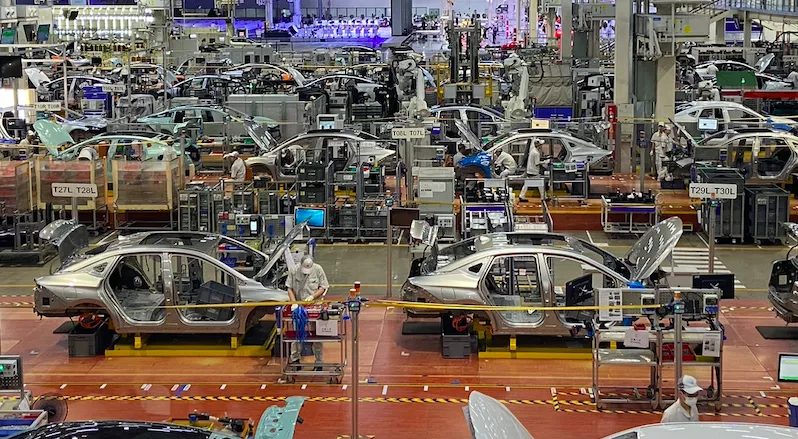
两大车企突然宣布联手!将为行业带来哪些新变量?
Zhong Guo Qi Che Bao Wang· 2025-08-08 07:56
Core Viewpoint - The collaboration between General Motors and Hyundai marks a significant strategic partnership aimed at developing multiple vehicle models, reflecting the ongoing transformation in the automotive industry [4][5][7]. Group 1: Partnership Details - General Motors and Hyundai have signed a memorandum of understanding to jointly develop several models, including an electric commercial van for the North American market and various internal combustion engine and hybrid models for the Central and South American markets, with an initial estimate of five models [5][6]. - The expected annual production volume for the jointly developed models is over 800,000 units, with General Motors leading the development of the mid-size truck platform and Hyundai focusing on small vehicles and the electric commercial van platform [5][6]. - The partnership aims to enhance procurement initiatives in raw materials, transportation, and logistics in North and South America, and explore further collaboration in areas such as low-carbon steel and components [5][6]. Group 2: Market Implications - The collaboration is seen as a strategic move to address the increasing competition in the electric vehicle sector, particularly in Latin America, where the new models are expected to reshape the market dynamics [7][8]. - In North America, the electric commercial vehicle segment is a competitive arena dominated by companies like Tesla, and the joint development of electric commercial vehicles is anticipated to strengthen both companies' positions in this market [9]. - The partnership is expected to intensify competition in the global automotive market, leveraging both companies' technological strengths and brand influence to attract consumers [9][10]. Group 3: Industry Insights - The collaboration highlights a shift in the automotive industry towards partnerships as a means to share resources, reduce risks, and enhance competitiveness in response to market demands [10][11]. - The targeted development of different vehicle types for North and South American markets demonstrates a strategic approach to meet diverse consumer needs and preferences [10][11]. - Successful collaboration between General Motors and Hyundai could serve as a model for other automotive companies, emphasizing the importance of innovation and resource efficiency in a rapidly changing market [11].

Recent Trade Deal Throws Curveball to Ford and GM
The Motley Fool· 2025-08-08 07:24
Group 1 - The recent trade deal between the U.S. and Japan may negatively impact U.S. automakers like General Motors and Ford while benefiting Japanese competitors [2][4] - The deal includes a 15% tariff on Japanese imports, which is lower than the 25% tariff U.S. automakers face for imports from Mexico and Canada [4][5] - U.S. automakers are also facing increased costs for essential components due to tariffs on imported metals, further complicating their competitive position [5][9] Group 2 - President Trump's goal was to increase U.S. production and jobs, but the new tariff structure may make it more expensive for U.S. automakers compared to their foreign counterparts [7][9] - U.S. automakers sold only 16,000 vehicles in Japan last year, representing less than 1% of the market, while Japanese automakers sold 5.3 million vehicles in the U.S. [8] - The trade deal raises questions about its effectiveness, as it may not significantly enhance U.S. automakers' access to the Japanese market [9][10]
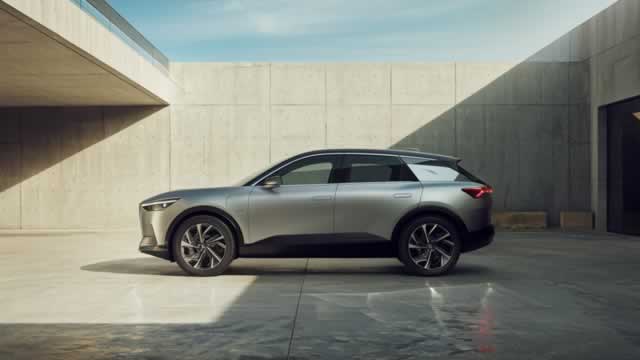
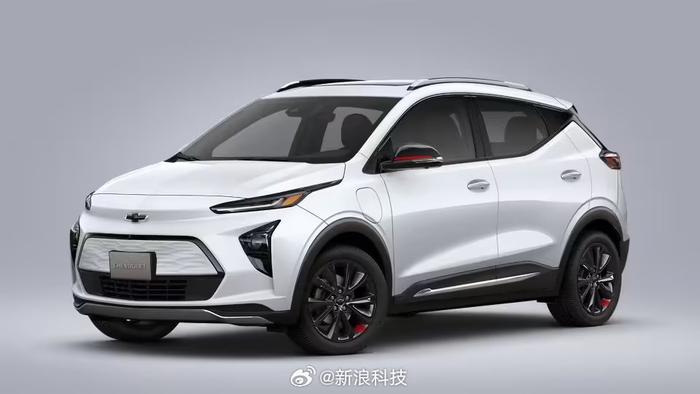
通用汽车或将采购宁德时代电池 保障雪佛兰Bolt过渡生产
Huan Qiu Wang· 2025-08-08 04:01
Core Viewpoint - General Motors plans to source batteries from China's CATL for the production of the second-generation Chevrolet Bolt EV, aiming to fill supply chain gaps and ensure smooth production during the transition phase while complementing its long-term strategy of domestic battery manufacturing [1][3]. Group 1: Battery Sourcing and Production Plans - General Motors will procure batteries from CATL for approximately two years until the domestic low-cost battery production with LG Energy Solution begins [3]. - The new Chevrolet Bolt is set to begin production at the Fairfax assembly plant in Kansas by the end of this year, with a market launch planned for 2026, targeting a price point of around $30,000 [3][4]. - This temporary procurement strategy is intended to pave the way for GM's own production of lithium iron phosphate batteries [3]. Group 2: Market Position and Competitiveness - Currently, all 12 electric vehicle models offered by GM are equipped with batteries manufactured in the U.S., ranging from the Chevrolet Equinox EV priced at $35,000 to the Cadillac Celestiq at $340,000 (approximately 2.443 million RMB) [3]. - The new Bolt's pricing could potentially drop to just over $20,000 with a $7,500 subsidy, although this subsidy will be eliminated before the new vehicle's launch [3]. Group 3: Future Production and Competitor Actions - GM's Tennessee plant, in partnership with LG, is undergoing renovations and is expected to start producing lithium iron phosphate batteries by 2027 [4]. - Ford, a competitor of GM, is also collaborating with CATL to establish a new factory in Michigan for the production of lithium iron phosphate batteries for a developing small electric pickup truck [4].

CATL再获美企大单
鑫椤锂电· 2025-08-08 02:44
Core Viewpoint - General Motors (GM) plans to source lithium iron phosphate (LFP) batteries from CATL for the Chevrolet Bolt model, ensuring cost competitiveness for its entry-level electric vehicles by 2027 [1][4]. Group 1: Supply Chain Strategy - GM's decision reflects a strategy of relying on overseas suppliers to address domestic supply chain challenges, despite tariff issues [4]. - The partnership with CATL is a temporary measure to maintain production of the Bolt until GM can manufacture its own LFP batteries in the U.S. [4]. - This collaboration will last for two years, allowing GM to stabilize its electric vehicle supply chain and cost efficiency [4]. Group 2: Industry Trends - Ford is also collaborating with CATL to build a factory in Michigan for LFP batteries, indicating a broader trend among U.S. automakers to enhance their electric vehicle strategies [4]. - CATL has made significant progress in the U.S. market and is expanding its global footprint through partnerships with various international companies [4]. - CATL's long-term contracts for LFP cells with companies like Japan's TDK are aimed at mitigating future price volatility [4].

韩企电池厂没造完,通用又看向中国:硬抗关税也得买
Guan Cha Zhe Wang· 2025-08-08 02:01
Core Viewpoint - General Motors (GM) has decided to source batteries from China's CATL despite high tariffs imposed by the Trump administration, indicating a strategic move to maintain competitiveness in the electric vehicle market while establishing domestic production capabilities in the future [1][4]. Group 1: Battery Sourcing and Production - GM will procure batteries from CATL for its second-generation Chevrolet Bolt electric vehicle, which is set to launch later this year [1]. - The battery procurement is described as a "transitional" arrangement, with GM's ultimate goal being the production of low-cost batteries using lithium iron phosphate (LFP) technology [1][3]. - The manufacturing cost of LFP batteries is approximately 35% lower than that of nickel-cobalt-based batteries, which may allow the new Bolt to achieve near profitability [3]. Group 2: Impact of Tariffs - The comprehensive tariff on Chinese electric vehicle batteries, including a 25% tariff on foreign auto parts, reaches 80% [1]. - The tariffs are projected to result in a total profit loss of $7 billion for the U.S. automotive industry by 2025, with GM expected to incur a loss of $3.5 billion [5]. - The tariffs on essential materials like steel and aluminum have reached 50%, significantly increasing the costs for U.S. automakers [5]. Group 3: Competitive Landscape - GM's decision reflects a broader trend where U.S. automakers are lagging behind Chinese companies in low-cost battery manufacturing [4]. - Competitors like Ford are also collaborating with CATL to produce low-cost electric vehicle batteries in the U.S. [4]. - The reliance on foreign suppliers for battery technology and materials is a common strategy among U.S. automakers to remain competitive in the electric vehicle market [1][3].
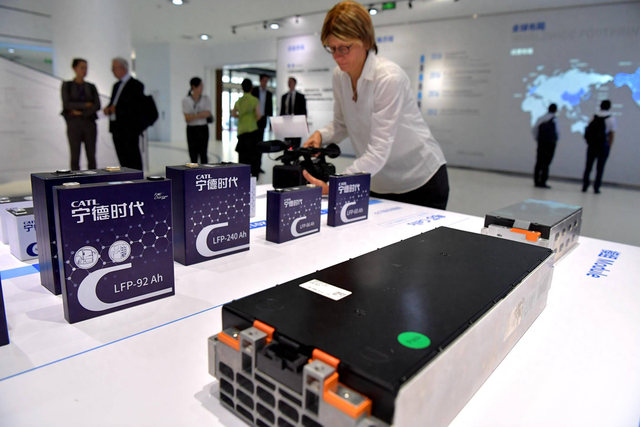
通用汽车将采购宁德时代电池用于雪佛兰Bolt
Xin Lang Ke Ji· 2025-08-08 01:08
Core Insights - General Motors plans to source batteries from China's CATL for its second-generation Chevrolet Bolt electric vehicle despite tariff impacts, filling supply chain gaps while contrasting with its domestic battery manufacturing efforts [1] - The transition period for sourcing from CATL is expected to last approximately two years until General Motors can produce lower-cost batteries in partnership with LG Energy Solution in the U.S. [1] - The new Bolt is set to begin production at the Kansas City Fairfax plant by the end of this year and is positioned as General Motors' most affordable electric vehicle, with a target market launch in 2026 [1] Summary by Sections Battery Sourcing - General Motors will temporarily procure batteries from CATL to support the production of the new Chevrolet Bolt, which is aimed at maintaining competitiveness in the electric vehicle market [1] - The company has indicated that this measure is a stepping stone towards its own production of lithium iron phosphate batteries [1] Vehicle Pricing and Market Position - The new Chevrolet Bolt is priced around $30,000 (approximately 216,000 RMB), with potential subsidies reducing the price to just over $20,000, although these subsidies are expected to be eliminated before the vehicle's launch [2] - Currently, General Motors has 12 electric vehicle models on sale, all equipped with batteries manufactured in the U.S., ranging from the Chevrolet Equinox EV at $35,000 (approximately 252,000 RMB) to the Cadillac Celestiq at $340,000 (approximately 2,443,000 RMB) [1]
汽车早报|恒大汽车继续停牌 日本七大车企利润或将大幅缩水
Xin Lang Cai Jing· 2025-08-08 00:42
Group 1: Automotive Events and Initiatives - The 28th Chengdu International Auto Show will be held from August 29 to September 7, with new car purchase subsidies available in Jinjiang and Chenghua districts, offering up to 4,500 yuan and 6,500 yuan respectively for eligible buyers [1] - Wuhan Economic Development Zone plans to launch 20 new energy vehicles by the end of the year, providing more options for consumers [2] - Audi's first strategic electric model, the E5 Sportback, will begin pre-sales on August 18, featuring advanced technology tailored for Chinese users [2] Group 2: Company Performance and Developments - Li Auto has received a patent for a new crash beam design that reduces vehicle weight and cost while enhancing safety features [3] - Honda's terminal vehicle sales in China for July 2025 were 44,817 units, a year-on-year decrease of 14.75%, with cumulative sales for the first seven months at 359,969 units [3] - Seres reported July 2025 new energy vehicle sales of 44,581 units, a year-on-year increase of 5.7%, while cumulative sales for the year were down 10.87% [3] Group 3: Market and Regulatory Updates - Evergrande Auto announced it failed to meet the Hong Kong Stock Exchange listing requirements and will remain suspended until compliance is achieved by September 30, 2026 [4] - Tesla has established over 70,000 supercharging stations globally, with more than 11,700 in China [5] - Toyota plans to acquire land in Aichi Prefecture, Japan, for a new manufacturing plant expected to be operational in the early 2030s [6] Group 4: Collaborations and Supply Agreements - Hyundai and General Motors announced plans for five jointly developed models, targeting a combined annual sales of over 800,000 units once fully operational [6] - General Motors signed a multi-year supply agreement with Noveon Magnetics for rare earth magnets for various automotive components [6] Group 5: Economic Impact and Profit Forecasts - Japanese automakers, including Toyota and Honda, anticipate a combined operating profit reduction of approximately 2.67 trillion yen (about 130.2 billion yuan) in the 2025 fiscal year due to U.S. tariffs [6]



美车企晒关税“代价账单”,专家:汽车制造商和供应商被要求用“利润”填补美税收收入
Huan Qiu Shi Bao· 2025-08-07 22:57
Group 1 - The core viewpoint of the articles indicates that the tariff policies implemented by the Trump administration are causing significant financial strain on various American companies, particularly in the automotive sector [1][2][4] - Ford Motor Company reported a loss of $800 million in the second quarter of 2025 due to tariff-related costs, marking its first quarterly loss since 2023 [1] - General Motors faced a loss of $1.1 billion in the same quarter attributed to tariffs, while Stellantis reported a loss of $350 million [1] - The total projected profit loss for the U.S. automotive industry due to tariffs is estimated to reach $7 billion by 2025 [1] Group 2 - Ford is expected to lose approximately $2 billion in profits for the entire year due to tariff impacts, which is significant compared to its operating profit of $10.2 billion last year [2] - Nearly all automakers producing vehicles in the U.S. are experiencing similar challenges, with the average vehicle containing 50%-60% imported parts [2] - The tariffs on steel and aluminum (50%) and on auto parts (25%) have made U.S. automakers more vulnerable to cost increases, contrary to the intended goal of boosting domestic manufacturing [2] Group 3 - Tesla is considered one of the least affected automakers by the tariff policies, as a significant portion of its electric vehicle components are sourced from within the U.S. or Canada [3] - However, about 25%-40% of Tesla's parts still come from Mexico, indicating some exposure to tariff impacts [3] - The automotive market is expected to see price increases, with luxury and electric vehicles potentially rising by over $12,000 and domestic vehicles by $2,000-$3,000 [3] Group 4 - The automotive industry is described as absorbing the costs of manufacturing tariffs, with executives warning of challenging times ahead and rising product prices [4] - There is a concern that the tariff policies may not effectively enhance the competitiveness of U.S. automakers against superior imported vehicles [4] - The ongoing trade war is expected to burden consumers with higher prices, as the industry struggles to maintain profitability amidst rising costs [4]