Goldman Sachs(GS)

Search documents
LQD vs. VCLT: Choosing Between Stability and Long-Rate Exposure
Yahoo Finance· 2025-12-22 20:36
Core Insights - The iShares iBoxx Investment Grade Corporate Bond ETF (LQD) and the Vanguard Long-Term Corporate Bond ETF (VCLT) differ significantly in cost, yield, sector exposure, and risk profile, with LQD providing broader diversification while VCLT focuses on higher yield and an ESG screen [2][3] Cost & Size Comparison - LQD has an expense ratio of 0.14% and AUM of $33 billion, while VCLT has a lower expense ratio of 0.03% and AUM of $9 billion [4][5] - As of December 16, 2025, LQD's 1-year return is 5.38% and dividend yield is 4.4%, compared to VCLT's 3.51% return and 5.38% yield [4][5] Performance & Risk Comparison - Over the past five years, LQD experienced a maximum drawdown of 24.95%, while VCLT had a larger drawdown of 34.31% [6] - The growth of $1,000 over five years is $805 for LQD and $690 for VCLT, indicating LQD's better performance [6] Portfolio Composition - VCLT primarily invests in high-quality corporate bonds with maturities between 10 and 25 years, holding 257 bonds with significant sector exposure in cash and others (15%), healthcare (14%), and financial services (13%) [7] - LQD, in contrast, has over 3,000 holdings, with a concentration in cash and equivalents, and does not apply any ESG screening [8] Investment Implications - Both LQD and VCLT provide exposure to investment-grade corporate bonds but react differently to interest rate changes, with LQD spreading risk across a larger number of bonds and a wider maturity range [11]


Index Volatility 'Dampened': Marshall
Yahoo Finance· 2025-12-22 19:38
John Marshall, Head of Derivatives Research at Goldman Sachs says options and other derivatives trading is going to be a bigger part of portfolios in 2026. He also thinks investors are less likely to buy treasury volatility. He joined the discussion on "Bloomberg Markets" with Scarlet Fu and Natalia Kniazhevich. ...
How Goldman Is Scaling AI to Transform Its Business Operations
ZACKS· 2025-12-22 18:05
Core Insights - Goldman Sachs is undergoing a firmwide AI transformation aimed at increasing fee income and enhancing operating leverage through initiatives like "One Goldman Sachs 3.0" and the "GS AI Assistant" program [1][5] Group 1: AI Transformation and Strategy - The "OneGS 3.0" initiative is a multi-year overhaul of Goldman's operating model, positioning AI as a foundational capability to simplify processes and improve productivity [2] - Goldman is reorganizing its Technology, Media, and Telecom (TMT) investment banking division to focus on AI-related dealmaking, responding to client needs in AI-enabling assets [3] - The AI strategy is shifting Goldman's revenue mix towards higher-fee, data-driven businesses, with plans to acquire Industry Ventures to enhance analytics in private markets [4][5] Group 2: Financial Performance and Projections - Goldman shares have increased by 56.6% over the past year, outperforming the industry growth of 36.9% [11] - The forward price-to-earnings (P/E) ratio for Goldman is 16.25X, higher than the industry average of 15.09X [14] - Earnings estimates for 2025 and 2026 indicate year-over-year growth of 20.8% and 12.6%, respectively, with upward revisions in estimates over the past 30 days [16]


中国股票,大利好!外资,爆买!
券商中国· 2025-12-22 15:11
Core Viewpoint - Foreign capital is reassessing Chinese assets, with significant inflows into the technology sector and optimistic forecasts for corporate earnings growth in China [2][4][10]. Group 1: Earnings Growth Predictions - Goldman Sachs analysts predict a 14% growth in Chinese corporate earnings in 2026 and a 12% growth in 2027, which is expected to boost the performance of the Chinese stock market [4][10]. - The report indicates that the MSCI China Index constituents' performance could increase by approximately 1.5% annually until 2030 due to growth in overseas revenue [5]. Group 2: Foreign Capital Inflows - As of December 20, 2025, global investments in Chinese asset ETFs have seen a net inflow of $83.1 billion, with the technology sector receiving the most significant inflow of $9.5 billion, primarily from the US and Europe [9]. - Domestic ETFs accounted for $78.6 billion of the inflow, while foreign ETFs saw a net inflow of about $4.5 billion [9]. Group 3: Sector-Specific Insights - The technology sector is highlighted as a key area for foreign investment, with six out of the top ten foreign inflow ETFs being technology-focused, each receiving over $2 billion [9]. - Analysts from various institutions, including UBS and Morgan Stanley, express confidence in the recovery of Chinese technology stocks, indicating that the growth momentum is still in its early stages [10]. Group 4: Global Investor Sentiment - Global investors are increasingly interested in exploring investment opportunities in China, particularly in the technology and AI sectors, recognizing their strong growth potential [6]. - Clients from emerging markets, including Mexico and Chile, are actively investing in Chinese assets, viewing the technology sector as crucial for long-term growth and diversification [6].



高盛唱多中国股市
财联社· 2025-12-22 12:12
以下文章来源于科创板日报 ,作者卞纯 该行还指出,上市公司海外营收增长预计将推动MSCI中国指数成分股的盈利到2030年每年增加约1.5%,中国AI科技生态系统的估值已重 新评估,但考虑到中国在资本支出方面的潜在增长空间以及对人工智能商业化的重视程度,与美国相比仍然显得便宜。 科创板日报 . 专注科创板和科技创新,上海报业集团主管主办,界面财联社出品。 受益于投资者重估中国科技行业价值,以及家庭储蓄流入股市等利好,今年中国股票强劲反弹。高盛最新预测, 中国股票在2026年料将延 续涨势 。 "我们预计(中国股票)牛市将持续,但上涨节奏会有所放缓。"以高盛首席中国股票策略师刘劲津为首的分析师团队在周一发布的报 告中表示。 高盛分析师认为,中国股市周期正从'预期驱动'转向'盈利驱动',在这一阶段,盈利兑现与估值温和扩张将成为推动回报的核心动力。报告 指出, 中国企业盈利明年可能增长14%,2027年或继续增长12% ; 而估值扩张程度或在10%左右。 高盛分析师重申, 中国股票市场到2027年底可能再上涨38% 。 刘劲津上个月曾表示,AI引领的中国股票上涨远非泡沫,因为中国科技公司仍有空间通过专注于AI应用来提 ...

Goldman Sachs’ Quarterly Earnings Preview: What You Need to Know
Yahoo Finance· 2025-12-22 09:53
Company Overview - The Goldman Sachs Group, Inc. (GS) has a market capitalization of $268 billion and is a prominent global investment banking, securities, and asset management firm, providing advisory services on mergers and acquisitions, capital raising, and risk management [1] Earnings Expectations - Analysts anticipate that Goldman Sachs will report fiscal Q4 earnings for 2025 of $11.61 per share, reflecting a decrease of 2.9% from $11.95 per share in the same quarter last year [2] - For fiscal 2025, the expected profit is projected to be $48.96 per share, which represents a 20.8% increase from $40.54 per share in fiscal 2024 [3] - The company's EPS is forecasted to grow by 12.6% year over year to $55.15 in fiscal 2026 [3] Stock Performance - Over the past 52 weeks, Goldman Sachs shares have increased by 61.3%, significantly outperforming the S&P 500 Index's 16.5% gain and the Financial Select Sector SPDR Fund's 14.7% return [4] - On December 11, shares rose by 2.5% following positive market reactions to the Federal Reserve's indication of a pause in interest rates, which alleviated investor concerns regarding further policy tightening [5] Analyst Ratings - Wall Street analysts maintain a "Moderate Buy" rating for Goldman Sachs, with 25 analysts covering the stock: eight recommend "Strong Buy," one suggests "Moderate Buy," and 16 indicate "Hold" [6] - The stock is currently trading above its mean price target of $831.33, while the highest price target of $971 suggests an 8.7% potential upside from current levels [6]
高盛2026年十大核心主题交易:周期顺风、通胀回落、AI动荡、波动保护........
美股IPO· 2025-12-22 08:30
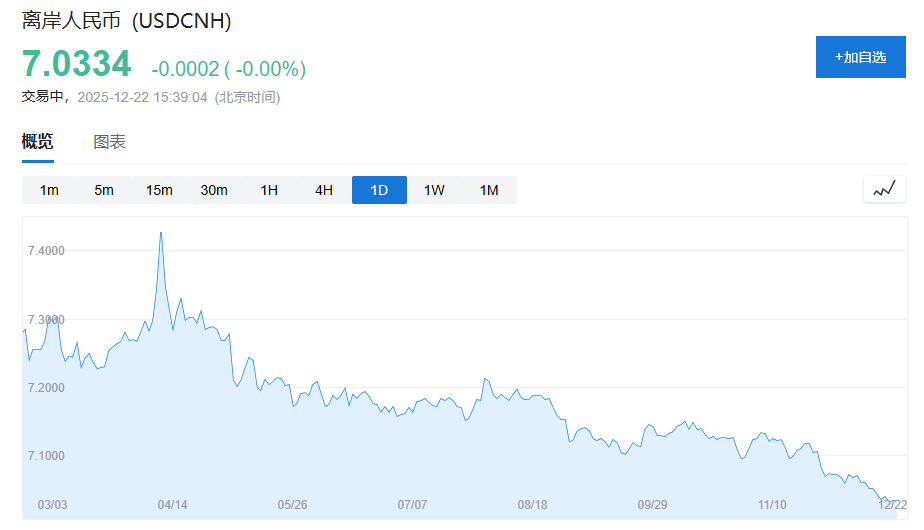
Core Viewpoint - Goldman Sachs predicts that the global market in 2026 will experience a "Game of Ice and Fire," characterized by robust growth, declining inflation, and Federal Reserve rate cuts on one hand, and overheated asset valuations, particularly in AI, on the other hand, leading to increased volatility [1][3]. Group 1: Economic Outlook - The combination of steady global growth and non-recessionary rate cuts by the Federal Reserve is expected to benefit global stock markets and emerging market assets [4]. - Goldman Sachs holds a more optimistic view on the U.S. economy, forecasting a 2.5% year-on-year GDP growth in Q4 2026, significantly above the market's implied expectation of about 1.7% [5]. - The report anticipates that 2026 will mark the end of the high inflation period that began in late 2021, driven by the easing of tariff impacts, productivity gains from AI, and continued low-cost goods supply from Asia [7]. Group 2: Central Bank Policies - Despite a general trend towards easing due to declining inflation, the rate cut paths in 2026 will vary significantly among central banks, with the Federal Reserve, Bank of England, and Norges Bank expected to have more room for rate cuts [9][10]. - Many high-rate emerging market economies are also expected to significantly lower policy rates [9]. Group 3: AI and Market Dynamics - The AI trend will remain a focal point in 2026, with productivity benefits just beginning to materialize, but market valuations have already significantly outpaced macro fundamentals [11]. - The reliance on debt financing for data center construction may render the credit market more vulnerable, potentially leading to increased stock volatility and widening credit spreads [11]. Group 4: Currency and Trade - The Chinese yuan is expected to continue its gradual appreciation trend, with the trade surplus exceeding $1 trillion in November 2025, indicating a level of undervaluation comparable to the mid-2000s [12]. - The foreign exchange market in 2026 is anticipated to exhibit more cyclical characteristics, with G10 currencies and certain emerging market currencies likely to benefit from stronger-than-expected growth in the U.S., China, and other emerging markets [15]. Group 5: Emerging Markets and Investment Strategy - Following a strong performance in 2025, emerging market assets are expected to deliver "good" rather than "great" returns in 2026, prompting a shift in investment strategy from tech-sensitive markets to those driven by domestic demand, such as South Africa, India, and Brazil [18]. - The report emphasizes the importance of risk management in the post-cycle phase, highlighting potential downturn risks from a deteriorating U.S. labor market and upside risks from economic overheating [19]. Group 6: Risk Management and Hedging - Investors are advised to diversify their portfolios and utilize tools such as interest rates, foreign exchange, gold, and equity volatility products to seek protection against potential risks [20].
周期顺风、通胀回落、AI动荡、波动保护---这是高盛2026年“10大核心主题交易”
Hua Er Jie Jian Wen· 2025-12-22 07:55
2. 周期顺风:美国增长或超预期 高盛对美国经济的看法比市场普遍定价更为乐观。该行预测2026年美国第四季度GDP同比增长2.5%,远高于目前市场隐含的约1.7% 的增长预期。 高盛认为,2026年的全球市场将迎来一个总体有利但更趋复杂的环境。投资者将面临稳健增长与通胀降温带来的周期性顺风,但同 时也必须驾驭人工智能(AI)主题下的高估值与高波动,并为潜在的宏观风险寻求保护。 据追风交易台,高盛Kamakshya Trivedi分析师团队在周四发布的一份题为《2026年市场展望:偏好火热》的报告中指出,全球经济 将呈现"稳健增长、就业停滞、物价稳定"的格局。该行预计,稳健的全球增长加上美联储的"非衰退式"降息,将为全球股市和新兴 市场资产提供一个友好背景。 然而,市场在许多方面已经领先于宏观经济。股票和信用市场,尤其是与AI相关的领域,呈现出"火热的估值",这与宏观周期之间 形成了紧张关系,可能导致波动性上升和信用利差扩大。 对于投资者而言,这意味着在享受周期性利好的同时,需要为更颠簸的行情做好准备。高盛建议,投资组合应在承担风险的同时, 通过多元化和对冲策略来管理潜在的尾部风险。报告明确指出了美国劳动力市场 ...
高盛(GS.US)过去一年涨超61%,现在入场还来得及吗?
Zhi Tong Cai Jing· 2025-12-22 07:13
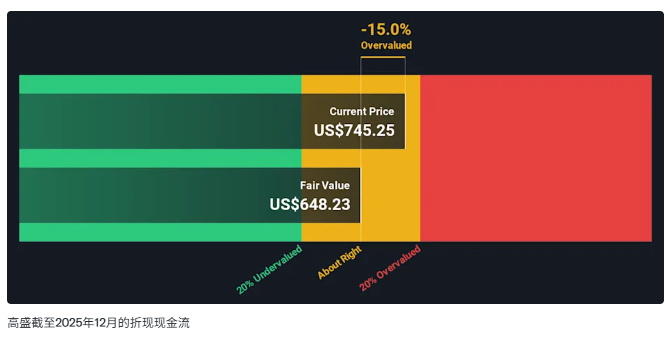
高盛(GS.US)最新收盘价为893.48美元。从股价走势来看,其上周涨幅达 0.6%,过去一个月累计上涨 15.4%,年内涨幅更是高达 55.4%,过去一年涨幅为 61.1%。不仅如此,基于这些涨幅,高盛三年累计 涨幅已攀升至 178.8%,五年累计涨幅更是飙升至 292.8%。在股价经历如此巨幅拉升之后,此时买入高 盛股票,究竟还算不算一笔明智的投资决策?又或者,市场狂欢已然接近尾声,在这个价位入场,投资 者是否只会面临过高的风险? 这轮行情得以蓬勃发展的主要驱动力,源自市场对高盛业务布局的乐观展望。具体而言,市场看好高盛 不断拓展的财富管理与交易业务,同时也对其重新聚焦机构与投资银行业务(而非此前开展的消费银行 业务试验)充满期待。此外,投资者对管理层战略方向的调整以及资本返还方案的兴趣也日益浓厚,这 便很好地解释了市场情绪为何如此高涨。 即便当前市场呈现出这般火热态势,但市场对高盛的估值评价却呈现出好坏参半的局面——有一半的估 值指标显示其股价被低估,而另一半指标则表明其估值处于合理区间。接下来,本文将运用不同的估值 方法进行详细拆解分析,并进一步探讨一种更为精细的定价思路。 方法 1:超额收益模型 ...
永安期货商品指数日报-20251222
Xin Yong An Guo Ji Zheng Quan· 2025-12-22 05:24
Market Performance - The Shanghai Composite Index closed up 0.36% at 3890.45 points, while the Shenzhen Component rose 0.66% and the ChiNext Index increased by 0.49%[1] - The Hong Kong Hang Seng Index closed up 0.75% at 25690.53 points, with the Hang Seng Tech Index rising 1.12% and the Hang Seng China Enterprises Index up 0.68%[1] - The total market turnover in Hong Kong was 2211.864 million HKD[1] U.S. Market Outlook - Goldman Sachs and Castle Securities are optimistic about the "Christmas rally" in U.S. stocks, citing historical data showing the S&P 500 index has risen 75% of the time in the last two weeks of December since 1928, with an average increase of 1.3%[8] - The Dow Jones Industrial Average rose 0.38% to 48134.89 points, the S&P 500 increased by 0.88% to 6834.5 points, and the Nasdaq Composite gained 1.31%[1] ByteDance Financial Projections - ByteDance is expected to achieve a profit of approximately 50 billion USD by 2025, marking a record year for the company as it expands into e-commerce and new markets[8] - The company has reportedly generated around 40 billion USD in net profit in the first three quarters of this year, indicating strong growth potential[12] Sector Highlights - Real estate services and development sectors are showing active performance in the A-share market[1] - Coal, automotive, and healthcare sectors led the gains in the Hong Kong market[1]