
Intel(INTC)

Search documents
热点快速轮动成“日常”
Yang Zi Wan Bao Wang· 2025-11-30 22:53
Market Overview - Jinfu Technology (003018) achieved a five-day consecutive rise, while Maoye Commercial (600828) saw a four-day consecutive rise. Hai Xin Food (002702) and Hai Wang Bio (000078) recorded three consecutive rises, and Meng Tian Home (603216) had six rises in eight days. The total market turnover was 1.59 trillion yuan, a decrease of 125.4 billion yuan from the previous day. Over 4,100 stocks in the market rose, with active sectors including titanium dioxide, dairy, and commercial aerospace. [1] Company Announcements - Tongyu Communication (002792) announced that its stock price had deviated by over 20% in the last two trading days, but confirmed that there were no undisclosed significant matters affecting its operations. The company stated that its recent operational status is normal and that there have been no major changes in the internal or external business environment. [2] - Rongji Software (002474) also reported a price deviation of over 20% in the last three trading days, confirming that its operational status is normal and that there are no undisclosed significant matters. [3] U.S. Market Performance - The Nasdaq Composite Index rose by 0.65%, with Intel experiencing a significant increase of 10%, marking its largest single-day gain since September 18. The three major U.S. indices collectively rose for the fifth consecutive day, with the Nasdaq up 4.91%, the Dow Jones up 3.18%, and the S&P 500 up 3.73%. Major tech stocks saw gains, including Meta (over 2%), AMD, Amazon, Netflix, and Microsoft (each over 1%). [4]



美股五连涨:机器人和共封装光学上涨,英特尔涨10%,中概股普涨
Sou Hu Cai Jing· 2025-11-30 17:21
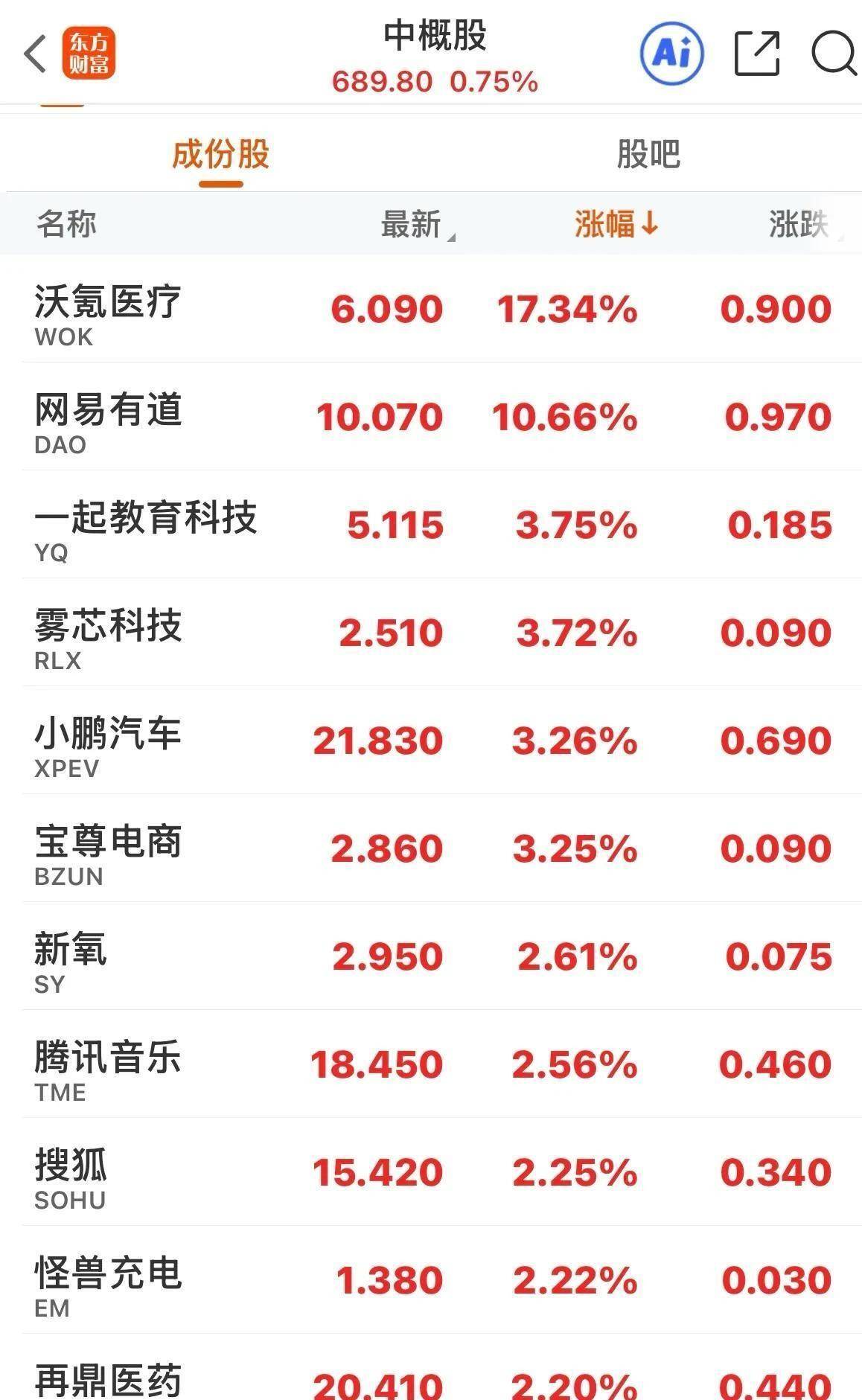
Market Overview - The U.S. stock market experienced an unexpected rebound, with the three major indices achieving a rare five-day winning streak, driven primarily by Intel rather than the anticipated AI giant Nvidia [1] - The Nasdaq index rose nearly 5% over the week, the S&P 500 increased by over 3.7%, and the Dow Jones Industrial Average climbed more than 3%, nearing historical highs [1] Federal Reserve Influence - The market sentiment shifted positively following dovish signals from Federal Reserve officials, particularly from Governor Christopher Waller, who indicated a lack of strong evidence for sustained inflation and supported pausing interest rate hikes in December [1] - The probability of a pause in rate hikes in December surged to over 80% according to the FedWatch tool [1] Technology Sector Performance - The technology sector saw a significant surge, with various tech concepts experiencing substantial gains; digital currency stocks rose over 5%, while mixed reality and co-packaged optics (CPO) concepts increased by over 4% [4] - Robotics stocks emerged as standout performers, with RBOT and LAZR soaring nearly 12% and 11%, respectively, driven by developments in Tesla's humanoid robot and IPOs from leading domestic robotics firms [4] Intel's Strategic Developments - Intel is positioned to potentially produce entry-level M-series processors for Apple starting in 2027, utilizing its advanced 18A process technology, which could lead to shipments of 15 to 20 million units [7][8] - The collaboration with Apple signifies a potential turnaround for Intel's foundry services, marking a significant milestone in regaining its competitive edge in the semiconductor industry [8] Broader Market Trends - Chinese concept stocks also saw a broad increase, with notable performances from companies like WoKe Medical and Xpeng Motors, reflecting a positive sentiment in the market [9] - European markets showed strength, with major indices like the FTSE 100 and DAX rising significantly over the past week, supported by expectations of stable interest rates from the European Central Bank [9] Conclusion - The year-end rally in the U.S. stock market was fueled by the Federal Reserve's interest rate outlook and Intel's potential recovery in its foundry business, alongside strong performances in robotics and CPO sectors [11]


英特尔前CEO:量子计算将刺破AI泡沫 GPU寿命不到十年
Sou Hu Cai Jing· 2025-11-30 17:20
Group 1 - Gelsinger predicts that quantum computing will surpass industry expectations and could be the key trigger for the end of the current AI bubble [3][4] - He believes that the mainstream adoption of quantum computing will occur within two years, contrasting with Nvidia CEO Jensen Huang's estimate of twenty years [4] - Gelsinger forecasts that the dominance of GPUs will be challenged by new computing paradigms by the end of this century [5] Group 2 - Gelsinger compares the partnership between Microsoft and OpenAI to the historical relationship between Bill Gates and IBM, suggesting that OpenAI acts as a "distribution partner" supported by Microsoft's computing power [6] - He acknowledges significant internal management issues at Intel, admitting that the company had lost "basic discipline" during his tenure [8] - Gelsinger reveals that no products were delivered on time in the five years prior to his return, highlighting a severe lack of engineering capability [9]

Weekend Round-Up: TSMC Trade Secrets Lawsuit, Google Deepmind Scientist's Market Slam, Baidu Layoffs, Amazon's Court Victory And More
Benzinga· 2025-11-30 12:01
Group 1: TSMC and Intel - Taiwan prosecutors raided the home of former TSMC vice president Wei-Jen Lo over allegations of leaking trade secrets to Intel Corp, with computers and storage devices seized as evidence [2] Group 2: AI Hardware Market - A Google DeepMind researcher criticized the market's perception of AI hardware demand following a significant drop in Nvidia and AMD stocks, which fell after reports indicated that Meta might utilize Google's AI chips [3] Group 3: Baidu Layoffs - Baidu has initiated layoffs across multiple business units after a disappointing Q3 report, with potential job cuts reaching up to 40% in some teams, although the exact number of layoffs remains unspecified [4] Group 4: Amazon Legal Victory - Amazon won a legal battle against New York's new labor law, which would have allowed state intervention in private-sector union disputes, with a federal judge blocking the law's enforcement while Amazon's challenge is ongoing [5] Group 5: Meta Investigation - U.S. Senators Richard Blumenthal and Josh Hawley have called for an investigation into Meta Platforms over allegations that the company profits from fraudulent advertisements, with estimates suggesting potential earnings of $16 billion annually from such ads [6]


Intel's Turnaround Is Real, But The Easy Money Is Over (NASDAQ:INTC)
Seeking Alpha· 2025-11-30 10:25
Core Viewpoint - Intel is perceived to be undervalued by the market, with potential for recovery and improvement in its business operations, which justifies a "Buy" recommendation at a price of $25 [1]. Company Analysis - The analyst emphasizes a disciplined approach to evaluating companies, focusing on financial metrics and underlying business performance rather than market narratives [1]. - Intel is actively working on turning its business around, which is a positive sign for potential investors [1]. Market Context - The article reflects a broader sentiment in the market where companies like Intel may not receive adequate recognition for their efforts to improve, leading to potential investment opportunities [1].
周末利好!A股,重大调整!央行最新部署!超级赛道,重磅定调!影响一周市场的十大消息
券商中国· 2025-11-30 09:24
Group 1: Index Adjustments - The announcement from the China Securities Index indicates that significant adjustments to A-share indices will take effect after market close on December 12, with the CSI 300 index replacing 11 stocks, including Huadian New Energy and Dongshan Precision [2] - The CSI 500 index will replace 50 stocks, including Heertai and Huahong Semiconductor, while the CSI 1000 index will replace 100 stocks, including Shijia Photon and Wangfujing [2] - The SSE 50 index will replace 4 stocks, including SAIC Motor and Northern Rare Earth, and the SSE 180 index will replace 7 stocks, including Guotou Capital and Zhongtian Technology [3] Group 2: Technology Finance Meeting - A joint meeting was held by the People's Bank of China and the Ministry of Science and Technology to discuss the integration of technology and finance, emphasizing the importance of technological innovation in national development [4] - The meeting highlighted the need for a financial system that supports technological innovation and called for the implementation of policies to enhance the synergy between technology and finance [4] Group 3: Regulatory Actions Against Financial Fraud - The China Securities Regulatory Commission (CSRC) has taken action against Lifan Shuke Co., which is accused of falsifying financial data, proposing a fine of 10 million yuan and initiating delisting procedures [5] - The CSRC's approach combines administrative penalties, market bans, and criminal referrals to strengthen the legal framework against financial fraud [5] Group 4: Virtual Currency Regulation - The People's Bank of China convened a meeting to address the rise in virtual currency speculation, reaffirming that virtual currencies do not hold legal status equivalent to fiat currencies and are considered illegal financial activities [6] - The meeting emphasized the need for ongoing efforts to combat illegal financial activities related to virtual currencies and improve regulatory policies [6] Group 5: Commercial Space Industry Development - The establishment of a dedicated Commercial Space Administration marks a significant step in regulating China's commercial space industry, which is expected to enhance collaboration across the industry [8] - The new agency aims to facilitate communication among various stakeholders in the commercial space sector, potentially improving overall competitiveness [8] Group 6: Securities Investigation - Tianfeng Securities has been placed under investigation by the CSRC for alleged violations related to information disclosure and financing practices [9] - This investigation may be linked to past issues regarding the company's financial practices, indicating a move towards addressing historical challenges [9] Group 7: Market Performance - On November 28, major U.S. stock indices experienced gains, with Intel shares rising by 10%, marking the largest single-day increase since September 18 [10] - Commodity markets saw significant increases, with silver prices reaching historical highs and copper prices also hitting record levels [10] Group 8: IPO and New Stock Offerings - The CSRC has approved IPO registrations for two companies, with new stock offerings scheduled for December 1-5, including Muxi Co. and Angrui Microelectronics [11][12] - This week, a total of 45 companies will have their restricted shares released, amounting to approximately 36.97 billion shares and a total market value of 665.82 billion yuan [13][16]


芯片领域,两则大消息!
是说芯语· 2025-11-30 06:39
Group 1: Intel - Intel's stock surged by 10% on a positive development, reaching a market capitalization of over $190 billion, with a year-to-date increase exceeding 100% [2][4] - Analyst Ming-Chi Kuo indicated that the likelihood of Apple becoming a new customer for Intel has significantly increased, with potential shipments of Apple M-series chips starting as early as 2027 [4] - Winning Apple's advanced node orders is seen as crucial for Intel, as it could signify the end of the company's most challenging period in its foundry business [4][5] - Apple is expected to order between 15 million to 20 million units of the standard M-series chips for MacBook Air and iPad Pro in 2026 and 2027 [5] - Intel has received substantial investments this year, including a $2 billion investment from SoftBank and a $50 billion investment from NVIDIA [5][6] Group 2: Micron Technology - Micron Technology plans to invest 1.5 trillion yen (approximately $9.6 billion) to build a factory in Japan for AI storage chips, with production expected to start around 2028 [1][8] - Micron's stock rose by 2.7%, with a market capitalization of $265.8 billion, and has seen a year-to-date increase of over 180% [10] - Analysts have raised Micron's target price due to increasing demand for DRAM, particularly driven by AI applications, with expectations of supply constraints by 2026 [11]


台积电,暗流涌动
半导体行业观察· 2025-11-30 04:53
Core Viewpoint - The recent departure of TSMC's former senior vice president, Luo Wei-ren, to Intel has raised significant concerns within the semiconductor industry, particularly regarding internal personnel dynamics and potential impacts on TSMC's competitive edge [1][2][6]. Group 1: Luo Wei-ren's Departure - Luo Wei-ren, a key figure at TSMC, allegedly copied 20 boxes of confidential data before joining Intel, prompting TSMC to file a lawsuit against him [2][9]. - The primary reason for Luo's departure appears to be dissatisfaction with personnel arrangements, particularly after his request for an extension of retirement was denied [2][8]. - TSMC has faced similar issues in the past, where high-level executives left for competitors due to internal personnel disputes, indicating a recurring challenge in management succession [2][10]. Group 2: Internal Succession Challenges - TSMC is currently navigating a complex internal power struggle between two potential successors, Wang Ying-lang and Zhang Zong-sheng, which could have more severe implications than Luo's departure [3][10]. - Wang Ying-lang, who was expected to be promoted, faces strong competition from Zhang Zong-sheng, who oversees advanced process development, a critical area for TSMC's market leadership [3][4]. - The advanced process technology is crucial for TSMC, accounting for 74% of the company's total revenue as of Q3 this year, highlighting the importance of effective leadership in this domain [4][5]. Group 3: Industry Implications - The semiconductor industry is closely monitoring the situation, as Luo's move to Intel, while significant, may not have a profound impact on TSMC's operations due to the complexity of its technology and the need for team collaboration [6][10]. - TSMC's ability to maintain its competitive edge relies heavily on its internal talent management and succession planning, especially in light of recent high-profile departures [10].

英特尔或于2027年重返苹果Mac供应链
Huan Qiu Wang Zi Xun· 2025-11-30 01:34
Group 1 - The possibility of Apple reselecting Intel as its supplier for M-series chips by 2027 has significantly increased according to supply chain analyst Ming-Chi Kuo [1] - Apple has signed a confidentiality agreement with Intel to procure its 18AP PDK 0.9.1GA chip design toolkit, with expectations for Intel to deliver updated PDK versions in Q1 2026 [1] - If successful, Intel could begin mass production of entry-level M-series processors for Apple as early as Q2 or Q3 2027, depending on the delivery and validation of the new PDK versions [1] Group 2 - A partnership with Intel would allow Apple to signal support for American manufacturing, potentially addressing policy pressures from the Trump administration [2] - This order could signify that Intel has moved past its most challenging period, with future prospects for winning more orders from Apple and other leading clients [2] - Intel's 14A and subsequent processes are expected to enhance the company's long-term outlook by securing more orders [2]


重新赢得大客户在望!英特尔暴涨10%,郭明錤料2027年交付苹果M系列芯片
硬AI· 2025-11-29 15:20
Core Viewpoint - The likelihood of Intel becoming a supplier for Apple's advanced process technology has significantly increased, with plans for Apple to adopt Intel's 18A advanced process for its low-end M-series processors by the second to third quarter of 2027 [2][5][6]. Group 1: Intel's Business Outlook - Intel's potential contract with Apple marks a significant turnaround for its foundry business, indicating that the worst period may soon be over for Intel's manufacturing operations [5][9]. - The expected shipment volume for the low-end M-series chips is projected to be between 15 million and 20 million units in 2026 and 2027 [7][9]. - Despite the relatively small order volume, the contract symbolizes a critical step in restoring Intel's reputation and competitiveness in the semiconductor market [9][10]. Group 2: Apple's Strategic Moves - By introducing Intel as a second supplier, Apple demonstrates support for the "American manufacturing" policy promoted by the Trump administration, while also ensuring supply chain diversification [11][12]. - Apple plans to continue relying on TSMC for the majority of its M-series chips, including higher-performance versions, while integrating Intel's technology for specific product lines [12][13]. Group 3: Government Support and Market Dynamics - The U.S. government has invested significantly in Intel, with a total investment of $11.1 billion, including an $8.9 billion equity investment and $2.2 billion in subsidies, reflecting a commitment to revitalize domestic semiconductor manufacturing [9][13]. - Intel's challenges include competition from AMD and the need to adapt to the growing demand for AI devices, despite recent government support and investments [9][16].
