
Intel(INTC)

Search documents
芯片巨头大跌17% 英伟达市值一夜增超4700亿元!贵金属领涨 现货白银大涨超7% 现货黄金逼近5000美元
Mei Ri Jing Ji Xin Wen· 2026-01-24 00:22
Group 1: Stock Market Performance - The three major U.S. stock indices closed mixed, with the Dow Jones down 0.58%, the Nasdaq up 0.28%, and the S&P 500 up 0.03% [2] - Technology stocks showed mixed results, with Microsoft and Netflix rising over 3%, while AMD and Amazon increased over 2% [2] - Intel experienced a significant drop of 17%, marking its largest single-day decline since August 2024 [2] Group 2: Chinese Stocks and Indices - The Nasdaq Golden Dragon China Index fell by 0.26%, with notable declines in stocks such as Xpeng down over 3%, NIO and Alibaba down over 2%, and Weibo down over 1% [3] - Conversely, stocks like Youdao rose over 4%, New Oriental increased over 2%, and Trip.com gained over 1% [3] - The FTSE China A50 Index futures rose by 0.41%, closing at 14,843 points [4] Group 3: Precious Metals - Spot silver surged by 7.34%, reaching $103.21 per ounce [5] - New York silver also increased by 7.17%, priced at $103.28 per ounce [6] - Silver saw a substantial annual increase of approximately 147%, driven by strong demand, limited refining capacity, and ongoing supply shortages [6] - Analysts noted that geopolitical tensions, a generally weaker dollar, and expectations of a shift to monetary easing by the Federal Reserve are influencing gold demand [6] - Spot gold rose by 1.01%, reaching $4,986.02 per ounce [7]





贵金属闪耀!美股走势分化 英特尔暴泻17% 高盛跌近4%拖累道指承压
Di Yi Cai Jing· 2026-01-24 00:09
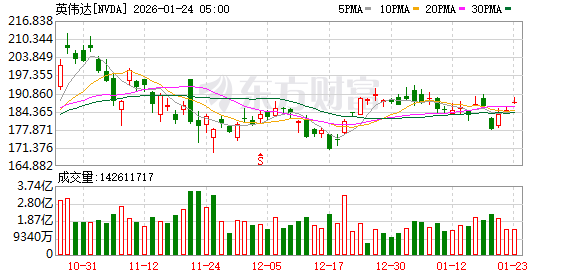
Core Viewpoint - Intel's earnings report fell short of expectations, leading the market to reassess AI valuations and impacting overall market sentiment [1][3]. Market Overview - The Dow Jones Industrial Average dropped by 285.30 points, or 0.58%, closing at 49098.71, with a weekly decline of 0.53%. The S&P 500 index rose by 2.26 points, or 0.03%, closing at 6915.61, with a weekly drop of 0.35%. The Nasdaq Composite increased by 65.23 points, or 0.28%, closing at 23501.24, with a slight weekly decline of 0.06% [1]. - Major tech stocks showed mixed performance, with Nvidia up 1.53%, Microsoft up 3.28%, and Amazon up 2.06%. In contrast, Google fell by 0.79%, Apple by 0.12%, and Tesla by 0.07% [2]. - Goldman Sachs and Caterpillar significantly pressured the Dow, with declines of 3.75% and 3.36%, respectively [3]. Company-Specific Insights - Intel's stock plummeted by 17.03% to $45.07 after the company provided a quarterly revenue and profit outlook that was below market expectations, citing challenges in meeting AI data center demand for server chips [3]. - Upcoming earnings reports from major tech companies such as Apple, Tesla, Meta, and Microsoft are anticipated to have a significant impact on market perceptions regarding AI investment returns and corporate capital expenditures [7]. Economic Indicators - The U.S. Composite Purchasing Managers Index for January was reported at 52.8, slightly above the previous value of 52.7. The services index was at 52.5, and the manufacturing index was at 51.9 [4]. - The University of Michigan's consumer confidence index for January was revised to 56.4, up from an initial value of 54.0, with inflation expectations for the next year at 4.0% and for the next five to ten years at 3.3% [4]. Commodity Market - International oil prices increased, with West Texas Intermediate crude oil futures rising by $1.71 to $61.07 per barrel, a 2.88% increase. Brent crude oil futures rose by $1.82 to $65.88 per barrel, a 2.84% increase [7]. - Precious metals reached new highs, with spot gold at $4964.81 per ounce, up 0.6%, and silver rising by 7.0% to $102.89 per ounce, marking a weekly increase of 14.60% [7][8].


贵金属闪耀!美股走势分化,英特尔暴泻17%,高盛跌近4%拖累道指承压
Di Yi Cai Jing· 2026-01-24 00:05
避险情绪推动黄金、白银、铂金和钯金价格齐创历史新高。 *英特尔财报不及预期,市场重新审视AI估值 *金银齐创新高,避险需求持续升温 *苹果、特斯拉、Meta和微软下周放榜 美股周五走势分化,高盛与卡特彼勒显著承压拖累道指回落,标普500指数基本持平,纳指小幅收高。 此外,英特尔发布疲弱业绩展望后股价重挫亦拖累市场情绪,投资者在动荡一周结束之际风险偏好有所 降温。 【热门股表现】 主要科技股涨跌不一。英伟达上涨1.53%,微软上涨3.28%,亚马逊上涨2.06%,Meta上涨1.72%,奈飞 上涨3.09%,AMD上涨2.35%,美光科技上涨0.52%;谷歌下跌0.79%,苹果下跌0.12%,特斯拉下跌 0.07%,博通下跌1.67%,甲骨文下跌0.57%。 道指成分股中,高盛跌3.75%,卡特彼勒跌3.36%,共同加重对蓝筹指数下行压力。 英特尔股价暴泻17.03%,收于45.07美元,成为当日最主要的利空因素之一。公司给出的季度营收和利 润指引低于市场预期,并坦言难以满足人工智能数据中心对服务器芯片的需求。 中概股涨跌互现,纳斯达克中国金龙指数下跌0.26%。阿里巴巴下跌2.23%,京东下跌0.53%,蔚来 ...

新浪财经资讯AI速递:昨夜今晨财经热点一览 丨2026年1月24日
Xin Lang Cai Jing· 2026-01-23 23:31
Group 1 - US stock market showed mixed results with Nasdaq and S&P slightly up while Dow Jones declined, Intel's stock plummeted by 17% due to poor earnings guidance, while Nvidia and other chip stocks provided support [1] - The dollar index continued to weaken, and gold futures reached an all-time high, with silver breaking the $100 mark for the first time, driven by severe weather that caused US natural gas prices to surge by 70% in a week [1] - European countries hold approximately $3.6 trillion in US Treasury bonds, representing 40% of the overseas total, which could be used as leverage against the US amid tariff pressures, although coordinated selling may lead to significant losses [2][19] Group 2 - Japanese Prime Minister Fumio Kishida's tax cut promises have raised market concerns, leading to a massive sell-off of Japanese government bonds, causing long-term bond yields to soar to multi-year highs [3][20] - The US oil service giant SLB stated it could quickly expand operations in Venezuela if permitted, being the only international oil service company currently operating there, with competitors like Halliburton also looking to re-enter the market [4][21] - Canadian billionaire Eric Sprott has significantly profited from investing in the struggling Hycroft Mining Company, with a return on investment of 678%, capitalizing on the bull market for gold and silver [5][22] Group 3 - Silver prices have historically surpassed $100 per ounce, with a year-to-date increase of 40%, driven by strong industrial demand and ongoing structural supply shortages [6][23] - Economists have revised their expectations, indicating that the Federal Reserve may delay interest rate cuts until June, with inflation pressures and a robust labor market reducing the urgency for rate reductions [7][24] - Nomura's chief economist suggested gradually increasing farmers' pensions to 1,000 yuan per month, which could significantly improve rural elderly income expectations and stimulate consumption [8][25] Group 4 - The A-share market saw a surge in the photovoltaic sector, with major investment from well-known funds in commercial aerospace and semiconductor industries, indicating a strong institutional interest [10][26] - Musk's support for space-based solar power has led to a significant rally in photovoltaic stocks, with over 30 stocks hitting the daily limit up, although the industry still faces substantial technical and cost challenges [11][28] - China Merchants Bank has become the first bank to surpass 13 trillion yuan in total assets, indicating a potential turning point in its financial performance, while other banks also reached significant asset milestones [12][29]



S&P 500 Poised for First Two‑Week Loss Since June as Silver Tops $100 | The Close 1/23/2026
Youtube· 2026-01-23 23:29
ROMAINE: THE CURSE OF HIGH EXPECTATIONS. HERE BLOOMBERG HEADQUARTERS IN NEW YORK, I'M ROMAINE BOSTICK. KATIE: I WANTED TO LOOK LIKE -- ANYWAY, LET'S TALK ABOUT THE MARKET AND WHAT IS GOING ON ON THIS FRIDAY.IT IS REALLY QUIET AFTER THE VERY ACTION-PACKED SHORT WEEK WE HAD. S&P 500 HIGHER BY 0.1% IF YOU ARE FEELING GENEROUS. NOT ENOUGH TO BRING US INTO POSITIVE TERRITORY FOR THE WEEK.NASDAQ 100, SLIGHT OUTPERFORMANCE TODAY, HIGHER BY 0.4%. SMALL CAPS, THE STREET IS OVER, RUSSELL 2000 DOWN BY 1.8%. BOND MARKE ...
英特尔重挫17%,白银拉升超7%,国际油价大涨,特朗普政府正考虑全面封锁古巴石油进口
21世纪经济报道· 2026-01-23 23:18
Market Performance - The three major U.S. stock indices closed mixed on January 23, with the Dow Jones down 0.58%, the S&P 500 up 0.03%, and the Nasdaq up 0.28% [1] - The Dow Jones Industrial Average closed at 49,098.71, down 285.30 points [2] - The Nasdaq Composite Index closed at 23,501.24, up 65.22 points, while the S&P 500 closed at 6,915.61, up 2.26 points [2] Technology Sector - Major technology stocks mostly rose, with the Wande American Technology Seven Giants Index increasing by 1.05% [2] - Notable stock movements included Microsoft up 3.28%, Nvidia up 1.54%, Facebook up 1.72%, and Amazon up 2.06%, while Tesla, Apple, and Google saw declines of less than 1% [2] Semiconductor Sector - The semiconductor sector experienced mixed results, with some stocks rising while others fell [2] - Advanced Micro Devices (AMD) rose by 2.35%, Taiwan Semiconductor Manufacturing Company (TSMC) increased by 2.29%, while ASML fell by 0.37%, Qualcomm by 1.25%, Broadcom by 1.70%, and ARM by 2.63% [2] Intel's Financial Performance - Intel's stock price plummeted by 17% to $45.07, ending a three-day streak of gains [3] - The company's Q4 revenue was reported at $13.7 billion, a year-on-year decline of 4%, and the forecast for the current quarter is between $11.7 billion and $12.7 billion, with adjusted earnings per share expected to be breakeven, both significantly below analyst expectations [3] Chinese Concept Stocks - Chinese concept stocks showed mixed performance, with the Nasdaq China Golden Dragon Index down 0.26% and the Wande Chinese Technology Leader Index down 0.19% [6] - Notable movements included Tencent Music up 4.74%, New Oriental up 2.18%, Trip.com up 1.26%, Pinduoduo up 0.33%, and Li Auto up 0.12% [6] Currency and Commodity Markets - The U.S. dollar index fell sharply by 0.81%, marking the largest single-day decline since August of the previous year [6] - The weakening dollar contributed to a strong performance in the metals market, with spot gold slightly rising and spot silver surging over 7% to $103.341 per ounce [6] - International oil prices rose significantly, with WTI crude and ICE Brent both increasing by over 3% [10]
英特尔(INTC.US)指引疲软并警告供应短缺 股价暴跌超17%创近一年半来最差单日表现
Zhi Tong Cai Jing· 2026-01-23 23:11
Core Viewpoint - Intel's stock plummeted over 17% due to disappointing earnings guidance and warnings of potential supply shortages, marking the largest single-day drop since August 2024 [1] Group 1: Earnings Guidance - Intel's CEO, Pat Gelsinger, acknowledged that the company's current capacity and efficiency cannot meet market demand, indicating a long-term transformation journey ahead [1] - The company expects Q1 2026 revenue to be between $11.7 billion and $12.7 billion, with adjusted earnings per share near breakeven, significantly below market expectations of approximately $0.05 per share and $12.51 billion in revenue [1] Group 2: Market Concerns - Weak outlook raises investor concerns about Intel's position in the semiconductor competition driven by AI, despite a previous year of over 100% stock price increase fueled by government investments and support from major players like SoftBank and Nvidia [2] - Intel's underperforming foundry business remains a key drag, as it has not capitalized on the booming AI demand in data centers, unlike its competitors [2] Group 3: Technological Developments - A focal point for the market is whether Intel's advanced process technology "14A" can attract large-scale foundry customers, which could drive stock price recovery [2] - Intel's CFO, David Zinsner, indicated that customers for the 14A technology are expected to emerge in the second half of this year, but analysts warn that substantial revenue contributions may not materialize until late 2028 [2] Group 4: Analyst Perspectives - Analysts believe that Intel's success in transforming its foundry business and achieving breakthroughs in advanced processes will be crucial for its long-term transformation [3] - Despite a weak outlook, Intel's Q4 earnings and revenue exceeded Wall Street expectations, but investors are more focused on future growth potential in the AI-driven semiconductor industry [2]
1月24日隔夜要闻:油价收高 日元大幅升值 金价银价上涨 俄美乌三方24日将继续会谈 投资者撤出美国资产
Xin Lang Cai Jing· 2026-01-23 22:43
Company - Tesla has suspended the use of its basic driver assistance system, Autopilot, in the US and Canada [3] - BlackRock's private bond fund is expected to see a net asset value decline of 19% [7] - Meta has temporarily blocked underage users from accessing AI features and is developing a dedicated version for teenagers [7] - Nestlé and Danone are involved in a baby formula recall scandal, with France reporting two infant deaths [7] - Binance is considering restarting US stock tokens as global crypto exchanges compete for regulatory approval in parallel markets [7] - Goldman Sachs has increased its CEO's annual salary from $39 million to $47 million [7] - Citigroup plans further layoffs in March [7] - UBS is considering offering cryptocurrency trading services to its private banking clients [7] - Apple's stock price has fallen, marking its longest weekly decline since 2022 [7] - OpenAI's CEO plans to visit India in mid-February and will host a closed-door meeting [7] - Databricks has secured $1.8 billion in a new funding round [7] Industry - Analysts indicate that Intel's long-term profitability outlook for its 18A process technology remains uncertain [9] - The European debt market has seen the spread between French and German government bonds narrow to the lowest level since June 2024 [9] - The US bond market has experienced a slight increase in government bonds, with long-term bonds leading the rise [9] - In the commodities market, oil prices have risen, silver has surpassed $100 for the first time, and base metals have generally increased [9]

Stock Market Today, Jan. 23: Intel's Weak Outlook Weighs on Dow While Nasdaq Edges Higher
Yahoo Finance· 2026-01-23 22:39
Market Performance - The S&P 500 increased by 0.03% to 6,915.16, while the Nasdaq Composite rose by 0.28% to 23,501.24, driven by technology stocks. The Dow Jones Industrial Average fell by 0.58% to 49,098.70, primarily due to Intel's decline [1][2]. Company-Specific Developments - Intel's post-earnings drop significantly impacted the Dow and overall tech sentiment, while gains in Nvidia, Microsoft, Meta Platforms, and a more than 5% increase in Fortinet supported the Nasdaq's rise [2][3]. - Intel's fourth-quarter earnings report presented a negative outlook, citing supply constraints as a major concern for the upcoming months [3][4]. - The company reported that finished goods inventory has decreased to 40% of its peak level, leading to a hand-to-mouth supply management approach and anticipated supply shortages in Q1 [4]. Investor Sentiment - Despite Intel's disappointing performance, investors shifted focus towards artificial intelligence, boosting major tech stocks. The strong performance of Nvidia, Microsoft, Meta, and Fortinet reflects a continued preference for high-quality growth and cybersecurity investments [5]. - Geopolitical uncertainties have driven investors towards safe-haven assets like gold and energy, as concerns about inflation and global instability persist [6].

Stock Market Today, Jan. 23: Intel Plunges After Weak Outlook Highlights Supply Constraints and Foundry Losses
Yahoo Finance· 2026-01-23 22:36
Core Insights - Intel's stock closed at $45.07, down 17.03% after Q4 2025 earnings report, which revealed a weaker-than-expected Q1 2026 outlook due to supply constraints and foundry losses [1] - The trading volume for Intel reached 290 million shares, significantly above its three-month average of 100.3 million shares [1] - Intel's Q4 earnings exceeded Wall Street expectations, particularly in the data center and AI segment, generating $4.7 billion in revenue compared to the expected $4.4 billion [3] - Management's guidance for Q1 2026 sales is $12.2 billion, below the expected $12.6 billion, leading to a sell-off [3] - CFO David Zisner indicated that the supply constraint is expected to bottom out in Q1 and rebound in Q2, suggesting a positive long-term outlook despite short-term challenges [4] Market Movement - The S&P 500 finished up 0.03% at 6,915, while the Nasdaq Composite increased by 0.28% to close at 23,501 [2] - Among semiconductor stocks, Advanced Micro Devices closed at $259.68 (+2.35%), and Nvidia finished at $187.68 (+1.54%) [2]