
Morgan Stanley(MS)

Search documents
准备迎接“降息红包”!美股短期波动不改长期向好逻辑
Jin Shi Shu Ju· 2025-09-17 09:56
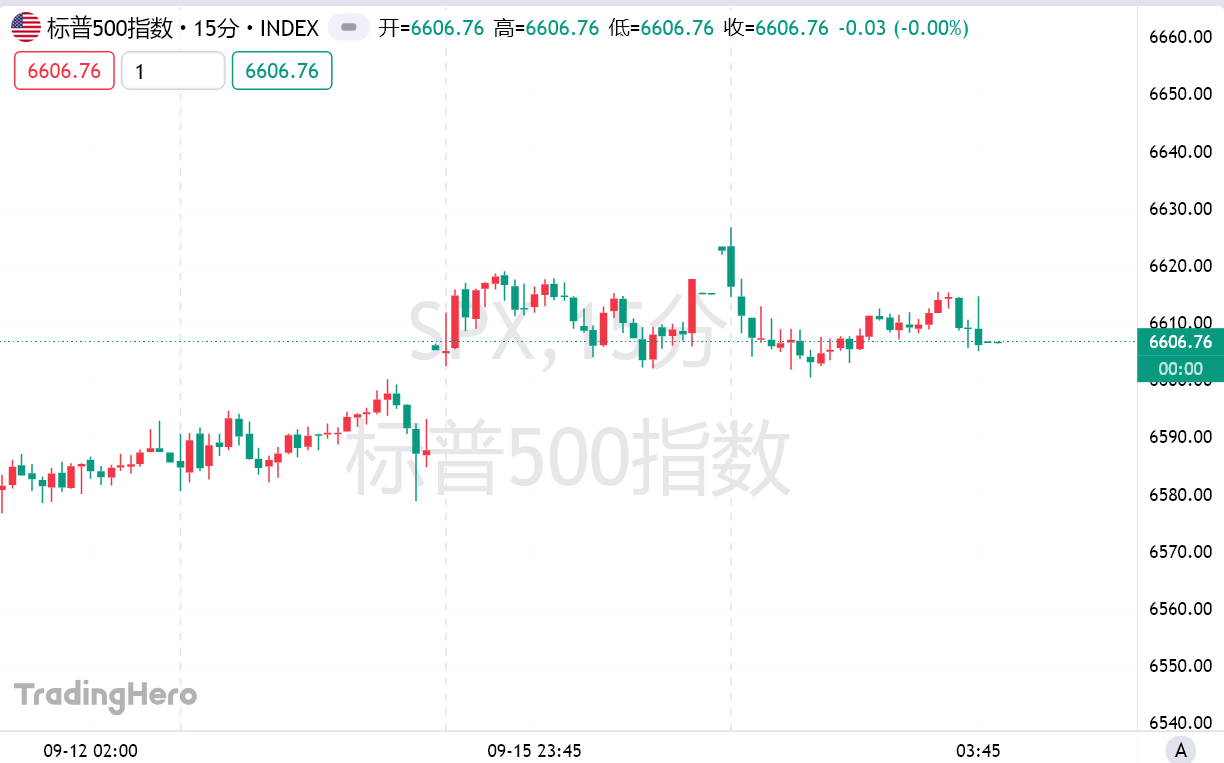
美联储若于北京时间周四凌晨宣布降息,可能会为已然强劲的股市再添动力。 芝商所(CME Group)的美联储观察工具(FedWatch Tool)显示,投资者认为美联储有96%的概率降息25个基点,仅有4%的概率会更大幅地降息50个基 点。 不过,尽管市场对降息的长期反应往往向好,但短期走势可能更为震荡。 Vital Knowledge的创始人亚当·克里萨弗里(Adam Crisafulli)指出,"当前市场情绪整体偏多,但人们担忧美联储决议可能引发'卖事实'式快速回调。这也是 我们的担忧所在,不过最'痛苦'的结果将是美联储释放超鸽派信号,催生一波激进的'重价值/周期股、轻科技/动量股'风格切换。" 摩根大通交易部门周一也指出,根据美联储表态的基调,股市可能会出现波动。 摩根大通交易部门表示,当标普500指数(SPX)处于距历史高点1%的区间内,且美联储下调基准贷款利率时,该指数在接下来一年平均涨幅接近15%。 该部门还指出,这一趋势在美联储去年启动降息以来的一年间已十分明显。"自那时起,标普500指数已上涨约17%……这类回报与我们预期未来数月将出现 的'非衰退环境下美联储降息'背景相符,"摩根大通交易员表示 ...


黄金价格再创新高 有外资机构已看涨至5000美元
Sou Hu Cai Jing· 2025-09-16 17:17
Core Viewpoint - The gold market is experiencing a significant upward trend, driven by expectations of a shift in Federal Reserve policy, increased demand for safe-haven assets, and supply-demand imbalances, with forecasts for gold prices potentially reaching $4,000 per ounce sooner than previously anticipated [1][2][3] Gold Market Analysis - As of September 16, COMEX gold futures reached a record high of $3,731.9 per ounce, with a cumulative increase of over 6% in September, surpassing the 5% increase in August [1] - Morgan Stanley has set a year-end target price for gold at $3,800 per ounce, emphasizing the strong inverse correlation between gold and the US dollar [2] - UBS predicts gold prices will rise to $3,700 per ounce by June 2026, with a possibility of reaching $4,000 per ounce amid geopolitical or economic risks [2] - JPMorgan has revised its gold price forecast to an average of $3,800 per ounce in Q4 2023, with expectations of surpassing $4,000 per ounce in Q1 2026, driven by increased investor demand [2] Silver Market Analysis - Silver prices are also on the rise, with COMEX silver futures increasing by 41% year-to-date, outperforming gold's 35% increase [4] - The Shanghai silver futures market has entered a new phase, surpassing 10,000 yuan per kilogram [4] - The silver market is more volatile due to its smaller size compared to gold, making it susceptible to rapid price changes [4][5] - Despite optimism for silver prices, JPMorgan expresses greater confidence in the gold market, citing silver's complex outlook and significant industrial demand that may be impacted by macroeconomic risks [5] Macro Economic Factors - The weakening US job market, with non-farm payrolls falling short of expectations and an unemployment rate reaching 4.3%, is contributing to heightened market volatility and increased demand for precious metals [5] - The potential erosion of the Federal Reserve's independence and rising US deficit rates are expected to further undermine the credibility of the US dollar and US Treasury securities, intensifying the global trend of "de-dollarization" [3]


Goldman Sachs, Morgan Stanley defeat Archegos investors' insider trading appeals
Yahoo Finance· 2025-09-16 16:40
Core Viewpoint - Goldman Sachs and Morgan Stanley successfully defeated appeals from investors regarding allegations of market manipulation and insider trading linked to the collapse of Archegos Capital Management, which was valued at $36 billion [1][2]. Group 1: Legal Proceedings - The 2nd U.S. Circuit Court of Appeals ruled in a 3-0 decision that Archegos did not qualify as an insider with fiduciary duties to the companies whose stocks it owned [1]. - The court found no evidence that Goldman and Morgan Stanley acted in Archegos' best interest or tipped preferred clients about its financial troubles [4]. Group 2: Financial Impact - Archegos' collapse was attributed to Bill Hwang's use of total return swaps, leading to an estimated $160 billion in stock exposure [3]. - The fallout from Archegos' collapse resulted in significant losses for other banks, including Credit Suisse and Nomura Holdings [4]. Group 3: Settlements and Previous Cases - In July, Goldman, Morgan Stanley, and Wells Fargo agreed to pay a total of $120 million to settle a lawsuit from former ViacomCBS shareholders who claimed the banks concealed conflicts of interest [6]. - The recent court decision upheld a prior dismissal of related cases by U.S. District Judge Jed Rakoff [6].
Are Finance Stocks Lagging Allianz (ALIZY) This Year?
ZACKS· 2025-09-16 14:41
Group 1 - Allianz SE (ALIZY) is currently outperforming the Finance sector with a year-to-date return of 36.8%, compared to the sector's average return of 14% [4] - The Zacks Rank for Allianz SE is 2 (Buy), indicating a positive earnings outlook, with the consensus estimate for full-year earnings having increased by 0.9% in the past quarter [3] - Allianz SE is part of the Insurance - Multi line industry, which has an average gain of 6.1% this year, further highlighting its strong performance within its industry [5] Group 2 - Morgan Stanley (MS) is another Finance stock that has shown strong performance, with a year-to-date return of 24.6% and a Zacks Rank of 2 (Buy) [4][5] - The Financial - Investment Bank industry, to which Morgan Stanley belongs, has seen a year-to-date increase of 27%, ranking 10 among 21 industries [6]

黄金价格再创新高,有外资机构已看涨至5000美元
Di Yi Cai Jing· 2025-09-16 10:08
Core Insights - The gold price has reached a new historical high, with COMEX gold futures hitting $3731.9 per ounce, indicating a strong bullish trend in precious metals [1][2] - Analysts predict that the target price for gold could reach $4000 per ounce sooner than previously expected due to factors such as shifts in Federal Reserve policy, increased demand for safe-haven assets, and supply-demand imbalances [1][2] Group 1: Gold Market Analysis - The international gold price has increased by over 6% in September, surpassing the 5% increase in August [2] - Morgan Stanley has set a year-end target price for gold at $3800 per ounce, emphasizing the strong inverse correlation between gold and the US dollar [2] - UBS has revised its forecast, predicting gold prices could reach $3700 per ounce by June 2026, with a possibility of hitting $4000 in case of geopolitical or economic deterioration [2] - JPMorgan has also raised its gold price expectations, forecasting an average of $3800 per ounce in Q4 2023 and a breakthrough of $4000 in Q1 2026, which is a quarter earlier than their previous estimate [2][3] Group 2: Silver Market Analysis - Silver prices have also surged, with COMEX silver futures showing a year-to-date increase of 41%, outperforming gold's 35% increase [4] - The Shanghai silver futures market has entered the "ten thousand yuan era," indicating a significant price milestone [4] - Analysts suggest that the silver market is more volatile due to its smaller size compared to gold, making it susceptible to rapid price changes [4][5] - Despite the bullish outlook for silver, its industrial demand could be negatively impacted by rising prices, as seen in past speculative bubbles [4][5] Group 3: Economic Context and Future Outlook - The current economic environment, characterized by weakening employment data and rising unemployment rates, is contributing to increased expectations for Federal Reserve rate cuts [5][6] - Market sentiment remains high regarding the potential for the Federal Reserve to lower interest rates, with a 90% probability of a 25 basis point cut in September [5][6] - The weakening dollar and the potential erosion of the Fed's independence are seen as key factors driving the demand for precious metals [3][5][6]
GS vs. MS: Which Stock Is the Better Value Option?
ZACKS· 2025-09-15 16:41
Core Viewpoint - The analysis compares Goldman Sachs (GS) and Morgan Stanley (MS) to determine which stock offers better value for investors at the current time [1] Valuation Metrics - Both GS and MS currently hold a Zacks Rank of 2 (Buy), indicating a positive earnings outlook due to favorable analyst estimate revisions [3] - GS has a forward P/E ratio of 16.88, while MS has a forward P/E of 17.64, suggesting GS may be the more attractive option based on this metric [5] - The PEG ratio for GS is 1.64, compared to MS's PEG ratio of 1.94, indicating GS has a better valuation relative to its expected earnings growth [5] - GS's P/B ratio is 2.17, while MS's P/B ratio is 2.52, further supporting the conclusion that GS is the superior value option [6] - GS has a Value grade of B, whereas MS has a Value grade of D, highlighting the relative undervaluation of GS [6]
Morgan Stanley Investment Management Launches Online Education Centers Dedicated to Investment Tax Management and Investing in Alternatives
Businesswire· 2025-09-15 13:02
Core Insights - Morgan Stanley Investment Management (MSIM) has launched the Tax Forward Investing Center and the Alternatives Investing Center to enhance resources in asset management [1] Group 1 - The new education platforms are designed to better equip financial advisors to improve client outcomes [1] - The Tax Forward and Alternatives Investing Centers will include continuing education resources [1]
33 Innovators Join Morgan Stanley Inclusive & Sustainable Ventures Cohort
Businesswire· 2025-09-15 12:08
Core Insights - Morgan Stanley announced the global cohort of its Inclusive & Sustainable Ventures (MSISV) program, which will support 29 startups and four emerging nonprofits [1] Group 1 - The 2025 MSISV cohort includes founders from the Americas and Europe, the Middle East, and Africa (EMEA) [1] - The selected organizations were chosen from thousands of applications, highlighting the competitive nature of the selection process [1] - The program will run over the next five months, focusing on tailored entrepreneurship for the selected startups and nonprofits [1]
港交所消息:9月10日,摩根士丹利持有的宁德时代H股多头头寸从6.63%降至5.76%

Zhi Tong Cai Jing· 2025-09-15 10:38
Group 1 - Morgan Stanley's long position in Contemporary Amperex Technology Co., Ltd. (CATL) H-shares decreased from 6.63% to 5.76% as of September 10 [1]
大摩与德银双双上调降息预期:美联储或于9、10、12月连续三次降息
智通财经网· 2025-09-15 03:23
Group 1 - Morgan Stanley and Deutsche Bank predict that the Federal Reserve may lower interest rates by 25 basis points in each of the remaining three meetings this year (September, October, December), a significant upgrade from previous expectations of rate cuts only in September and December [1] - This adjustment is based on recent data showing easing inflation pressures and signs of a slowing labor market, with the market widely expecting the Fed to restart its easing cycle after December 2024 [1] - Fed Chairman Jerome Powell has indicated that a rate cut may occur at the September 16-17 meeting, highlighting rising risks in the labor market while warning that inflation threats remain [1] Group 2 - Morgan Stanley further notes that the current market environment allows the Fed to shift more quickly to a neutral policy stance, potentially implementing rate cuts of 25 basis points in four consecutive meetings starting this week, continuing until January next year, with additional cuts expected in April and July 2026 [1] - Deutsche Bank's chief U.S. economist, Matthew Luzetti, believes that while the current forecast does not include further cuts in 2026, risks lean towards more rate cuts if inflation and labor market trends do not align with levels below the neutral rate [1] - According to the Chicago Mercantile Exchange's FedWatch tool, traders are pricing in a 95% probability of a 25 basis point cut next week, with only a 5% chance of a more aggressive 50 basis point cut [1]
