Microsoft(MSFT)

Search documents
美股前瞻 | 三大股指期货齐涨 美联储利率决议来袭 微软、Meta、特斯拉盘后公布财报
智通财经网· 2026-01-28 12:12
盘前市场动向 1. 1月28日(周三)美股盘前,美股三大股指期货齐涨。截至发稿,道指期货涨0.04%,标普500指数期货涨0.37%,纳指期货涨 0.95%。 | = US 30 | 49,020.90 | 49,079.60 | 48,972.10 | +17.50 | +0.04% | | --- | --- | --- | --- | --- | --- | | = US 500 | 7,004.30 | 7.014.80 | 6,983.30 | +25.70 | +0.37% | | 트 US Tech 100 | 26,185.00 | 26,224.70 | 26,003.30 | +245.30 | +0.95% | 2. 截至发稿,德国DAX指数跌0.10%,英国富时100指数跌0.44%,法国CAC40指数跌0.96%,欧洲斯托克50指数涨0.03%。 | 德国DAX30 | 24,882.14 | 24,929.93 | 24,795.48 | -26.09 | -0.10% | | --- | --- | --- | --- | --- | --- | | 英国富时100 | 10,1 ...



但斌 美股第一大重仓股变了!
Shang Hai Zheng Quan Bao· 2026-01-28 11:51
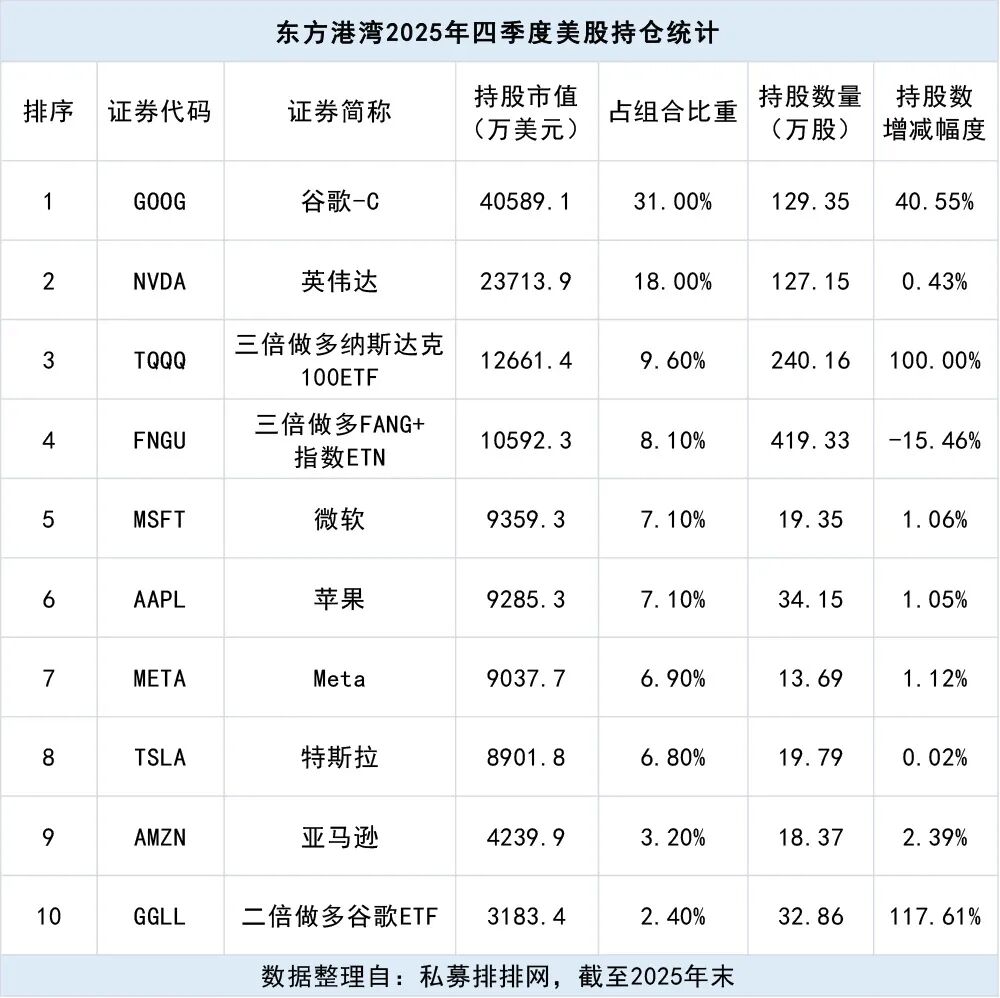
但斌美股持仓最新出炉! 私募排排网据美国证券交易委员会(SEC)统计称,截至2025年末,东方港湾旗下海外基金在美股市场共持有10只股票,持仓总市值约为 13.16亿美元(约合人民币91亿元),较三季度末的12.92亿美元略有增长。从调仓动作来看,东方港湾2025年四季度清仓了包括Coinbase、奈 飞、博通、台积电在内的多只股票,同时大手笔加仓谷歌、纳斯达克指数等,持仓进一步集中于科技板块巨头,第一大重仓股也由英伟达变为 谷歌。 多位业内人士称,2026年科技仍将是全球资本市场的重要投资主线,尤其是AI相关且逐步兑现业绩的标的值得关注。 第一大重仓股变更 同时,东方港湾旗下海外基金2025年四季度大手笔加仓了TQQQ(三倍做多纳斯达克100ETF)和GGLL(二倍做多谷歌ETF)。 截至2025年末,东方港湾旗下海外基金持仓进一步聚焦科技,除谷歌和英伟达外,微软、苹果、Meta、特斯拉和亚马逊均位列其中,显示出 对美股科技龙头股的高度关注。 SEC官网披露的信息显示,截至2025年末,东方港湾旗下海外基金共持有10只美股标的,前五大重仓股分别为谷歌、英伟达、TQQQ(三倍做 多纳斯达克100ETF)、FN ...





US megacap results to test market's tech trade, profit optimism
Yahoo Finance· 2026-01-28 11:19
By Lewis Krauskopf NEW YORK, Jan 28 (Reuters) - Stakes are high for earnings reports from U.S. megacap companies this week, as investors seek proof that strong profit growth will lift stocks this year, including evidence that artificial-intelligence investments are paying off. Reports are due from Microsoft, Apple, Facebook parent Meta Platforms and Tesla - four of the "Magnificent Seven" megacap companies whose bottom-line results broadly are key drivers of overall U.S. profits. The group is expected ...
U.S. Markets Brace for Fed Decision and Tech Earnings Amidst Premarket Gains
Stock Market News· 2026-01-28 11:10
Market Overview - U.S. stock markets are experiencing a pivotal moment with anticipation surrounding the Federal Reserve's interest rate decision and earnings reports from major technology companies [1] - Premarket trading shows a mixed but generally upward trend, with S&P 500 Futures up 0.3% to 7,028.75 points and Nasdaq 100 Futures up 0.6% to 26,228.75 points, while Dow Jones Futures remain flat at 49,159.0 points [2] Semiconductor Industry - U.S. chip stocks are seeing notable gains, with Nvidia increasing by 1.7%, AMD rising by 1.4%, and Intel climbing 4.6%, reflecting strong investor confidence in AI and advanced computing [3] Major Market Indexes - The S&P 500 Index closed at a record high of 6,978.60 points, a 0.41% increase, driven by strength in chipmakers and AI infrastructure stocks, particularly Micron Technology, which announced a $24 billion investment in Singapore [4] - The Dow Jones Industrial Average closed at 49,003.41 points, down 0.83%, primarily due to weakness in the healthcare sector, with UnitedHealth Group forecasting a revenue decline for 2026 [5] - The Nasdaq Composite Index closed up 0.91% at 23,817.10 points, reaching a 2.75-month high, with nearly 30% year-over-year growth attributed to AI advancements [6] Upcoming Market Events - The Federal Reserve is expected to hold its key interest rate steady within the 3.5%-3.75% target range, following three consecutive rate cuts in late 2025, with a focus on the labor market and consumer spending [7] - Major earnings reports are anticipated from tech giants Meta Platforms and Microsoft, which will provide insights into the technology sector's health and AI investments [13] Company News - Infosys announced a strategic AI-focused collaboration, indicating ongoing investment in AI solutions [14] - Boeing's CEO outlined a turnaround plan after six consecutive annual losses, addressing operational challenges [14] - HSBC is scaling back its M&A and equities businesses in Europe, the UK, and the Americas to focus on Asian operations [14] - JetBlue Airways reported a significant Q4 loss and provided weaker-than-expected revenue guidance, raising concerns about profitability [14] - RTX Corporation delivered higher-than-expected Q4 results, showcasing strong growth across its business segments [14]



Stock Market Today: Dow Jones, Nasdaq Futures Gain As Investors Await Fed Decision, Jerome Powell's Speech—Starbucks, Seagate, Tesla In Focus - State Street SPDR S&P 500 ETF Trust (ARCA:SPY)
Benzinga· 2026-01-28 10:12
Market Overview - U.S. stock futures rose on Wednesday following a mixed close on Tuesday, with major benchmark indices showing higher futures [1] - The CME Group's FedWatch tool indicates a 97.2% likelihood of the Federal Reserve keeping interest rates unchanged in January [2] - The 10-year Treasury bond yielded 4.24%, while the two-year bond was at 3.57% [2] Index Performance - Dow Jones increased by 0.04%, S&P 500 by 0.30%, Nasdaq 100 by 0.74%, and Russell 2000 by 0.40% in premarket trading [2] - The SPDR S&P 500 ETF Trust (NYSE:SPY) was up 0.33% at $697.77, and Invesco QQQ Trust ETF (NASDAQ:QQQ) advanced 0.77% to $635.96 [2] Stocks in Focus - Starbucks Corp. (NASDAQ:SBUX) was down 0.76% in premarket, projected to post quarterly earnings of $0.59 per share on revenue of $9.73 billion [4] - Microsoft Corp. (NASDAQ:MSFT) rose 0.087% ahead of earnings expected to be $3.97 per share on revenue of $80.27 billion [4] - Tesla Inc. (NASDAQ:TSLA) advanced 0.23%, projected to post quarterly earnings of $0.45 per share on revenue of $24.78 billion [4] - Seagate Technology Holdings PLC (NASDAQ:STX) jumped 10.02% after reporting better-than-expected revenue and earnings, along with strong guidance [4] Economic Insights - Jeffrey Roach, Chief Economist at LPL Financial, forecasts a resilient U.S. economy in 2026, with real economic growth projected at 2.5% year-over-year and nominal growth surpassing 5% [8] - Roach emphasizes that productivity growth, particularly from early AI adoption, will support economic expansion without reigniting inflation [8] - His team maintains a "tactical neutral stance on equities," favoring large-cap growth stocks and the communication services sector [9] Upcoming Economic Data - The FOMC will announce its interest-rate decision at 2:00 p.m., followed by a press conference from Fed Chair Powell at 2:30 p.m. ET [10] Commodities and Global Markets - Crude oil futures were down 0.22% to around $62.25 per barrel, while Gold Spot rose 1.75% to approximately $5,272.90 per ounce [11] - Bitcoin (CRYPTO: BTC) was trading 1.52% higher at $89,223.76 per coin [13]

Microsoft Set To Report Q2 2026 Earnings: Analysts Eye Azure Growth, AI Spending, CapEx As Shares Dip Over 6% In 6 Months - Microsoft (NASDAQ:MSFT)
Benzinga· 2026-01-28 09:23
Microsoft Corp. (NASDAQ:MSFT) is set to release its second-quarter 2026 earnings on Wednesday, with investors and analysts closely watching cloud growth, AI investments, and capital expenditures amid a six-month stock slump.Analysts Predict Strong Cloud PerformanceFor the second quarter, Wall Street expects Microsoft to report earnings per share of $3.86 and revenue of $80.26 billion, up from $3.23 EPS and $69.63 billion revenue in the same quarter last year, according to Benzinga Pro data.The company has a ...
通信行业月报:光模块上游关键物料供应持续紧张,AWS规模部署空芯光纤-20260128
Zhongyuan Securities· 2026-01-28 08:29
Investment Rating - The report maintains an "Outperform" investment rating for the communication industry [2][9]. Core Insights - The communication industry index outperformed the Shanghai Composite Index in December 2025, rising by 12.82% compared to +2.06% for the Shanghai Composite Index and +2.28% for the CSI 300 Index [8][14]. - Key material supply for optical modules remains tight, with major players like Longfei and Hengtong winning bids for China Unicom's hollow-core fiber cable procurement [8][9]. - The retail sales of communication equipment in China increased by 20.9% year-on-year in December 2025, driven by the demand for smartphones [8][41]. - The global smartphone shipment is projected to grow by 2% year-on-year in 2025, reaching 1.25 billion units, with AI smartphones expected to penetrate 34% of the market [8][29]. - The export value of optical modules from China decreased by 15.6% year-on-year in 2025, while Thailand's communication equipment exports surged by 152.1% [8][9]. Summary by Sections Market Review - The communication industry index rose by 12.82% in December 2025, outperforming major indices [14]. - Sub-sectors such as cables and network equipment saw significant gains, with increases of 22.05% and 19.44% respectively [15][19]. Industry Tracking - The capital expenditure of major cloud providers in North America reached $112.43 billion in Q3 2025, a 76.9% increase year-on-year [25][28]. - AI applications are driving cloud business growth, with major companies like Amazon, Microsoft, Google, and Meta significantly increasing their capital expenditures [25][29]. - The Chinese ICT market is expected to grow to approximately $889.43 billion by 2029, with a CAGR of 7.0% [39][40]. Domestic Telecom Industry - Telecom business revenue in China reached 1.6096 trillion yuan from January to November 2025, a year-on-year increase of 0.9% [48]. - The number of 5G mobile phone users reached 1.193 billion by November 2025, accounting for 65.3% of total mobile phone users [49]. - The number of fixed broadband users with gigabit access reached 239 million, representing 34.3% of total users [52].


Mag 7财报季明日启动,市场紧盯一件事——资本开支!
Hua Er Jie Jian Wen· 2026-01-28 08:20
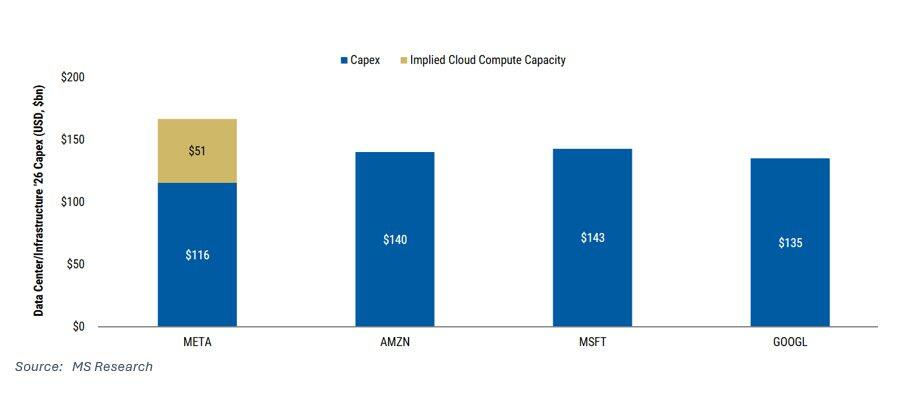
科技巨头"Mag 7"财报季将于周三拉开帷幕,微软、Meta和特斯拉将在盘后公布业绩,苹果紧随其后于周四发布,四家公司总市 值达10.5万亿美元。高盛Delta One部门负责人Rich Prvorotsky最新表示,这一轮财报季归根结底将围绕一个核心问题:"谁在减少 支出,谁在增加支出。" 市场预期"Mag 7"第四季度利润增长20%,这将是2023年初以来最慢的增速。在此背景下,这些公司面临压力,需要证明其承诺 的巨额资本开支正在以更显著的方式产生回报。投资者对资本开支指引的关注度空前高涨,这一数据将直接影响市场对AI投资回 报周期的判断。 本周将有三分之一的标普500成分股(按市值计算)公布业绩。据彭博汇编数据,迄今已有近80%的标普500公司业绩超出分析师 预期。瑞银全球财富管理的Ulrike Hoffmann-Burchardi表示:"我们预计科技股业绩将表现强劲,但也预期盈利增长将扩展至各个 板块。" 尽管业绩稳健,但Wolfe Research的Chris Senyek指出,营收和利润双双超预期的公司股价在财报后反而出现负面表现。"换句话 说,双重超预期正因稳健业绩而受到惩罚,"他表示,"我们认 ...
S&P 500 Hits Record High Ahead Of Key Earnings, Interest Rate Decision: Investor Sentiment Improves, Fear Index In 'Greed' Zone
Benzinga· 2026-01-28 07:54
Market Sentiment - The CNN Money Fear and Greed index improved to a reading of 63.6, remaining in the "Greed" zone, up from 58.9 [6] - U.S. stocks showed mixed performance, with the Dow Jones falling over 400 points while the Nasdaq Composite gained over 200 points [1] Company Performance - General Motors Co. (NYSE:GM) saw a surge of more than 8% after exceeding forecasts and providing positive guidance for 2026 [2] - Boeing Co. (NYSE:BA) reported fourth-quarter revenue of $23.948 billion, a 57% increase from $15.242 billion, but its stock fell around 1.5% [2] Economic Indicators - The Case-Shiller Home Price Index rose 1.4% year-over-year in November, surpassing October's growth of 1.3% and market estimates of 1.2% [3] - The FHFA house price index increased by 0.6% in November, exceeding market expectations of a 0.3% gain [3] Sector Performance - Most sectors on the S&P 500 closed positively, with energy, information technology, and utilities stocks showing the largest gains [4] - Health care and financial stocks closed lower, bucking the overall market trend [4] Upcoming Earnings - Investors are anticipating earnings results from Microsoft Corp. (NASDAQ:MSFT), Tesla Inc. (NASDAQ:TSLA), and Starbucks Corp. (NASDAQ:SBUX) [5]



Big tech earnings land with AI winners still in question
ETBrandEquity.com· 2026-01-28 07:25
Core Viewpoint - Investors have recently shifted focus to niche stocks as skepticism grows regarding the returns on investments made by the Magnificent Seven tech giants in artificial intelligence development [1][12]. Group 1: Performance of the Magnificent Seven - The Magnificent Seven tech giants, including Alphabet, Amazon, Apple, Meta, Microsoft, Nvidia, and Tesla, have led the stock market for the past three years, but their performance has declined since the end of 2025 [1][12]. - Alphabet and Amazon are the only stocks among the Magnificent Seven that have seen gains, with Alphabet rising nearly 20% during the recent downturn [2][12]. - The Magnificent Seven index is currently trading at 28 times profits expected over the next 12 months, which is below previous peaks and in line with the average over the past decade [10][13]. Group 2: Investment Shifts and Market Reactions - Traders have increasingly invested in companies benefiting from Big Tech's spending, such as Sandisk, which is up over 130%, Micron Technology, which has risen 76%, and Western Digital, which has gained 67% since the Magnificent Seven index peaked [3][12]. - The upcoming earnings reports from Microsoft, Meta, Tesla, Apple, Alphabet, and Nvidia are expected to provide insights into the health of various tech sectors, with a projected profit growth of 20% for the fourth quarter, the slowest since early 2023 [4][6][12]. Group 3: Capital Expenditures and Growth Expectations - Major tech companies are expected to spend approximately USD 475 billion on capital expenditures in 2026, significantly up from USD 230 billion in 2024, raising investor expectations for returns on these investments [7][12]. - Microsoft’s Azure revenue rose 39% in its fiscal first quarter, with expectations of 36% growth in the second quarter, highlighting the demand for cloud services driven by AI [7][12]. - Companies that fail to meet growth targets may face significant market penalties, as seen with Meta Platforms, which experienced an 11% drop in stock price following a projection of increased capital expenditures without clear profit pathways [8][12]. Group 4: Comparative Earnings Growth - The 493 companies in the S&P 500 not included in the Magnificent Seven are projected to deliver only 8% earnings growth in the fourth quarter, significantly slower than the expected growth from the tech giants [9][12]. - Nvidia shares have increased by 1,184% since the end of 2022, yet are priced at 24 times anticipated profits, slightly above the S&P 500's multiple of 22, indicating that the stocks are not historically expensive [10][13]. Group 5: Market Sentiment and Future Outlook - Investors are awaiting signs of growth from the Magnificent Seven, with the current earnings season viewed as a critical milestone for assessing progress [11][13]. - The sentiment in the market has shifted to a "show-me story," where investors demand tangible results from Big Tech's investments in AI and other technologies [4][12].